20 Results for "

growth hormone compounds

" in MedChemExpress (MCE) Product Catalog:
Products (20)

20 Results for "growth hormone compounds" in MCE Product Catalog:

5
5 Cited Publications
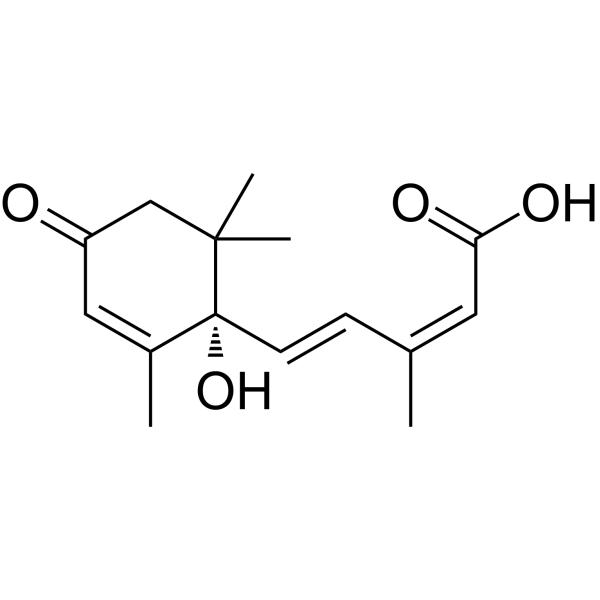
Cat. No.: HY-100560
CAS No.: 21293-29-8
Purity:  99.64%
Synonyms: (S)​-​(+)​-​Abscisic acid; ABA
Abscisic acid ((S)-(+)-Abscisic acid), an orally active phytohormone in fruits and vegetables, is an endogenously produced mammalian hormone. Abscisic acid is a growth inhibitor and can regulate many aspects of plant growth and development. Abscisic acid inhibits proton pump (H +-ATPase) and leads to the plasma membrane depolarization in a Ca 2+-dependent manner. Abscisic acid, a LANCL2 natural ligand, is a potent insulin-sensitizing compound and has the potential for pre-diabetes, type 2 diabetes and metabolic syndrome .
loading...
    loading...
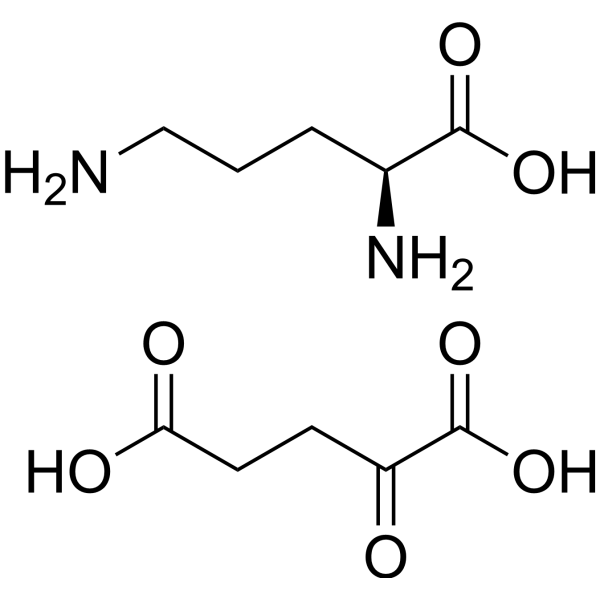
Cat. No.: HY-131514
CAS No.: 5191-97-9
Purity:  ≥95.0%
Synonyms: Ornithine α-ketoglutarate; OKG
Target:  

Insulin Receptor GHR

Research Areas:  

Inflammation/Immunology

L-Ornithine 2-oxoglutarate (Ornithine alpha-ketoglutarate) is a nutritional compound that is a salt of amino acids with antioxidant and anti-inflammatory effects. L-Ornithine 2-oxoglutarate stimulates the production of insulin and growth hormone, and promotes intracellular amino acid transport and protein synthesis .
loading...
    loading...
Cat. No.: HY-100560R
CAS No.: 21293-29-8
Synonyms: (S)​-​(+)​-​Abscisic acid (Standard); ABA (Standard)
Abscisic acid (Standard) is the analytical standard of Abscisic acid. This product is intended for research and analytical applications. Abscisic acid ((S)-(+)-Abscisic acid), an orally active phytohormone in fruits and vegetables, is an endogenously produced mammalian hormone. Abscisic acid is a growth inhibitor and can regulate many aspects of plant growth and development. Abscisic acid inhibits proton pump (H+-ATPase) and leads to the plasma membrane depolarization in a Ca2+-dependent manner. Abscisic acid, a LANCL2 natural ligand, is a potent insulin-sensitizing compound and has the potential for pre-diabetes, type 2 diabetes and metabolic syndrome .
loading...
    loading...
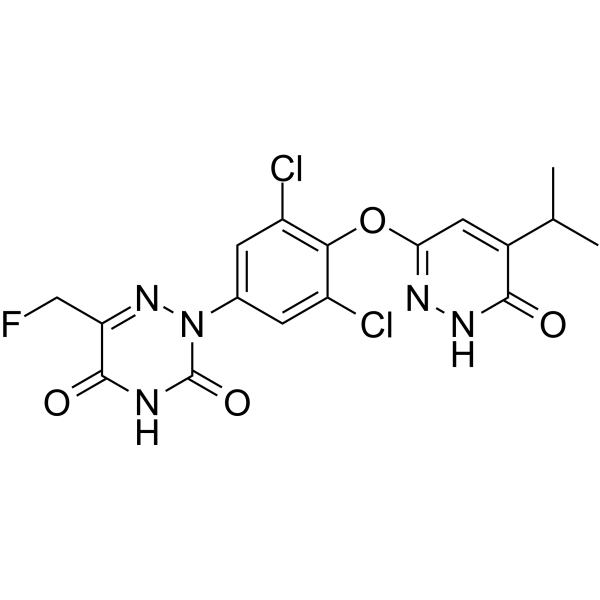
Cat. No.: HY-142441
CAS No.: 2648403-17-0
Purity:  98.66%
Research Areas:  

Endocrinology

THR-β Agonist 1 is a potent and selective agonist of THRβ. Thyroid hormone receptor mediates the physiological activity of thyroid hormones which plays a key role in normal growth and development of the body and in maintaining metabolic balance. THR-β Agonist 1 has the potential for the research of thyroid hormone receptor-related diseases (extracted from patent WO2021104288A1, compound 2) .
loading...
    loading...
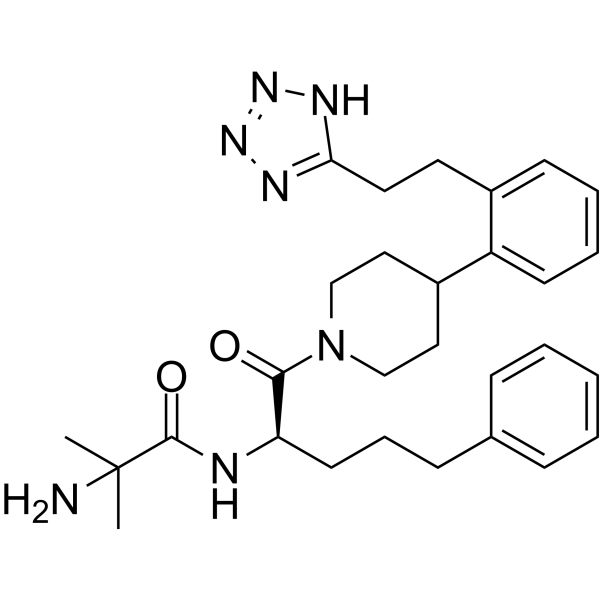
Cat. No.: HY-100305
CAS No.: 170842-46-3
Research Areas:  

Endocrinology

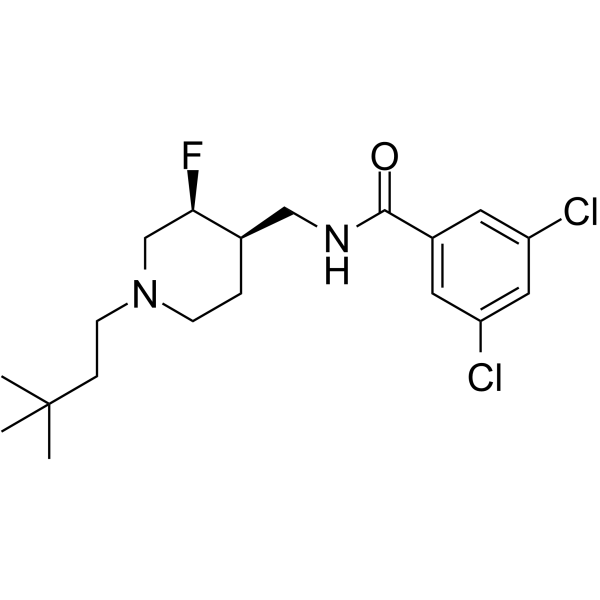
Substituted piperidines-1 is a compound that can promote the release of growth hormone in humans and animals.
loading...
    loading...
Cat. No.: HY-173271
CAS No.: 3060887-25-1
Target:  

GHSR

Research Areas:  

Endocrinology

GHSR-1a agonist-1 (Compound 4b) is an orally active agonist of the human growth hormone secretagogue receptor 1a (GHSR-1a), with an EC50 of 0.49 nM. GHSR-1a agonist-1 can effectively stimulate the release of endogenous growth hormone by activating GHSR-1a. GHSR-1a agonist-1 administered orally at a dose as low as 0.1 mg/kg can increase the body weight and body length of 4-week-old rats. GHSR-1a agonist-1 can be used in the research field of growth and development retardation in children .
loading...
    loading...
Cat. No.: HY-P10390
CAS No.: 1798816-86-0
Target:  

Parasite

Research Areas:  

Infection

Insecticidal agent 11 (compound Q6) is a potent insect growth regulator (IGR)-based insecticide. Insecticidal agent 11 shows high insecticidal activity against Diploptera punctata by inhibiting juvenile hormone (JH) biosynthesis. Insecticidal agent 11 also exhibits insecticidal activity against Plutella xylostella .
loading...
    loading...
Cat. No.: HY-10955
CAS No.: 918333-06-9
Target:  

Calcium Channel

Research Areas:  

Neurological Disease

TTA-P1 is a potent state-independent compound inhibiting human T-type calcium channel. T-type calcium channels play a role in diverse physiological responses including neuronal burst firing, hormone secretion, and cell growth. TTA-P1 has the potential for the research of absence epilepsy .
loading...
    loading...
Cat. No.: HY-149105
CAS No.: 487064-35-7
Target:  

Estrogen Receptor/ERR

Research Areas:  

Endocrinology

FSH receptor antagonist 1 (compound 10) is a potent antagonist of the G(s)-protein-coupled human follicle-stimulating hormone (FSH) receptor. FSH receptor antagonist 1 exhibits an IC50 of 28 nM on a cell line expressing the human FSH receptor. FSH receptor antagonist 1 significantly inhibits follicle growth and ovulation in an ex vivo mouse model .
loading...
    loading...
Cat. No.: HY-W698686
CAS No.: 36271-49-5
β-Galactosyl-C18-ceramide is a bioactive molecule that promotes the regulation of nerve cells, regulates protein kinase C activity, and affects hormone receptors. β-Galactosyl-C18-ceramide is widely used in neuroscience research to explore its effects on nerve cell growth and function. The regulatory function of β-Galactosyl-C18-ceramide makes it a potential application prospect in compound development and disease inhibition.
loading...
    loading...
Cat. No.: HY-W698686S
CAS No.: 145176-92-7
Research Areas:  

Others

β-Galactosyl-C18-ceramide-d35 is deuterium labeled β-Galactosyl-C18-ceramide. β-Galactosyl-C18-ceramide is a bioactive molecule that promotes the regulation of nerve cells, regulates protein kinase C activity, and affects hormone receptors. β-Galactosyl-C18-ceramide is widely used in neuroscience research to explore its effects on nerve cell growth and function. The regulatory function of β-Galactosyl-C18-ceramide makes it a potential application prospect in compound development and disease inhibition .
loading...
    loading...
Cat. No.: HY-L047
908 compounds

The endocrine system is a chemical messenger system comprising feedback loops of the hormones released by internal glands of an organism directly into the circulatory system, regulating distant target organs. Hormones are chemicals that serve to communicate between organs and tissues for physiological regulation and behavioral activities. Hormones affect distant cells by binding to specific receptor proteins in the target cell, resulting in a change in cell function.

The endocrine system is concerned with the integration of developmental events proliferation, growth, and differentiation, and the psychological or behavioral activities of metabolism, growth and development, tissue function, sleep, digestion, respiration, excretion, mood, stress, lactation, movement, reproduction, and sensory perception caused by hormones. Irregulated hormone release, inappropriate response to signaling or lack of a gland can lead to endocrine disease.

MCE offers a unique collection of 908 endocrinology related compounds targeting varieties of hormone receptors such as thyroid hormone receptor, TSH receptor, GNRH receptor, adrenergic receptor, etc. MCE Endocrinology Compound Library is a useful tool for the discovery of endocrinology drugs.

Cat. No.: HY-L211
86 compounds

Hormones are a class of biologically active substances secreted by endocrine gland cells, which are transported through the circulatory system to various parts of the body, and precisely act on specific target organs or cells, playing a crucial role in regulating the growth, development, metabolism, and reproduction of organisms. The mechanisms of hormone action are diverse and complex. Some hormones (such as corticosteroids, vitamin D, and thyroid hormones) can enter the cell interior and interact with receptors in the nucleus, thereby regulating gene expression and affecting cell function. Other hormones (such as growth hormone and thyrotropin-releasing hormone) bind directly to receptors on the cell surface, exerting their effects by regulating enzyme activity or influencing the state of ion channels. Additionally, hormones play a key role in the study of endocrine and metabolic diseases, and are closely related to the development of diseases such as diabetes and thyroid diseases.

MCE has included 86 human hormone compounds, which is of great significance for the study of human metabolic pathways, and can also be used to build a metabonomics database.

Cat. No.: HY-180453
CAS No.: 1194092-48-2
Target:  

Drug Intermediate

Research Areas:  

Endocrinology

Transient pfp-activated mPEG-linker reagent (Compound 17b) is a kind of transient pfp-activated mPEG linker agent. Transient pfp-activated mPEG-linker reagent can be used for the study of growth hormone deficiency .
loading...
    loading...
Cat. No.: HY-182512
CAS No.: 1319729-54-8
Research Areas:  

Metabolic Disease

Albumin binder-1 (Page 21, Example 2) is an albumin binder. Albumin binder-1 is applicable to growth hormone delivery research .
loading...
    loading...
Cat. No.: HY-176995
CAS No.: 1143021-16-2
Target:  

GHSR

Research Areas:  

Metabolic Disease

AZ-GHS-38 (compound 38) is an orally active CNS-penetrant inverse agonist of growth hormone secretagogue receptor (GHS-R1a) with an IC50 of 6.7 nM. AZ-GHS-38 results in acute reduction of food intake in wild-type mice. AZ-GHS-38 can be used for anti-obesity research .
loading...
    loading...
Cat. No.: HY-180210
CAS No.: 2243167-93-1
Target:  

GHSR GHR IGF-1R

Research Areas:  

Inflammation/Immunology Cancer

Ghrelin receptor full agonist-3 (Compound 22) is a selective, potent and orally active ghrelin receptor full agonist with an EC50 of 1.8 nM. Ghrelin receptor full agonist-3 can stimulate pulsatile secretion of growth hormone (GH), significantly increasing the frequency and duration of GH secretion, thereby inducing a sustained increase in insulin-like growth factor-1 (IGF-1) levels. Ghrelin receptor full agonist-3 can be used for the researches of cancer and chronic obstructive pulmonary disease .
loading...
    loading...
Cat. No.: HY-L131
984 compounds

Ossification is a tightly regulated process, performed by specialized cells called osteoblasts. Dysregulation of this process may cause inadequate or excessive mineralization of bones or ectopic calcification, all of which have grave consequences for human health.

Osteoblasts play important roles in the process of osteogenesis and prevention of osteonecrosis. Osteoblast formation and bone formation are regulated by hormones, growth factors, cytokines, etc.

MCE offers a unique collection of 984 bone formation compounds with identified and potential inducing osteogenesis activity. MCE bone formation compound library is a useful tool for the study of bone disease drugs and pharmacology.

Cat. No.: HY-L150
7,133 compounds

Membrane receptors, also known cell surface receptors or transmembrane receptors, are transmembrane proteins embedded into the plasma membrane which play an essential role in maintaining communication between the internal processes within the cell and various types of extracellular signals. They act in cell signaling by receiving (binding to) extracellular molecules, which are also called ligands. These extracellular molecules include hormones, cytokines, growth factors, neurotransmitters, lipophilic signaling molecules such as prostaglandins, and cell recognition molecules.

There are three kinds of membrane receptors: ion channel-linked receptors, enzyme-linked receptors and G-protein-linked receptors. They play important roles in keeping human normal physiologic processes. GPCRs and ion channels are important drug targets in drug discovery.

MCE provides a unique collection of 7,133 compounds targeting a variety of membrane receptors. MCE Membrane reeptor-targeted Compound Library can be used for membrane receptor-focused screening and drug discovery.

Cat. No.: HY-L074
3,404 compounds

Breast cancer is the most frequent cancer among women, impacting 2.1 million women each year, and also causes the greatest number of cancer-related deaths among women. Surgery is usually the first type of treatment for breast cancer, which is usually followed by chemotherapy or radiotherapy or, in some cases, hormone or targeted therapies, especially for metastatic breast cancer (MBC).

Breast cancer is a heterogeneous disease, which is categorized into 3 major subtypes based on the presence or absence of molecular markers for estrogen or progesterone receptors and human epidermal growth factor 2 (ERBB2; formerly HER2): hormone receptor positive/ERBB2 negative (70% of patients), ERBB2 positive (15%-20%), and triple-negative (tumors lacking all 3 standard molecular markers; 15%). Different intrinsic subtypes exhibit different tumor behavior with different prognoses, and may require specific targeted therapies to maximize treatment effectiveness. Otherwise, some signaling pathways also play important roles in the development of breast cancer, such as NF-κB Signaling Pathway, TGF-beta Signaling Pathway, PI3K/AKT/mTOR signaling pathway and Notch Signaling Pathway. These signaling pathways offer ideal targets for development of new targeted therapies for breast cancer.

MCE supplies a unique collection of 3,404 compounds with identified and potential anti-breast cancer activity. MCE Anti-Breast Cancer Compound Library is a useful tool for anti-breast cancer drugs screening.

  • 1

