4 Results for "

hPRMT1

" in MedChemExpress (MCE) Product Catalog:
Products (4)

4 Results for "hPRMT1" in MCE Product Catalog:

4
4 Cited Publications
Cat. No.: HY-107574
CAS No.: 17328-16-4
Purity:  98.03%
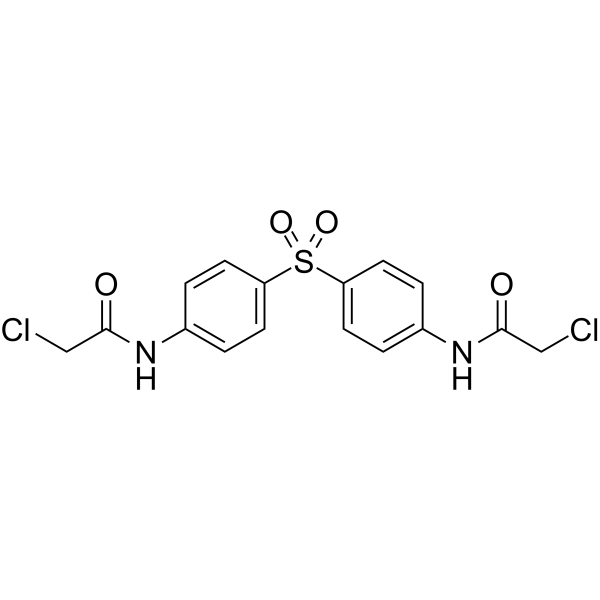
TC-E 5003 is a selective protein arginine methyltransferase 1 (PRMT1) inhibitor with an IC50 of 1.5 µM against hPRMT1. TC-E 5003 modulates the lipopolysaccharide (LPS) (HY-D1056)-induced AP-1 and NF-κB signaling pathways with anti-inflammatory properties. TC-E 5003 also upregulates the expression of Ucp1 and Fgf21, activates protein kinase A signaling and lipolysis in primary subcutaneous adipocytes from both mouse and humans. TC-E 5003 is promising for research of obesity and associated metabolic disorders, oxidative stress, inflammation and cancers [1] .
loading...
    loading...
Cat. No.: HY-15890
CAS No.: 587850-67-7
Purity:  99.91%
Research Areas:  

Cancer

C-7280948 is a selective and potent protein methyltransferase1 (PRMT1) inhibitor with an IC50 value of 12.75 μM [1].
loading...
    loading...
Cat. No.: HY-W191023
CAS No.: 61251-99-8
Research Areas:  

Cancer

4-Amino-N-(2-phenylethyl) benzamide is an inhibitor of human protein arginine methyltransferase 1 (hPRMT1) with an IC50 of 49.7 μM. 4-Amino-N-(2-phenylethyl) benzamide can be used in epigenetics-related research as well as prostate cancer-related research [1].
loading...
    loading...
Cat. No.: HY-107574R
CAS No.: 17328-16-4
TC-E 5003 (Standard) is the analytical standard of TC-E 5003 (HY-107574). This product is intended for research and analytical applications. TC-E 5003 is a selective protein arginine methyltransferase 1 (PRMT1) inhibitor with an IC50 of 1.5 µM against hPRMT1. TC-E 5003 modulates the lipopolysaccharide (LPS) (HY-D1056)-induced AP-1 and NF-κB signaling pathways with anti-inflammatory properties. TC-E 5003 also upregulates the expression of Ucp1 and Fgf21, activates protein Kinase A signaling and lipolysis in primary subcutaneous adipocytes from both mouse and humans. TC-E 5003 is promising for research of obesity and associated metabolic disorders, oxidative stress, inflammation and cancers [1] .
loading...
    loading...

