1. Search Result
Search Result
Results for "

human dihydrofolate reductase

" in MedChemExpress (MCE) Product Catalog:

23

Inhibitors & Agonists

2

Natural
Products

2

Recombinant Proteins

5

Isotope-Labeled Compounds

Cat. No. Product Name Target Research Areas Chemical Structure
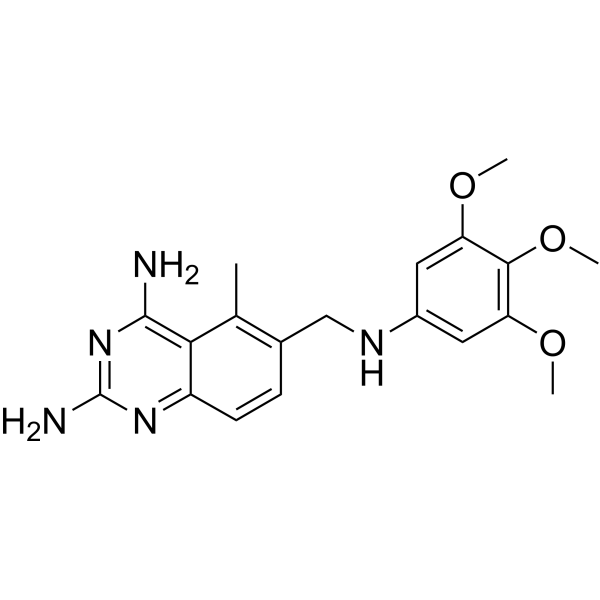
  • HY-10373
    Trimetrexate
    2 Publications Verification

    CI-898

    Dihydrofolate reductase (DHFR) Antibiotic Antifolate Parasite Bacterial DNA/RNA Synthesis Infection Cancer
    Trimetrexate (CI-898) is an antibiotic, also a potent and orally active dihydrofolate reductase (DHFR) inhibitor, reducing the production of DNA and RNA precursors and leading to cell death, with IC50 values of 4.74 nM and 1.35 nM for human DHFR and Toxoplasma gondii DHFR. Trimetrexate can also inhibit the growth of various cancer cells. Trimetrexate can be used for researching Pneumocystis carinii pneumonia (PCP) and cancer .
    Trimetrexate
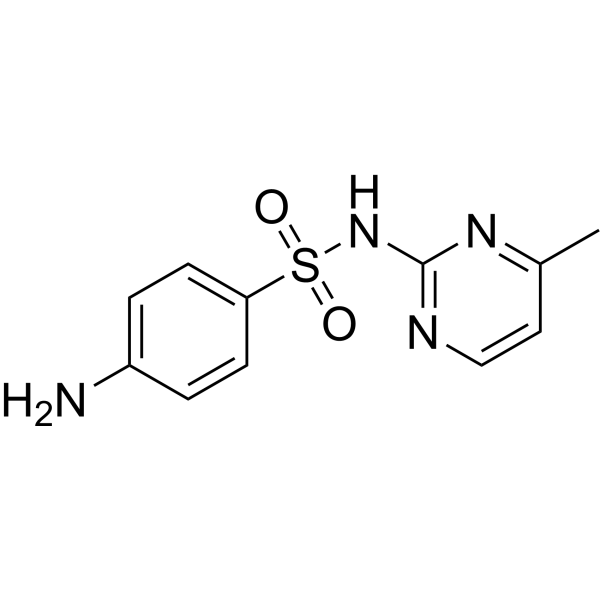
  • HY-B0512
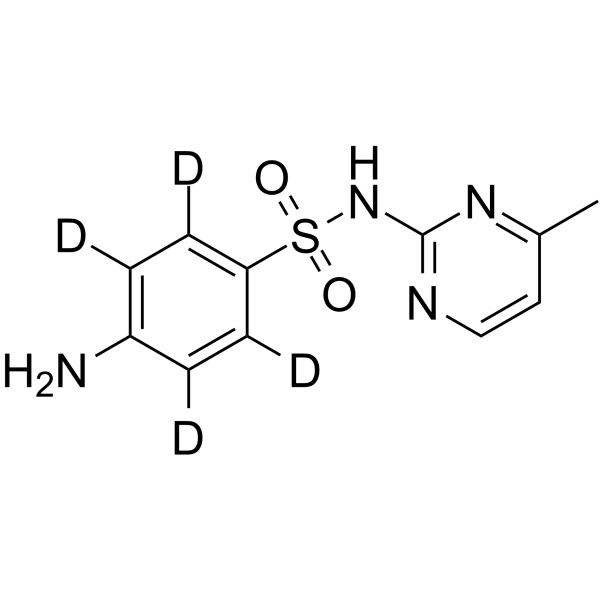
    Sulfamerazine
    4 Publications Verification

    RP2632

    Antibiotic Bacterial α-synuclein Infection Neurological Disease
    Sulfamerazine (RP2632) is a brain-penetrant and orally active sulfonamide antibiotic and α-synuclein inhibitor with human α-synuclein KD of 352 μM. Sulfamerazine inhibits the synthesis of dihydrofolate by bacteria, thereby inhibiting bacterial growth. Sulfamerazine inhibits α-synuclein fibrillation, reduces α-synuclein aggregation-associated toxicity and α-synuclein aggregate accumulation. Sulfamerazine can be used for the research of Parkinson’s disease and bacterial infection .
    Sulfamerazine
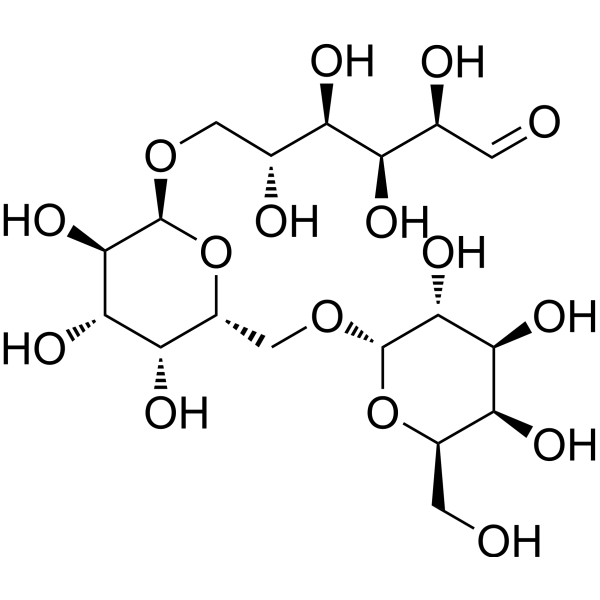
  • HY-N0913
    Manninotriose
    1 Publications Verification

    Antifolate Thymidylate Synthase Cancer
    Manninotriose is a binder of dihydrofolate reductase and thymidylate synthase. Manninotriose binds to dihydrofolate reductase via hydrogen bond formation with Arg28. Manninotriose binds to thymidylate synthase via hydrogen bond formation with Arg50. Manninotriose acts as a membrane protectant and helps improve stress tolerance. Manninotriose can be used in research related to acute lymphoblastic leukemia .
    Manninotriose
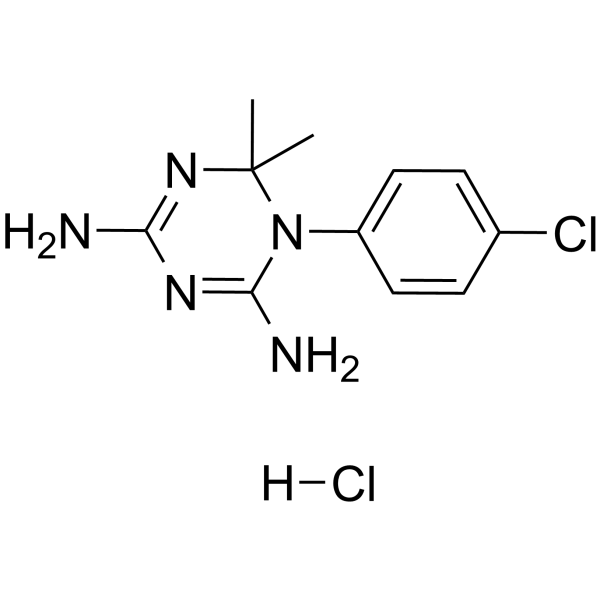
  • HY-12784A
    Cycloguanil hydrochloride
    3 Publications Verification

    Chlorguanide triazine hydrochloride

    Antifolate Parasite DNA/RNA Synthesis STAT Infection Cancer
    Cycloguanil (Chlorguanide triazine) hydrochloride is a dihydrofolate reductase (DHFR) inhibitor with an IC50 of 10.8 μM against human DHFR. Cycloguanil hydrochloride blocks the folate metabolic pathway, thereby affecting nucleotide synthesis and interfering with DNA replication. Cycloguanil inhibits DHFR in Plasmodium and is thus used in malaria research. Cycloguanil hydrochloride also potently inhibits DHFR in human cancer cells and blocks the transcriptional activity of STAT3, thereby exhibiting anticancer activity .
    Cycloguanil hydrochloride
  • HY-137129

    Dihydrofolate reductase (DHFR) Cancer
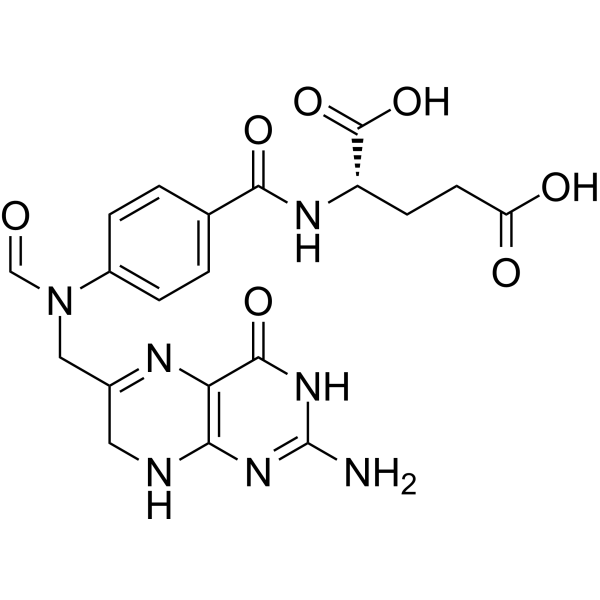
    10-Formyl-7,8-dihydrofolic acid is a biologically active folic acid and growth promoter. 10-Formyl-7,8-dihydrofolic acid serves as a substrate for aminoimidazolecarboxamide ribonucleotide transformylase and dihydrofolate reductase (DHFR) to support catalytic reactions (with detection wavelengths of 552 nm and 340 nm, respectively). 10-Formyl-7,8-dihydrofolic acid not only promotes the growth of leukemia cells, but also effectively reverses the growth inhibition induced by antifolate drugs under folate-deficient conditions. 10-Formyl-7,8-dihydrofolic acid can be used in the research of leukemia .
    10-Formyl-7,8-dihydrofolic acid
  • HY-B0512A

    RP2632 sodium

    Antibiotic Bacterial α-synuclein Infection Neurological Disease
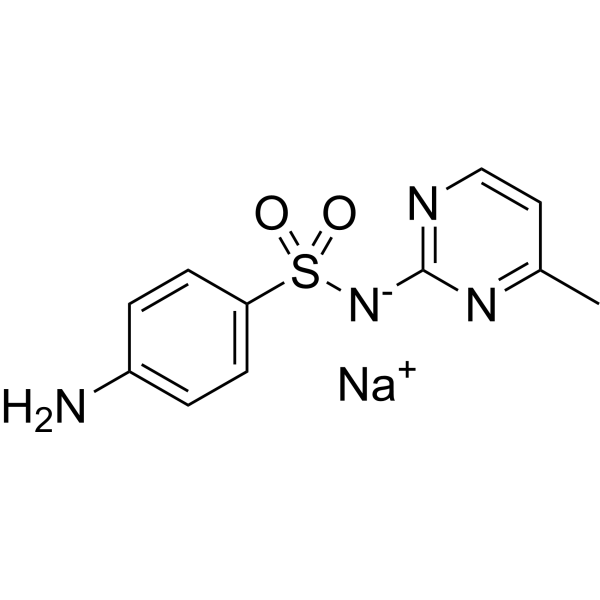
    Sulfamerazine (RP2632) sodium is a brain-penetrant and orally active sulfonamide antibiotic and α-synuclein inhibitor with human α-synuclein KD of 352 μM. Sulfamerazine sodium inhibits the synthesis of dihydrofolate by bacteria, thereby inhibiting bacterial growth. Sulfamerazine sodium inhibits α-synuclein fibrillation, reduces α-synuclein aggregation-associated toxicity and α-synuclein aggregate accumulation. Sulfamerazine sodium can be used for the research of Parkinson’s disease and bacterial infection .
    Sulfamerazine sodium
  • HY-16638

    PDDF

    Thymidylate Synthase Metabolic Disease
    CB 3717 is a potent inhibitor of human thymidylate synthetase, competitively binding with 5,10-methylenetetrahydrofolate (Ki = 4.9 X 10(-9) M). It also competitively inhibits human dihydrofolate reductase with dihydrofolate (Ki = 2.3 X 10(-8) M). In WI-L2 human lymphoblastoid cells, CB 3717 treatment led to a significant decrease in cellular dTTP levels and a notable increase in dUMP levels, indicating a disruption in nucleotide metabolism. The growth-inhibitory effect of CB 3717 was reversed by thymidine supplementation, demonstrating that thymidylate synthetase became rate-limiting in the presence of this compound. Delayed thymidine supplementation beyond 8 hours resulted in severe cytotoxicity, underscoring the critical timing of nucleotide rescue strategies in CB 3717-treated cells .
    CB 3717
  • HY-12784

    Chlorguanide triazine

    Antifolate DNA/RNA Synthesis STAT Parasite Infection Cancer
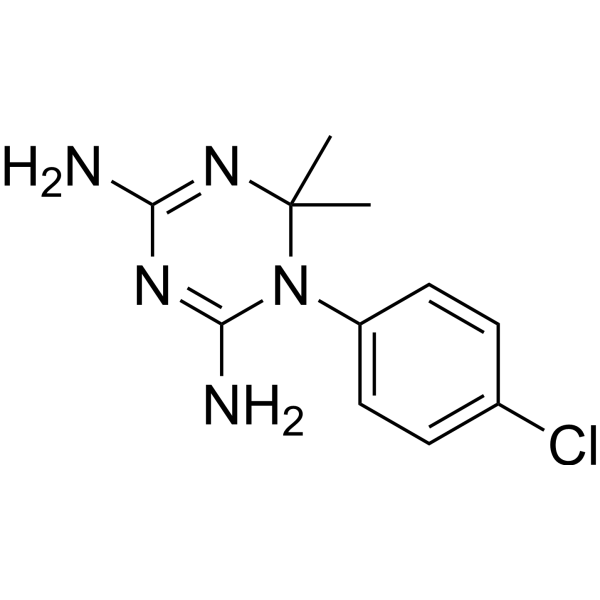
    Cycloguanil (Chlorguanide triazine) is a dihydrofolate reductase (DHFR) inhibitor with an IC50 of 10.8 μM against human DHFR. Cycloguanil blocks the folate metabolic pathway, thereby affecting nucleotide synthesis and interfering with DNA replication. Cycloguanil inhibits DHFR in Plasmodium and is thus used in malaria research. Cycloguanil also potently inhibits DHFR in human cancer cells and blocks the transcriptional activity of STAT3, thereby exhibiting anticancer activity .
    Cycloguanil
  • HY-12784AR

    Chlorguanide triazine hydrochloride (Standard)

    Reference Standards Antifolate DNA/RNA Synthesis STAT Parasite Infection Cancer
    Cycloguanil hydrochloride (Standard) is the analytical standard of Cycloguanil hydrochloride (HY-12784A). This product is intended for research and analytical applications. Cycloguanil hydrochloride is a dihydrofolate reductase (DHFR) inhibitor with an IC50 of 10.8 μM against human DHFR. Cycloguanil hydrochloride blocks the folate metabolic pathway, thereby affecting nucleotide synthesis and interfering with DNA replication. Cycloguanil hydrochloride inhibits DHFR in Plasmodium and is thus used in malaria research. Cycloguanil hydrochloride also potently inhibits DHFR in human cancer cells and blocks the transcriptional activity of STAT3, thereby exhibiting anticancer activity .
    Cycloguanil hydrochloride (Standard)
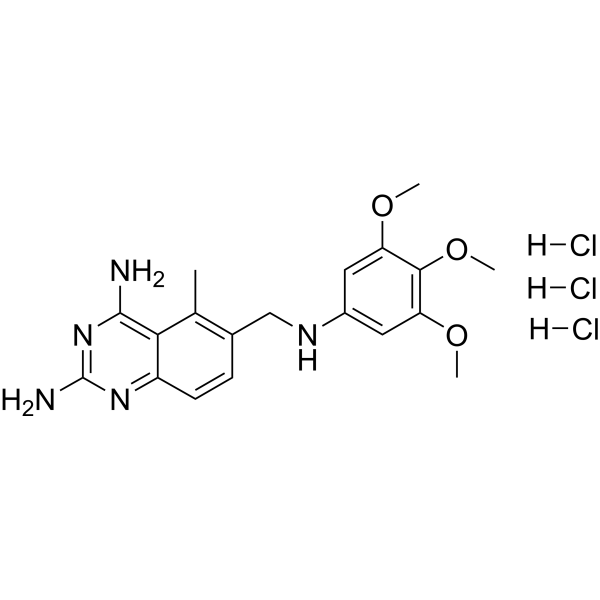
  • HY-10373A

    CI-898 trihydrochloride

    Dihydrofolate reductase (DHFR) Antibiotic Antifolate Parasite Bacterial DNA/RNA Synthesis Infection Cancer
    Trimetrexate (CI-898) trihydrochloride is an antibiotic, also a potent and orally active dihydrofolate reductase (DHFR) inhibitor, reducing the production of DNA and RNA precursors and leading to cell death, with IC50 values of 4.74 nM and 1.35 nM for human DHFR and Toxoplasma gondii DHFR. Trimetrexate trihydrochloride can also inhibit the growth of various cancer cells. Trimetrexate trihydrochloride can be used for researching Pneumocystis carinii pneumonia (PCP) and cancer .
    Trimetrexate trihydrochloride
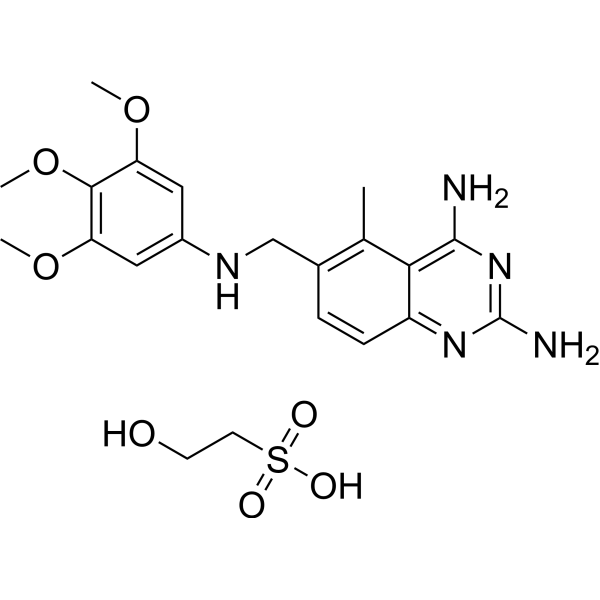
  • HY-10373B

    CI-898 isethionate

    Dihydrofolate reductase (DHFR) Antibiotic Antifolate Parasite Bacterial DNA/RNA Synthesis Infection Cancer
    Trimetrexate (CI-898) isethionate is an antibiotic, also a potent and orally active dihydrofolate reductase (DHFR) inhibitor, reducing the production of DNA and RNA precursors and leading to cell death, with IC50 values of 4.74 nM and 1.35 nM for human DHFR and Toxoplasma gondii DHFR. Trimetrexate isethionate can also inhibit the growth of various cancer cells. Trimetrexate isethionate can be used for researching Pneumocystis carinii pneumonia (PCP) and cancer .
    Trimetrexate isethionate
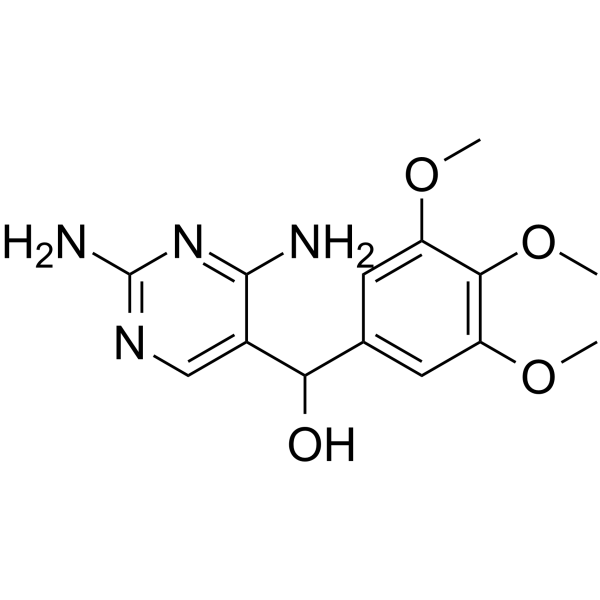
  • HY-100622

    Bacterial Infection
    Ro 20-0657/000 is a metabolite of Trimethoprim. Trimethoprim is a dihydrofolate reductase inhibitor, used as an antibacterial agent in human and veterinary medicine .
    Ro 20-0657/000
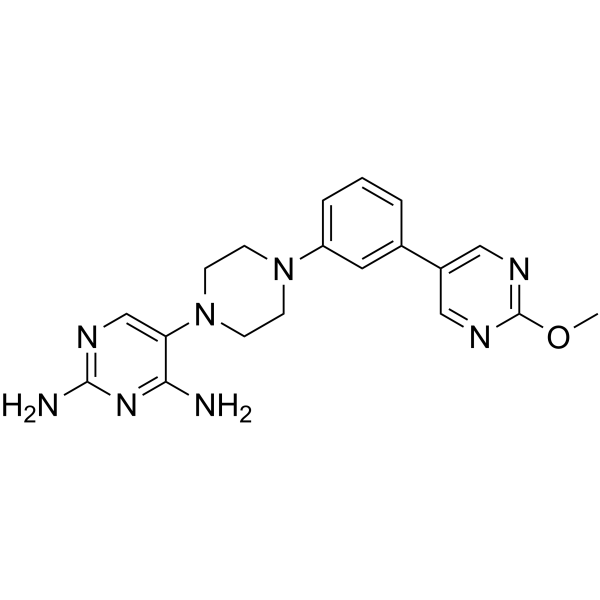
  • HY-137439

    VYR-006

    Antifolate Infection
    Fanotaprim is a dihydrofolate reductase (DHFR) inhibitor with IC50s of 1.57 and 308 nM for tgDHFR (Toxoplasma gondii DHFR) and hDHFR (human DHFR), respectively. Fanotaprim has the potential for the research of toxoplasmosis .
    Fanotaprim
  • HY-W707099

    Isotope-Labeled Compounds Bacterial Infection
    Ro 20-0657/000-d3 is the deuterium labeled Ro 20-0657/000 (HY-100622). Ro 20-0657/000 is a metabolite of Trimethoprim. Trimethoprim is a dihydrofolate reductase inhibitor, used as an antibacterial agent in human and veterinary medicine .
    Ro 20-0657/000-d3
  • HY-12784S
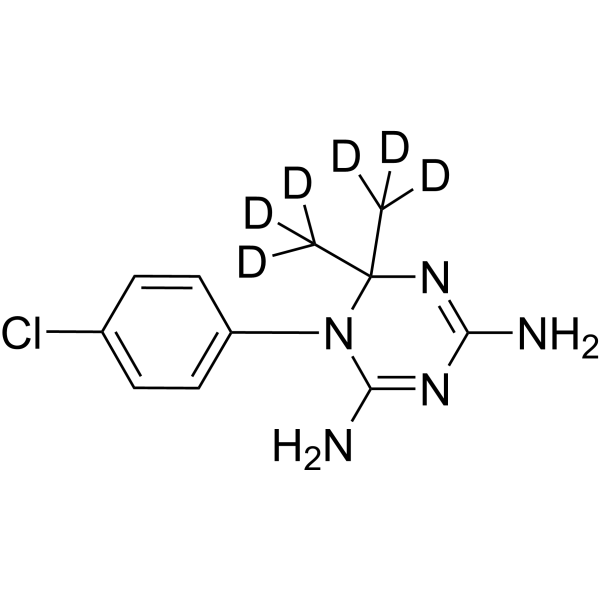
    Cycloguanil-d6
    1 Publications Verification

    Chlorguanide triazine-d6

    Isotope-Labeled Compounds Antifolate DNA/RNA Synthesis STAT Parasite Infection Cancer
    Cycloguanil-d6 (Chlorguanide triazine-d6) is the deuterium labeled Cycloguanil (HY-12784). Cycloguanil is a dihydrofolate reductase (DHFR) inhibitor with an IC50 of 10.8 μM against human DHFR. Cycloguanil blocks the folate metabolic pathway, thereby affecting nucleotide synthesis and interfering with DNA replication. Cycloguanil inhibits DHFR in Plasmodium and is thus used in malaria research. Cycloguanil also potently inhibits DHFR in human cancer cells and blocks the transcriptional activity of STAT3, thereby exhibiting anticancer activity .
    Cycloguanil-d6
  • HY-12784AS

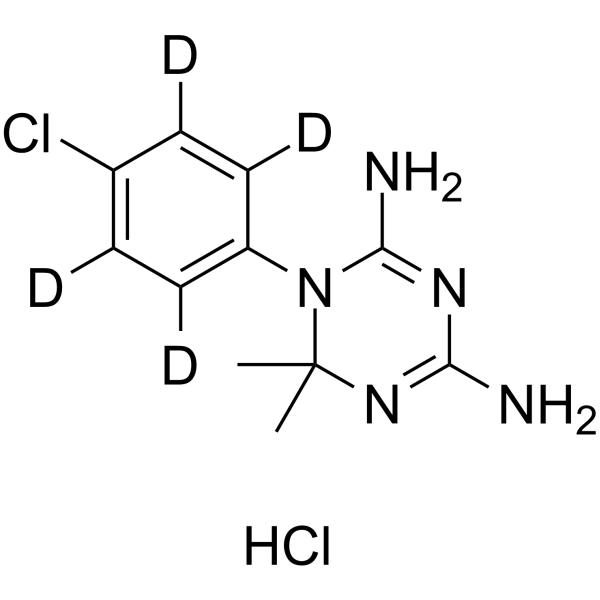
    Chlorguanide triazine-d4 hydrochloride

    Isotope-Labeled Compounds Antifolate DNA/RNA Synthesis STAT Parasite Infection Cancer
    Cycloguanil-d4 (Chlorguanide triazine-d4) hydrochloride is the deuterium labeled Cycloguanil hydrochloride (HY-12784A). Cycloguanil hydrochloride is a dihydrofolate reductase (DHFR) inhibitor with an IC50 of 10.8 μM against human DHFR. Cycloguanil hydrochloride blocks the folate metabolic pathway, thereby affecting nucleotide synthesis and interfering with DNA replication. Cycloguanil hydrochloride inhibits DHFR in Plasmodium and is thus used in malaria research. Cycloguanil hydrochloride also potently inhibits DHFR in human cancer cells and blocks the transcriptional activity of STAT3, thereby exhibiting anticancer activity .
    Cycloguanil-d4 hydrochloride
  • HY-12784AS1

    Chlorguanide triazine-d6 hydrochloride

    Isotope-Labeled Compounds Antifolate DNA/RNA Synthesis STAT Parasite Infection
    Cycloguanil-d6 (Chlorguanide triazine-d6) hydrochloride is the deuterium labeled Cycloguanil hydrochloride (HY-12784A). Cycloguanil hydrochloride is a dihydrofolate reductase (DHFR) inhibitor with an IC50 of 10.8 μM against human DHFR. Cycloguanil hydrochloride blocks the folate metabolic pathway, thereby affecting nucleotide synthesis and interfering with DNA replication. Cycloguanil hydrochloride inhibits DHFR in Plasmodium and is thus used in malaria research. Cycloguanil hydrochloride also potently inhibits DHFR in human cancer cells and blocks the transcriptional activity of STAT3, thereby exhibiting anticancer activity .
    Cycloguanil-d6 hydrochloride
  • HY-12784S1

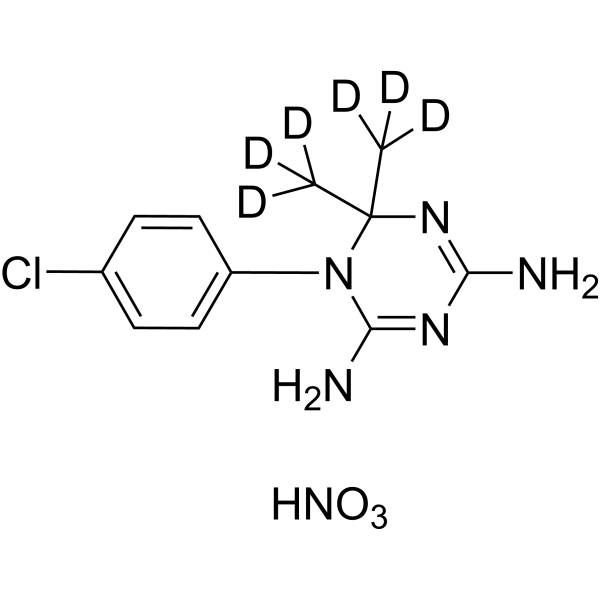
    Chlorguanide triazine-d6 nitrate

    Isotope-Labeled Compounds Antifolate DNA/RNA Synthesis STAT Parasite Infection Cancer
    Cycloguanil-d6 (Chlorguanide triazine-d6) nitrate is the deuterium labeled Cycloguanil nitrate. Cycloguanil nitrate is a dihydrofolate reductase (DHFR) inhibitor with an IC50 of 10.8 μM against human DHFR. Cycloguanil nitrate blocks the folate metabolic pathway, thereby affecting nucleotide synthesis and interfering with DNA replication. Cycloguanil nitrate inhibits DHFR in Plasmodium and is thus used in malaria research. Cycloguanil nitrate also potently inhibits DHFR in human cancer cells and blocks the transcriptional activity of STAT3, thereby exhibiting anticancer activity .
    Cycloguanil-d6 nitrate
  • HY-159899

    Bacterial Antibiotic Dihydrofolate reductase (DHFR)
    DHFR-IN-22 (Compound 8) is a DHFR (Dihydrofolate Reductase) inhibitor belonging to the class of 2,4-diaminopyrimidine compounds. DHFR-IN-22 exhibits significant inhibitory activity against purified DHFR enzyme and major species of nontuberculous mycobacteria (NTM), namely Mycobacterium avium and Mycobacterium abscessus. It shows an IC50 of 1.1 nM and MIC of 1.5 μg/mL against M. abscessus, and an IC50 of 6.3 nM and MIC of 0.1 μg/mL against M. avium. Additionally, it demonstrates an IC50 of 2100 nM against human DHFR. DHFR-IN-22 holds potential for studying novel strategies to combat NTM infections .
    DHFR-IN-22
  • HY-182684

    Bacterial Dihydrofolate reductase (DHFR) Infection
    MMV675968 is an inhibitor of Acinetobacter baumannii dihydrofolate reductase (AbDHFR) with an IC50 of 8.5 nM, and it exhibits selectivity against human DHFR. MMV675968 inhibits dihydrofolate reductase in Cryptosporidium, Plasmodium, and Escherichia coli, disrupting the thymidylate cycle and folate biosynthesis pathway. MMV675968 inhibits the growth of multiple A. baumannii strains, including clinical isolates and environmental isolates. MMV675968 is applicable to research related to A. baumannii infections .
    MMV675968
  • HY-181813

    PROTACs Ligands for E3 Ligase Dihydrofolate reductase (DHFR) Parasite Infection
    PROTAC DHFR Degrader-1 is a selective PROTAC degrader targeting Plasmodium falciparum DHFR-TS with a Ki of 2.01 nM. PROTAC DHFR Degrader-1 exhibits no inhibitory activity against human DHFR and suppresses the growth of Plasmodium falciparum. PROTAC DHFR Degrader-1 can be used for the research of Plasmodium falciparum and malaria .
    PROTAC DHFR Degrader-1
  • HY-183286

    Dihydrofolate reductase (DHFR) Parasite Infection
    DHFR-IN-27 (Compound LA4) is an orally active DHFR inhibitor and antimalarial agent, with a Ki value of 1.71 nM against TgDHFR. DHFR-IN-27 reduces the parasitic load of Toxoplasma gondii in infected mice and prolongs the survival time of infected mice. DHFR-IN-27 exerts Antiparasitic effects against Toxoplasma gondii. DHFR-IN-27 can be used in the research of toxoplasmosis .
    DHFR-IN-27
  • HY-10373R

    CI-898 (Standard)

    Reference Standards Dihydrofolate reductase (DHFR) Antibiotic Antifolate Parasite Bacterial DNA/RNA Synthesis Infection Cancer
    Trimetrexate (Standard) is the analytical standard of Trimetrexate (HY-10373). This product is intended for research and analytical applications. Trimetrexate (CI-898) is an antibiotic, also a potent and orally active dihydrofolate reductase (DHFR) inhibitor, reducing the production of DNA and RNA precursors and leading to cell death, with IC50 values of 4.74 nM and 1.35 nM for human DHFR and Toxoplasma gondii DHFR. Trimetrexate can also inhibit the growth of various cancer cells. Trimetrexate can be used for researching Pneumocystis carinii pneumonia (PCP) and cancer .
    Trimetrexate (Standard)

Inquiry Online

Your information is safe with us. * Required Fields.

Salutation


Country or Region *

Applicant Name *


Organization Name *

Department *


Email Address *


Product Name *

Cat. No.


Requested quantity *

Phone Number *


Remarks

Inquiry Online

Inquiry Information

Product Name:
Cat. No.:
Quantity:
MCE Japan Authorized Agent:

