

1. Search Result
Search Result
Pathways Recommended: Stem Cell/Wnt Cell Cycle/DNA Damage
Results for "

human hematopoietic stem cells

" in MedChemExpress (MCE) Product Catalog:

30

Inhibitors & Agonists

2

Peptides

3

Inhibitory Antibodies

3

Natural
Products

2

Oligonucleotides

Cat. No. Product Name Target Research Areas Chemical Structure
  • HY-P1122
    Cyclosporin H
    3 Publications Verification

    Formyl Peptide Receptor (FPR) Infection Inflammation/Immunology
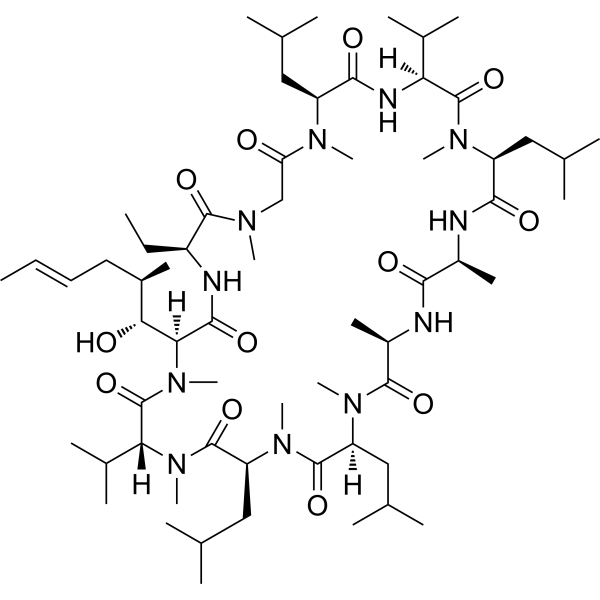
    Cyclosporin H is a selective and potent inhibitor of FPR-1 (formyl peptide receptor 1). Cyclosporin H, a viral transduction enhancer, increases lentiviral transduction up to 10-fold in human cord blood-derived hematopoietic stem and progenitor cells (HSPCs). Cyclosporin H displays an additive effect when combined with Rapamycin (HY-10219) or Prostaglandin E2 (HY-101952). Cyclosporin H lacks immunosuppressant activity of Cyclosporin A.
    Cyclosporin H
  • HY-P99376
    Narsoplimab
    1 Publications Verification

    OMS 721; Anti-MASP2 Reference Antibody (narsoplimab)

    SARS-CoV Infection
    Narsoplimab (OMS 721) is a high-affinity fully human immunoglobulin gamma 4 (IgG4) monoclonal antibody that binds MASP-2 and blocks lectin pathway activation. Narsoplimab can be used in research of hematopoietic stem-cell transplantation and SARS-CoV-2 .
    Narsoplimab
  • HY-B1165

    p38 MAPK Checkpoint Kinase (Chk) Histamine Receptor 5-HT Receptor CDK PARP Apoptosis Cancer
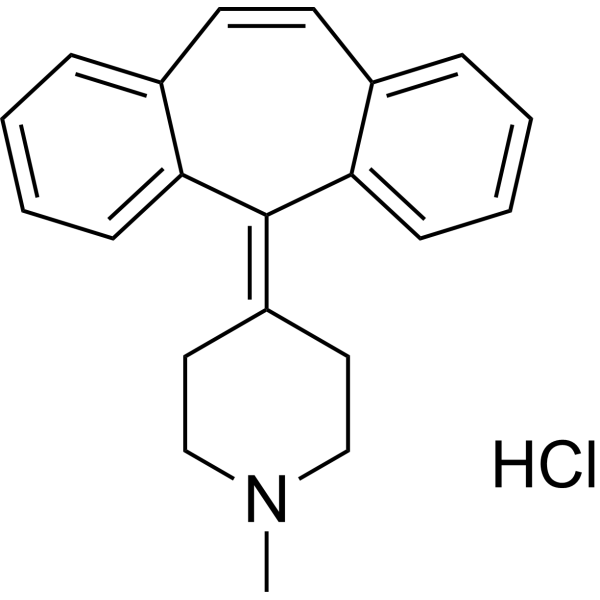
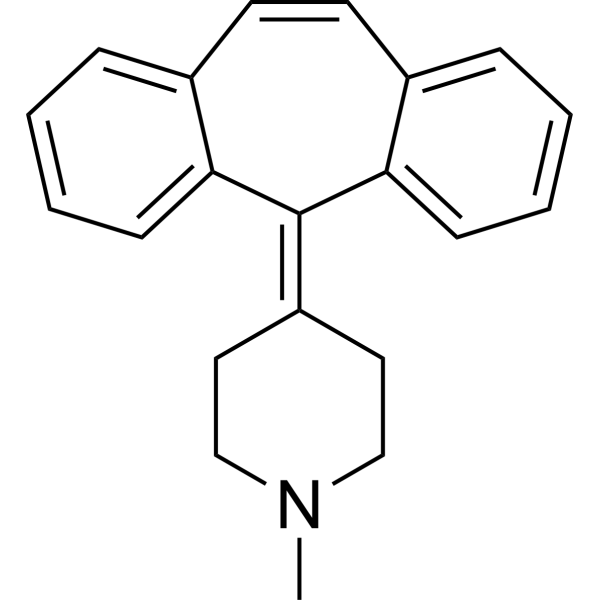
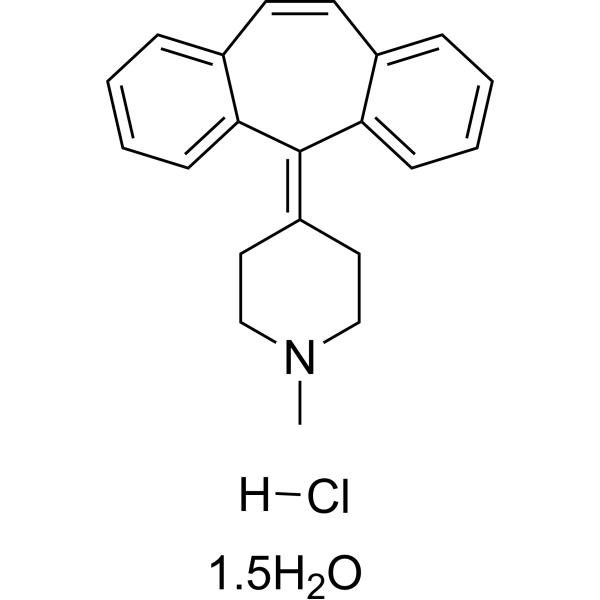
    Cyproheptadine hydrochloride sesquihydrate acts as a p38 MAP kinase activator, CHK2 activator, histamine H1 receptor inhibitor and serotonin receptor inhibitor. Cyproheptadine hydrochloride sesquihydrate mediates cell cycle arrest via G1 phase arrest, G1/S transition arrest, G0/G1 phase arrest, reduced expression of cyclins D1/D2/D3, upregulated expression of HBP1, p16, p21, p27, and decreased phosphorylation of retinoblastoma protein. Cyproheptadine hydrochloride sesquihydrate induces Apoptosis by increasing PARP and cleaved PARP, as well as activating the mitochondrial caspase pathway. Cyproheptadine hydrochloride sesquihydrate inhibits tumor growth with extremely low toxicity to normal cells. Cyproheptadine hydrochloride sesquihydrate can be used in research related to hepatocellular carcinoma, multiple myeloma and acute myeloid leukemia .
    Cyproheptadine (hydrochloride sesquihydrate)
  • HY-P99199

    NI-0401

    CD3 Inflammation/Immunology
    Foralumab (NI-0401) is a potent, orally active human monoclonal antibody targeting the CD3. Foralumab modulates immune responses by human cells in NSG mice that were reconstituted with human hematopoietic stem cells .
    Foralumab
  • HY-12854

    GRN163L

    Telomerase Apoptosis Cardiovascular Disease Cancer
    Imetelstat (GRN163L) is a 13-mer oligonucleotide and competitive Telomerase inhibitor. Imetelstat binds with high affinity to the template region of the RNA component of human telomerase. Imetelstat induces Apoptosis. Imetelstat is capable of selectively eliminating myelofibrosis hematopoietic stem cells. Imetelstat leads to the loss of a cancer cell's ability to maintain telomere length, resulting in the inhibition of cell proliferation .
    Imetelstat
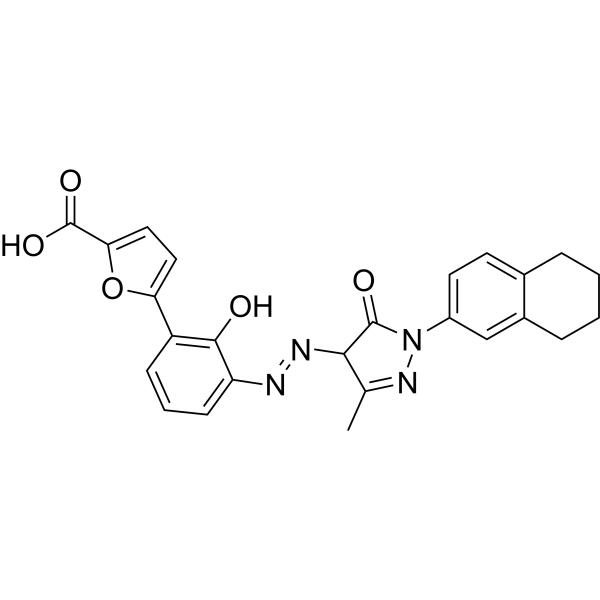
  • HY-122620

    Hetrombopag (tautomerism); SHR-8735 (tautomerism)

    Thrombopoietin Receptor STAT PI3K ERK Apoptosis CDK Cardiovascular Disease Inflammation/Immunology
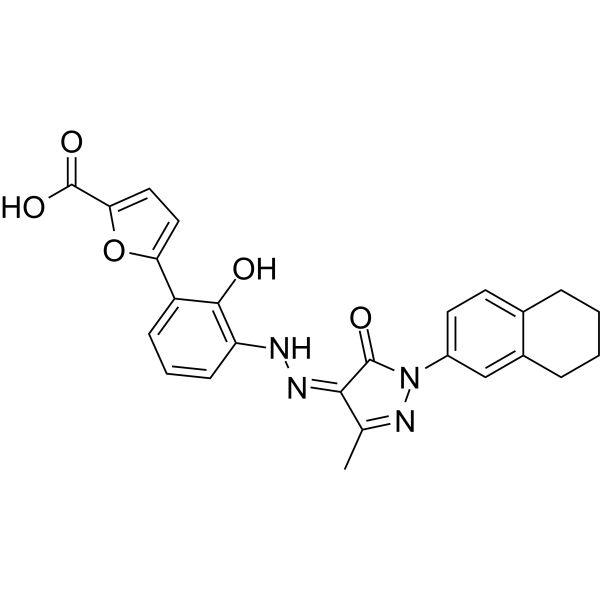
    Rafutrombopag (tautomerism) (Hetrombopag) is an orally active nonpeptide thrombopoietin receptor (TPOR/MPL) agonist. Rafutrombopag can chelate iron and alleviate iron overload while promoting haematopoiesis. Rafutrombopag specifically stimulates proliferation and differentiation of human TPOR‐expressing cells, including 32D‐ MPL and human hematopoietic stem cells through stimulation of STAT, PI3K and ERK signalling pathways. Rafutrombopag effectively up-regulates G1-phase-related proteins, including p-RB, Cyclin D1 and CDK4/6, normalizes progression of the cell cycle, and prevents apoptosis by modulating BCL-XL/BAK expression in 32D-MPL cells. Rafutrombopag protects cardiomyocyte survival from oxidative stress damage as an enhancer of stem cells. Rafutrombopag can be used for the study of immune thrombocytopenia and oxidative stress-related cardiovascular disease .
    Rafutrombopag (tautomerism)
  • HY-120427
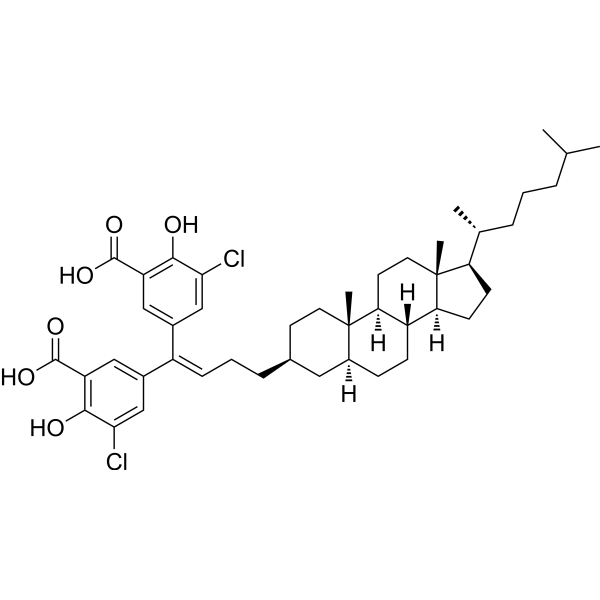
    Cosalane
    1 Publications Verification

    NSC 658586

    CCR CXCR HIV HSV Infection Inflammation/Immunology
    Cosalane (NSC 658586) is a CCR7 (IC50 = 2.43 μM) and CXCR2 antagonist (IC50 = 0.66 μM). Cosalane is an inhibitor of HIV replication with a wide range of activity against HIV-1 isolates, HIV-2, Rauscher murine leukemia virus, HSV-1, HSV-2 and human cytomegalovirus. Cosalane inhibits both attachment of gp120 to CD4. Cosalane inhibits human and murine CCR7 in response to both CCL19 and CCL21 agonists. Cosalane can be studied in research for HIV or attenuating acute graft-versus-host disease (aGVHD) in allogeneic hematopoietic stem cell transplantation (HSCT) .
    Cosalane
  • HY-N8572
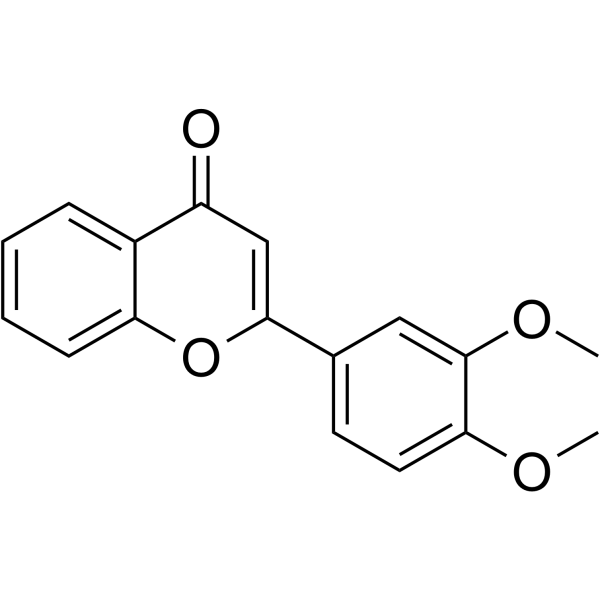
    3',4'-Dimethoxyflavone
    1 Publications Verification

    PARP Reactive Oxygen Species (ROS) Aryl Hydrocarbon Receptor Cardiovascular Disease Neurological Disease Inflammation/Immunology Cancer
    3',4'-Dimethoxyflavone is a lipophilic flavone, can be isolated from the leaves of Primula veris. 3',4'-Dimethoxyflavone can reduce the synthesis and accumulation of PARP and protect cortical neurones against cell death induced by Parthanatos. 3',4'-Dimethoxyflavone is also an aryl hydrocarbon receptor antagonist in human breast cancer cells. 3',4'-Dimethoxyflavone can promote the proliferation of human hematopoietic stem cells. 3',4'-Dimethoxyflavone has various biological activities, including antioxidant, anti-cancer, anti-inflammatory, anti-atherogenic, hypolipidaemic, and neuroprotective or neurotrophic effects .
    3',4'-Dimethoxyflavone
  • HY-P991381

    PPMX-T003

    Transferrin Receptor Reactive Oxygen Species (ROS) Ferroptosis Cancer
    JST‑TfR09 (PPMX‑T003) is a human monoclonal antibody (mAb) targeting transferrin receptor 1 (TfR1/CD71). JST‑TfR09 blocks the binding of transferrin to TfR1, inhibits TfR1 internalization, and suppresses cellular iron uptake. JST‑TfR09 triggers ferritin degradation via activating the autolysosomal system, promotes ROS production and lipid peroxidation, and ultimately induces ferroptosis. JST‑TfR09 exhibits cytotoxicity toward human erythroblasts differentiated from hematopoietic stem cells. JST-TfR09 can be used in leukemia research. Recommended isotype control: Human IgG1 lambda, Isotype Control (HY-P99992) .
    JST-TfR09
  • HY-N3540

    Others Inflammation/Immunology
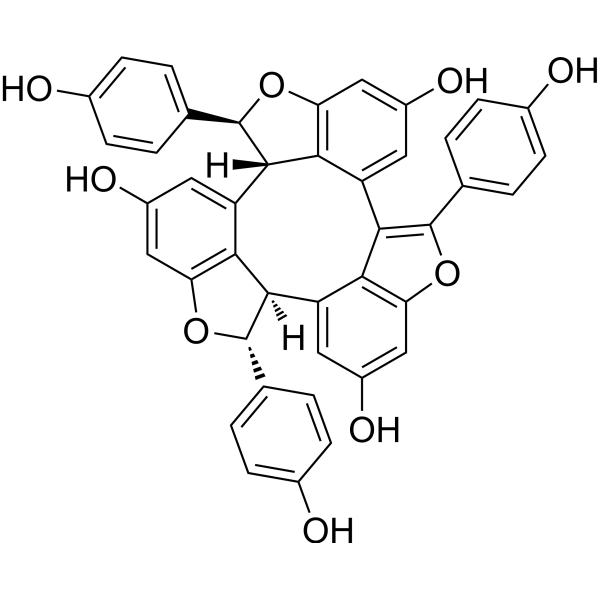
    Caraphenol A is a resveratrol trimer and is able to transiently reduce interferon-induced transmembrane (IFITM) protein expression. Caraphenol A safely enhances lentiviral vector gene delivery to hematopoietic stem and progenitor cells . Caraphenol A also inhibits human cystathionine β-synthase (hCBS) and human cystathionine γ- lyase (hCSE) with IC50s of 5.9 μM and 12.1 μM, respectively .
    Caraphenol A
  • HY-145589

    Hetrombopag; SHR-8735

    Thrombopoietin Receptor STAT PI3K ERK Apoptosis CDK Cardiovascular Disease Inflammation/Immunology Cancer
    Rafutrombopag (Hetrombopag) is an orally active nonpeptide thrombopoietin receptor (TPOR/MPL) agonist. Rafutrombopag can chelate iron and alleviate iron overload while promoting haematopoiesis. Rafutrombopag specifically stimulates proliferation and differentiation of human TPOR-expressing cells, including 32D-MPL and human hematopoietic stem cells through stimulation of STAT, PI3K and ERK signalling pathways. Rafutrombopag effectively up-regulates G1-phase-related proteins, including p-RB, Cyclin D1 and CDK4/6, normalizes progression of the cell cycle, and prevents apoptosis by modulating BCL-XL/BAK expression in 32D-MPL cells. Rafutrombopag protects cardiomyocyte survival from oxidative stress damage as an enhancer of stem cells. Rafutrombopag can be used for the study of immune thrombocytopenia and oxidative stress-related cardiovascular disease .
    Rafutrombopag
  • HY-100791
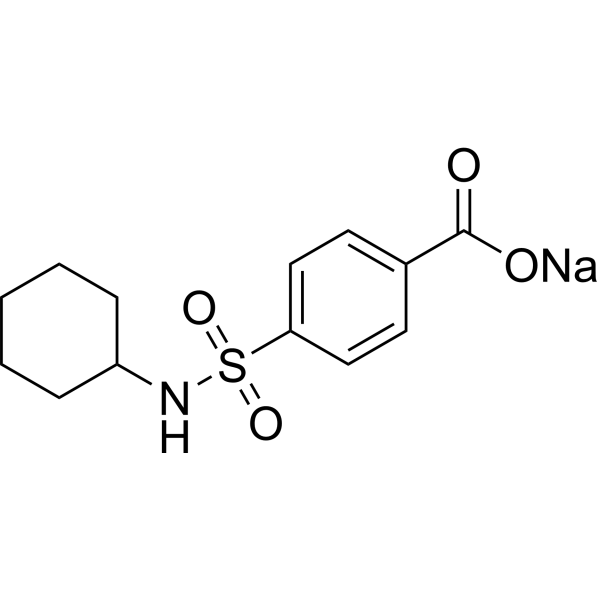
    NSC23005 sodium
    1 Publications Verification

    CDK Cancer
    NSC23005 sodium is a novel and effective p18 inhibitor (ED50=5.21 nM) in promoting Hematopoietic stem cells (HSCs) expansion in both murine and human models.
    NSC23005 sodium
  • HY-N8572R

    Reference Standards PARP Reactive Oxygen Species (ROS) Aryl Hydrocarbon Receptor Cardiovascular Disease Neurological Disease Inflammation/Immunology Cancer
    3',4'-Dimethoxyflavone is a lipophilic flavone, can be isolated from the leaves of Primula veris. 3',4'-Dimethoxyflavone can reduce the synthesis and accumulation of PARP and protect cortical neurones against cell death induced by Parthanatos. 3',4'-Dimethoxyflavone is also an aryl hydrocarbon receptor antagonist in human breast cancer cells. 3',4'-Dimethoxyflavone can promote the proliferation of human hematopoietic stem cells. 3',4'-Dimethoxyflavone has various biological activities, including antioxidant, anti-cancer, anti-inflammatory, anti-atherogenic, hypolipidaemic, and neuroprotective or neurotrophic effects .
    3',4'-Dimethoxyflavone (Standard)
  • HY-P10999

    P55

    Drug Derivative Biochemical Assay Reagents Others
    INF7TAT-P55 (P55) is a polypeptide derived from INF7TAT (HY-P11000) with G1K, G20L and Y22N mutations. INF7TAT-P55 serves as a delivery carrier to deliver preassembled CRISPR ribonucleases into cells for genome editing .
    INF7TAT-P55
  • HY-132869

    HOXA Others
    MEIS-IN-1 is a potent myeloid ecotropic viral integration site (MEIS) inhibitor to induce murine and human hematopoietic stem-cell expansion.
    MEIS-IN-1
  • HY-174644

    mRNA Inflammation/Immunology
    Human IL11 mRNA encodes the human interleukin 11 (IL11) protein, a member of the gp130 family of cytokines. IL11 is shown to stimulate the T-cell-dependent development of immunoglobulin-producing B cells. It is also found to support the proliferation of hematopoietic stem cells and megakaryocyte progenitor cells.
    Human IL11 mRNA
  • HY-E70687

    CDK Cancer
    CDK6 is a cell-cycle kinases that regulate exit from the G1 phase of the cell cycle. CDK6 is directly involved in transcription in tumor cells and in hematopoietic stem cells. CDK6/CycD2 Recombinant Human Active Protein Kinase is an ortholog of CDK6 .
    CDK6/CycD2 Recombinant Human Active Protein Kinase
  • HY-E70686

    CDK Cancer
    CDK6 is a cell-cycle kinases that regulate exit from the G1 phase of the cell cycle. CDK6 is directly involved in transcription in tumor cells and in hematopoietic stem cells. CDK6/CycD1 Recombinant Human Active Protein Kinase is an ortholog of CDK6 .
    CDK6/CycD1 Recombinant Human Active Protein Kinase
  • HY-E70688

    CDK Cancer
    CDK6 is a cell-cycle kinases that regulate exit from the G1 phase of the cell cycle. CDK6 is directly involved in transcription in tumor cells and in hematopoietic stem cells. CDK6/CycD3 Recombinant Human Active Protein Kinase is an ortholog of CDK6 .
    CDK6/CycD3 Recombinant Human Active Protein Kinase
  • HY-E70742

    c-Kit Cancer
    KIT (CD117) is an important cell surface marker used to identify certain types of hematopoietic(blood) progenitors in the bone marrow. KIT is a cytokine receptor expressed on the surface of hematopoietic stem cells as well as other cell types. Altered forms of this receptor may be associated with some types of cancer. KIT V654A is a mutant of KIT. KIT V654A Recombinant Human Active Protein Kinase is a recombinant KIT V654A protein that can be used to study KIT V654A-related functions .
    KIT V654A Recombinant Human Active Protein Kinase
  • HY-E70737

    c-Kit Cancer
    KIT (CD117) is an important cell surface marker used to identify certain types of hematopoietic(blood) progenitors in the bone marrow. KIT is a cytokine receptor expressed on the surface of hematopoietic stem cells as well as other cell types. Altered forms of this receptor may be associated with some types of cancer. KIT T670I is a mutant of KIT. KIT T670I Recombinant Human Active Protein Kinase is a recombinant KIT T670I protein that can be used to study KIT T670I-related functions .
    KIT T670I Recombinant Human Active Protein Kinase
  • HY-E70738

    c-Kit Cancer
    KIT (CD117) is an important cell surface marker used to identify certain types of hematopoietic(blood) progenitors in the bone marrow. KIT is a cytokine receptor expressed on the surface of hematopoietic stem cells as well as other cell types. Altered forms of this receptor may be associated with some types of cancer. KIT V559D is a mutant of KIT. KIT V559D Recombinant Human Active Protein Kinase is a recombinant KIT V559D protein that can be used to study KIT V559D-related functions .
    KIT V559D Recombinant Human Active Protein Kinase
  • HY-E70741

    c-Kit Cancer
    KIT (CD117) is an important cell surface marker used to identify certain types of hematopoietic(blood) progenitors in the bone marrow. KIT is a cytokine receptor expressed on the surface of hematopoietic stem cells as well as other cell types. Altered forms of this receptor may be associated with some types of cancer. KIT V560G is a mutant of KIT. KIT V560G Recombinant Human Active Protein Kinase is a recombinant KIT V560G protein that can be used to study KIT V560G-related functions .
    KIT V560G Recombinant Human Active Protein Kinase
  • HY-E70736

    c-Kit Cancer
    KIT (CD117) is an important cell surface marker used to identify certain types of hematopoietic(blood) progenitors in the bone marrow. KIT is a cytokine receptor expressed on the surface of hematopoietic stem cells as well as other cell types. Altered forms of this receptor may be associated with some types of cancer. KIT D816V is a mutant of KIT. KIT D816V Recombinant Human Active Protein Kinase is a recombinant KIT D816V protein that can be used to study KIT D816V-related functions .
    KIT D816V Recombinant Human Active Protein Kinase
  • HY-E70735

    c-Kit Cancer
    KIT (CD117) is an important cell surface marker used to identify certain types of hematopoietic(blood) progenitors in the bone marrow. KIT is a cytokine receptor expressed on the surface of hematopoietic stem cells as well as other cell types. Altered forms of this receptor may be associated with some types of cancer. KIT D816H is a mutant of KIT. KIT D816H Recombinant Human Active Protein Kinase is a recombinant KIT D816H protein that can be used to study KIT D816H-related functions .
    KIT D816H Recombinant Human Active Protein Kinase
  • HY-E70734

    c-Kit Cancer
    KIT (CD117) is an important cell surface marker used to identify certain types of hematopoietic(blood) progenitors in the bone marrow. KIT is a cytokine receptor expressed on the surface of hematopoietic stem cells as well as other cell types. Altered forms of this receptor may be associated with some types of cancer. KIT A829P is a mutant of KIT. KIT A829P Recombinant Human Active Protein Kinase is a recombinant KIT A829P protein that can be used to study KIT A829P-related functions .
    KIT A829P Recombinant Human Active Protein Kinase
  • HY-E70740

    c-Kit Cancer
    KIT (CD117) is an important cell surface marker used to identify certain types of hematopoietic(blood) progenitors in the bone marrow. KIT is a cytokine receptor expressed on the surface of hematopoietic stem cells as well as other cell types. Altered forms of this receptor may be associated with some types of cancer. KIT V559D/V654A is a mutant of KIT. KIT V559D/V654A Recombinant Human Active Protein Kinase is a recombinant KIT V559D/V654A protein that can be used to study KIT V559D/V654A-related functions .
    KIT V559D/V654A Recombinant Human Active Protein Kinase
  • HY-E70739

    c-Kit Cancer
    KIT (CD117) is an important cell surface marker used to identify certain types of hematopoietic(blood) progenitors in the bone marrow. KIT is a cytokine receptor expressed on the surface of hematopoietic stem cells as well as other cell types. Altered forms of this receptor may be associated with some types of cancer. KIT V559D/T670I is a mutant of KIT. KIT V559D/T670I Recombinant Human Active Protein Kinase is a recombinant KIT V559D/T670I protein that can be used to study KIT V559D/T670I-related functions .
    KIT V559D/T670I Recombinant Human Active Protein Kinase
  • HY-100791R

    Others Reference Standards Cancer
    NSC23005 (sodium) (Standard) is the analytical standard of NSC23005 (sodium) (HY-100791). This product is intended for research and analytical applications. NSC23005 sodium is a novel and effective p18 inhibitor (ED50=5.21 nM) in promoting Hematopoietic stem cells (HSCs) expansion in both murine and human models.
    NSC23005 sodium (Standard)
  • HY-182501

    Biochemical Assay Reagents Cardiovascular Disease
    HSC mobilizer-1 (Compound 3) is an in vitro expansion activator of HSC. HSC mobilizer-1 promotes the in vitro expansion of hematopoietic stem cells .
    HSC mobilizer-1

Inquiry Online

Your information is safe with us. * Required Fields.

Salutation


Country or Region *

Applicant Name *


Organization Name *

Department *


Email Address *


Product Name *

Cat. No.


Requested quantity *

Phone Number *


Remarks

Inquiry Online

Inquiry Information

Product Name:
Cat. No.:
Quantity:
MCE Japan Authorized Agent:

