53 Results for "

item/HY-B0356

" in MedChemExpress (MCE) Product Catalog:
Products (53)

53 Results for "item/HY-B0356" in MCE Product Catalog:

  • Targets Recommended:
61
61 Publications Verification
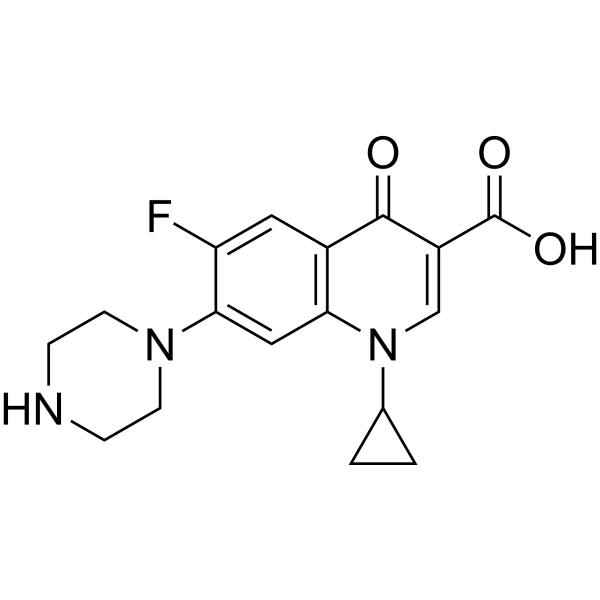
Cat. No.: HY-B0356
CAS No.: 85721-33-1
Synonyms: Bay-09867
Ciprofloxacin (Bay-09867) is a potent, orally active topoisomerase IV inhibitor. Ciprofloxacin induces mitochondrial DNA and nuclear DNA damage and lead to mitochondrial dysfunction, ROS production. Ciprofloxacin has anti-proliferative activity and induces apoptosis. Ciprofloxacin is a fluoroquinolone antibiotic, exhibiting potent antibacterial activity .
loading...
    loading...
60
60 Cited Publications
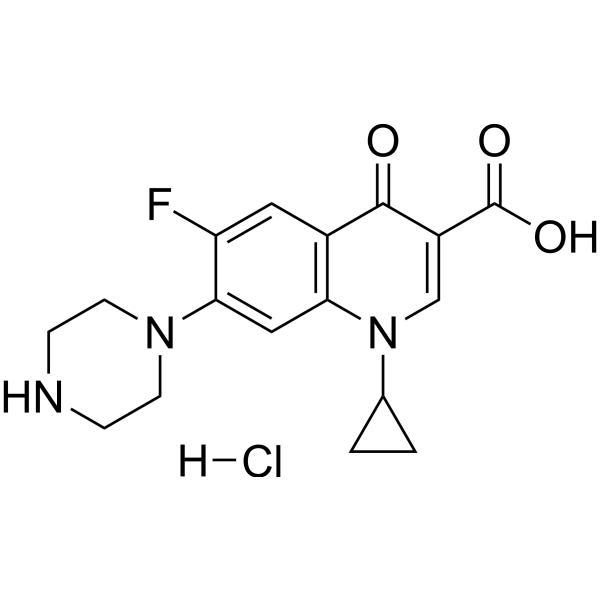
Cat. No.: HY-B0356A
CAS No.: 93107-08-5
Synonyms: Bay-09867 monoHYdrochloride
Ciprofloxacin (Bay-09867) monohydrochloride is an orally active, blood-brain barrier permeable fluoroquinolone antibacterial agent. Ciprofloxacin monohydrochloride exerts bactericidal effects primarily by inhibiting topoisomerase II and IV. Ciprofloxacin monohydrochloride inhibits the proliferation of human dental pulp stem cells and chondrocytes from young rats, and also activates the Akt signaling pathway and upregulates markers such as β-catenin and Nanog to maintain the morphological characteristics of stem cells. Ciprofloxacin monohydrochloride induces significant neurotoxicity and tissue damage, including reducing serotonin and glutathione levels in the brain, inducing oxidative stress and depression-like behaviors, and causing articular cartilage damage. Ciprofloxacin monohydrochloride can be applied to research related to infections of necrotic young permanent teeth and neurotoxicity .
loading...
    loading...
60
60 Cited Publications
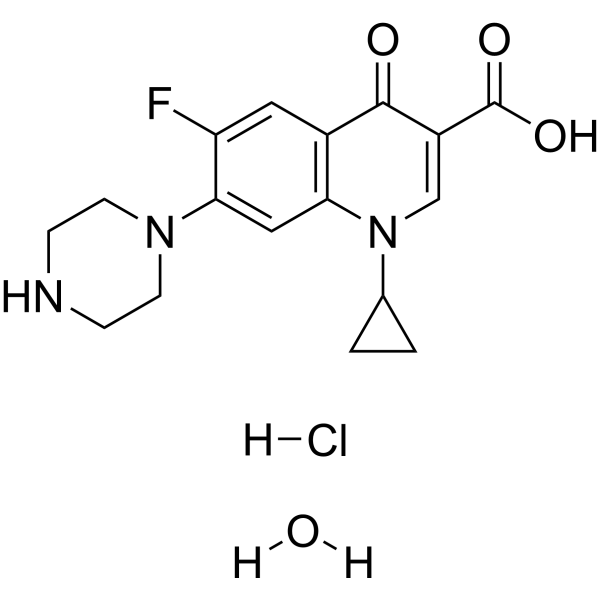
Cat. No.: HY-B0356B
CAS No.: 86393-32-0
Synonyms: Bay-09867 HYdrochloride monoHYdrate
Ciprofloxacin (Bay-09867) hydrochloride monohydrate is an orally active, blood-brain barrier permeable fluoroquinolone antibacterial agent. Ciprofloxacin hydrochloride monohydrate exerts bactericidal effects primarily by inhibiting topoisomerase II and IV. Ciprofloxacin hydrochloride monohydrate inhibits the proliferation of human dental pulp stem cells and chondrocytes from young rats, and also activates the Akt signaling pathway and upregulates markers such as β-catenin and Nanog to maintain the morphological characteristics of stem cells. Ciprofloxacin hydrochloride monohydrate induces significant neurotoxicity and tissue damage, including reducing serotonin and glutathione levels in the brain, inducing oxidative stress and depression-like behaviors, and causing articular cartilage damage. Ciprofloxacin hydrochloride monohydrate can be applied to research related to infections of necrotic young permanent teeth and neurotoxicity .
loading...
    loading...
1
1 Cited Publications
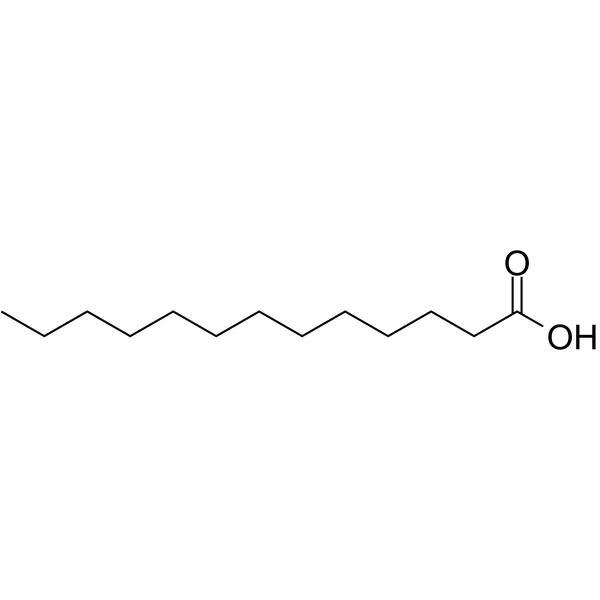
Cat. No.: HY-Y1718
CAS No.: 638-53-9
Synonyms: N-Tridecanoic acid
Tridecanoic acid (N-Tridecanoic acid) is a medium-chain saturated fatty acid and inhibitor with no antibacterial activity against enterohemorrhagic E. coli (EHEC). When used in combination with Ciprofloxacin (HY-B0356) or Ampicillin (HY-B0522), Tridecanoic acid suppresses persister formation in exponentially growing E. coli and EHEC, but exerts no inhibitory effect on persister formation induced by Kanamycin (HY-16566) or in stationary-phase cells. Tridecanoic acid inhibits biofilm formation in EHEC. It can be used in the research of bacterial infections .
loading...
    loading...
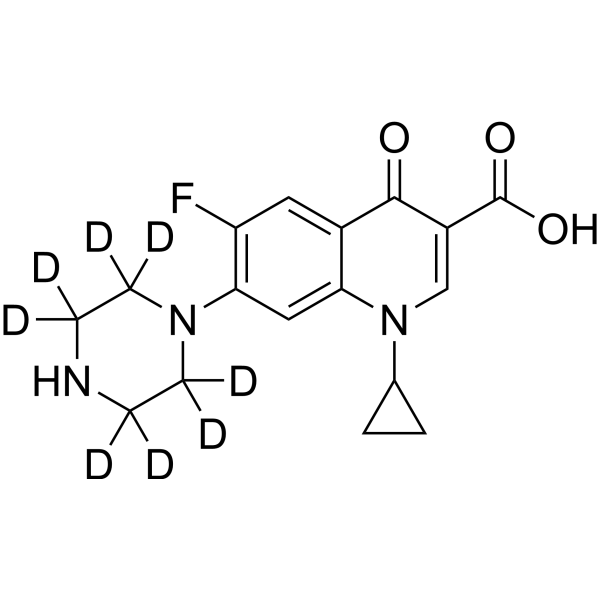
Cat. No.: HY-B0356S1
CAS No.: 1130050-35-9
Synonyms: Bay-09867-d8
Ciprofloxacin-d8 is the deuterium labeled Ciprofloxacin. Ciprofloxacin (Bay-09867) is a fluoroquinolone antibiotic, exhibiting potent antibacterial activity.
loading...
    loading...
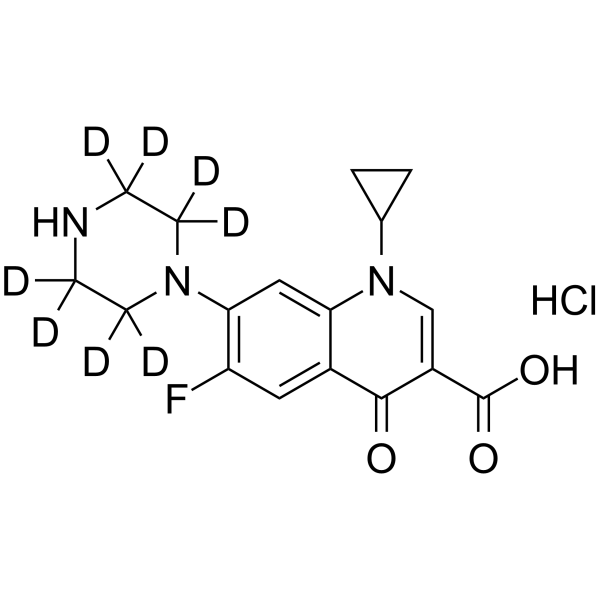
Cat. No.: HY-B0356S
CAS No.: 1216659-54-9
Synonyms: Bay-09867-d8 HYdrochloride
Ciprofloxacin-d8 (hydrochloride) is the deuterium labeled Ciprofloxacin. Ciprofloxacin (Bay-09867) hydrochloride is a fluoroquinolone antibiotic, exhibiting potent antibacterial activity.
loading...
    loading...
Cat. No.: HY-B0356BR
CAS No.: 86393-32-0
Synonyms: Bay-09867 HYdrochloride monoHYdrate (Standard)
Ciprofloxacin (hydrochloride monohydrate) (Standard) is the analytical standard of Ciprofloxacin (hydrochloride monohydrate). This product is intended for research and analytical applications. Ciprofloxacin (Bay-09867) hydrochloride monohydrate is a potent, orally active topoisomerase IV inhibitor. Ciprofloxacin hydrochloride monohydrate induces mitochondrial DNA and nuclear DNA damage and lead to mitochondrial dysfunction, ROS production. Ciprofloxacin hydrochloride monohydrate has anti-proliferative activity and induces apoptosis. Ciprofloxacin hydrochloride monohydrate is a fluoroquinolone antibiotic, exhibiting potent antibacterial activity .
loading...
    loading...
Cat. No.: HY-B0356R
CAS No.: 85721-33-1
Synonyms: Bay-09867 (Standard)
Ciprofloxacin (Standard) is the analytical standard of Ciprofloxacin. This product is intended for research and analytical applications. Ciprofloxacin (Bay-09867) is an orally active, blood-brain barrier permeable fluoroquinolone antibacterial agent. Ciprofloxacin exerts bactericidal effects primarily by inhibiting topoisomerase II and IV. Ciprofloxacin inhibits the proliferation of human dental pulp stem cells and chondrocytes from young rats, and also activates the Akt signaling pathway and upregulates markers such as β-catenin and Nanog to maintain the morphological characteristics of stem cells. Ciprofloxacin induces significant neurotoxicity and tissue damage, including reducing serotonin and glutathione levels in the brain, inducing oxidative stress and depression-like behaviors, and causing articular cartilage damage. Ciprofloxacin can be applied to research related to infections of necrotic young permanent teeth and neurotoxicity .
loading...
    loading...
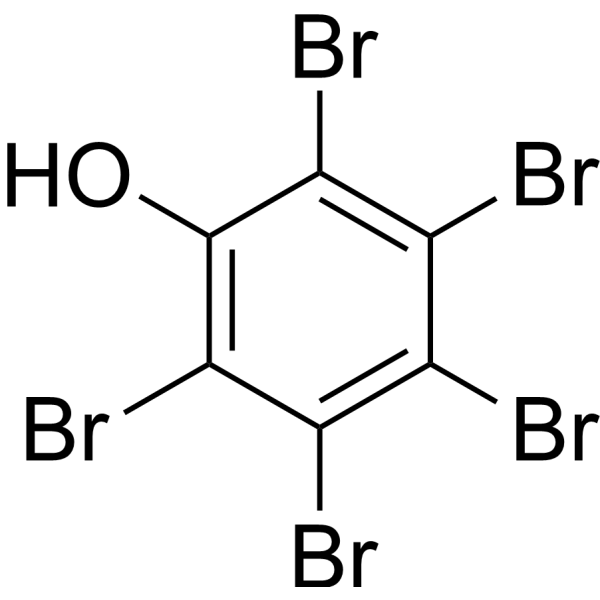
Cat. No.: HY-W105318
CAS No.: 608-71-9
Synonyms: PBP
Target:  

TGF-beta/Smad Apoptosis

Research Areas:  

Cancer

Pentabromophenol (PBP) is a brominated flame retardant (BFR) widely used in various consumer products to reduce the flammability of materials used in different utility items. Pentabromophenol can accelerate the degradation of transforming growth factor-β (TGF-β) receptors by promoting clathrin-mediated endocytosis, thereby inhibiting the TGF-β signaling pathway. Additionally, Pentabromophenol can also induce apoptosis in peripheral blood mononuclear cells (PBMCs) .
loading...
    loading...
Cat. No.: HY-B0356AS1
CAS No.: 2483830-12-0
Synonyms: Bay-09867-13C3,15N monoHYdrochloride
Ciprofloxacin- 13C3, 15N (Bay-09867- 13C3, 15N) monohydrochloride is 13C- and 15N-labeled Ciprofloxacin (monohydrochloride) (HY-B0356A) .
loading...
    loading...
Cat. No.: HY-177716
CAS No.: 2418537-98-9
Research Areas:  

Infection

Ciprofloxacin prodrug-1 (Compound 35) is an activated prodrug of β-lactase. Ciprofloxacin prodrug-1 exhibits good antibacterial activity against bacteria containing β-lactase (MIC = 63 nM). After being hydrolyzed by β-lactase, Ciprofloxacin prodrug-1 can release Ciprofloxacin (HY-B0356), thereby inhibiting the activity of DNA gyrase. Ciprofloxacin prodrug-1 can be used to study infections caused by enzyme-producing drug-resistant bacteria (such as uropathogenic Escherichia coli) .
loading...
    loading...
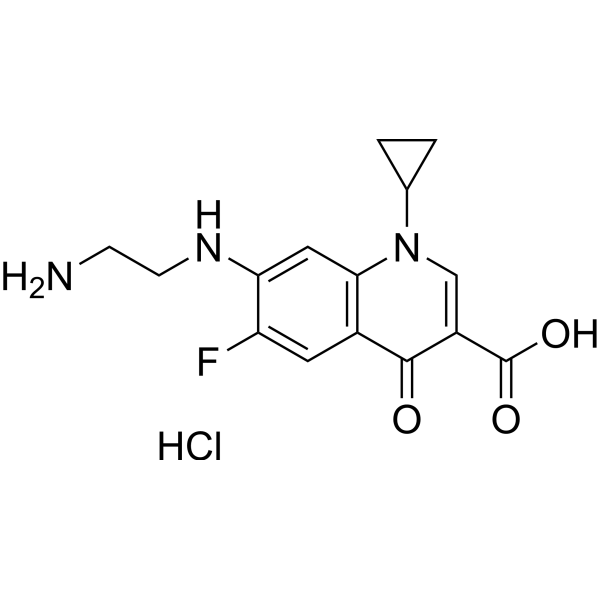
Cat. No.: HY-122139
CAS No.: 528851-31-2
Target:  

Bacterial

Research Areas:  

Infection

Desethylene Ciprofloxacin hydrochloride is a major metabolite of Ciprofloxacin (HY-B0356). Ciprofloxacin is an orally active topoisomerase IV inhibitor. Desethylene Ciprofloxacin hydrochloride has antibacterial activity .
loading...
    loading...
Cat. No.: HY-145525
CAS No.: 173686-75-4
Synonyms: CAR 18:2; C18:2 Carnitine; L-Carnitine linoleoyl ester
Target:  

Endogenous Metabolite

Research Areas:  

Others

Linoleoyl-L-carnitine is a naturally occurring long-chain acylcarnitine. Hepatic levels of linoleoyl-L-carnitine are increased following high-dose (200 mg/kg) administration of Isoniazid (Item No. 20378) in mice.
loading...
    loading...
Cat. No.: HY-137555
CAS No.: 79250-60-5
Purity:  ≥99.0%
Synonyms: 11-deHYdro-2,3-dinor TXB2
Target:  

Endogenous Metabolite

Research Areas:  

Metabolic Disease

11-dehydro-2,3-dinor Thromboxane B2 (11-dehydro-2,3-dinor TXB2) is a metabolite of the TXA2 inactive metabolite TXB2 (Item No. 19030). It is formed from TXB2 by cytosolic aldehyde dehydrogenase (ALDH) and β-oxidation. Levels of 11-dehydro-2,3-dinor TXB2 are increased 5.2-fold in a surgery-induced rat model of tendon overuse.
loading...
    loading...
Cat. No.: HY-W716339
CAS No.: 19902-08-0
Synonyms: d-β-Pinene
(+)-β-Pinene (d-β-Pinene) acts as an Antifungal and Antibacterial agent. (+)-β-Pinene inhibits Phospholipase. (+)-β-Pinene interferes with fungal cell wall function, reduces Candida biofilm adhesion, inhibits Candida albicans biofilm formation, and suppresses the growth of various Candida species. Combined with Ciprofloxacin (HY-B0356), (+)-β-Pinene exerts synergistic antibacterial activity against Methicillin (HY-121544)-resistant Staphylococcus aureus. (+)-β-Pinene can be used in research related to candidiasis and Staphylococcus aureus infections .
loading...
    loading...
Cat. No.: HY-W114419
CAS No.: 79-97-0
Bisphenol C is an estrogen receptor-α (ERα) agonist and an ERβ antagonist, with IC50 values of 2.65 nM for ERα and 1.94 nM for ERβ. Bisphenol C is a material of manufacturing polyester polymers like polycarbonate, is widely used in daily items like water bottles, food packaging, textile and so on .
loading...
    loading...
Cat. No.: HY-B0356AR
CAS No.: 93107-08-5
Synonyms: Bay-09867 monoHYdrochloride (Standard)
Ciprofloxacin monohydrochloride (Standard) is the analytical standard of Ciprofloxacin (monohydrochloride). This product is intended for research and analytical applications. Ciprofloxacin (Bay-09867) monohydrochloride is an orally active, blood-brain barrier permeable fluoroquinolone antibacterial agent. Ciprofloxacin monohydrochloride exerts bactericidal effects primarily by inhibiting topoisomerase II and IV. Ciprofloxacin monohydrochloride inhibits the proliferation of human dental pulp stem cells and chondrocytes from young rats, and also activates the Akt signaling pathway and upregulates markers such as β-catenin and Nanog to maintain the morphological characteristics of stem cells. Ciprofloxacin monohydrochloride induces significant neurotoxicity and tissue damage, including reducing serotonin and glutathione levels in the brain, inducing oxidative stress and depression-like behaviors, and causing articular cartilage damage. Ciprofloxacin monohydrochloride can be applied to research related to infections of necrotic young permanent teeth and neurotoxicity .
loading...
    loading...
Cat. No.: HY-B0356AS
Synonyms: Bay-09867-d8 HYdrochloride HYdrate
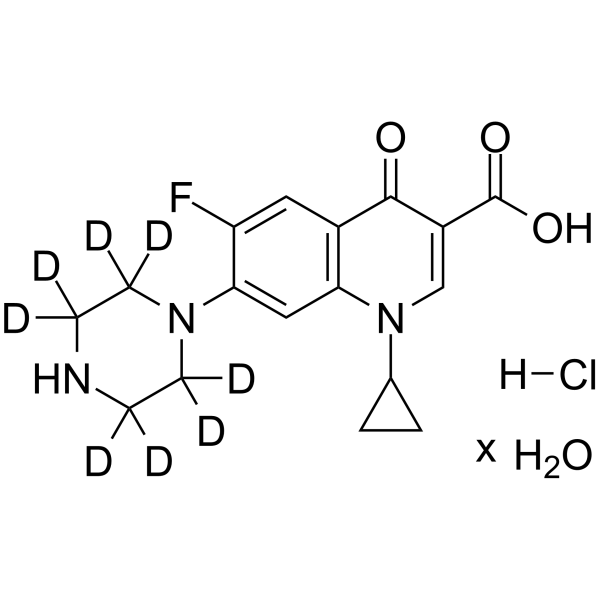
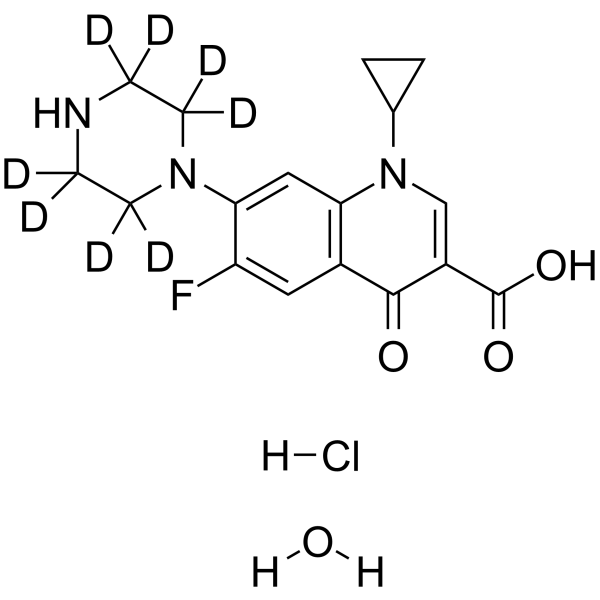
Ciprofloxacin-d8 (hydrochloride hydrate) is the deuterium labeled Ciprofloxacin hydrochloride monohydrate. Ciprofloxacin hydrochloride monohydrate is a fluoroquinolone antibiotic, exhibiting potent antibacterial activity.
loading...
    loading...
Cat. No.: HY-B0356BS
Synonyms: Bay-09867-d8 HYdrochloride monoHYdrate
Ciprofloxacin-d8 (hydrochloride monohydrate) is the deuterium labeled Ciprofloxacin (hydrochloride monohydrate). Ciprofloxacin hydrochloride is a fluoroquinolone antibiotic, exhibiting potent antibacterial activity.
loading...
    loading...
Cat. No.: HY-B0356S2
Synonyms: Bay-09867-d4
Ciprofloxacin-d4 (Bay-09867-d4) is deuterium labeled Ciprofloxacin. Ciprofloxacin (Bay-09867) is a potent, orally active topoisomerase IV inhibitor. Ciprofloxacin induces mitochondrial DNA and nuclear DNA damage and lead to mitochondrial dysfunction, ROS production. Ciprofloxacin has anti-proliferative activity and induces apoptosis. Ciprofloxacin is a fluoroquinolone antibiotic, exhibiting potent antibacterial activity .
loading...
    loading...

