
1. Search Result
Search Result
Results for "

muscle loss

" in MedChemExpress (MCE) Product Catalog:

22

Inhibitors & Agonists

1

Biochemical Assay Reagents

1

Inhibitory Antibodies

4

Natural
Products

1

Isotope-Labeled Compounds

1

Oligonucleotides

Cat. No. Product Name Target Research Areas Chemical Structure
  • HY-P99355
    Bimagrumab
    3 Publications Verification

    Anti-ACVR2B Reference Antibody; BYM338

    TGF-β Receptor Metabolic Disease
    Bimagrumab (Anti-ACVR2B Reference Antibody) is a human monoclonal antibody that blocks activin type II receptor (ActRII), with KDs of 1.7 pM and 434 pM for human ActRIIB and ActRIIA, respectively. Bimagrumab can be used for the research of pathological muscle loss and weakness .
    Bimagrumab
  • HY-170794

    Acyltransferase Ceramidase Metabolic Disease
    ALT-007 is an orally active serine palmitoyltransferase (SPT) inhibitor that selectively reduces the levels of toxic very-long-chain deoxysphingolipids to enhance protein homeostasis. ALT-007 restores aging-related loss of muscle mass in a mouse model of sarcopenia. ALT-007 enhances protein homeostasis in both mouse and C. elegans models of aging and disease. ALT-007 can be used for age-related neuromuscular diseases research .
    ALT-007
  • HY-19307

    Integrin Interleukin Related Cardiovascular Disease Inflammation/Immunology Endocrinology Cancer
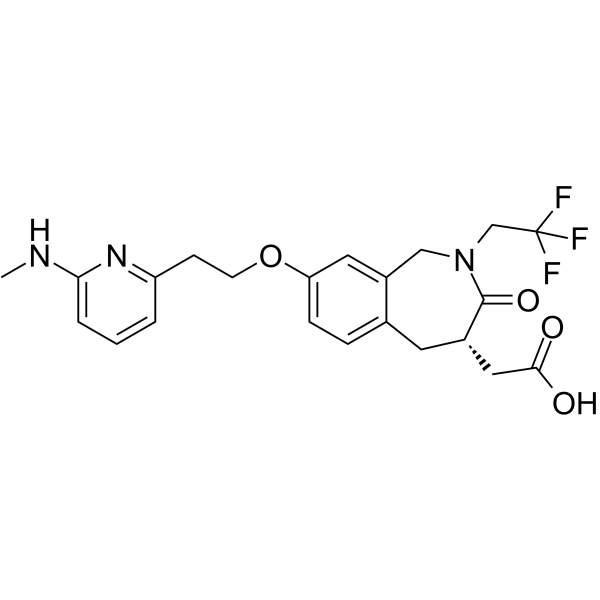
    SB-273005 is an orally active non-peptide αvβ3 integrin antagonist with Ki values of 1.2 nM and 0.3 nM for αvβ3 and αvβ5, respectively. SB-273005 blocks the binding of integrins to the RGD sequence in the extracellular matrix. SB-273005 inhibits Rictor phosphorylation and reduces IL-10 secretion. SB-273005 inhibits inflammation, prevents bone loss, regulates vascular smooth muscle function, and reverses pregnancy-induced immune deviation. SB-273005 can be used in the study of rheumatoid arthritis, osteoporosis, and aneurysms. .
    SB-273005
  • HY-N1993
    5-Methyl-7-methoxyisoflavone
    3 Publications Verification

    Cytochrome P450 NF-κB Metabolic Disease Cancer
    5-Methyl-7-methoxyisoflavone is an orally active anti-oxidant with remyelinating activity. 5-Methyl-7-methoxyisoflavone inhibits the enzyme aromatase, interfering with the normal metabolic pathways of testosterone. 5-Methyl-7-methoxyisoflavone is a non-steroidal anabolic isoflavone, used as a anabolic agent. 5-Methyl-7-methoxyisoflavone shows better potency increasing muscle mass and endurance than Ipriflavone (HY-N0094). 5-Methyl-7-methoxyisoflavone can be used for fat loss besides the maintenance of low cholesterol level and strengthen bones. 5-Methyl-7-methoxyisoflavone is the inhibitor for NF-κB .
    5-Methyl-7-methoxyisoflavone
  • HY-164027

    E1/E2/E3 Enzyme Metabolic Disease Cancer
    MyoMed 205 is an orally active muscle ring finger protein 1 (MuRF1) inhibitor. MyoMed-205 reduces ubiquitination and subsequent proteasomal degradation of muscle proteins by inhibiting MuRF1 activity. MyoMed 205 augments muscle performance, attenuates muscle weight loss and alleviates disease-induced weight loss. MyoMed 205 can be used for the research of cancer cachexia, type 2 diabetes mellitus, and heart failure with preserved ejection fraction .
    MyoMed 205
  • HY-18102
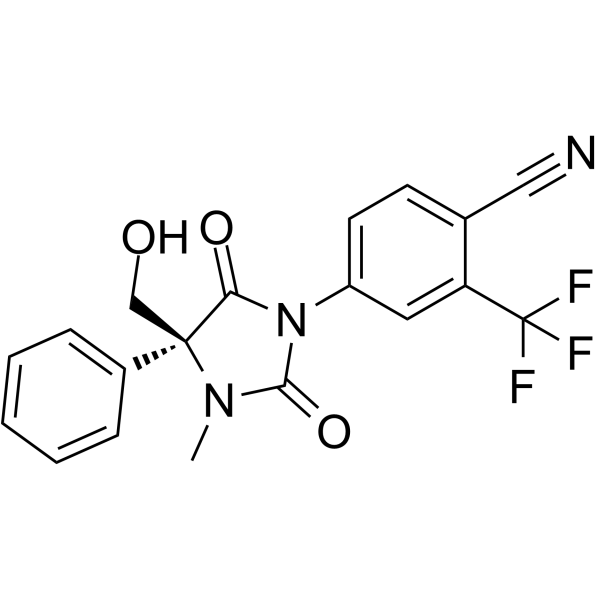
    GLPG0492
    Maximum Cited Publications
    7 Publications Verification

    Androgen Receptor Neurological Disease
    GLPG0492 is an orally active, non-steroidal selective androgen receptor modulator. GLPG0492 exerts functional transactivation by binding to the ligand-binding domain of the receptor, exhibiting preferential partial agonist activity in muscle and bone tissues with low activity in reproductive tissues. GLPG0492 effectively counteracts muscle atrophy-related pathways, significantly enhances muscle strength, maintains motor ability, reduces fibrosis and improves electrophysiological parameters. GLPG0492 prevents immobilization-induced muscle atrophy and regulates muscle mass homeostasis, serving as a valuable tool compound for studies on Duchenne muscular dystrophy, muscle loss and various types of disuse musculoskeletal atrophy .
    GLPG0492
  • HY-150270A

    P2X Receptor Prostaglandin Receptor NOD-like Receptor (NLR) Caspase Interleukin Related Inflammation/Immunology
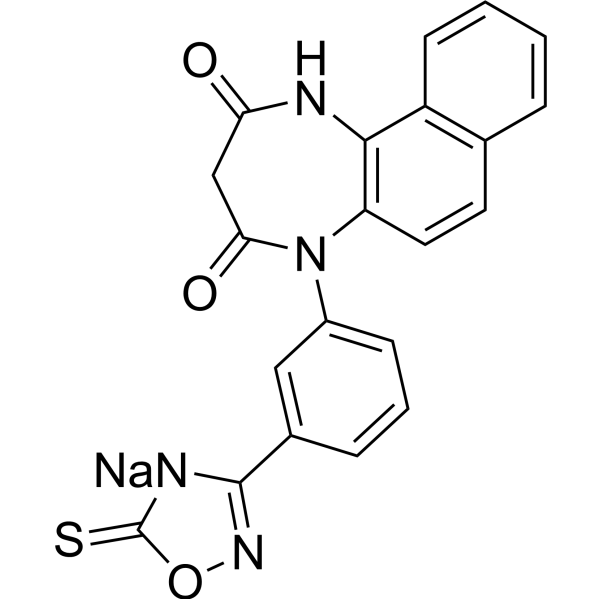
    NP-1815-PX sodium is an orally active dual inhibitor of P2X4 and prostaglandin TP receptors, with an IC50 of 0.26 μM against human P2X4 receptors. NP-1815-PX sodium specifically inhibits ATP-mediated prostaglandin production, TP receptor-induced calcium elevation, and the canonical/non-canonical NLRP3 inflammasome signaling pathway. NP-1815-PX sodium selectively blocks smooth muscle contractions induced by ATP, U46619 (HY-108566) and prostaglandin F2α. NP-1815-PX sodium not only produces anti-allodynic effects in vivo, but also significantly alleviates symptoms of DNBS (HY-W324435)-induced colitis (such as weight loss and tissue damage). NP-1815-PX sodium exerts anti-inflammatory effects by downregulating IL-1β levels and Caspase-1 activity. NP-1815-PX sodium is used in studies related to asthma and inflammatory bowel disease (colitis) .
    NP-1815-PX sodium
  • HY-30215

    Endogenous Metabolite Metabolic Disease Endocrinology
    (S)-Leucic acid is a metabolite of Leucine. (S)-Leucic acid has anabolic effects, particularly promoting muscle protein synthesis. (S)-Leucic acid can be used in the diagnosis of pregnancy loss .
    (S)-Leucic acid
  • HY-30215R

    Reference Standards Endogenous Metabolite Metabolic Disease Endocrinology
    (S)-Leucic acid (Standard) is the analytical standard of (S)-Leucic acid (HY-30215). This product is intended for research and analytical applications. (S)-Leucic acid is a metabolite of Leucine. (S)-Leucic acid has anabolic effects, particularly promoting muscle protein synthesis. (S)-Leucic acid can be used in the diagnosis of pregnancy loss .
    (S)-Leucic acid (Standard)
  • HY-167917

    Drug Isomer Metabolic Disease Inflammation/Immunology Endocrinology Cancer
    Conjugated linoleic acid is a group of isomers of Linoleic acid (HY-N0729) containing conjugated double bonds. Conjugated linoleic acid is mainly derived from dairy products and ruminant meats. Conjugated linoleic acid exhibits various activities such as anti-carcinogenicity, immunomodulation, weight loss promotion, reduction of muscle damage, and alleviation of inflammatory responses. Conjugated linoleic acid can be used as a food additive .
    Conjugated linoleic acid
  • HY-150270

    Prostaglandin Receptor P2X Receptor NOD-like Receptor (NLR) Caspase Interleukin Related Neurological Disease Inflammation/Immunology
    NP-1815-PX is an orally active dual inhibitor of P2X4 and prostaglandin TP receptors, with an IC50 of 0.26 μM against human P2X4 receptors. NP-1815-PX specifically inhibits ATP-mediated prostaglandin production, TP receptor-induced calcium elevation, and the canonical/non-canonical NLRP3 inflammasome signaling pathway. NP-1815-PX selectively blocks smooth muscle contractions induced by ATP, U46619 (HY-108566) and prostaglandin F2α. NP-1815-PX not only produces anti-allodynic effects in vivo, but also significantly alleviates symptoms of DNBS (HY-W324435)-induced colitis (such as weight loss and tissue damage). NP-1815-PX exerts anti-inflammatory effects by downregulating IL-1β levels and Caspase-1 activity. NP-1815-PX is used in studies related to asthma and inflammatory bowel disease (colitis) .
    NP-1815-PX
  • HY-177971

    Antibody-Oligonucleotide Conjugates (AOCs) Neurological Disease
    Braxlosiran, one of the components of the AOC Delpacibart braxlosiran (HY-177566), is composed of a siRNA targeting DUX4 (dual homologous box protein) and SMCC linker (HY-42360). Abnormal expression of the DUX4 protein leads to changes in gene expression in muscle cells, and these changes are associated with the loss of muscle function in facioscapulohumeral muscular dystrophy (FSHD) .
    Braxlosiran
  • HY-N6609

    nAChR Others
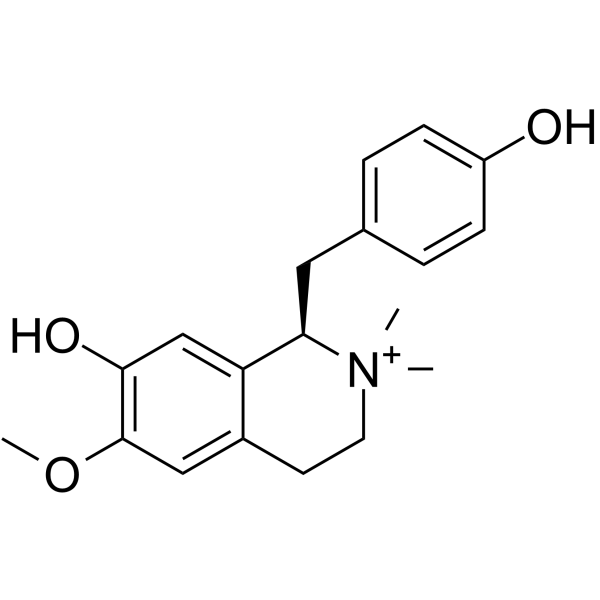
    Magnocurarine is a neuromuscular junction blocker that inhibits muscle contraction by functionally blocking signal transmission without directly damaging nerve or muscle tissues. In frog, mouse and rabbit models, Magnocurarine exerts a dose-dependent paralytic effect, which progresses gradually from limb weakness and loss of righting reflex to respiratory depression and even cardiac arrest. Although high doses cause complete cessation of movement, Magnocurarine does not affect the spinal multineuronal reflex in frogs. Magnocurarine exhibits biological activity similar to that of tubocurarine (HY-125901) in various animal models .
    Magnocurarine
  • HY-W127851

    Cypridina luciferin analog

    Biochemical Assay Reagents Others Cancer
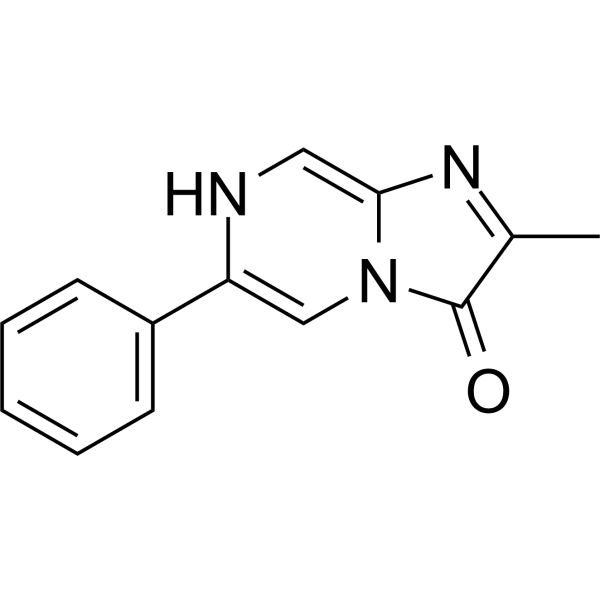
    CLA, or conjugated linoleic acid, is a polyunsaturated fatty acid that occurs naturally in a variety of animal products, such as meat and dairy. It has several potential benefits for human health, including the ability to reduce body fat mass, improve insulin sensitivity, and reduce inflammation. CLA has been extensively studied for its effects on weight loss and muscle growth, as well as its potential role in preventing chronic diseases such as heart disease and cancer. Additionally, it can be taken as a dietary supplement in capsule form.
    CLA
  • HY-138576

    Indoleamine 2,3-Dioxygenase (IDO) Metabolic Disease
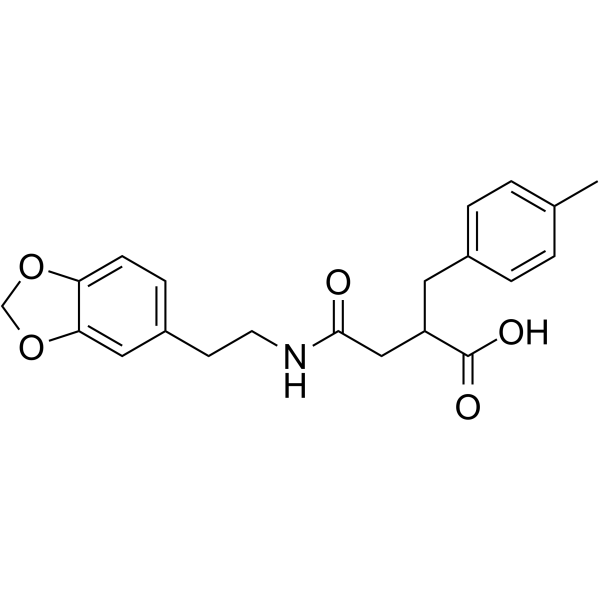
    IDO1-IN-26 (N-(2-Benzo[1,3]dioxol-5-yl-ethyl)-2-(4-methyl-benzyl)-succinamic acid SA) is a IDO1 inhibitor that can be used for the study of sarcopenia or age-related muscle loss .
    IDO1-IN-26
  • HY-18102BS

    Isotope-Labeled Compounds Adrenergic Receptor Neurological Disease
    GLPG0492- 13C,d3 racemate is 13C-labeled GLPG0492 (racemate) (HY-18102B). GLPG0492 racemate is an orally active, non-steroidal selective androgen receptor modulator. GLPG0492 racemate exerts functional transactivation by binding to the ligand-binding domain of the receptor, exhibiting preferential partial agonist activity in muscle and bone tissues with low activity in reproductive tissues. GLPG0492 racemate effectively counteracts muscle atrophy-related pathways, significantly enhances muscle strength, maintains motor ability, reduces fibrosis and improves electrophysiological parameters. GLPG0492 racemate prevents immobilization-induced muscle atrophy and regulates muscle mass homeostasis, serving as a valuable tool compound for studies on Duchenne muscular dystrophy, muscle loss and various types of disuse musculoskeletal atrophy .
    GLPG0492-13C,d3 racemate
  • HY-121670

    Others Neurological Disease
    Ambenoxan is a central nervous system-acting skeletal muscle relaxant that is effective in mice, rats, rabbits, dogs, and monkeys without loss of the righting reflex. It has no peripheral neuromuscular blocking effects and significantly reduces or eliminates decerebrate rigidity in rabbits, but does not antagonize the effects of strychnine, leptazol, or tremorine. Like other central nervous system depressants, ambenoxan prolongs sleep duration with hexobarbitone, but it has no local anesthetic effects. In anesthetized cats, the agent lowers blood pressure and reduces the pressor response to epinephrine, but has no effect on norepinephrine.
    Ambenoxan
  • HY-121670A

    Adrenergic Receptor Neurological Disease
    Ambenoxan hydrochloride is a central nervous system-acting skeletal muscle relaxant that is effective in mice, rats, rabbits, dogs, and monkeys without loss of the righting reflex. It has no peripheral neuromuscular blocking effects and significantly reduces or eliminates decerebrate rigidity in rabbits, but does not antagonize the effects of strychnine, leptazol, or tremorine. Like other central nervous system depressants, ambenoxan prolongs sleep duration with hexobarbitone, but it has no local anesthetic effects. In anesthetized cats, the agent lowers blood pressure and reduces the pressor response to epinephrine, but has no effect on norepinephrine.
    Ambenoxan hydrochloride
  • HY-182773

    Melanocortin Receptor Metabolic Disease
    MC4R Antagonist-1 (compound 1) is an MC4R-selective antagonist (IC50<10 nM). MC4R Antagonist-1 can be used for the research of cachexia, anorexia, anorexia nervosa, involuntary weight loss, failure to thrive, sarcopenia, muscle wasting, muscle weakness, frailty, osteoporosis .
    MC4R Antagonist-1
  • HY-B1562D

    Adrenergic Receptor Metabolic Disease
    (S)-Bopindolol is a β-adrenergic receptor blocker that can be used to prevent, inhibit, can be used to reduce muscle mass and/or functional loss and/or decreased bone density caused by weight loss. (S)-Bopindolol can protect the myocardium and/or cardiac function, or prevent low blood pressure and/or increased heart rate during weight loss .
    (S)-Bopindolol
  • HY-183005

    TGF-β Receptor Inflammation/Immunology Cancer
    ActRIIB-IN-1, 7-azaindole compound is an orally active activin type II receptor B (ActRIIB) inhibitor with an IC50 of 1.8 nM. ActRIIB-IN-1 can alleviate weight loss, muscle atrophy and decreased muscle strength caused by tumor cachexia, as well as improve appetite. ActRIIB-IN-1 can be used for the research of cancer cachexia .
    ActRIIB-IN-1
  • HY-N6609B

    nAChR Cardiovascular Disease
    Magnocurarine chloride is a neuromuscular junction blocker that inhibits muscle contraction by functionally blocking signal transmission without directly damaging nerve or muscle tissues. In frog, mouse and rabbit models, Magnocurarine chloride exerts a dose-dependent paralytic effect, which progresses gradually from limb weakness and loss of righting reflex to respiratory depression and even cardiac arrest. Although high doses cause complete cessation of movement, Magnocurarine chloride does not affect the spinal multineuronal reflex in frogs. Magnocurarine chloride exhibits biological activity similar to that of tubocurarine (HY-125901) in various animal models .
    Magnocurarine chloride

Inquiry Online

Your information is safe with us. * Required Fields.

Salutation


Country or Region *

Applicant Name *


Organization Name *

Department *


Email Address *


Product Name *

Cat. No.


Requested quantity *

Phone Number *


Remarks

Inquiry Online

Inquiry Information

Product Name:
Cat. No.:
Quantity:
MCE Japan Authorized Agent:

