28 Results for "

neurodegenerative conditions

" in MedChemExpress (MCE) Product Catalog:
Products (28)

28 Results for "neurodegenerative conditions" in MCE Product Catalog:

2
2 Cited Publications
Cat. No.: HY-B0985
CAS No.: 136-40-3
Target:  

TRP Channel

Research Areas:  

Neurological Disease

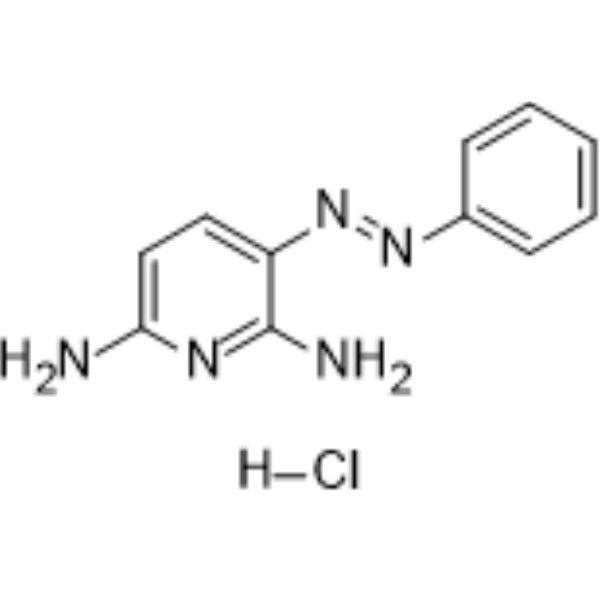
Phenazopyridine hydrochlorideis a competitive SARM1 inhibitor, with IC50 145 μM. Phenazopyridine hydrochlorideis a TRPM8 antagonist. Phenazopyridine hydrochloride has a local anesthetic/analgesic effect. Phenazopyridine hydrochlorideis used to relieve painful symptoms of conditions such as cystitis and urethritis. Phenazopyridine hydrochloridecan promote neuronal differentiation and can also be used in the study of traumatic brain injury, peripheral neuropathy and neurodegenerative diseases .
loading...
    loading...
2
2 Cited Publications
Cat. No.: HY-B0985A
CAS No.: 94-78-0
Target:  

TRP Channel

Research Areas:  

Neurological Disease

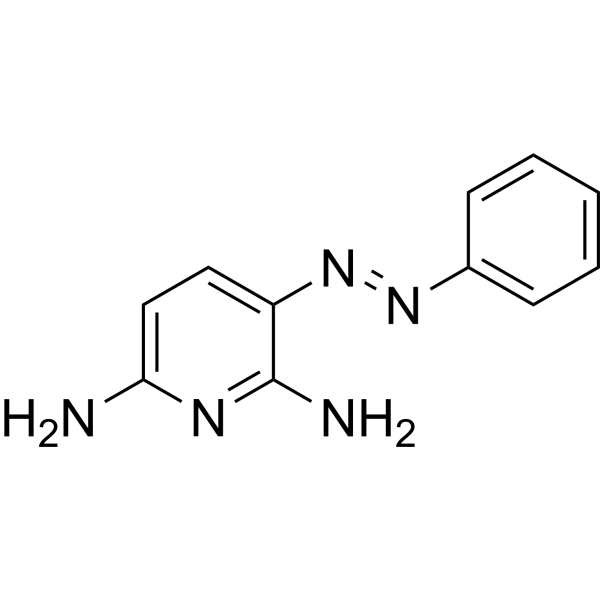
Phenazopyridine is a competitive SARM1 inhibitor, with IC50 145 μM. Phenazopyridine is a TRPM8 antagonist. Phenazopyridine has a local anesthetic/analgesic effect. Phenazopyridine is used to relieve painful symptoms of conditions such as cystitis and urethritis. Phenazopyridine can promote neuronal differentiation and can also be used in the study of traumatic brain injury, peripheral neuropathy and neurodegenerative diseases .
loading...
    loading...
Cat. No.: HY-N2410
CAS No.: 66648-43-9
Synonyms: N-feruloyltyramine; Moupinamide
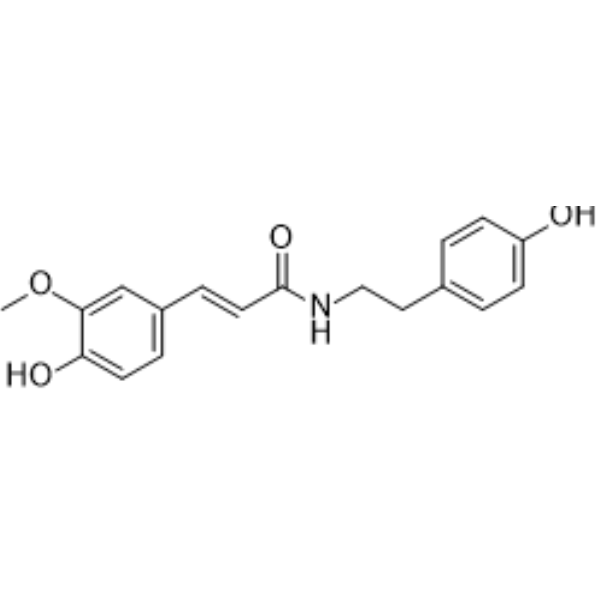
N-trans-Feruloyltyramine (N-feruloyltyramine), an alkaloid, is a potent antioxidant. N-trans-Feruloyltyramine improves H2O2-induced intracellular ROS generation and decreases apoptosis. N-trans-Feruloyltyramine has the potential for oxidative stress-related neurodegenerative conditions and cancer research .
loading...
    loading...
Cat. No.: HY-113366
CAS No.: 60203-57-8
Purity:  98.10%
Synonyms: PGJ2
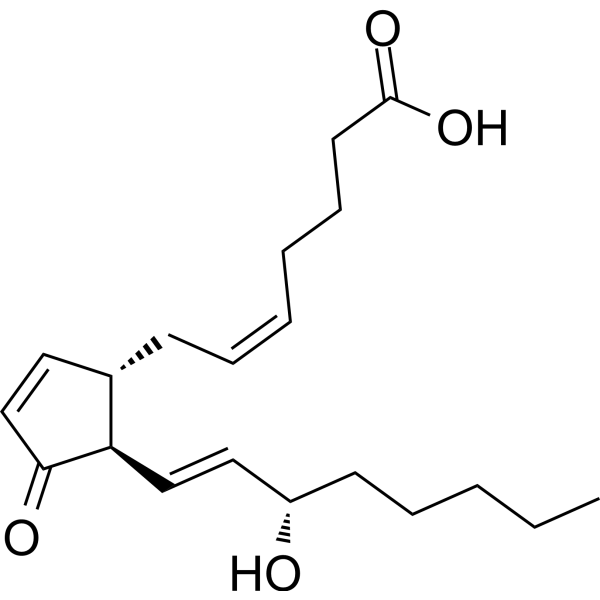
Prostaglandin J2 (PGJ2), an endogenous metabolite of Prostaglandin D2 (PGD2; HY-101988), is a potent PGD2 receptor (DP) agonist with Kis of 0.9 nM and 6.6 nM for hDP and hCRTH2, respectively. Prostaglandin J2 stimulates intracellular cyclic AMP production with an EC50 value of 1.2 nM. Prostaglandin J2 induces oxidative stress and neuronal apoptosis. Prostaglandin J2 induces the accumulation/aggregation of ubiquitinated (Ub) proteins. Prostaglandin J2 is highly neurotoxic and potentially contributes to many neurodegenerative conditions, including Alzheimer's (AD) and Parkinson's diseases (PD) .
loading...
    loading...
Cat. No.: HY-151369
CAS No.: 233605-81-7
Purity:  99.60%
AV123 (compound 12) is a non-cytotoxic RIPK1 inhibitor (IC50=12.12 µM). AV123 blocks the TNF-α-induced necroptotic (EC50=1.7 μM) but not the apoptotic cell death. AV123 can be used in the study of necrotic chronic conditions such as ischemia-reperfusion injury of the brain, heart and kidney, inflammatory diseases, neurodegenerative diseases and infectious diseases .
loading...
    loading...
Cat. No.: HY-108312A
Purity:  98.7%
Target:  

Caspase

Research Areas:  

Neurological Disease

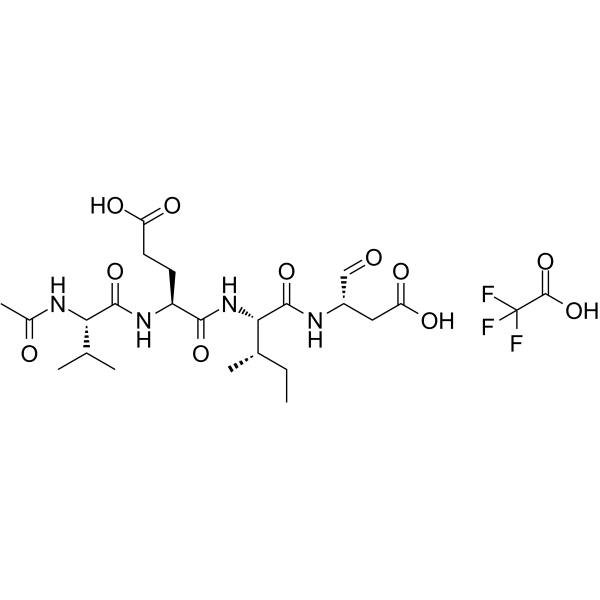
Ac-VEID-CHO (TFA) is a peptide-derived caspase inhibitor and has potency of inhibition for Caspase-6, Caspase-3 and Caspase-7 with IC50 values of 16.2 nM, 13.6 nM and 162.1 nM, respectively. Ac-VEID-CHO (TFA) can be used for the research of neurodegenerative conditions including Alzheimer’s and Huntington’s disease .
loading...
    loading...
Cat. No.: HY-139008
CAS No.: 2584411-86-7
Research Areas:  

Neurological Disease

RC363 is a glutathione peroxidase 1 (GPx1) activator. RC363 enhances glutathione peroxidase activity and inhibits ferroptosis. RC363 can be used for the research of neurodegenerative conditions .
loading...
    loading...
Cat. No.: HY-114423
CAS No.: 1034189-82-6
Purity:  98.91%
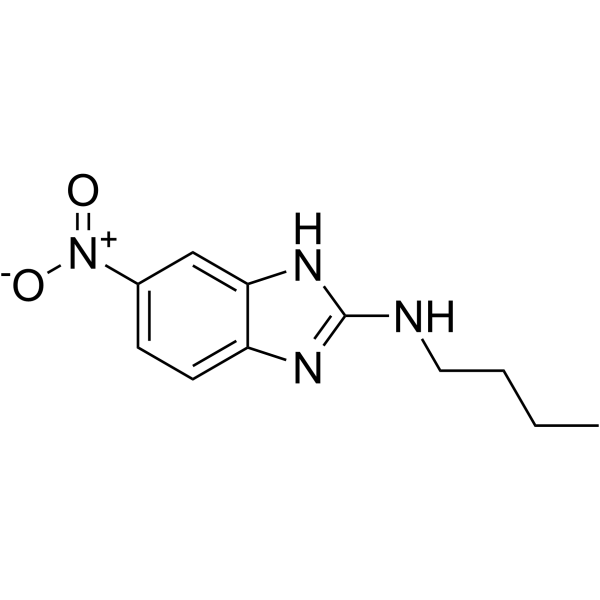
p38α inhibitor 1 (Arry-797) is a p38α inhibitor. p38α inhibitor 1 is applicable to research related to diseases including Alzheimer's disease and inflammatory dilated cardiomyopathy .
loading...
    loading...
Cat. No.: HY-176783
CAS No.: 3080315-83-6
Research Areas:  

Neurological Disease

GNE-5152 is an orthosteric SARM1 base-exchange (BE) inhibitor. GNE-5152 sustainably activates SARM1 at subinhibitory concentrations under mildly activating conditions, and this synergistic adverse effect increases NAD consumption, induces axon degradation and neurodegeneration and releases neurofilament-light (NfL) in cortical neurons. GNE-5152 can be used for neurodegenerative diseases research .
loading...
    loading...
Cat. No.: HY-108312
CAS No.: 319494-39-8
Target:  

Caspase

Research Areas:  

Neurological Disease

Ac-VEID-CHO is a peptide-derived caspase inhibitor and has potency of inhibition for Caspase-6, Caspase-3 and Caspase-7 with IC50 values of 16.2 nM, 13.6 nM and 162.1 nM, respectively. Ac-VEID-CHO also inhibits VEIDase activity an IC50 value of 0.49 µM. Ac-VEID-CHO can be used for the research of neurodegenerative conditions including Alzheimer’s and Huntington’s disease .
loading...
    loading...
Cat. No.: HY-N2410R
CAS No.: 66648-43-9
Synonyms: N-feruloyltyramine (Standard); Moupinamide (Standard)
N-trans-Feruloyltyramine (Standard) is the analytical standard of N-trans-Feruloyltyramine. This product is intended for research and analytical applications. N-trans-Feruloyltyramine (N-feruloyltyramine), an alkaloid, is a potent antioxidant. N-trans-Feruloyltyramine improves H2O2-induced intracellular ROS generation and decreases apoptosis. N-trans-Feruloyltyramine has the potential for oxidative stress-related neurodegenerative conditions and cancer research .
loading...
    loading...
Cat. No.: HY-149859
CAS No.: 2071224-39-8
Target:  

HDAC

Research Areas:  

Neurological Disease

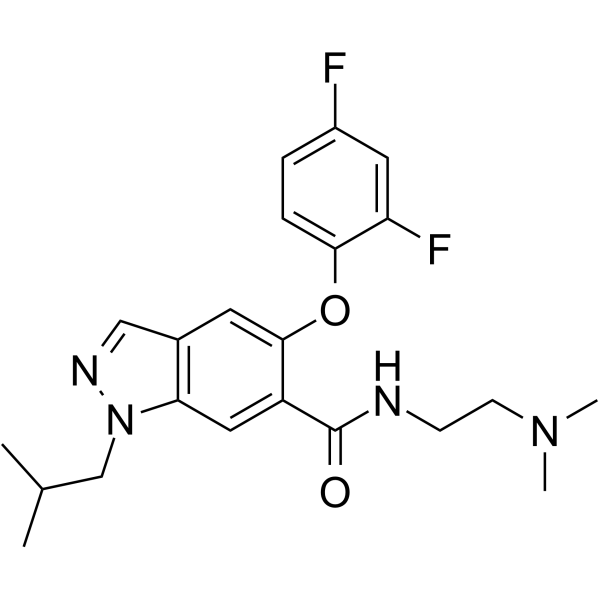
HDAC-IN-58 is a HDAC inhibitor. HDAC-IN-58 has HDAC6-specific inhibition activity with an IC50 value of 2.06 nM. HDAC-IN-58 can be used for the research of chronic diseases, including neurodegenerative and psychiatric conditions .
loading...
    loading...
Cat. No.: HY-158794
CAS No.: 1808096-67-4
Target:  

Autophagy

Research Areas:  

Neurological Disease

Lentztrehalose B is a dehydroxylated analog of trehalose A, possessing antioxidant properties that can be used in research on neurodegenerative diseases and other autophagy-related conditions .
loading...
    loading...
Cat. No.: HY-W354617
CAS No.: 58882-17-0
Synonyms: Ethyl dihydroxypropyl PABA
Roxadimate (Ethyl dihydroxypropyl PABA) can be used as a sunscreen agent by scavenging free radicals and reducing oxidative stress. Roxadimate can protect cells from damage caused by radiation or neurotoxic insults. Roxadimate can be studied in research for cancer and neurodegenerative conditions .
loading...
    loading...
Cat. No.: HY-139331
CAS No.: 858557-69-4
Purity:  99.13%
20S Proteasome-IN-1 is a 26S proteasome inhibitor extracted from patent WO2006128196A2 compound 2. 20S Proteasome-IN-1 has the potential for cancer, immune-related disorders, inflammation, ischemic conditions, neurodegenerative disorders and other diseases research .
loading...
    loading...
Cat. No.: HY-B0985R
CAS No.: 136-40-3
Research Areas:  

Neurological Disease

Phenazopyridine (hydrochloride) (Standard) is the analytical standard of Phenazopyridine (hydrochloride). This product is intended for research and analytical applications. Phenazopyridine hydrochlorideis a competitive SARM1 inhibitor, with IC50 145 μM. Phenazopyridine hydrochlorideis a TRPM8 antagonist. Phenazopyridine hydrochloride has a local anesthetic/analgesic effect. Phenazopyridine hydrochlorideis used to relieve painful symptoms of conditions such as cystitis and urethritis. Phenazopyridine hydrochloridecan promote neuronal differentiation and can also be used in the study of traumatic brain injury, peripheral neuropathy and neurodegenerative diseases .
loading...
    loading...
Cat. No.: HY-161461
CAS No.: 1341007-95-1
Target:  

Amylases

Research Areas:  

Neurological Disease

E234G HYPE-IN-1 (Compound I2.10) is an inhibitor of AMPylation directed by the Huntingtin-interacting protein E (HYPE), possessing low micromolar bioactivity, low cytotoxicity, and blood-brain barrier permeability. E234G HYPE-IN-1 can inhibit the AMPylation of B-cell immunoglobulin-binding protein (BiP), the primary substrate of HYPE. E234G HYPE-IN-1 is suitable for development as a HYPE-specific therapeutic agent for clinical conditions such as neurodegenerative diseases and diabetes .
loading...
    loading...
Cat. No.: HY-15074
CAS No.: 245063-59-6
Synonyms: NS-1209
Target:  

iGluR

Research Areas:  

Neurological Disease

SPD-502 is a novel glutamate antagonist with potential neuroprotective properties, particularly in brain ischemia. It selectively targets the AMPA receptor, showing high affinity (IC50 = 0.043 μM) and competitive inhibition of AMPA-induced effects in rat cortical membranes and cultured mouse cortical neurons. In vivo, SPD-502 effectively blocks AMPA-evoked spike activity in the hippocampus after intravenous administration, significantly increasing the seizure threshold in mice and demonstrating robust protection against ischemia-induced damage to hippocampal neurons in gerbils. These findings suggest SPD-502 may be promising for studying neurodegenerative conditions associated with glutamate excitotoxicity .
loading...
    loading...
Cat. No.: HY-15076
CAS No.: 205645-02-9
Synonyms: NS-1209 sodium
Target:  

iGluR

Research Areas:  

Neurological Disease

SPD-502 sodium is a novel glutamate antagonist with potential neuroprotective properties, particularly in brain ischemia. It selectively targets the AMPA receptor, showing high affinity (IC50 = 0.043 μM) and competitive inhibition of AMPA-induced effects in rat cortical membranes and cultured mouse cortical neurons. In vivo, SPD-502 sodium effectively blocks AMPA-evoked spike activity in the hippocampus after intravenous administration, significantly increasing the seizure threshold in mice and demonstrating robust protection against ischemia-induced damage to hippocampal neurons in gerbils. These findings suggest SPD-502 sodium may be promising for studying neurodegenerative conditions associated with glutamate excitotoxicity .
loading...
    loading...
Cat. No.: HY-L086
3,759 compounds

Neurodegenerative diseases are incurable and life-threatening conditions that result in progressive degeneration and/or death of nerve cells. Some common neurodegenerative diseases include Alzheimer’s Disease (AD), Parkinson’s Disease (PD), Motor Neuron Disease (MND), Huntington’s Disease (HD), Spino-Cerebellar Ataxia (SCA), Spinal Muscular Atrophy (SMA), and Amyotrophic Lateral Sclerosis (ALS). Because the pathophysiology of neurodegenerative disorders is generally poorly understood, it is difficult to identify promising molecular targets and validate them. At the same time, about 85% of the drugs fail in clinical trials. Therefore, validating new targets and discovering new drugs to mitigate neurodegenerative disorders is need of the hour.

MCE offers a unique collection of 3,759 compounds with anti-Neurodegenerative Diseases activities or targeting the unique targets of neurodegenerative diseases. MCE Neurodegenerative Disease-related Compound Library is a useful tool for exploring the mechanism of neurodegenerative diseases and discovering new drugs for neurodegenerative diseases.

