


1. Search Result
Search Result
Results for "

neuroendocrine

" in MedChemExpress (MCE) Product Catalog:

60

Inhibitors & Agonists

2

Fluorescent Dyes

28

Peptides

1

MCE Kits

3

Inhibitory Antibodies

4

Natural
Products

2

Recombinant Proteins

6

Isotope-Labeled Compounds

6

Antibodies

Cat. No. Product Name Target Research Area
  • HY-P0221C

    PACAP Receptor Metabolic Disease
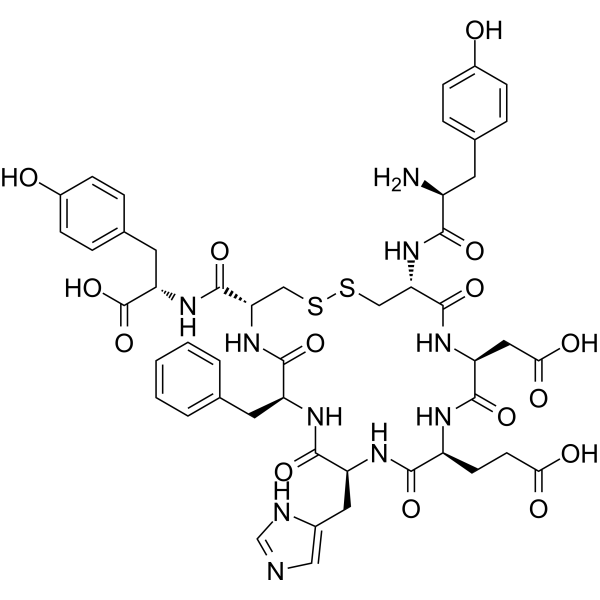
    PACAP (1-38) free acid is a desamido-PACAP (1-38), human, ovine, rat (HY-P0221). PACAP (1-38) free acid can activate the human PAC1 receptor. PACAP (1-38) free acid induces cyclic AMP (cAMP) generation in both NS-1 neuroendocrine cells and non-neuroendocrine HEK293 cells .
  • HY-106033
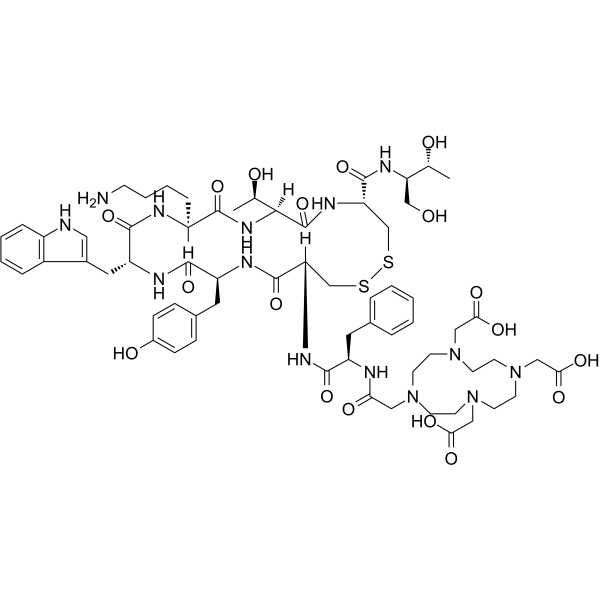
    Edotreotide
    2 Publications Verification

    DOTATOC; SDZ-SMT 487; SMT 487

    Radionuclide-Drug Conjugates (RDCs) Cancer
    Edotreotide is a ligand that selectively targets SSTR2 and can competitively bind to the receptor. Edotreotide mediates the targeted delivery, while modificated with radionuclides (such as 90Y, 177Lu, and 68Ga) to SSTR-positive tumors and induces tumor cell apoptosis by releasing β rays. Edotreotide has strong tumor targeting and precise killing activity. Edotreotide is used in the synthesis of radionuclide-drug conjugates (RDCs) and is widely used in the field of neuroendocrine tumors (such as metastatic carcinoids, lung and thymus NETs) .
  • HY-P10920

    Drug Derivative Cancer
    DOTAMTATE is a somatostatin analogue. DOTAMTATE marked 212Pb is promising for research of somatostatin receptor positive neuroendocrine tumors .
  • HY-P5128
    DOTA-JR11
    1 Publications Verification

    Satoreotide tetraxetan

    Radionuclide-Drug Conjugates (RDCs) Somatostatin Receptor Cancer
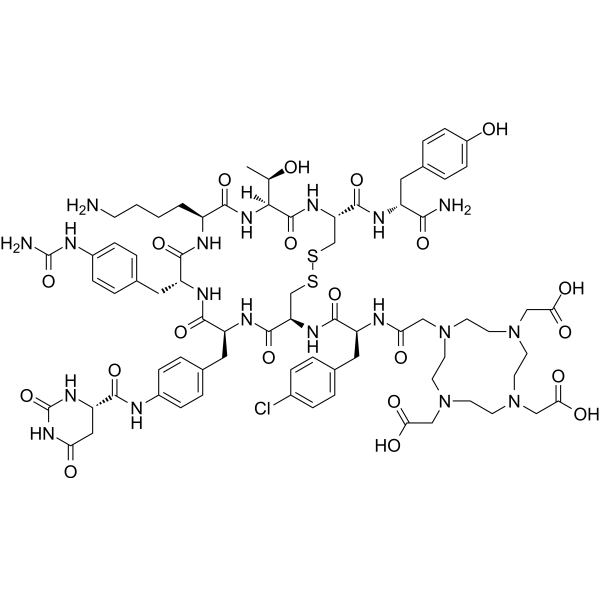
    DOTA-JR11 is a somatostatin receptor 2 (SSTR2)antagonist. DOTA-JR11 can be labeled by 68Ga, used for paired imaging in neuroendocrine tumors (NETs) research . DOTA-JR11 can be used for the synthesis/research of Radionuclide-Drug Conjugates (RDCs).
  • HY-P10102
    Kp7-6
    2 Publications Verification

    Apoptosis PERK NF-κB Caspase JNK Inflammation/Immunology Cancer
    Kp7-6 is a Fas mimetic peptide and also a Fas/FasL antagonist. Kp7-6 specifically binds to Fas and FasL, disrupts receptor complexes, and blocks downstream apoptosis signaling pathways. Kp7-6 inhibits the phosphorylation of ERK1-2, induces the phosphorylation of IκBα, and activates NF-κB. Kp7-6 inhibits the activation of caspase-8, caspase-3 and JNK, and suppresses human amylin-induced β-cell apoptosis. Kp7-6 inhibits FasL-induced lymphoid cytotoxicity and apoptosis. Kp7-6 reduces local tumor FasL expression, increases CD8 +Fas + T cell infiltration, and decreases tumor volume in pancreatic neuroendocrine tumor models. Kp7-6 prevents concanavalin A-induced liver injury in mice. Kp7-6 is applicable to research related to type 2 diabetes, concanavalin A-induced hepatitis and pancreatic neuroendocrine tumors .
  • HY-P1248

    NPFF

    Neuropeptide FF Receptor Cardiovascular Disease Neurological Disease
    Neuropeptide FF (NPFF), an octapeptide belonging to the RF-amide family of peptides, is a NPFF1 and NPFF2 receptors agonist with Ki values of 2.82 nM and 0.21 nM, respectively. Neuropeptide FF induces abstinence syndrome, exerts antiopioid and analgesic effects, releases via calcium-dependent mechanisms from rat spinal cord, regulates memory, autonomic function, and neuroendocrine function, modulates pain and opioid antinociception, reduces food intake, stimulates water intake, alters cardiovascular parameters, and shows differential activity in hypothalamic paraventricular nucleus neurons. Neuropeptide FF is present in mammalian central nervous system and periphery, with NPFF-immunoreactivity increases in rat cerebrospinal fluid during opiate tolerance, and its NPFF gene and NPFF-R2 gene are up-regulated in rat spinal cord and dorsal root ganglia during peripheral inflammation. Neuropeptide FF can be used for the research of opioid tolerance, morphine-induced analgesia, abstinence syndrome, pain, hypertension, nociception, inflammatory pain, and neuropathic pain .
  • HY-P5362

    Radionuclide-Drug Conjugates (RDCs) Somatostatin Receptor Neurological Disease Cancer
    NODAGA-LM3 is a ligand that can cross the blood-brain barrier and targets somatostatin receptor SSTR2 with high affinity (IC50 = 1.3 nM). NODAGA-LM3 does not trigger the internalization of SSTR2 and can inhibit agonist-induced internalization processes. NODAGA-LM3 shows low uptake in normal tissues such as the liver and spleen, but high uptake in the lungs and blood pool. 68Ga-labeled NODAGA-LM3 can serve as a PET imaging agent for well-differentiated neuroendocrine tumors, and is applied in studies related to small cell lung cancer and well-differentiated neuroendocrine tumors .
  • HY-P10137

    JR11

    Radionuclide-Drug Conjugates (RDCs) Somatostatin Receptor Cancer
    Satoreotide (JR11) is a SSTR2 antagonist. Satoreotide is usually conjugated with radiolabeled chelators used in neuroendocrine tumor imaing .
  • HY-109538

    Secretin Receptor Neurological Disease Metabolic Disease
    Secretin (swine), a neuroendocrine hormone, is the first hormone to be identifie and is secreted by S cells that are localized primarily in the mucosa of the duodenum. Secretin also is a 27-amino acid peptide, which acts on secretin receptors. Secretin is expressed by cells in all mature enteroendocrine cell subsets and can be prompted by fatty acids. Secretin stimulates the secretion of pancreatic water and bicarbonate. Secretin exerts various effects in organs, can be used for the research of digestive system, central nervous system and energy metabolism .
  • HY-P3840

    Mitosis Neurological Disease Cancer
    Head activator neuropeptide is a mitogen for mammalian cell lines of neuronal or neuroendocrine origin. Head activator neuropeptide signals by binding GPR37 and stimulates cells to enter mitosis .
  • HY-P1339B
    Orexin B, human acetate
    1 Publications Verification

    Human orexin B acetate

    Orexin Receptor (OX Receptor) Cardiovascular Disease Neurological Disease
    Orexin B, human acetate is the acetate form of Orexin B, human (HY-P1339). Orexin B, human acetate is the agonist for Orexin Receptor, with Ki of 420 nM and 36 nM for OX1 and OX2. Orexin B, human acetate participates in the regulation of appetite, wakefulness, cardiovascular function and neuroendocrine .
  • HY-103281

    Bombesin Receptor Metabolic Disease
    Litorin, an amphibian bombesin peptide derivative, is an bombesin receptor agonist. Litorin stimulates the contraction of smooth muscle, stimulates gastrin, gastric acid, and pancreatic secretion, and suppresses the nutriment in vivo .
  • HY-P2022

    Radionuclide-Drug Conjugates (RDCs) Cancer
    Pentetreotide is a diethylenetriaminopentaacetic (DTPA) conjugate of Octreotide (HY-P0036). Pentetreotide is a somatostatin analog that, when labeled with 111In, can be used for nuclear medicine imaging. Somatostatin receptor scintigraphy with Pentetreotide is effective in visualizing neuroendocrine tumors, and its metastasis .
  • HY-P11318

    Peptides Cancer
    NOTA-NOC is a peptide conjugated to a radiotracer, such as gallium-68 or fluorine-18, for use in PET/CT scans to diagnose and monitor neuroendocrine tumors .
  • HY-P5362A

    Radionuclide-Drug Conjugates (RDCs) Somatostatin Receptor Cancer
    NODAGA-LM3 TFA is a ligand that can cross the blood-brain barrier and targets somatostatin receptor SSTR2 with high affinity (IC50 = 1.3 nM). NODAGA-LM3 TFA does not trigger the internalization of SSTR2 and can inhibit agonist-induced internalization processes. NODAGA-LM3 TFA shows low uptake in normal tissues such as the liver and spleen, but high uptake in the lungs and blood pool. 68Ga-labeled NODAGA-LM3 TFA can serve as a PET imaging agent for well-differentiated neuroendocrine tumors, and is applied in studies related to small cell lung cancer and well-differentiated neuroendocrine tumors .
  • HY-P1339AS1

    Human orexin B-13C18,15N3 TFA

    Isotope-Labeled Compounds Orexin Receptor (OX Receptor) Cardiovascular Disease Neurological Disease
    Orexin B, human- 13C18, 15N3 (Human orexin B- 13C18, 15N3) TFA is the 13C- and 15N-labeled Orexin B, human (HY-P1339). Orexin B, human is the agonist for Orexin Receptor, with Kis of 420 nM and 36 nM for OX1 and OX2. Orexin B, human participates in the regulation of appetite, wakefulness, cardiovascular function and neuroendocrine .
  • HY-P2434

    Somatostatin Receptor Neurological Disease Metabolic Disease Cancer
    AP102 is a dual SSTR2/SSTR5-specific somatostatin analog (SSA). AP102 is a disulfide-bridged octapeptide SSA containing synthetic iodinated amino acids. AP102 binds with subnanomolar affinity to SSTR2 and SSTR5 (IC50: 0.63 and 0.65 nM, respectively). AP102 does not bind to SSTR1 or SSTR3. AP102 can be used for acromegaly and neuroendocrine tumors research .
  • HY-P11405

    Neurotensin Receptor Neurological Disease Cancer
    [D-Arg1, D-Trp5, 7, 9, Leu11]-Substance P is a potent inhibitor of cell growth in small cell lung cancer (SCLC). [D-Arg1, D-Trp5, 7, 9, Leu11]-Substance P is also a neuropeptide antagonist, capable of blocking colony formation stimulated by various neuropeptides (including vasopressin and bradykinin). [D-Arg1, D-Trp5, 7, 9, Leu11]-Substance P inhibits the mobilization of Ca 2+ and the activation of mitogen-activated protein kinases induced by vasopressin or bradykinin. [D-Arg1, D-Trp5, 7, 9, Leu11]-Substance P inhibits the growth of H-69 xenograft tumors in nude mice .
  • HY-P3826

    Peptides Neurological Disease
    Chromogranin A (324-337), human is a peptide fragment of chromogranin A, it can be isolated from human ileal carcinoid tumor. Chromogranin A is a soluble glycoprotein stored with hormones and neuropeptides in secretory granules of most (neuro)endocrine cells and neurons, and it is also a plasma marker of neuroendocrine tumors .
  • HY-103285

    Porcine gastrin-releasing peptide 27

    Cholecystokinin Receptor Cancer
    GRP (porcine) (Porcine gastrin-releasing peptide 27) is the putative mammalian analog of Bombesin (HY-P0195). GRP (porcine) activates the release of a number of gastroenteropancreatic (GEP) peptides into the peripheral circulation. GRP (porcine) stimulates gastrin release and exocrine pancreatic secretion. GRP (porcine) is a useful marker of neuroendocrine differentiation in many tumors .
  • HY-109538R

    Secretin Receptor Reference Standards Neurological Disease Metabolic Disease
    Secretin (swine) (Standard) is the analytical standard of Secretin (swine). This product is intended for research and analytical applications. Secretin (swine), a neuroendocrine hormone, is the first hormone to be identifie and is secreted by S cells that are localized primarily in the mucosa of the duodenum. Secretin also is a 27-amino acid peptide, which acts on secretin receptors. Secretin is expressed by cells in all mature enteroendocrine cell subsets and can be prompted by fatty acids. Secretin stimulates the secretion of pancreatic water and bicarbonate. Secretin exerts various effects in organs, can be used for the research of digestive system, central nervous system and energy metabolism .
  • HY-167847

    Drug Derivative Neurological Disease
    IRI-514 is a synthetic peptide analogue of Thymopentin (HY-N7122). IRI-514 plays a role in modulating behavioral and neuroendocrine responses to stress .
  • HY-P11655

    Somatostatin Receptor Neurological Disease
    NOTA-TATE is a somatostatin receptor 2 (SSTR2) binder. NOTA-TATE binds to SSTR2 to enable targeting of SSTR2-positive tumour cells for PET imaging. NOTA-TATE can be used for the research of neuroendocrine tumours .
  • HY-P0036D

    Drug Derivative Radionuclide-Drug Conjugates (RDCs) Somatostatin Receptor Apoptosis Cancer
    NOTA‑Octreotide is a selective SSTR2‑targeting PET tracer. NOTA‑Octreotide binds specifically to SSTR2 and accumulates in SSTR2‑expressing tissues. NOTA‑Octreotide enables effective imaging of somatostatin receptor‑positive tumors in mice and shows high specific uptake in SSTR2‑expressing organs in healthy rats. NOTA-Octreotide can be used for PET imaging investigation of neuroendocrine tumors. .
  • HY-P1339AS

    Human orexin B-13C6,15N TFA

    Isotope-Labeled Compounds Orexin Receptor (OX Receptor) Cardiovascular Disease Neurological Disease
    Orexin B, human- 13C6, 15N (Human orexin B- 13C6, 15N) TFA is the 13C- and 15N-labeled Orexin B, human (HY-P1339). Orexin B, human is the agonist for Orexin Receptor, with Kis of 420 nM and 36 nM for OX1 and OX2. Orexin B, human participates in the regulation of appetite, wakefulness, cardiovascular function and neuroendocrine .
  • HY-106033R

    DOTATOC (Standard); SDZ-SMT 487 (Standard); SMT 487 (Standard)

    Reference Standards Radionuclide-Drug Conjugates (RDCs) Cancer
    Edotreotide (Standard) is the analytical standard of Edotreotide (HY-106033). This product is intended for research and analytical applications. Edotreotide is a ligand that selectively targets SSTR2 and can competitively bind to the receptor. Edotreotide mediates the targeted delivery, while modificated with radionuclides (such as 90Y, 177Lu, and 68Ga) to SSTR-positive tumors and induces tumor cell apoptosis by releasing β rays. Edotreotide has strong tumor targeting and precise killing activity. Edotreotide is used in the synthesis of radionuclide-drug conjugates (RDCs) and is widely used in the field of neuroendocrine tumors (such as metastatic carcinoids, lung and thymus NETs) .
  • HY-P11485

    Radionuclide-Drug Conjugates (RDCs) Somatostatin Receptor PSMA Cancer
    JR11-PEG3-HBED-CC-PSMA-03 (Compound 1) is an RDC-related compound containing the chelating agent HBED-CC, the JR11 peptide (SSTR2 antagonist), and the PSMA ligand. JR11-PEG3-HBED-CC-PSMA-03 shows SSTR2-binding affinities and PSMA-binding affinities, with IC50 s of 59.2 nM, 57.0 nM, respectively. JR11-PEG3-HBED-CC-PSMA-03 can be radiolabeled with [ 68Ga]. [ 68Ga] radiolabeled JR11-PEG3-HBED-CC-PSMA-03 can be used in diagnostic studies of neuroendocrine differentiated prostate cancer .
  • HY-P11488

    Radionuclide-Drug Conjugates (RDCs) Somatostatin Receptor PSMA Cancer
    JR11-PEG3-DOTA-PSMA-03 (Compound 2) is an RDC-related compound containing the chelating agent DOTA (HY-W053583), the JR11 peptide (SSTR2 antagonist), and the PSMA ligand. JR11-PEG3-DOTA-PSMA-03 shows SSTR2-binding affinities and PSMA-binding affinities, with IC50 s of 94.0 nM, 81.8 nM, respectively. JR11-PEG3-DOTA-PSMA-03 can be radiolabeled with [ 68Ga]. [ 68Ga] radiolabeled JR11-PEG3-DOTA-PSMA-03 can be used in diagnostic studies of neuroendocrine differentiated prostate cancer .

Inquiry Online

Your information is safe with us. * Required Fields.

Salutation


Country or Region *

Applicant Name *


Organization Name *

Department *


Email Address *


Product Name *

Cat. No.


Requested quantity *

Phone Number *


Remarks

Inquiry Online

Inquiry Information

Product Name:
Cat. No.:
Quantity:
MCE Japan Authorized Agent:

