1. Search Result
Search Result
Results for "

noradrenergic neurons

" in MedChemExpress (MCE) Product Catalog:

11

Inhibitors & Agonists

1

Peptides

Cat. No. Product Name Target Research Areas Chemical Structure
  • HY-103210
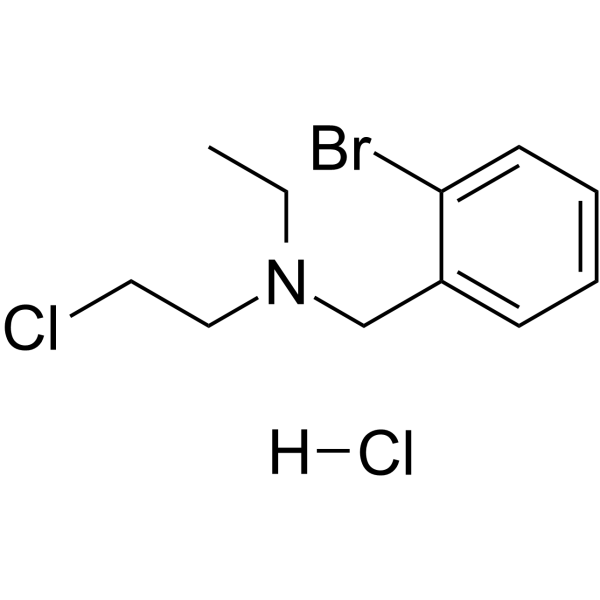
    DSP-4 hydrochloride
    2 Publications Verification

    Neurotoxin DSP 4 hydrochloride

    Adrenergic Receptor Neurological Disease
    DSP-4 hydrochloride is a highly and selective adrenergic neurotoxin. DSP-4 hydrochloride can cross the blood brain barrier. DSP-4 hydrochloride can be used for the temporary selective degradation of the central and peripheral noradrenergic neurons .
    DSP-4 hydrochloride
  • HY-108652
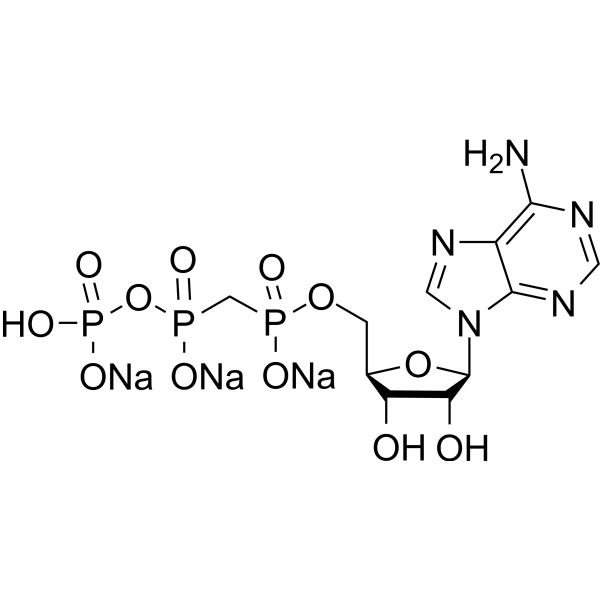
    α,β-Methylene-ATP trisodium
    1 Publications Verification

    P2X Receptor Inflammation/Immunology
    α,β-Methylene-ATP trisodium is an agonist of P2X1 and P2X3 receptors and can cross the blood-brain barrier. α,β-Methylene-ATP trisodium can trigger a reflex pressor response by activating P2X receptors in peripheral muscles and the central locus coeruleus (LC); this effect can be blocked by the P2X antagonist PPADS (HY-108960). α,β-Methylene-ATP trisodium also activates noradrenergic neurons in the central locus coeruleus, mediating antinociceptive effects; this effect can be attenuated by the locus coeruleus damaging agent DSP-4 (HY-103210/HY-121602). α,β-Methylene-ATP trisodium can be used to study the pathological mechanisms of neuropathic pain, cardiovascular reflex regulation, and antinociceptive effects of the central nervous system .
    α,β-Methylene-ATP trisodium
  • HY-W019599

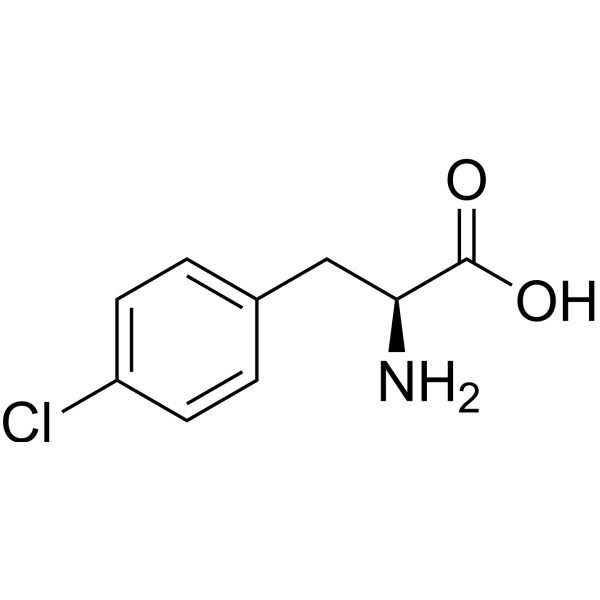
    L-PCPA

    5-HT Receptor Tryptophan Hydroxylase Neurological Disease
    4-Chloro-L-phenylalanine (L-PCPA) is a tryptophan hydroxylase inhibitor targeting TPH1 and TPH2, with the activity of blocking serotonin biosynthesis. 4-Chloro-L-phenylalanine reduces the levels of serotonin and its metabolites in the brain without impairing the survival of serotonergic neurons. 4-Chloro-L-phenylalanine enhances anhedonic, depression-like and anxiety-like behaviors in mice with depleted noradrenergic and dopaminergic neurons. 4-Chloro-L-phenylalanine acts as a decarboxylation substrate for aromatic L-amino acid decarboxylase from Bacillus atrophaeus. 4-Chloro-L-phenylalanine can be used in studies related to Parkinson's disease .
    4-Chloro-L-phenylalanine
  • HY-134440A

    P2X Receptor Inflammation/Immunology
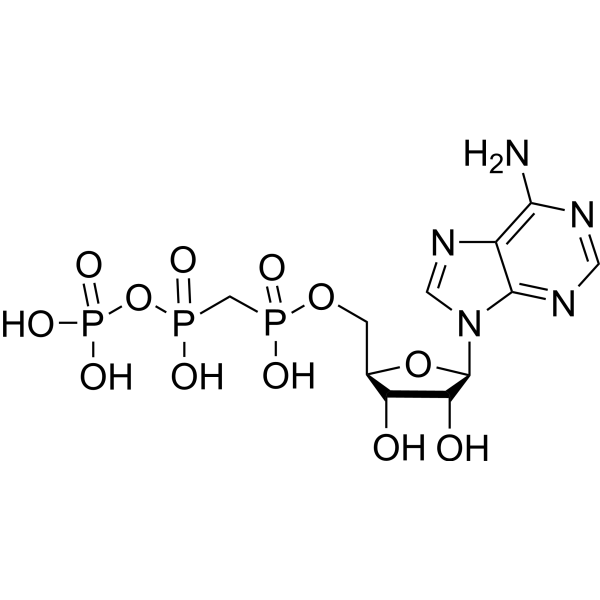
    α,β-Methylene-ATP is an agonist of P2X1 and P2X3 receptors and can cross the blood-brain barrier. α,β-Methylene-ATP can trigger a reflex pressor response by activating P2X receptors in peripheral muscles and the central locus coeruleus (LC); this effect can be blocked by the P2X antagonist PPADS (HY-108960). α,β-Methylene-ATP also activates noradrenergic neurons in the central locus coeruleus, mediating antinociceptive effects; this effect can be attenuated by the locus coeruleus damaging agent DSP-4 (HY-103210/HY-121602). α,β-Methylene-ATP can be used to study the pathological mechanisms of neuropathic pain, cardiovascular reflex regulation, and antinociceptive effects of the central nervous system .
    α,β-Methylene-ATP
  • HY-134440

    P2X Receptor Inflammation/Immunology
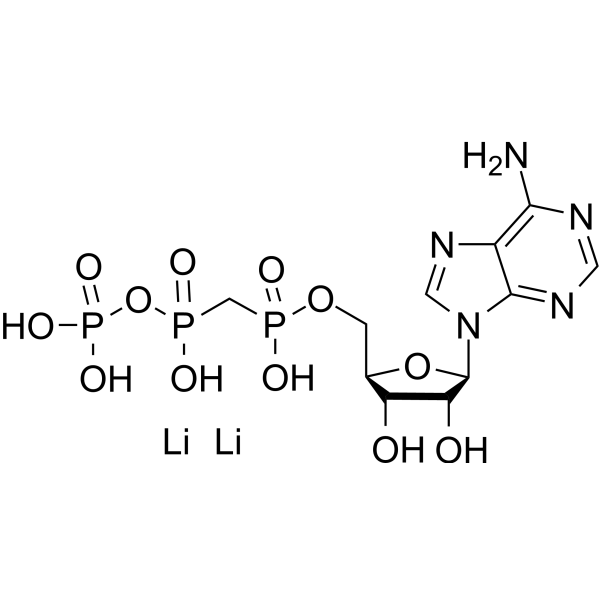
    α,β-Methylene-ATP dilithium is an agonist of P2X1 and P2X3 receptors and can cross the blood-brain barrier. α,β-Methylene-ATP dilithium can trigger a reflex pressor response by activating P2X receptors in peripheral muscles and the central locus coeruleus (LC); this effect can be blocked by the P2X antagonist PPADS (HY-108960). α,β-Methylene-ATP dilithium also activates noradrenergic neurons in the central locus coeruleus, mediating antinociceptive effects; this effect can be attenuated by the locus coeruleus damaging agent DSP-4 (HY-103210/HY-121602). α,β-Methylene-ATP dilithium can be used to study the pathological mechanisms of neuropathic pain, cardiovascular reflex regulation, and antinociceptive effects of the central nervous system .
    α,β-Methylene-ATP dilithium
  • HY-121602

    Adrenergic Receptor Neurological Disease
    DSP 4 Free base is a selective neurotoxin that targets noradrenergic neurons in the locus coeruleus noradrenergic system. DSP 4 Free base possesses the unique ability to cross the blood–brain barrier. DSP 4 Free base cyclizes to form a reactive aziridinium derivative that accumulates in noradrenergic neurons.
    DSP 4 free base
  • HY-103231

    iGluR Neurological Disease
    (S)-CPW 399 is a subtype-selective full agonist of AMPA receptors, with a 20-fold higher selectivity for GluA1 and GluA2 subunits over GluA3 and GluA4 subunits. (S)-CPW 399 can significantly increase the spontaneous firing rate (FR) of LC noradrenergic neurons by activating AMPA receptors containing GluA1 subunits. (S)-CPW 399 can be used for the study of neurological diseases .
    (S)-CPW 399
  • HY-103210R

    Neurotoxin DSP 4 hydrochloride (Standard)

    Adrenergic Receptor Reference Standards Neurological Disease
    DSP-4 hydrochloride (Standard) is the analytical standard of DSP-4 hydrochloride (HY-103210). This product is intended for research and analytical applications. DSP-4 hydrochloride is a highly and selective adrenergic neurotoxin. DSP-4 hydrochloride can cross the blood brain barrier. DSP-4 hydrochloride can be used for the temporary selective degradation of the central and peripheral noradrenergic neurons .
    DSP-4 hydrochloride (Standard)
  • HY-E70910

    Biochemical Assay Reagents Neurological Disease
    Dopamine β-monooxygenase, Human (EC 1.14.17.1) is a copper-containing monooxygenase that converts dopamine into norepinephrine in noradrenergic neurons, adrenergic neurons, and adrenacentrocytes.
    Dopamine β-monooxygenase, Human
  • HY-N18471A

    5,7-DHP hydrobromide

    Monoamine Oxidase 5-HT Receptor Neurological Disease
    5,7-Dihydroxytryptamine (5,7-DHT) hydrobromide is an autofluorescent (Ex ≈ 365 nm), selective neurotoxin and a transport substrate for MAO-A and 5-HT. 5,7-Dihydroxytryptamine hydrobromide can specifically target and damage central and peripheral 5-HTergic neurons, while affecting 5-HT-related pathways and neurotransmitter balance. 5,7-Dihydroxytryptamine hydrobromide can be used to establish 5-HTergic neuron injury models for studies on neural development, neurodegenerative diseases, as well as mechanisms related to platelet function and retinal neurons .
    5,7-Dihydroxytryptamine hydrobromide
  • HY-108652R

    Reference Standards P2X Receptor Inflammation/Immunology
    α,β-Methylene-ATP trisodium (Standard) is the analytical standard of α,β-Methylene-ATP (trisodium) (HY-108652). This product is intended for research and analytical applications. α,β-Methylene-ATP trisodium is an agonist of P2X1 and P2X3 receptors and can cross the blood-brain barrier. α,β-Methylene-ATP trisodium can trigger a reflex pressor response by activating P2X receptors in peripheral muscles and the central locus coeruleus (LC); this effect can be blocked by the P2X antagonist PPADS (HY-108960). α,β-Methylene-ATP trisodium also activates noradrenergic neurons in the central locus coeruleus, mediating antinociceptive effects; this effect can be attenuated by the locus coeruleus damaging agent DSP-4 (HY-103210/HY-121602). α,β-Methylene-ATP trisodium can be used to study the pathological mechanisms of neuropathic pain, cardiovascular reflex regulation, and antinociceptive effects of the central nervous system .
    α,β-Methylene-ATP trisodium (Standard)

Inquiry Online

Your information is safe with us. * Required Fields.

Salutation


Country or Region *

Applicant Name *


Organization Name *

Department *


Email Address *


Product Name *

Cat. No.


Requested quantity *

Phone Number *


Remarks

Inquiry Online

Inquiry Information

Product Name:
Cat. No.:
Quantity:
MCE Japan Authorized Agent:

