
17 Results for "

olive+oil

" in MedChemExpress (MCE) Product Catalog:
Products (17)

17 Results for "olive+oil" in MCE Product Catalog:

7
7 Publications Verification
Cat. No.: HY-108749
CAS No.: 8001-25-0
Synonyms: Cropure OL
Olive oil (Cropure OL) is an oleaginous compound found in the fruit of the Olea europaea tree . Olive oil contains many phenolic components and exerts antioxidant activity. Olive oil exhibits hydroxyl radical scavenging, platelet aggregation inhibition and xanthine oxidase inhibitory activity. Olive oil can promote wound healing and relieve inflammation. Olive oil can be used for the research of inflammation, cancer, metabolic and cardiovascular disease, such as diabetic foot ulcers and inflammatory bowel disease .
loading...
    loading...
1
1 Cited Publications
Cat. No.: HY-N1109
CAS No.: 545-46-0
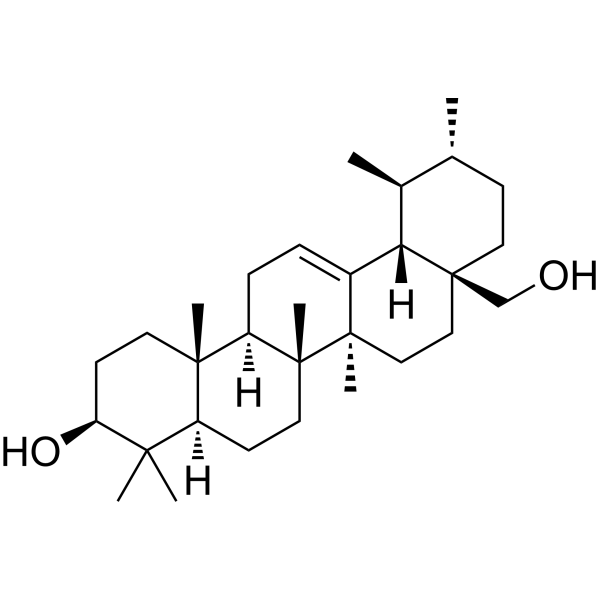
Uvaol, a triterpene present in olives and virgin olive oil, possesses anti-inflammatory properties and antioxidant effects. Uvaol is an orally active inducer of apoptosis in astroglioma cells. Uvaol also has anti-cancer activities. Uvaol attenuates pleuritis and eosinophilic inflammation in ovalbumin-induced allergy in mice .
loading...
    loading...
1
1 Cited Publications
Cat. No.: HY-N2419
CAS No.: 545-48-2
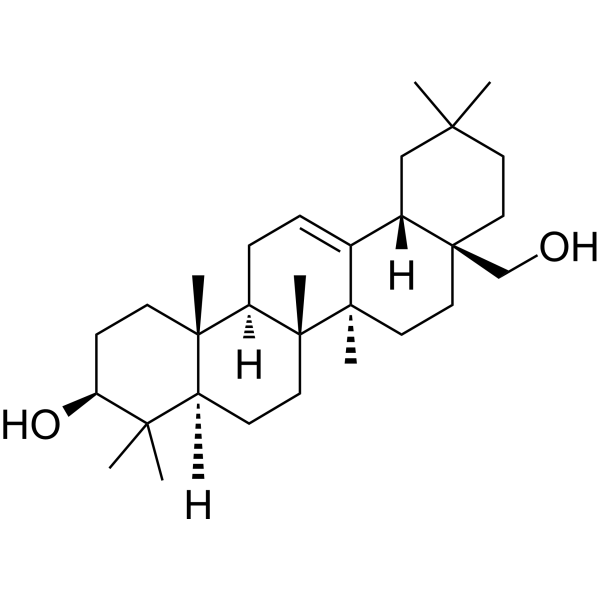
Erythrodiol is an olive oil component. Erythrodiol promotes Cholesterol efflux (ChE) by selectively inhibiting the degradation of ABCA1 protein. Erythrodiol is a good candidate to be further explored for therapeutic or preventive application in the context of atherosclerosis .
loading...
    loading...
Cat. No.: HY-Y0801
CAS No.: 303-07-1
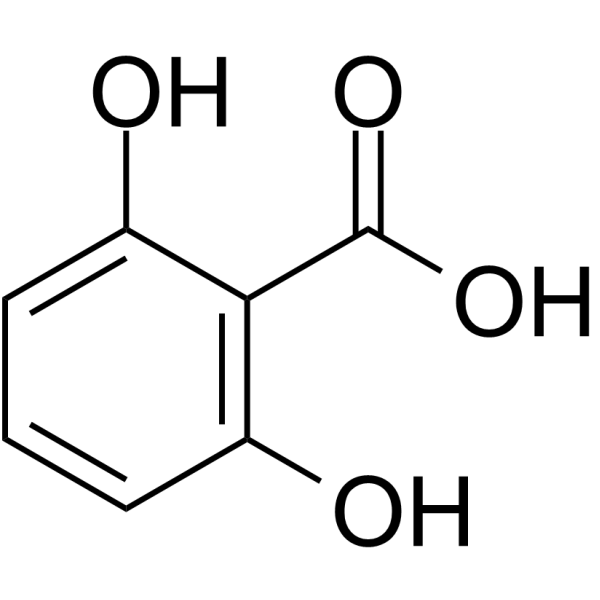
2,6-Dihydroxybenzoic acid is an aromatic compound containing phenolic hydroxyl groups and carboxyl groups, and it is a secondary metabolite of Salicylic acid (HY-B0167). 2,6-Dihydroxybenzoic acid is also present in olive oil wastewater .
loading...
    loading...
Cat. No.: HY-124481
CAS No.: 289030-99-5
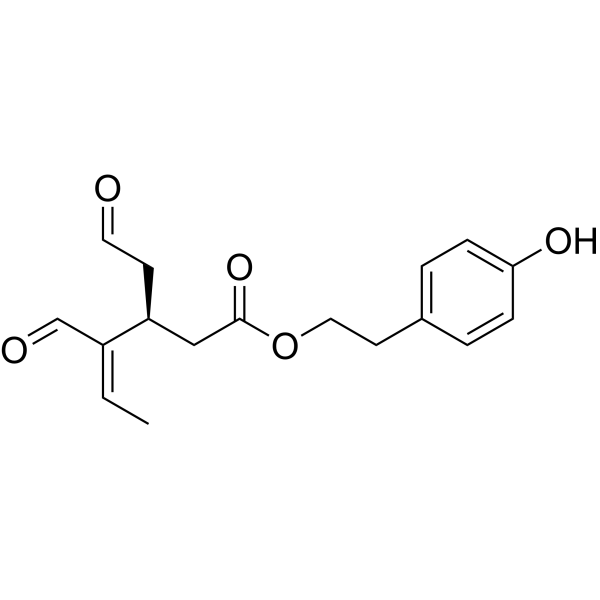
Oleocanthal is an orally active phenolic seciridoid compound. Oleocanthal can be extracted from olive oil. Oleocanthal inhibits COX-1 and COX-2, reduces ROS and NO, and upregulates Nrf-2 and HO-1. Oleocanthal reduces deposition. Oleocanthal exhibits anti-Leishmania activity against promastigotes and amastigotes of L. major, with IC50 values of 18.7 and 87 μg/mL, respectively. Oleocanthal exhibits anticancer activity against colon, breast, liver, and melanoma cancers. Oleocanthal also exhibits anti-inflammatory and neuroprotective properties. Oleocanthal can be used in Alzheimer's disease research .
loading...
    loading...
Cat. No.: HY-W010066
CAS No.: 28822-73-3
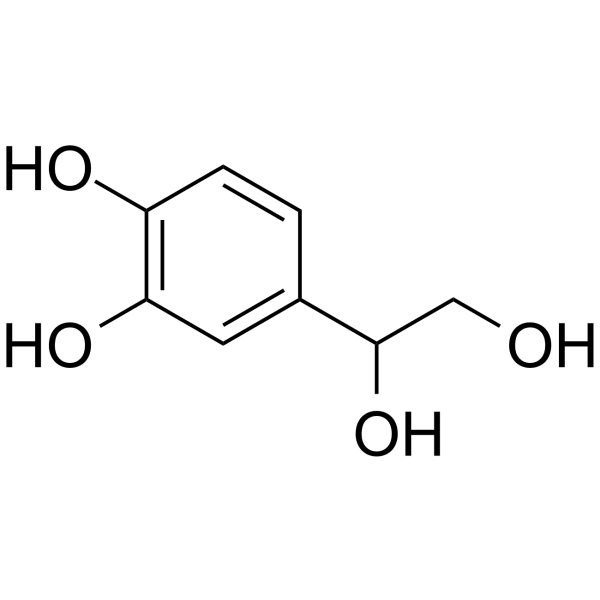
3,4-Dihydroxyphenylglycol is a phenolic compound and antioxidant. 3,4-Dihydroxyphenylglycol can be extracted from olive oil. 3,4-Dihydroxyphenylglycol downregulates the expression of proinflammatory enzymes (iNOS, COX-2) and prevents the degradation of IκBα. 3,4-Dihydroxyphenylglycol has antioxidant properties. 3,4-Dihydroxyphenylglycol has shown positive effects on frozen-thawed ram sperm. 3,4-Dihydroxyphenylglycol can be used in the study of inflammatory-related diseases (such as ulcerative colitis) and reproductive health (sperm cryopreservation) .
loading...
    loading...
Cat. No.: HY-N9811
CAS No.: 54695-80-6
Target:  

Drug Derivative

Hydroxytyrosol 4-O-glucoside is a phenolic compound found in olive pulp, vegetation water, and pomace of olive oil processing. Hydroxytyrosol 4-O-glucoside can be used in research on antibacterial, hypoglycemic, lipid-lowering, and cholesterol-lowering effects .
loading...
    loading...
Cat. No.: HY-113878
CAS No.: 101901-73-9
Target:  

Endogenous Metabolite

Research Areas:  

Metabolic Disease

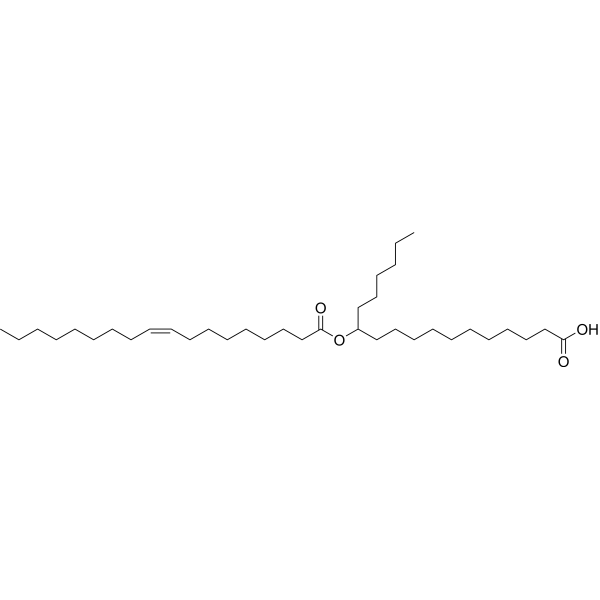
12-OAHSA is a component of olive oil. 12-OAHSA has oral activity, and improves glucose homeostasis in insulin resistant obese mice .
loading...
    loading...
Cat. No.: HY-157734
CAS No.: 93452-43-8
Target:  

Endogenous Metabolite

Research Areas:  

Others

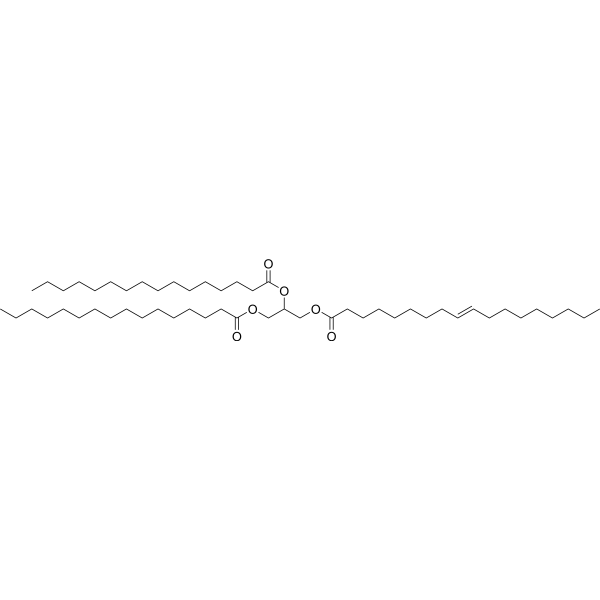
1,2-Palmitate-3-elaidate is a triglyceride that can be isolated from virgin olive oil .
loading...
    loading...
Cat. No.: HY-N2419R
CAS No.: 545-48-2
Erythrodiol (Standard) is the analytical standard of Erythrodiol. This product is intended for research and analytical applications. Erythrodiol is an olive oil component. Erythrodiol promotes Cholesterol efflux (ChE) by selectively inhibiting the degradation of ABCA1 protein. Erythrodiol is a good candidate to be further explored for therapeutic or preventive application in the context of atherosclerosis .
loading...
    loading...
Cat. No.: HY-W778471
CAS No.: 126374-41-2
Synonyms: DG(18:2/0:0/18:3); 1-Linolein-3-α-Linolenin; 1-Linolein-3-Linolenin
Target:  

Endogenous Metabolite

Research Areas:  

Metabolic Disease

1-Linoleoyl-3-α-linolenoyl-rac-glycerol is a diacylglycerol that contains linoleic acid (HY-N0729) at the sn-1 position and α-linolenic acid (HY-N0728) at the sn-3 position. It has been found in olive oil subjected to lipase-catalyzed glycerolysis with immobilized lipase B from C. antarctica.
loading...
    loading...
Cat. No.: HY-Y0801R
CAS No.: 303-07-1
2,6-Dihydroxybenzoic acid (Standard) is the analytical standard of 2,6-Dihydroxybenzoic acid (HY-Y0801). This product is used for research and analytical applications. 2,6-Dihydroxybenzoic acid is an aromatic compound containing phenolic hydroxyl groups and carboxyl groups, and it is a secondary metabolite of Salicylic acid (HY-B0167). 2,6-Dihydroxybenzoic acid is also present in olive oil wastewater .
loading...
    loading...
Cat. No.: HY-W010066R
CAS No.: 28822-73-3
3,4-Dihydroxyphenylglycol (Standard) is the analytical standard of 3,4-Dihydroxyphenylglycol (HY-W010066). This product is intended for research and analytical applications. 3,4-Dihydroxyphenylglycol is a phenolic compound and antioxidant. 3,4-Dihydroxyphenylglycol can be extracted from olive oil. 3,4-Dihydroxyphenylglycol downregulates the expression of proinflammatory enzymes (iNOS, COX-2) and prevents the degradation of IκBα. 3,4-Dihydroxyphenylglycol has antioxidant properties. 3,4-Dihydroxyphenylglycol has shown positive effects on frozen-thawed ram sperm. 3,4-Dihydroxyphenylglycol can be used in the study of inflammatory-related diseases (such as ulcerative colitis) and reproductive health (sperm cryopreservation) .
loading...
    loading...
Cat. No.: HY-187587
CAS No.: 105791-89-7
Research Areas:  

Others

Cu (II) Pyropheophytin a is a chlorophyll derivative. Copper-chlorophyll derivatives are absent in olive oil. Cu (II) Pyropheophytin a can be applied in the research of olive oil adulteration .
loading...
    loading...
Cat. No.: HY-W792683
CAS No.: 38339-06-9
Homovanillic Acid Sulfate is a Phenols product that can be isolated from From olive oil. .
loading...
    loading...
Cat. No.: HY-W654215
Research Areas:  

Metabolic Disease

Homovanillic acid sulfate (sodium) is a phenol that can be found in olive oil and a dopamine metabolite. Homovanillic acid sulfate (sodium) increases in response to acute renal injury in vivo. Homovanillic acid sulfate (sodium) can be used as a biomarker for early detection of kidney disease .
loading...
    loading...
Cat. No.: HY-Y0801S
CAS No.: 1195947-64-8
2,6-Dihydroxybenzoic acid-d3 is the deuterated-labeled 2,6-Dihydroxybenzoic acid (HY-Y0801). 2,6-Dihydroxybenzoic acid is an aromatic compound containing phenolic hydroxyl groups and carboxyl groups, and it is a secondary metabolite of Salicylic acid (HY-B0167). 2,6-Dihydroxybenzoic acid is also present in olive oil wastewater .
loading...
    loading...
  • 1

