
Search Result
Results for "
peripheral antinociceptive
" in MedChemExpress (MCE) Product Catalog:
3
Isotope-Labeled Compounds
| Cat. No. |
Product Name |
Target |
Research Areas |
Chemical Structure |
-
- HY-106224
-
|
Hypocretin-1 (human, rat, mouse)
|
Orexin Receptor (OX Receptor)
|
Neurological Disease
|
|
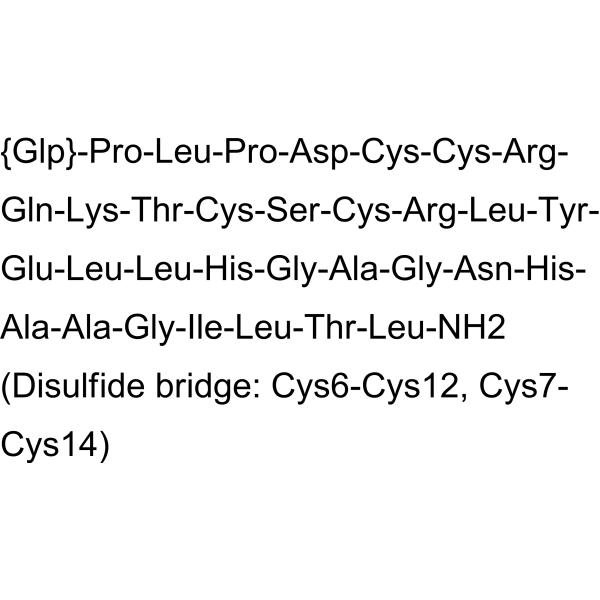
Orexin A (human, rat, mouse) (Hypocretin-1 (human, rat, mouse)), a 33 amino acid excitatory neuropeptide, orchestrates diverse central and peripheral processes. Orexin A (human, rat, mouse) binds and activates two types of G protein-coupled receptors, the orexin-1 receptor (OX1R) and the orexin-2 receptor (OX2R). Orexin A (human, rat, mouse) has a role in the regulation of feeding behavior. Orexin A (human, rat, mouse) is an effective anti-nociceptive and anti-hyperalgesic agent in mice and rats .
|
-
-
- HY-108652
-
|
|
P2X Receptor
|
Inflammation/Immunology
|
|
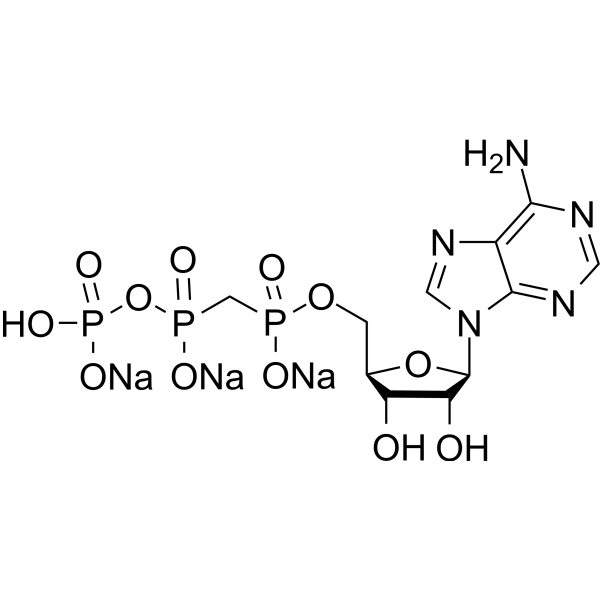
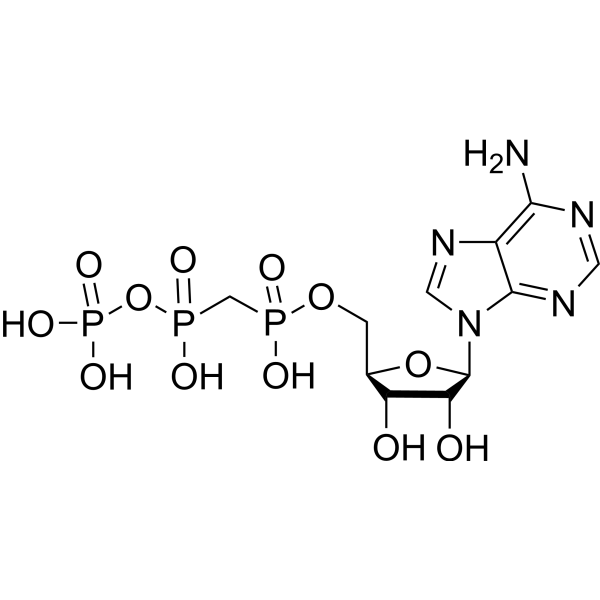
α,β-Methylene-ATP trisodium is an agonist of P2X1 and P2X3 receptors and can cross the blood-brain barrier. α,β-Methylene-ATP trisodium can trigger a reflex pressor response by activating P2X receptors in peripheral muscles and the central locus coeruleus (LC); this effect can be blocked by the P2X antagonist PPADS (HY-108960). α,β-Methylene-ATP trisodium also activates noradrenergic neurons in the central locus coeruleus, mediating antinociceptive effects; this effect can be attenuated by the locus coeruleus damaging agent DSP-4 (HY-103210/HY-121602). α,β-Methylene-ATP trisodium can be used to study the pathological mechanisms of neuropathic pain, cardiovascular reflex regulation, and antinociceptive effects of the central nervous system .
|
-
-
- HY-12882A
-
|
NP-120 tartrate; RC-61-91 tartrate
|
iGluR
Adrenergic Receptor
Potassium Channel
Calcium Channel
Influenza Virus
|
Infection
Neurological Disease
|
|
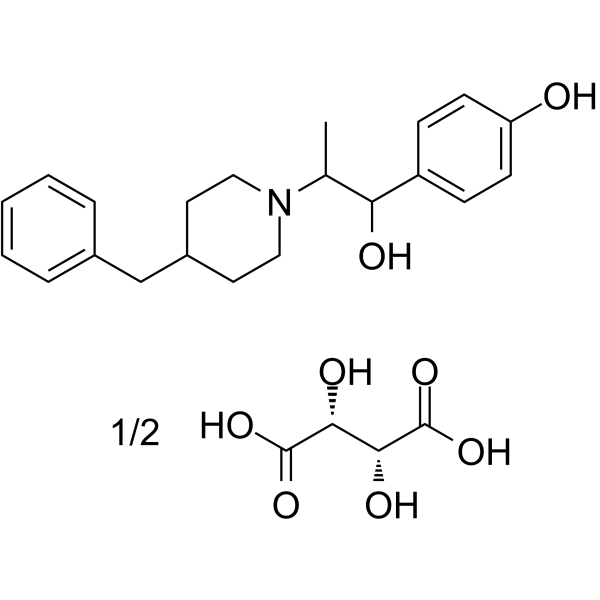
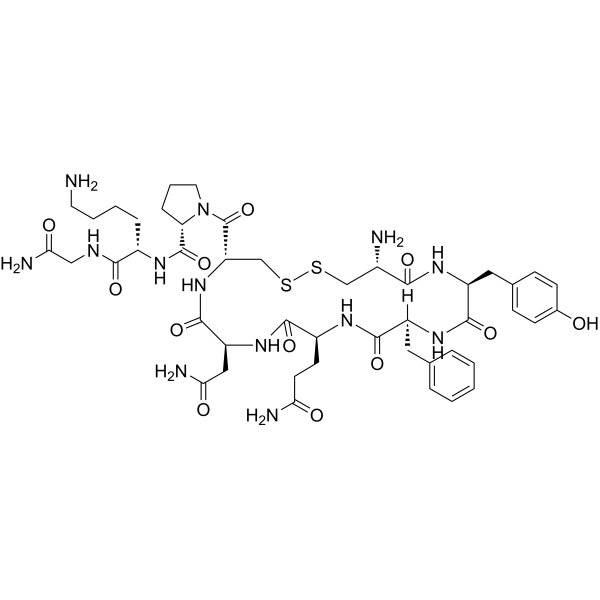
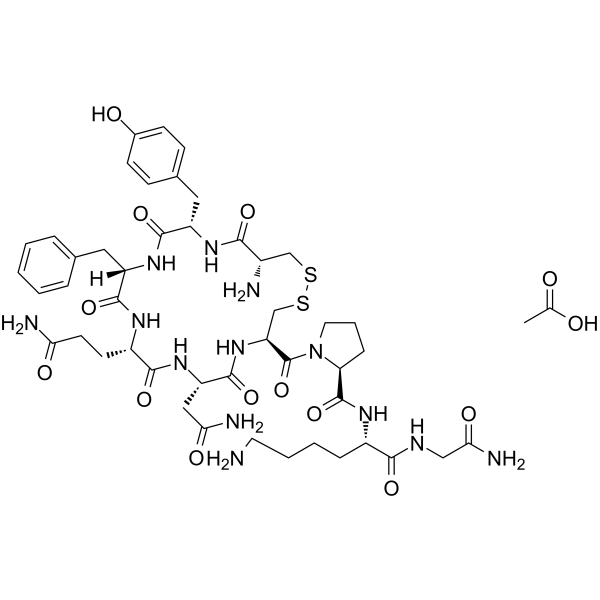
Ifenprodil (NP-120) tartrate, a cerebral vasodilator, is a noncompetitive NMDA receptor antagonist. Ifenprodil tartrate exerts high affinity at NR1A/NR2B receptors (IC50=0.34 μM) over 400-fold than at NR1A/NR2A receptors (IC50=146 μM) . Ifenprodil tartrate is an α1 adrenergic receptor antagonist. Ifenprodil tartrate inhibits GIRK (Kir3), reduces inward currents through the basal GIRK activity. Ifenprodil tartrate has reliable inhibitory effects against A/H1N1 strains (EC50 of 6.6 µM). Ifenprodil tartrate has neuroprotective, anticonvulsant and antinociceptive effects. Ifenprodil tartrate can be used for the study of cerebrovascular diseases and peripheral arterial obliterative disease .
|
-
-
- HY-18099
-
S1RA
3 Publications Verification
E-52862
|
Sigma Receptor
5-HT Receptor
|
Neurological Disease
|
|
S1RA (E-52862) is a highly selective σ1 receptor (σ1R) antagonist with Kis of 17 nM and 23.5 nM for human σ1R and guinea pig σ1R, respectively. S1RA has Moderate antagonistic activity for human 5-HT2B receptor (Ki= 328 nM). S1RA has antinociceptive effects in neuropathic pain models. S1RA prevents mechanical and cold hypersensitivity in Oxaliplatin (HY-17371)-treated mice .
|
-
-
- HY-N8487
-
|
|
Cytochrome P450
|
Neurological Disease
Inflammation/Immunology
Cancer
|
|
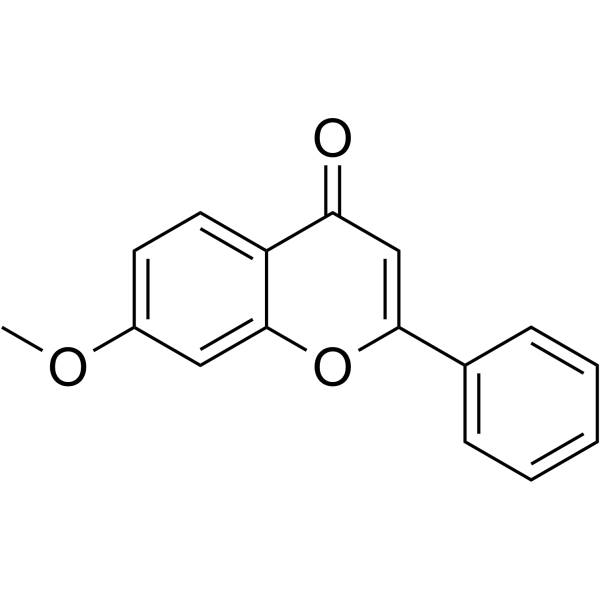
7-Methoxyflavone is a flavonoid compound that can be isolated from Zornia brasiliensis. 7-Methoxyflavone can bind to human serum albumin and is an aromatase inhibitor. 7-Methoxyflavone has peripheral analgesic and certain antitumor activities. 7-Methoxyflavone is effective against chemical pain but has no significant effect on thermal pain .
|
-
-
- HY-12882
-
|
NP-120; RC-61-91
|
iGluR
Adrenergic Receptor
Potassium Channel
Calcium Channel
Influenza Virus
|
Infection
Neurological Disease
|
|
Ifenprodil (NP-120), a cerebral vasodilator, is a noncompetitive NMDA receptor antagonist. Ifenprodil exerts high affinity at NR1A/NR2B receptors (IC50=0.34 μM) over 400-fold than at NR1A/NR2A receptors (IC50=146 μM) . Ifenprodil is an α1 adrenergic receptor antagonist. Ifenprodil inhibits GIRK (Kir3), reduces inward currents through the basal GIRK activity. Ifenprodil has reliable inhibitory effects against A/H1N1 strains (EC50 of 6.6 µM). Ifenprodil has neuroprotective, anticonvulsant and antinociceptive effects. Ifenprodil can be used for the study of cerebrovascular diseases and peripheral arterial obliterative disease .
|
-
-
- HY-17391
-
|
|
Adenosine Receptor
|
Endocrinology
|
|
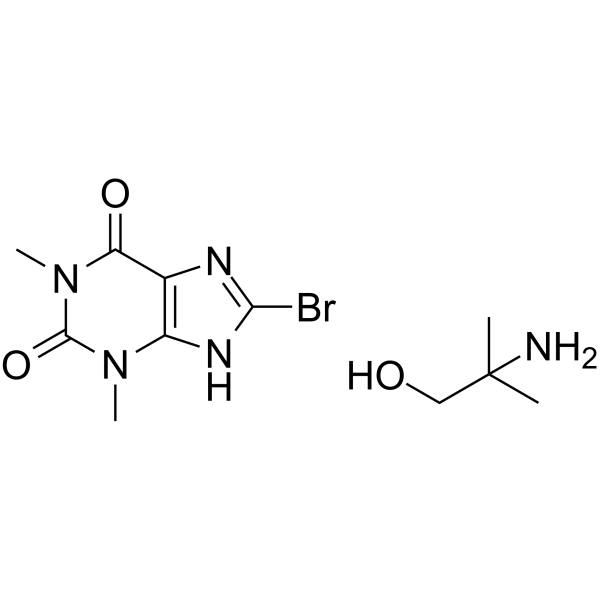
Pamabrom is a diuretic that acts on the opioid receptor-nitric oxide (NO) -cyclic guanosine monophosphate (cGMP) -K + channel pathway. Pamabrom exerts peripheral antinociceptive activity by activating this pathway. The mechanism involves activating opioid receptors, promoting the release of nitric oxide, and then influencing cyclic guanosine monophosphate and K channels to produce an analgesic effect. Pamabrom is orally active and is mainly used in the research and treatment of premenstrual syndrome and primary dysmenorrhea[1].
|
-
-
- HY-N0746
-
|
|
Others
|
Cancer
|
|
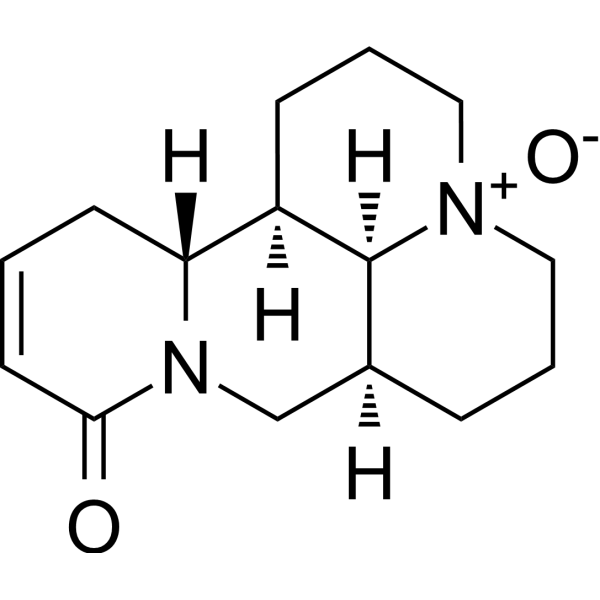
Oxysophocarpine is an alkaloid extracted from Sophora alopecuroides.?Oxysophocarpine has neuroprotective and anti-nociceptive effects on the central and peripheral nervous systems . Oxysophocarpine inhibits the?growth?and?metastasis?of ?oral?squamous?cell?carcinoma?(OSCC) .
|
-
-
- HY-134440A
-
|
|
P2X Receptor
|
Inflammation/Immunology
|
|
α,β-Methylene-ATP is an agonist of P2X1 and P2X3 receptors and can cross the blood-brain barrier. α,β-Methylene-ATP can trigger a reflex pressor response by activating P2X receptors in peripheral muscles and the central locus coeruleus (LC); this effect can be blocked by the P2X antagonist PPADS (HY-108960). α,β-Methylene-ATP also activates noradrenergic neurons in the central locus coeruleus, mediating antinociceptive effects; this effect can be attenuated by the locus coeruleus damaging agent DSP-4 (HY-103210/HY-121602). α,β-Methylene-ATP can be used to study the pathological mechanisms of neuropathic pain, cardiovascular reflex regulation, and antinociceptive effects of the central nervous system .
|
-
-
- HY-125527A
-
|
17(R)-RvD1; AT-RvD1
|
TRP Channel
|
Inflammation/Immunology
|
|
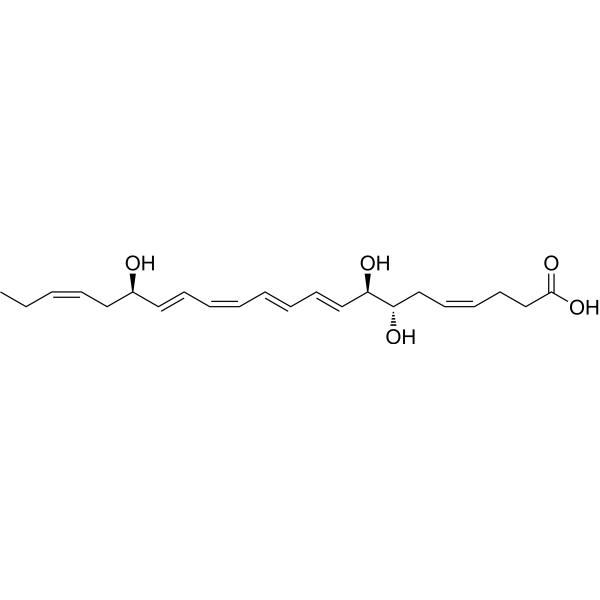
17R-Resolvin D1 (17R-RvD1; AT-RvD1) is an aspirin-triggered epimer of Resolvin D1, which exhibits anti-inflammatory activity in mice and human PMNs cells . 17R-Resolvin D1 specificially inhibits TRPV3 with an IC50 of 398 nM and exhibits peripheral anti-nociceptive efficacy .
|
-
-
- HY-147907
-
|
|
Adenosine Receptor
|
Neurological Disease
Inflammation/Immunology
Cancer
|
|
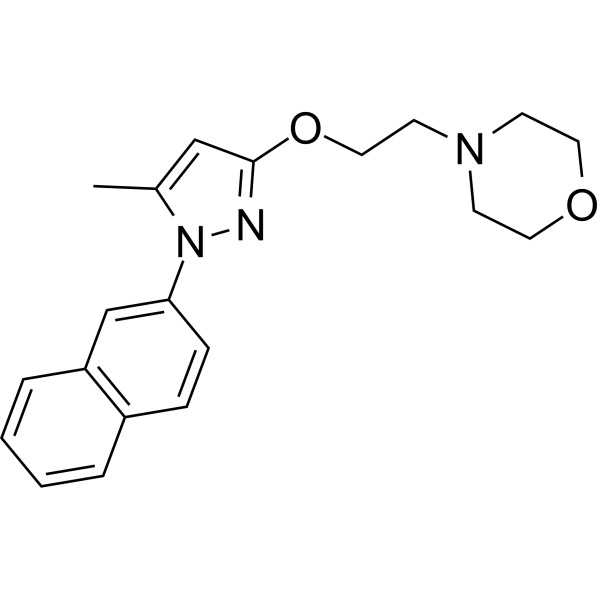
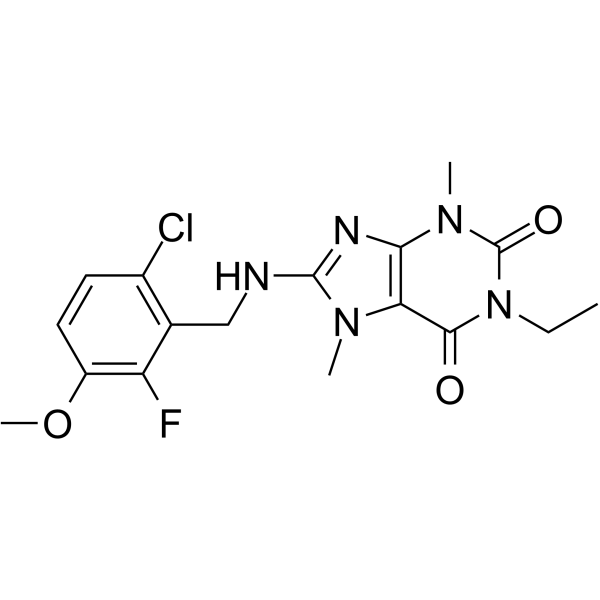
Adenosine receptor inhibitor 1 is a potent and selective adenosine receptor (AR) inhibitor with Ki values of >1000, 68.5, >1000, >1000 nM for A1AR, A2AAR, A2BAR, A3AR, respectively. Adenosine receptor inhibitor 1 shows antinociceptive activity, anti-inflammatory effect and peripheral analgesic effect. Adenosine receptor inhibitor 1 has the potential for the research of cancer or neurodegenerative diseases .
|
-
-
- HY-106224A
-
|
Hypocretin-1 (human, rat, mouse) TFA
|
Orexin Receptor (OX Receptor)
|
Neurological Disease
|
|
Orexin A (human, rat, mouse) (Hypocretin-1 (human, rat, mouse)) TFA, a 33 amino acid excitatory neuropeptide, orchestrates diverse central and peripheral processes. Orexin A (human, rat, mouse) TFA binds and activates two types of G protein-coupled receptors, the orexin-1 receptor (OX1R) and the orexin-2 receptor (OX2R). Orexin A (human, rat, mouse) TFA has a role in the regulation of feeding behavior. Orexin A (human, rat, mouse) TFA is an effective anti-nociceptive and anti-hyperalgesic agent in mice and rats .
|
-
-
- HY-P10358
-
|
|
Calcium Channel
|
Neurological Disease
|
|
TAT-CBD3A6K, is a modified TAT-CBD3 peptide. TAT-CBD3A6K reduces T- and R-type voltage-dependent calcium currents in dorsal root ganglion (DRG) neurons. TAT-CBD3A6K shows anti-nociceptive effects in a model of AIDS-induced peripheral neuropathy by preventing CRMP-2-mediated enhancement of T- and R-type calcium channel function .
|
-
-
- HY-N0746R
-
|
|
Reference Standards
Others
|
Cancer
|
|
Oxysophocarpine (Standard) is the analytical standard of Oxysophocarpine. This product is intended for research and analytical applications. Oxysophocarpine is an alkaloid extracted from Sophora alopecuroides. Oxysophocarpine has neuroprotective and anti-nociceptive effects on the central and peripheral nervous systems . Oxysophocarpine inhibits the growth and metastasis of oral squamous cell carcinoma (OSCC) .
|
-
-
- HY-134440
-
|
|
P2X Receptor
|
Inflammation/Immunology
|
|
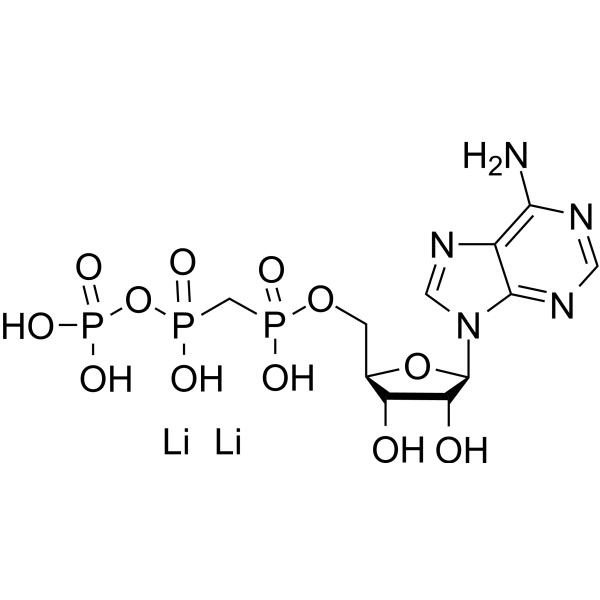
α,β-Methylene-ATP dilithium is an agonist of P2X1 and P2X3 receptors and can cross the blood-brain barrier. α,β-Methylene-ATP dilithium can trigger a reflex pressor response by activating P2X receptors in peripheral muscles and the central locus coeruleus (LC); this effect can be blocked by the P2X antagonist PPADS (HY-108960). α,β-Methylene-ATP dilithium also activates noradrenergic neurons in the central locus coeruleus, mediating antinociceptive effects; this effect can be attenuated by the locus coeruleus damaging agent DSP-4 (HY-103210/HY-121602). α,β-Methylene-ATP dilithium can be used to study the pathological mechanisms of neuropathic pain, cardiovascular reflex regulation, and antinociceptive effects of the central nervous system .
|
-
-
- HY-106224AS1
-
|
Hypocretin-1-13C18,15N3 (human, rat, mouse) TFA
|
Isotope-Labeled Compounds
Orexin Receptor (OX Receptor)
|
Neurological Disease
|
|
Orexin A- 13C18, 15N3 (human, rat, mouse) ((Hypocretin-1- 13C18, 15N3 (human, rat, mouse)) TFA is the 13C- and 15N-labeled Orexin A (human, rat, mouse) (HY-106224). Orexin A (human, rat, mouse) (Hypocretin-1 (human, rat, mouse)), a 33 amino acid excitatory neuropeptide, orchestrates diverse central and peripheral processes. Orexin A (human, rat, mouse) binds and activates two types of G protein-coupled receptors, the orexin-1 receptor (OX1R) and the orexin-2 receptor (OX2R). Orexin A (human, rat, mouse) has a role in the regulation of feeding behavior. Orexin A (human, rat, mouse) is an effective anti-nociceptive and anti-hyperalgesic agent in mice and rats .
|
-
-
- HY-N9854
-
|
|
Potassium Channel
|
Inflammation/Immunology
|
|
Icariside E4 is an antinociceptive agent, and can be isolated from Tabebuia roseo-alba. Icariside E4 has peripheral analgesic activity by ATP-sensitive K + channel-dependent mechanisms. Icariside E4 also has anti-oxidant, anti-Alzheimer and anti-inflammatory effects .
|
-
-
- HY-130432
-
|
|
nAChR
|
Neurological Disease
|
|
DBO-83 dihydrochloride is a brain-penetrant nicotinic acetylcholine receptor (nAChR) agonist. DBO-83 dihydrochloride activates peripheral nicotinic acetylcholine receptors to evoke non-stimulated ileum contractions. DBO-83 dihydrochloride shows antinociceptive and anti-amnesic activities .
|
-
-
- HY-174848
-
|
|
TRP Channel
Cannabinoid Receptor
|
Neurological Disease
Inflammation/Immunology
|
|
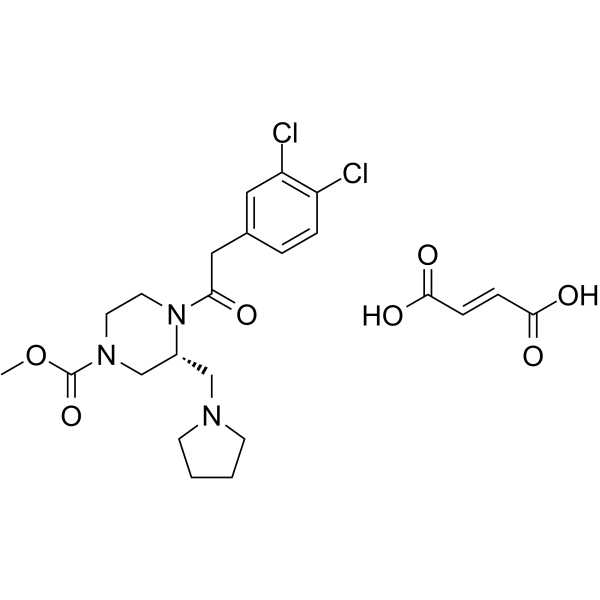
PQM-244 (Compound 5c) is an orally active and multi-target modulator of TRPV1 and CB1 and CB2 receptors. PQM-244 has significant peripheral antinociceptive effects on both neurogenic and inflammatory phases. PQM-244 also has potential antioxidant activity with an IC50 of 14.15 µM for radical scavenging DPPH. PQM-244 can be used for chronic pain and inflammatory disease research, such as diabetes, atherosclerosis and Alzheimer’s disease .
|
-
-
- HY-P10358A
-
|
|
Calcium Channel
|
Neurological Disease
|
|
TAT-CBD3A6K acetate, is a modified TAT-CBD3 peptide. TAT-CBD3A6K acetate reduces T- and R-type voltage-dependent calcium currents in dorsal root ganglion (DRG) neurons. TAT-CBD3A6K acetate shows anti-nociceptive effects in a model of AIDS-induced peripheral neuropathy by preventing CRMP-2-mediated enhancement of T- and R-type calcium channel function .
|
-
-
- HY-150028
-
|
|
Cannabinoid Receptor
|
Inflammation/Immunology
|
|
CB1/2 agonist 2 (compound 23) is a potent non-selective cannabinoid ligand, with Ki values of 3.5 and 1.2 nM, respectively. CB1/2 agonist 2 can behave as a full CB1 agonist and CB2 competitive inverse agonist. CB1/2 agonist 2 shows antinociceptive activity .
|
-
-
- HY-125527AS
-
|
17(R)-RvD1-d5; AT-RvD1-d5
|
Isotope-Labeled Compounds
TRP Channel
|
Inflammation/Immunology
|
|
17(R)-Resolvin D1-d5 (17(R)-RvD1-d5) is deuterium labeled 17(R)-Resolvin D1. 17R-Resolvin D1 (17R-RvD1; AT-RvD1) is an aspirin-triggered epimer of Resolvin D1, which exhibits anti-inflammatory activity in mice and human PMNs cells . 17R-Resolvin D1 specificially inhibits TRPV3 with an IC50 of 398 nM and exhibits peripheral anti-nociceptive efficacy .
|
-
-
- HY-167129
-
|
|
nAChR
|
Neurological Disease
|
|
DBO-83 free base is a brain-penetrant nicotinic acetylcholine receptor (nAChR) agonist. DBO-83 free base activates peripheral nicotinic acetylcholine receptors to evoke non-stimulated ileum contractions. DBO-83 free base shows antinociceptive and anti-amnesic activities .
|
-
-
- HY-108652R
-
|
|
Reference Standards
P2X Receptor
|
Inflammation/Immunology
|
|
α,β-Methylene-ATP trisodium (Standard) is the analytical standard of α,β-Methylene-ATP (trisodium) (HY-108652). This product is intended for research and analytical applications. α,β-Methylene-ATP trisodium is an agonist of P2X1 and P2X3 receptors and can cross the blood-brain barrier. α,β-Methylene-ATP trisodium can trigger a reflex pressor response by activating P2X receptors in peripheral muscles and the central locus coeruleus (LC); this effect can be blocked by the P2X antagonist PPADS (HY-108960). α,β-Methylene-ATP trisodium also activates noradrenergic neurons in the central locus coeruleus, mediating antinociceptive effects; this effect can be attenuated by the locus coeruleus damaging agent DSP-4 (HY-103210/HY-121602). α,β-Methylene-ATP trisodium can be used to study the pathological mechanisms of neuropathic pain, cardiovascular reflex regulation, and antinociceptive effects of the central nervous system .
|
-
-
- HY-N8487R
-
|
|
Reference Standards
Cytochrome P450
|
Neurological Disease
Inflammation/Immunology
Cancer
|
|
7-Methoxyflavone (Standard) is the analytical standard of 7-Methoxyflavone (HY-N8487). This product is intended for research and analytical applications. 7-Methoxyflavone is a flavonoid compound that can be isolated from Zornia brasiliensis. 7-Methoxyflavone can bind to human serum albumin and is an aromatase inhibitor. 7-Methoxyflavone has peripheral analgesic and certain antitumor activities. 7-Methoxyflavone is effective against chemical pain but has no significant effect on thermal pain .
|
-
-
- HY-106224AS
-
|
Hypocretin-1-13C6,15N (human, rat, mouse) TFA
|
Isotope-Labeled Compounds
Orexin Receptor (OX Receptor)
|
Neurological Disease
|
|
Orexin A- 13C6, 15N (human, rat, mouse) (Hypocretin-1- 13C6, 15N (human, rat, mouse)) TFA is the 13C- and 15N-labeled Orexin A (human, rat, mouse) (HY-106224). Orexin A (human, rat, mouse) (Hypocretin-1 (human, rat, mouse)), a 33 amino acid excitatory neuropeptide, orchestrates diverse central and peripheral processes. Orexin A (human, rat, mouse) binds and activates two types of G protein-coupled receptors, the orexin-1 receptor (OX1R) and the orexin-2 receptor (OX2R). Orexin A (human, rat, mouse) has a role in the regulation of feeding behavior. Orexin A (human, rat, mouse) is an effective anti-nociceptive and anti-hyperalgesic agent in mice and rats .
|
-
| Cat. No. |
Product Name |
Target |
Research Area |
-
- HY-106224
-
|
Hypocretin-1 (human, rat, mouse)
|
Orexin Receptor (OX Receptor)
|
Neurological Disease
|
|
Orexin A (human, rat, mouse) (Hypocretin-1 (human, rat, mouse)), a 33 amino acid excitatory neuropeptide, orchestrates diverse central and peripheral processes. Orexin A (human, rat, mouse) binds and activates two types of G protein-coupled receptors, the orexin-1 receptor (OX1R) and the orexin-2 receptor (OX2R). Orexin A (human, rat, mouse) has a role in the regulation of feeding behavior. Orexin A (human, rat, mouse) is an effective anti-nociceptive and anti-hyperalgesic agent in mice and rats .
|
-
- HY-106224A
-
|
Hypocretin-1 (human, rat, mouse) TFA
|
Orexin Receptor (OX Receptor)
|
Neurological Disease
|
|
Orexin A (human, rat, mouse) (Hypocretin-1 (human, rat, mouse)) TFA, a 33 amino acid excitatory neuropeptide, orchestrates diverse central and peripheral processes. Orexin A (human, rat, mouse) TFA binds and activates two types of G protein-coupled receptors, the orexin-1 receptor (OX1R) and the orexin-2 receptor (OX2R). Orexin A (human, rat, mouse) TFA has a role in the regulation of feeding behavior. Orexin A (human, rat, mouse) TFA is an effective anti-nociceptive and anti-hyperalgesic agent in mice and rats .
|
-
- HY-P10358
-
|
|
Calcium Channel
|
Neurological Disease
|
|
TAT-CBD3A6K, is a modified TAT-CBD3 peptide. TAT-CBD3A6K reduces T- and R-type voltage-dependent calcium currents in dorsal root ganglion (DRG) neurons. TAT-CBD3A6K shows anti-nociceptive effects in a model of AIDS-induced peripheral neuropathy by preventing CRMP-2-mediated enhancement of T- and R-type calcium channel function .
|
-
- HY-106224AS1
-
|
Hypocretin-1-13C18,15N3 (human, rat, mouse) TFA
|
Isotope-Labeled Compounds
Orexin Receptor (OX Receptor)
|
Neurological Disease
|
|
Orexin A- 13C18, 15N3 (human, rat, mouse) ((Hypocretin-1- 13C18, 15N3 (human, rat, mouse)) TFA is the 13C- and 15N-labeled Orexin A (human, rat, mouse) (HY-106224). Orexin A (human, rat, mouse) (Hypocretin-1 (human, rat, mouse)), a 33 amino acid excitatory neuropeptide, orchestrates diverse central and peripheral processes. Orexin A (human, rat, mouse) binds and activates two types of G protein-coupled receptors, the orexin-1 receptor (OX1R) and the orexin-2 receptor (OX2R). Orexin A (human, rat, mouse) has a role in the regulation of feeding behavior. Orexin A (human, rat, mouse) is an effective anti-nociceptive and anti-hyperalgesic agent in mice and rats .
|
-
- HY-P10358A
-
|
|
Calcium Channel
|
Neurological Disease
|
|
TAT-CBD3A6K acetate, is a modified TAT-CBD3 peptide. TAT-CBD3A6K acetate reduces T- and R-type voltage-dependent calcium currents in dorsal root ganglion (DRG) neurons. TAT-CBD3A6K acetate shows anti-nociceptive effects in a model of AIDS-induced peripheral neuropathy by preventing CRMP-2-mediated enhancement of T- and R-type calcium channel function .
|
-
- HY-106224AS
-
|
Hypocretin-1-13C6,15N (human, rat, mouse) TFA
|
Isotope-Labeled Compounds
Orexin Receptor (OX Receptor)
|
Neurological Disease
|
|
Orexin A- 13C6, 15N (human, rat, mouse) (Hypocretin-1- 13C6, 15N (human, rat, mouse)) TFA is the 13C- and 15N-labeled Orexin A (human, rat, mouse) (HY-106224). Orexin A (human, rat, mouse) (Hypocretin-1 (human, rat, mouse)), a 33 amino acid excitatory neuropeptide, orchestrates diverse central and peripheral processes. Orexin A (human, rat, mouse) binds and activates two types of G protein-coupled receptors, the orexin-1 receptor (OX1R) and the orexin-2 receptor (OX2R). Orexin A (human, rat, mouse) has a role in the regulation of feeding behavior. Orexin A (human, rat, mouse) is an effective anti-nociceptive and anti-hyperalgesic agent in mice and rats .
|
| Cat. No. |
Product Name |
Category |
Target |
Chemical Structure |
| Cat. No. |
Product Name |
Chemical Structure |
-
- HY-106224AS1
-
|
|
|
Orexin A- 13C18, 15N3 (human, rat, mouse) ((Hypocretin-1- 13C18, 15N3 (human, rat, mouse)) TFA is the 13C- and 15N-labeled Orexin A (human, rat, mouse) (HY-106224). Orexin A (human, rat, mouse) (Hypocretin-1 (human, rat, mouse)), a 33 amino acid excitatory neuropeptide, orchestrates diverse central and peripheral processes. Orexin A (human, rat, mouse) binds and activates two types of G protein-coupled receptors, the orexin-1 receptor (OX1R) and the orexin-2 receptor (OX2R). Orexin A (human, rat, mouse) has a role in the regulation of feeding behavior. Orexin A (human, rat, mouse) is an effective anti-nociceptive and anti-hyperalgesic agent in mice and rats .
|
-
-
- HY-125527AS
-
|
|
|
17(R)-Resolvin D1-d5 (17(R)-RvD1-d5) is deuterium labeled 17(R)-Resolvin D1. 17R-Resolvin D1 (17R-RvD1; AT-RvD1) is an aspirin-triggered epimer of Resolvin D1, which exhibits anti-inflammatory activity in mice and human PMNs cells . 17R-Resolvin D1 specificially inhibits TRPV3 with an IC50 of 398 nM and exhibits peripheral anti-nociceptive efficacy .
|
-
-
- HY-106224AS
-
|
|
|
Orexin A- 13C6, 15N (human, rat, mouse) (Hypocretin-1- 13C6, 15N (human, rat, mouse)) TFA is the 13C- and 15N-labeled Orexin A (human, rat, mouse) (HY-106224). Orexin A (human, rat, mouse) (Hypocretin-1 (human, rat, mouse)), a 33 amino acid excitatory neuropeptide, orchestrates diverse central and peripheral processes. Orexin A (human, rat, mouse) binds and activates two types of G protein-coupled receptors, the orexin-1 receptor (OX1R) and the orexin-2 receptor (OX2R). Orexin A (human, rat, mouse) has a role in the regulation of feeding behavior. Orexin A (human, rat, mouse) is an effective anti-nociceptive and anti-hyperalgesic agent in mice and rats .
|
-
Your information is safe with us. * Required Fields.
Inquiry Information
- Product Name:
- Cat. No.:
- Quantity:
- MCE Japan Authorized Agent:

