
1. Search Result
Search Result
Results for "

phosphate group donor

" in MedChemExpress (MCE) Product Catalog:

88

Inhibitors & Agonists

4

Screening Libraries

1

Fluorescent Dyes

9

Biochemical Assay Reagents

2

Peptides

15

Natural
Products

8

Isotope-Labeled Compounds

3

Click Chemistry

4

Oligonucleotides

Cat. No. Product Name Target Research Areas Chemical Structure
  • HY-113596
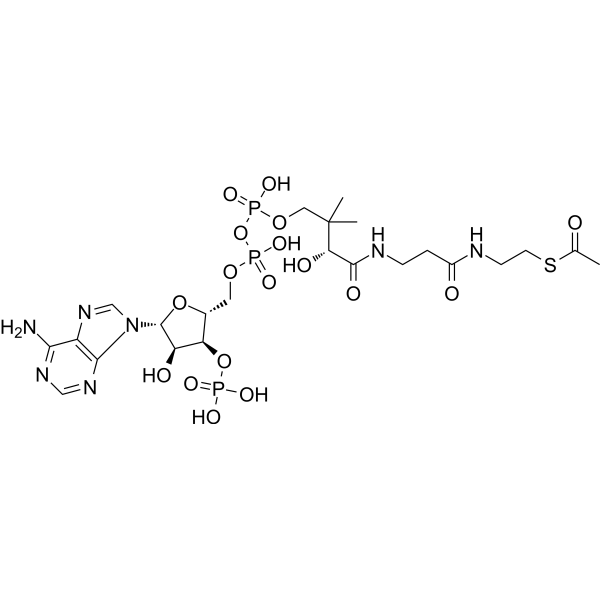
    Acetyl Coenzyme A trisodium
    4 Publications Verification

    Acetyl-CoA trisodium

    Oxidative Phosphorylation Endogenous Metabolite Autophagy Metabolic Disease
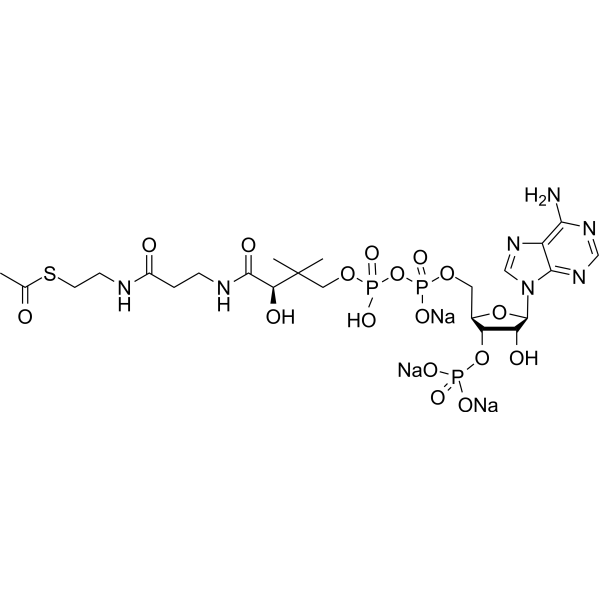
    Acetyl-coenzyme A (Acetyl-CoA) trisodium is a membrane-impermeant central metabolic intermediate, participates in the TCA cycle and oxidative phosphorylation metabolism. Acetyl-coenzyme A trisodium, regulates various cellular mechanisms by providing (sole donor) acetyl groups to target amino acid residues for post-translational acetylation reactions of proteins. Acetyl Coenzyme A trisodium is also a key precursor of lipid synthesis .
    Acetyl Coenzyme A trisodium
  • HY-14520
    Tetrahydrofolic acid
    5+ Cited Publications

    L-5,6,7,8-Tetrahydrofolic acid; L-Tetrahydrofolic acid

    Endogenous Metabolite Metabolic Disease
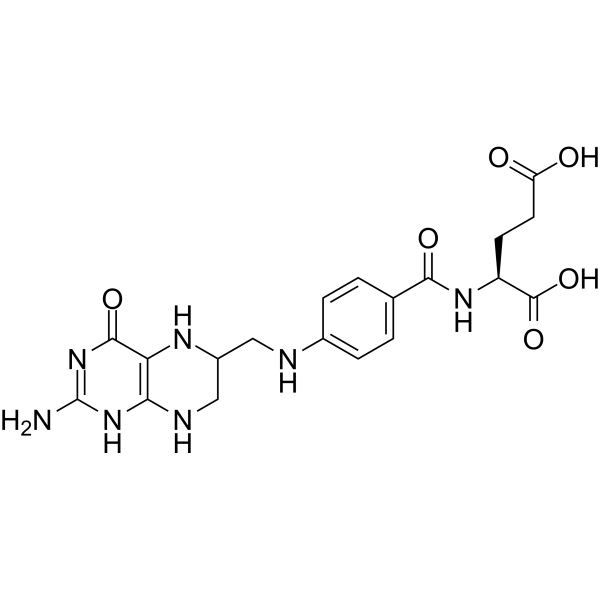
    Tetrahydrofolic acid (L-5,6,7,8-Tetrahydrofolic acid) is the biologically active vitamin B9 folate derivative. Tetrahydrofolic acid is a donor of one-carbon groups for amino acids, nucleic acids, and lipids. Tetrahydrofolic acid serves as an acceptor of free formaldehyde, producing 5,10-methylenetetrahydrofolate-Tetrahydrofolic acid .
    Tetrahydrofolic acid
  • HY-B0617
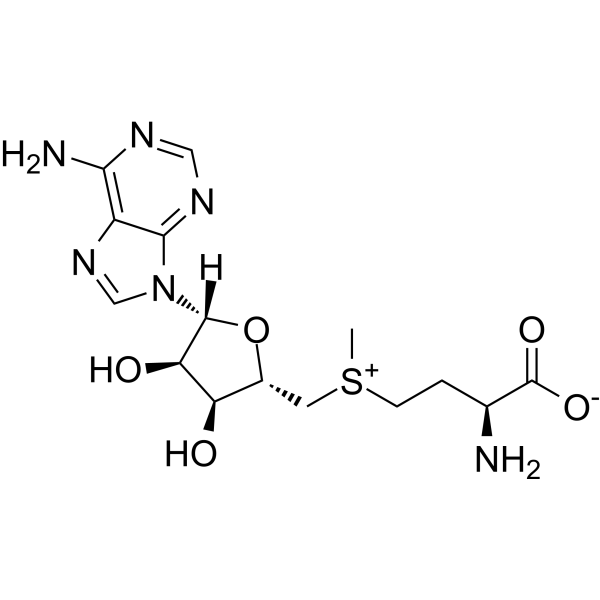
    S-Adenosyl-L-methionine
    Maximum Cited Publications
    22 Publications Verification

    S-Adenosyl methionine; Ademetionine; AdoMet

    Endogenous Metabolite Apoptosis Neurological Disease Inflammation/Immunology Cancer
    S-Adenosyl-L-methionine (S-Adenosyl methionine) is an orally active methyl group donor. S-Adenosyl-L-methionine is a dietary supplement with potent antidepressant effects. S-Adenosyl-L-methionine also has anti‑proliferative, pro‑apoptotic and anti‑metastatic roles in cancers. S-Adenosyl-L-methionine has the potential for, cancer, liver disease and osteoarthritis research .
    S-Adenosyl-L-methionine
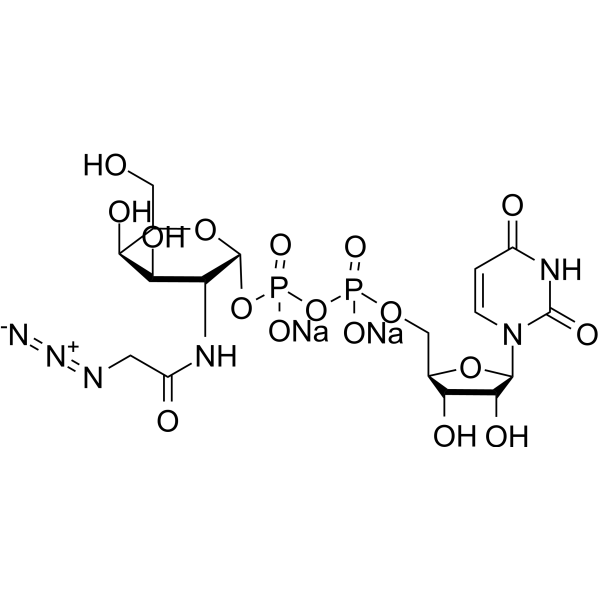
  • HY-145934
    UDP-GalNAz disodium
    1 Publications Verification

    UDP-N-azidoacetylgalactosamine disodium

    Biochemical Assay Reagents OGT Glycosidase Metabolic Disease
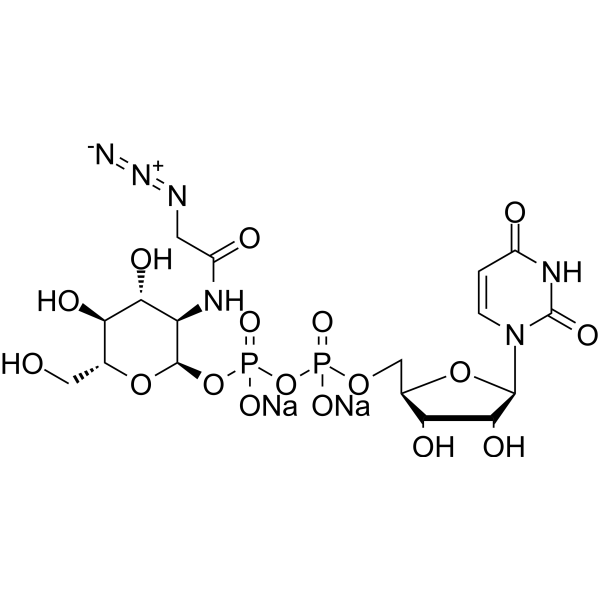
    UDP-GalNAz (UDP-N-azidoacetylgalactosamine) disodium is the analogue of UDP-GalNAc disodium (HY-114365). UDP-GalNAc disodium is the donor substrate of many N-acetylgalactosaminyltransferases, enzymes which transfer GalNAc from the nucleotide sugar to a saccharide or peptide acceptor. UDP-GalNAz disodium is a click chemistry reagent, it contains an Azide group and can undergo copper-catalyzed azide-alkyne cycloaddition reaction (CuAAc) with molecules containing Alkyne groups. It can also undergo strain-promoted alkyne-azide cycloaddition (SPAAC) reactions with molecules containing DBCO or BCN groups .
    UDP-GalNAz disodium
  • HY-W017770

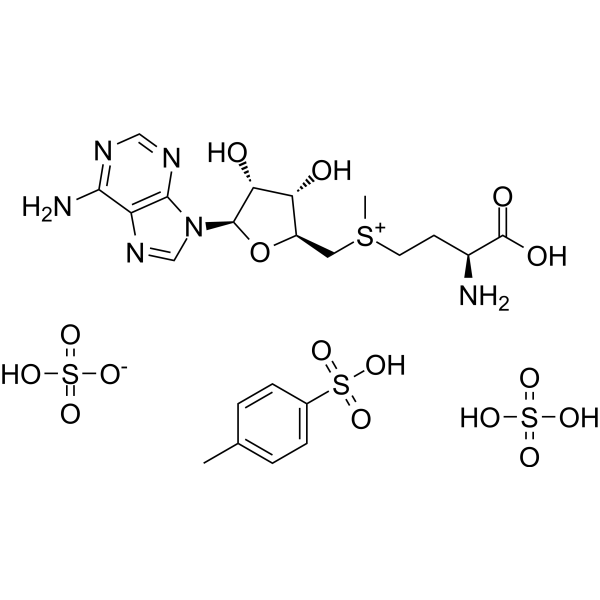
    Ademetionine disulfate tosylate; S-Adenosyl methionine disulfate tosylate; AdoMet disulfate tosylate

    Endogenous Metabolite Apoptosis Neurological Disease Inflammation/Immunology Cancer
    S-Adenosyl-L-methionine (Ademetionine) disulfate tosylate is the disulfate tosylate form of S-Adenosyl-L-methionine (HY-B0617). S-Adenosyl-L-methionine disulfate tosylate is an orally active methyl group donor. S-Adenosyl-L-methionine disulfate tosylate is a dietary supplement with potent antidepressant effects. S-Adenosyl-L-methionine disulfate tosylate also has anti‑proliferative, pro‑apoptotic and anti‑metastatic roles in cancers. S-Adenosyl-L-methionine disulfate tosylate has the potential for, cancer, liver disease and osteoarthritis research .
    S-Adenosyl-L-methionine disulfate tosylate
  • HY-B0617A
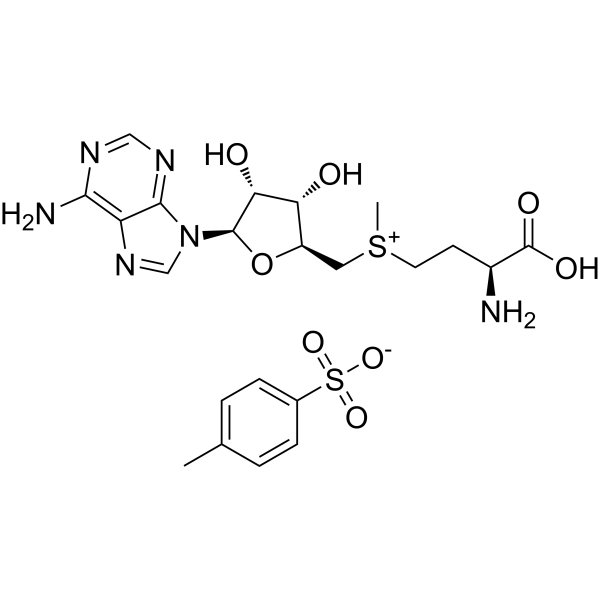
    S-Adenosyl-L-methionine tosylate
    15+ Cited Publications

    S-Adenosyl methionine tosylate; Ademetionine tosylate; AdoMet tosylate

    Endogenous Metabolite Apoptosis Neurological Disease Inflammation/Immunology Cancer
    S-Adenosyl-L-methionine (S-Adenosyl methionine) tosylate is an orally active methyl group donor. S-Adenosyl-L-methionine tosylate is a dietary supplement with potent antidepressant effects. S-Adenosyl-L-methionine tosylate also has anti‑proliferative, pro‑apoptotic and anti‑metastatic roles in cancers. S-Adenosyl-L-methionine tosylate has the potential for, cancer, liver disease and osteoarthritis research .
    S-Adenosyl-L-methionine tosylate
  • HY-14614A

    S-Adenosyl methionine chloride dihydrochloride; Ademetionine chloride dihydrochloride; AdoMet chloride dihydrochloride

    Endogenous Metabolite Apoptosis Neurological Disease Inflammation/Immunology Cancer
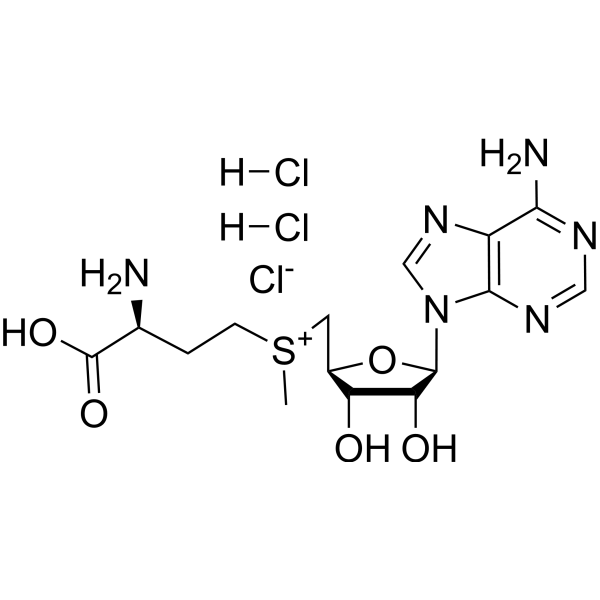
    S-Adenosyl-L-methionine (S-Adenosyl methionine) chloride dihydrochloride is an orally active methyl group donor. S-Adenosyl-L-methionine chloride dihydrochloride is a dietary supplement with potent antidepressant effects. S-Adenosyl-L-methionine chloride dihydrochloride also has anti‑proliferative, pro‑apoptotic and anti‑metastatic roles in cancers. S-Adenosyl-L-methionine chloride dihydrochloride has the potential for, cancer, liver disease and osteoarthritis research .
    S-Adenosyl-L-methionine chloride dihydrochloride
  • HY-B0617S

    S-Adenosyl methionine-d3; Ademetionine-d3; AdoMet-d3

    Isotope-Labeled Compounds Endogenous Metabolite Apoptosis Neurological Disease Inflammation/Immunology Cancer
    S-Adenosyl-L-methionine-d3 (S-Adenosyl methionine-d3) is the deuterated product of S-Adenosyl-L-methionine (HY-B0617). S-Adenosyl-L-methionine (S-Adenosyl methionine) is an orally active methyl group donor. S-Adenosyl-L-methionine is a dietary supplement with potent antidepressant effects. S-Adenosyl-L-methionine also has anti‑proliferative, pro‑apoptotic and anti‑metastatic roles in cancers. S-Adenosyl-L-methionine has the potential for, cancer, liver disease and osteoarthritis research .
    S-Adenosyl-L-methionine-d3
  • HY-112169A

    Endogenous Metabolite Metabolic Disease
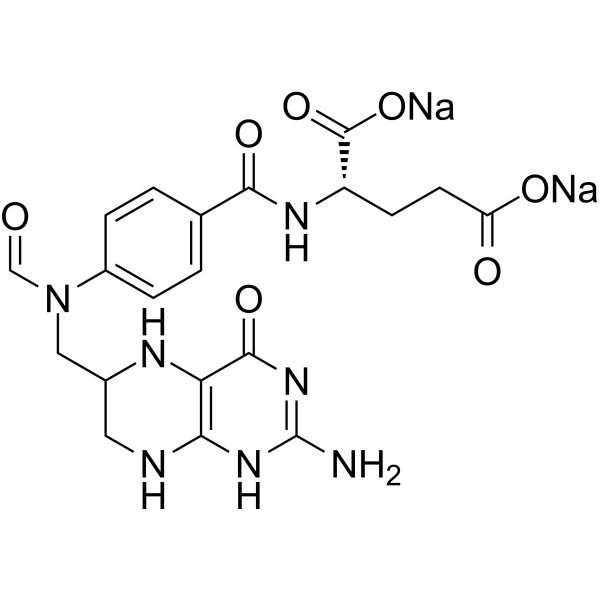
    10-Formyltetrahydrofolic acid disodium is a form of tetrahydrofolic acid that acts as a donor of formyl groups in anabolism. 10-Formyltetrahydrofolic acid disodium can be used as a substrate for formyltransferase reactions and is involved in the biosynthesis of purines .
    10-Formyltetrahydrofolic acid disodium
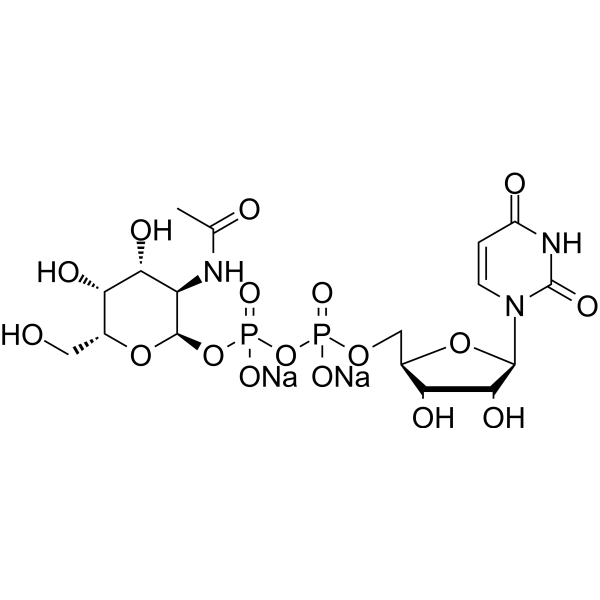
  • HY-114365
    UDP-GalNAc disodium
    1 Publications Verification

    UDP-N-acetyl-D-galactosamine disodium

    Endogenous Metabolite Metabolic Disease Cancer
    UDP-GalNAc (UDP-N-acetyl-D-galactosamine) disodium is a sugar nucleotide and a substrate for EpsC115. EpsC115 is a mutant with N-terminal residues 1-115 deleted from the exopolymeric substance (EPS). UDP-GalNAc disodium is a donor substrate for many N-acetylgalactosaminyltransferases, which transfer GalNAc from nucleotide sugars to sugar or peptide acceptors. UDP-GalNAc disodium provides a sugar group donor for glycosylation reactions. UDP-GalNAc disodium can be used in cancer research, such as colorectal and breast cancer .
    UDP-GalNAc disodium
  • HY-114293A

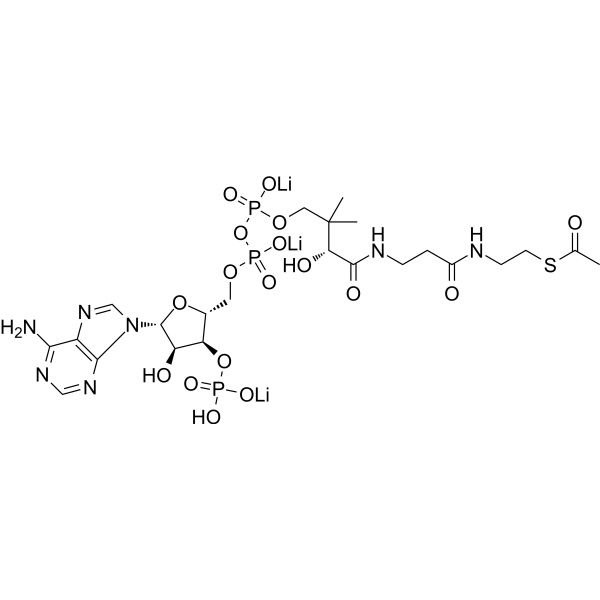
    Acetyl-CoA trilithium

    Oxidative Phosphorylation Endogenous Metabolite Autophagy Cardiovascular Disease Metabolic Disease
    Acetyl-coenzyme A (Acetyl-CoA) trilithium is a membrane-impermeant central metabolic intermediate, participates in the TCA cycle and oxidative phosphorylation metabolism. Acetyl-coenzyme A trilithium regulates various cellular mechanisms by providing (sole donor) acetyl groups to target amino acid residues for post-translational acetylation reactions of proteins. Acetyl Coenzyme A trilithium is also a key precursor of lipid synthesis .
    Acetyl coenzyme A trilithium
  • HY-112169

    Endogenous Metabolite Metabolic Disease
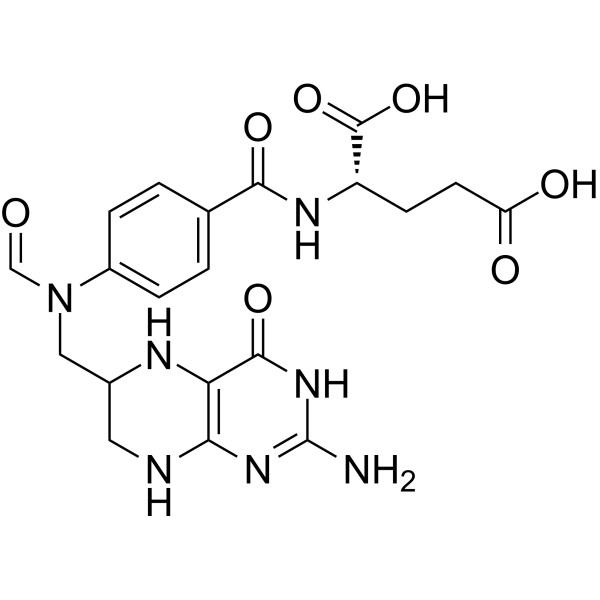
    10-Formyltetrahydrofolic acid is a form of tetrahydrofolic acid that acts as a donor of formyl groups in anabolism. 10-Formyltetrahydrofolic acid can be used as a substrate for formyltransferase reactions and is involved in the biosynthesis of purines .
    10-Formyltetrahydrofolic acid
  • HY-145934A

    OGT Biochemical Assay Reagents Glycosidase Metabolic Disease
    UDP-GlcNAz disodium is the analogue of UDP-GlcNAc disodium (HY-112174). UDP-GlcNAc disodium is the donor substrate of many N-acetylgalactosaminyltransferases, enzymes which transfer GlcNAc from the nucleotide sugar to a saccharide or peptide acceptor. UDP-GlcNAc disodium is a click chemistry reagent, it contains an Azide group and can undergo copper-catalyzed azide-alkyne cycloaddition reaction (CuAAc) with molecules containing Alkyne groups. It can also undergo strain-promoted alkyne-azide cycloaddition (SPAAC) reactions with molecules containing DBCO or BCN groups .
    UDP-GlcNAz disodium
  • HY-114293

    Acetyl-CoA

    Oxidative Phosphorylation Endogenous Metabolite Autophagy Cardiovascular Disease Metabolic Disease
    Acetyl-coenzyme A (Acetyl-CoA) is a membrane-impermeant central metabolic intermediate, participates in the TCA cycle and oxidative phosphorylation metabolism. Acetyl-coenzyme A, regulates various cellular mechanisms by providing (sole donor) acetyl groups to target amino acid residues for post-translational acetylation reactions of proteins. Acetyl Coenzyme A is also a key precursor of lipid synthesis .
    Acetyl coenzyme A
  • HY-W076543

    Transglutaminase Others
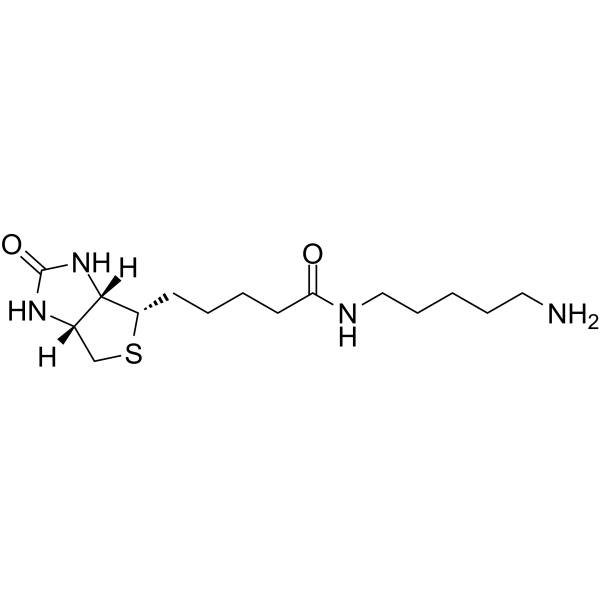
    5-(Biotinamido)pentylamine is an amine donor substrate for transglutaminase. 5-(Biotinamido)pentylamine can be used as a biotin-labeled probe to specifically participate in the calcium-dependent reaction catalyzed by TG, bind to the γ-carboxamide group of the glutamine residue in the protein, introduce the biotin tag into the target protein, and form a biotinylated protein product. 5-(Biotinamido)pentylamine can be used for the labeling, separation, and detection of TG amine receptor protein substrates .
    5-(Biotinamido)pentylamine
  • HY-B0617S2

    S-Adenosyl methionine-13C dihydrochloride; Ademetionine-13C dihydrochloride; AdoMet-13C dihydrochloride

    Isotope-Labeled Compounds Endogenous Metabolite Apoptosis Neurological Disease Inflammation/Immunology Cancer
    S-Adenosyl-L-methionine- 13C (S-Adenosyl methionine- 13C) dihydrochloride is the 13C labeled S-Adenosyl-L-methionine (HY-B0617). S-Adenosyl-L-methionine (S-Adenosyl methionine) is an orally active methyl group donor. S-Adenosyl-L-methionine is a dietary supplement with potent antidepressant effects. S-Adenosyl-L-methionine also has anti‑proliferative, pro‑apoptotic and anti‑metastatic roles in cancers. S-Adenosyl-L-methionine has the potential for, cancer, liver disease and osteoarthritis research .
    S-Adenosyl-L-methionine-13C dihydrochloride
  • HY-P2897
    D-Lactate dehydrogenase, Microorganism
    1 Publications Verification

    D-LDH

    Lactate Dehydrogenase Others
    D-Lactate dehydrogenase, Microorganism (D-LDH) is an oxidoreductase that uses NAD + or NADP + as an acceptor and acts on the donor CH-OH group, and can catalyze the oxidation of D-lactate to pyruvate. D-Lactate dehydrogenase widely exists in bacteria and fungi, and is often used in biochemical research .
    D-Lactate dehydrogenase, Microorganism
  • HY-76440

    Oxetan-3-one

    Biochemical Assay Reagents Others
    3-Oxetanone (Oxetan-3-one) is a four-membered cyclic ketone and strained cyclic ether derivative with measurable molecular g-value, magnetic susceptibility anisotropy and molecular quadrupole moment. 3-Oxetanone acts not only as a hydrogen bond acceptor, a tetrel donor and a weak hydrogen bond acceptor, but also forms a classic O-H···O hydrogen bond with H2O via the ether oxygen atom. Alternatively, it forms a C···O tetrel bond with formaldehyde using its carbonyl group as a tetrel donor, while acting as a proton acceptor to form a C-H···O weak hydrogen bond with formaldehyde. 3-Oxetanone can be used to prepare various oxetanes .
    3-Oxetanone
  • HY-113596A
    Acetyl coenzyme A lithium
    4 Publications Verification

    Acetyl-CoA lithium

    Oxidative Phosphorylation Endogenous Metabolite Autophagy Cardiovascular Disease Metabolic Disease
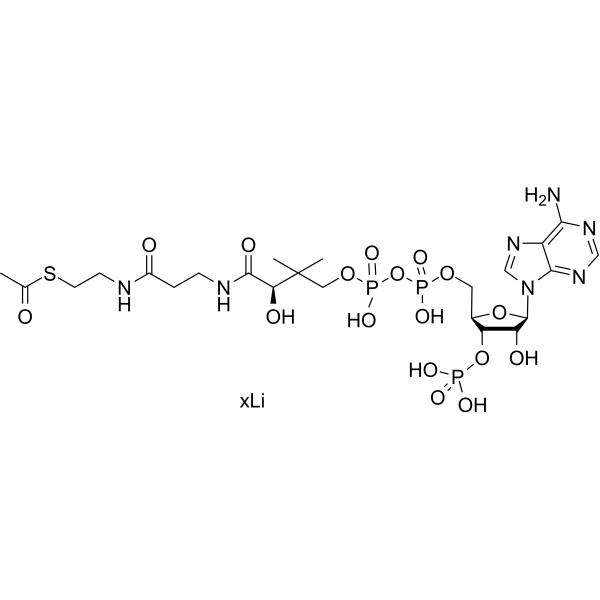
    Acetyl-coenzyme A (Acetyl-CoA) lithium is a membrane-impermeant central metabolic intermediate, participates in the TCA cycle and oxidative phosphorylation metabolism. Acetyl-coenzyme A lithium, regulates various cellular mechanisms by providing (sole donor) acetyl groups to target amino acid residues for post-translational acetylation reactions of proteins. Acetyl Coenzyme A lithium is also a key precursor of lipid synthesis .
    Acetyl coenzyme A lithium
  • HY-W800703

    Fluorescent Dye Others
    Alexa Fluor 594 azide is an azide-modified fluorescent dye and also a FRET acceptor reactant. Owing to its negligible direct absorption under 488 nm excitation light, excellent photostability, and the ability of its azide group to participate in the CuAAC reaction, Alexa Fluor 594 azide can be paired with a donor dye for single-molecule imaging via TIRFM, thereby enabling the visual monitoring of CuNP-catalyzed click reactions .
    Alexa Fluor 594 azide
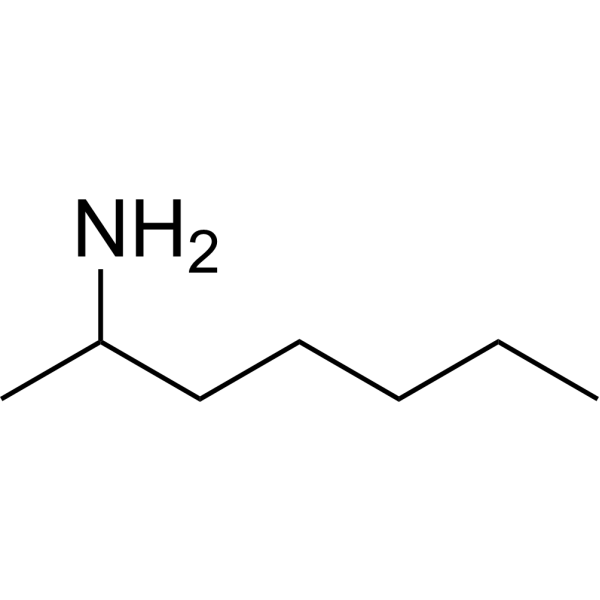
  • HY-B0952
    2-Aminoheptane
    1 Publications Verification

    Tuaminoheptane

    Adrenergic Receptor Neurological Disease
    2-Aminoheptane (Tuaminoheptane) is a norepinephrine transporter inhibitor. 2-Aminoheptane binds to norepinephrine transporter via ionic and hydrophobic interactions to block norepinephrine uptake. 2-Aminoheptane deactivates ω-TAmla enzyme, reduces recombinant whole cell stability, and acts as an amino group donor substrate for ω-TA and ω-TAmla enzymes. 2-Aminoheptane can be used in research on depression and Alzheimer's disease .
    2-Aminoheptane
  • HY-B0617S1

    S-Adenosyl methionine-13C; Ademetionine-13C; AdoMet-13C

    Isotope-Labeled Compounds Endogenous Metabolite Apoptosis Neurological Disease Inflammation/Immunology Cancer
    S-Adenosyl-L-methionine- 13C (S-Adenosyl methionine- 13C) is the 13C labeled S-Adenosyl-L-methionine (HY-B0617). S-Adenosyl-L-methionine (S-Adenosyl methionine) is produced endogenously from methionine and ATP by action of the enzyme methionine adenosyltransferase and is an important orally active methyl group donor. S-Adenosyl-L-methionine is a dietary supplement with potent antidepressant effects, and has the potential for liver disease and osteoarthritis research .
    S-Adenosyl-L-methionine-13C
  • HY-114293S

    Acetyl-CoA-13C2 lithium

    Isotope-Labeled Compounds Endogenous Metabolite Autophagy Oxidative Phosphorylation Metabolic Disease
    Acetyl coenzyme A- 13C2 lithium is the 13C-labeled Acetyl coenzyme A (HY-114293). Acetyl-coenzyme A (Acetyl-CoA) is a membrane-impermeant central metabolic intermediate, participates in the TCA cycle and oxidative phosphorylation metabolism. Acetyl-coenzyme A, regulates various cellular mechanisms by providing (sole donor) acetyl groups to target amino acid residues for post-translational acetylation reactions of proteins. Acetyl Coenzyme A is also a key precursor of lipid synthesis .
    Acetyl coenzyme A-13C2 lithium
  • HY-77817

    2-Formylpyrrole

    Others Others
    Pyrrole-2-carboxaldehyde (2-Formylpyrrole) has vibrational and electronic characteristics used to establish the existence of dimeric form in solid phase and monomeric form in solution phase. Pyrrole-2-carboxaldehyde is a five membered N-heterocyclic system containing pyrrole group as a proton donor and carbonyl group as a proton acceptor .
    Pyrrole-2-carboxaldehyde
  • HY-14520S

    Isotope-Labeled Compounds Endogenous Metabolite Metabolic Disease
    Tetrahydrofolic acid-d4 is the deuterium labeled Tetrahydrofolic acid. Tetrahydrofolic acid (L-5,6,7,8-Tetrahydrofolic acid) is the biologically active vitamin B9 folate derivative. Tetrahydrofolic acid is a donor of one-carbon groups for amino acids, nucleic acids, and lipids. Tetrahydrofolic acid serves as an acceptor of free formaldehyde, producing 5,10-methylenetetrahydrofolate-Tetrahydrofolic acid .
    Tetrahydrofolic acid-d4
  • HY-14614D
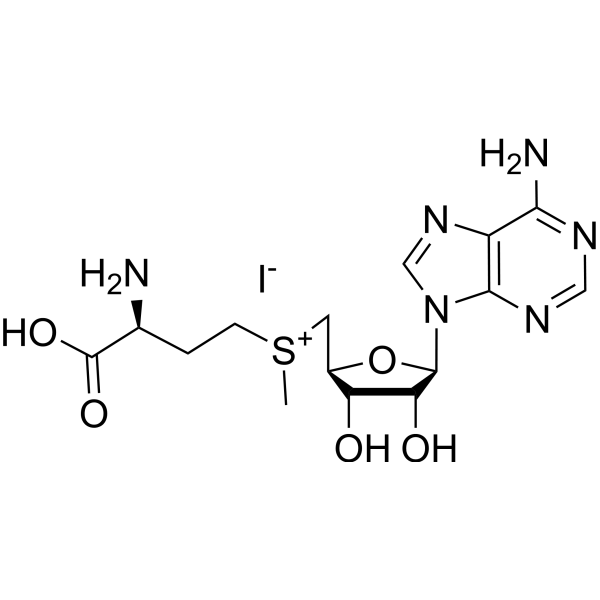
    S-Adenosyl-L-methionine iodide
    15+ Cited Publications

    S-Adenosyl methionine iodide; Ademetionine iodide; AdoMet iodide

    Endogenous Metabolite Apoptosis Neurological Disease Inflammation/Immunology Cancer
    S-Adenosyl-L-methionine (S-Adenosyl methionine) iodide is an orally active methyl group donor. S-Adenosyl-L-methionine iodide is a dietary supplement with potent antidepressant effects. S-Adenosyl-L-methionine iodide also has anti‑proliferative, pro‑apoptotic and anti‑metastatic roles in cancers. S-Adenosyl-L-methionine iodide has the potential for, cancer, liver disease and osteoarthritis research .
    S-Adenosyl-L-methionine iodide
  • HY-W250153

    P2Y Receptor Cardiovascular Disease
    Adenosine 3'-phosphate 5'-phosphosulfate lithium, an adenine nucleotide derivative, is a selective P2Y1 antagonist with no effect on P2Y2, P2Y4, or P2Y6 receptors. Adenosine 3'-phosphate 5'-phosphosulfate lithium can competitive inhibit ADP-induced platelet aggregation, as well as the ability of ADP to cause shape change and increases in Ca 2+ in platelets, but had no effect on the inhibition of stimulated adenylate cyclase by ADP. Adenosine 3'-phosphate 5'-phosphosulfate lithium is a co-substrate used for the sulfonation of glycans. Adenosine 3'-phosphate 5'-phosphosulfate lithium can be used for Golgi-resident PAP-specific 3'-phosphatase-coupled sulfotransferase assays, which as donor substrate to transfer a sulfonate group .
    Adenosine 3'-phosphate 5'-phosphosulfate lithium
  • HY-134393B

    N6-Methyl-ATP trisodium solution (100 mM)

    GSK-3 Others
    6-Me-ATP (N6-Methyl-ATP) trisodium solution (100 mM) is a N 6-modified ATP derivative. 6-Me-ATP trisodium shows excellent binding affinity to GSK3, serving as the phosphate group donor for GSK3β-catalyzed phosphorylation of its substrate peptide .
    6-Me-ATP trisodium solution (100 mM)
  • HY-114293S5

    Acetyl-CoA-d3

    Isotope-Labeled Compounds Oxidative Phosphorylation Endogenous Metabolite Autophagy Cardiovascular Disease Metabolic Disease
    Acetyl coenzyme A-d3 (Acetyl-CoA-d3) is the deuterium labeled Acetyl coenzyme A (HY-114293). Acetyl-coenzyme A (Acetyl-CoA) is a membrane-impermeant central metabolic intermediate, participates in the TCA cycle and oxidative phosphorylation metabolism. Acetyl-coenzyme A, regulates various cellular mechanisms by providing (sole donor) acetyl groups to target amino acid residues for post-translational acetylation reactions of proteins. Acetyl Coenzyme A is also a key precursor of lipid synthesis .
    Acetyl coenzyme A-d3
  • HY-164090

    P2Y Receptor Cardiovascular Disease
    Adenosine 3'-phosphate 5'-phosphosulfate, an adenine nucleotide derivative, is a selective P2Y1 antagonist with no effect on P2Y2, P2Y4, or P2Y6 receptors. Adenosine 3'-phosphate 5'-phosphosulfate can competitive inhibit ADP-induced platelet aggregation, as well as the ability of ADP to cause shape change and increases in Ca 2+ in platelets, but had no effect on the inhibition of stimulated adenylate cyclase by ADP. Adenosine 3'-phosphate 5'-phosphosulfate is a co-substrate used for the sulfonation of glycans. Adenosine 3'-phosphate 5'-phosphosulfate can be used for Golgi-resident PAP-specific 3'-phosphatase-coupled sulfotransferase assays, which as donor substrate to transfer a sulfonate group .
    Adenosine 3'-phosphate 5'-phosphosulfate
  • HY-134393

    N6-Methyl-ATP

    GSK-3 Neurological Disease
    6-Me-ATP (N6-Methyl-ATP) is an N 6-modified ATP derivative. 6-Me-ATP exhibits excellent binding affinity for GSK3 and acts as a phosphate group donor for GSK3β-catalyzed phosphorylation of its substrate peptides. 6-Me-ATP is applicable to research related to Alzheimer's disease .
    6-Me-ATP
  • HY-P5485

    Bacterial Others
    Dabcyl-QALPETGEE-Edans is a synthetic peptide substrate for fluorescence resonance energy transfer (FRET) detection of Sortase A (SrtA) enzymatic activity. Dabcyl-QALPETGEE-Edans is labeled at both ends with the fluorescent group Edans (donor) and the quencher Dabcyl (acceptor), respectively. Dabcyl-QALPETGEE-Edans's central sequence contains a conserved motif specifically recognized by SrtA. Dabcyl-QALPETGEE-Edans demonstrates high sensitivity in vitro assays, enabling precise determination of the half-maximal inhibitory concentration of SrtA .
    Dabcyl-QALPETGEE-Edans
  • HY-14520S1

    L-5,6,7,8-Tetrahydrofolic acid-13C5; L-Tetrahydrofolic acid-13C5

    Isotope-Labeled Compounds Endogenous Metabolite Metabolic Disease
    Tetrahydrofolic acid- 13C5 (L-5,6,7,8-Tetrahydrofolic acid- 13C5) is 13C labeled Tetrahydrofolic acid. Tetrahydrofolic acid (L-5,6,7,8-Tetrahydrofolic acid) is the biologically active vitamin B9 folate derivative. Tetrahydrofolic acid is a donor of one-carbon groups for amino acids, nucleic acids, and lipids. Tetrahydrofolic acid serves as an acceptor of free formaldehyde, producing 5,10-methylenetetrahydrofolate-Tetrahydrofolic acid .
    Tetrahydrofolic acid-13C5
  • HY-B0617AR

    S-Adenosyl methionine tosylate (Standard); Ademetionine tosylate (Standard); AdoMet tosylate (Standard)

    Reference Standards Endogenous Metabolite Apoptosis Neurological Disease Inflammation/Immunology Cancer
    S-Adenosyl-L-methionine tosylate (Standard) (S-Adenosyl methionine tosylate (Standard)) is the analytical standard of S-Adenosyl-L-methionine tosylate (HY-B0617A). This product is intended for research and analytical applications. S-Adenosyl-L-methionine (S-Adenosyl methionine) tosylate is an orally active methyl group donor. S-Adenosyl-L-methionine tosylate is a dietary supplement with potent antidepressant effects. S-Adenosyl-L-methionine tosylate also has anti‑proliferative, pro‑apoptotic and anti‑metastatic roles in cancers. S-Adenosyl-L-methionine tosylate has the potential for, cancer, liver disease and osteoarthritis research .
    S-Adenosyl-L-methionine tosylate (Standard)
  • HY-E70081

    Biochemical Assay Reagents Others
    mRNA Cap 2'-O-methyltransferase uses S-adenosylmethionine (SAM) as a methyl donor to add a methyl group at the 2'-O position of the first nucleotide at the 5’ end of Cap-0 mRNA, resulting in Cap-1 structure. Cap-1 structure promotes translation efficiency, increasing subsequent protein expression .
    mRNA Cap 2'-O-methyltransferase
  • HY-145934B

    OGT Biochemical Assay Reagents Glycosidase Metabolic Disease
    UDP-GlcNAz is the analogue of UDP-GlcNAc disodium (HY-112174). UDP-GlcNAc disodium is the donor substrate of many N-acetylgalactosaminyltransferases, enzymes which transfer GlcNAc from the nucleotide sugar to a saccharide or peptide acceptor. UDP-GlcNAc disodium is a click chemistry reagent, it contains an Azide group and can undergo copper-catalyzed azide-alkyne cycloaddition reaction (CuAAc) with molecules containing Alkyne groups. It can also undergo strain-promoted alkyne-azide cycloaddition (SPAAC) reactions with molecules containing DBCO or BCN groups .
    UDP-GlcNAz
  • HY-B0617B

    S-Adenosyl methionine 1,4-butanedisulfonate; Ademetionine 1,4-butanedisulfonate; AdoMet 1,4-butanedisulfonate

    Endogenous Metabolite Apoptosis Neurological Disease Inflammation/Immunology Cancer
    S-Adenosyl-L-methionine (S-Adenosyl methionine) 1,4-butanedisulfonate is an orally active methyl group donor. S-Adenosyl-L-methionine 1,4-butanedisulfonate is a dietary supplement with potent antidepressant effects. S-Adenosyl-L-methionine 1,4-butanedisulfonate also has anti‑proliferative, pro‑apoptotic and anti‑metastatic roles in cancers. S-Adenosyl-L-methionine 1,4-butanedisulfonate has the potential for, cancer, liver disease and osteoarthritis research .
    S-Adenosyl-L-methionine 1,4-butanedisulfonate
  • HY-N9422

    P2Y Receptor Cardiovascular Disease
    Adenosine 3'-phosphate 5'-phosphosulfate triethylamine, an adenine nucleotide derivative, is a selective P2Y1 antagonist with no effect on P2Y2, P2Y4, or P2Y6 receptors. Adenosine 3'-phosphate 5'-phosphosulfate triethylamine can competitive inhibit ADP-induced platelet aggregation, as well as the ability of ADP to cause shape change and increases in Ca 2+ in platelets, but had no effect on the inhibition of stimulated adenylate cyclase by ADP. Adenosine 3'-phosphate 5'-phosphosulfate triethylamine is a co-substrate used for the sulfonation of glycans. Adenosine 3'-phosphate 5'-phosphosulfate triethylamine can be used for Golgi-resident PAP-specific 3'-phosphatase-coupled sulfotransferase assays, which as donor substrate to transfer a sulfonate group .
    Adenosine 3'-phosphate 5'-phosphosulfate triethylamine
  • HY-14520B

    L-5,6,7,8-Tetrahydrofolic acid trihydrochloride; L-Tetrahydrofolic acid trihydrochloride

    Endogenous Metabolite Metabolic Disease
    Tetrahydrofolic acid (L-5,6,7,8-Tetrahydrofolic acid) trihydrochloride is the biologically active vitamin B9 folate derivative. Tetrahydrofolic acid trihydrochloride is a donor of one-carbon groups for amino acids, nucleic acids, and lipids. Tetrahydrofolic acid trihydrochloride serves as an acceptor of free formaldehyde, producing 5,10-methylenetetrahydrofolate-Tetrahydrofolic acid .
    Tetrahydrofolic acid trihydrochloride
  • HY-150964S

    S-Adenosyl methionine-d3 methylbenzenesulfonate; Ademetionine-d3 methylbenzenesulfonate; AdoMet-d3 methylbenzenesulfonate

    Isotope-Labeled Compounds Endogenous Metabolite Apoptosis Neurological Disease Inflammation/Immunology Cancer
    S-Adenosyl-L-methionine-d3 (S-Adenosyl methionine-d3) methylbenzenesulfonate is the deuterium labeled S-Adenosyl-L-methionine methylbenzenesulfonate . S-Adenosyl-L-methionine (S-Adenosyl methionine) is an orally active methyl group donor. S-Adenosyl-L-methionine is a dietary supplement with potent antidepressant effects. S-Adenosyl-L-methionine also has anti‑proliferative, pro‑apoptotic and anti‑metastatic roles in cancers. S-Adenosyl-L-methionine has the potential for, cancer, liver disease and osteoarthritis research .
    S-Adenosyl-L-methionine-d3 methylbenzenesulfonate
  • HY-W250153A

    P2Y Receptor Cardiovascular Disease
    Adenosine 3'-phosphate 5'-phosphosulfate lithium hydrate, an adenine nucleotide derivative, is a selective P2Y1 antagonist with no effect on P2Y2, P2Y4, or P2Y6 receptors. Adenosine 3'-phosphate 5'-phosphosulfate lithium hydrate can competitive inhibit ADP-induced platelet aggregation, as well as the ability of ADP to cause shape change and increases in Ca 2+ in platelets, but had no effect on the inhibition of stimulated adenylate cyclase by ADP. Adenosine 3'-phosphate 5'-phosphosulfate lithium hydrate is a co-substrate used for the sulfonation of glycans. Adenosine 3'-phosphate 5'-phosphosulfate lithium hydrate can be used for Golgi-resident PAP-specific 3'-phosphatase-coupled sulfotransferase assays, which as donor substrate to transfer a sulfonate group .
    Adenosine 3'-phosphate 5'-phosphosulfate lithium, hydrate
  • HY-172755

    Nitric Oxide-Rosa5 chloride

    NO Synthase Others
    NO-Rosa5 (chloride) is a photocontrollable NO donor. NO-Rosa5 (chloride) is made up of the fluorescent dye rosamie that functions as the light-harvesting group .
    NO-Rosa5 chloride
  • HY-120221

    Guanylate Cyclase NO Synthase Cardiovascular Disease
    SE 175 is an organic nitrate compound that acts as an NO donor in vivo following reductive transformation of the nitrate group to nitric oxide. SE 175 stimulates endothelial soluble guanylate cyclase and induces aortic vasorelaxation with an EC50 of 0.20 µM .
    SE 175
  • HY-126866

    Bacterial Infection
    Lankacidin C 8-acetate is an antibiotic with antibacterial activity. Lankacidin C 8-acetate, as a component of the Lankacidin group (T-2636) antibiotics, shows inhibitory effects against specific bacteria. Lankacidin C 8-acetate can generate other esterates by reacting with different acyl donors, indicating its importance in the synthesis of antibiotics .
    Lankacidin C 8-acetate
  • HY-77817R

    2-Formylpyrrole (Standard)

    Reference Standards Others Others
    Pyrrole-2-carboxaldehyde (2-Formylpyrrole) (Standard) is the analytical standard of Pyrrole-2-carboxaldehyde. This product is intended for research and analytical applications. Pyrrole-2-carboxaldehyde has vibrational and electronic characteristics used to establish the existence of dimeric form in solid phase and monomeric form in solution phase. Pyrrole-2-carboxaldehyde is a five membered N-heterocyclic system containing pyrrole group as a proton donor and carbonyl group as a proton acceptor .
    Pyrrole-2-carboxaldehyde (Standard)
  • HY-E70262

    Oxidative Phosphorylation Endogenous Metabolite Metabolic Disease
    Acetoyl-CoA (triammonium) is a triammonium derivative of Acetoyl-CoA (HY-114293), Acetyl-CoA is a membrane-impermeant central metabolic intermediate, participates in the TCA cycle and oxidative phosphorylation metabolism. Acetyl-coenzyme A, regulates various cellular mechanisms by providing (sole donor) acetyl groups to target amino acid residues for post-translational acetylation reactions of proteins. Acetyl Coenzyme A is also a key precursor of lipid synthesis .
    Acetoyl-CoA triammonium
  • HY-110196

    Histone Methyltransferase Others
    (S)-PFI-2 hydrochloride is an inhibitor of lysine methyltransferase SETD7 and is approximately 500-fold more active than its enantiomer (R)-PFI-2. (R)-PFI-2 is a cofactor-dependent and substrate-competitive inhibitor. (R)-PFI-2 can occupy the substrate peptide binding groove of SETD7 (including the catalytic lysine binding channel) and interact with the cofactor The donor methyl group is in direct contact. However, (S)-PFI-2 was not observed to have the same interaction as (R)-PFI-2 .
    (S)-PFI-2 hydrochloride
  • HY-149203A

    Fluorescent Dye Others
    MQA-P is a multifunctional near-infrared (NIR) fluorescent probe that simultaneously detects ONOO -, viscosity, and polarity within mitochondria. MQA-P exhibits significant response to ONOO -, λem=645 nm; and NIR channel at λem>704 nm Medium is highly sensitive to viscosity/polarity. MQA-P possesses excited-state intramolecular charge transfer (ESICT) properties that are highly sensitive to polarity by designing the N,N-dimethylamino group as the electron donor and the quinoline cation unit as the electron acceptor. MQA-P is used for ferroptosis or cancer diagnosis in vitro and in vivo via dual-channel images .
    MQA-P TFA
  • HY-W150273

    Biochemical Assay Reagents Others
    6-Aminocoumarin hydrochloride is a coumarin dye, which belongs to the donor-acceptor compounds as it contains a donor amine group and an acceptor carbonyl group .
    6-Aminocoumarin hydrochloride
  • HY-E71135

    Biochemical Assay Reagents Metabolic Disease
    (S)-Usnate reductase (EC 1.1.1.199) belongs to the family of oxidoreductases, specifically those acting on the CH-OH group of donor with NAD+ or NADP+ as acceptor.
    (S)-Usnate reductase

Inquiry Online

Your information is safe with us. * Required Fields.

Salutation


Country or Region *

Applicant Name *


Organization Name *

Department *


Email Address *


Product Name *

Cat. No.


Requested quantity *

Phone Number *


Remarks

Inquiry Online

Inquiry Information

Product Name:
Cat. No.:
Quantity:
MCE Japan Authorized Agent:

