10 Results for "

phosphorylated p38 MAPK

" in MedChemExpress (MCE) Product Catalog:
Products (10)

10 Results for "phosphorylated p38 MAPK" in MCE Product Catalog:

5
5 Cited Publications
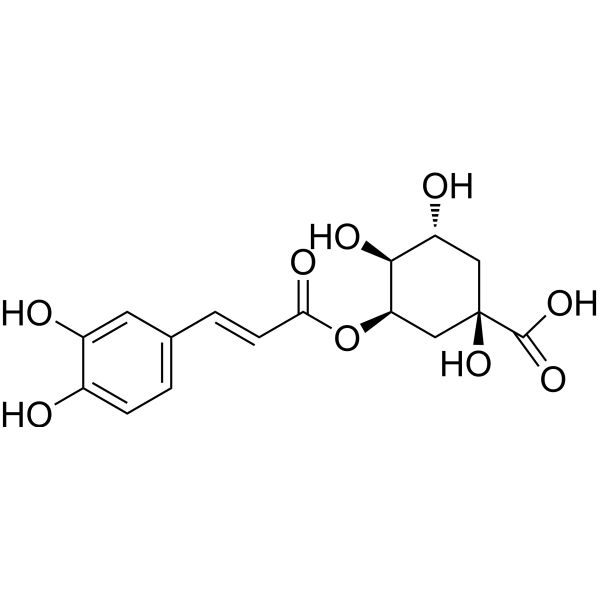
Cat. No.: HY-N0722
CAS No.: 906-33-2
Synonyms: trans-5-O-Caffeoylquinic acid
Neochlorogenic acid is a natural polyphenolic compound found in dried fruits and other plants. Neochlorogenic acid inhibits the production of TNF-α and IL-1β. Neochlorogenic acid suppresses iNOS and COX-2 protein expression. Neochlorogenic acid also inhibits phosphorylated NF-κB p65 and p38 MAPK activation.
loading...
    loading...
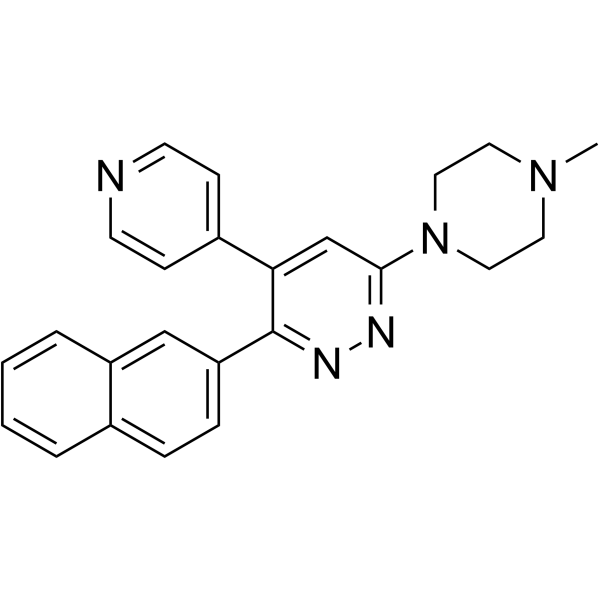
Cat. No.: HY-120111
CAS No.: 1628502-91-9
Purity:  99.89%
Synonyms: MW01-18-150SRM
MW150 (MW01-18-150SRM) is a selective, CNS penetrant, and orally active inhibitor of p38α MAPK with a Ki of 101 nM. MW-150 inhibits the ability of the endogenous p38α MAPK to phosphorylate an endogenous substrate MK2 in activated glia .
loading...
    loading...
Cat. No.: HY-N0722R
CAS No.: 906-33-2
Synonyms: trans-5-O-Caffeoylquinic acid (Standard)
Neochlorogenic acid (Standard) is the analytical standard of Neochlorogenic acid. This product is intended for research and analytical applications. Neochlorogenic acid is a natural polyphenolic compound found in dried fruits and other plants. Neochlorogenic acid inhibits the production of TNF-α and IL-1β. Neochlorogenic acid suppresses iNOS and COX-2 protein expression. Neochlorogenic acid also inhibits phosphorylated NF-κB p65 and p38 MAPK activation.
loading...
    loading...
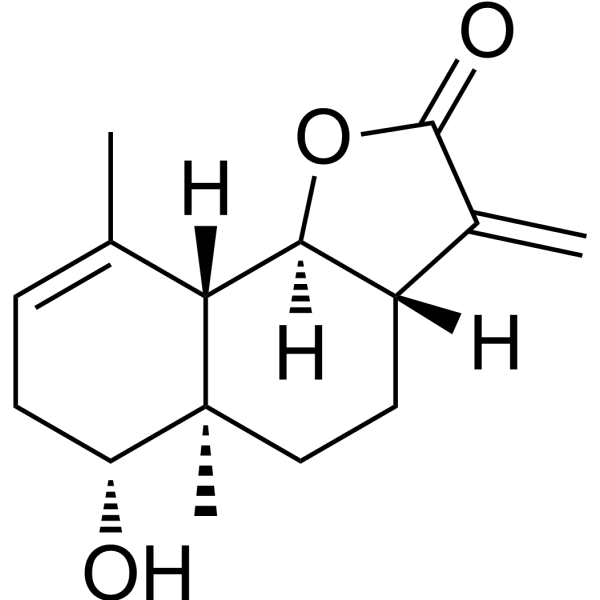
Cat. No.: HY-N1326
CAS No.: 4290-13-5
Synonyms: Santamarin; Balchanin
Santamarine (Santamarin; Balchanin) is a sesquiterpene lactone found in Artemisia scoparia. Santamarine shows anti-inflammatory, antioxidant, anticancer and anti-photoaging activities. Santamarine suppresses UVA-induced phosphorylation of JNK and p38 MAPK, nuclear translocation of phosphorylated c-Fos and c-Jun, and AP-1-mediated MMP-1 transcription and secretion. Santamarine suppresses NF-κB signaling, iNOS, COX-2, TNF-α, and IL-1β production. Santamarine inhibits thioredoxin reductase activity, induces ROS production, mitochondrial apoptosis, G2/M cell cycle arrest, and DNA damage, and reduces cancer cell growth. Santamarine can be used for the photoaging, inflammatory diseases and cancer .
loading...
    loading...
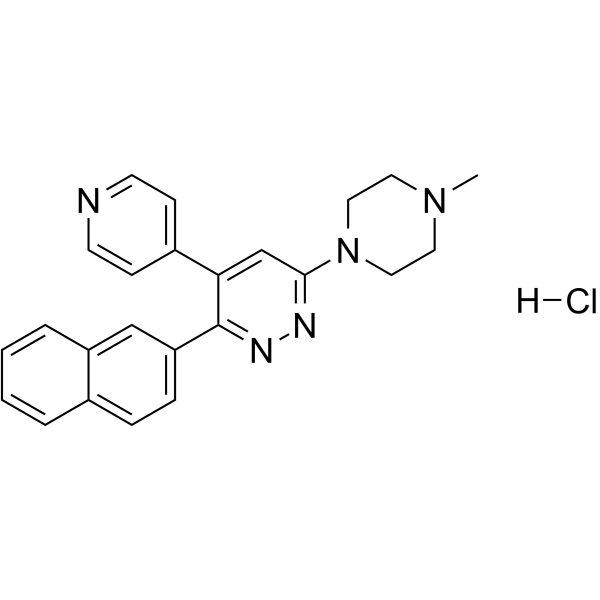
Cat. No.: HY-120111A
CAS No.: 1923773-01-6
Synonyms: MW01-18-150SRM hydrochloride
MW-150 hydrochloride (MW01-18-150SRM hydrochloride) is a selective, CNS penetrant, and orally active inhibitor of p38α MAPK with a Ki of 101 nM. MW-150 hydrochloride (MW01-18-150SRM hydrochloride) inhibits the ability of the endogenous p38α MAPK to phosphorylate an endogenous substrate MK2 in activated glia .
loading...
    loading...
Cat. No.: HY-N0722A
CAS No.: 32719-11-2
Synonyms: cis-5-O-Caffeoylquinic acid
(Z)-Neochlorogenic acid is the z-isomer of Neochlorogenic acid (HY-N0722). Neochlorogenic acid is a natural polyphenolic compound found in dried fruits and other plants. Neochlorogenic acid inhibits the production of TNF-α and IL-1β. Neochlorogenic acid suppresses iNOS and COX-2 protein expression. Neochlorogenic acid also inhibits phosphorylated NF-κB p65 and p38 MAPK activation .
loading...
    loading...
Cat. No.: HY-N20721
CAS No.: 21416-14-8
Pancracine is an alkaloid. Pancracine upregulates p27, phosphorylated p38 MAPK and phosphorylated p53, while downregulating phosphorylated Akt and phosphorylated Rb. Pancracine induces G1 cell cycle arrest and Apoptosis in cells. Pancracine inhibits the replication of pseudotyped HIV-1 and Dengue virus. Pancracine can be used in research related to lung adenocarcinoma, acute lymphoblastic leukemia, cutaneous epidermoid carcinoma, human immunodeficiency virus infection and dengue virus infection .
loading...
    loading...
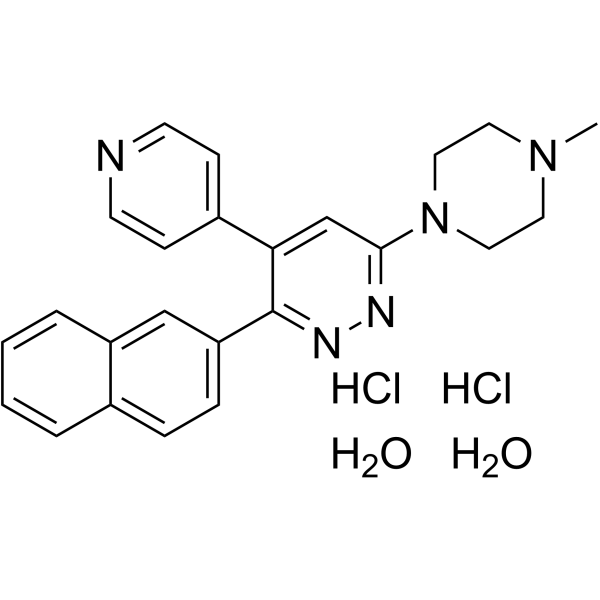
Cat. No.: HY-120111B
CAS No.: 1661020-92-3
Synonyms: MW01-18-150SRM dihydrochloride dihydrate
MW-150 dihydrochloride dihydrate (MW01-18-150SRM dihydrochloride dihydrate) is a selective, CNS penetrant, and orally active inhibitor of p38α MAPK with a Ki of 101 nM. MW-150 dihydrochloride dihydrate (MW01-18-150SRM dihydrochloride dihydrate) inhibits the ability of the endogenous p38α MAPK to phosphorylate an endogenous substrate MK2 in activated glia .
loading...
    loading...
Cat. No.: HY-P705668
Purity:  ≥ 90%, as determined by reducing SDS-PAGE.
Synonyms: MAPK11; Mitogen-Activated Protein Kinase p38-2; Prev. PRKM11; Stress-Activated Protein Kinase 2b; p38-2; Stress-Activated Protein Kinase-2; SAPK2; Mitogen-Activated Protein Kinase; p38Beta; p38BETA2; Mitogen-Activated Protein Kinase p38 Beta; MAPK 11; MAP
Species:  
Human
Source:  
Sf9 insect cells
loading...
    loading...
Cat. No.: HY-N19029
CAS No.: 21871-10-3
Vernodalin is an orally active, cytotoxic sesquiterpene lactone with a Kd value of 9.55 μM for p38 MAPK. Vernodalin downregulates the expression of phosphorylated ERK, JNK, AKT, PI3K, mTOR, p38MAPK, FAK, MMP-2, MMP-9, and uPA, while upregulates the expression of TIMP-1 and TIMP-2. Vernodalin increases ROS production, upregulates the expression of Bax and caspase 3, downregulates the expression of Bcl-2, and induces apoptosis (apoptosis), oxidative stress response and cell cycle arrest. Vernodalin inhibits the proliferation, adhesion and metastasis of cancer cells. Vernodalin enhances the activity of VEGF-B, AMPK and eNOS signaling pathways. Vernodalin alleviates myocardial injury and restores hemodynamic parameters. Vernodalin inhibits the growth of Trypanosoma brucei rhodesiense. Vernodalin can be used in research related to various cancers including gastric cancer, colorectal cancer and lung cancer, as well as African human trypanosomiasis and myocardial infarction .
loading...
    loading...

