8 Results for "

planktonic growth

" in MedChemExpress (MCE) Product Catalog:
Products (8)

8 Results for "planktonic growth" in MCE Product Catalog:

11
11 Cited Publications
Cat. No.: HY-B1077
CAS No.: 26864-56-2
Synonyms: R-16341
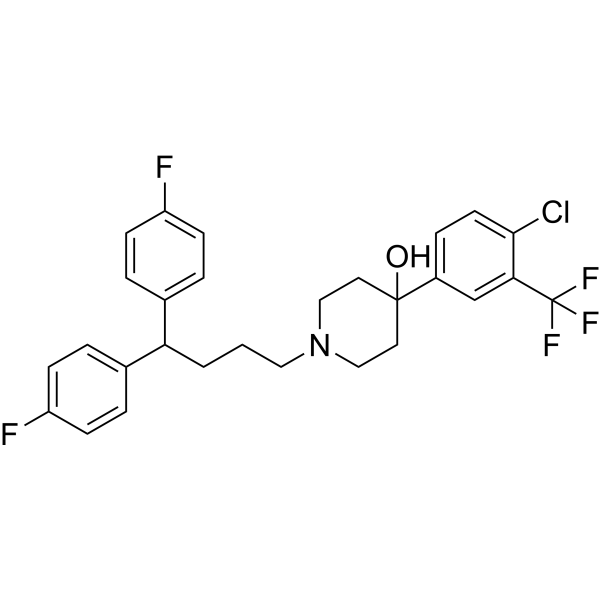
Penfluridol (R-16341) is a potent, long-acting, first-generation, oral diphenylbutylpiperidine antipsychotic agent by targeting D2-like dopamine receptor. Penfluridol effectively inhibits TNFα-induced NF-κB activation and alleviates the severity of arthritis and colitis in vivo. Penfluridol is a Ca2+-calmodulin inhibitor. Penfluridol induces apoptosis and autophagy. Penfluridol is used for chronic schizophrenia, acute psychosis, Tourette syndrome and autoimmune diseases. Penfluridol inhibites the growth of E. faecalis planktonic cells with the MIC of 7.81 μg/ml .
loading...
    loading...
1
1 Cited Publications
Cat. No.: HY-N7435
CAS No.: 54814-64-1
Synonyms: (±)-Massoia lactone
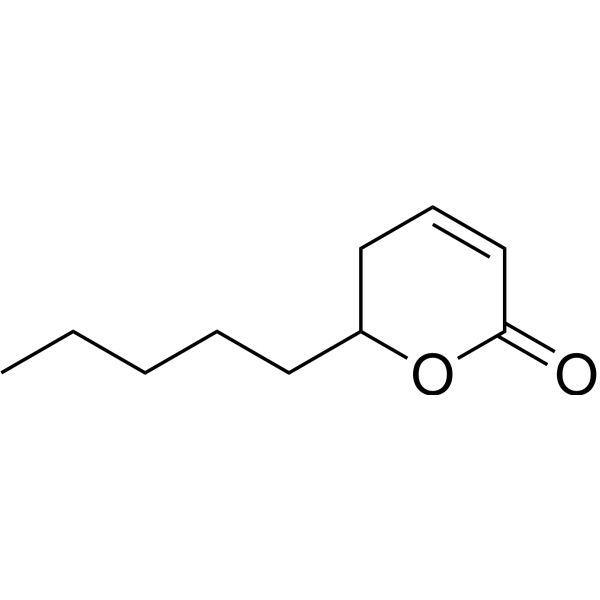
Massoia lactone ((±)-Massoia lactone) is a natural lactone-based biosurfactant with antifungal (fungal), antibiofilm, and cytotoxic activities. Massoia lactone inhibits fungal hyphal growth and spore germination, and induces fungal cell necrosis by forming membrane pores, reducing ergosterol, elevating ROS, and causing leakage of intracellular components. Massoia lactone inhibits the viability and proliferation of tumor cells. Massoia lactone degrades the extracellular polymeric substances of polymicrobial biofilms, penetrates the biofilm matrix, inhibits the growth of planktonic oral bacteria (bacterial), and reduces surface tension through its amphiphilic properties. Massoia lactone is a low-toxicity, biodegradable food additive with a coconut cream aroma, which can be used for flavor improvement and also serves as a quality control marker for Cs-4 mycelium. Massoia lactone can be used for research on Fusarium head blight, malignant tumors, and oral polymicrobial biofilm-associated dental diseases .
loading...
    loading...
Cat. No.: HY-161797
CAS No.: 301304-67-6
Research Areas:  

Infection

Antibacterial agent 227 (Compd 29) is a SerRS (Seryl-tRNA synthetase) inhibitor. Antibacterial agent 227 has a significant inhibitory effect on the growth of planktonic and biofilm culture of Staphylococcus aureus 25923 with MIC (minimum inhibitory concentration) value of 32 µg/ml. Antibacterial agent 227 can be proposed as effective antiseptic toward multidrug-resistant biofilm-forming S. aureus isolates .
loading...
    loading...
Cat. No.: HY-B1077R
CAS No.: 26864-56-2
Synonyms: R-16341 (Standard)
Penfluridol (Standard) is the analytical standard of Penfluridol. This product is intended for research and analytical applications. Penfluridol (R-16341) is a potent, long-acting, first-generation, oral diphenylbutylpiperidine antipsychotic agent by targeting D2-like dopamine receptor. Penfluridol effectively inhibits TNFα-induced NF-κB activation and alleviates the severity of arthritis and colitis in vivo. Penfluridol is a Ca2+-calmodulin inhibitor. Penfluridol induces apoptosis and autophagy. Penfluridol is used for chronic schizophrenia, acute psychosis, Tourette syndrome and autoimmune diseases. Penfluridol inhibites the growth of E. faecalis planktonic cells with the MIC of 7.81 μg/ml .
loading...
    loading...
Cat. No.: HY-W041958
CAS No.: 16078-71-0
Target:  

Bacterial

Research Areas:  

Infection

5-Amino-4-carbethoxy-1-phenylpyrazole is a pyrazole derivative that inhibits biofilm formation by Staphylococcus aureus strains without exerting significant inhibitory effects on the growth of planktonic bacteria. 5-Amino-4-carbethoxy-1-phenylpyrazole can be used in studies related to Staphylococcus aureus infections .
loading...
    loading...
Cat. No.: HY-N19799
CAS No.: 1464778-45-7
Diorcinol D is a natural product with antifungal activity. Diorcinol D inhibits CYP51 expression, reduces Cdr1 expression, blocks efflux pump activity, and impedes ergosterol biosynthesis. It inhibits planktonic and biofilm growth of Candida albicans. Diorcinol D is applicable to research related to fungal infections .
loading...
    loading...
Cat. No.: HY-187666
CAS No.: 506429-34-1
Target:  

Bacterial

Research Areas:  

Infection

YycG-IN-1 is a selective YycG inhibitor, with an IC50 of 42.9 μM and a Kd of 86.4 μM against YycG from Enterococcus faecalis. YycG-IN-1 inhibits the kinase activity and autophosphorylation activity of YycG, suppresses biofilm formation of Enterococcus faecalis, inhibits the planktonic growth of Enterococcus faecalis, and exerts effects on multiple mutant strains of Enterococcus faecalis. YycG-IN-1 can be used in studies related to Enterococcus faecalis infection .
loading...
    loading...
Cat. No.: HY-N7435R
CAS No.: 54814-64-1
Synonyms: (±)-Massoia lactone (Standard)
Massoia lactone (Standard) ((±)-Massoia lactone (Standard)) is the analytical standard of Massoia lactone (HY-N7435). This product is intended for research and analytical applications. Massoia lactone ((±)-Massoia lactone) is a natural lactone-based biosurfactant with antifungal (fungal), antibiofilm, and cytotoxic activities. Massoia lactone inhibits fungal hyphal growth and spore germination, and induces fungal cell necrosis by forming membrane pores, reducing ergosterol, elevating ROS, and causing leakage of intracellular components. Massoia lactone inhibits the viability and proliferation of tumor cells. Massoia lactone degrades the extracellular polymeric substances of polymicrobial biofilms, penetrates the biofilm matrix, inhibits the growth of planktonic oral bacteria (bacterial), and reduces surface tension through its amphiphilic properties. Massoia lactone is a low-toxicity, biodegradable food additive with a coconut cream aroma, which can be used for flavor improvement and also serves as a quality control marker for Cs-4 mycelium. Massoia lactone can be used for research on Fusarium head blight, malignant tumors, and oral polymicrobial biofilm-associated dental diseases .
loading...
    loading...

