Search Result
Results for "
polar lipids
" in MedChemExpress (MCE) Product Catalog:
7
Biochemical Assay Reagents
| Cat. No. |
Product Name |
Target |
Research Areas |
Chemical Structure |
-
- HY-157950
-
|
|
Liposome
|
Cancer
|
|
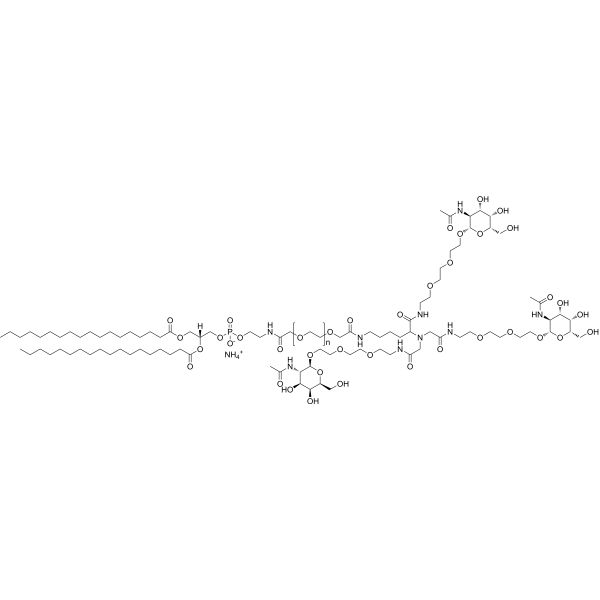
DSPE-PEG2K-triGalNAc ammonium is a polar lipid composed of DSPE and tri-N-acetylgalactosamine that can be used to construct liposomes target to asialoglycoprotein receptor (ASGPR).
|
-
-
- HY-W013967
-
|
|
Fluorescent Dye
|
Infection
|
|
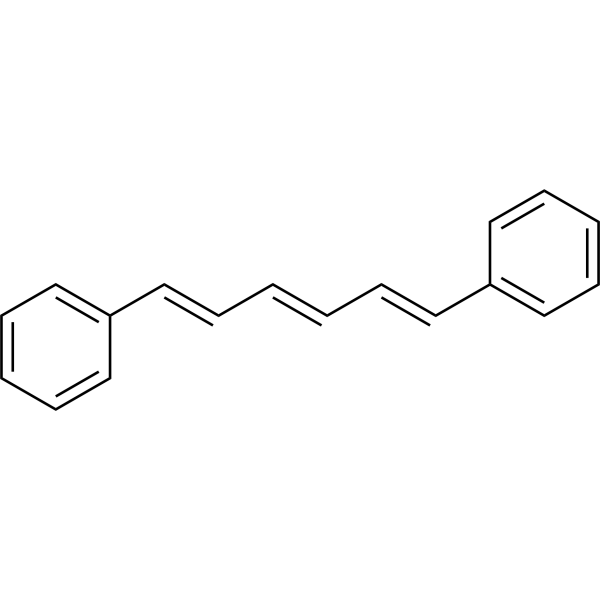
1,6-Diphenylhexa-1,3,5-triene is a membrane intercalator and hydrophobic fluorescent probe. 1,6-Diphenylhexa-1,3,5-triene intercalates into the non-polar region of lipid bilayers of adipocyte membranes with probe/membrane equilibrium affected by temperature, probe concentration, and membrane concentration. 1,6-Diphenylhexa-1,3,5-triene’s fluorescence intensity correlating with adipocyte membrane probe incorporation (Ex/Em = 350/452 nm) .
|
-
-
- HY-144012
-
|
16:0 PEG2000 PE ammonium; 1,2-Dipalmitoyl-sn-glycero-3-phosphoethanolamine-N-[methoxy(polyethylene glycol)-2000] ammonium
|
Liposome
|
Others
|
|
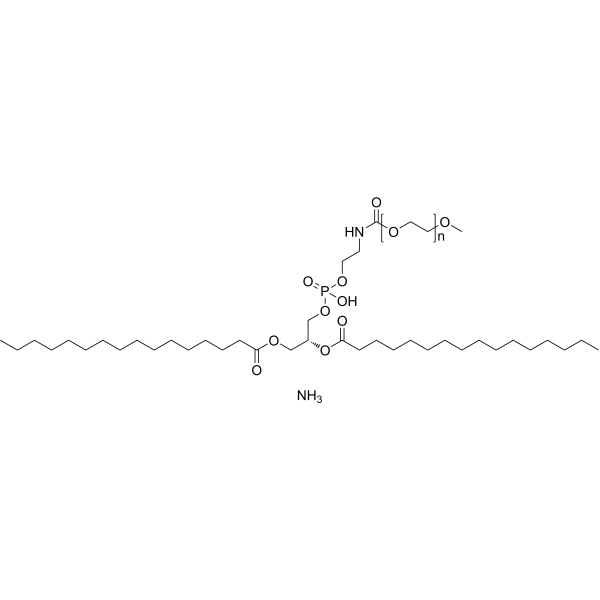
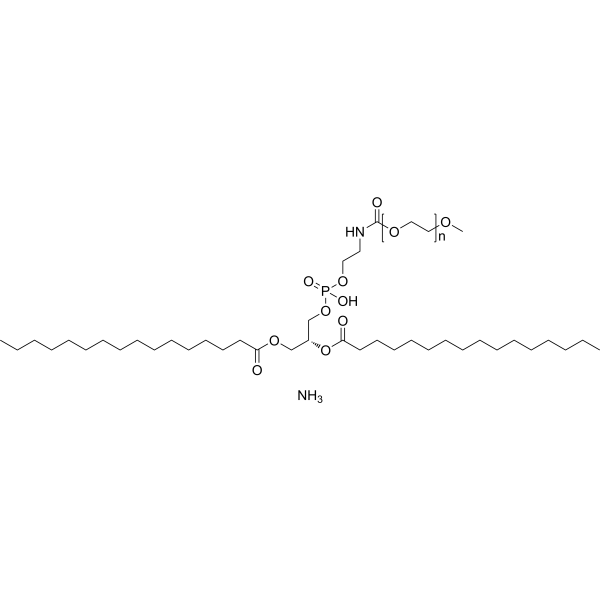
DPPE-PEG2000 ammonium (16:0 PEG5000 PE) is a polymer-lipid conjugate and LipoParticle stabilizer with a PEG chain of 5,000 g/mol molecular weight attached to its polar head, and it can be internalized by biological membranes. DPPE-PEG2000 ammonium enables LipoParticle to maintain colloidal stability after 20-fold dilution in PBS or cell culture medium, and prevents aggregate formation during lyophilization and rehydration. DPPE-PEG2000 ammonium helps enhance the non-cytotoxic property of LipoParticle formulations against human osteoblasts. DPPE-PEG2000 ammonium serves as a PEG lipid functional end group for synthesizing liposomes (LPs), is used in the design of conjugated polymer nanoparticles, and applies to research related to bone and joint infections .
|
-
-
- HY-174940
-
|
|
Biochemical Assay Reagents
|
Others
|
|
E. coli Extract Polar is a polar lipid extract of Escherichia coli containing phosphatidylethanolamine, phosphatidylglycerol, and cardiolipin for reconstitution of membrane proteins.
|
-
-
- HY-144012H
-
|
16:0 PEG5000 PE; 1,2-Dipalmitoyl-sn-glycero-3-phosphoethanolamine-N-[methoxy(polyethylene glycol)-5000] ammonium
|
Liposome
|
Others
|
|
DPPE-PEG5000 (16:0 PEG5000 PE) is a polymer-lipid conjugate and LipoParticle stabilizer with a PEG chain of 5,000 g/mol molecular weight attached to its polar head, and it can be internalized by biological membranes. DPPE-PEG5000 enables LipoParticle to maintain colloidal stability after 20-fold dilution in PBS or cell culture medium, and prevents aggregate formation during lyophilization and rehydration. DPPE-PEG5000 helps enhance the non-cytotoxic property of LipoParticle formulations against human osteoblasts. DPPE-PEG5000 serves as a PEG lipid functional end group for synthesizing liposomes (LPs), is used in the design of conjugated polymer nanoparticles, and applies to research related to bone and joint infections .
|
-
-
- HY-115703
-
|
N-Heptadecanoyl-D-erythro-sphingosine
|
Biochemical Assay Reagents
|
Metabolic Disease
|
|
C17 Ceramide (d18:1/17:0) (N-Heptadecanoyl-D-erythro-sphingosine) is a phospholipid internal standard. C17 Ceramide (d18:1/17:0) is used in studies of medium-chain acyl-CoA dehydrogenase deficiency (MCADD) .
|
-
-
- HY-W099630
-
-
-
- HY-W141932
-
|
Stearoylglycine; N-Octadecanoylglycine
|
Endogenous Metabolite
|
Others
|
|
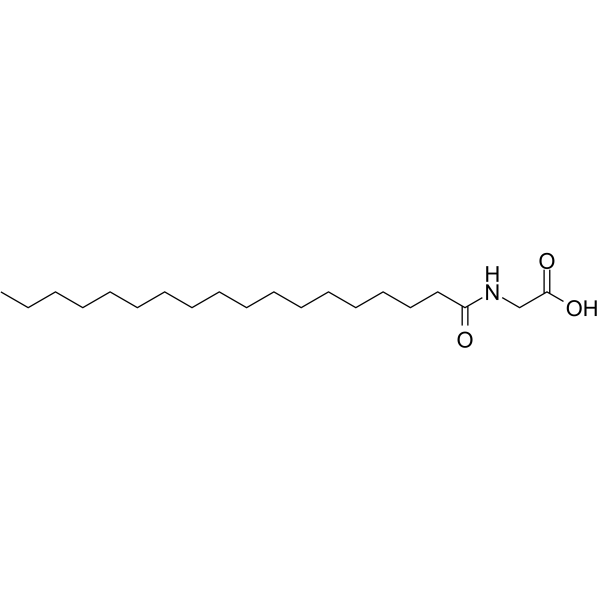
N-stearoylglycine is a lipid and has a small ionizable polar headgroup whose charge is pH dependent and whose amide moiety can form H-bonded network between adjacent molecules in ordered films .
|
-
-
- HY-157624
-
|
18:0-22:6 PE
|
Liposome
|
Others
|
|
1-Stearoyl-2-docosahexaenoyl-sn-glycero-3-phosphoethanolamine (18:0-22:6 PE) is a lipid compound that can be used for liposome preparation. Liposomes are the main component of vesicles with concentric phospholipid bilayer membranes, which can be used to construct drug delivery systems for anti-cancer and anti-infection fields. Highly polar water-soluble loads can be captured in the internal aqueous space of liposomes, while lipophilic loads can be distributed into the lipid bilayer and become part of the lipid bilayer. Especially for the delivery of antisense oligonucleotides, it can overcome the problems of inefficient cellular uptake and rapid loss in the body.
|
-
-
- HY-W099632
-
|
|
Biochemical Assay Reagents
|
Infection
Inflammation/Immunology
|
|
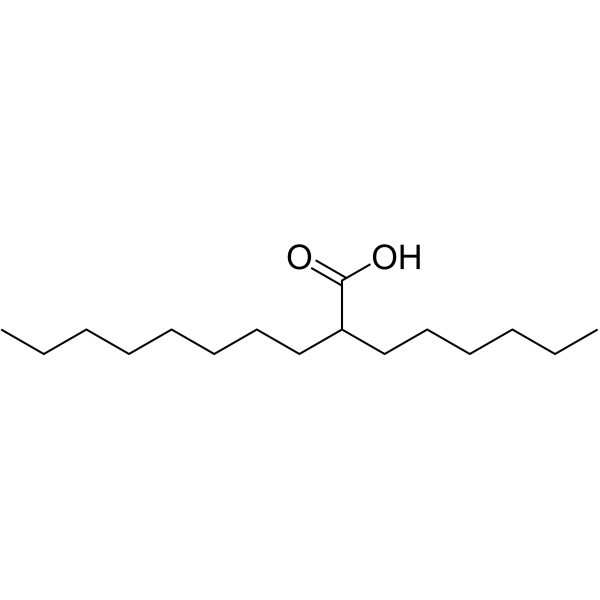
2-Hexyldecanoic acid is a lipid containing one carboxylic acid group and two non-polar tails. In the presence of EDC, HATU and DCC, carboxylic acid groups can undergo continuous amide coupling reactions with amine-containing biomolecules to form stable amide bonds. 2-Hexyldecanoic acid can be used as an aerolysin inhibitor to prevent bacterial pathogens. 2-Hexyldecanoic acid can cause contact dermatitis .
|
-
-
- HY-165104
-
|
GuCGp; Gulopyranosyl-(β1-1)-caldarchaetidylglycerol
|
Bacterial
|
Others
|
|
β-L-Gulopyranosyl-caldarchaetidyl-glycerol (GuCGp) is a compound that is studied in the polar lipid composition of thermoacidophilic bacteria. Its content varies under different culture conditions, which may be related to the adaptation of bacteria to the environment.
|
-
-
- HY-17650
-
|
(±)-Dimyristoyl-2,3-dimethylhydroxypropylamine
|
Liposome
|
Others
|
|
DMDHP ((±)-Dimyristoyl-2,3-dimethylhydroxypropylamine) is a cationic lipid with a polar head group containing a dihydroxy group. DMDHP exhibits superior transfection efficiency and lower toxicity at high DNA doses in mouse intrapulmonary transfection model. DMDHP is commonly used for gene delivery .
|
-
-
- HY-40118
-
|
Boc-L-proline methyl ester
|
Liposome
|
Others
|
|
Boc-Pro-OMe (Boc-L-proline methyl ester) is a lipid compound that can be used for liposome preparation. Liposomes are the main component of vesicles with concentric phospholipid bilayer membranes, which can be used to construct drug delivery systems for anti-cancer and anti-infection fields. Highly polar water-soluble loads can be captured in the internal aqueous space of liposomes, while lipophilic loads can be distributed into the lipid bilayer and become part of the lipid bilayer. Especially for the delivery of antisense oligonucleotides, it can overcome the problems of inefficient cellular uptake and rapid loss in the body.
|
-
-
- HY-165975
-
|
(2S)-3-Keto-C6-dihydrosphingosine hydrochloride
|
Liposome
|
Others
|
|
(2S)-3-Keto sphinganine (d6:0) ((2S)-3-Keto-C6-dihydrosphingosine) hydrochloride is a lipid compound that can be used for liposome preparation. Liposomes are the main component of vesicles with concentric phospholipid bilayer membranes, which can be used to construct drug delivery systems for anti-cancer and anti-infection fields. Highly polar water-soluble loads can be captured in the internal aqueous space of liposomes, while lipophilic loads can be distributed into the lipid bilayer and become part of the lipid bilayer. Especially for the delivery of antisense oligonucleotides, it can overcome the problems of inefficient cellular uptake and rapid loss in the body.
|
-
-
- HY-W591449
-
|
|
Liposome
|
Cancer
|
|
DOPE-PEG2000-Azide is a liposome to simulate biological phospholipid membrane. Liposomes are the main component of vesicles with concentric phospholipid bilayer membranes, which can be used to construct drug delivery systems for anti-cancer and anti-infection fields. Highly polar water-soluble payloads can be trapped in the internal aqueous space of liposomes, while lipophilic payloads can partition into and become part of the lipid bilayer. Especially for delivering antisense oligonucleotides, it can overcome problems such as inefficient cellular uptake and rapid loss in the body .
|
-
-
- HY-D1745
-
|
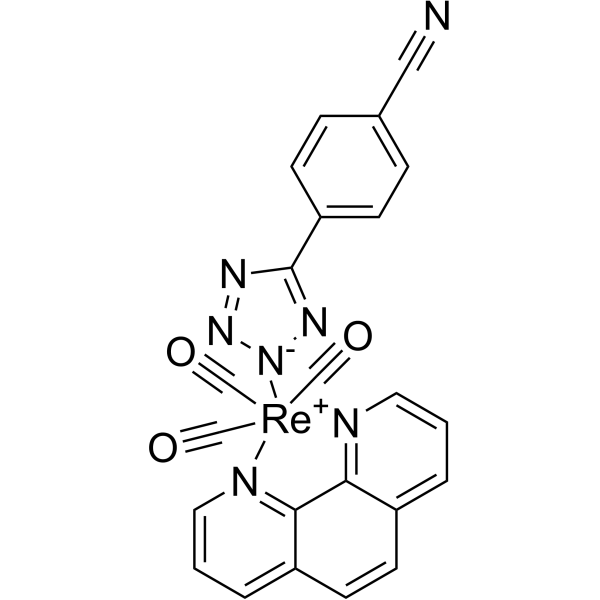
fac-[Re(CO)3(phen)L]
|
Fluorescent Dye
|
Others
|
|
Liptracker-green (fac-[Re(CO)3(phen)L]) is a cell-permeable fluorogenic probe that localizes to polar lipids, and can be used to label lipid droplets and other high lipid-content compartments in live and fixed cells using fluorescent microscopy.
|
-
-
- HY-W020798
-
|
|
Fluorescent Dye
|
Others
|
|
1-Palmitoyl-2-[3-(diphenylhexatriene)propanoyl]-sn-phosphatidylcholine is a fluorescent probe with a polar phosphatidylethanolamine head group for the determination of surface lipid oxidation in lipoproteins and plasma .
|
-
-
- HY-125734
-
|
|
Liposome
|
Others
|
|
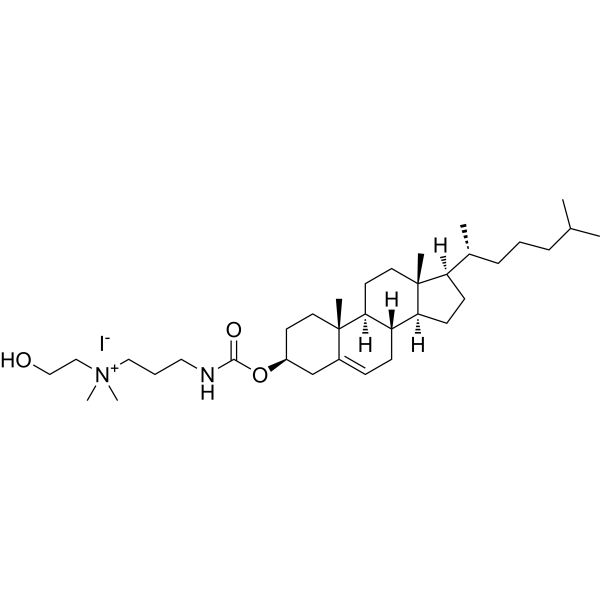
DMHAPC-Chol, a cationic lipid, contains a biodegradable carbamoyl linker and a hydroxyethyl group in the polar amino head moiety. DMHAPC-Chol can be used in both transfection experiments concerning plasmids or siRNA .
|
-
-
- HY-W440681
-
|
|
Liposome
|
Others
|
|
C13-112-tri-tail is a cationic lipid-like compound containing a polar amino alcohol head group, three hydrophobic carbon-13 tails, and a PEG2 linker. C13-112-tri-tail can be formulated into a lipid nanoparticle (LNP).
|
-
-
- HY-W440684
-
|
|
Liposome
|
Others
|
|
C13-113-tetra tail is a cationic lipid-like compound containing a polar amino alcohol head group, four hydrophobic carbon-13 tails, and a tertiary amine linker. C13-113-tetra tail can be formulated into a lipid nanoparticle (LNP).
|
-
-
- HY-W440682
-
|
|
Liposome
|
Others
|
|
C13-113-tri tail is a cationic lipid-like compound containing a polar amino alcohol head group, three hydrophobic carbon-13 tails, and a tertiary amine linker. C13-113-tri tail can be formulated into a lipid nanoparticle (LNP).
|
-
-
- HY-W440683
-
|
|
Liposome
|
Others
|
|
C13-112-tetra-tail is a cationic lipid-like compound containing a polar amino alcohol head group, four hydrophobic carbon-13 tails, and a PEG2 linker. C13-112-tetra-tail can be formulated into a lipid nanoparticle (LNP).
|
-
-
- HY-N2687
-
|
|
DNA/RNA Synthesis
|
Others
|
|
5-n-Tricosylresorcinolthe is the first cyst lipid. 5-n-Tricosylresorcinolthe has metahydroxyl group which allows it to self-associate forming a staggered-chain conformation in which the polar head groups have heaxagonal symmetry. 5-n-Tricosylresorcinolthe reduces hydrogen peroxide-induced DNA damage .
|
-
-
- HY-153725
-
|
|
Liposome
|
Cancer
|
|
17:1 Lyso PC is a liposome to simulate biological phospholipid membrane. Liposomes are the main component of vesicles with concentric phospholipid bilayer membranes, which can be used to construct drug delivery systems for anti-cancer and anti-infection fields. Highly polar water-soluble payloads can be trapped in the internal aqueous space of liposomes, while lipophilic payloads can partition into and become part of the lipid bilayer. Especially for delivering antisense oligonucleotides, it can overcome problems such as inefficient cellular uptake and rapid loss in the body .
|
-
-
- HY-W594833
-
-
-
- HY-W699010
-
-
-
- HY-W800763
-
-
-
- HY-D2938
-
|
|
Fluorescent Dye
|
Others
|
|
BG-PEG11-Cya-NR is a high-performance, non washable, fluorescent opening probe. BG-PEG11-Cya-NR has very weak fluorescence in polar environments (such as aqueous solutions), while its fluorescence is significantly enhanced in non-polar environments (such as the lipid bilayer of cell membranes) .
|
-
-
- HY-164579
-
|
|
Liposome
|
Others
|
|
NH2-GG-DSPE is a lipid compound that can be used for liposome preparation. Liposomes are the main component of vesicles with concentric phospholipid bilayer membranes, which can be used to construct drug delivery systems for anti-cancer and anti-infection fields. Highly polar water-soluble loads can be captured in the internal aqueous space of liposomes, while lipophilic loads can be distributed into the lipid bilayer and become part of the lipid bilayer. Especially for the delivery of antisense oligonucleotides, it can overcome the problems of inefficient cellular uptake and rapid loss in the body.
|
-
-
- HY-157678
-
|
18:2 PS sodium
|
Liposome
|
Others
|
|
1,2-Dilinoleoyl-sn-glycero-3-phospho-L-serine sodium (18:2 PS sodium) is a lipid compound that can be used for liposome preparation. Liposomes are the main component of vesicles with concentric phospholipid bilayer membranes, which can be used to construct drug delivery systems for anti-cancer and anti-infection fields. Highly polar water-soluble loads can be captured in the internal aqueous space of liposomes, while lipophilic loads can be distributed into the lipid bilayer and become part of the lipid bilayer. Especially for the delivery of antisense oligonucleotides, it can overcome the problems of inefficient cellular uptake and rapid loss in the body.
|
-
-
- HY-W099632R
-
|
|
Biochemical Assay Reagents
Reference Standards
|
Others
|
|
Dipotassium glycyrrhizinate (Standard) is the analytical standard of Dipotassium glycyrrhizinate. This product is intended for research and analytical applications. 2-Hexyldecanoic acid is a lipid containing one carboxylic acid group and two non-polar tails. In the presence of EDC, HATU and DCC, carboxylic acid groups can undergo continuous amide coupling reactions with amine-containing biomolecules to form stable amide bonds. 2-Hexyldecanoic acid can be used as an aerolysin inhibitor to prevent bacterial pathogens. 2-Hexyldecanoic acid can cause contact dermatitis.
|
-
| Cat. No. |
Product Name |
Type |
-
- HY-W013967
-
|
|
Fluorescent Dyes
|
|
1,6-Diphenylhexa-1,3,5-triene is a membrane intercalator and hydrophobic fluorescent probe. 1,6-Diphenylhexa-1,3,5-triene intercalates into the non-polar region of lipid bilayers of adipocyte membranes with probe/membrane equilibrium affected by temperature, probe concentration, and membrane concentration. 1,6-Diphenylhexa-1,3,5-triene’s fluorescence intensity correlating with adipocyte membrane probe incorporation (Ex/Em = 350/452 nm) .
|
-
- HY-D1745
-
|
fac-[Re(CO)3(phen)L]
|
Fluorescent Dyes
|
|
Liptracker-green (fac-[Re(CO)3(phen)L]) is a cell-permeable fluorogenic probe that localizes to polar lipids, and can be used to label lipid droplets and other high lipid-content compartments in live and fixed cells using fluorescent microscopy.
|
-
- HY-W020798
-
|
|
Fluorescent Dyes
|
|
1-Palmitoyl-2-[3-(diphenylhexatriene)propanoyl]-sn-phosphatidylcholine is a fluorescent probe with a polar phosphatidylethanolamine head group for the determination of surface lipid oxidation in lipoproteins and plasma .
|
-
- HY-D2938
-
|
|
Fluorescent Dyes
|
|
BG-PEG11-Cya-NR is a high-performance, non washable, fluorescent opening probe. BG-PEG11-Cya-NR has very weak fluorescence in polar environments (such as aqueous solutions), while its fluorescence is significantly enhanced in non-polar environments (such as the lipid bilayer of cell membranes) .
|
| Cat. No. |
Product Name |
Type |
-
- HY-144012
-
|
16:0 PEG2000 PE ammonium; 1,2-Dipalmitoyl-sn-glycero-3-phosphoethanolamine-N-[methoxy(polyethylene glycol)-2000] ammonium
|
Biochemical Assay Reagents
|
|
DPPE-PEG2000 ammonium (16:0 PEG5000 PE) is a polymer-lipid conjugate and LipoParticle stabilizer with a PEG chain of 5,000 g/mol molecular weight attached to its polar head, and it can be internalized by biological membranes. DPPE-PEG2000 ammonium enables LipoParticle to maintain colloidal stability after 20-fold dilution in PBS or cell culture medium, and prevents aggregate formation during lyophilization and rehydration. DPPE-PEG2000 ammonium helps enhance the non-cytotoxic property of LipoParticle formulations against human osteoblasts. DPPE-PEG2000 ammonium serves as a PEG lipid functional end group for synthesizing liposomes (LPs), is used in the design of conjugated polymer nanoparticles, and applies to research related to bone and joint infections .
|
-
- HY-174940
-
|
|
Biochemical Assay Reagents
|
|
E. coli Extract Polar is a polar lipid extract of Escherichia coli containing phosphatidylethanolamine, phosphatidylglycerol, and cardiolipin for reconstitution of membrane proteins.
|
-
- HY-144012H
-
|
16:0 PEG5000 PE; 1,2-Dipalmitoyl-sn-glycero-3-phosphoethanolamine-N-[methoxy(polyethylene glycol)-5000] ammonium
|
Biochemical Assay Reagents
|
|
DPPE-PEG5000 (16:0 PEG5000 PE) is a polymer-lipid conjugate and LipoParticle stabilizer with a PEG chain of 5,000 g/mol molecular weight attached to its polar head, and it can be internalized by biological membranes. DPPE-PEG5000 enables LipoParticle to maintain colloidal stability after 20-fold dilution in PBS or cell culture medium, and prevents aggregate formation during lyophilization and rehydration. DPPE-PEG5000 helps enhance the non-cytotoxic property of LipoParticle formulations against human osteoblasts. DPPE-PEG5000 serves as a PEG lipid functional end group for synthesizing liposomes (LPs), is used in the design of conjugated polymer nanoparticles, and applies to research related to bone and joint infections .
|
-
- HY-W440681
-
|
|
Biochemical Assay Reagents
|
|
C13-112-tri-tail is a cationic lipid-like compound containing a polar amino alcohol head group, three hydrophobic carbon-13 tails, and a PEG2 linker. C13-112-tri-tail can be formulated into a lipid nanoparticle (LNP).
|
-
- HY-W440684
-
|
|
Biochemical Assay Reagents
|
|
C13-113-tetra tail is a cationic lipid-like compound containing a polar amino alcohol head group, four hydrophobic carbon-13 tails, and a tertiary amine linker. C13-113-tetra tail can be formulated into a lipid nanoparticle (LNP).
|
-
- HY-W440682
-
|
|
Biochemical Assay Reagents
|
|
C13-113-tri tail is a cationic lipid-like compound containing a polar amino alcohol head group, three hydrophobic carbon-13 tails, and a tertiary amine linker. C13-113-tri tail can be formulated into a lipid nanoparticle (LNP).
|
-
- HY-W440683
-
|
|
Biochemical Assay Reagents
|
|
C13-112-tetra-tail is a cationic lipid-like compound containing a polar amino alcohol head group, four hydrophobic carbon-13 tails, and a PEG2 linker. C13-112-tetra-tail can be formulated into a lipid nanoparticle (LNP).
|
| Cat. No. |
Product Name |
Target |
Research Area |
-
- HY-W141932
-
|
Stearoylglycine; N-Octadecanoylglycine
|
Endogenous Metabolite
|
Others
|
|
N-stearoylglycine is a lipid and has a small ionizable polar headgroup whose charge is pH dependent and whose amide moiety can form H-bonded network between adjacent molecules in ordered films .
|
-
- HY-40118
-
|
Boc-L-proline methyl ester
|
Liposome
|
Others
|
|
Boc-Pro-OMe (Boc-L-proline methyl ester) is a lipid compound that can be used for liposome preparation. Liposomes are the main component of vesicles with concentric phospholipid bilayer membranes, which can be used to construct drug delivery systems for anti-cancer and anti-infection fields. Highly polar water-soluble loads can be captured in the internal aqueous space of liposomes, while lipophilic loads can be distributed into the lipid bilayer and become part of the lipid bilayer. Especially for the delivery of antisense oligonucleotides, it can overcome the problems of inefficient cellular uptake and rapid loss in the body.
|
| Cat. No. |
Product Name |
Category |
Target |
Chemical Structure |
| Cat. No. |
Product Name |
|
Classification |
-
- HY-157950
-
|
|
|
Pegylated Lipids
|
|
DSPE-PEG2K-triGalNAc ammonium is a polar lipid composed of DSPE and tri-N-acetylgalactosamine that can be used to construct liposomes target to asialoglycoprotein receptor (ASGPR).
|
-
- HY-144012
-
|
16:0 PEG2000 PE ammonium; 1,2-Dipalmitoyl-sn-glycero-3-phosphoethanolamine-N-[methoxy(polyethylene glycol)-2000] ammonium
|
|
Pegylated Lipids
|
|
DPPE-PEG2000 ammonium (16:0 PEG5000 PE) is a polymer-lipid conjugate and LipoParticle stabilizer with a PEG chain of 5,000 g/mol molecular weight attached to its polar head, and it can be internalized by biological membranes. DPPE-PEG2000 ammonium enables LipoParticle to maintain colloidal stability after 20-fold dilution in PBS or cell culture medium, and prevents aggregate formation during lyophilization and rehydration. DPPE-PEG2000 ammonium helps enhance the non-cytotoxic property of LipoParticle formulations against human osteoblasts. DPPE-PEG2000 ammonium serves as a PEG lipid functional end group for synthesizing liposomes (LPs), is used in the design of conjugated polymer nanoparticles, and applies to research related to bone and joint infections .
|
-
- HY-144012H
-
|
16:0 PEG5000 PE; 1,2-Dipalmitoyl-sn-glycero-3-phosphoethanolamine-N-[methoxy(polyethylene glycol)-5000] ammonium
|
|
Pegylated Lipids
|
|
DPPE-PEG5000 (16:0 PEG5000 PE) is a polymer-lipid conjugate and LipoParticle stabilizer with a PEG chain of 5,000 g/mol molecular weight attached to its polar head, and it can be internalized by biological membranes. DPPE-PEG5000 enables LipoParticle to maintain colloidal stability after 20-fold dilution in PBS or cell culture medium, and prevents aggregate formation during lyophilization and rehydration. DPPE-PEG5000 helps enhance the non-cytotoxic property of LipoParticle formulations against human osteoblasts. DPPE-PEG5000 serves as a PEG lipid functional end group for synthesizing liposomes (LPs), is used in the design of conjugated polymer nanoparticles, and applies to research related to bone and joint infections .
|
-
- HY-157624
-
|
18:0-22:6 PE
|
|
Phospholipids
|
|
1-Stearoyl-2-docosahexaenoyl-sn-glycero-3-phosphoethanolamine (18:0-22:6 PE) is a lipid compound that can be used for liposome preparation. Liposomes are the main component of vesicles with concentric phospholipid bilayer membranes, which can be used to construct drug delivery systems for anti-cancer and anti-infection fields. Highly polar water-soluble loads can be captured in the internal aqueous space of liposomes, while lipophilic loads can be distributed into the lipid bilayer and become part of the lipid bilayer. Especially for the delivery of antisense oligonucleotides, it can overcome the problems of inefficient cellular uptake and rapid loss in the body.
|
-
- HY-17650
-
|
(±)-Dimyristoyl-2,3-dimethylhydroxypropylamine
|
|
Cationic Lipids
|
|
DMDHP ((±)-Dimyristoyl-2,3-dimethylhydroxypropylamine) is a cationic lipid with a polar head group containing a dihydroxy group. DMDHP exhibits superior transfection efficiency and lower toxicity at high DNA doses in mouse intrapulmonary transfection model. DMDHP is commonly used for gene delivery .
|
-
- HY-W591449
-
|
|
|
Pegylated Lipids
|
|
DOPE-PEG2000-Azide is a liposome to simulate biological phospholipid membrane. Liposomes are the main component of vesicles with concentric phospholipid bilayer membranes, which can be used to construct drug delivery systems for anti-cancer and anti-infection fields. Highly polar water-soluble payloads can be trapped in the internal aqueous space of liposomes, while lipophilic payloads can partition into and become part of the lipid bilayer. Especially for delivering antisense oligonucleotides, it can overcome problems such as inefficient cellular uptake and rapid loss in the body .
|
-
- HY-125734
-
|
|
|
Cationic Lipids
Cholesterol
|
|
DMHAPC-Chol, a cationic lipid, contains a biodegradable carbamoyl linker and a hydroxyethyl group in the polar amino head moiety. DMHAPC-Chol can be used in both transfection experiments concerning plasmids or siRNA .
|
-
- HY-W440681
-
|
|
|
Cationic Lipids
|
|
C13-112-tri-tail is a cationic lipid-like compound containing a polar amino alcohol head group, three hydrophobic carbon-13 tails, and a PEG2 linker. C13-112-tri-tail can be formulated into a lipid nanoparticle (LNP).
|
-
- HY-W440684
-
|
|
|
Cationic Lipids
|
|
C13-113-tetra tail is a cationic lipid-like compound containing a polar amino alcohol head group, four hydrophobic carbon-13 tails, and a tertiary amine linker. C13-113-tetra tail can be formulated into a lipid nanoparticle (LNP).
|
-
- HY-W440682
-
|
|
|
Cationic Lipids
|
|
C13-113-tri tail is a cationic lipid-like compound containing a polar amino alcohol head group, three hydrophobic carbon-13 tails, and a tertiary amine linker. C13-113-tri tail can be formulated into a lipid nanoparticle (LNP).
|
-
- HY-W440683
-
|
|
|
Cationic Lipids
|
|
C13-112-tetra-tail is a cationic lipid-like compound containing a polar amino alcohol head group, four hydrophobic carbon-13 tails, and a PEG2 linker. C13-112-tetra-tail can be formulated into a lipid nanoparticle (LNP).
|
-
- HY-157678
-
|
18:2 PS sodium
|
|
Phospholipids
|
|
1,2-Dilinoleoyl-sn-glycero-3-phospho-L-serine sodium (18:2 PS sodium) is a lipid compound that can be used for liposome preparation. Liposomes are the main component of vesicles with concentric phospholipid bilayer membranes, which can be used to construct drug delivery systems for anti-cancer and anti-infection fields. Highly polar water-soluble loads can be captured in the internal aqueous space of liposomes, while lipophilic loads can be distributed into the lipid bilayer and become part of the lipid bilayer. Especially for the delivery of antisense oligonucleotides, it can overcome the problems of inefficient cellular uptake and rapid loss in the body.
|
Your information is safe with us. * Required Fields.
Inquiry Information
- Product Name:
- Cat. No.:
- Quantity:
- MCE Japan Authorized Agent: