
22 Results for "

protein denaturation

" in MedChemExpress (MCE) Product Catalog:
Products (22)

22 Results for "protein denaturation" in MCE Product Catalog:

2
2 Cited Publications
Cat. No.: HY-17480
CAS No.: 20187-55-7
Target:  

Others

Research Areas:  

Inflammation/Immunology

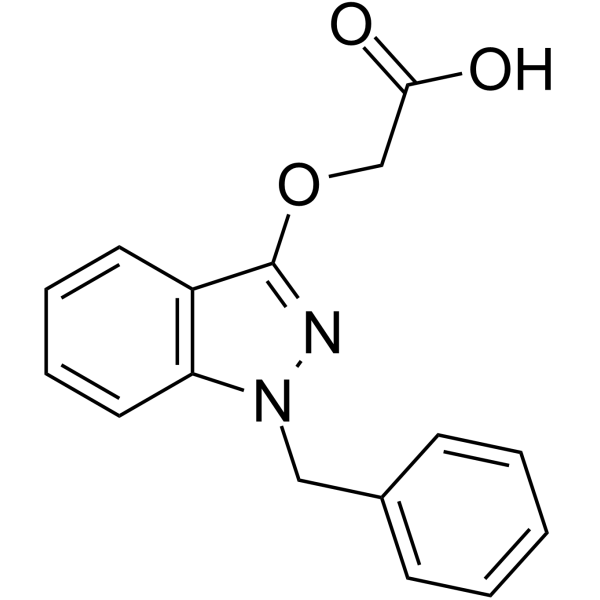
Bendazac is an oxyacetic acid with anti-inflammatory, antinecrotic, choleretic and antilipidaemic properties. Bendazac acts by preventing protein denaturation and delays the cataractogenic process .
loading...
    loading...
2
2 Cited Publications
Cat. No.: HY-13769A
CAS No.: 2076-91-7
Purity:  ≥98.0%
Synonyms: NSC55712; TPU-260 Dihydrochloride
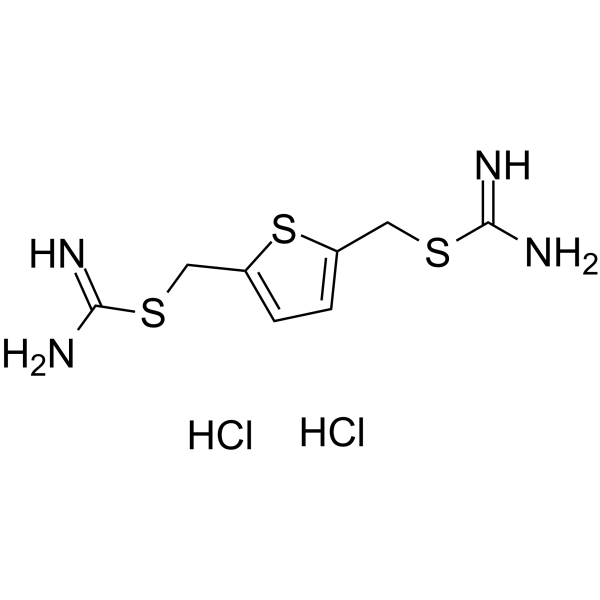
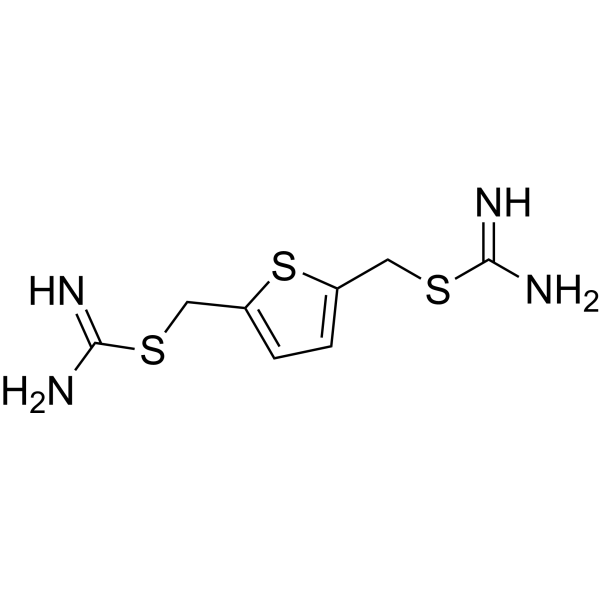
TPT-260 Dihydrochloride (NSC55712), a thiophene thiourea derivative, is a retromer complex stabilizer against thermal denaturation (Kd = ~5 µM). TPT-260 Dihydrochloride increases the levels of retromer proteins, shifts amyloid-precursor protein (APP) away from the endosome, and decreases the pathogenic processing of APP. TPT-260 Dihydrochloride inhibits TLR4 upregulation, IKKβ phosphorylation, NF-κB p65 nuclear translocation, and NLRP3 inflammasome formation. TPT-260 Dihydrochloride improves retromer-mediated cargo trafficking, reduces brain infarct area, and decreases amyloid plaque deposition. TPT-260 Dihydrochloride exhibits minimal cytotoxicity to primary microglia at tested concentrations. TPT-260 Dihydrochloride can be used for the research of inflammatory bowel disease, ischemic stroke and Alzheimer's disease .
loading...
    loading...
2
2 Cited Publications
Cat. No.: HY-K1030

MCE SDS dust-free Powder can be directly prepared into 10% SDS solution, and is widely used for protein denaturation.

loading...
    loading...
1
1 Cited Publications
Cat. No.: HY-W010572
CAS No.: 96-27-5
Synonyms: alpha-Thioglycerol
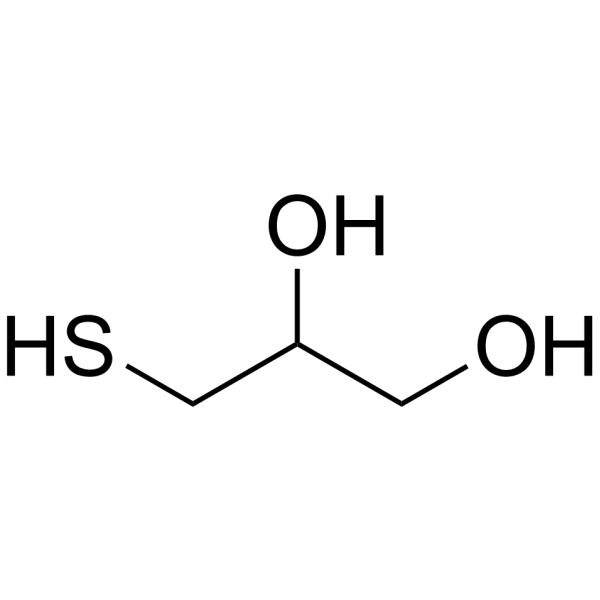
1-Thioglycerol, commonly used as a reducing agent in various biochemical and biophysical applications, especially in protein chemistry and molecular biology, it can protect proteins from oxidation and denaturation, and can reduce disulfide bonds to thiols base, which can then be modified or analyzed. In addition, 1-Thioglycerol has been investigated for potential medical applications, including as an inhibitor of cystic fibrosis, which may help improve the function of lung cells, and has also been studied for Used in the preparation of metal nanoparticles and as a stabilizer for certain pharmaceutical preparations.
loading...
    loading...
Cat. No.: HY-NP008
CAS No.: 9045-23-2
β-Lactoglobulin, a major whey protein, is a small globular protein from the lipocalin family. β-Lactoglobulin is an important source of the essential and branched-chain amino acids (leucine, isoleucine, and valine). β-Lactoglobulin shows antioxidant properties, because it contains two disulfide bonds and one free thiol group. β-Lactoglobulin is a ligand transport agent. β-Lactoglobulin is one of the major allergens in milk and can be utilized in the research for developing safe hypoallergenic dairy products .
loading...
    loading...
Cat. No.: HY-135484
CAS No.: 160255-06-1
Purity:  99.15%
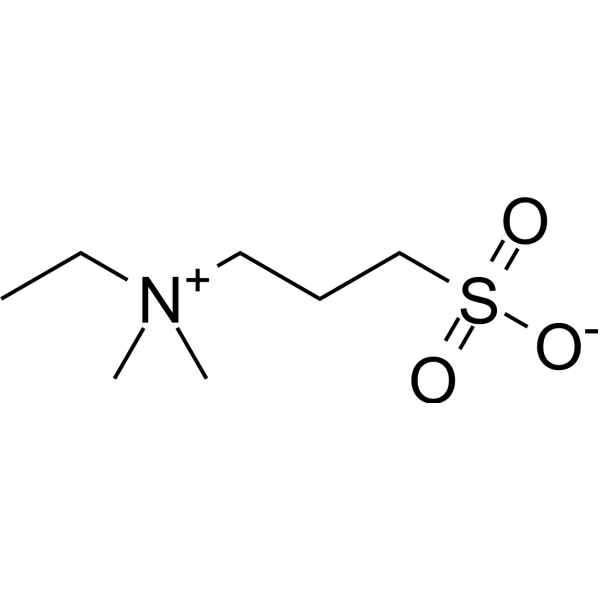
NDSB-195 is protein stabilizer that enhances the dynamics of the β4-α2 loop of ubiquitin. NDSB-195 stabilizes Saccharomyces cerevisiae ubiquitin against guanidium chloride denaturation, increasing the onset temperature of heat denaturation in the presence of the denaturant .
loading...
    loading...
Cat. No.: HY-N2078
CAS No.: 512-06-1
Synonyms: Neodiosgenin
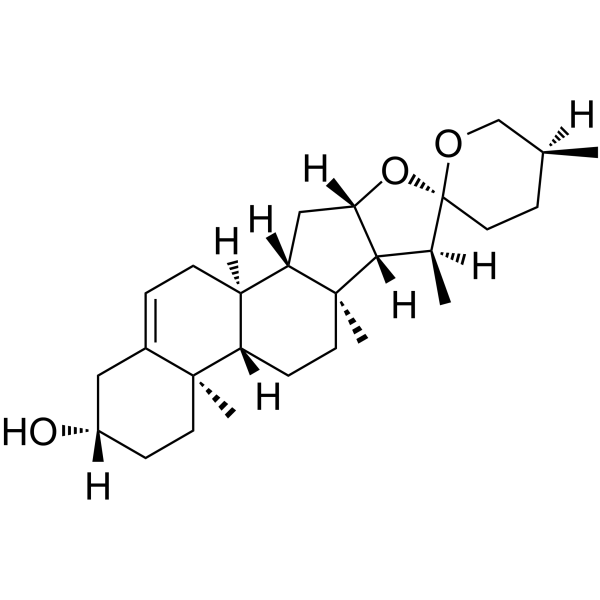
Yamogenin (Neodiosgenin) is a diastereomer of diosgenin. Yamogenin antagonizes the activation of the liver X receptor (LXR) in luciferase ligand assay. Yamogenin inhibits triacylglyceride (TG) accumulation through the suppression of gene expression of fatty acid synthesis in HepG2 hepatocytes. Yamogenin is a steroidal saponin that can be obtained from plant species with in vitro cytotoxicity, antioxidant, and antimicrobial properties. Yamogenin induces cell death via the extrinsic and intrinsic way of apoptosis. Yamogenin inhibits protein denaturation with an IC50 of 1421.92 μg/mL. Yamogenin can be studied in research on gastric cancer .
loading...
    loading...
Cat. No.: HY-W585874
CAS No.: 5746-03-2
Target:  

EAAT Apoptosis

Nε-(Carboxyethyl) lysine is an advanced glycation end product (AGE). Nε-(Carboxyethyl) lysine induces cross-linking between proteins, thereby affecting protein structure and function and causing protein denaturation. Nε-(Carboxyethyl) lysine binds to the RAGE receptor, affects cell signal transduction, and regulates processes such as inflammatory responses, cell proliferation, and apoptosis. Nε-(Carboxyethyl) lysine affects glutamate transporters, reduces glutamate uptake and S100β protein secretion, influences neurotransmission in the nervous system, and exhibits diabetes-related neurotoxicity .
loading...
    loading...
Cat. No.: HY-W011831
CAS No.: 81239-45-4
Synonyms: 3-(Benzyldimethylammonio)propane-1-sulfonate; PDA
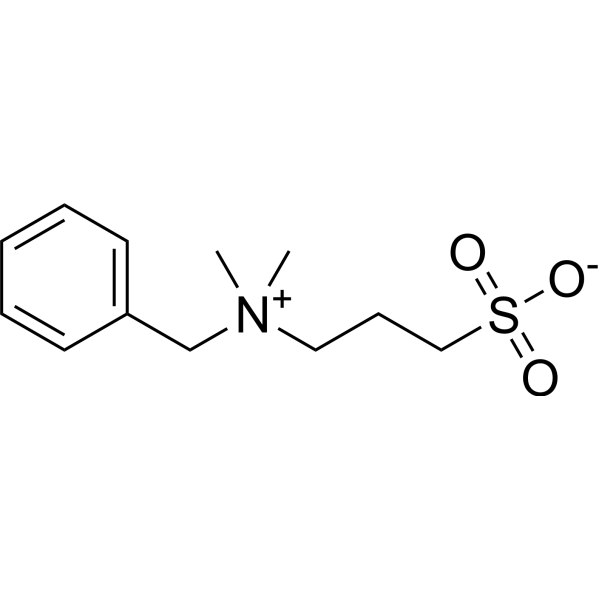
NDSB-256 is a non-stain remover sulfabetaine. NDSB-256 prevents protein aggregation and promotes denaturation of chemically and thermally denatured proteins .
loading...
    loading...
Cat. No.: HY-115419
CAS No.: 10593-29-0
Target:  

Liposome

Research Areas:  

Others

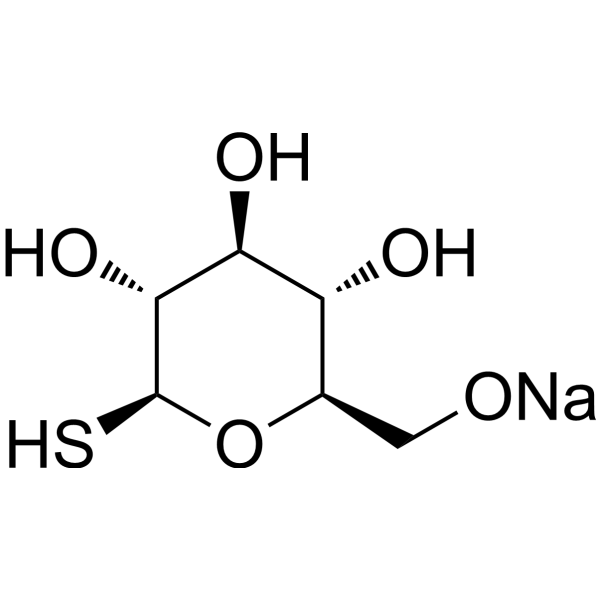
1-Thio-β-D-glucose sodium is the sodium salt form of 1-Thio-β-D-glucose. 1-Thio-β-D-glucose forms hydrophilic self-assembled monolayer with metal, stablizes the lipid bilayer and protects the proteins from denaturation .
loading...
    loading...
Cat. No.: HY-Y0317I
CAS No.: 7757-82-6
Synonyms: Disodium sulfate, meets analytical specification of Ph. Eur. BP USP
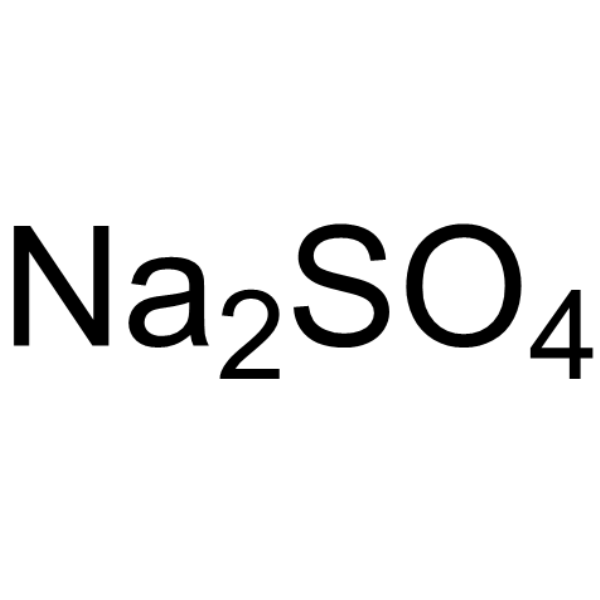
Sodium sulfate anhydrous (Disodium sulfate), meets analytical specification of Ph. Eur. BP USP is an orally active multifunctional ionic salt that serves as a protein precipitant, collagen fibril bundling inducer, and chlorine-free sodium source. Sodium sulfate anhydrous, meets analytical specification of Ph. Eur. BP USP promotes collagen fibril bundling to increase matrix pore size, alters cancer cell morphology and regulates their migration direction via geometric signals, and separates plasma/serum proteins or concentrates proteins at 37°C without causing thermal denaturation. In poultry farming applications, Sodium sulfate anhydrous, meets analytical specification of Ph. Eur. BP USP improves laying performance and eggshell quality, and is safe and effective at an addition level of 0.3-1.5%, while a high concentration of 3.0% causes negative physiological effects. Sodium sulfate anhydrous, meets analytical specification of Ph. Eur. BP USP can be widely applied in scientific research on cervical cancer and related fields .
loading...
    loading...
Cat. No.: HY-W040218
CAS No.: 85316-98-9
Synonyms: N-Octanoyl-N-methylglucamine
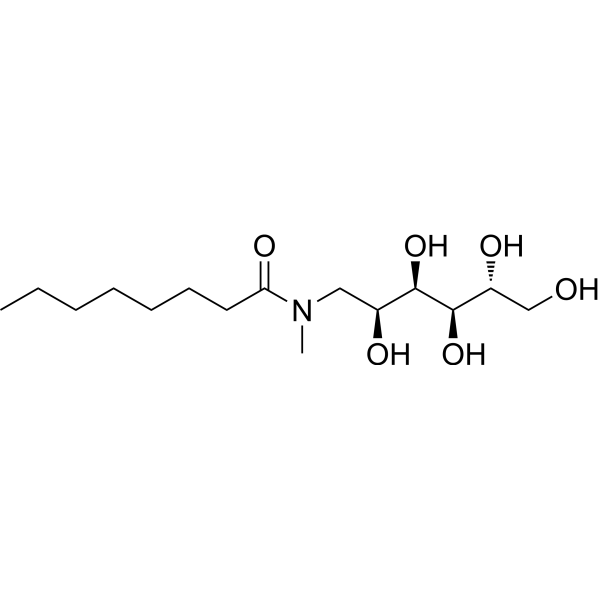
MEGA-8 (N-Octanoyl-N-methylglucamine) is a nonionic sugar-based surfactant. MEGA-8 can gently solubilize membrane proteins without easily causing their denaturation. MEGA-8 is a commonly used reagent for the extraction and study of membrane proteins in biochemistry .
loading...
    loading...
Cat. No.: HY-13769
CAS No.: 769856-81-7
Synonyms: TPU260
TPT-260 (TPU260), a thiophene thiourea derivative, is a retromer complex stabilizer against thermal denaturation (Kd = ~5 µM). TPT-260 increases the levels of retromer proteins, shifts amyloid-precursor protein (APP) away from the endosome, and decreases the pathogenic processing of APP. TPT-260 inhibits TLR4 upregulation, IKKβ phosphorylation, NF-κB p65 nuclear translocation, and NLRP3 inflammasome formation. TPT-260 improves retromer-mediated cargo trafficking, reduces brain infarct area, and decreases amyloid plaque deposition. TPT-260 exhibits minimal cytotoxicity to primary microglia at tested concentrations. TPT-260 can be used for the research of inflammatory bowel disease, ischemic stroke and Alzheimer's disease .
loading...
    loading...
Cat. No.: HY-17480R
CAS No.: 20187-55-7
Bendazac (Standard) is the analytical standard of Bendazac. This product is intended for research and analytical applications. Bendazac is an oxyacetic acid with anti-inflammatory, antinecrotic, choleretic and antilipidaemic properties. Bendazac acts by preventing protein denaturation and delays the cataractogenic process. Bendazac exerts funciton in anti-radical effect and inhibits oxidative brust .
loading...
    loading...
Cat. No.: HY-W748418
1-Thio-β-D-glucose Sodium Salt Dihydrate- 13C6 is the 13C-labeled 1-Thio-β-D-glucose sodium (HY-115419). 1-Thio-β-D-glucose sodium is the sodium salt form of 1-Thio-β-D-glucose. 1-Thio-β-D-glucose forms hydrophilic self-assembled monolayer with metal, stablizes the lipid bilayer and protects the proteins from denaturation .
loading...
    loading...
Cat. No.: HY-W010572R
CAS No.: 96-27-5
Synonyms: alpha-Thioglycerol (Standard)
1-Thioglycerol (Standard) is the analytical standard of 1-Thioglycerol. This product is intended for research and analytical applications. 1-Thioglycerol, commonly used as a reducing agent in various biochemical and biophysical applications, especially in protein chemistry and molecular biology, it can protect proteins from oxidation and denaturation, and can reduce disulfide bonds to thiols base, which can then be modified or analyzed. In addition, 1-Thioglycerol has been investigated for potential medical applications, including as an inhibitor of cystic fibrosis, which may help improve the function of lung cells, and has also been studied for Used in the preparation of metal nanoparticles and as a stabilizer for certain pharmaceutical preparations.
loading...
    loading...
Cat. No.: HY-N2078R
CAS No.: 512-06-1
Synonyms: Neodiosgenin (Standard)
Yamogenin (Standard) is the analytical standard of Yamogenin. This product is intended for research and analytical applications. Yamogenin (Neodiosgenin) is a diastereomer of diosgenin. Yamogenin antagonizes the activation of the liver X receptor (LXR) in luciferase ligand assay. Yamogenin inhibits triacylglyceride (TG) accumulation through the suppression of gene expression of fatty acid synthesis in HepG2 hepatocytes. Yamogenin is a steroidal saponin that can be obtained from plant species with in vitro cytotoxicity, antioxidant, and antimicrobial properties. Yamogenin induces cell death via the extrinsic and intrinsic way of apoptosis. Yamogenin inhibits protein denaturation with an IC50 of 1421.92 μg/mL. Yamogenin can be studied in research on gastric cancer .
loading...
    loading...
Cat. No.: HY-W753557
CAS No.: 24607-08-7
Avocadene is a natural product isolated from Persea americana leaves, with anticancer, insecticidal, anti-Helicobacter pylori, and anti-inflammatory activity. Avocadene exerts antibacterial and anti‑inflammatory effects by suppressing Helicobacter pylori growth and inhibiting protein denaturation. Avocadene displays obvious cytotoxic activity against human prostate cancer PC‑3 cells with an IC50 of 0.5 μg/mL. Avocadene can be used for research of Helicobacter pylori‑associated gastrointestinal inflammation, gastroduodenal injury and prostate tumors .
loading...
    loading...
Cat. No.: HY-D3520
CAS No.: 2484683-99-8
HPsensor 2 is a fluorescent probe used to detect the surface hydrophobicity of proteins. The detection mechanism of HPsensor 2 relies on its amphipathic properties. The 2-methoxyethylamine substituents at positions 3 and 5 of its BODIPY core enhance water solubility, enabling it to interact with solvent-exposed hydrophobic regions on proteins. When it binds to these hydrophobic surfaces, the free rotation of the meso-aryl substituent is restricted, increasing molecular rigidity and reducing non-radiative deactivation, which results in a significant enhancement of fluorescence. HPsensor 2 exhibits weak but detectable fluorescence in aqueous environments, and its fluorescence is highly sensitive to changes in protein surface hydrophobicity (Ex/Em = 528/579 nm) .
loading...
    loading...
Cat. No.: HY-D3111
CAS No.: 1240465-12-6
Target:  

Fluorescent Dye

Research Areas:  

Neurological Disease

DBHA is a long-wavelength polarity-sensitive fluorescent probe based on Nile Red. Under the catalysis of Pd (OAc)2/TPPTS, DBHA site-selectively labels protein tyrosine residues via a π-allyl palladium complex intermediate. Utilizing the property that its maximum emission wavelength blue-shifts with decreasing local polarity (650 nm in aqueous solution → 584-608 nm in hydrophobic domains), it detects changes in local polarity and conformation of protein tyrosine domains under acid/thermal denaturation conditions. DBHA can be used in studies related to SOD1-associated oxidative stress neurodegenerative diseases .
loading...
    loading...

