
14 Results for "

protein kinase C ε

" in MedChemExpress (MCE) Product Catalog:
Products (14)

14 Results for "protein kinase C ε" in MCE Product Catalog:

1
1 Cited Publications
Cat. No.: HY-129624A
CAS No.: 138516-31-1
Purity:  99.68%
Synonyms: Ro 31-7549 acetate; Bis VIII acetate
Target:  

PKC Apoptosis

Research Areas:  

Inflammation/Immunology Cancer

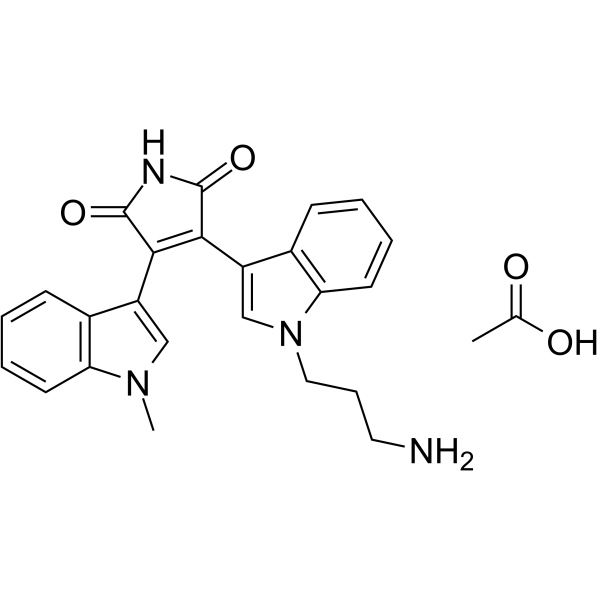
Bisindolylmaleimide VIII acetate (Ro 31-7549 acetate) is a potent and selective protein kinase C (PKC) inhibitor with an IC50 of 158 nM for rat brain PKC. Bisindolylmaleimide VIII acetate has IC50s of 53, 195, 163, 213, and 175 nM for PKC-α, PKC-βI, PKC-βII, PKC-γ, PKC-ε, respectively . Bisindolylmaleimide VIII acetate facilitates Fas-mediated apoptosis and inhibits T cell-mediated autoimmune diseases .
loading...
    loading...
Cat. No.: HY-137295
CAS No.: 59086-90-7
Purity:  99.96%
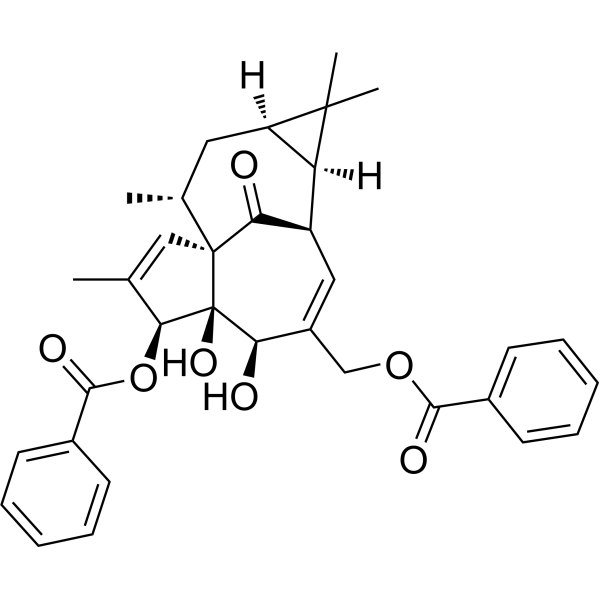
Ingenol 3,20-dibenzoate is a potent protein kinase C (PKC) isoform-selective agonist. Ingenol 3,20-dibenzoate induces selective translocation of nPKC-delta, -epsilon, and -theta and PKC-mu from the cytosolic fraction to the particulate fraction and induces morphologically typical apoptosis through de novo synthesis of macromolecules. Ingenol 3,20-dibenzoate increases the IFN-γ production and degranulation by NK cells, especially when NK cells are stimulated by NSCLC cells .
loading...
    loading...
Cat. No.: HY-121197
CAS No.: 63590-19-2
Synonyms: Ophiocordin; Azepinostatin
Target:  

MARCKS PKA PKC

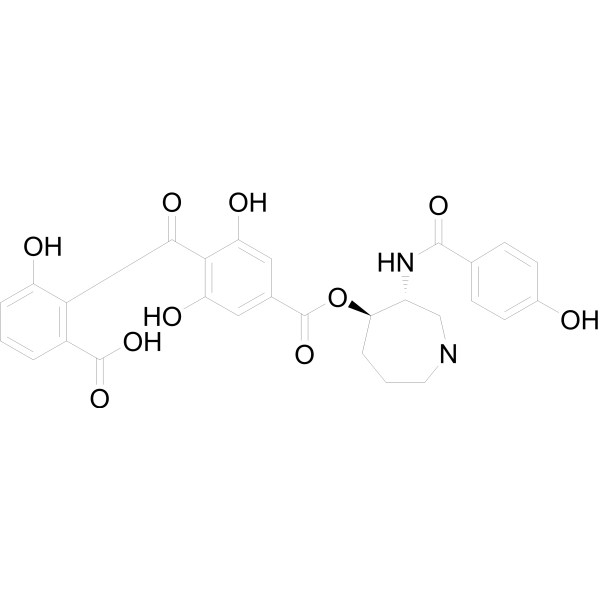
Balanol (Ophiocordin; Azepinostatin) is a potent and ATP competitive PKC/PKA inhibitor against human PKC isozymes α, β-I, β-II, γ, δ, ε, η (IC50s=4-9 nM) and ζ (IC50=150 nM). Balanol also blocks the phosphorylation of cyclic AMP response element-binding protein (CREB) and myristoylated alanine-rich C kinase substrate (MARCKS). Balanol can be isolated from the fungus Verticillium balanoides .
loading...
    loading...
Cat. No.: HY-158051
CAS No.: 1620195-03-0
Target:  

PKC

Research Areas:  

Neurological Disease

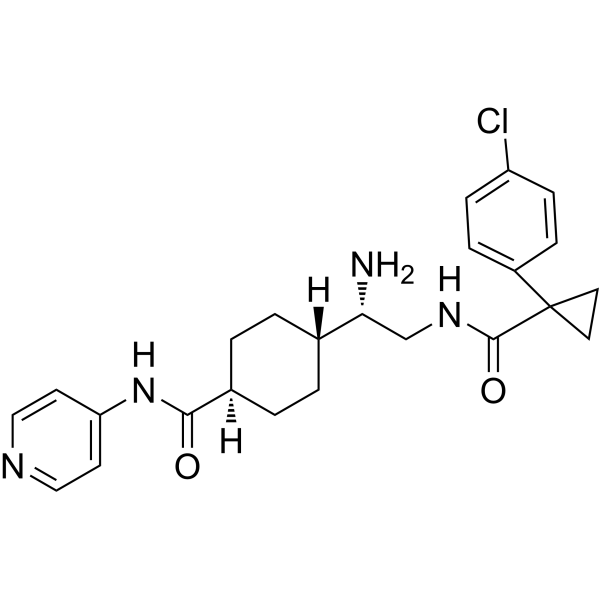
CIDD-0072424 selectively inhibits Protein Kinase C-epsilon (PKCε) (Ki=54 nM). CIDD-0072424 reduces ethanol consumption and preference in a dose-dependent manner .
loading...
    loading...
Cat. No.: HY-P1803
CAS No.: 120253-69-2
Synonyms: PKCε; PRKCE ; Peptide Epsilon
Protein Kinase C Peptide Substrate is targeted to a specific cellular compartment in a manner dependent on second messengers and on specific adapter proteins in response to extracellular signals that activate G-protein-coupled receptors, tyrosine kinase receptors, or tyrosine kinase-coupled receptors. Protein Kinase C Peptide Substrate then regulates various physiological functions including the activation of nervous, endocrine, exocrine, inflammatory, and immune systems .
loading...
    loading...
Cat. No.: HY-180888
CAS No.: 1356734-45-6
Target:  

Src CD3

Research Areas:  

Inflammation/Immunology

Lck-IN-5 (example C10) is a potent and selective lymphocyte-specific protein tyrosine kinase (LCK) inhibitor. Lck-IN-5 selectively disrupts the interaction between the SH3 domain of LCK and the RK motif of CD3ε, thereby impairing LCK recruitment to the TCR. Lck-IN-5 modulates the activity of CD3ε-containing CAR and TRuC T cells, attenuating cytokine production and promoting a central-memory-like phenotype associated with enhanced persistence. Lck-IN-5 can be used for autoimmune diseases and graft-versus-host disease research .
loading...
    loading...
Cat. No.: HY-149489
CAS No.: 742104-91-2
Target:  

PKC

Research Areas:  

Neurological Disease

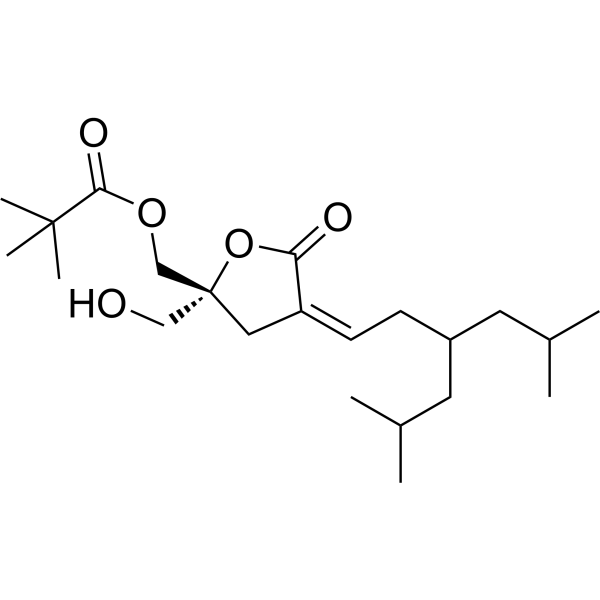
JH-131e-153, a diacylglycerol (DAG)-lactone, is a small molecule activator of Munc13-1, targeting the C1 domain. The activation sequence of JH-131e-153 on Munc13-1 is WT>I590≈R592A≈W588A. The C1 domain of Munc13-1 and protein kinase C (PKC) are homologous in sequence and structure. The activation sequence of JH-131e-153 on Munc13-1 and PKC was PKCα>Munc13-1>PKCε. JH-131e-153 regulates neuronal processes through Munc13-1 and can be further used in the study of neurodegenerative diseases .
loading...
    loading...
Cat. No.: HY-129624
CAS No.: 125313-65-7
Synonyms: Ro 31-7549; Bis VIII
Target:  

PKC Apoptosis

Research Areas:  

Inflammation/Immunology Cancer

Bisindolylmaleimide VIII (Ro 31-7549) is a potent and selective protein kinase C (PKC) inhibitor with an IC50 of 158 nM for rat brain PKC. Bisindolylmaleimide VIII has IC50s of 53, 195, 163, 213, and 175 nM for PKC-α, PKC-βI, PKC-βII, PKC-γ, PKC-ε, respectively . Bisindolylmaleimide VIII facilitates Fas-mediated apoptosis and inhibits T cell-mediated autoimmune diseases .
loading...
    loading...
Cat. No.: HY-P71208
Purity:  ≥ 90%, as determined by reducing SDS-PAGE.
Synonyms: PRKCE; PKCE; protein kinase C Epsilon; Non-Specific Serine/Threonine protein kinase; protein kinase C Epsilon Type; protein kinase C, Epsilon; NPKC-Epsilon
Species:  
Human
Source:  
E. coli
loading...
    loading...
Cat. No.: HY-P702644
Purity:  ≥ 80%, as determined by reducing SDS-PAGE.
Synonyms: PRKCE; PKCE; protein kinase C Epsilon; Non-Specific Serine/Threonine protein kinase; protein kinase C Epsilon Type; protein kinase C, Epsilon; NPKC-Epsilon
Species:  
Human
Source:  
Sf9 insect cells
loading...
    loading...
Cat. No.: HY-P80434
Synonyms: PKCE, PRKCE, protein kinase C epsilon type, nPKC-epsilon

Host:  

Rabbit

Application:  

WB, ICC/IF, IHC-P, FC

Reactivity:  

Human, Mouse, Rat

loading...
    loading...
Cat. No.: HY-P11803
CAS No.: 1041004-14-1
Target:  

PKC

Research Areas:  

Neurological Disease

KAI-1678 is a selective protein kinase Cε (PKCε) inhibitor that competitively blocks the binding of PKCε to its anchoring protein RACK. KAI-1678 attenuates the responses of nociceptive neurons in rodent neuropathic pain models. KAI-1678 can be used in research related to moderate to severe postoperative pain, neuropathic pain, and postherpetic neuralgia .
loading...
    loading...
Cat. No.: HY-W341633A
CAS No.: 221044-58-2
Synonyms: DGPP
Target:  

Liposome

Research Areas:  

Metabolic Disease

Diacylglycerol pyrophosphate (DGPP) is a phospholipid signaling mediator present in plants, yeasts and oomycetes, but absent in higher animals. Diacylglycerol pyrophosphate induces the phosphorylation and activation of p42 and p44 mitogen-activated protein kinases, the phosphorylation of cytosolic phospholipase A2 type IV, and the membrane translocation of protein kinase C. Diacylglycerol pyrophosphate stimulates the secretion of arachidonic acid metabolites and prostaglandins in macrophages, and acts as a macrophage activator with pro-inflammatory properties. Diacylglycerol pyrophosphate has an affinity for Opi1p and activates phosphatidylserine synthase. Diacylglycerol pyrophosphate can be used in lipid metabolism-related studies .
loading...
    loading...
Cat. No.: HY-P82884
Synonyms: 14-3-3 epsilon; 14-3-3E; 143E; KCIP-1; MDCR; protein kinase C inhibitor protein-1; YWHAE

Host:  

Rabbit

Application:  

WB, IHC-P, ICC/IF, FC

Reactivity:  

Human, Mouse, Rat

loading...
    loading...
  • 1

