26 Results for "

rabbit atria

" in MedChemExpress (MCE) Product Catalog:
Products (26)

26 Results for "rabbit atria" in MCE Product Catalog:

6
6 Publications Verification
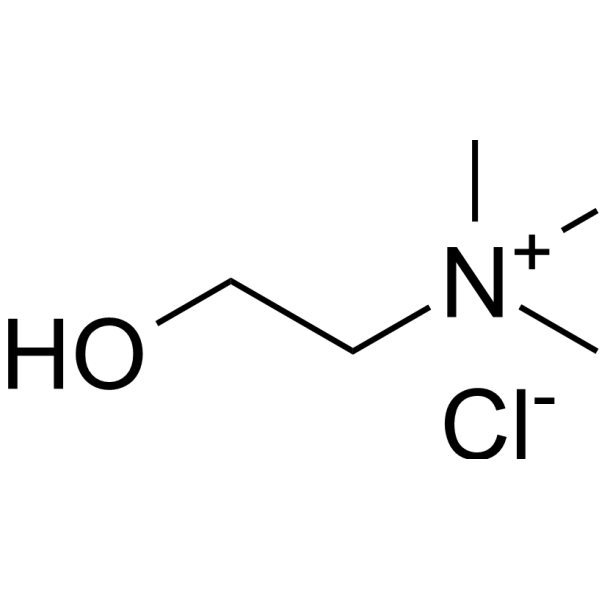
Cat. No.: HY-B1337
CAS No.: 67-48-1
Choline chloride is an orally active methylxanthine derivative. Choline chloride exhibits weak antihistaminic and anticholinergic activities and potentiates the effects of histamine and acetylcholine. Choline chloride relaxes bronchial smooth muscle, dilates coronary and peripheral blood vessels, increases urine output and electrolyte excretion, stimulates locomotor activity in the central nervous system, and induces transient hypotension following a pressor phase. Choline chloride modulates sleep architecture by increasing wakefulness time and reducing slow-wave sleep, without altering the frequency or severity of nocturnal hypoxemia, apnea, or hypopnea events. Choline chloride is used in studies of bronchospasm, nocturnal asthma, and chronic asthma .
loading...
    loading...
6
6 Publications Verification
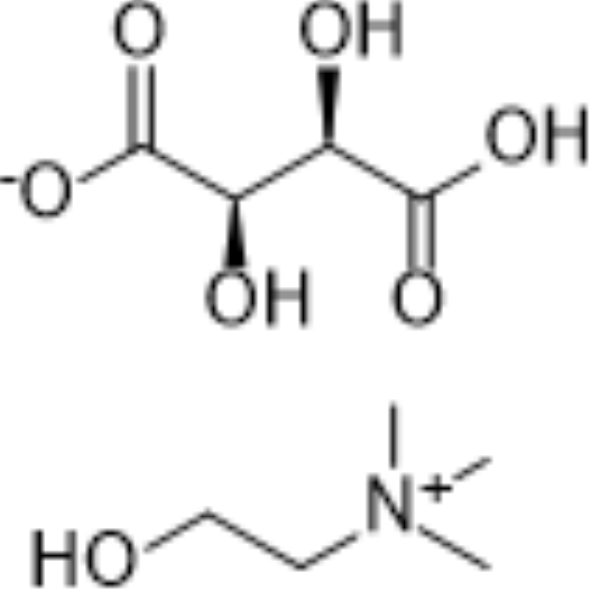
Cat. No.: HY-101036
CAS No.: 87-67-2
Purity:  ≥98.0%
Choline bitartrate (Oxtriphylline) is an orally active methylxanthine-derived choline salt of theophylline. Choline bitartrate exhibits weak antihistaminic and anticholinergic activities and can enhance the effects of histamine and acetylcholine. Choline bitartrate relaxes bronchial smooth muscle, dilates coronary and peripheral blood vessels, increases urine output and electrolyte excretion, stimulates central nervous system motor activity, and induces transient hypotension following a pressor phase. Choline bitartrate modulates sleep architecture by increasing wakefulness time and reducing slow-wave sleep, without altering the frequency or severity of nocturnal hypoxemia, apnea, or hypopnea events. Choline bitartrate is used in studies of bronchospasm, nocturnal asthma, and chronic asthma .
loading...
    loading...
6
6 Publications Verification
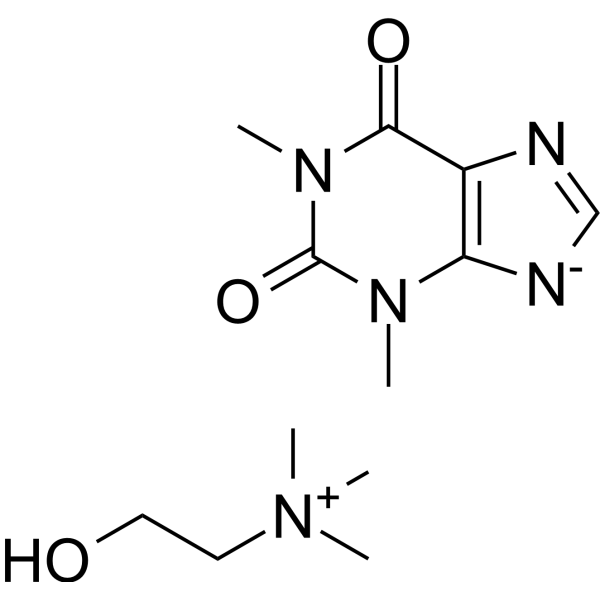
Cat. No.: HY-B1718
CAS No.: 4499-40-5
Synonyms: Oxtriphylline
Choline theophyllinate (Oxtriphylline) is an orally active methylxanthine derivative. Choline theophyllinate exhibits weak antihistaminic and anticholinergic activities and potentiates the effects of histamine and acetylcholine. Choline theophyllinate relaxes bronchial smooth muscle, dilates coronary and peripheral blood vessels, increases urine output and electrolyte excretion, stimulates locomotor activity in the central nervous system, and induces transient hypotension following a pressor phase. It modulates sleep architecture by increasing wakefulness time and reducing slow-wave sleep, without altering the frequency or severity of nocturnal hypoxemia, apnea, or hypopnea events. Choline theophyllinate is used in studies of bronchospasm, nocturnal asthma, and chronic asthma .
loading...
    loading...
3
3 Cited Publications
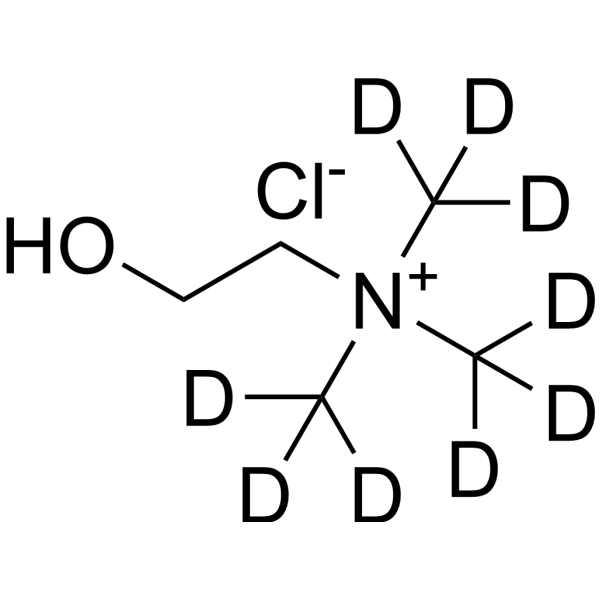
Cat. No.: HY-B1337S1
CAS No.: 61037-86-3
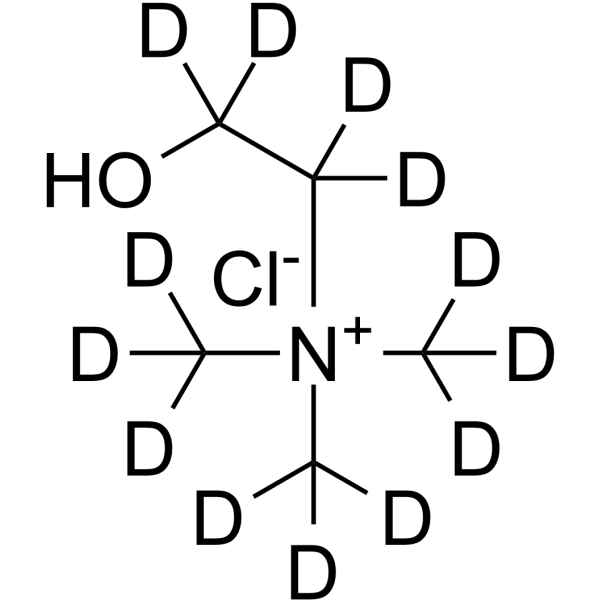
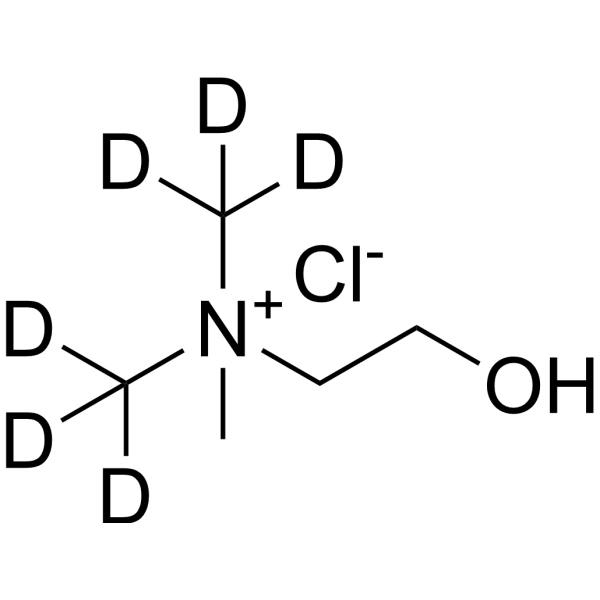
Choline-d9 chloride is the d9-labeled Choline chloride (HY-B1337). Choline chloride is an orally active methylxanthine derivative. Choline chloride exhibits weak antihistaminic and anticholinergic activities and potentiates the effects of histamine and acetylcholine. Choline chloride relaxes bronchial smooth muscle, dilates coronary and peripheral blood vessels, increases urine output and electrolyte excretion, stimulates locomotor activity in the central nervous system, and induces transient hypotension following a pressor phase. Choline chloride modulates sleep architecture by increasing wakefulness time and reducing slow-wave sleep, without altering the frequency or severity of nocturnal hypoxemia, apnea, or hypopnea events. Choline chloride is used in studies of bronchospasm, nocturnal asthma, and chronic asthma .
loading...
    loading...
2
2 Cited Publications
Cat. No.: HY-B1337S4
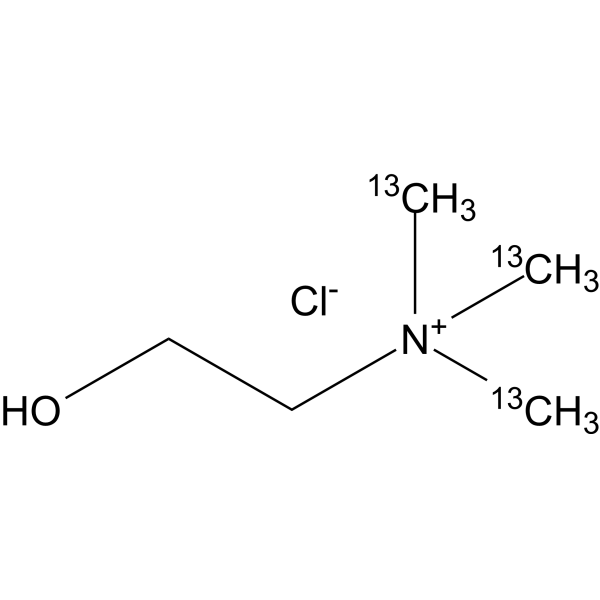
Choline Chloride- 13C3 is the 13C-labeled Choline chloride (HY-B1337). Choline chloride is an orally active methylxanthine derivative. Choline chloride exhibits weak antihistaminic and anticholinergic activities and potentiates the effects of histamine and acetylcholine. Choline chloride relaxes bronchial smooth muscle, dilates coronary and peripheral blood vessels, increases urine output and electrolyte excretion, stimulates locomotor activity in the central nervous system, and induces transient hypotension following a pressor phase. Choline chloride modulates sleep architecture by increasing wakefulness time and reducing slow-wave sleep, without altering the frequency or severity of nocturnal hypoxemia, apnea, or hypopnea events. Choline chloride is used in studies of bronchospasm, nocturnal asthma, and chronic asthma .
loading...
    loading...
1
1 Cited Publications
Cat. No.: HY-B1337S
CAS No.: 285979-70-6
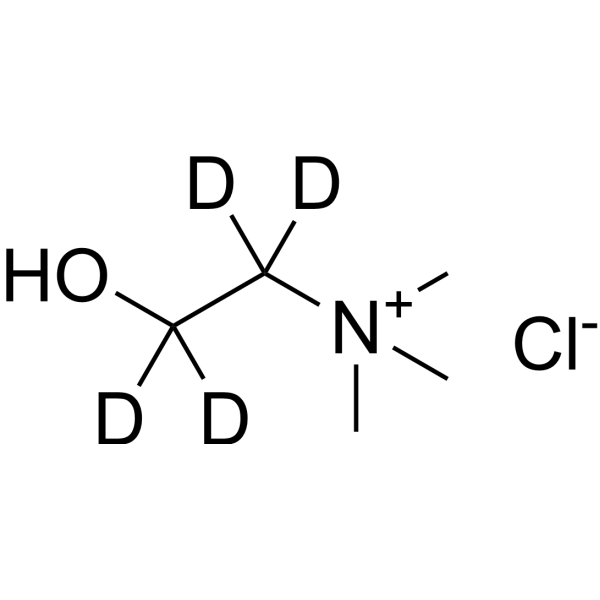
Choline-d4 chloride is the d4-labeled Choline chloride (HY-B1337). Choline chloride is an orally active methylxanthine derivative. Choline chloride exhibits weak antihistaminic and anticholinergic activities and potentiates the effects of histamine and acetylcholine. Choline chloride relaxes bronchial smooth muscle, dilates coronary and peripheral blood vessels, increases urine output and electrolyte excretion, stimulates locomotor activity in the central nervous system, and induces transient hypotension following a pressor phase. Choline chloride modulates sleep architecture by increasing wakefulness time and reducing slow-wave sleep, without altering the frequency or severity of nocturnal hypoxemia, apnea, or hypopnea events. Choline chloride is used in studies of bronchospasm, nocturnal asthma, and chronic asthma .
loading...
    loading...
1
1 Cited Publications
Cat. No.: HY-101433
CAS No.: 34118-92-8
Purity:  99.83%
Synonyms: Acecainide hydrochloride; NAPA hydrochloride
Research Areas:  

Cardiovascular Disease

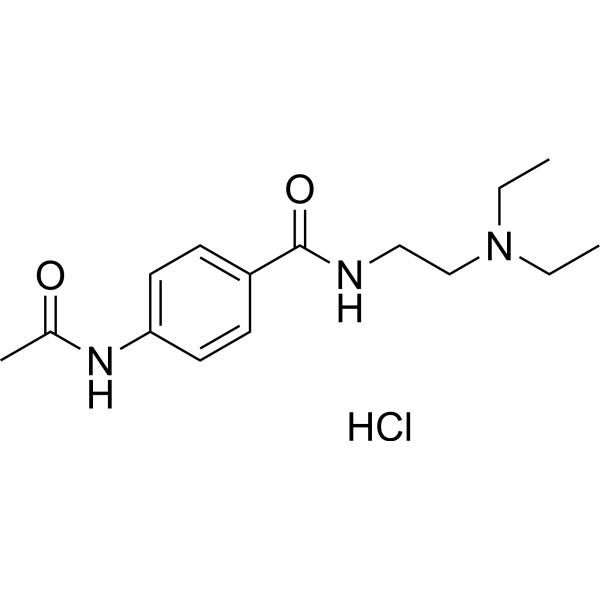
N-Acetylprocainamide (Acecainide) hydrochloride is a class III antiarrhythmic, which blocks K + channels. N-Acetylprocainamide hydrochloride exerts inhibitory effects on the maximum following frequency (MFF) of isolated rabbit atria. N-Acetylprocainamide hydrochloride can be used for the study of arrhythmias .
loading...
    loading...
Cat. No.: HY-B1337S5
CAS No.: 202190-49-6
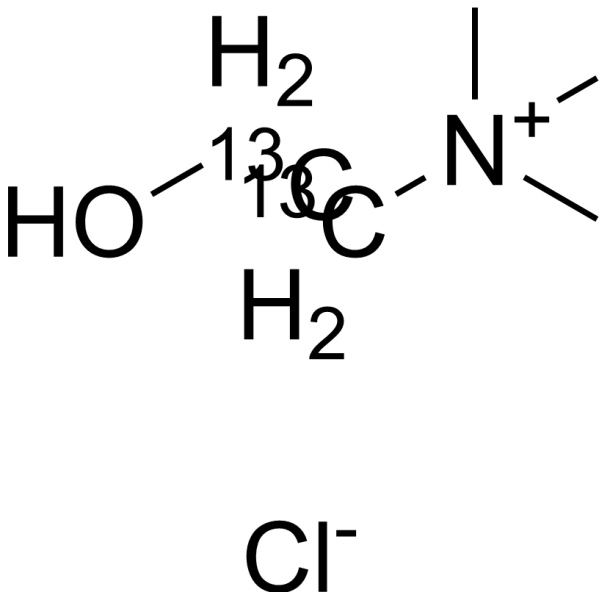
Choline- 13C2 chloride is the 13C-labeled Choline chloride (HY-B1337). Choline chloride is an orally active methylxanthine derivative. Choline chloride exhibits weak antihistaminic and anticholinergic activities and potentiates the effects of histamine and acetylcholine. Choline chloride relaxes bronchial smooth muscle, dilates coronary and peripheral blood vessels, increases urine output and electrolyte excretion, stimulates locomotor activity in the central nervous system, and induces transient hypotension following a pressor phase. Choline chloride modulates sleep architecture by increasing wakefulness time and reducing slow-wave sleep, without altering the frequency or severity of nocturnal hypoxemia, apnea, or hypopnea events. Choline chloride is used in studies of bronchospasm, nocturnal asthma, and chronic asthma .
loading...
    loading...
Cat. No.: HY-121186
CAS No.: 42864-78-8
Purity:  98.98%
Synonyms: SOM3355
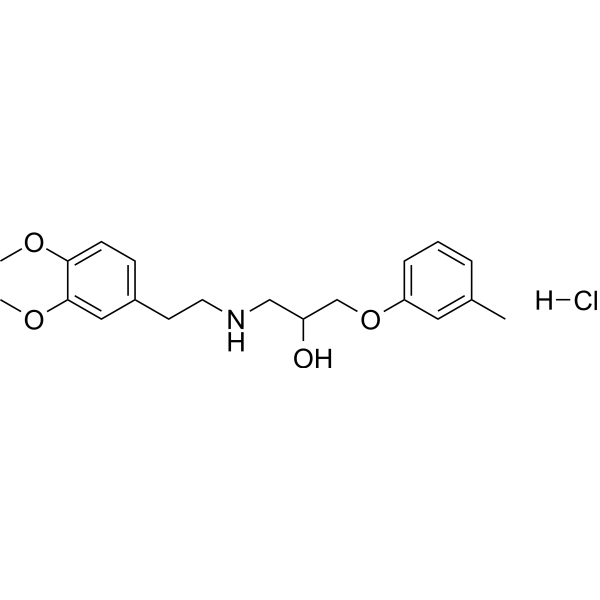
Bevantolol hydrochloride (SOM3355) is a selective β1-adrenergic receptor antagonist, with an IC50 of 35 nM for β1-adrenergic receptor and an IC50 of 60 nM for VMAT2. Bevantolol hydrochloride blocks β1-adrenergic receptors, exerts partial agonistic effects on α-adrenoceptor, inhibits calcium currents in the sinoatrial and atrioventricular nodes as well as sodium currents in cardiomyocytes, delays repolarization, and shortens the action potential duration of Purkinje cells. Bevantolol hydrochloride reduces peripheral vascular resistance, increases subendocardial blood flow, inhibits VMAT2, elevates the serum HDL/LDL ratio, and does not affect glomerular filtration rate or cause cold extremities. Bevantolol hydrochloride is applicable to research related to angina pectoris, hypertension, arrhythmia, and Huntington's disease .
loading...
    loading...
Cat. No.: HY-B1337S3
CAS No.: 352438-97-2
Choline-d13 chloride is the d13-labeled Choline chloride (HY-B1337). Choline chloride is an orally active methylxanthine derivative. Choline chloride exhibits weak antihistaminic and anticholinergic activities and potentiates the effects of histamine and acetylcholine. Choline chloride relaxes bronchial smooth muscle, dilates coronary and peripheral blood vessels, increases urine output and electrolyte excretion, stimulates locomotor activity in the central nervous system, and induces transient hypotension following a pressor phase. Choline chloride modulates sleep architecture by increasing wakefulness time and reducing slow-wave sleep, without altering the frequency or severity of nocturnal hypoxemia, apnea, or hypopnea events. Choline chloride is used in studies of bronchospasm, nocturnal asthma, and chronic asthma .
loading...
    loading...
Cat. No.: HY-B1337R
CAS No.: 67-48-1
Choline chloride (Standard) is the analytical standard of Choline chloride (HY-B1337). This product is intended for research and analytical applications. Choline chloride is an orally active methylxanthine derivative. Choline chloride exhibits weak antihistaminic and anticholinergic activities and potentiates the effects of histamine and acetylcholine. Choline chloride relaxes bronchial smooth muscle, dilates coronary and peripheral blood vessels, increases urine output and electrolyte excretion, stimulates locomotor activity in the central nervous system, and induces transient hypotension following a pressor phase. Choline chloride modulates sleep architecture by increasing wakefulness time and reducing slow-wave sleep, without altering the frequency or severity of nocturnal hypoxemia, apnea, or hypopnea events. Choline chloride is used in studies of bronchospasm, nocturnal asthma, and chronic asthma .
loading...
    loading...
Cat. No.: HY-A0249
CAS No.: 59170-23-9
Synonyms: SOM3355 free base
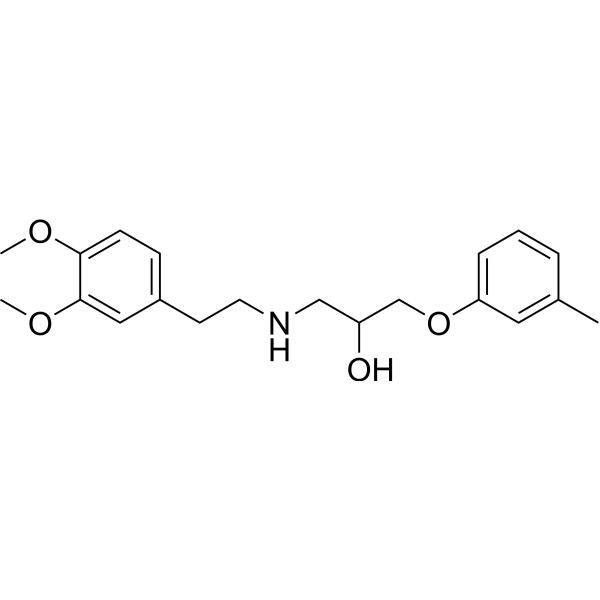
Bevantolol (SOM3355 (free base)) is a selective β1-adrenergic receptor antagonist, with an IC50 of 35 nM for β1-adrenergic receptor and an IC50 of 60 nM for VMAT2. Bevantolol blocks β1-adrenergic receptors, exerts partial agonistic effects on α-adrenoceptor, inhibits calcium currents in the sinoatrial and atrioventricular nodes as well as sodium currents in cardiomyocytes, delays repolarization, and shortens the action potential duration of Purkinje cells. Bevantolol reduces peripheral vascular resistance, increases subendocardial blood flow, inhibits VMAT2, elevates the serum HDL/LDL ratio, and does not affect glomerular filtration rate or cause cold extremities. Bevantolol is applicable to research related to angina pectoris, hypertension, arrhythmia, and Huntington's disease .
loading...
    loading...
Cat. No.: HY-101036R
CAS No.: 87-67-2
Choline bitartrate (Standard) is the analytical standard of Choline bitartrate (HY-101036). This product is intended for research and analytical applications. Choline bitartrate is an orally active methylxanthine-derived choline salt of theophylline. Choline bitartrate exhibits weak antihistaminic and anticholinergic activities and can enhance the effects of histamine and acetylcholine. Choline bitartrate relaxes bronchial smooth muscle, dilates coronary and peripheral blood vessels, increases urine output and electrolyte excretion, stimulates central nervous system motor activity, and induces transient hypotension following a pressor phase. Choline bitartrate modulates sleep architecture by increasing wakefulness time and reducing slow-wave sleep, without altering the frequency or severity of nocturnal hypoxemia, apnea, or hypopnea events. Choline bitartrate is used in studies of bronchospasm, nocturnal asthma, and chronic asthma .
loading...
    loading...
Cat. No.: HY-161608
CAS No.: 3034189-56-2
Target:  

Myosin

Research Areas:  

Cardiovascular Disease

Myosin modulator 1 (Compound B141) is a modulator for myosin, that inhibits ATPase in rabbits psoas, porcine atria and in porcine ventricle, with IC25s of 0.42, 0.13 and 3.09 μM, respectively. Myosin modulator 1 regulates systolic cardiac performance in Sprague Dawley rats .
loading...
    loading...
Cat. No.: HY-161609
CAS No.: 3034189-87-9
Target:  

Myosin

Research Areas:  

Cardiovascular Disease

Myosin modulator 2 (Compound B172) is a modulator for myosin, that inhibits ATPase in rabbits psoas, porcine atria and in porcine ventricle, with IC25s of 2.013, 2.94 and 20.93 μM, respectively. Myosin modulator 2 regulates systolic cardiac performance in Sprague Dawley rats .
loading...
    loading...
Cat. No.: HY-16489A
CAS No.: 7082-21-5
Target:  

mAChR Calcium Channel

Research Areas:  

Neurological Disease

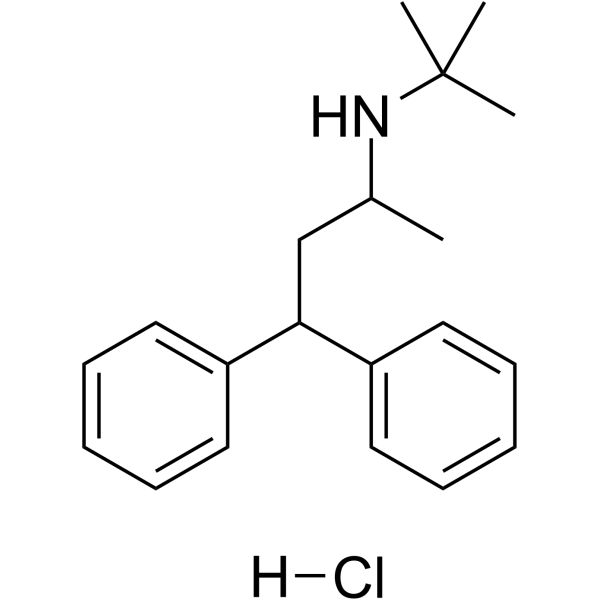
Terodiline hydrochloride is an M1-selective muscarinic receptor (mAChR) antagonist with Kbs of 15, 160, 280, and 198 nM in rabbit vas deferens (M1), atria (M2), bladder (M3) and ileal muscle (M3), respectively. Terodiline hydrochloride also is a Ca 2+ blocker. Terodiline hydrochloride acts as a treatment for urinary frequency and urge incontinence .
loading...
    loading...
Cat. No.: HY-121186R
CAS No.: 42864-78-8
Synonyms: SOM3355 (Standard)
Bevantolol hydrochloride (Standard) (SOM3355 (Standard)) is the analytical standard of Bevantolol hydrochloride (HY-121186). This product is intended for research and analytical applications. Bevantolol hydrochloride (SOM3355) is a selective β1-adrenergic receptor antagonist, with an IC50 of 35 nM for β1-adrenergic receptor and an IC50 of 60 nM for VMAT2. Bevantolol hydrochloride blocks β1-adrenergic receptors, exerts partial agonistic effects on α-adrenoceptor, inhibits calcium currents in the sinoatrial and atrioventricular nodes as well as sodium currents in cardiomyocytes, delays repolarization, and shortens the action potential duration of Purkinje cells. Bevantolol hydrochloride reduces peripheral vascular resistance, increases subendocardial blood flow, inhibits VMAT2, elevates the serum HDL/LDL ratio, and does not affect glomerular filtration rate or cause cold extremities. Bevantolol hydrochloride is applicable to research related to angina pectoris, hypertension, arrhythmia, and Huntington's disease .
loading...
    loading...
Cat. No.: HY-B1337S2
CAS No.: 3035513-80-2
Choline-d6 chloride is the d6-labeled Choline chloride (HY-B1337). Choline chloride is an orally active methylxanthine derivative. Choline chloride exhibits weak antihistaminic and anticholinergic activities and potentiates the effects of histamine and acetylcholine. Choline chloride relaxes bronchial smooth muscle, dilates coronary and peripheral blood vessels, increases urine output and electrolyte excretion, stimulates locomotor activity in the central nervous system, and induces transient hypotension following a pressor phase. Choline chloride modulates sleep architecture by increasing wakefulness time and reducing slow-wave sleep, without altering the frequency or severity of nocturnal hypoxemia, apnea, or hypopnea events. Choline chloride is used in studies of bronchospasm, nocturnal asthma, and chronic asthma .
loading...
    loading...
Cat. No.: HY-B1718R
CAS No.: 4499-40-5
Synonyms: Oxtriphylline (Standard)
Choline theophyllinate (Standard) (Oxtriphylline (Standard)) is the analytical standard of Choline theophyllinate (HY-B1718). This product is intended for research and analytical applications. Choline theophyllinate (Oxtriphylline) is an orally active methylxanthine derivative. Choline theophyllinate exhibits weak antihistaminic and anticholinergic activities and potentiates the effects of histamine and acetylcholine. Choline theophyllinate relaxes bronchial smooth muscle, dilates coronary and peripheral blood vessels, increases urine output and electrolyte excretion, stimulates locomotor activity in the central nervous system, and induces transient hypotension following a pressor phase. It modulates sleep architecture by increasing wakefulness time and reducing slow-wave sleep, without altering the frequency or severity of nocturnal hypoxemia, apnea, or hypopnea events. Choline theophyllinate is used in studies of bronchospasm, nocturnal asthma, and chronic asthma .
loading...
    loading...
Cat. No.: HY-101433R
CAS No.: 34118-92-8
Synonyms: Acecainide hydrochloride (Standard); NAPA hydrochloride (Standard)
N-Acetylprocainamide (Acecainide) hydrochloride (Standard) is the analytical standard of N-Acetylprocainamide hydrochloride (HY-101433). This product is intended for research and analytical applications. N-Acetylprocainamide hydrochloride is a class III antiarrhythmic, which blocks K + channels. N-Acetylprocainamide hydrochloride exerts inhibitory effects on the maximum following frequency (MFF) of isolated rabbit atria. N-Acetylprocainamide hydrochloride can be used for the study of arrhythmias .
loading...
    loading...

