16 Results for "

rat DNA polymerase

" in MedChemExpress (MCE) Product Catalog:
Products (16)

16 Results for "rat DNA polymerase" in MCE Product Catalog:

1
1 Cited Publications
Cat. No.: HY-N1548
CAS No.: 99-18-3
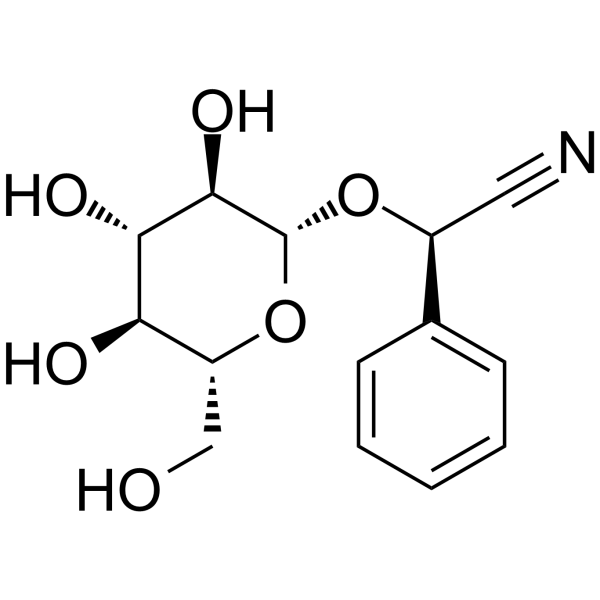
Prunasin is an orally active cyanogenic glucoside and the main metabolite of Amygdalin (HY-N0190). Prunasin can specifically inhibit rat DNA polymerase β (IC50: 98 μM). Prunasin has anti-inflammatory and anti-fibrotic activities. Prunasin can be used in the research of diseases such as liver fibrosis .
loading...
    loading...
1
1 Cited Publications
Cat. No.: HY-N2566
CAS No.: 53155-25-2
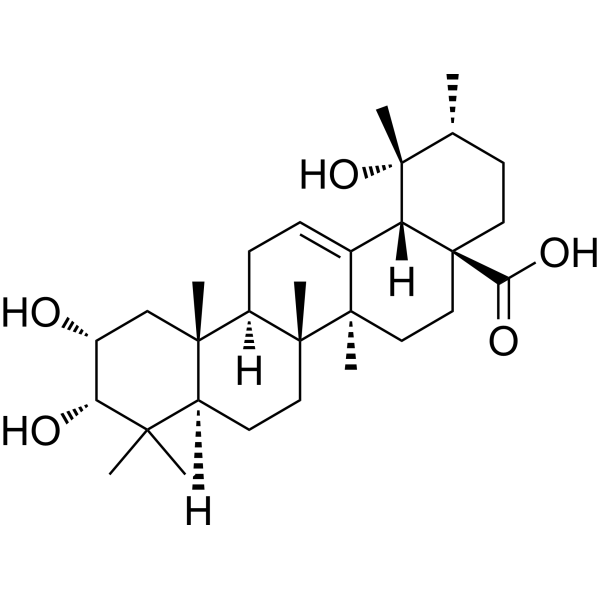
Euscaphic acid, a DNA polymerase inhibitor, is a triterpene from the root of the R. alceaefolius Poir. Euscaphic inhibits calf DNA polymerase α (pol α) and rat DNA polymerase β (pol β) with IC50 values of 61 and 108 μM . Euscaphic acid induces apoptosis .
loading...
    loading...
Cat. No.: HY-137697D
Purity:  ≥98.0%
ddCTP trilithium solution (100 mM) is a chain-terminating dideoxynucleotide. ddCTP trilithium is a type of chain-terminating deoxynucleotide. ddCTP trilithium can be incorporated into the extension primer chain that lacks the 3'-hydroxyl group, thereby terminating primer extension, viral genome replication, and DNA synthesis. ddCTP trilithium can distinguish almost identical RNA through distinguishable extension products in primer extension inhibition experiments. ddCTP trilithium is the active metabolite of Zalcitabine (HY-17392), which can competitively inhibit HIV reverse transcriptase, terminate the synthesis of viral DNA chains, and thereby inhibit HIV replication .
loading...
    loading...
Cat. No.: HY-W013403
CAS No.: 784-71-4
Target:  

IFNAR

Research Areas:  

Infection

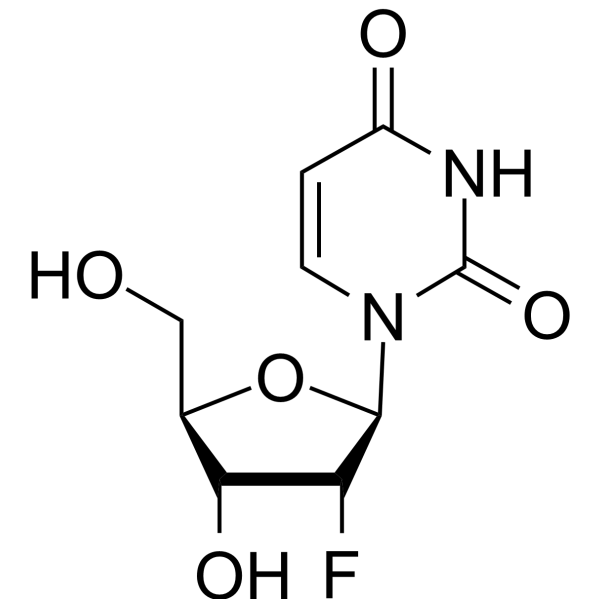
2'-Deoxy-2'-fluorouridine is a derivative of the pyrimidine nucleoside uridine. 2'-Deoxy-2'-fluorouridine is a nucleoside analog that inhibits the replication of wild-type viruses by binding to the viral RNA. Hepatitis C polyU/UC RNA strands containing 2'-Deoxy-2'-fluorouridine, bind to RIG-I but do not activate RIG-I signaling in a reporter assay using Huh7 cells. 2'-Deoxy-2'-fluorouridine also has been used as a starting material in the synthesis of respiratory syncytial virus (RSV) polymerase inhibitors. 2'-Deoxy-2'-fluorouridine can incorporate into DNA and RNA in rat and woodchuck model upon administration. 2'-Deoxy-2'-fluorouridine can be studied in anti-viral research .
loading...
    loading...
Cat. No.: HY-137697
CAS No.: 66004-77-1
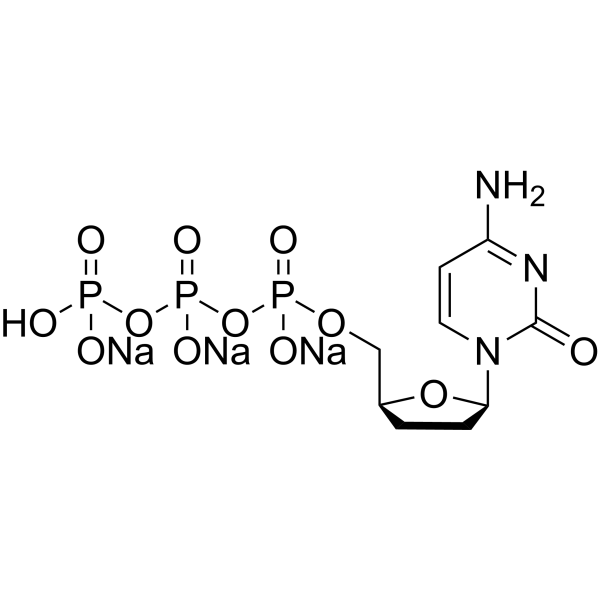
ddCTP is a type of chain-terminating deoxynucleotide. ddCTP can be incorporated into the extension primer chain that lacks the 3'-hydroxyl group, thereby terminating primer extension, viral genome replication, and DNA synthesis. ddCTP can distinguish almost identical RNA through distinguishable extension products in primer extension inhibition experiments. ddCTP is the active metabolite of Zalcitabine (HY-17392), which can competitively inhibit HIV reverse transcriptase, terminate the synthesis of viral DNA chains, and thereby inhibit HIV replication .
loading...
    loading...
Cat. No.: HY-161916
CAS No.: 3043810-73-4
Target:  

DNA/RNA Synthesis

Research Areas:  

Cancer

Polθ-IN-4 is an orally active prodrug of a DNA polymerase θ (Polθ) inhibitor with Kms of 3.7, 3.7 and 5.2 μM in human, mouse and rat recombinant alkaline phosphatases. Polθ-IN-4 that inhibits Polθ activity by targeting its ATP-dependent helicase domain. Polθ-IN-4 demonstrates significant anti-tumor activity in multiple animal experiments. Polθ-IN-4 can be used for the studies of breast cancer and ovarian cancer .
loading...
    loading...
Cat. No.: HY-N16549
CAS No.: 86631-41-6
Synonyms: 3-O-Galloylprocyanidin B3
Procyanidin B3-3-O-gallate (3-O-Galloylprocyanidin B3) is a selective mammalian DNA polymerase α inhibitor, with a calf DNA polymerase α IC50 of 0.26 μM. Procyanidin B3-3-O-gallate scavenges DPPH radicals. Procyanidin B3-3-O-gallate can be used for research on oxidative stress and inflammatory diseases[1].
loading...
    loading...
Cat. No.: HY-137697B
CAS No.: 93939-77-6
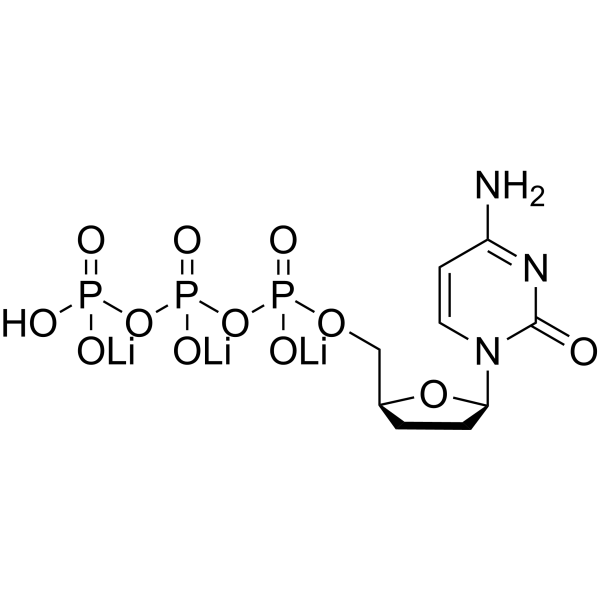
ddCTP trilithium is a type of chain-terminating deoxynucleotide. ddCTP trilithium can be incorporated into the extension primer chain that lacks the 3'-hydroxyl group, thereby terminating primer extension, viral genome replication, and DNA synthesis. ddCTP trilithium can distinguish almost identical RNA through distinguishable extension products in primer extension inhibition experiments. ddCTP trilithium is the active metabolite of Zalcitabine (HY-17392), which can competitively inhibit HIV reverse transcriptase, terminate the synthesis of viral DNA chains, and thereby inhibit HIV replication .
loading...
    loading...
Cat. No.: HY-N13712
CAS No.: 250643-34-6
Lucidenic lactone is a terpene compound, is a DNA polymerase inhibitor. Lucidenic lactone inhibits calf DNA polymerase-α, rat DNA polymerase-β, and HIV-1 reverse transcriptase with IC50 values of 42 μM, 99 μM, and 69 μM, respectively .
loading...
    loading...
Cat. No.: HY-N13716
CAS No.: 250643-33-5
Lucidenic acid O is a terpene compound, is a DNA polymerases inhibitor. Lucidenic lactone inhibits calf DNA polymerase-α, rat DNA polymerase-β, and HIV-1 reverse transcriptase with IC50 values of 42 μM, 99 μM, and 69 μM, respectively .
loading...
    loading...
Cat. No.: HY-W013403S
CAS No.: 362049-50-1
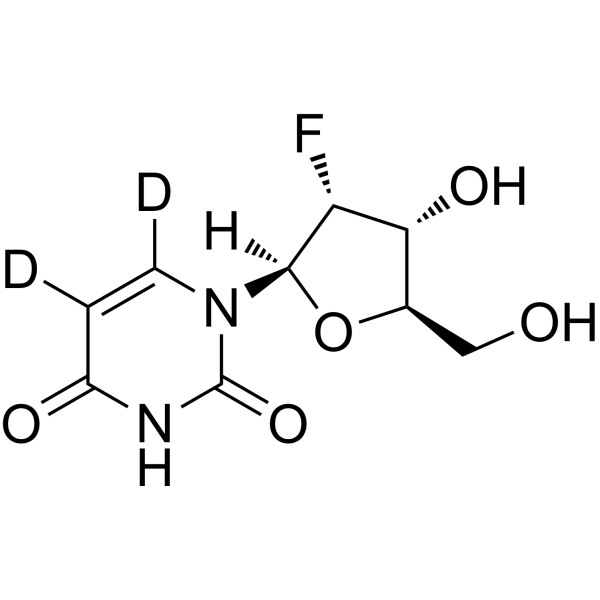
2'-Deoxy-2'-fluorouridine-d2 is the deuterium labeled 2'-Deoxy-2'-fluorouridine . 2'-Deoxy-2'-fluorouridine is a derivative of the pyrimidine nucleoside uridine. 2'-Deoxy-2'-fluorouridine is a nucleoside analog that inhibits the replication of wild-type viruses by binding to the viral RNA. Hepatitis C polyU/UC RNA strands containing 2'-Deoxy-2'-fluorouridine, bind to RIG-I but do not activate RIG-I signaling in a reporter assay using Huh7 cells. 2'-Deoxy-2'-fluorouridine also has been used as a starting material in the synthesis of respiratory syncytial virus (RSV) polymerase inhibitors. 2'-Deoxy-2'-fluorouridine can incorporate into DNA and RNA in rat and woodchuck model upon administration. 2'-Deoxy-2'-fluorouridine can be studied in anti-viral research .
loading...
    loading...
Cat. No.: HY-N21925
CAS No.: 18449-25-7
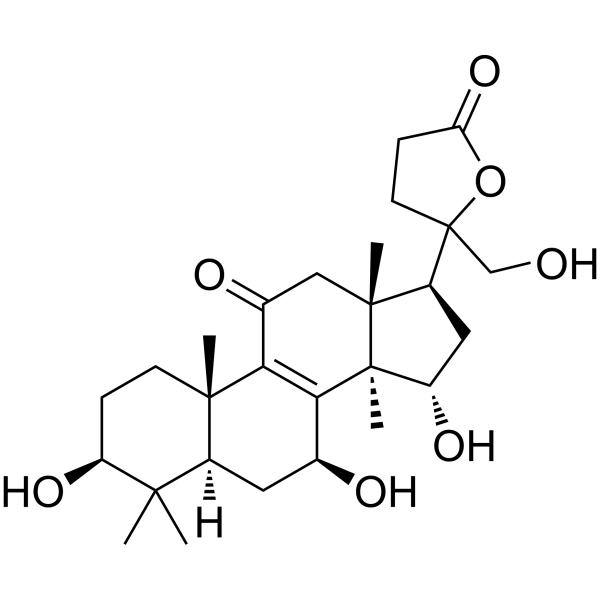
Dehydroeburiconic acid is a DNA polymerase α/β inhibitor, with IC50 values of 40.8 μM and 30.0 μM against calf DNA polymerase α and rat DNA polymerase β, respectively. Dehydroeburiconic acid can be used in studies related to lanostane-type triterpenoids and DNA polymerase .
loading...
    loading...
Cat. No.: HY-119787
CAS No.: 27267-69-2
Synonyms: Collinomycin
α-Rubromycin (Collinomycin) is an antibiotic isolated from the mycelia of Streptomyces collinus. α-Rubromycin also acts as a DNA polymerase inhibitor, with an IC50 of 0.91 μM against bovine mammalian DNA polymerase. α-Rubromycin binds to the active region of DNA polymerase β, competes with nucleotide substrates for binding, and interferes with template-DNA interactions. α-Rubromycin inhibits the activities of telomerase, retroviral reverse transcriptase and terminal deoxynucleotidyl transferase, as well as the growth of Staphylococcus aureus. α-Rubromycin can be used in studies related to bacterial infections .
loading...
    loading...
Cat. No.: HY-N21920
CAS No.: 796062-77-6
Dehydrotrametenonic acid is a DNA topoisomerase II inhibitor with an IC50 of 37.5 μM. Dehydrotrametenonic acid inhibits DNA polymerase α and β with IC50 values of 45.5 and 86.5 μM, respectively. Dehydrotrametenonic acid does not intercalate into DNA and exhibits an inhibitory factor-like Topo II inhibition mechanism. Dehydrotrametenonic acid can be used in DNA replication, cell cycle, and cancer-related research .
loading...
    loading...
Cat. No.: HY-186293
CAS No.: 662144-62-9
Research Areas:  

Cancer

3-Lauroylcatechin is a DPPH free radical scavenger. 3-Lauroylcatechin inhibits the activities of mammalian DNA polymerase α and β. 3-Lauroylcatechin can be used in studies related to colon cancer .
loading...
    loading...
Cat. No.: HY-133240
CAS No.: 1109241-72-6
trans-AzoTAB is a photoresponsive potassium/sodium/calcium channel modulator and DNA-binding agent. trans-AzoTAB undergoes trans-cis isomerization driven by light, with variable polarity and DNA affinity. trans-AzoTAB also enhances voltage-gated potassium currents and inhibits sodium and calcium currents in cardiomyocytes, thereby reducing spontaneous electrical activity and excitation conduction velocity. In addition, trans-AzoTAB induces compaction and frozen conformation of λ-phage DNA, and non-sequence-dependently inhibits transcription and translation processes in the dark; its activity can be reversed and restored by visible light after activation with ultraviolet irradiation. trans-AzoTAB can serve as a probe for two-photon optical regulation of myocardial excitability, and is used to construct photoresponsive interfacial polymer structures .
loading...
    loading...
  • 1

