9 Results for "

rat isolated hepatocytes

" in MedChemExpress (MCE) Product Catalog:
Products (9)

9 Results for "rat isolated hepatocytes" in MCE Product Catalog:

1
1 Cited Publications
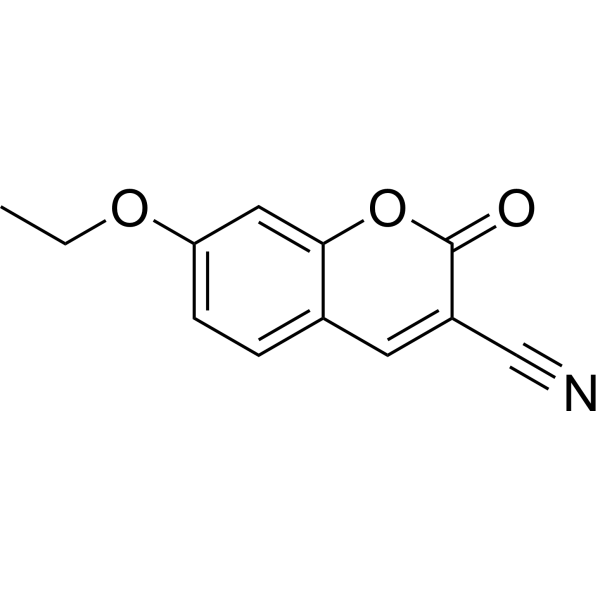
Cat. No.: HY-D0055
CAS No.: 117620-77-6
3-Cyano-7-ethoxycoumarin is a fluorescent cytochrome P-450 substrate that generates a blue fluorescent product upon enzymatic cleavage. 3-Cyano-7-ethoxycoumarin is used to detect the activity of mixed-function oxidases in isolated rat hepatocytes. 3-Cyano-7-ethoxycoumarin serves as a biological dye and indicator for research .
loading...
    loading...
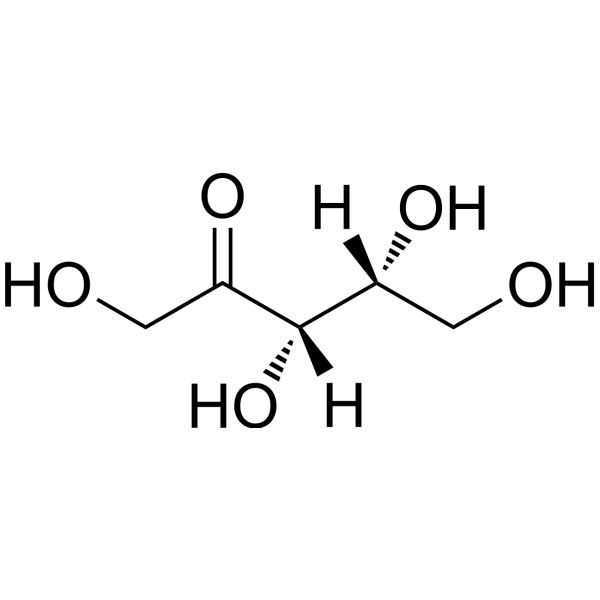
Cat. No.: HY-W010256
CAS No.: 551-84-8
D-Xylulose is a toxic pentose. D-Xylulose does not induce pentitol production in cells. D-Xylulose can induce ATP and intracellular Pi depletion through the accumulation of Sedoheptulose 7-P .
loading...
    loading...
Cat. No.: HY-135700
CAS No.: 19115-49-2
Purity:  ≥98.0%
Mevalonolactone is an intermediate metabolite in the eukaryotic mevalonate pathway, serving as the stable δ-lactone form of mevalonate with oral activity. Mevalonolactone exhibits binding affinity for ZNF384 (Ka = 12.6 μM) and inhibitory activity against aconitase (aconitase). Mevalonolactone promotes the nuclear localization of ZNF384 and enhances its binding to the GGPPS promoter. Mevalonolactone induces insulin resistance, disrupts glucose and lipid metabolism, enhances the isoprenylation of K-Ras, and inhibits the activation of the insulin signaling pathway. Mevalonolactone inhibits polypeptide synthesis of HMG-CoA reductase in isolated rat hepatocytes, promotes its degradation, and reduces its enzymatic activity. Mevalonolactone impairs mitochondrial function in rat brains. Mevalonolactone promotes the development of metabolically unhealthy obesity. Mevalonolactone can be used in research related to metabolically abnormal obesity, mevalonic aciduria, HMGCR-related limb-girdle myopathy, and statin-induced myopathy .
loading...
    loading...
Cat. No.: HY-N8249
CAS No.: 168706-29-4
Cynandione A is an acetophenone that can be isolated from Cynanchum Wilfordii Radix. Cynandione A protects hepatocytes and cortical neurons from toxicity and improves neurological deficits in a rat model of cerebral ischemia. On the other hand, cynandione A has significant anti-inflammatory effects and inhibits inflammation by activating macrophage α7 nAChR and IL-10 expression .
loading...
    loading...
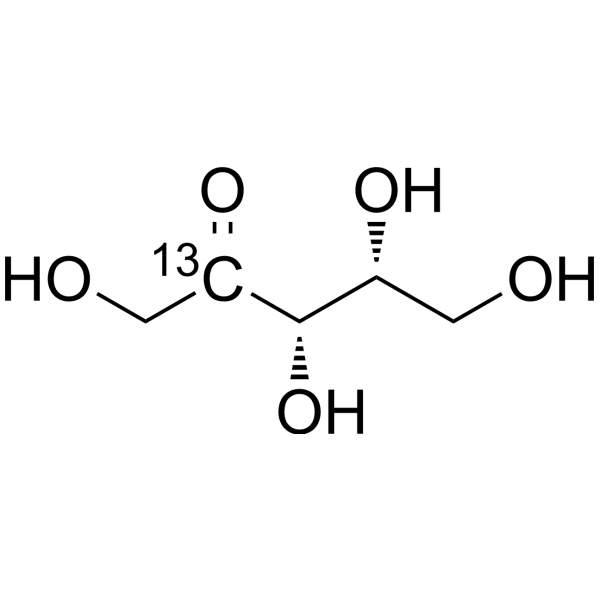
Cat. No.: HY-W010256S1
CAS No.: 131771-47-6
D-Xylulose-2- 13C is the 13C-labeled D-Xylulose (HY-W010256). D-Xylulose is a toxic pentose. D-Xylulose does not induce pentitol production in cells. D-Xylulose can induce ATP and intracellular Pi depletion through the accumulation of Sedoheptulose 7-P .
loading...
    loading...
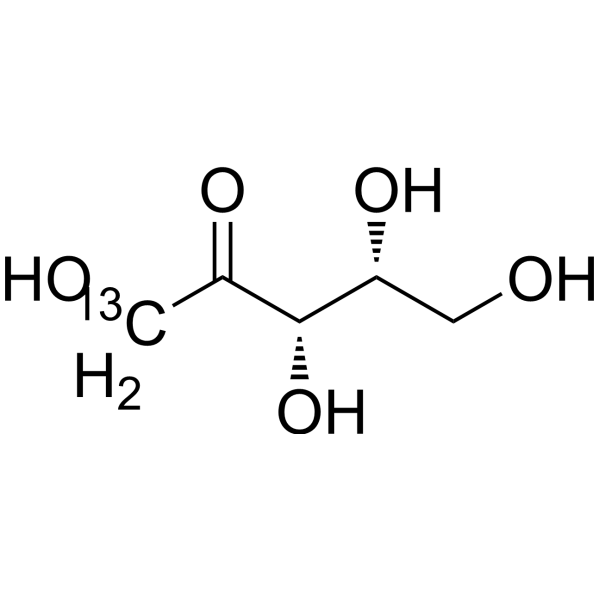
Cat. No.: HY-W010256S
CAS No.: 131771-46-5
D-Xylulose-1- 13C is the 13C-labeled D-Xylulose (HY-W010256). D-Xylulose is a toxic pentose. D-Xylulose does not induce pentitol production in cells. D-Xylulose can induce ATP and intracellular Pi depletion through the accumulation of Sedoheptulose 7-P .
loading...
    loading...
Cat. No.: HY-W010256S3
D-Xylulose- 13C5 is the 13C-labeled D-Xylulose (HY-W010256). D-Xylulose is a toxic pentose. D-Xylulose does not induce pentitol production in cells. D-Xylulose can induce ATP and intracellular Pi depletion through the accumulation of Sedoheptulose 7-P .
loading...
    loading...
Cat. No.: HY-129565
CAS No.: 613-37-6
Target:  

Cytochrome P450

Research Areas:  

Others

4-Methoxybiphenyl is a cytochrome P450-dependent microsomal monooxygenase system substrate and metabolite precursor. 4-Methoxybiphenyl undergoes O-demethylation to generate 4-hydroxybiphenyl. 4-Methoxybiphenyl undergoes sulphation and glucuronidation conjugation; inhibition of sulphation shifts metabolism toward increased glucuronidation and unconjugated 4-hydroxybiphenyl accumulation. 4-Methoxybiphenyl serves as a model substrate for studying phase II metabolic conjugation pathway balance in rat isolated hepatocytes .
loading...
    loading...
Cat. No.: HY-W721611
CAS No.: 1918-11-2
Target:  

Herbicide

Research Areas:  

Others

Terbucarb is a phenylcarbamate herbicide. Terbucarb disrupts the mitotic microtubule organizing centers in plant cells, leading to the formation of multipolar spindles and branched phragmoplasts, thereby inhibiting plant growth. An "anaphase star" pattern induced by Terbucarb is observed in onion root tips. Terbucarb is cytotoxic to isolated rat hepatocytes, inducing cell death accompanied by depletion of intracellular ATP, protein thiols and glutathione .
loading...
    loading...

