Search Result
Results for "
steroid hormones
" in MedChemExpress (MCE) Product Catalog:
3
Biochemical Assay Reagents
43
Isotope-Labeled Compounds
| Cat. No. |
Product Name |
Target |
Research Areas |
Chemical Structure |
-
- HY-B0141
-
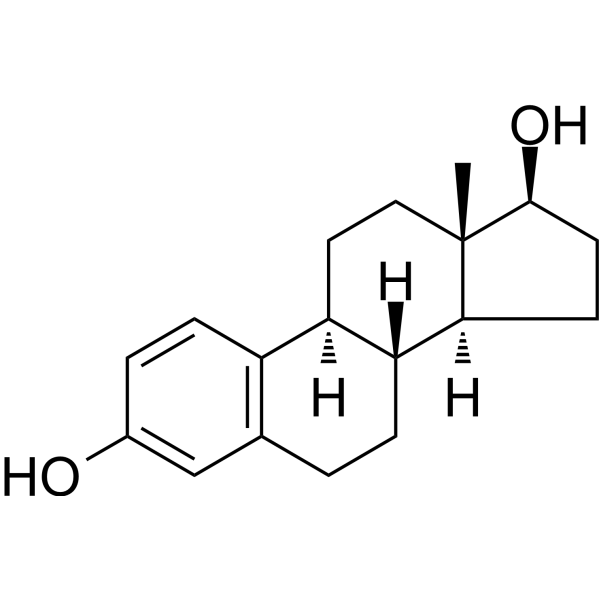
Estradiol
Maximum Cited Publications
122 Publications Verification
β-Estradiol; E2; 17β-Estradiol; 17β-Oestradiol
|
Estrogen Receptor/ERR
Endogenous Metabolite
Bacterial
|
Endocrinology
Cancer
|
|
Estradiol (β-Estradiol) is a steroid hormone and the major female sex hormone. Estradiol can up-regulate the expression of neural markers of human endometrial stem cells (hEnSCs) and promote their neural differentiation. Estradiol can be used for the research of cancers, neurodegenerative diseases and neural tissue engineering .
|
-
-
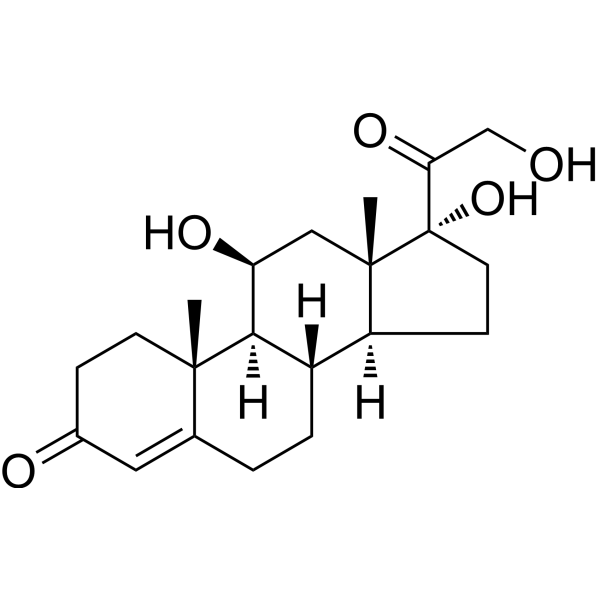
- HY-N0583
-
-
-
- HY-14650
-
|
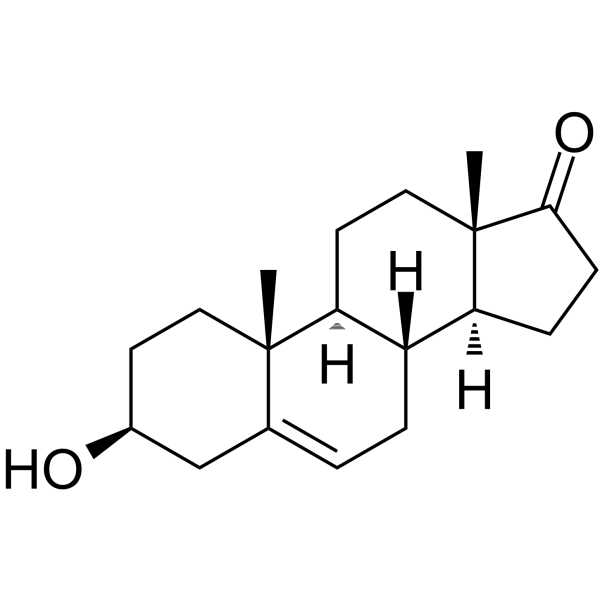
Prasterone; Dehydroisoandrosterone; Dehydroepiandrosterone
|
Environmental Pollutants
Endogenous Metabolite
Androgen Receptor
|
Cardiovascular Disease
Endocrinology
Cancer
|
|
DHEA (Prasterone) is one of the most abundant steroid hormones. DHEA (Prasterone) mediates its action via multiple signaling pathways involving specific membrane receptors and via transformation into androgen and estrogen derivatives (e.g., androgens, estrogens, 7α and 7β DHEA, and 7α and 7β epiandrosterone derivatives) acting through their specific receptors.
|
-
-
- HY-N0437
-
-
-
- HY-113313
-
|
|
Endogenous Metabolite
|
Cardiovascular Disease
|
|
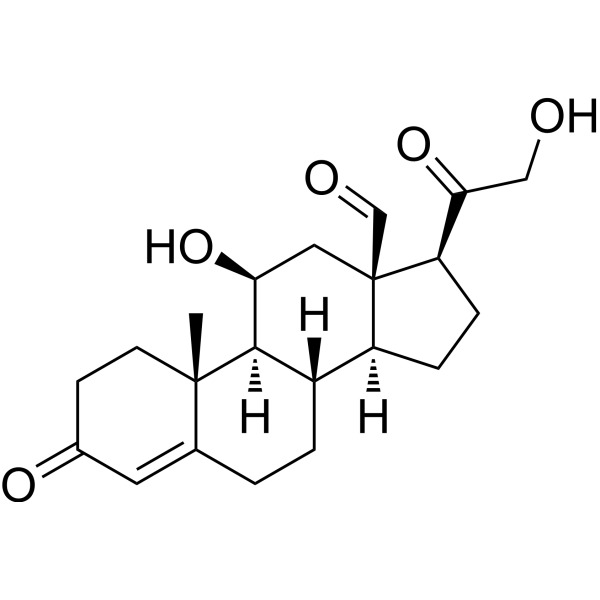
Aldosterone is the primary mineralocorticoid. Aldosterone is a steroid hormone, and it is synthesized and secreted in response to renin-angiotensin system activation (RAS) or high dietary potassium by the zona glomerulosa (ZG) of the adrenal cortex. Aldosterone activity is dependent by the binding and activation of the cytoplasmic/nuclear mineralocorticoid receptor (MR) at cellular level .
|
-
-
- HY-B0216
-
-
-
- HY-13632
-
|
FCE 24304; EXE
|
Cytochrome P450
|
Endocrinology
Cancer
|
|
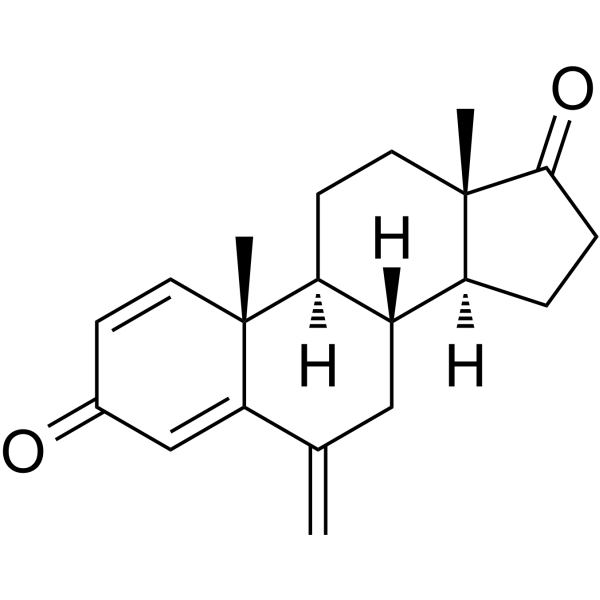
Exemestane (FCE 24304) is a selective, irreversible and orally active steroidal aromatase inhibitor with IC50s of 30 nM and 40 nM for human placental and rat ovarian aromatase, respectively. Exemestane can be used for hormone-dependent breast cancer research .
|
-
-
- HY-B0672
-
|
β-Estradiol 17-valerate
|
Estrogen Receptor/ERR
|
Endocrinology
Cancer
|
|
Estradiol valerate (β-Estradiol 17-valerate) is a synthetic estrogen widely used in combination with other steroid hormones in hormone replacement therapy agents.
|
-
-
- HY-113414
-
|
|
Endogenous Metabolite
Mineralocorticoid Receptor
|
Others
Inflammation/Immunology
|
|
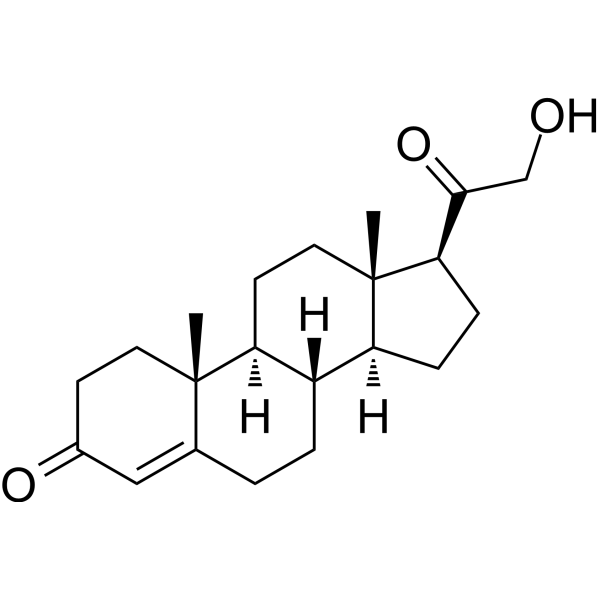
Deoxycorticosterone is a steroid hormone produced by the adrenal gland that possesses mineralocorticoid activity and acts as an aldosterone precursor. Deoxycorticosterone is an agonist for O. mykiss mineralocorticoid receptor (rtMR) transcription with EC50 of 0.16 nM . Deoxycorticosterone could acts as an immune stimulator in fish .
|
-
-
- HY-109017
-
-
-
- HY-B0151
-
|
3β-Hydroxy-5-pregnen-20-one
|
Cannabinoid Receptor
TRP Channel
Endogenous Metabolite
Autophagy
|
Neurological Disease
|
|
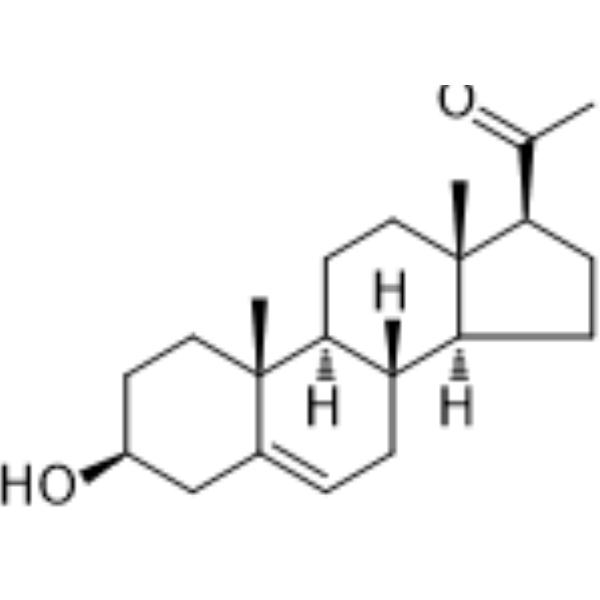
Pregnenolone (3β-Hydroxy-5-pregnen-20-one) is a powerful neurosteroid, the main precursor of various steroid hormones including steroid ketones. Pregnenolone acts as a signaling-specific inhibitor of cannabinoid CB1 receptor, inhibits the effects of tetrahydrocannabinol (THC) that are mediated by the CB1 receptors. Pregnenolone can protect the brain from cannabis intoxication . Pregnenolone is also a TRPM3 channel activator, and also can weakly activate TRPM1 channels .
|
-
-
- HY-N0583R
-
-
-
- HY-77839
-
|
11-Deoxycortisol; cortexolone; Reichstein's substance S
|
Glucocorticoid Receptor
Endogenous Metabolite
|
Inflammation/Immunology
Endocrinology
|
|
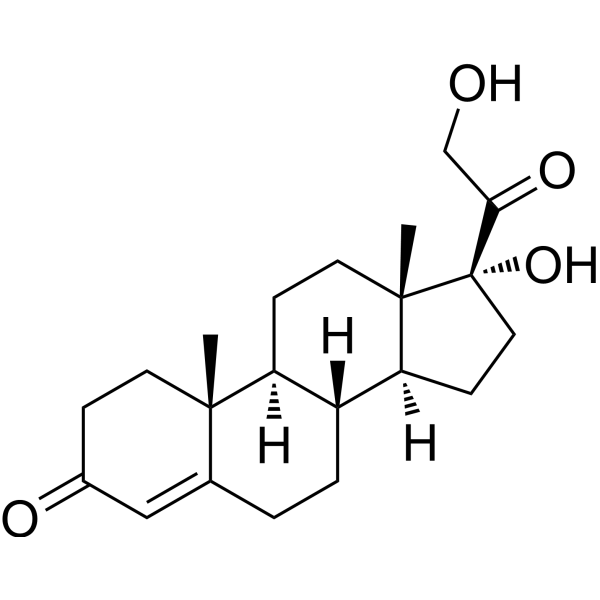
Cortodoxone (11-Deoxycortisol; cortexolone) is a glucocorticoid steroid hormone and also is a glucocorticoid antagonist. Cortodoxone increases tryptophan oxygenase (TO) activity and induces the secretion of corticosterone. Cortodoxone regulates T cell proliferation and activation .
|
-
-
- HY-B0141R
-
|
β-Estradiol (Standard); E2 (Standard); 17β-Estradiol (Standard); 17β-Oestradiol (Standard)
|
Reference Standards
Estrogen Receptor/ERR
Endogenous Metabolite
Bacterial
|
Endocrinology
Cancer
|
|
Estradiol (Standard) is the analytical standard of Estradiol. This product is intended for research and analytical applications. Estradiol (β-Estradiol) is a steroid hormone and the major female sex hormone. Estradiol can up-regulate the expression of neural markers of human endometrial stem cells (hEnSCs) and promote their neural differentiation. Estradiol can be used for the research of cancers, neurodegenerative diseases and neural tissue engineering .
|
-
-
- HY-B0891
-
|
17-Hydroxyprogesterone; 17-OHP
|
Progesterone Receptor
Endogenous Metabolite
|
Cardiovascular Disease
|
|
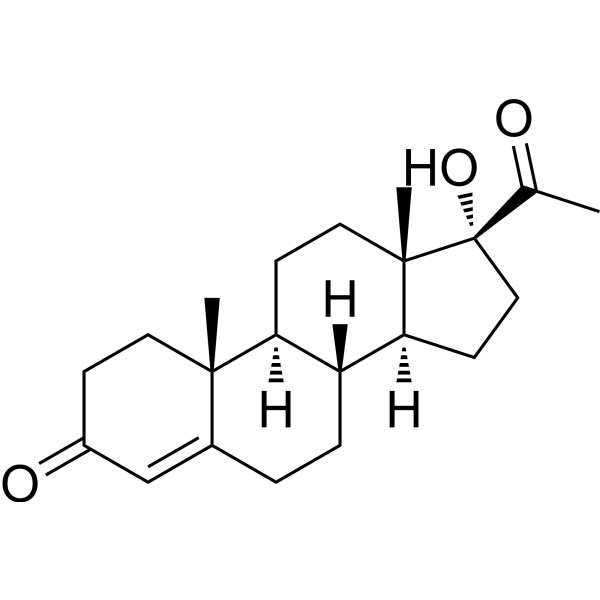
17α-Hydroxyprogesterone is a steroid hormone. 17α-Hydroxyprogesterone induces ovarian growth and yolk production in female crabs and increases blood pressure in sheep. 17α-Hydroxyprogesterone is mainly used in research related to crustacean reproduction and animal hypertension .
|
-
-
- HY-13604
-
|
|
Androgen Receptor
|
Endocrinology
Cancer
|
|
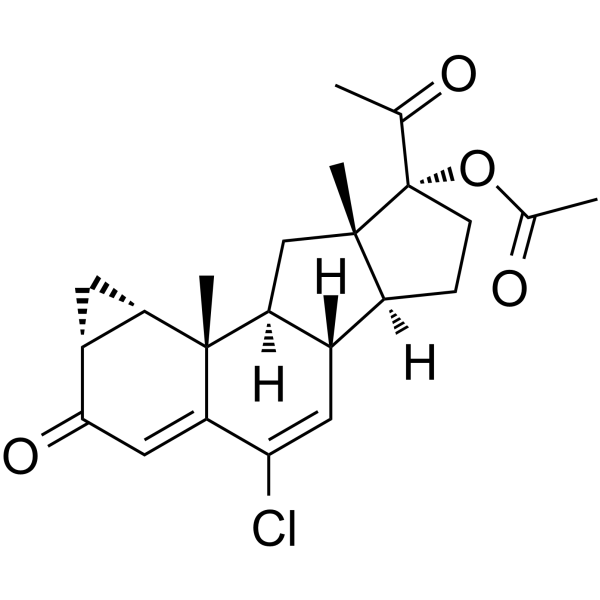
Cyproterone acetate is an anti-androgen (IC50=7.1 nM) and progestogen synthetic steroid. Cyproterone acetate has affinity with progesteron and with glucocorticoidal receptors .
|
-
-
- HY-N0437R
-
-
-
- HY-14383
-
|
RAD140; EP0062
|
Androgen Receptor
|
Neurological Disease
Endocrinology
Cancer
|
|
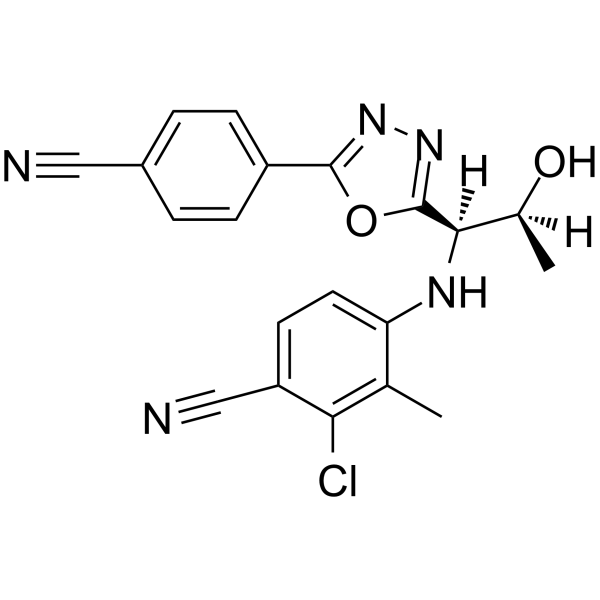
Vosilasarm (RAD140) is a potent, orally active, nonsteroidal selective androgen receptor modulator (SARM) with a Ki of 7 nM. Vosilasarm shows good selectivity over other steroid hormone nuclear receptors .
|
-
-
- HY-B0141S2
-
|
β-Estradiol-d5; 17β-Estradiol-d5; 17β-Oestradiol-d5
|
Estrogen Receptor/ERR
Endogenous Metabolite
|
Endocrinology
Cancer
|
|
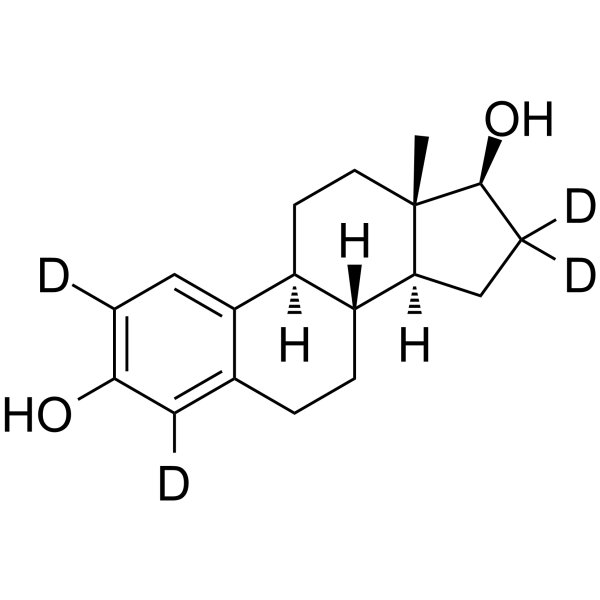
Estradiol-d5 is deuterium labeled Estradiol. Estradiol is a steroid sex hormone vital to the maintenance of fertility and secondary sexual characteristics in females. Estradiol upregulates IL-6 expression through the estrogen receptor β (ERβ) pathway .
|
-
-
- HY-B1739
-
|
3β-Hydroxy-5-pregnen-20-one monosulfate
|
Cannabinoid Receptor
TRP Channel
Endogenous Metabolite
Autophagy
|
Neurological Disease
|
|
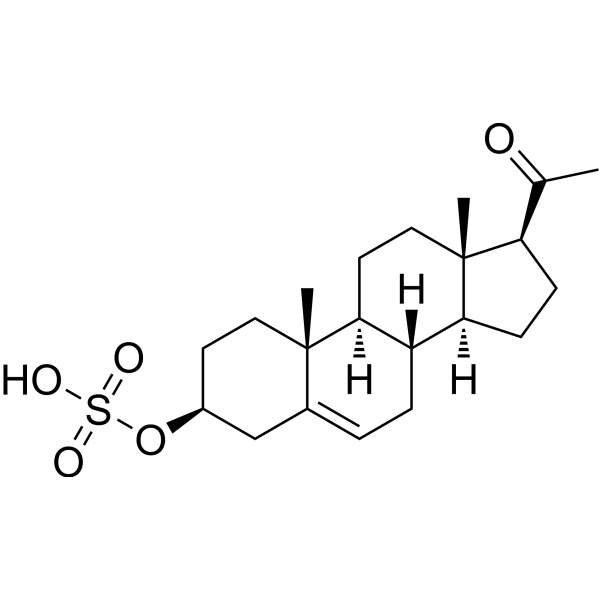
Pregnenolone monosulfate (3β-Hydroxy-5-pregnen-20-one monosulfate) is a powerful neurosteroid, the main precursor of various steroid hormones including steroid ketones. Pregnenolone monosulfate acts as a signaling-specific inhibitor of cannabinoid CB1 receptor, inhibits the effects of tetrahydrocannabinol (THC) that are mediated by the CB1 receptors. Pregnenolone monosulfate can protect the brain from cannabis intoxication . Pregnenolone monosulfate is also a TRPM3 channel activator, and also can weakly activate TRPM1 channels .
|
-
-
- HY-14650R
-
-
-
- HY-N0437S
-
-
-
- HY-N0583S2
-
-
-
- HY-B0141S1
-
|
β-Estradiol-d4; 17β-Estradiol-d4; 17β-Oestradiol-d4
|
Estrogen Receptor/ERR
Endogenous Metabolite
|
Endocrinology
Cancer
|
|
Estradiol-d4 is the deuterium labeled Estradiol. Estradiol is a steroid sex hormone vital to the maintenance of fertility and secondary sexual characteristics in females. Estradiol upregulates IL-6 expression through the estrogen receptor β (ERβ) pathway .
|
-
-
- HY-N0179
-
|
α-Ecdysone
|
Endogenous Metabolite
Apoptosis
|
Metabolic Disease
|
|
Ecdysone (α-Ecdysone), a major steroid hormone in insects and herbs, triggers mineralocorticoid receptor (MR) activation and induces cellular apoptosis. Ecdysone plays essential roles in coordinating developmental transitions and homeostatic sleep regulation through its active metabolite 20-hydroxyecdysone (Crustecdysone; 20E; HY-N6979) .
|
-
-
- HY-NP181
-
|
|
Biochemical Assay Reagents
|
Others
|
|
Testosterone/BSA, a conjugate of Testosterone (HY-113415) and bovine serum albumin (BSA), acts as a nuclear transporter and cytoplasmic accumulator. Testosterone/BSA can enter the nuclei of rat testicular spermatocytes, spermatids and rat liver endothelial cells, while the antigenicity of BSA remains intact. Testosterone/BSA accumulates in the cytoplasm of rat hepatocytes in granular form. Testosterone/BSA can be used to investigate the membrane-initiated or non-genomic activities of steroid hormones .
|
-
-
- HY-12502A
-
|
NZ-105 hydrochloride monoethanolate; (±)-Efonidipine hydrochloride monoethanolate
|
Calcium Channel
SARS-CoV
|
Cardiovascular Disease
Neurological Disease
Cancer
|
|
Efonidipine (NZ-105) hydrochloride monoethanolate is an orally active dual L-type and T-type calcium channel blocker (CCB) with IC50 values of 1.8 and 350 nM, respectively. Efonidipine hydrochloride monoethanolate inhibits SARS-CoV-2 main protease. Efonidipine hydrochloride monoethanolate modulates adrenal steroidogenesis by increasing the expression of steroidogenic acute regulatory protein (StAR), dbcAMP-or angiotensin II-induced StAR mRNA expression and DHEA-S production, while suppressing the biosynthesis of aldosterone and cortisol. Efonidipine hydrochloride monoethanolate reduces plasma aldosterone levels in vivo. Efonidipine hydrochloride monoethanolate improves cardiac function in heart failure models by inhibiting T-type calcium channels (via both tonic and use-dependent blockade), independently of blood pressure reduction. Efonidipine hydrochloride monoethanolate can be used for research in hypertension, heart failure, and disorders involving dysregulated steroid hormone synthesis .
|
-
-
- HY-110189
-
|
3β-Hydroxy-5-pregnen-20-one monosulfate sodium
|
Cannabinoid Receptor
TRP Channel
Endogenous Metabolite
Autophagy
|
Neurological Disease
|
|
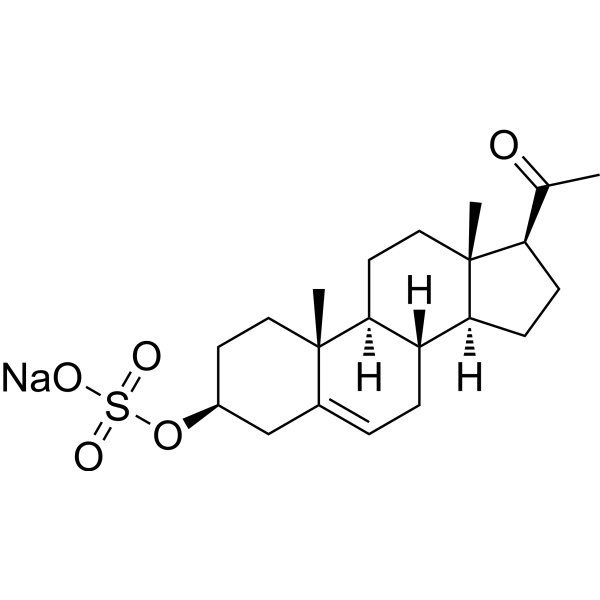
Pregnenolone monosulfate sodium (3β-Hydroxy-5-pregnen-20-one monosulfate sodium) is a powerful neurosteroid, the main precursor of various steroid hormones including steroid ketones. Pregnenolone monosulfate sodium acts as a signaling-specific inhibitor of cannabinoid CB1 receptor, inhibits the effects of tetrahydrocannabinol (THC) that are mediated by the CB1 receptors. Pregnenolone monosulfate sodium can protect the brain from cannabis intoxication . Pregnenolone monosulfate sodium is also a TRPM3 channel activator, and also can weakly activate TRPM1 channels .
|
-
-
- HY-B0742
-
|
17α-Hydroxyprogesterone hexanoate; 17α-Hydroxyprogesterone caproate
|
Progesterone Receptor
|
Endocrinology
|
|
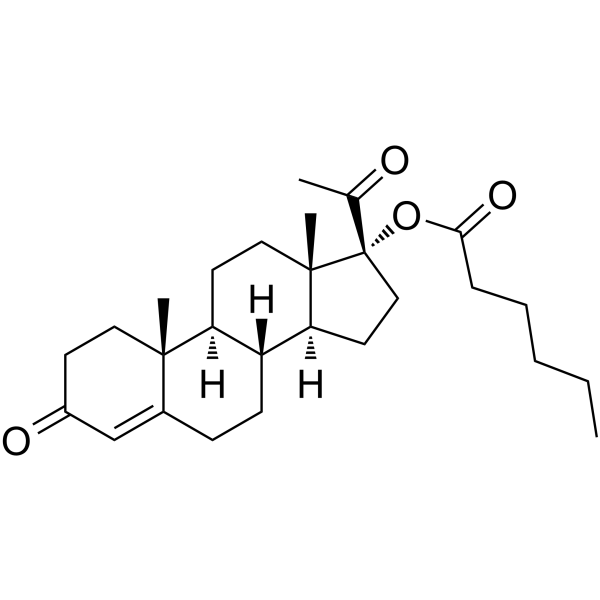
Hydroxyprogesterone caproate (17α-Hydroxyprogesterone hexanoate; 17α-Hydroxyprogesterone caproate) is a progesterone receptor (progesterone receptor) ligand and steroid hormone transcription inhibitor. Hydroxyprogesterone caproate downregulates estrogen receptors in target tissues and activates their metabolic pathways, and exhibits equivalent affinity for progesterone receptor A and progesterone receptor B. Hydroxyprogesterone caproate shows no consistent teratogenicity or developmental toxicity in rat, mouse and monkey models, but induces resorption or abortion in rhesus monkeys at human-equivalent doses. Hydroxyprogesterone caproate promotes the production of TNF-α in lipopolysaccharide-stimulated whole blood from non-pregnant women. Hydroxyprogesterone caproate can be used in scientific research related to preterm birth .
|
-
-
- HY-N0583S1
-
-
-
- HY-B0141S
-
|
β-Estradiol-d3; 17β-Estradiol-d3; 17β-Oestradiol-d3
|
Estrogen Receptor/ERR
Endogenous Metabolite
|
Endocrinology
Cancer
|
|
Estradiol-d3 is the deuterium labeled Estradiol. Estradiol is a steroid sex hormone vital to the maintenance of fertility and secondary sexual characteristics in females. Estradiol upregulates IL-6 expression through the estrogen receptor β (ERβ) pathway.
|
-
-
- HY-101405
-
|
R 2323
|
Estrogen Receptor/ERR
|
Inflammation/Immunology
|
|
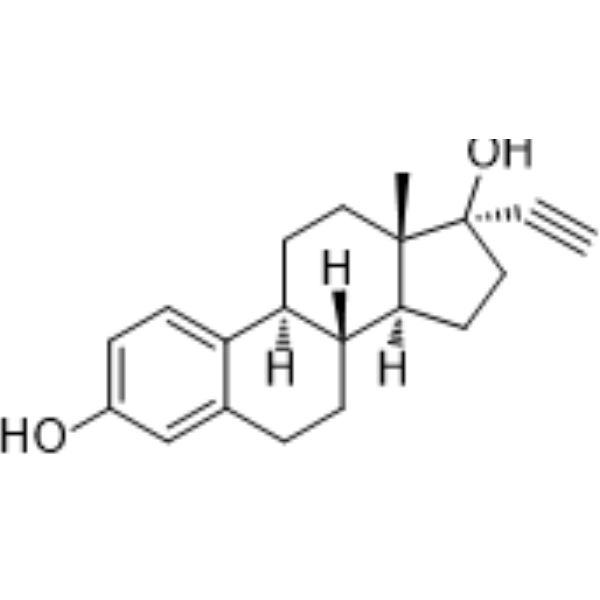
Gestrinone (R2323) is a synthetic steroid hormone used to treat endometriosis. It inhibits leiomyoma cells with an IC50 of 43.67 μM. Gestrinone is a click chemistry reagent, it contains an Alkyne group and can undergo copper-catalyzed azide-alkyne cycloaddition (CuAAc) with molecules containing Azide groups.
|
-
-
- HY-113313S1
-
|
|
Endogenous Metabolite
|
Cardiovascular Disease
|
|
Aldosterone-d7 is the deuterium labeled Aldosterone. Aldosterone is the primary mineralocorticoid. Aldosterone is a steroid hormone, and it is synthesized and secreted in response to renin-angiotensin system activation (RAS) or high dietary potassium by the zona glomerulosa (ZG) of the adrenal cortex. Aldosterone activity is dependent by the binding and activation of the cytoplasmic/nuclear mineralocorticoid receptor (MR) at cellular level .
|
-
-
- HY-B0141C
-
|
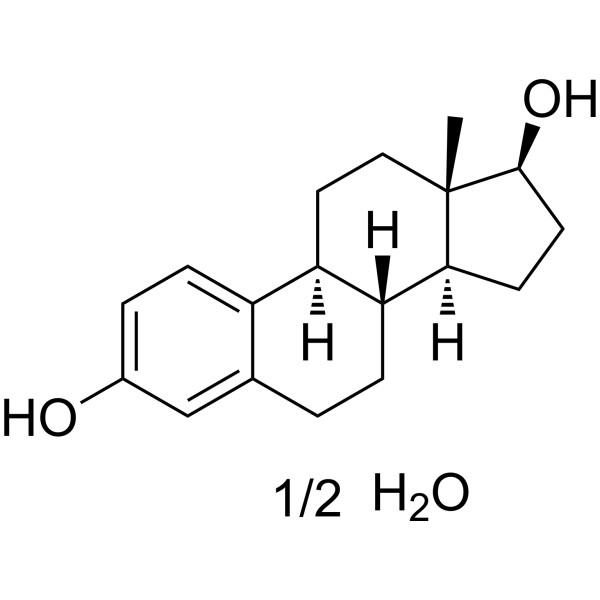
β-Estradiol hemihydrate; 17β-Estradiol hemihydrate; 17β-Oestradiol hemihydrate
|
Estrogen Receptor/ERR
Endogenous Metabolite
Bacterial
|
Neurological Disease
Cancer
|
|
Estradiol (β-Estradiol) hemihydrate is a steroid hormone and the major female sex hormone. Estradiol (β-Estradiol) hemihydrate can up-regulate the expression of neural markers of human endometrial stem cells (hEnSCs) and promote their neural differentiation. Estradiol (β-Estradiol) hemihydrate can be used for the research of cancers, neurodegenerative diseases and neural tissue engineering .
|
-
-
- HY-12502
-
|
NZ-105; (±)-Efonidipine
|
Calcium Channel
SARS-CoV
|
Cardiovascular Disease
Neurological Disease
Cancer
|
|
Efonidipine (NZ-105) is an orally active dual L-type and T-type calcium channel blocker (CCB) with IC50 values of 1.8 and 350 nM, respectively. Efonidipine inhibits SARS-CoV-2 main protease. Efonidipine modulates adrenal steroidogenesis by increasing the expression of steroidogenic acute regulatory protein (StAR), dbcAMP-or angiotensin II-induced StAR mRNA expression and DHEA-S production, while suppressing the biosynthesis of aldosterone and cortisol. Efonidipine reduces plasma aldosterone levels in vivo. Efonidipine improves cardiac function in heart failure models by inhibiting T-type calcium channels (via both tonic and use-dependent blockade), independently of blood pressure reduction. Efonidipine can be used for research in hypertension, heart failure, and disorders involving dysregulated steroid hormone synthesis .
|
-
-
- HY-N0583S5
-
-
-
- HY-B0891S
-
|
17-Hydroxyprogesterone-d8; 17-OHP-d8
|
Isotope-Labeled Compounds
Progesterone Receptor
Endogenous Metabolite
|
Others
|
|
17α-Hydroxyprogesterone-d8 is the deuterium labeled 17α-Hydroxyprogesterone. 17α-Hydroxyprogesterone (17-Hydroxyprogesterone) is an endogenous progestogen as well as chemical intermediate in the biosynthesis of other steroid hormones, including the corticosteroids and the androgens and the estrogens.
|
-
-
- HY-17657
-
|
5-Androstenediol 3-sulfate sodium
|
Drug Intermediate
|
Metabolic Disease
|
|
Androst-5-enediol sulfate (5-Androstenediol 3-sulfate) sodium salt is an adrenal Δ5-steroid sulfate that synthesized by zona reticularis of adrenal depending on the lyase and Cytochrome b5 type A (CYB5A) activity. Androst-5-enediol sulfate sodium salt is a precursor hormone and can be desulfated to produce more potent androgens, including testosterone, in peripheral tissues like skin and liver. The serum level of Androst-5-enediol sulfate sodium salt has an age-related increase .
|
-
-
- HY-17462
-
|
(+)-Adrenosterone
|
Androgen Receptor
Endogenous Metabolite
|
Endocrinology
Cancer
|
|
Adrenosterone ((+)-Adrenosterone) is a competitive hydroxysteroid (11-beta) dehydrogenase 1 (HSD11β1) inhibitor.
Adrenosterone is a steroid hormone with weak androgenic effect. Adrenosterone is a dietary supplement that can decrease fat and increase muscle mass. Adrenosterone acts as a suppressor of metastatic progression of human cancer cells .
|
-
-
- HY-B0672R
-
|
β-Estradiol 17-valerate (Standard)
|
Reference Standards
Estrogen Receptor/ERR
|
Endocrinology
Cancer
|
|
Estradiol valerianate (Standard) is the analytical standard of Estradiol valerianate. This product is intended for research and analytical applications. Estradiol valerate (β-Estradiol 17-valerate) is a synthetic estrogen widely used in combination with other steroid hormones in hormone replacement therapy agents.
|
-
-
- HY-113414S
-
|
|
Endogenous Metabolite
|
Others
|
|
Deoxycorticosterone-d8 is the deuterium labeled Deoxycorticosterone. Deoxycorticosterone is a steroid hormone produced by the adrenal gland that possesses mineralocorticoid activity and acts as an aldosterone precursor .
|
-
-
- HY-113414R
-
|
|
Reference Standards
Endogenous Metabolite
|
Others
|
|
Deoxycorticosterone (Standard) is the analytical standard of Deoxycorticosterone. This product is intended for research and analytical applications. Deoxycorticosterone is a steroid hormone produced by the adrenal gland that possesses mineralocorticoid activity and acts as an aldosterone precursor.
|
-
-
- HY-B0141S3
-
-
-
- HY-B0141S5
-
-
-
- HY-N0583S3
-
-
-
- HY-118541
-
|
|
Insecticide
|
Others
|
|
RH-5849 is an orally active agonist for non-steroidal ecdysteroid, which inhibits the larval growth of Plodia inferpuncteila in a dose-dependent manner. RH-5849 exhibits molting hormone activity .
|
-
-
- HY-77839R
-
|
11-Deoxycortisol (Standard); cortexolone (Standard); Reichstein's substance S (Standard)
|
Reference Standards
Glucocorticoid Receptor
Endogenous Metabolite
|
Inflammation/Immunology
Endocrinology
|
|
Cortodoxone (Standard) is the analytical standard of Cortodoxone. This product is intended for research and analytical applications. Cortodoxone (11-Deoxycortisol; cortexolone) is a glucocorticoid steroid hormone and also is a glucocorticoid antagonist. Cortodoxone increases tryptophan oxygenase (TO) activity and induces the secretion of corticosterone. Cortodoxone regulates T cell proliferation and activation .
|
-
-
- HY-N2026A
-
|
Propyl parahydroxybenzoate sodium; Propyl 4-hydroxybenzoate sodium
|
Estrogen Receptor/ERR
|
Cardiovascular Disease
Neurological Disease
|
|
Propylparaben sodium is an orally active weak estrogen receptor agonist. Propylparaben sodium regulates the PI3K-AKT and JNK signaling pathways, induces oxidative stress, and alters the estrous cycle, hormone levels and ovarian reserve function. Propylparaben sodium inhibits the growth of antral follicles and alters the accumulation of steroid hormones in follicle culture media. Propylparaben sodium can be used in studies related to ovarian aging and myocardial ischemia-reperfusion injury[1][2][3][4][5].
|
-
-
- HY-105184
-
|
|
Cytochrome P450
|
Endocrinology
|
|
YM511 is a highly specific non-steroidal aromatase inhibitor. YM511 inhibits aromatase activities in microsomes from rat ovary and human placenta competitively (IC50s of 0.4 and 0.12 nM, respectively). YM511 slightly inhibits production of other steroid hormones. YM511 has the potential for suppressing estrogen-dependent action research without affecting serum levels of other steroid hormones .
|
-
-
- HY-113155A
-
|
|
Drug Intermediate
|
Neurological Disease
|
|
17-Hydroxypregnenolone sulfate sodium is a key intermediate in adrenal and gonadal steroidogenesis. 17-Hydroxypregnenolone sulfate sodium acts as a precursor in the biosynthesis of steroid hormones (e.g., glucocorticoids, sex hormones). 17-Hydroxypregnenolone sulfate sodium is promising for research of adrenal function development and neurosteroid-related diseases (e.g., cognitive impairment, neurodegenerative diseases) .
|
-
- HY-N0437S2
-
-
- HY-13604R
-
|
|
Reference Standards
Androgen Receptor
|
Endocrinology
Cancer
|
|
Cyproterone acetate (Standard) is the analytical standard of Cyproterone acetate. This product is intended for research and analytical applications. Cyproterone acetate is an anti-androgen (IC50=7.1 nM) and progestogen synthetic steroid. Cyproterone acetate has affinity with progesteron and with glucocorticoidal receptors .
|
-
- HY-B0891S1
-
|
17-Hydroxyprogesterone-13C3; 17-OHP-13C3
|
Isotope-Labeled Compounds
Progesterone Receptor
Endogenous Metabolite
|
Others
|
|
17α-Hydroxyprogesterone- 13C3 is the 13C-labeled 17α-Hydroxyprogesterone. 17α-Hydroxyprogesterone (17-Hydroxyprogesterone) is an endogenous progestogen as well as chemical intermediate in the biosynthesis of other steroid hormones, including the corticosteroids and the androgens and the estrogens.
|
-
- HY-B0151S2
-
|
3β-Hydroxy-5-pregnen-20-one-d4-1
|
Cannabinoid Receptor
TRP Channel
Endogenous Metabolite
Autophagy
|
Neurological Disease
|
|
Pregnenolone-d4-1 is the deuterium labeled Pregnenolone. Pregnenolone (3β-Hydroxy-5-pregnen-20-one) is a powerful neurosteroid, the main precursor of various steroid hormones including steroid ketones. Pregnenolone acts as a signaling-specific inhibitor of cannabinoid CB1 receptor, inhibits the effects of tetrahydrocannabinol (THC) that are mediated by the CB1 receptors. Pregnenolone can protect the brain from cannabis intoxication . Pregnenolone is also a TRPM3 channel activator, and also can weakly activate TRPM1 channels .
|
-
- HY-113313R
-
|
|
Reference Standards
Endogenous Metabolite
|
Cardiovascular Disease
|
|
Aldosterone (Standard) is the analytical standard of Aldosterone. This product is intended for research and analytical applications. Aldosterone is the primary mineralocorticoid. Aldosterone is a steroid hormone, and it is synthesized and secreted in response to renin-angiotensin system activation (RAS) or high dietary potassium by the zona glomerulosa (ZG) of the adrenal cortex. Aldosterone activity is dependent by the binding and activation of the cytoplasmic/nuclear mineralocorticoid receptor (MR) at cellular level .
|
-
- HY-13632R
-
|
FCE 24304(Standard); EXE (Standard)
|
Cytochrome P450
Reference Standards
|
Endocrinology
Cancer
|
|
Exemestane (Standard) is the analytical standard of Exemestane. This product is intended for research and analytical applications. Exemestane (FCE 24304) is a selective, irreversible and orally active steroidal aromatase inhibitor with IC50s of 30 nM and 40 nM for human placental and rat ovarian aromatase, respectively. Exemestane can be used for hormone-dependent breast cancer research .
|
-
- HY-W741872
-
|
5α-DHF
|
Drug Metabolite
|
Metabolic Disease
|
|
5α-Dihydrocortisol (5α-DHF), a metabolite of Hydrocortisone (Cortisol) (HY-N0583), is a steroid hormone. 5α-Dihydrocortisol can enhance the mineralocorticoid activity of aldosterone .
|
-
- HY-12502B
-
|
NZ-105 hydrochloride; (±)-Efonidipine hydrochloride
|
Calcium Channel
SARS-CoV
|
Cardiovascular Disease
Cancer
|
|
Efonidipine (NZ-105) hydrochloride is an orally active dual L-type and T-type calcium channel blocker (CCB) with IC50 values of 1.8 and 350 nM, respectively. Efonidipine hydrochloride inhibits SARS-CoV-2 main protease. Efonidipine hydrochloride modulates adrenal steroidogenesis by increasing the expression of steroidogenic acute regulatory protein (StAR), dbcAMP-or angiotensin II-induced StAR mRNA expression and DHEA-S production, while suppressing the biosynthesis of aldosterone and cortisol. Efonidipine hydrochloride reduces plasma aldosterone levels in vivo. Efonidipine hydrochloride improves cardiac function in heart failure models by inhibiting T-type calcium channels (via both tonic and use-dependent blockade), independently of blood pressure reduction. Efonidipine hydrochloride can be used for research in hypertension, heart failure, and disorders involving dysregulated steroid hormone synthesis .
|
-
- HY-77839S1
-
-
- HY-N0437S3
-
-
- HY-W751098
-
|
|
Isotope-Labeled Compounds
|
Others
|
|
Aldosterone- 13C3 is a 13C-labeled Aldosterone (HY-113313). Aldosterone is a primary mineralocorticoid and steroid hormone.
|
-
- HY-113313S2
-
-
- HY-B0141S4
-
-
- HY-B0151S
-
|
3β-Hydroxy-5-pregnen-20-one-d4
|
Isotope-Labeled Compounds
Cannabinoid Receptor
TRP Channel
Endogenous Metabolite
Autophagy
|
Neurological Disease
|
|
Pregnenolone-d4 is the deuterium labeled Pregnenolone. Pregnenolone (3β-Hydroxy-5-pregnen-20-one) is a powerful neurosteroid, the main precursor of various steroid hormones including steroid ketones. Pregnenolone acts as a signaling-specific inhibitor of cannabinoid CB1 receptor, inhibits the effects of tetrahydrocannabinol (THC) that are mediated by the CB1 receptors. Pregnenolone can protect the brain from cannabis intoxication . Pregnenolone is also a TRPM3 channel activator, and also can weakly activate TRPM1 channels .
|
-
- HY-B0151S1
-
|
3β-Hydroxy-5-pregnen-20-one-13C2,d2
|
Isotope-Labeled Compounds
Autophagy
Cannabinoid Receptor
Endogenous Metabolite
TRP Channel
|
Neurological Disease
|
|
Pregnenolone- 13C2,d2 is the deuterium and 13C labeled Pregnenolone (HY-B0151). Pregnenolone is a powerful neurosteroid, the main precursor of various steroid hormones including steroid ketones. Pregnenolone acts as a signaling-specific inhibitor of cannabinoid CB1 receptor, inhibits the effects of tetrahydrocannabinol (THC) that are mediated by the CB1 receptors. Pregnenolone can protect the brain from cannabis intoxication. Pregnenolone is also a TRPM3 channel activator, and also can weakly activate TRPM1 channels .
|
-
- HY-141728
-
|
BCIPP
|
Endogenous Metabolite
|
Metabolic Disease
|
|
Bis(1-chloro-2-propyl) phosphate (BCIPP) is a metabolite of organophosphate flame retardants (OPFR) that may alter energy metabolism by influencing the levels of steroid hormones, such as cortisol and cortisone. Bis(1-chloro-2-propyl) phosphate holds potential for research on metabolism-related diseases caused by environmental exposure .
|
-
- HY-E70077
-
|
|
Endogenous Metabolite
|
Infection
Metabolic Disease
|
|
Penicillinase (from calf stomach) is an enzyme that degrades penicillin by hydrolyzing the cyclic amide bonds in the lactam ring of penicillin, which can inactivate penicillin. Penicillinase (from calf stomach) can be isolated from penicillin resistant strains. Penicillinase (from calf stomach) has potential application as a marker for steroid hormone enzyme linked immunosorbent assay .
|
-
- HY-137178
-
|
|
Endogenous Metabolite
|
Metabolic Disease
|
|
20α,22R-Dihydroxycholesterol is an endogenous metabolic intermediate. 20α,22R-Dihydroxycholesterol involved in the biosynthesis of cholesterol to steroid hormones .
|
-
- HY-P3489
-
-
- HY-NP186
-
|
|
Biochemical Assay Reagents
|
Cancer
|
|
Helix pomatia Agglutinin is a N-acetylgalactosamine (GalNAc) binding lectin, found in the reproductive gland of a Roman snail. Helix pomatia Agglutinin binds with high affinity (kD = 1.9-2.4 μM) steroid hormones: testosterone and progesterone. Helix pomatia Agglutinin interacts with adenine (kD = 5.4 μM) and arylaminonaphthalene sulfonate TNS (kD = 12 μM). Helix pomatia Agglutinin is commonly used for characterizing, imaging, or targeting glycoconjugates, and is also a very useful tool for glycomics analysis . Helix pomatia Agglutinin can be used for cancer prognosis study .
|
-
- HY-17462R
-
|
(+)-Adrenosterone (Standard)
|
Androgen Receptor
Endogenous Metabolite
Reference Standards
|
Endocrinology
Cancer
|
|
Adrenosterone (Standard) is the analytical standard of Adrenosterone. This product is intended for research and analytical applications. Adrenosterone ((+)-Adrenosterone) is a competitive hydroxysteroid (11-beta) dehydrogenase 1 (HSD11β1) inhibitor.
Adrenosterone is a steroid hormone with weak androgenic effect. Adrenosterone is a dietary supplement that can decrease fat and increase muscle mass. Adrenosterone acts as a suppressor of metastatic progression of human cancer cells .
|
-
- HY-164357
-
-
- HY-150542
-
|
|
Steroid Sulfatase
|
Cancer
|
|
Steroid sulfatase -IN-2 is an active steroid sulfatase (STS) inhibitor with an IC50 value of 109.5 nM. Steroid sulfatase-IN-2 can be used for the research of hormone-dependent cancers, such as estrogen-dependent breast and endometrial cancer .
|
-
- HY-P2110
-
|
|
GnRH Receptor
|
Endocrinology
|
|
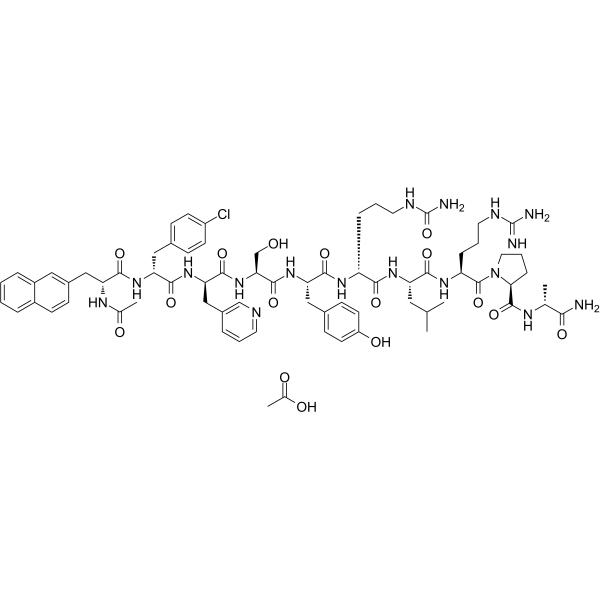
RS-18286 is a potent luteinizing-hormone (LH)-releasing hormone (LHRH) antagonist. RS-18286 blocks the pituitary LHRH receptor and suppresses pituitary luteinizing-hormone (LH) secretion and reduce serum concentrations of gonadal steroids .
|
-
- HY-B0672S
-
-
- HY-B0672S1
-
|
β-Estradiol 17-valerate-d4
|
Isotope-Labeled Compounds
Estrogen Receptor/ERR
|
Endocrinology
Cancer
|
|
Estradiol valerianate-d4 is the deuterium labeled Estradiol valerianate. Estradiol valerianate (β-estradiol 17-valerate) is a synthetic estrogen widely used in combination with other steroid hormones in hormone replacement therapy agents.
|
-
- HY-N0437S1
-
-
- HY-W701984
-
|
|
Glucocorticoid Receptor
|
Endocrinology
|
|
11β-Hydroxyetiocholanolone is a metabolite of Hydrocortisone (HY-N0583). Hydrocortisone is a steroid hormone or glucocorticoid secreted by the adrenal cortex.
|
-
- HY-107630
-
-
- HY-NP0209
-
-
- HY-N8550
-
|
α-Cortolone
|
Glucocorticoid Receptor
|
Endocrinology
|
|
Cortolone (α-Cortolone) is a metabolite of the glucocorticoid cortisol (Hydrocortisone (HY-N0583)). Hydrocortisone is a steroid hormone or glucocorticoid secreted by the adrenal cortex.
|
-
- HY-P3673
-
|
|
GnRH Receptor
|
Endocrinology
|
|
Lamprey LH-RH I is a gonadotropin-releasing hormone, elevates plasma steroid levels and stimulates ovulation in the lamprey without biological activity in other animal models .
|
-
- HY-125787
-
|
|
Thyroid Hormone Receptor
|
Metabolic Disease
|
|
MLS000389544 is a selective and potent methylsulfonylnitrobenzoate thyroid hormone receptor β (TRβ) antagonist that blocks the association of TRβ with steroid receptor coactivator 2 (SRC2) .
|
-
- HY-B1192S
-
|
β-Estradiol 3-benzoate-d3; 17β-Estradiol 3-benzoate-d3
|
Estrogen Receptor/ERR
|
Neurological Disease
|
|
Estradiol benzoate-d3 is the deuterium labeled Estradiol benzoate. Estradiol Benzoate (β-Estradiol 3-benzoate), a proagent of estradiol, acts as a steroid sex hormone. It exhibits mild anabolic and metabolic properties, and increases blood coagulability .
|
-
- HY-107850A
-
|
Allopregnanediol
|
GnRH Receptor
|
Endocrinology
|
|
5α-Pregnane-3α,20α-diol (Allopregnanediol) is a derivative of progesterone and is one of the various steroids secreted by the ovaries of rats. 5α-Pregnane-3α,20α-diol can significantly stimulate the release of luteinizing hormone (LH) in castrated rats that have been pre-treated with estrogen, while simultaneously inhibiting the secretion of follicle-stimulating hormone (FSH) .
|
-
- HY-B0141S6
-
-
- HY-13632S
-
|
FCE 24304-d2; EXE-d2
|
Isotope-Labeled Compounds
Cytochrome P450
|
Endocrinology
Cancer
|
|
Exemestane-d2 is the deuterium labeled Exemestane. Exemestane (FCE 24304) is a selective, irreversible and orally active steroidal aromatase inhibitor with IC50s of 30 nM and 40 nM for human placental and rat ovarian aromatase, respectively. Exemestane can be used for hormone-dependent breast cancer research .
|
-
- HY-13632S2
-
|
FCE 24304-d3; EXE-d3
|
Isotope-Labeled Compounds
Cytochrome P450
|
Endocrinology
Cancer
|
|
Exemestane-d3 is the deuterium labeled Exemestane. Exemestane (FCE 24304) is a selective, irreversible and orally active steroidal aromatase inhibitor with IC50s of 30 nM and 40 nM for human placental and rat ovarian aromatase, respectively. Exemestane can be used for hormone-dependent breast cancer research .
|
-
- HY-13632S1
-
|
FCE 24304-13C3; EXE-13C3
|
Isotope-Labeled Compounds
Cytochrome P450
|
Endocrinology
Cancer
|
|
Exemestane- 13C3 is the 13C-labeled Exemestane. Exemestane (FCE 24304) is a selective, irreversible and orally active steroidal aromatase inhibitor with IC50s of 30 nM and 40 nM for human placental and rat ovarian aromatase, respectively. Exemestane can be used for hormone-dependent breast cancer research .
|
-
- HY-W653985
-
|
11-Deoxycortisol-d7; Cortexolone-d7; Reichstein's substance S-d7
|
Isotope-Labeled Compounds
Glucocorticoid Receptor
Endogenous Metabolite
|
Inflammation/Immunology
Endocrinology
|
|
Cortodoxone-d7 (11-Deoxycortisol-d7) is a deuterium labeled Cortodoxone (HY-77839). Cortodoxone (11-Deoxycortisol; cortexolone) is a glucocorticoid steroid hormone and also is a glucocorticoid antagonist. Cortodoxone increases tryptophan oxygenase (TO) activity and induces the secretion of corticosterone. Cortodoxone regulates T cell proliferation and activation .
|
-
- HY-101405R
-
|
R 2323 (Standard)
|
Reference Standards
Estrogen Receptor/ERR
|
Inflammation/Immunology
|
|
Gestrinone (Standard) is the analytical standard of Gestrinone. This product is intended for research and analytical applications. Gestrinone (R2323) is a synthetic steroid hormone used to treat endometriosis. It inhibits leiomyoma cells with an IC50 of 43.67 μM. Gestrinone is a click chemistry reagent, it contains an Alkyne group and can undergo copper-catalyzed azide-alkyne cycloaddition (CuAAc) with molecules containing Azide groups.
|
-
- HY-13632S6
-
|
FCE 24304-d4; EXE-d4
|
Isotope-Labeled Compounds
Cytochrome P450
|
Endocrinology
Cancer
|
|
Exemestane-d4 (FCE 24304-d4) is deuterium labeled Exemestane. Exemestane (FCE 24304) is a selective, irreversible and orally active steroidal aromatase inhibitor with IC50s of 30 nM and 40 nM for human placental and rat ovarian aromatase, respectively. Exemestane can be used for hormone-dependent breast cancer research .
|
-
- HY-162522
-
|
|
Parasite
|
Others
|
|
SL-IN-1 (Compound C6) is an inhibitor for plant hormone steroid lactones receptor (SL receptor). SL-IN-1 promotes rice tillering, inhibits the germination of the root parasite P. aegyptiaca seeds (IC50 is 82.8 µM), delays dark-induced senescence of rice leaves, and protects the leaf membrane from lipid peroxidation .
|
-
- HY-105184R
-
|
|
Cytochrome P450
Reference Standards
|
Endocrinology
|
|
YM511 (Standard) is the analytical standard of YM511 (HY-105184). This product is intended for research and analytical applications. YM511 is a highly specific non-steroidal aromatase inhibitor. YM511 inhibits aromatase activities in microsomes from rat ovary and human placenta competitively (IC50s of 0.4 and 0.12 nM, respectively). YM511 slightly inhibits production of other steroid hormones. YM511 has the potential for suppressing estrogen-dependent action research without affecting serum levels of other steroid hormones .
|
-
- HY-N15362
-
|
|
Endogenous Metabolite
|
Endocrinology
|
|
5α-Pregnane-3β,17α,20α-triol is an endogenous steroid compound. 5α-Pregnane-3β,17α,20α-triol is the metabolite of Pregnenolone (HY-B0151) or Progesterone (HY-N0437). 5α-Pregnane-3β,17α,20α-triol is promising for research of the endocrine function of the placenta and the mechanisms related to steroid hormone metabolism during pregnancy .
|
-
- HY-N15363
-
|
|
Endogenous Metabolite
|
Metabolic Disease
Endocrinology
|
|
5-Pregnene-3β,17a,20a-triol is an endogenous steroid compound. 5-Pregnene-3β,17a,20a-triol plays a role in maintaining the body's hormonal balance. 5-Pregnene-3β,17a,20a-triol is promising for research of congenital steroid synthesis enzyme deficiency diseases .
|
-
- HY-182755
-
|
|
Steroid Sulfatase
|
Cancer
|
|
Steroid sulfatase-IN-12 is a steroid sulfatase inhibitor. Steroid sulfatase-IN-12 inhibits the activity of steroid sulfatase. Steroid sulfatase-IN-12 can be used in research related to hormone receptor-positive/HER2-negative breast cancer .
|
-
- HY-181408
-
|
|
Steroid Sulfatase
|
Cancer
|
|
Steroid sulfatase-IN-11 is a steroid sulfatase inhibitor, which functionally inhibits steroid sulfatase activity, reducing the enzyme's ability to hydrolyze steroid sulfates. Steroid sulfatase-IN-11 can be used for the research of hormone-dependent cancers .
|
-
- HY-N15925
-
|
ent-Dehydroepiandrosterone
|
Biochemical Assay Reagents
|
Others
|
|
ent-DHEA is an enantiomer of DHEA (HY-14650). DHEA (Prasterone) is one of the most abundant steroid hormones .
|
-
- HY-179686
-
|
|
Cytochrome P450
|
Cancer
|
|
CYP11A1-IN-2 (Compound 61) is a selective cholesterol side-chain cleavage enzyme (CYP11A1) inhibitor. CYP11A1-IN-2 can inhibitor steroid biosynthesis and can be used for the research of steroid hormone-dependent cancers, such as prostate cancer .
|
-
- HY-B0151R
-
|
3β-Hydroxy-5-pregnen-20-one (Standard)
|
Reference Standards
Cannabinoid Receptor
TRP Channel
Endogenous Metabolite
Autophagy
|
Neurological Disease
|
|
Pregnenolone (Standard) is the analytical standard of Pregnenolone. This product is intended for research and analytical applications. Pregnenolone (3β-Hydroxy-5-pregnen-20-one) is a powerful neurosteroid, the main precursor of various steroid hormones including steroid ketones. Pregnenolone acts as a signaling-specific inhibitor of cannabinoid CB1 receptor, inhibits the effects of tetrahydrocannabinol (THC) that are mediated by the CB1 receptors. Pregnenolone can protect the brain from cannabis intoxication . Pregnenolone is also a TRPM3 channel activator, and also can weakly activate TRPM1 channels .
|
-
- HY-13632S5
-
|
FCE 24304-13C,d2; EXE-13C,d2
|
Cytochrome P450
Isotope-Labeled Compounds
|
Endocrinology
Cancer
|
|
Exemestane- 13C,d2 is 13C and deuterated labeled Exemestane (HY-13632). Exemestane (FCE 24304) is a selective, irreversible and orally active steroidal aromatase inhibitor with IC50s of 30 nM and 40 nM for human placental and rat ovarian aromatase, respectively. Exemestane can be used for hormone-dependent breast cancer research .
|
-
- HY-14598
-
|
|
Estrogen Receptor/ERR
Apoptosis
Autophagy
|
Endocrinology
Cancer
|
|
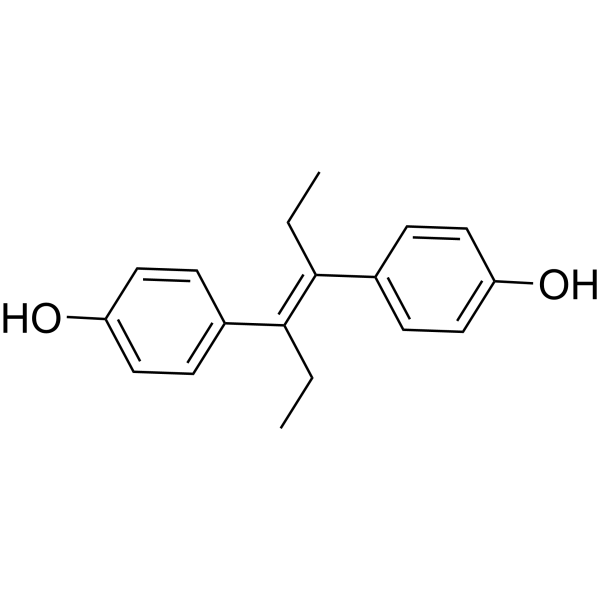
Diethylstilbestrol is a non-steroidal female hormone that has oral activity and can act on menopausal and postmenopausal disorders. Diethylstilbestrol can induce DNA oxidation and Apoptosis of spermatogonial stem cells. Diethylstilbestrol can induce thymocyte Autophagy Diethylstilbestrol is a 11β-hydroxysteroid dehydrogenase 2 (HSD11B2) inhibitor. .
|
-
- HY-B1155
-
|
Hydrocortisone 21-phosphate; Cortisol 21-phosphate
|
Phosphatase
|
Metabolic Disease
Endocrinology
|
|
Hydrocortisone phosphate (Hydrocortisone 21-phosphate) is a derivative of the glucocorticoid Hydrocortisone hemisuccinate (HY-B1402) that increases serum luteinizing hormone (LH) levels. Hydrocortisone phosphate increases the activity of magnesium-dependent polymerases in the nucleolus. Hydrocortisone phosphate also serves as a substrate for alkaline phosphatase to localize phosphatases that hydrolyze steroid phosphates, and the role of alkaline phosphatase has been validated in adult mouse tissues .
|
-
- HY-161700
-
|
|
Cytochrome P450
|
Cancer
|
|
BMS-737 (compound 33) is a non-steroidal, reversible small molecule inhibitor. BMS-737 exhibits 11-fold selectivity for CYP17 lyase over CYP17 hydroxylase. BMS-737 is designed to inhibit castration-resistant prostate cancer (CRPC) and significantly reduces testosterone levels without significant effects on orrodermal hormone and glucocorticoid levels .
|
-
- HY-113031
-
|
16α-Hydroxy-DHEA; 16α-OH-DHEA; 16α-hydroxy DHEA
|
Cytochrome P450
|
Endocrinology
|
|
16a-Hydroxydehydroisoandrosterone (16α-Hydroxy-DHEA) is a metabolite of the endogenous steroid hormone dehydroepiandrosterone. 16α-hydroxy Dehydroepiandrosterone is formed from dehydroepiandrosterone via 16-hydroxylation by the cytochrome P450 (CYP) isoforms CYP3A4 and CYP3A5 in adult human liver microsomes, as well as by fetal recombinant CYP3A7. It is a precursor to fetal estrogens, including estriol.
|
-
- HY-110189S1
-
|
3β-Hydroxy-5-pregnen-20-one monosulfate-d4 sodium
|
Isotope-Labeled Compounds
Cannabinoid Receptor
TRP Channel
Endogenous Metabolite
Autophagy
|
Neurological Disease
|
|
Pregnenolone monosulfate-d4 sodium is the deuterium labeled Pregnenolone monosulfate sodium (HY-110189) . Pregnenolone monosulfate sodium (3β-Hydroxy-5-pregnen-20-one monosulfate sodium) is a powerful neurosteroid, the main precursor of various steroid hormones including steroid ketones. Pregnenolone monosulfate sodium acts as a signaling-specific inhibitor of cannabinoid CB1 receptor, inhibits the effects of tetrahydrocannabinol (THC) that are mediated by the CB1 receptors. Pregnenolone monosulfate sodium can protect the brain from cannabis intoxication . Pregnenolone monosulfate sodium is also a TRPM3 channel activator, and also can weakly activate TRPM1 channels .
|
-
- HY-123868
-
|
|
Steroid Sulfatase
|
Cancer
|
|
KW-2581 is a steroidal selective steroid sulfatase (STS) inhibitor with an IC50 of 4 nM. KW-2581 inhibits STS activity of ZR-75-1 cells with an IC50 of 13 nM. KW-2581 inhibits the E1S-stimulated growth of ZR-75-1 cells with an IC50 of 0.18 nM. KW-2581 inhibits sulfated-estrogen dependent growth of breast cancer cells both in vitro and in vivo. KW-2581 induced regression in E1S-induced tumor growth. KW-2581 can be studied in research on hormone receptors-positive breast cancer .
|
-
- HY-110189R
-
|
3β-Hydroxy-5-pregnen-20-one monosulfate sodium (Standard)
|
Cannabinoid Receptor
TRP Channel
Endogenous Metabolite
Autophagy
Reference Standards
|
Neurological Disease
|
|
Pregnenolone monosulfate (sodium) (Standard) is the analytical standard of Pregnenolone monosulfate (sodium). This product is intended for research and analytical applications. Pregnenolone monosulfate sodium (3β-Hydroxy-5-pregnen-20-one monosulfate sodium) is a powerful neurosteroid, the main precursor of various steroid hormones including steroid ketones. Pregnenolone monosulfate sodium acts as a signaling-specific inhibitor of cannabinoid CB1 receptor, inhibits the effects of tetrahydrocannabinol (THC) that are mediated by the CB1 receptors. Pregnenolone monosulfate sodium can protect the brain from cannabis intoxication . Pregnenolone monosulfate sodium is also a TRPM3 channel activator, and also can weakly activate TRPM1 channels .
|
-
- HY-110189S
-
|
3β-Hydroxy-5-pregnen-20-one monosulfate sodium-13C2,d2
|
Isotope-Labeled Compounds
Cannabinoid Receptor
TRP Channel
Endogenous Metabolite
Autophagy
|
Neurological Disease
|
|
Pregnenolone monosulfate (sodium)- 13C2,d2 is the 13C- and deuterium labeled Pregnenolone monosulfate sodium. Pregnenolone monosulfate sodium (3β-Hydroxy-5-pregnen-20-one monosulfate sodium) is a powerful neurosteroid, the main precursor of various steroid hormones including steroid ketones. Pregnenolone monosulfate sodium salt acts as a signaling-specific inhibitor of cannabinoid CB1 receptor, inhibits the effects of tetrahydrocannabinol (THC) that are mediated by the CB1 receptors. Pregnenolone monosulfate sodium salt can protect the brain from cannabis intoxication . Pregnenolone monosulfate sodium salt is also a TRPM3 channel activator, and also can weakly activate TRPM1 channels .
|
-
- HY-W721874
-
|
(+)-Adrenosterone-d10
|
Isotope-Labeled Compounds
Endogenous Metabolite
Androgen Receptor
|
Cancer
|
|
Adrenosterone-d10 ((+)-Adrenosterone-d10) is the deuterium labeled Adrenosterone (HY-17462). Adrenosterone ((+)-Adrenosterone) is a competitive hydroxysteroid (11-beta) dehydrogenase 1 (HSD11β1) inhibitor.
Adrenosterone is a steroid hormone with weak androgenic effect. Adrenosterone is a dietary supplement that can decrease fat and increase muscle mass. Adrenosterone acts as a suppressor of metastatic progression of human cancer cells .
|
-
- HY-131492
-
|
|
Endogenous Metabolite
VD/VDR
|
Metabolic Disease
|
|
Δ4‑Dafachronic acid is an endogenous steroid hormone, an agonist of the DAF‑12 nuclear receptor, and a key ligand for the vitamin D receptor (VDR). Δ4‑Dafachronic acid promotes the active escape developmental trajectory in Austrofundulus limnaeus embryos even under diapause‑inducing conditions. Δ4‑Dafachronic acid is suitable for research on the developmental biology .
|
-
- HY-P0097A
-
|
Melanostatine-5 acetate salt
|
Melanocortin Receptor
|
Metabolic Disease
Endocrinology
Cancer
|
|
Nonapeptide-1 (Melanostatine-5) acetate salt, a peptide hormone, is a selective antagonist of MC1R (Ki: 40 nM). Nonapeptide-1 acetate salt is a competitive α-MSH antagonist that potently inhibits intracellular cAMP and melanosome dispersion induced by α-MSH in melanocytes (IC50: 2.5 nM and 11 nM, respectively). Nonapeptide-1 acetate salt inhibits melanin synthesis, and can be used in the research of skin pigmentation and regulation of steroid production in the adrenal gland, skin cancer .
|
-
- HY-N3994
-
|
|
Drug Intermediate
|
Others
|
|
16α,17α-Epoxyprogesterone is an important steroid, serving as an intermediate for many hormonal drugs such as Hydrocortisone (HY-N0583) and Megestrol (HY-B1834). 16α,17α-Epoxyprogesterone can further biotransform into another significant intermediate, 11α-hydroxy-16α,17α-epoxyprogesterone, to manufacture additional compounds .
|
-
- HY-W759219
-
|
(+)-Adrenosterone-13C3; 11-Keto-androstedione-13C3
|
Isotope-Labeled Compounds
Endogenous Metabolite
Androgen Receptor
|
Endocrinology
|
|
Adrenosterone- 13C3 ((+)-Adrenosterone- 13C3) is the 13C-labeled Adrenosterone (HY-17462). Adrenosterone ((+)-Adrenosterone) is a competitive hydroxysteroid (11-beta) dehydrogenase 1 (HSD11β1) inhibitor.
Adrenosterone is a steroid hormone with weak androgenic effect. Adrenosterone is a dietary supplement that can decrease fat and increase muscle mass. Adrenosterone acts as a suppressor of metastatic progression of human cancer cells .
|
-
- HY-P0097
-
|
Melanostatine-5
|
Melanocortin Receptor
|
Metabolic Disease
Endocrinology
Cancer
|
|
Nonapeptide-1 (Melanostatine-5), a peptide hormone, is a selective antagonist of MC1R (Ki: 40 nM). Nonapeptide-1 is a competitive α-MSH antagonist that potently inhibits intracellular cAMP and melanosome dispersion induced by α-MSH in melanocytes (IC50: 2.5 nM and 11 nM, respectively). Nonapeptide-1 inhibits melanin synthesis, and can be used in the research of skin pigmentation and regulation of steroid production in the adrenal gland, skin cancer .
|
-
- HY-14598R
-
|
|
Reference Standards
Estrogen Receptor/ERR
Apoptosis
Autophagy
|
Endocrinology
Cancer
|
|
Diethylstilbestrol (Standard) is the analytical standard of Diethylstilbestrol. This product is intended for research and analytical applications. Diethylstilbestrol (Stilbestrol) is a non-steroidal female hormone that has oral activity and can act on menopausal and postmenopausal disorders. Diethylstilbestrol can induce DNA oxidation and Apoptosis of spermatogonial stem cells. Diethylstilbestrol can induce thymocyte Autophagy Diethylstilbestrol is a 11β-hydroxysteroid dehydrogenase 2 (HSD11B2) inhibitor. .
|
-
- HY-B0151S3
-
|
3β-Hydroxy-5-pregnen-20-one-d6
|
Isotope-Labeled Compounds
TRP Channel
Autophagy
Cannabinoid Receptor
Endogenous Metabolite
|
Neurological Disease
|
|
Pregnenolone-d6 (3β-Hydroxy-5-pregnen-20-one-d6) is the deuterium labeled Pregnenolone (HY-B0151) . Pregnenolone (3β-Hydroxy-5-pregnen-20-one) is a powerful neurosteroid, the main precursor of various steroid hormones including steroid ketones. Pregnenolone acts as a signaling-specific inhibitor of cannabinoid CB1 receptor, inhibits the effects of tetrahydrocannabinol (THC) that are mediated by the CB1 receptors. Pregnenolone can protect the brain from cannabis intoxication . Pregnenolone is also a TRPM3 channel activator, and also can weakly activate TRPM1 channels .
|
-
- HY-141901S1
-
|
Prasterone-d5; Dehydroisoandrosterone-d5; Dehydroepiandrosterone-d5
|
Isotope-Labeled Compounds
Endogenous Metabolite
Androgen Receptor
|
Cardiovascular Disease
Endocrinology
Cancer
|
|
DHEA-d5 (Prasterone-d5; Dehydroisoandrosterone-d5; Dehydroepiandrosterone-d5) is the deuterium labeled DHEA (HY-14650). DHEA (Prasterone) is one of the most abundant steroid hormones. DHEA (Prasterone) mediates its action via multiple signaling pathways involving specific membrane receptors and via transformation into androgen and estrogen derivatives (e.g., androgens, estrogens, 7α and 7β DHEA, and 7α and 7β epiandrosterone derivatives) acting through their specific receptors.
|
-
- HY-B0237
-
|
DL-Aminoglutethimide
|
Cytochrome P450
|
Neurological Disease
Endocrinology
Cancer
|
|
Aminoglutethimide (DL-Aminoglutethimide) is an orally active anticonvulsant with various endocrine-related side effects. Aminoglutethimide blocks multiple steroid hormone synthesis pathways by inhibiting several cytochrome P-450-dependent hydroxylases, such as aromatase, cholesterol side-chain cleavage enzyme, 11-hydroxylase, and 18-hydroxylase, with IC50 values of 0.3, 3.5, 120, and 20 μM, respectively. Aminoglutethimide reduces cortisol levels. Aminoglutethimide can be used in research on Cushing's syndrome, breast cancer, and other conditions .
|
-
- HY-W653929
-
|
BCIPP-d12
|
Isotope-Labeled Compounds
Endogenous Metabolite
|
Metabolic Disease
|
|
Bis(1-chloro-2-propyl) phosphate-d12 is deuterium labeled Bis(1-chloro-2-propyl) phosphate. Bis(1-chloro-2-propyl) phosphate (BCIPP) is a metabolite of organophosphate flame retardants (OPFR) that may alter energy metabolism by influencing the levels of steroid hormones, such as cortisol and cortisone. Bis(1-chloro-2-propyl) phosphate holds potential for research on metabolism-related diseases caused by environmental exposure .
|
-
- HY-131492S
-
|
|
Isotope-Labeled Compounds
Endogenous Metabolite
VD/VDR
|
Metabolic Disease
|
|
Δ4-Dafachronic Acid-d3 is deuterium labeled Δ4-Dafachronic acid (HY-131492). Δ4‑Dafachronic acid is an endogenous steroid hormone, an agonist of the DAF‑12 nuclear receptor, and a key ligand for the vitamin D receptor (VDR). Δ4‑Dafachronic acid promotes the active escape developmental trajectory in Austrofundulus limnaeus embryos even under diapause‑inducing conditions. Δ4‑Dafachronic acid is suitable for research on the developmental biology .
|
-
- HY-B0742R
-
|
17α-Hydroxyprogesterone hexanoate(Standard); 17α-Hydroxyprogesterone caproate (Standard)
|
Reference Standards
Progesterone Receptor
|
Others
|
|
Hydroxyprogesterone caproate (Standard) is the analytical standard of Hydroxyprogesterone caproate. This product is intended for research and analytical applications. Hydroxyprogesterone caproate (17α-Hydroxyprogesterone hexanoate; 17α-Hydroxyprogesterone caproate) is a progesterone receptor (progesterone receptor) ligand and steroid hormone transcription inhibitor. Hydroxyprogesterone caproate downregulates estrogen receptors in target tissues and activates their metabolic pathways, and exhibits equivalent affinity for progesterone receptor A and progesterone receptor B. Hydroxyprogesterone caproate shows no consistent teratogenicity or developmental toxicity in rat, mouse and monkey models, but induces resorption or abortion in rhesus monkeys at human-equivalent doses. Hydroxyprogesterone caproate promotes the production of TNF-α in lipopolysaccharide-stimulated whole blood from non-pregnant women. Hydroxyprogesterone caproate can be used in scientific research related to preterm birth .
|
-
- HY-B0742S1
-
|
17α-Hydroxyprogesterone hexanoate-d8; 17α-Hydroxyprogesterone caproate-d8
|
Isotope-Labeled Compounds
Progesterone Receptor
|
Others
|
|
Hydroxyprogesterone caproate-d8 (17α-Hydroxyprogesterone hexanoate-d8) is the deuterium labeled Hydroxyprogesterone caproate (HY-B0742). Hydroxyprogesterone caproate (17α-Hydroxyprogesterone hexanoate; 17α-Hydroxyprogesterone caproate) is a progesterone receptor (progesterone receptor) ligand and steroid hormone transcription inhibitor. Hydroxyprogesterone caproate downregulates estrogen receptors in target tissues and activates their metabolic pathways, and exhibits equivalent affinity for progesterone receptor A and progesterone receptor B. Hydroxyprogesterone caproate shows no consistent teratogenicity or developmental toxicity in rat, mouse and monkey models, but induces resorption or abortion in rhesus monkeys at human-equivalent doses. Hydroxyprogesterone caproate promotes the production of TNF-α in lipopolysaccharide-stimulated whole blood from non-pregnant women. Hydroxyprogesterone caproate can be used in scientific research related to preterm birth .
|
-
- HY-B1162
-
|
Benzophenone-4
|
Environmental Pollutants
Biochemical Assay Reagents
|
Metabolic Disease
|
|
Sulisobenzone (Benzophenone-4) is a benzophenone-type UV filter. Sulisobenzone can act as a endocrine disrupting compound. Sulisobenzone disrupts energy metabolism, nucleotide synthesis, oxidative stress response, and endocrine function. Sulisobenzone thyroid hormone biosynthesis and induces oxidative stress .
|
-
- HY-12502AR
-
|
NZ-105 hydrochloride monoethanolate (Standard); (±)-Efonidipine hydrochloride monoethanolate (Standard)
|
Reference Standards
Calcium Channel
SARS-CoV
|
Cardiovascular Disease
|
|
Efonidipine (NZ-105) hydrochloride monoethanolate (Standard) is the analytical standard of Efonidipine hydrochloride monoethanolate (HY-12502AR). This product is intended for research and analytical applications. Efonidipine (NZ-105) hydrochloride monoethanolate is an orally active dual L-type and T-type calcium channel blocker (CCB) with IC50 values of 1.8 and 350 nM, respectively. Efonidipine hydrochloride monoethanolate inhibits SARS-CoV-2 main protease. Efonidipine hydrochloride monoethanolate modulates adrenal steroidogenesis by increasing the expression of steroidogenic acute regulatory protein (StAR), dbcAMP-or angiotensin II-induced StAR mRNA expression and DHEA-S production, while suppressing the biosynthesis of aldosterone and cortisol. Efonidipine hydrochloride monoethanolate reduces plasma aldosterone levels in vivo. Efonidipine hydrochloride monoethanolate improves cardiac function in heart failure models by inhibiting T-type calcium channels (via both tonic and use-dependent blockade), independently of blood pressure reduction. Efonidipine hydrochloride monoethanolate can be used for research in hypertension, heart failure, and disorders involving dysregulated steroid hormone synthesis .
|
-
-
-
HY-L239
-
|
|
70 compounds
|
|
Steroid hormones (also known as steroidal hormones) are a class of tetracyclic aliphatic hydrocarbon compounds derived from cholesterol. Typical representatives of steroid hormones include cortisol, aldosterone, testosterone, estradiol, among others. These hormones serve diverse regulatory functions within the body. For instance, aldosterone helps maintain the homeostasis of extracellular fluid volume and circulating blood volume; testosterone and estradiol primarily promote the development and maturation of male and female reproductive organs and regulate reproductive functions.
MCE designs a unique collection of 70 steroid hormones. This library can be used for research related to metabolic or immune diseases, investigations into the mechanisms of action of nuclear receptor signaling pathways, as well as identification and quantitative analysis in metabolomics studies.
|
| Cat. No. |
Product Name |
Type |
-
- HY-NP181
-
|
|
Biochemical Assay Reagents
|
|
Testosterone/BSA, a conjugate of Testosterone (HY-113415) and bovine serum albumin (BSA), acts as a nuclear transporter and cytoplasmic accumulator. Testosterone/BSA can enter the nuclei of rat testicular spermatocytes, spermatids and rat liver endothelial cells, while the antigenicity of BSA remains intact. Testosterone/BSA accumulates in the cytoplasm of rat hepatocytes in granular form. Testosterone/BSA can be used to investigate the membrane-initiated or non-genomic activities of steroid hormones .
|
-
- HY-NP186
-
|
|
Biochemical Assay Reagents
|
|
Helix pomatia Agglutinin is a N-acetylgalactosamine (GalNAc) binding lectin, found in the reproductive gland of a Roman snail. Helix pomatia Agglutinin binds with high affinity (kD = 1.9-2.4 μM) steroid hormones: testosterone and progesterone. Helix pomatia Agglutinin interacts with adenine (kD = 5.4 μM) and arylaminonaphthalene sulfonate TNS (kD = 12 μM). Helix pomatia Agglutinin is commonly used for characterizing, imaging, or targeting glycoconjugates, and is also a very useful tool for glycomics analysis . Helix pomatia Agglutinin can be used for cancer prognosis study .
|
-
- HY-NP0209
-
|
|
Biochemical Assay Reagents
|
|
Hydrocortisone-OVA is a conjugate of Hydrocortisone (HY-N0583) and OVA peptide. Hydrocortisone (Cortisol) is a steroid hormone or glucocorticoid secreted by the adrenal cortex .
|
| Cat. No. |
Product Name |
Target |
Research Area |
-
- HY-P0097
-
|
Melanostatine-5
|
Melanocortin Receptor
|
Metabolic Disease
Endocrinology
Cancer
|
|
Nonapeptide-1 (Melanostatine-5), a peptide hormone, is a selective antagonist of MC1R (Ki: 40 nM). Nonapeptide-1 is a competitive α-MSH antagonist that potently inhibits intracellular cAMP and melanosome dispersion induced by α-MSH in melanocytes (IC50: 2.5 nM and 11 nM, respectively). Nonapeptide-1 inhibits melanin synthesis, and can be used in the research of skin pigmentation and regulation of steroid production in the adrenal gland, skin cancer .
|
-
- HY-P0097A
-
|
Melanostatine-5 acetate salt
|
Melanocortin Receptor
|
Metabolic Disease
Endocrinology
Cancer
|
|
Nonapeptide-1 (Melanostatine-5) acetate salt, a peptide hormone, is a selective antagonist of MC1R (Ki: 40 nM). Nonapeptide-1 acetate salt is a competitive α-MSH antagonist that potently inhibits intracellular cAMP and melanosome dispersion induced by α-MSH in melanocytes (IC50: 2.5 nM and 11 nM, respectively). Nonapeptide-1 acetate salt inhibits melanin synthesis, and can be used in the research of skin pigmentation and regulation of steroid production in the adrenal gland, skin cancer .
|
-
- HY-P3489
-
-
- HY-P2110
-
|
|
GnRH Receptor
|
Endocrinology
|
|
RS-18286 is a potent luteinizing-hormone (LH)-releasing hormone (LHRH) antagonist. RS-18286 blocks the pituitary LHRH receptor and suppresses pituitary luteinizing-hormone (LH) secretion and reduce serum concentrations of gonadal steroids .
|
-
- HY-P3673
-
|
|
GnRH Receptor
|
Endocrinology
|
|
Lamprey LH-RH I is a gonadotropin-releasing hormone, elevates plasma steroid levels and stimulates ovulation in the lamprey without biological activity in other animal models .
|
| Cat. No. |
Product Name |
Category |
Target |
Chemical Structure |
-
- HY-B0141
-
-
-
- HY-N0583
-
-
-
- HY-14650
-
-
-
- HY-N0437
-
-
-
- HY-113313
-
-
-
- HY-B0216
-
-
-
- HY-113414
-
-
-
- HY-B0151
-
-
-
- HY-N0583R
-
-
-
- HY-77839
-
-
-
- HY-B0141R
-
-
-
- HY-B0891
-
-
-
- HY-N0437R
-
-
-
- HY-B1739
-
|
3β-Hydroxy-5-pregnen-20-one monosulfate
|
Endogenous metabolite
Steroids
Source Classification
|
Cannabinoid Receptor
TRP Channel
Endogenous Metabolite
Autophagy
|
|
Pregnenolone monosulfate (3β-Hydroxy-5-pregnen-20-one monosulfate) is a powerful neurosteroid, the main precursor of various steroid hormones including steroid ketones. Pregnenolone monosulfate acts as a signaling-specific inhibitor of cannabinoid CB1 receptor, inhibits the effects of tetrahydrocannabinol (THC) that are mediated by the CB1 receptors. Pregnenolone monosulfate can protect the brain from cannabis intoxication . Pregnenolone monosulfate is also a TRPM3 channel activator, and also can weakly activate TRPM1 channels .
|
-
-
- HY-14650R
-
-
-
- HY-N0179
-
-
-
- HY-110189
-
|
3β-Hydroxy-5-pregnen-20-one monosulfate sodium
|
Endogenous metabolite
Steroids
Source Classification
|
Cannabinoid Receptor
TRP Channel
Endogenous Metabolite
Autophagy
|
|
Pregnenolone monosulfate sodium (3β-Hydroxy-5-pregnen-20-one monosulfate sodium) is a powerful neurosteroid, the main precursor of various steroid hormones including steroid ketones. Pregnenolone monosulfate sodium acts as a signaling-specific inhibitor of cannabinoid CB1 receptor, inhibits the effects of tetrahydrocannabinol (THC) that are mediated by the CB1 receptors. Pregnenolone monosulfate sodium can protect the brain from cannabis intoxication . Pregnenolone monosulfate sodium is also a TRPM3 channel activator, and also can weakly activate TRPM1 channels .
|
-
-
- HY-B0141C
-
-
-
- HY-17657
-
|
5-Androstenediol 3-sulfate sodium
|
Structural Classification
Endogenous metabolite
Steroids
Source Classification
|
Drug Intermediate
|
|
Androst-5-enediol sulfate (5-Androstenediol 3-sulfate) sodium salt is an adrenal Δ5-steroid sulfate that synthesized by zona reticularis of adrenal depending on the lyase and Cytochrome b5 type A (CYB5A) activity. Androst-5-enediol sulfate sodium salt is a precursor hormone and can be desulfated to produce more potent androgens, including testosterone, in peripheral tissues like skin and liver. The serum level of Androst-5-enediol sulfate sodium salt has an age-related increase .
|
-
-
- HY-B0151R
-
-
-
- HY-17462
-
-
-
- HY-113414R
-
-
-
- HY-77839R
-
-
-
- HY-N2026A
-
-
-
- HY-113313R
-
-
-
- HY-W741872
-
-
-
- HY-141728
-
-
-
- HY-137178
-
-
-
- HY-17462R
-
-
-
- HY-N8550
-
-
-
- HY-110189R
-
|
3β-Hydroxy-5-pregnen-20-one monosulfate sodium (Standard)
|
Structural Classification
Endogenous metabolite
Steroids
Source Classification
|
Cannabinoid Receptor
TRP Channel
Endogenous Metabolite
Autophagy
Reference Standards
|
|
Pregnenolone monosulfate (sodium) (Standard) is the analytical standard of Pregnenolone monosulfate (sodium). This product is intended for research and analytical applications. Pregnenolone monosulfate sodium (3β-Hydroxy-5-pregnen-20-one monosulfate sodium) is a powerful neurosteroid, the main precursor of various steroid hormones including steroid ketones. Pregnenolone monosulfate sodium acts as a signaling-specific inhibitor of cannabinoid CB1 receptor, inhibits the effects of tetrahydrocannabinol (THC) that are mediated by the CB1 receptors. Pregnenolone monosulfate sodium can protect the brain from cannabis intoxication . Pregnenolone monosulfate sodium is also a TRPM3 channel activator, and also can weakly activate TRPM1 channels .
|
-
-
- HY-N15362
-
|
|
Animals
Steroids
Source Classification
|
Endogenous Metabolite
|
|
5α-Pregnane-3β,17α,20α-triol is an endogenous steroid compound. 5α-Pregnane-3β,17α,20α-triol is the metabolite of Pregnenolone (HY-B0151) or Progesterone (HY-N0437). 5α-Pregnane-3β,17α,20α-triol is promising for research of the endocrine function of the placenta and the mechanisms related to steroid hormone metabolism during pregnancy .
|
-
-
- HY-N15363
-
-
-
- HY-N15925
-
|
ent-Dehydroepiandrosterone
|
Lipid
|
Biochemical Assay Reagents
|
|
ent-DHEA is an enantiomer of DHEA (HY-14650). DHEA (Prasterone) is one of the most abundant steroid hormones .
|
-
| Cat. No. |
Product Name |
Chemical Structure |
-
- HY-B0141S2
-
|
|
|
Estradiol-d5 is deuterium labeled Estradiol. Estradiol is a steroid sex hormone vital to the maintenance of fertility and secondary sexual characteristics in females. Estradiol upregulates IL-6 expression through the estrogen receptor β (ERβ) pathway .
|
-
-
- HY-N0437S
-
|
|
|
Progesterone-d9 is the deuterium labeled Progesterone. Progesterone is a steroid hormone that regulates the menstrual cycle and is crucial for pregnancy.
|
-
-
- HY-N0583S2
-
|
|
|
Hydrocortisone-d4 is the deuterium labeled Hydrocortisone. Hydrocortisone (Cortisol) is a steroid hormone or glucocorticoid secreted by the adrenal cortex .
|
-
-
- HY-B0141S1
-
2 Publications Verification
|
|
Estradiol-d4 is the deuterium labeled Estradiol. Estradiol is a steroid sex hormone vital to the maintenance of fertility and secondary sexual characteristics in females. Estradiol upregulates IL-6 expression through the estrogen receptor β (ERβ) pathway .
|
-
-
- HY-N0583S1
-
|
|
|
Hydrocortisone-d7 is the deuterium labeled Hydrocortisone. Hydrocortisone (Cortisol) is a steroid hormone or glucocorticoid secreted by the adrenal cortex .
|
-
-
- HY-B0141S
-
|
|
|
Estradiol-d3 is the deuterium labeled Estradiol. Estradiol is a steroid sex hormone vital to the maintenance of fertility and secondary sexual characteristics in females. Estradiol upregulates IL-6 expression through the estrogen receptor β (ERβ) pathway.
|
-
-
- HY-113313S1
-
|
|
|
Aldosterone-d7 is the deuterium labeled Aldosterone. Aldosterone is the primary mineralocorticoid. Aldosterone is a steroid hormone, and it is synthesized and secreted in response to renin-angiotensin system activation (RAS) or high dietary potassium by the zona glomerulosa (ZG) of the adrenal cortex. Aldosterone activity is dependent by the binding and activation of the cytoplasmic/nuclear mineralocorticoid receptor (MR) at cellular level .
|
-
-
- HY-N0583S5
-
|
|
|
Hydrocortisone-d2 is the deuterium labeled Hydrocortisone. Hydrocortisone (Cortisol) is a steroid hormone or glucocorticoid secreted by the adrenal cortex .
|
-
-
- HY-B0891S
-
|
|
|
17α-Hydroxyprogesterone-d8 is the deuterium labeled 17α-Hydroxyprogesterone. 17α-Hydroxyprogesterone (17-Hydroxyprogesterone) is an endogenous progestogen as well as chemical intermediate in the biosynthesis of other steroid hormones, including the corticosteroids and the androgens and the estrogens.
|
-
-
- HY-113414S
-
|
|
|
Deoxycorticosterone-d8 is the deuterium labeled Deoxycorticosterone. Deoxycorticosterone is a steroid hormone produced by the adrenal gland that possesses mineralocorticoid activity and acts as an aldosterone precursor .
|
-
-
- HY-B0141S3
-
|
|
|
Estradiol-d2 is the deuterium labeled Estradiol. Estradiol is a steroid sex hormone vital to the maintenance of fertility and secondary sexual characteristics in females. Estradiol upregulates IL-6 expression through the estrogen receptor β (ERβ) pathway .
|
-
-
- HY-B0141S5
-
|
|
|
Estradiol- 13C2 is the 13C-labeled Estradiol. Estradiol is a steroid sex hormone vital to the maintenance of fertility and secondary sexual characteristics in females. Estradiol upregulates IL-6 expression through the estrogen receptor β (ERβ) pathway .
|
-
-
- HY-N0583S3
-
|
|
|
Hydrocortisone-d3 is the deuterium labeled Hydrocortisone. Hydrocortisone (Cortisol) is a steroid hormone or glucocorticoid secreted by the adrenal cortex .
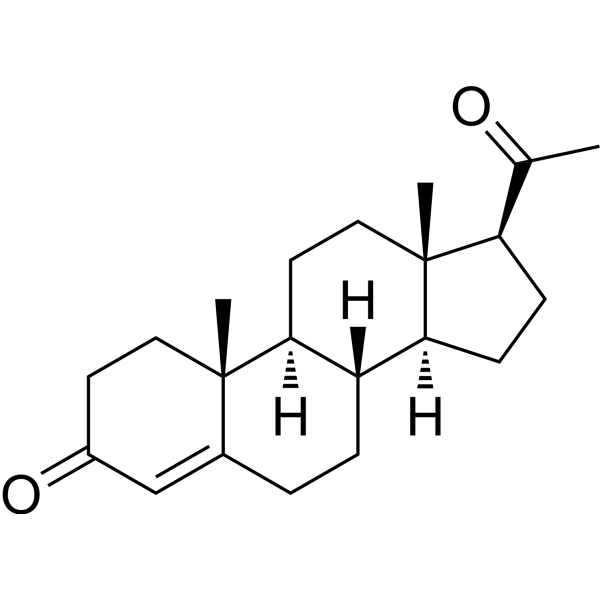
|
-
-
- HY-N0437S2
-
1 Publications Verification
|
|
Progesterone- 13C3 is the 13C-labeled Progesterone. Progesterone is a steroid hormone that regulates the menstrual cycle and is crucial for pregnancy.
|
-
-
- HY-B0891S1
-
|
|
|
17α-Hydroxyprogesterone- 13C3 is the 13C-labeled 17α-Hydroxyprogesterone. 17α-Hydroxyprogesterone (17-Hydroxyprogesterone) is an endogenous progestogen as well as chemical intermediate in the biosynthesis of other steroid hormones, including the corticosteroids and the androgens and the estrogens.
|
-
-
- HY-B0151S2
-
|
|
|
Pregnenolone-d4-1 is the deuterium labeled Pregnenolone. Pregnenolone (3β-Hydroxy-5-pregnen-20-one) is a powerful neurosteroid, the main precursor of various steroid hormones including steroid ketones. Pregnenolone acts as a signaling-specific inhibitor of cannabinoid CB1 receptor, inhibits the effects of tetrahydrocannabinol (THC) that are mediated by the CB1 receptors. Pregnenolone can protect the brain from cannabis intoxication . Pregnenolone is also a TRPM3 channel activator, and also can weakly activate TRPM1 channels .
|
-
-
- HY-141901S1
-
|
|
|
DHEA-d5 (Prasterone-d5; Dehydroisoandrosterone-d5; Dehydroepiandrosterone-d5) is the deuterium labeled DHEA (HY-14650). DHEA (Prasterone) is one of the most abundant steroid hormones. DHEA (Prasterone) mediates its action via multiple signaling pathways involving specific membrane receptors and via transformation into androgen and estrogen derivatives (e.g., androgens, estrogens, 7α and 7β DHEA, and 7α and 7β epiandrosterone derivatives) acting through their specific receptors.
|
-
-
- HY-110189S1
-
|
|
|
Pregnenolone monosulfate-d4 sodium is the deuterium labeled Pregnenolone monosulfate sodium (HY-110189) . Pregnenolone monosulfate sodium (3β-Hydroxy-5-pregnen-20-one monosulfate sodium) is a powerful neurosteroid, the main precursor of various steroid hormones including steroid ketones. Pregnenolone monosulfate sodium acts as a signaling-specific inhibitor of cannabinoid CB1 receptor, inhibits the effects of tetrahydrocannabinol (THC) that are mediated by the CB1 receptors. Pregnenolone monosulfate sodium can protect the brain from cannabis intoxication . Pregnenolone monosulfate sodium is also a TRPM3 channel activator, and also can weakly activate TRPM1 channels .
|
-
-
- HY-W721874
-
|
|
|
Adrenosterone-d10 ((+)-Adrenosterone-d10) is the deuterium labeled Adrenosterone (HY-17462). Adrenosterone ((+)-Adrenosterone) is a competitive hydroxysteroid (11-beta) dehydrogenase 1 (HSD11β1) inhibitor.
Adrenosterone is a steroid hormone with weak androgenic effect. Adrenosterone is a dietary supplement that can decrease fat and increase muscle mass. Adrenosterone acts as a suppressor of metastatic progression of human cancer cells .
|
-
-
- HY-77839S1
-
|
|
|
Cortodoxone-d2 is the deuterium labeled Cortodoxone. Cortodoxone is a glucocorticoid steroid hormone that can be oxygenated to cortisol (Hydrocortisone) .
|
-
-
- HY-N0437S3
-
|
|
|
Progesterone- 13C2 is the 13C-labeled Progesterone. Progesterone is a steroid hormone that regulates the menstrual cycle and is crucial for pregnancy.
|
-
-
- HY-W751098
-
|
|
|
Aldosterone- 13C3 is a 13C-labeled Aldosterone (HY-113313). Aldosterone is a primary mineralocorticoid and steroid hormone.
|
-
-
- HY-113313S2
-
|
|
|
Aldosterone-d4 is the deuterium labeled Aldosterone. Aldosterone is the primary mineralocorticoid. Aldosterone is a steroid hormone, and it is synthesized and secreted in response to renin-angiotensin system activation (RAS) or high dietary potassium by t
|
-
-
- HY-B0141S4
-
|
|
|
Estradiol- 13C6 is the 13C-labeled Estradiol. Estradiol is a steroid sex hormone vital to the maintenance of fertility and secondary sexual characteristics in females. Estradiol upregulates IL-6 expression through the estrogen receptor β (ERβ) pathway .
|
-
-
- HY-B0151S
-
|
|
|
Pregnenolone-d4 is the deuterium labeled Pregnenolone. Pregnenolone (3β-Hydroxy-5-pregnen-20-one) is a powerful neurosteroid, the main precursor of various steroid hormones including steroid ketones. Pregnenolone acts as a signaling-specific inhibitor of cannabinoid CB1 receptor, inhibits the effects of tetrahydrocannabinol (THC) that are mediated by the CB1 receptors. Pregnenolone can protect the brain from cannabis intoxication . Pregnenolone is also a TRPM3 channel activator, and also can weakly activate TRPM1 channels .
|
-
-
- HY-B0151S1
-
|
|
|
Pregnenolone- 13C2,d2 is the deuterium and 13C labeled Pregnenolone (HY-B0151). Pregnenolone is a powerful neurosteroid, the main precursor of various steroid hormones including steroid ketones. Pregnenolone acts as a signaling-specific inhibitor of cannabinoid CB1 receptor, inhibits the effects of tetrahydrocannabinol (THC) that are mediated by the CB1 receptors. Pregnenolone can protect the brain from cannabis intoxication. Pregnenolone is also a TRPM3 channel activator, and also can weakly activate TRPM1 channels .
|
-
-
- HY-B0672S
-
|
|
|
Estradiol valerianate-d9 is the deuterium labeled Estradiol valerianate. Estradiol valerianate (β-estradiol 17-valerate) is a synthetic estrogen widely used in combination with other steroid hormones in hormone replacement therapy agents.
|
-
-
- HY-B0672S1
-
|
|
|
Estradiol valerianate-d4 is the deuterium labeled Estradiol valerianate. Estradiol valerianate (β-estradiol 17-valerate) is a synthetic estrogen widely used in combination with other steroid hormones in hormone replacement therapy agents.
|
-
-
- HY-N0437S1
-
|
|
|
Progesterone- 13C5 is the 13C-labeled Progesterone. Progesterone is a steroid hormone that regulates the menstrual cycle and is crucial for pregnancy.
|
-
-
- HY-B1192S
-
|
|
|
Estradiol benzoate-d3 is the deuterium labeled Estradiol benzoate. Estradiol Benzoate (β-Estradiol 3-benzoate), a proagent of estradiol, acts as a steroid sex hormone. It exhibits mild anabolic and metabolic properties, and increases blood coagulability .
|
-
-
- HY-B0141S6
-
|
|
|
Estradiol-d2-1 is the deuterium labeled Estradiol. Estradiol is a steroid sex hormone vital to the maintenance of fertility and secondary sexual characteristics in females. Estradiol upregulates IL-6 expression through the estrogen receptor β (ERβ) pathway .
|
-
-
- HY-13632S
-
|
|
|
Exemestane-d2 is the deuterium labeled Exemestane. Exemestane (FCE 24304) is a selective, irreversible and orally active steroidal aromatase inhibitor with IC50s of 30 nM and 40 nM for human placental and rat ovarian aromatase, respectively. Exemestane can be used for hormone-dependent breast cancer research .
|
-
-
- HY-13632S2
-
|
|
|
Exemestane-d3 is the deuterium labeled Exemestane. Exemestane (FCE 24304) is a selective, irreversible and orally active steroidal aromatase inhibitor with IC50s of 30 nM and 40 nM for human placental and rat ovarian aromatase, respectively. Exemestane can be used for hormone-dependent breast cancer research .
|
-
-
- HY-13632S1
-
|
|
|
Exemestane- 13C3 is the 13C-labeled Exemestane. Exemestane (FCE 24304) is a selective, irreversible and orally active steroidal aromatase inhibitor with IC50s of 30 nM and 40 nM for human placental and rat ovarian aromatase, respectively. Exemestane can be used for hormone-dependent breast cancer research .
|
-
-
- HY-W653985
-
|
|
|
Cortodoxone-d7 (11-Deoxycortisol-d7) is a deuterium labeled Cortodoxone (HY-77839). Cortodoxone (11-Deoxycortisol; cortexolone) is a glucocorticoid steroid hormone and also is a glucocorticoid antagonist. Cortodoxone increases tryptophan oxygenase (TO) activity and induces the secretion of corticosterone. Cortodoxone regulates T cell proliferation and activation .
|
-
-
- HY-13632S6
-
|
|
|
Exemestane-d4 (FCE 24304-d4) is deuterium labeled Exemestane. Exemestane (FCE 24304) is a selective, irreversible and orally active steroidal aromatase inhibitor with IC50s of 30 nM and 40 nM for human placental and rat ovarian aromatase, respectively. Exemestane can be used for hormone-dependent breast cancer research .
|
-
-
- HY-13632S5
-
|
|
|
Exemestane- 13C,d2 is 13C and deuterated labeled Exemestane (HY-13632). Exemestane (FCE 24304) is a selective, irreversible and orally active steroidal aromatase inhibitor with IC50s of 30 nM and 40 nM for human placental and rat ovarian aromatase, respectively. Exemestane can be used for hormone-dependent breast cancer research .
|
-
-
- HY-110189S
-
|
|
|
Pregnenolone monosulfate (sodium)- 13C2,d2 is the 13C- and deuterium labeled Pregnenolone monosulfate sodium. Pregnenolone monosulfate sodium (3β-Hydroxy-5-pregnen-20-one monosulfate sodium) is a powerful neurosteroid, the main precursor of various steroid hormones including steroid ketones. Pregnenolone monosulfate sodium salt acts as a signaling-specific inhibitor of cannabinoid CB1 receptor, inhibits the effects of tetrahydrocannabinol (THC) that are mediated by the CB1 receptors. Pregnenolone monosulfate sodium salt can protect the brain from cannabis intoxication . Pregnenolone monosulfate sodium salt is also a TRPM3 channel activator, and also can weakly activate TRPM1 channels .
|
-
-
- HY-W759219
-
|
|
|
Adrenosterone- 13C3 ((+)-Adrenosterone- 13C3) is the 13C-labeled Adrenosterone (HY-17462). Adrenosterone ((+)-Adrenosterone) is a competitive hydroxysteroid (11-beta) dehydrogenase 1 (HSD11β1) inhibitor.
Adrenosterone is a steroid hormone with weak androgenic effect. Adrenosterone is a dietary supplement that can decrease fat and increase muscle mass. Adrenosterone acts as a suppressor of metastatic progression of human cancer cells .
|
-
-
- HY-W653929
-
|
|
|
Bis(1-chloro-2-propyl) phosphate-d12 is deuterium labeled Bis(1-chloro-2-propyl) phosphate. Bis(1-chloro-2-propyl) phosphate (BCIPP) is a metabolite of organophosphate flame retardants (OPFR) that may alter energy metabolism by influencing the levels of steroid hormones, such as cortisol and cortisone. Bis(1-chloro-2-propyl) phosphate holds potential for research on metabolism-related diseases caused by environmental exposure .
|
-
-
- HY-B0151S3
-
|
|
|
Pregnenolone-d6 (3β-Hydroxy-5-pregnen-20-one-d6) is the deuterium labeled Pregnenolone (HY-B0151) . Pregnenolone (3β-Hydroxy-5-pregnen-20-one) is a powerful neurosteroid, the main precursor of various steroid hormones including steroid ketones. Pregnenolone acts as a signaling-specific inhibitor of cannabinoid CB1 receptor, inhibits the effects of tetrahydrocannabinol (THC) that are mediated by the CB1 receptors. Pregnenolone can protect the brain from cannabis intoxication . Pregnenolone is also a TRPM3 channel activator, and also can weakly activate TRPM1 channels .
|
-
-
- HY-131492S
-
|
|
|
Δ4-Dafachronic Acid-d3 is deuterium labeled Δ4-Dafachronic acid (HY-131492). Δ4‑Dafachronic acid is an endogenous steroid hormone, an agonist of the DAF‑12 nuclear receptor, and a key ligand for the vitamin D receptor (VDR). Δ4‑Dafachronic acid promotes the active escape developmental trajectory in Austrofundulus limnaeus embryos even under diapause‑inducing conditions. Δ4‑Dafachronic acid is suitable for research on the developmental biology .
|
-
-
- HY-B0742S1
-
|
|
|
Hydroxyprogesterone caproate-d8 (17α-Hydroxyprogesterone hexanoate-d8) is the deuterium labeled Hydroxyprogesterone caproate (HY-B0742). Hydroxyprogesterone caproate (17α-Hydroxyprogesterone hexanoate; 17α-Hydroxyprogesterone caproate) is a progesterone receptor (progesterone receptor) ligand and steroid hormone transcription inhibitor. Hydroxyprogesterone caproate downregulates estrogen receptors in target tissues and activates their metabolic pathways, and exhibits equivalent affinity for progesterone receptor A and progesterone receptor B. Hydroxyprogesterone caproate shows no consistent teratogenicity or developmental toxicity in rat, mouse and monkey models, but induces resorption or abortion in rhesus monkeys at human-equivalent doses. Hydroxyprogesterone caproate promotes the production of TNF-α in lipopolysaccharide-stimulated whole blood from non-pregnant women. Hydroxyprogesterone caproate can be used in scientific research related to preterm birth .
|
-
| Cat. No. |
Product Name |
|
Classification |
-
- HY-B0216
-
|
Ethynyl estradiol; 17α-Ethynylestradiol
|
|
Alkynes
|
|
Ethinylestradiol is an orally active steroidal estrogen. Ethinylestradiol is widely used in research on menopausal symptoms, gynecological conditions, and certain hormone-sensitive cancers .
|
-
- HY-101405
-
|
R 2323
|
|
Alkynes
|
|
Gestrinone (R2323) is a synthetic steroid hormone used to treat endometriosis. It inhibits leiomyoma cells with an IC50 of 43.67 μM. Gestrinone is a click chemistry reagent, it contains an Alkyne group and can undergo copper-catalyzed azide-alkyne cycloaddition (CuAAc) with molecules containing Azide groups.
|
Your information is safe with us. * Required Fields.
Inquiry Information
- Product Name:
- Cat. No.:
- Quantity:
- MCE Japan Authorized Agent:

