1. Search Result
Search Result
Results for "

tamoxifen

" in MedChemExpress (MCE) Product Catalog:

66

Inhibitors & Agonists

1

Peptides

9

Natural
Products

11

Isotope-Labeled Compounds

Cat. No. Product Name Target Research Areas Chemical Structure
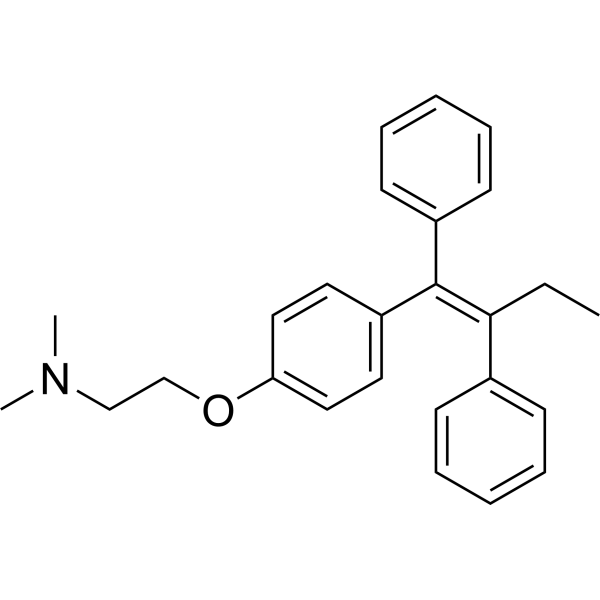
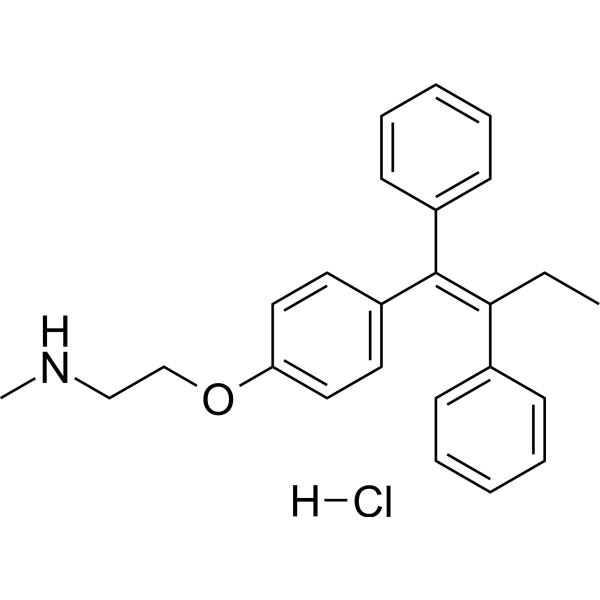
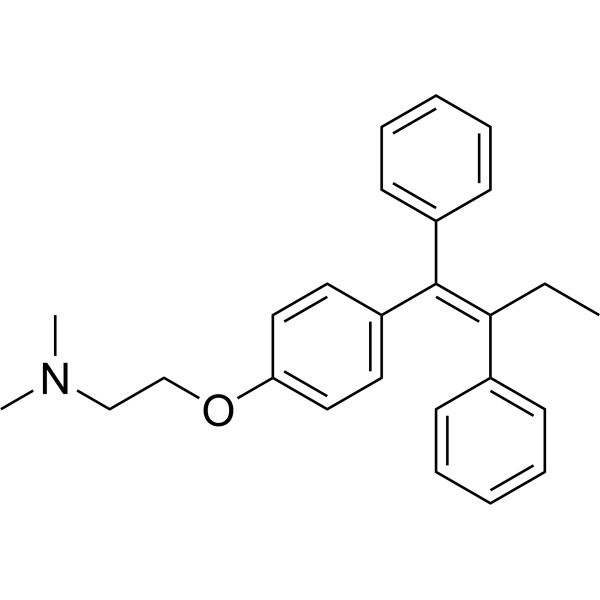
  • HY-13757A
    Tamoxifen
    Maximum Cited Publications
    229 Publications Verification

    ICI 47699; (Z)-tamoxifen; trans-tamoxifen

    Estrogen Receptor/ERR HSP Autophagy Apoptosis Infection Neurological Disease Metabolic Disease Inflammation/Immunology Cancer
    Tamoxifen (ICI 47699) is an orally active, selective estrogen receptor modulator (SERM) which blocks estrogen action in breast cells and can activate estrogen activity in other cells, such as bone, liver, and uterine cells. Tamoxifen is a potent Hsp90 activator and enhances the Hsp90 molecular chaperone ATPase activity. Tamoxifen also potent inhibits infectious EBOV Zaire and Marburg (MARV) with IC50 of 0.1 μM and 1.8 μM, respectively. Tamoxifen activates autophagy and induces apoptosis. Tamoxifen can also be dissolved in corn oil (HY-Y1888) for use in inducing gene knockout in CreER transgenic mice. Tamoxifen has better solubility in corn oil compared to Tamoxifen Citrate (HY-13757) .
    Tamoxifen
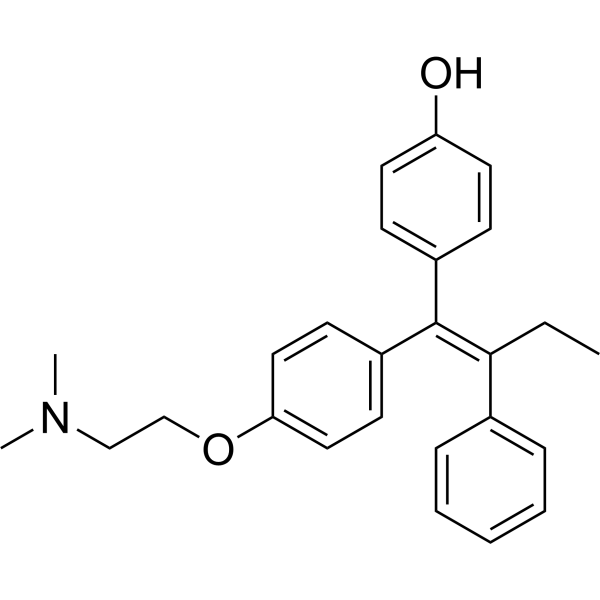
  • HY-16950
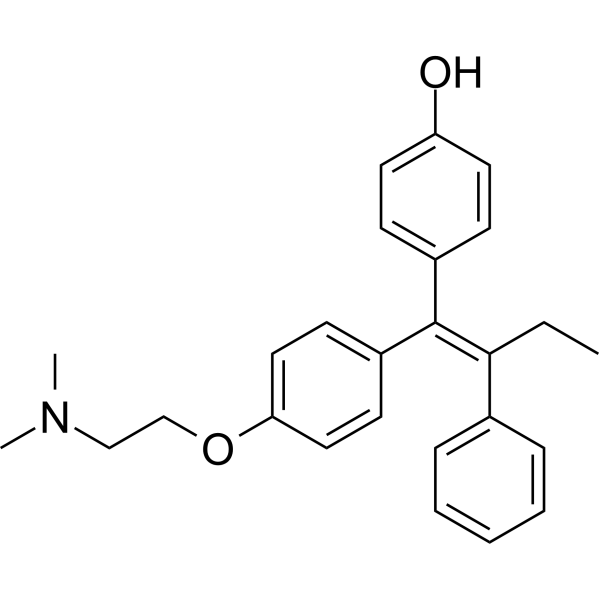
    4-Hydroxytamoxifen
    50+ Cited Publications

    (Z)-4-Hydroxytamoxifen; trans-4-Hydroxytamoxifen; (Z)-Afimoxifene

    Estrogen Receptor/ERR Cancer
    4-Hydroxytamoxifen ((Z)-4-Hydroxytamoxifen) is an orally active, selective estrogen receptor modulator (SERM). 4-Hydroxytamoxifen ((Z)-4-Hydroxytamoxifen) is also the active metabolic form of Tamoxifen (HY-13757A) in vivo and can be used to induce gene knockout in transgenic mice expressing CreER .
    4-Hydroxytamoxifen
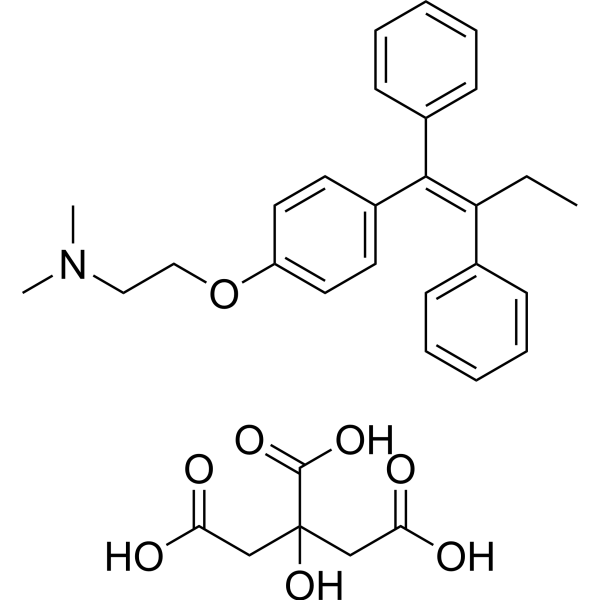
  • HY-13757
    Tamoxifen Citrate
    Maximum Cited Publications
    229 Publications Verification

    ICI 46474; (Z)-tamoxifen Citrate; trans-tamoxifen Citrate

    Estrogen Receptor/ERR HSP Autophagy Apoptosis Infection Neurological Disease Inflammation/Immunology Cancer
    Tamoxifen Citrate (ICI 46474) is an orally active, selective estrogen receptor modulator (SERM) which blocks estrogen action in breast cells and can activate estrogen activity in other cells, such as bone, liver, and uterine cells.Tamoxifen Citrate is a potent Hsp90 activator and enhances the Hsp90 molecular chaperone ATPase activity. Tamoxifen Citrate also potent inhibits infectious EBOV Zaire and Marburg (MARV) with IC50 of 0.1 μM and 1.8 μM, respectively. Tamoxifen Citrate activates autophagy and induces apoptosis. Tamoxifen Citrate can also be used to induce gene knockout in CreER transgenic mice .
    Tamoxifen Citrate
  • HY-16950A
    (E/Z)-4-Hydroxytamoxifen
    3 Publications Verification

    Afimoxifene; 4-OHT

    Estrogen Receptor/ERR Adhesion G Protein-coupled Receptors (AGPCRs) Drug Metabolite Metabolic Disease Cancer
    (E/Z)-4-Hydroxytamoxifen (Afimoxifene) is a racemic compound of (Z)-4-Hydroxytamoxifen and (E)-4-Hydroxytamoxifen isomers. (E/Z)-4-Hydroxytamoxifen is a selective estrogen receptor modulator with mixed estrogenic and antiestrogenic activity, which is also an active metabolite of Tamoxifen (HY-13757A). (E/Z)-4-Hydroxytamoxifen is an agonist of the G protein-coupled estrogen receptor (GPER) with relatively low affinity (100-1000 nM). (E/Z)-4-Hydroxytamoxifen is promising for research of cyclical mastalgia, such as breast pain, tenderness, and nodularity .
    (E/Z)-4-Hydroxytamoxifen
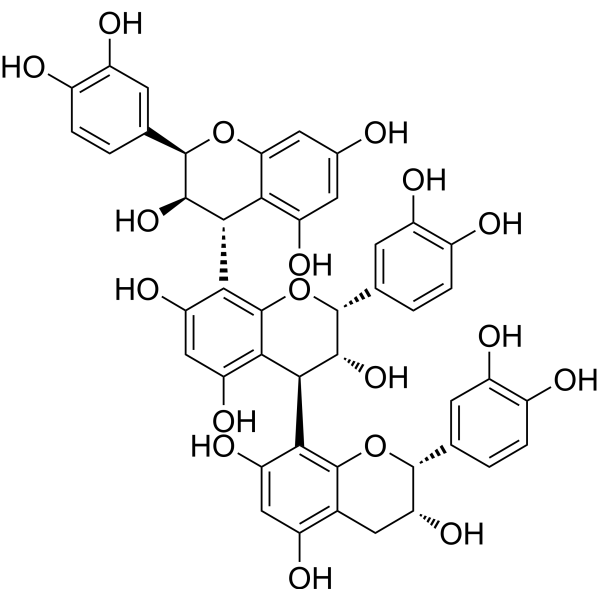
  • HY-N2342
    Procyanidin C1
    Maximum Cited Publications
    7 Publications Verification

    PCC1

    Apoptosis Cancer
    Procyanidin C1 (PCC1), a natural polyphenol with oral activity, causes DNA damage, cell cycle arrest and induces apoptosis. Procyanidin C1 decreases the level of Bcl-2, but enhances BAX, caspase 3 and 9 expression in cancer cells. Procyanidin C1 shows senotherapeutic activity and increases lifespan in mice .
    Procyanidin C1
  • HY-N0401A
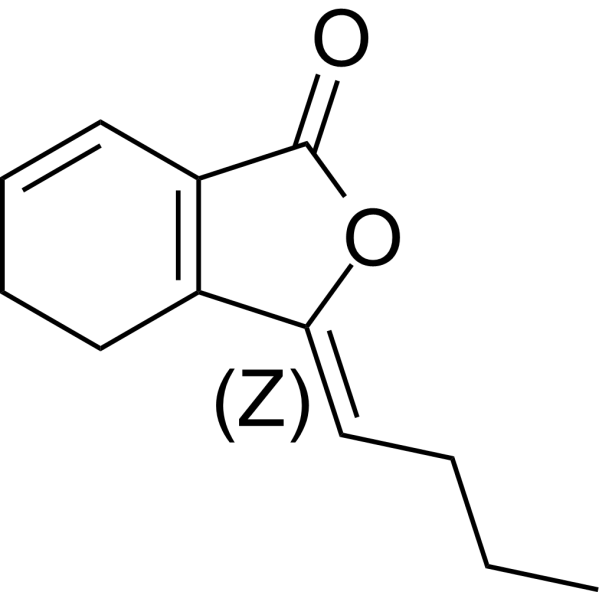
    (Z)-Ligustilide
    5 Publications Verification

    Bacterial Estrogen Receptor/ERR FATP Infection Metabolic Disease Cancer
    (Z)-Ligustilide is extracted from Ligusticum chuanxiong Hort, has antimicrobial and antifungal activity, exhibits an average antifungal score of 5.6 . (Z)-Ligustilide is orally active, it inhibits the expression of FATP5 and DGAT, inhibits fatty acid uptake and esterification in mice and has potential as therapeutics for nonalcoholic fatty liver disease (NAFLD) . (Z)-Ligustilide is also able to reactivate ERα, has epigenetic regulation, and is used in the study of tamoxifen-resistant breast cancer .
    (Z)-Ligustilide
  • HY-18719E
    Endoxifen
    1 Publications Verification

    Cytochrome P450 Estrogen Receptor/ERR Drug Metabolite Parasite Cancer
    Endoxifen is a key active metabolite of tamoxifen (TAM) with higher affinity and specificity to estrogen receptor that also inhibits aromatase activity. Endoxifen has the potential for breast cancer study .
    Endoxifen
  • HY-13757AR
    Tamoxifen (Standard)
    210+ Cited Publications

    ICI 47699(Standard); (Z)-tamoxifen(Standard); trans-tamoxifen (Standard)

    Reference Standards Estrogen Receptor/ERR HSP Autophagy Apoptosis Endocrinology Cancer
    Tamoxifen (Standard) is the analytical standard of Tamoxifen (HY-13757A). This product is intended for research and analytical applications. Tamoxifen (ICI 47699) is an orally active, selective estrogen receptor modulator (SERM) which blocks estrogen action in breast cells and can activate estrogen activity in other cells, such as bone, liver, and uterine cells . Tamoxifen is a potent Hsp90 activator and enhances the Hsp90 molecular chaperone ATPase activity. Tamoxifen also potent inhibits infectious EBOV Zaire and Marburg (MARV) with IC50 of 0.1 μM and 1.8 μM, respectively . Tamoxifen activates autophagy and induces apoptosis . Tamoxifen also can induce gene knockout of CreER(T2) transgenic mouse .
    Tamoxifen (Standard)
  • HY-18719
    Endoxifen (Z-isomer)
    3 Publications Verification

    Estrogen Receptor/ERR Drug Metabolite PKC Akt Apoptosis Neurological Disease Cancer
    Endoxifen Z-isomer hydrochloride, an orally active Tamoxifen (HY-13757A) metabolite, is a selective estrogen receptor modulator with 100-fold more potency than its parent agent, Tamoxifen. Endoxifen Z-isomer inhibits PKCβ1 kinase activity. Endoxifen Z-isomer attenuates PKCβ1-activated AKT Ser473 phosphorylation, diminishes AKT substrate phosphorylation, and induces Apoptosis. Endoxifen Z-isomer exhibits anticancer activity against hormone-resistant metastatic breast cancer .
    Endoxifen (Z-isomer)
  • HY-W089645

    N-Methyl-n-trimethylsilyltrifluoroacetamide

    Biochemical Assay Reagents Cancer
    2,2,2-Trifluoro-N-methyl-N-(trimethylsilyl)acetamide (N-Methyl-n-trimethylsilyltrifluoroacetamide) is an ester product commonly used for silylation reactions in analyticalchemistry. 2,2,2-Trifluoro-N-methyl-N-(trimethylsilyl)acetamide can be used in the derivatization step of metabolomics analysis with gas chromatography/mass spectrometry (GC/MS) or as a derivatization reagent in GC with flame ionization detection analysis. 2,2,2-Trifluoro-N-methyl-N-(trimethylsilyl)acetamide can be used in research for studying Tamoxifen (HY-13757A) resistant breast cancer cells and other disease pathways .
    2,2,2-Trifluoro-N-methyl-N-(trimethylsilyl)acetamide
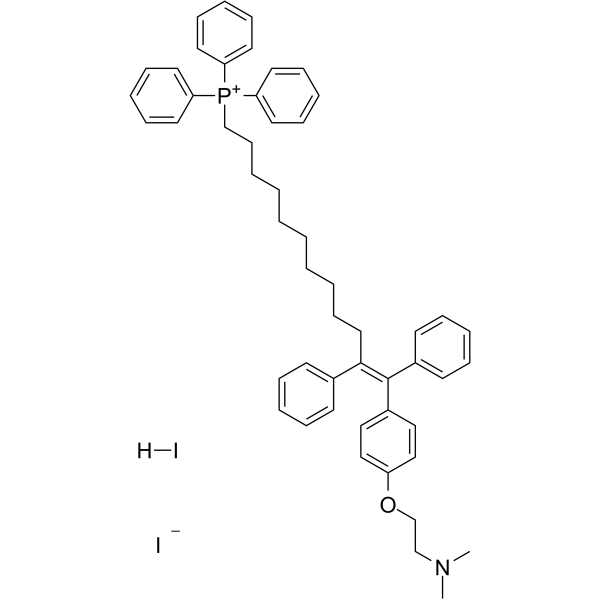
  • HY-126222A

    Apoptosis Mitochondrial Metabolism Cancer
    MitoTam iodide, hydriodide is a Tamoxifen derivative , an electron transport chain (ETC) inhibitor, spreduces mitochondrial membrane potential in senescent cells and affects mitochondrial morphology . MitoTam iodide, hydriodide is an effective anticancer agent, suppresses respiratory complexes (CI-respiration) and disrupts respiratory supercomplexes (SCs) formation in breast cancer cells . MitoTam iodide, hydriodide causes apoptosis .
    MitoTam iodide, hydriodide
  • HY-18719A
    Endoxifen Z-isomer hydrochloride
    3 Publications Verification

    Estrogen Receptor/ERR Drug Metabolite PKC Akt Apoptosis Neurological Disease Cancer
    Endoxifen Z-isomer hydrochloride, an orally active Tamoxifen (HY-13757A) metabolite, is a selective estrogen receptor modulator with 100-fold more potency than its parent agent, Tamoxifen. Endoxifen Z-isomer hydrochloride inhibits PKCβ1 kinase activity. Endoxifen Z-isomer hydrochloride attenuates PKCβ1-activated AKT Ser473 phosphorylation, diminishes AKT substrate phosphorylation, and induces Apoptosis. Endoxifen Z-isomer hydrochloride exhibits anticancer activity against hormone-resistant metastatic breast cancer .
    Endoxifen Z-isomer hydrochloride
  • HY-119437
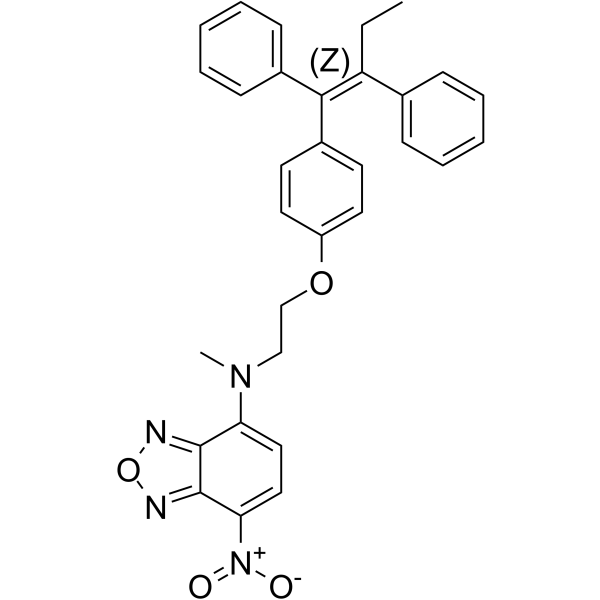
    FLTX1
    2 Publications Verification

    Estrogen Receptor/ERR Cancer
    FLTX1 is a fluorescent Tamoxifen derivative that can specifically label intracellular Tamoxifen-binding sites (estrogen receptors) under permeabilized and non-permeabilized conditions. FLTX1 exhibits the potent antiestrogenic properties of Tamoxifen in breast cancer cells. FLTX1 is devoid of the estrogenic agonistic effect on the uterus .
    FLTX1
  • HY-129099A

    PKC Estrogen Receptor/ERR Drug Metabolite Endogenous Metabolite Cancer
    N-Desmethyltamoxifen hydrochloride is the major metabolite of tamoxifen in humans. N-Desmethyltamoxifen, a poor antiestrogen, is a ten-fold more potent protein kinase C (PKC) inhibitor than Tamoxifen. N-Desmethyltamoxifen hydrochloride is also a potent regulator of ceramide metabolism in human AML cells, limiting ceramide glycosylation, hydrolysis, and sphingosine phosphorylation .
    N-Desmethyltamoxifen hydrochloride
  • HY-18719B
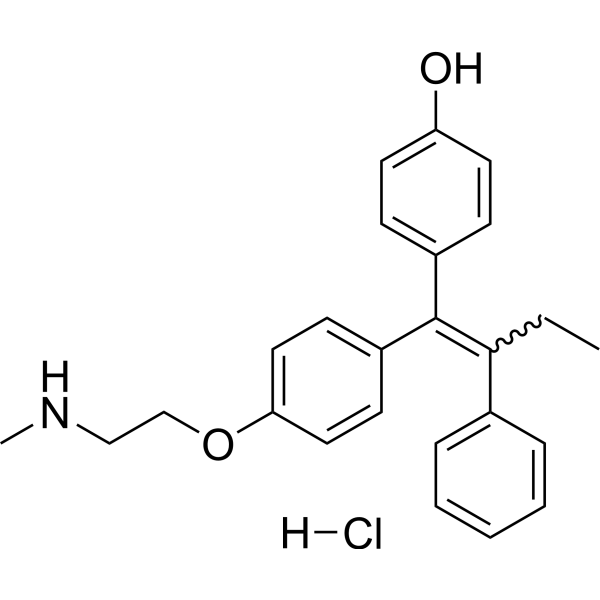
    Endoxifen hydrochloride
    1 Publications Verification

    Cytochrome P450 Estrogen Receptor/ERR Drug Metabolite Parasite Cancer
    Endoxifen hydrochloride is a key active metabolite of Tamoxifen (TAM) with higher affinity and specificity to estrogen receptor that also inhibits aromatase activity. Endoxifen hydrochloride has the potential for breast cancer study .
    Endoxifen hydrochloride
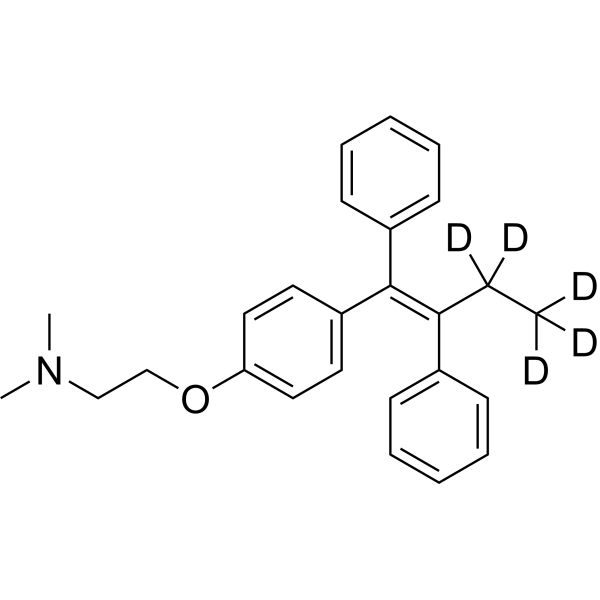
  • HY-13757AS

    ICI 47699-​d5; (Z)-tamoxifen-d5; trans-tamoxifen-d5

    Isotope-Labeled Compounds Estrogen Receptor/ERR HSP Autophagy Apoptosis Cancer
    Tamoxifen-d5 is a deuterium labeled Tamoxifen. Tamoxifen (ICI 47699) is an orally active, selective estrogen receptor modulator (SERM). Tamoxifen is a potent Hsp90 activator and enhances the Hsp90 molecular chaperone ATPase activity .
    Tamoxifen-​d5
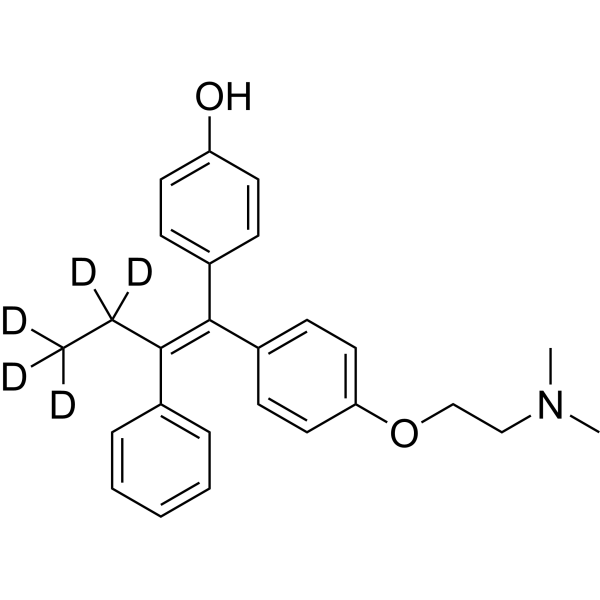
  • HY-132477S

    Isotope-Labeled Compounds Others
    (Z)-4-Hydroxy Tamoxifen-d5 is the deuterium labeled (Z)-4-Hydroxy Tamoxifen .
    (Z)-4-Hydroxy Tamoxifen-d5
  • HY-133010

    Drug Metabolite Cancer
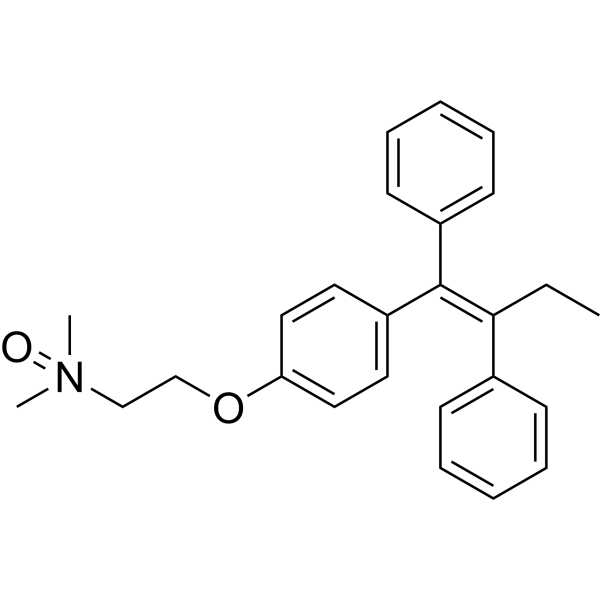
    Tamoxifen N-oxide is a Tamoxifen (HY-13757A) metabolite .
    Tamoxifen N-oxide
  • HY-100910

    CaMK Cancer
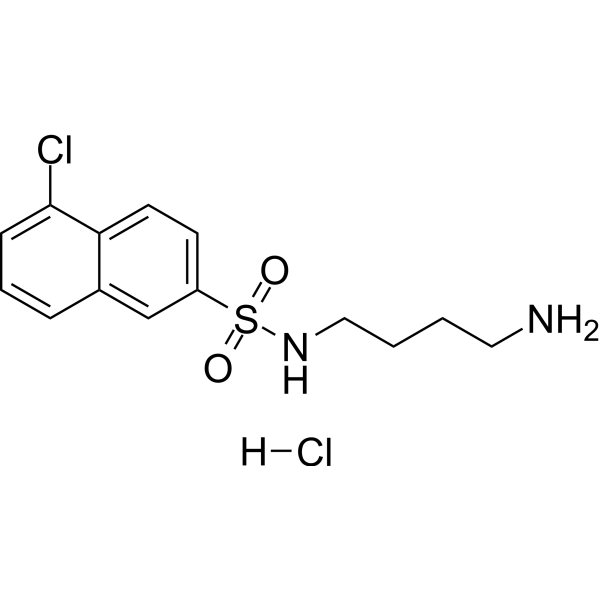
    W-13 hydrochloride is a calmodulin antagonist. W-13 hydrochloride can inhibit Tamoxifen (HY-13757A)-resistant human breast cancer cell growth .
    W-13 hydrochloride
  • HY-121149
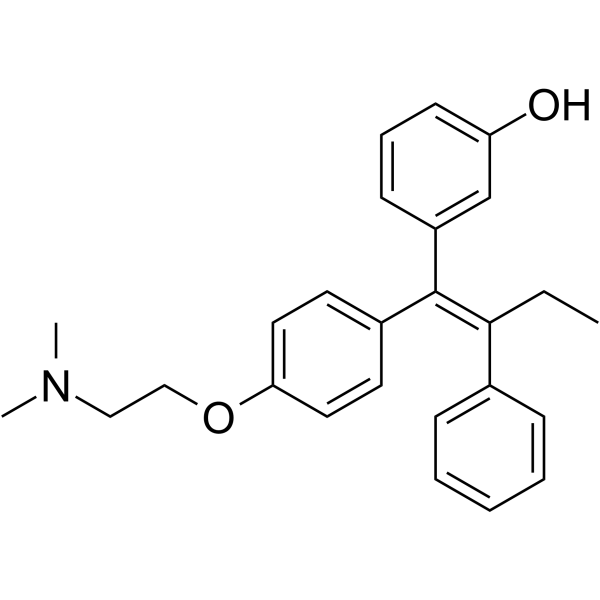
    Droloxifene
    1 Publications Verification

    3-Hydroxytamoxifen

    Estrogen Receptor/ERR Apoptosis Cancer
    Droloxifene, a Tamoxifen derivative, is an orally active and selective estrogen receptor modulator. Droloxifene shows antiestrogenic and anti-implantation effects. Droloxifene induces p53 expression and apoptosis in MCF-7 cells. Droloxifene prevents bone loss in ovariectomized rats .
    Droloxifene
  • HY-126222

    Apoptosis Mitochondrial Metabolism Cancer
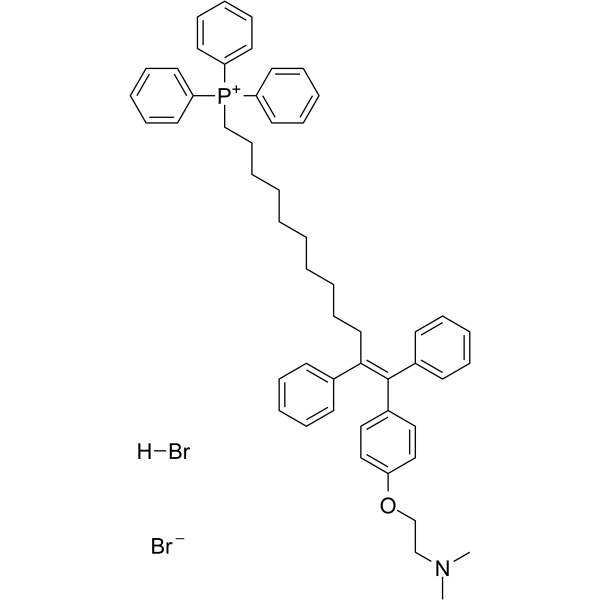
    MitoTam bromide, hydrobromide, a Tamoxifen derivative , is an electron transport chain (ETC) inhibitor. MitoTam bromide, hydrobromide reduces mitochondrial membrane potential in senescent cells and affects mitochondrial morphology . MitoTam bromide, hydrobromide is an effective anticancer agent, suppresses respiratory complexes (CI-respiration) and disrupts respiratory supercomplexes (SCs) formation in breast cancer cells .
    MitoTam bromide, hydrobromide
  • HY-W014937

    Drug Intermediate Cancer
    4-Hydroxybenzophenone is an intermediate for synthesizing Tamoxifen (HY-13757A) and can be used as a source for chemical synthesis, UV protection products, and UV-absorbing ingredients in cosmetics .
    4-Hydroxybenzophenone
  • HY-110201

    Estrogen Receptor/ERR Cancer
    Estrogen receptor modulator 1 (compound 18) is an orally active and selective estrogen receptor modulator (SERM), with a pIC50 of 0.46. Estrogen receptor modulator 1 induces regression of Tamoxifen-resistant, hormone independent xenograft tumors .
    Estrogen receptor modulator 1
  • HY-149295

    PROTACs Estrogen Receptor/ERR Apoptosis Cancer
    PROTAC ERα Degrader-4 (Compound ZD12) is a highly potent and selectivePROTAC ERα degrader (Ki: 5.08 μM). PROTAC ERα Degrader-4 contains OBHSAs, linker and E3 ligase ligands. PROTAC ERα Degrader-4 shows excellent cell inhibitory and ERα degradation activity against Tamoxifen-sensitive and -resistant ER + breast cancer (BC) cells and ERα-mutated BC cells. PROTAC ERα Degrader-4 can induce apoptosis and can be used for cancer research.
    PROTAC ERα Degrader-4
  • HY-124414

    Estrogen Receptor/ERR Drug Metabolite Cancer
    4'-Hydroxytamoxifen is a metabolite of Tamoxifen. 4'-Hydroxytamoxifen shows higher affinity for the ER than Tamoxifen. 4'-Hydroxytamoxifen induces a non-apoptotic cytotoxic effect in human endometrial adenocarcinoma cells .
    4'-Hydroxytamoxifen
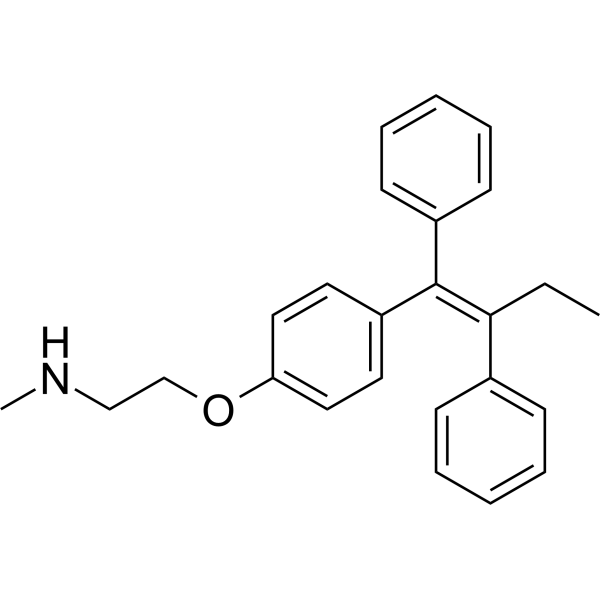
  • HY-129099

    PKC Estrogen Receptor/ERR Drug Metabolite Endogenous Metabolite Cancer
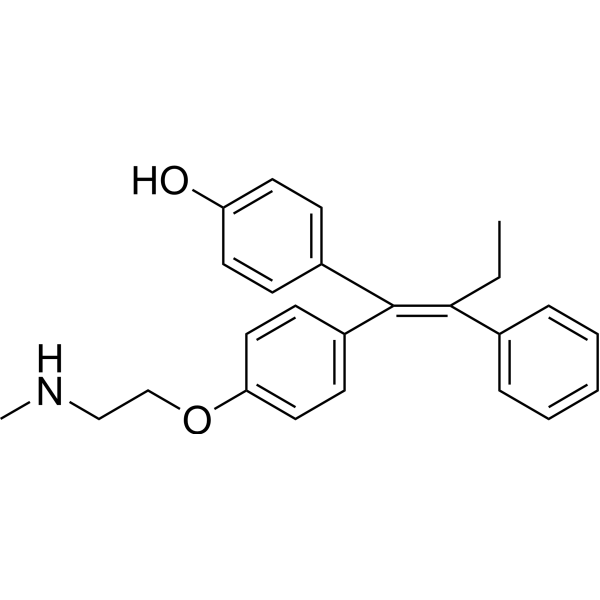
    N-Desmethyltamoxifen is the major metabolite of tamoxifen in humans. N-Desmethyltamoxifen, a poor antiestrogen, is a ten-fold more potent protein kinase C (PKC) inhibitor than Tamoxifen. N-Desmethyltamoxifen is also a potent regulator of ceramide metabolism in human AML cells, limiting ceramide glycosylation, hydrolysis, and sphingosine phosphorylation .
    N-Desmethyltamoxifen
  • HY-18719ES

    Cytochrome P450 Estrogen Receptor/ERR Drug Metabolite Parasite Cancer
    Endoxifen-d5 is the deuterium labeled Endoxifen. Endoxifen is a key active metabolite of tamoxifen (TAM) with higher affinity and specificity to estrogen receptor that also inhibits aromatase activity. Endoxifen has the potential for breast cancer study .
    Endoxifen-d5
  • HY-18719S

    Isotope-Labeled Compounds Cytochrome P450 Estrogen Receptor/ERR Drug Metabolite Parasite Cancer
    Endoxifen-d5 (Z-isomer) is the deuterium labeled Endoxifen (Z-isomer) (HY-18719). Endoxifen (Z-isomer) is an oral active Tamoxifen (HY-13757A) metabolite, inducing an anti-estrogenic effect in breast cancer cells expressing ERα. Endoxifen (Z-isomer) inhibits hERG. This effect is concentration-dependent, with an IC50 value of 1.6 μM .
    Endoxifen-d5 (Z-isomer)
  • HY-118517

    (E)-α-Hydroxy tamoxifen; α-OHTAM

    Drug Metabolite Cancer
    α-Hydroxytamoxifen is a metabolite of tamoxifen, reacts with DNA in the absence of metabolizing enzymes, and causes formation of DNA adducts .
    α-Hydroxytamoxifen
  • HY-P11197

    Gap Junction Protein Cancer
    ACT1 is a peptide that targets endogenous Cx43 by stabilizing its activity at gap junctions. ACT1 stabilizes gap junction intercellular communication in breast cancer cells. ACT1 enhances the activity of Tamoxifen (HY-13757A) and Lapatinib (HY-50898) in breast cancer. ACT1 can be used for breast cancer research .
    ACT1
  • HY-124414A

    Estrogen Receptor/ERR Drug Metabolite Cancer
    4'-Hydroxytamoxifen TFA is a salt form of a metabolite of Tamoxifen. 4'-Hydroxytamoxifen TFA has a higher affinity for ER than Tamoxifen. 4'-Hydroxytamoxifen TFA induces non-apoptotic cytotoxicity in human endometrial adenocarcinoma cells .
    4'-Hydroxytamoxifen TFA
  • HY-10830A

    Estrogen Receptor/ERR Cancer
    PBPE hydrochloride is a derivative of tamoxifen (HY-13757A) and a selective ligand for the anti-estrogen binding site (AEBS), the binding affinities (Ki) of PBPE hydrochloride and MBPE to AEBS are 8.79 and 17.57 nM, respectively .
    PBPE hydrochloride
  • HY-N2342R

    PCC1 (Standard)

    Reference Standards Apoptosis Cancer
    Procyanidin C1 (Standard) is the analytical standard of Procyanidin C1. This product is intended for research and analytical applications. Procyanidin C1 (PCC1), a natural polyphenol with oral activity, causes DNA damage, cell cycle arrest and induces apoptosis. Procyanidin C1 decreases the level of Bcl-2, but enhances BAX, caspase 3 and 9 expression in cancer cells. Procyanidin C1 shows senotherapeutic activity and increases lifespan in mice .
    Procyanidin C1 (Standard)
  • HY-13757S

    ICI 46474-d3 hydrochloride; (Z)-tamoxifen-d3 hydrochloride; trans-tamoxifen-d3 hydrochloride

    Apoptosis Estrogen Receptor/ERR Autophagy HSP Isotope-Labeled Compounds Cancer
    Tamoxifen-d3 hydrochloride is deuterated labeled Tamoxifen (Citrate) (HY-13757). Tamoxifen Citrate (ICI 46474) is an orally active, selective estrogen receptor modulator (SERM) which blocks estrogen action in breast cells and can activate estrogen activity in other cells, such as bone, liver, and uterine cells [3].Tamoxifen Citrate is a potent Hsp90 activator and enhances the Hsp90 molecular chaperone ATPase activity. Tamoxifen Citrate also potent inhibits infectious EBOV Zaire and Marburg (MARV) with IC50 of 0.1 μM and 1.8 μM, respectively . Tamoxifen Citrate activates autophagy and induces apoptosis [4].Tamoxifen Citrate also can induce gene knockout of CreER(T2) transgenic mouse .
    Tamoxifen-d3 hydrochloride
  • HY-13757R

    ICI 46474 (Standard); (Z)-tamoxifen Citrate (Standard); trans-tamoxifen Citrate (Standard)

    Reference Standards Estrogen Receptor/ERR HSP Autophagy Apoptosis Cancer
    Tamoxifen (Citrate) (Standard) is the analytical standard of Tamoxifen (Citrate). This product is intended for research and analytical applications. Tamoxifen Citrate (ICI 46474) is an orally active, selective estrogen receptor modulator (SERM) which blocks estrogen action in breast cells and can activate estrogen activity in other cells, such as bone, liver, and uterine cells [3].Tamoxifen Citrate is a potent Hsp90 activator and enhances the Hsp90 molecular chaperone ATPase activity. Tamoxifen Citrate also potent inhibits infectious EBOV Zaire and Marburg (MARV) with IC50 of 0.1 μM and 1.8 μM, respectively . Tamoxifen Citrate activates autophagy and induces apoptosis [4].Tamoxifen Citrate also can induce gene knockout of CreER(T2) transgenic mouse .
    Tamoxifen Citrate (Standard)
  • HY-132626S

    Isotope-Labeled Compounds Others
    N-Desmethyl Tamoxifen-d5 is the deuterium labeled N-Desmethyl Tamoxifen .
    N-Desmethyl Tamoxifen-d5
  • HY-168869

    PROTACs Estrogen Receptor/ERR Cancer
    Tamoxifen-PEG-Clozapine is an estrogen receptor α (ERα) PROTAC degrader. Tamoxifen-PEG-Clozapine degrades ERα via a ubiquitin-proteasome system that uses the ubiquitin protein ligase E3 component N-recognin 5. Tamoxifen-PEG-Clozapine can be used for the research of cancer . (Pink: ERα inhibitor (HY-W271653); Black: linker (HY-168870); Blue: CRBN Ligand (HY-G0021))
    Tamoxifen-PEG-Clozapine
  • HY-122411

    EGIS 5650; GYKI-13504

    Estrogen Receptor/ERR Cancer
    Panomifene (EGIS 5650) is a tamoxifen (HY-13757A) analog with an antiestrogenic activity. Panomifene can be used in the research of breast cancer .
    Panomifene
  • HY-126222B

    MitoTax iodide, hydriodide

    Mitochondrial Metabolism Apoptosis Cancer
    (E/Z)-MitoTam (iodide, hydriodide) (MitoTam (iodide, hydriodide)) is the E/Z mixture of MitoTam iodide, hydriodide. MitoTam iodide, hydriodide is a Tamoxifen derivative , an electron transport chain (ETC) inhibitor, spreduces mitochondrial membrane potential in senescent cells and affects mitochondrial morphology . MitoTam iodide, hydriodide is an effective anticancer agent, suppresses respiratory complexes (CI-respiration) and disrupts respiratory supercomplexes (SCs) formation in breast cancer cells . MitoTam iodide, hydriodide causes apoptosis .
    (E/Z)-MitoTam iodide, hydriodide
  • HY-106751

    Progesterone Receptor Endocrinology
    Anordrin is a contraceptive agent. Anordrin exhibits estrogenicites and can induce decrease in serum progesterone levels in rat models. Anordrin inhibits endometrial epithelial cell mitosis and NAFLD induced by Tamoxifen (HY-13757A) in mouse uterus and liver as an anti-estrogenic and estrogenic agent .
    Anordrin
  • HY-16950R

    (Z)-4-Hydroxytamoxifen (Standard); trans-4-Hydroxytamoxifen (Standard); (Z)-Afimoxifene (Standard)

    Estrogen Receptor/ERR Reference Standards Cancer
    4-Hydroxytamoxifen (Standard) is the analytical standard of 4-Hydroxytamoxifen. This product is intended for research and analytical applications. 4-Hydroxytamoxifen ((Z)-4-Hydroxytamoxifen) is an orally active, selective estrogen receptor modulator (SERM). 4-Hydroxytamoxifen ((Z)-4-Hydroxytamoxifen) is also the active metabolic form of Tamoxifen (HY-13757A) in vivo and can be used to induce gene knockout in transgenic mice expressing CreER .
    4-Hydroxytamoxifen (Standard)
  • HY-13757AS1

    ICI 47699-d3; (Z)-tamoxifen-d3; trans-tamoxifen-d3

    Isotope-Labeled Compounds Estrogen Receptor/ERR Apoptosis Autophagy HSP Cancer
    Tamoxifen-d3 is the deuterium labeled Tamoxifen . Tamoxifen (ICI 47699) is an orally active, selective estrogen receptor modulator (SERM) which blocks estrogen action in breast cells and can activate estrogen activity in other cells, such as bone, liver, and uterine cells . Tamoxifen is a potent Hsp90 activator and enhances the Hsp90 molecular chaperone ATPase activity. Tamoxifen also potent inhibits infectious EBOV Zaire and Marburg (MARV) with IC50 of 0.1 μM and 1.8 μM, respectively . Tamoxifen activates autophagy and induces apoptosis . Tamoxifen also can induce gene knockout of CreER(T2) transgenic mouse .
    Tamoxifen-d3
  • HY-16950AR

    Afimoxifene (Standard); 4-OHT (Standard)

    Reference Standards Estrogen Receptor/ERR Endogenous Metabolite Cancer
    (E/Z)-4-Hydroxytamoxifen (Standard) is the analytical standard of (E/Z)-4-Hydroxytamoxifen. This product is intended for research and analytical applications. (E/Z)-4-Hydroxytamoxifen (Afimoxifene) is a racemic compound of (Z)-4-Hydroxytamoxifen and (E)-4-Hydroxytamoxifen isomers. (E/Z)-4-Hydroxytamoxifen is a selective estrogen receptor modulator with mixed estrogenic and antiestrogenic activity, which is also an active metabolite of Tamoxifen (HY-13757A). (E/Z)-4-Hydroxytamoxifen is an agonist of the G protein-coupled estrogen receptor (GPER) with relatively low affinity (100-1000 nM). (E/Z)-4-Hydroxytamoxifen is promising for research of cyclical mastalgia, such as breast pain, tenderness, and nodularity .
    (E/Z)-4-Hydroxytamoxifen (Standard)
  • HY-W778408

    ICI 47699-13C6; (Z)-tamoxifen-13C6; trans-tamoxifen-13C6

    Isotope-Labeled Compounds Apoptosis Autophagy HSP Estrogen Receptor/ERR Endocrinology
    Tamoxifen- 13C6 (ICI 47699- 13C6) is the 13C-labeled Tamoxifen (HY-13757A). Tamoxifen (ICI 47699) is an orally active, selective estrogen receptor modulator (SERM) which blocks estrogen action in breast cells and can activate estrogen activity in other cells, such as bone, liver, and uterine cells . Tamoxifen is a potent Hsp90 activator and enhances the Hsp90 molecular chaperone ATPase activity. Tamoxifen also potent inhibits infectious EBOV Zaire and Marburg (MARV) with IC50 of 0.1 μM and 1.8 μM, respectively . Tamoxifen activates autophagy and induces apoptosis . Tamoxifen also can induce gene knockout of CreER transgenic mouse .
    Tamoxifen-13C6
  • HY-169382

    Melatonin Receptor Cancer
    Melatonin-Tamoxifen Conjugate (compound 16c) is an anticancer drug conjugate composed of Melatonin (HY-B0075) and Tamoxifen (HY-13757A), which is a potent antagonist of ERα (IC50=863 nM). Melatonin-Tamoxifen Conjugate binds to MLT receptor (Ki=3.1 nM) and promotes β-arrestin (EC50=914 nM) and ERK activation (EC50=98 nM) in cells expressing hMT1 receptor. Melatonin-Tamoxifen Conjugate against several common cell lines MCF-7, MDA-MB-231, and HT-1080 with IC50s of 6.8 μM, 6.4 μM, and 1.7 μM, respectively.
    Melatonin-Tamoxifen Conjugate
  • HY-132647S

    Isotope-Labeled Compounds Others
    N-Desmethyl-4’-hydroxy Tamoxifen-d3 (E/Z Mixture) is the deuterium labeled N-Desmethyl-4’-hydroxy Tamoxifen (E/Z Mixture) .
    N-Desmethyl-4’-hydroxy Tamoxifen-d3 (E/Z Mixture)
  • HY-145823

    EGFR Cancer
    EGFR-IN-42 (Compound 17b) is a potent inhibitor of EGFR with single-digit nanomolar activity. EGFR-IN-42 connects tamoxifen or endoxifen with the EGFR-inhibitor gefitinib via a covalent linkage. EGFR-IN-42 retains both ER antagonist activity and EGFR inhibition. EGFR-IN-42 has superior anti-cancer activity .
    EGFR-IN-42
  • HY-145824

    EGFR Cancer
    EGFR-IN-43 (Compound 17c) is a potent inhibitor of EGFR with single-digit nanomolar activity. EGFR-IN-43 connects tamoxifen or endoxifen with the EGFR-inhibitor gefitinib via a covalent linkage. EGFR-IN-43 retains both ER antagonist activity and EGFR inhibition. EGFR-IN-43 has superior anti-cancer activity .
    EGFR-IN-43
  • HY-124414S

    Estrogen Receptor/ERR Drug Metabolite Isotope-Labeled Compounds Others
    4'-Hydroxytamoxifen-d6 (contains up to 10% E isomer) is deuterium labeled 4'-Hydroxy Tamoxifen. 4'-Hydroxytamoxifen is a metabolite of Tamoxifen.
    4'-Hydroxytamoxifen-d6 (contains up to 10% E isomer)
  • HY-124414R

    Reference Standards Estrogen Receptor/ERR Drug Metabolite Cancer
    4'-Hydroxytamoxifen (Standard) is the analytical standard of 4'-Hydroxytamoxifen. This product is intended for research and analytical applications. 4'-Hydroxytamoxifen is a metabolite of Tamoxifen. 4'-Hydroxytamoxifen shows higher affinity for the ER than Tamoxifen. 4'-Hydroxytamoxifen induces a non-apoptotic cytotoxic effect in human endometrial adenocarcinoma cells .
    4'-Hydroxytamoxifen (Standard)

Inquiry Online

Your information is safe with us. * Required Fields.

Salutation


Country or Region *

Applicant Name *


Organization Name *

Department *


Email Address *


Product Name *

Cat. No.


Requested quantity *

Phone Number *


Remarks

Inquiry Online

Inquiry Information

Product Name:
Cat. No.:
Quantity:
MCE Japan Authorized Agent:

