
13 Results for "

terminal regulation

" in MedChemExpress (MCE) Product Catalog:
Products (13)

13 Results for "terminal regulation" in MCE Product Catalog:

4
4 Cited Publications
Cat. No.: HY-120821
CAS No.: 1839524-44-5
Purity:  99.17%
Synonyms: ES2
Target:  

Exosomes

Research Areas:  

Others

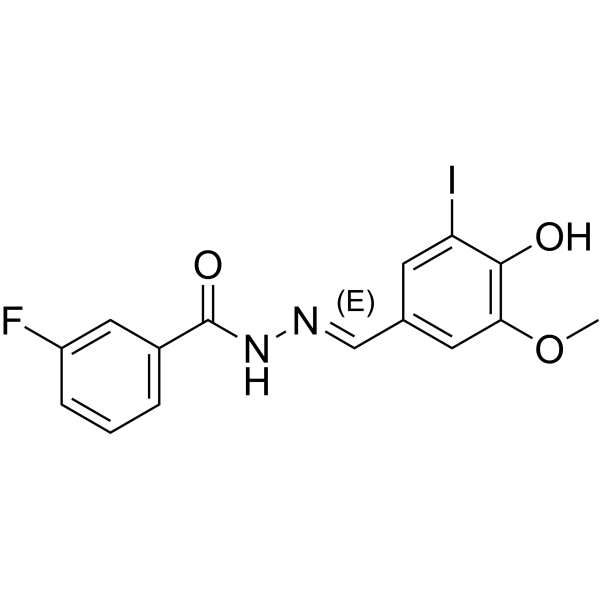
Endosidin-2 (ES2) is a selective inhibitor targeting the conserved exosome subunit EXO70. Endosidin-2 binds to the C-terminal domain of EXO70, inhibiting exocytosis and endosomal recycling, while promoting vacuolar trafficking in plant cells. Endosidin-2 interferes with the EXO70-mediated vesicle-to-plasma membrane anchoring process, leading to abnormal aggregation of auxin transporters (such as PIN2) in the cytoplasm and redirected to vacuolar degradation, while causing abnormal Golgi structure (such as cup-shaped or ring-shaped vesicles cisternae formation). Endosidin-2 can inhibit exocytosis in plant and mammalian cells and is mainly used to study the dynamic regulation of membrane trafficking (such as polar growth, vesicle sorting) .
loading...
    loading...
2
2 Cited Publications
Cat. No.: HY-P2537
CAS No.: 229961-08-4
Research Areas:  

Others

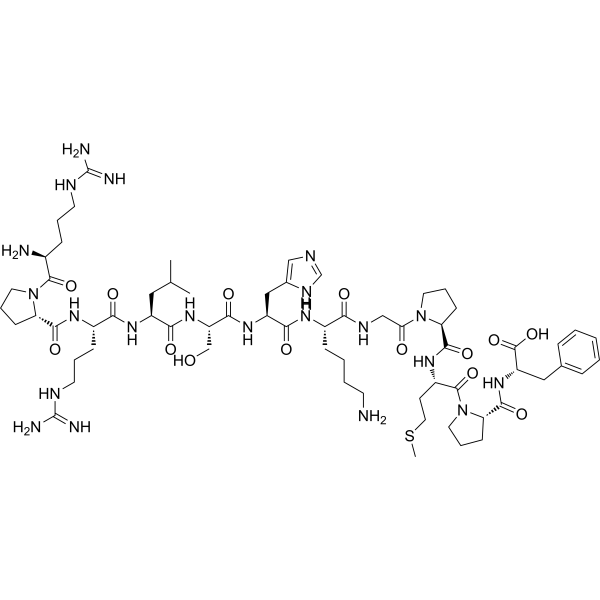
Apelin-12 is one of the most potent C-terminal fragments of the polypeptide that possesses a high affinity to orphan receptor APJ receptor. Apelin-12 is involved in the regulation of body fluid homeostasis and in the central control of feeding. Apelin-12 blocks HIV-1 entry through APJ receptor. Apelin-12 exerts neuroprotective effect .
loading...
    loading...
1
1 Cited Publications
Cat. No.: HY-B0344
CAS No.: 155-41-9
Synonyms: (-)-Scopolamine methyl bromide; Hyoscine methyl bromide
Target:  

mAChR

Research Areas:  

Neurological Disease

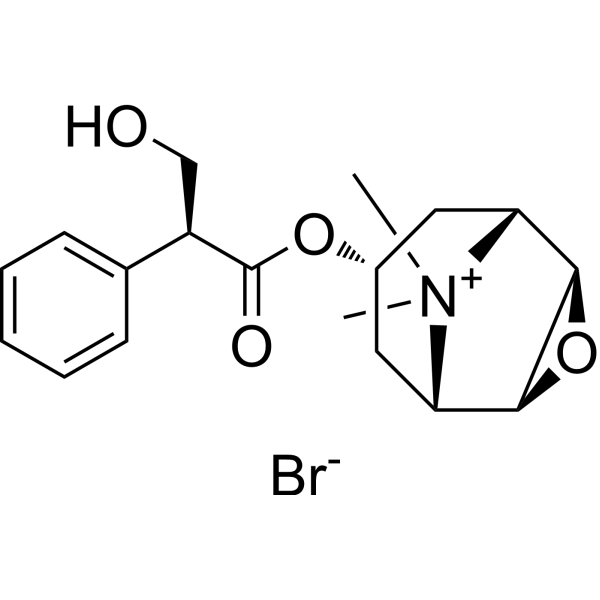
Methscopolamine bromide ((-)-Scopolamine methyl bromide; Hyoscine methyl bromide) is a peripherally acting muscarinic receptor (mAChR) antagonist that cannot cross the blood-brain barrier. Methscopolamine bromide blocks the muscarinic negative feedback regulation of acetylcholine release from striatal cholinergic terminals, thereby increasing acetylcholine release in the striatum of freely moving rats. Methscopolamine bromide does not induce motor excitation in freely moving rats, nor does it alter the duration of ethanol-induced loss of righting reflex in mice. Methscopolamine bromide fails to antagonize the arecoline-mediated reduction in the duration of ethanol-induced loss of righting reflex in mice .
loading...
    loading...
1
1 Cited Publications
Cat. No.: HY-P0312
CAS No.: 2918768-02-0
Target:  

c-Myc

Research Areas:  

Cancer

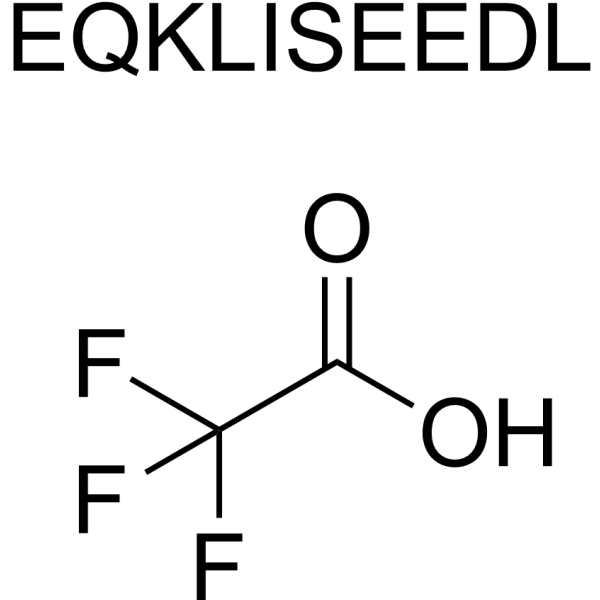
c-Myc Peptide (TFA) is a synthetic peptide corresponding to the C-terminal amino acids (410-419) of human c-myc protein, and participates in regulation of growth-related gene transcription.
loading...
    loading...
Cat. No.: HY-E70199
CAS No.: 9054-63-1
Synonyms: APN/CD13
Target:  

Aminopeptidase

Research Areas:  

Cardiovascular Disease

Aminopeptidase N (rat) (APN/CD13) is a Zn 2+-dependent membrane-bound exopeptidase that preferentially degrades proteins and peptides with N-terminal neutral amino acids. Aminopeptidase N (rat) is inhibited by angiotensin IV and participates in the regulation of angiotensin IV half-life in the rat striatum .
loading...
    loading...
Cat. No.: HY-P1958
CAS No.: 667899-73-2
Research Areas:  

Others

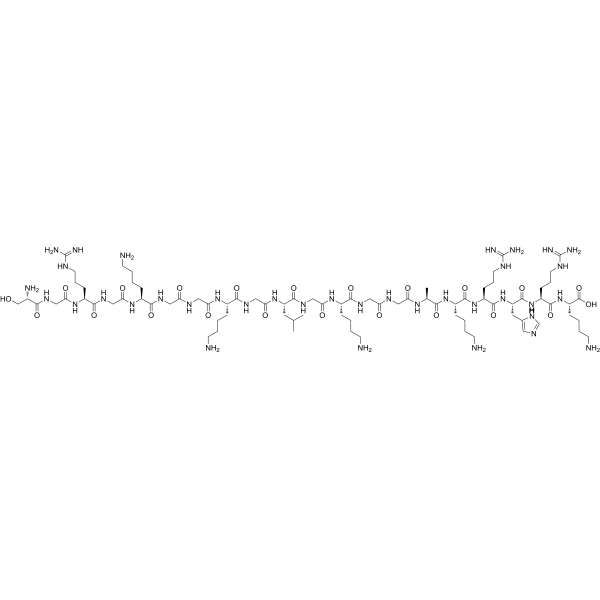
Histone H4 (2-21) is a substrate peptide derived from the N-terminal region of histone H4, which serves as an acyl acceptor for lysine acetyltransferases of the MYST family (KAT). Histone H4 (2-21) participates in enzymatic reactions together with acyl-coenzyme A (acyl-CoA, and undergoes lysine acetylation and propionylation modifications catalyzed by KATs such as MOF. The apparent Km of Histone H4 (2-21) for MOF is 788.8 μM, while in the picNuA4 catalytic system, the Km and Kd values of the H4 peptide are 192 μM and 251 μM, respectively. Histone H4 (2-21) can be used in studies related to histone post-translational modifications, epigenetic regulation, and lysine acylation .
loading...
    loading...
Cat. No.: HY-P4130
CAS No.: 1180485-56-6
Target:  

Inhibitory Antibodies

Research Areas:  

Infection

MPS-Gαi2 is a membrane-permeable inhibitory peptide corresponding to the C-terminal sequence of Gαi2 involved in receptor interaction. MPS-Gαi2 blocks Hep I-induced binding of Gαi2 to LRP, thereby inhibiting pertussis toxin-sensitive Gαi2 signaling and focal adhesion disassembly mediated by thrombospondin/Hep I-calreticulin-LRP. MPS-Gαi2 can be used in studies on G protein signaling and cell adhesion regulation .
loading...
    loading...
Cat. No.: HY-P4827
CAS No.: 521986-14-1
Target:  

PTHR

Research Areas:  

Metabolic Disease

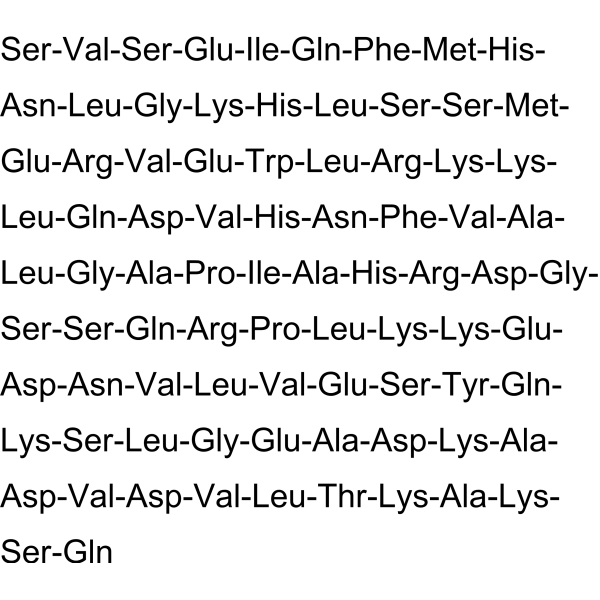
pTH (1-84) dog is a biologically active full-length canine parathyroid hormone, as well as an agonist of PTHR. pTH (1-84) dog can be detected by the "intact" PTH (W-PTH) assay, thus effectively distinguishing inactive C-terminal fragments. In terms of metabolic regulation, it rapidly and persistently stimulates hepatic glucose release, hepatic alanine uptake, and alanine-based gluconeogenesis in conscious fasted dogs, and causes a secondary increase in circulating canine insulin levels due to enhanced glucose release. However, high doses of pTH (1-84) (dog) may induce adverse reactions such as hypercalcemia in dogs. Based on the above characteristics, this hormone can be widely used in studies related to canine hyperadrenocorticism (HAC) .
loading...
    loading...
Cat. No.: HY-125564
CAS No.: 19245-85-3
Acetyltrialanine is a peptide containing three amino acid residues in which the N-terminal amino acid is acetylated and used as a substrate for Nα-acetyl alanine aminopeptidase in order to study the activity and properties of the enzyme. Acetyltrialanine can be used in the study of protein degradation and N-terminal regulation .
loading...
    loading...
Cat. No.: HY-161948
CAS No.: 3055534-10-3
Target:  

Ferroptosis

Research Areas:  

Cancer

Ferroptosis inducer-4 (Compound 5) is a ferroptosis (Ferroptosis) inducer with a structure featuring terminal double bonds introduced at the sn-2 position of phospholipids. Ferroptosis inducer-4 exhibits significant cytotoxicity towards HT-1080 cells, with an IC50 of 18 μM. This cytotoxic mechanism involves the generation of lipid peroxides and oxidative damage to the cell membrane triggered by the terminal double bonds. Ferroptosis inducer-4 can be used for research on ferroptosis regulation .
loading...
    loading...
Cat. No.: HY-168337
CAS No.: 3052985-32-4
Target:  

JNK Pyruvate Kinase

SET-171 is a JNK (c-Jun N-terminal kinase) inhibitor that exhibits significant anticancer activity and lipid metabolism regulation by inhibiting liver pyruvate kinase (PKL) expression. In anticancer studies, SET-171 shows IC50 values of 8.82 μM and 2.97 μM against HepG2 and Huh7 cell lines, respectively, indicating high cytotoxicity. Additionally, in non-alcoholic fatty liver disease (NAFLD)-related studies, SET-171 significantly reduces triacylglycerol (TAG) levels and inhibits the expression of steatosis-related proteins. SET-171 holds promise for research on hepatocellular carcinoma (HCC) and NAFLD .
loading...
    loading...
Cat. No.: HY-E71537
Research Areas:  

Others

2-Heptyl-3-hydroxy-4(1H)-quinolone synthase (EC 1.14.13.182) from the bacterium Pseudomonas aeruginosa catalyses the terminal step in biosynthesis of the signal molecule 2-heptyl-3,4-dihydroxyquinoline that plays a role in regulation of virulence genes.
loading...
    loading...
Cat. No.: HY-185053
Target:  

mRNA

Research Areas:  

Infection

Cas12a mRNA is the messenger RNA encoding Cas12a. Cas12a mRNA undergoes translation-dependent degradation triggered by the anti-CRISPR protein AcrVA2, which recognizes and binds to the N-terminal polypeptide of Cas12a. AcrVA2-triggered Cas12a mRNA degradation is independent of promoter or codon sequences, requiring only the first 100 amino acids of the Cas12a polypeptide. The down-regulation of Cas12a mRNA by AcrVA2 inhibits the biosynthesis of Cas12a .
loading...
    loading...
  • 1

