6 Results for "

testosterone biosynthesis

" in MedChemExpress (MCE) Product Catalog:
Products (6)

6 Results for "testosterone biosynthesis" in MCE Product Catalog:

2
2 Cited Publications
Referencia número: HY-W269593
No. CAS: 335-76-2
Synonyms: PFDA
Áreas de investigación:  

Metabolic Disease

Perfluorodecanoic acid (PFDA) is an orally active perfluoroalkyl substance. Perfluorodecanoic acid causes dysfunction of rat fetal Leydig cells via endoplasmic reticulum stress-mediated changes in lipid components. Perfluorodecanoic acid reduces testosterone biosynthesis in rat R2C Leydig cells by inducing endoplasmic reticulum stress. Perfluorodecanoic acid can be used in studies related to fetal Leydig cell dysfunction .
loading...
    loading...
Referencia número: HY-123247
No. CAS: 112959-07-6
Target:  

Cytochrome P450

Áreas de investigación:  

Endocrinology

LY113174 is an orally active aromatase inhibitor (IC50 = 24 nM). LY113174 blocks testosterone induced increase in uterine weight in rat, and inhibits ovarian estrogen biosynthesis .
loading...
    loading...
Referencia número: HY-157161
Target:  

11β-HSD

Áreas de investigación:  

Cancer

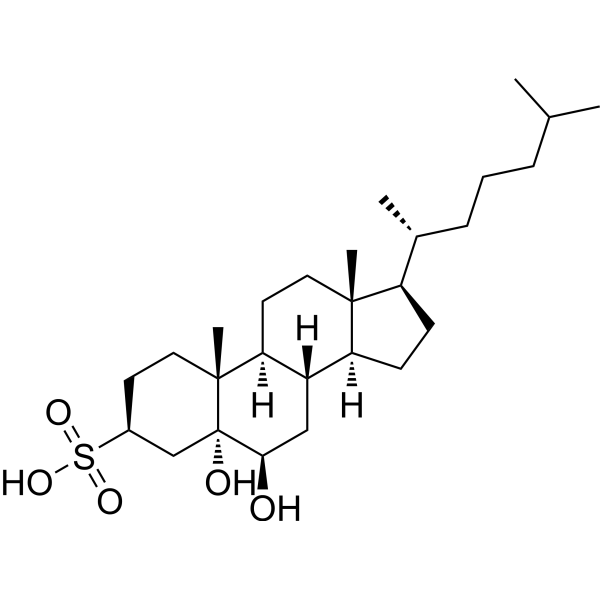
11β-HSD2-IN-1 (compound CDSN) is a potent inhibitor of 11β-HSD2, inhibiting the metabolism of Cholestane-3β,5α,6β-triol (CT) in cells by 11β-HSD2 into the tumor promoter, carcinosterone. 11β-HSD2-IN-1 inhibits testosterone biosynthesis, thereby inhibiting MCF-7 cell proliferation. 11β-HSD2-IN-1 has immune activity and antiviral infection effects .
loading...
    loading...
Referencia número: HY-155666
No. CAS: 2952994-34-0
Áreas de investigación:  

Cancer

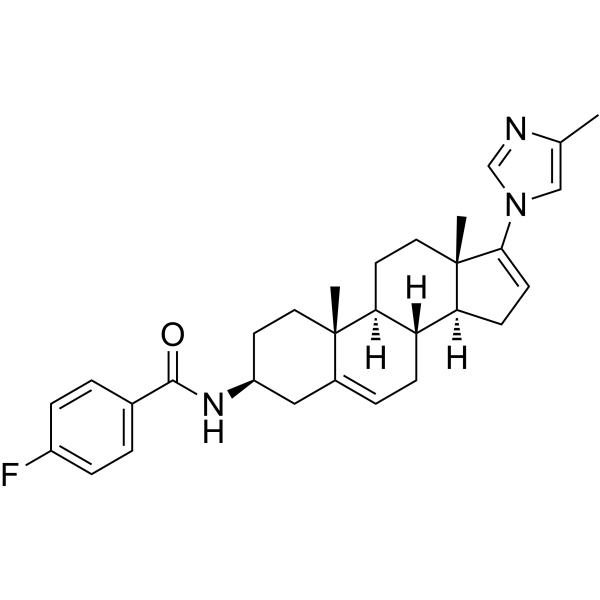
YXG‑158 is an orally active, anticancer bifunctional steroid analog with both androgen receptor (AR) degradation activity (DC50 = 1.28 μM) and CYP17A1 inhibitory activity (IC50 = 100 nM). YXG-158 reduces AR protein and mRNA expression via proteasome-dependent degradation, degrades AR-V7, and inhibits CYP17A1 enzymatic activity to block androgen biosynthesis. YXG-158 inhibits the activities of ERα and ERβ, as well as cancer cell proliferation. YXG-158 decreases the weight of androgen-sensitive organs in castrated rats treated with testosterone propionate, downregulates AR protein, reduces PSA levels, and suppresses tumor growth in Enzalutamide (HY-70002)-sensitive and -resistant xenograft models. YXG-158 can be used in prostate cancer-related research .
loading...
    loading...
Referencia número: HY-W490804
No. CAS: 2971-36-0
Áreas de investigación:  

Metabolic Disease

HPTE is the active in vivo metabolite of Methoxychlor (HY-B1873), and acts as an inhibitor of 3β‑HSD and 17β‑HSD3. HPTE binds to the substrate-binding pocket of 3β‑HSD in a non-competitive manner, but competitively occupies the coenzyme NAD +-binding site, thereby inhibiting the conversion of pregnenolone to progesterone. HPTE binds to the androstenedione-binding pocket (the substrate pocket) of 17β‑HSD3 in a non-competitive manner, and competitively occupies the coenzyme NADPH-binding site, thus blocking the conversion of androstenedione to testosterone. HPTE interferes with androgen biosynthesis in Leydig cells by inhibiting the activities of these two key steroidogenic enzymes. HPTE can be used in studies related to androgen biosynthesis .
loading...
    loading...
Referencia número: HY-141764S
No. CAS: 1794780-53-2
Áreas de investigación:  

Metabolic Disease

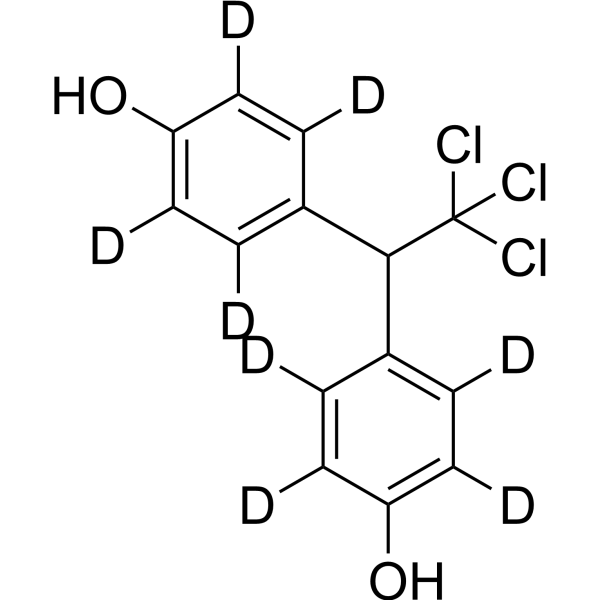
2,2-Bis(p-hydroxyphenyl)-1,1,1-trichloroethane-d8 is the deuterated-labeled HPTE (HY-W490804). HPTE is the active in vivo metabolite of Methoxychlor (HY-B1873), and acts as an inhibitor of 3β‑HSD and 17β‑HSD3. HPTE binds to the substrate-binding pocket of 3β‑HSD in a non-competitive manner, but competitively occupies the coenzyme NAD +-binding site, thereby inhibiting the conversion of pregnenolone to progesterone. HPTE binds to the androstenedione-binding pocket (the substrate pocket) of 17β‑HSD3 in a non-competitive manner, and competitively occupies the coenzyme NADPH-binding site, thus blocking the conversion of androstenedione to testosterone. HPTE interferes with androgen biosynthesis in Leydig cells by inhibiting the activities of these two key steroidogenic enzymes. HPTE can be used in studies related to androgen biosynthesis .
loading...
    loading...

