



sEH inhibitor-7

Based on 1 Customer Validation
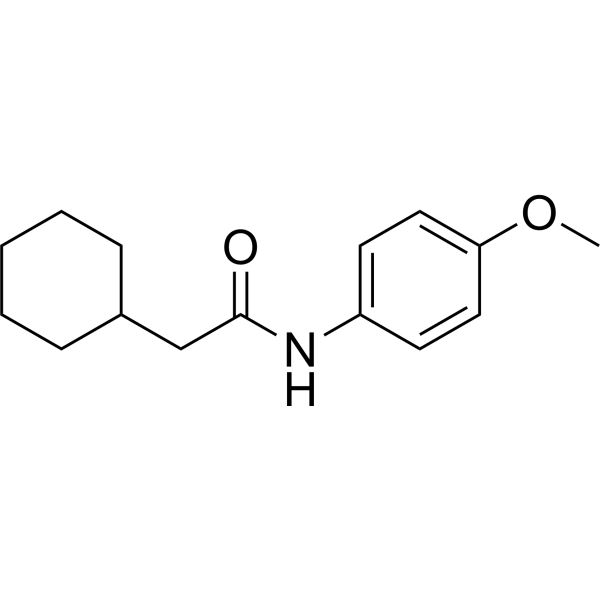
sEH inhibitor-7 is an sEH inhibitor, with an IC50 of 0.15 μM against mouse sEH and an IC50 of 6.2 μM against h-sEH. sEH inhibitor-7 can be used in studies related to hypertension and inflammation.
For research use only. We do not sell to patients.
- Purity : 99.50%
- CAS No.: 340221-20-7
- Formula: C15H21NO2
- Molecular Weight:247.33
-
Storage:Powder -20°C, 3 years ; In solvent -80°C, 6 months , -20°C, 1 month

To place orders, for customer services and technical support, please contact: MedChemExpress USA
Tel: 609-228-6898 E-mail: [email protected] [email protected]


-
 Biological Activity
-
Chemical Information
-
Solvent & Solubility
- Protocols
- Purity & Documentation
- References
-
 Help & FAQs


-
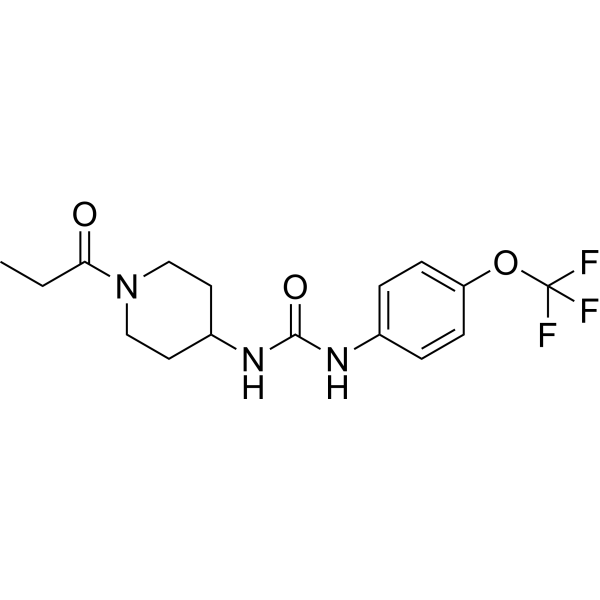
HY-101294
TPPUsEH Inhibitor -
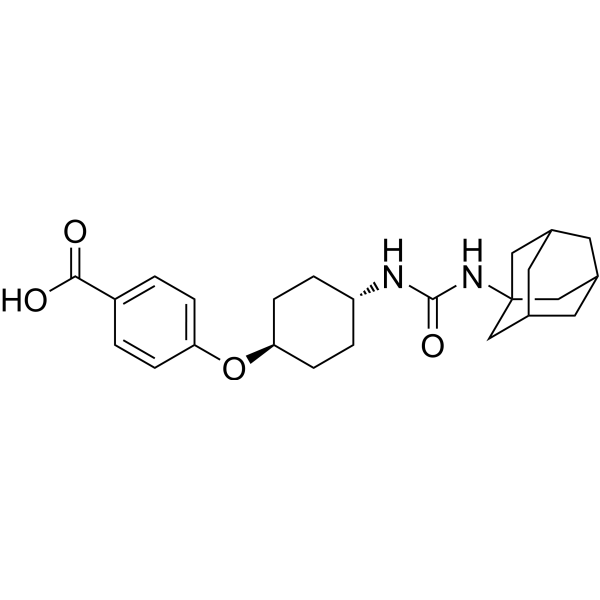
HY-113974
trans-AUCBsEH Inhibitor -
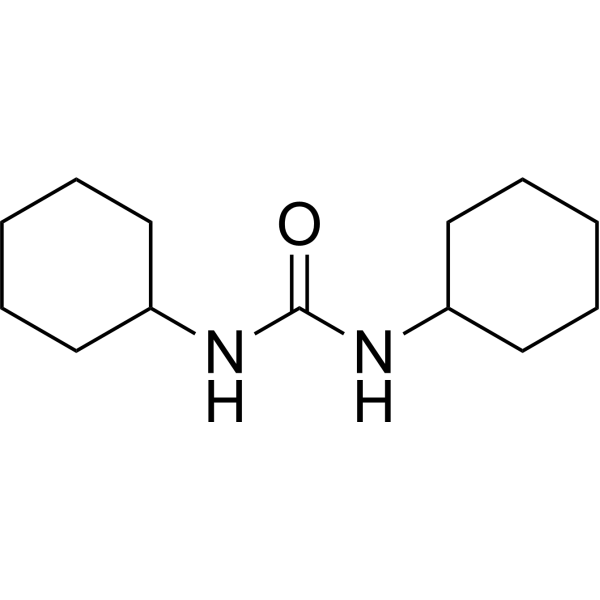
HY-W013989R
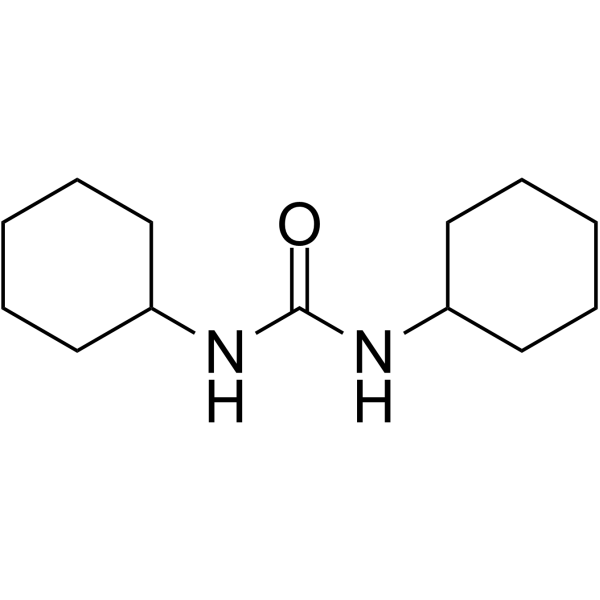
1,3-Dicyclohexylurea (Standard)sEH Inhibitor -
HY-W013989
1,3-DicyclohexylureasEH Inhibitor -
HY-124063
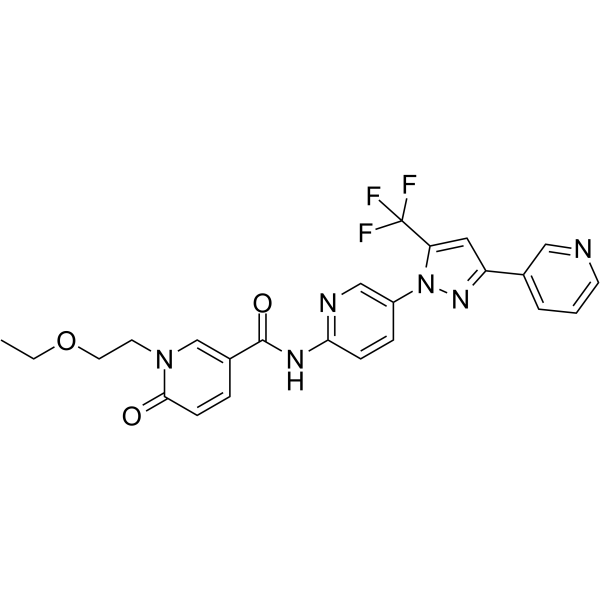
BI-1935sEH Inhibitor -
HY-135795
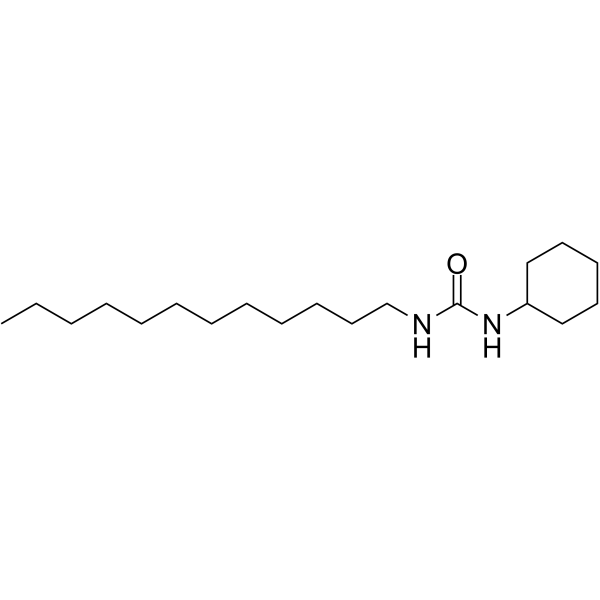
1-Cyclohexyl-3-dodecyl ureasEH Inhibitor -
HY-135653A
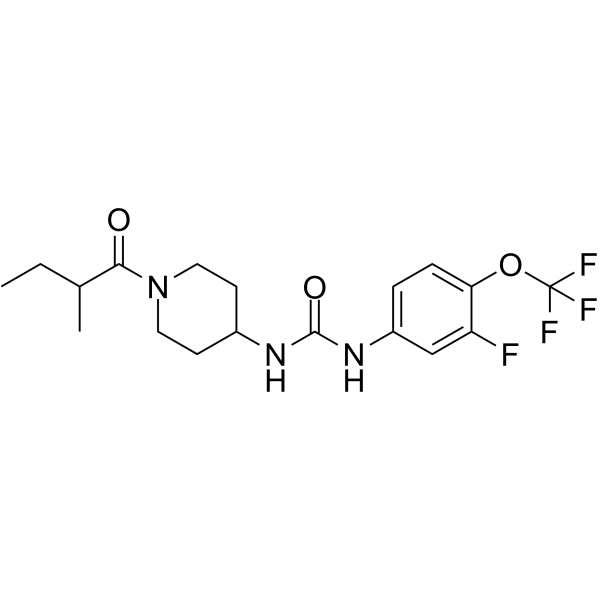
(Rac)-EC5026sEH Inhibitor -
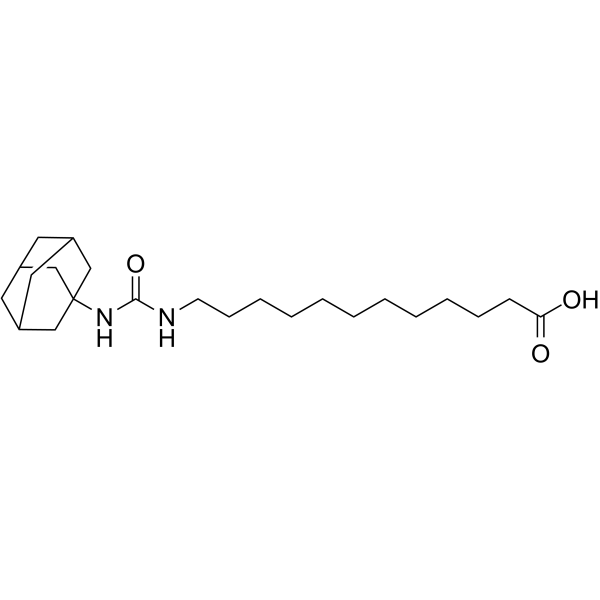
HY-108570
AUDAsEH Inhibitor -
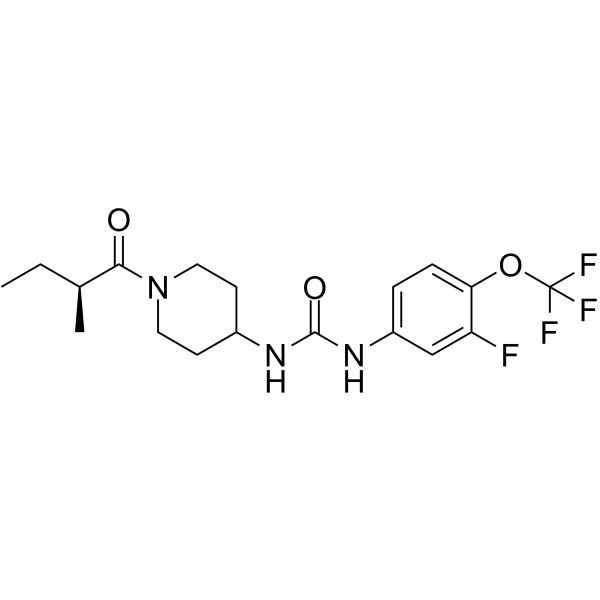
HY-135653
EC5026sEH Inhibitor -
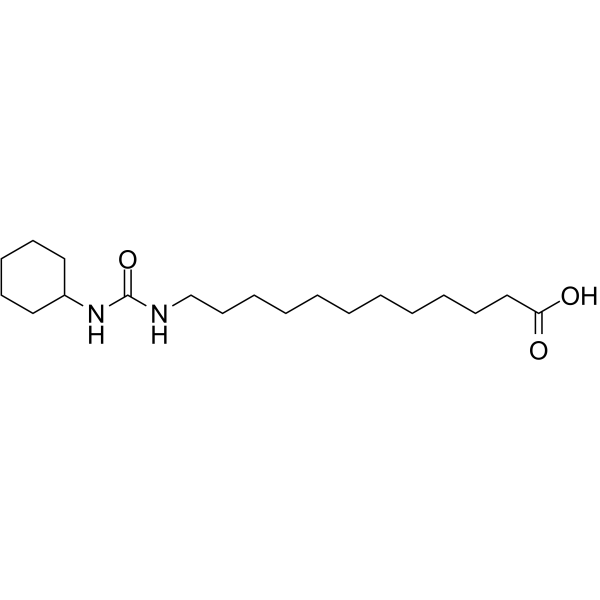
HY-121538
CUDAsEH Inhibitor -
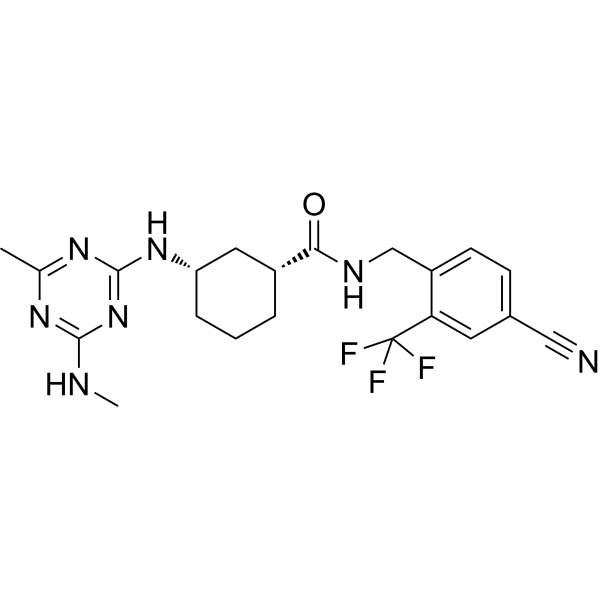
HY-19644
GSK2256294AsEH Inhibitor -
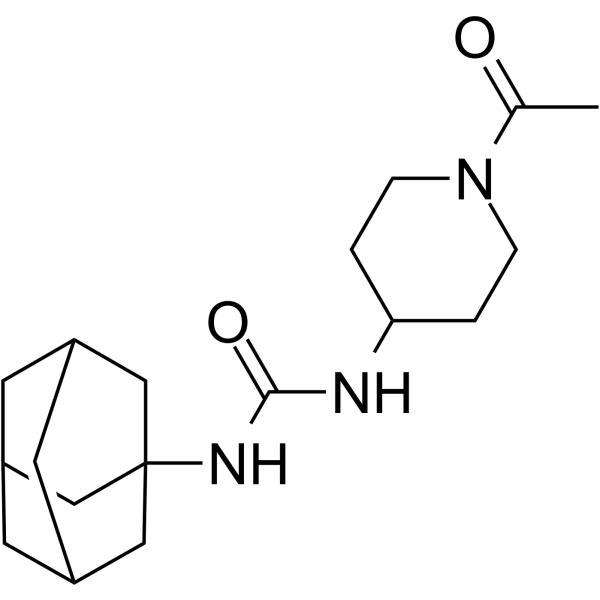
HY-111151
AR-9281s-EH Inhibitor


Biological Activity
Description
IC50 & Target
[1]|
sEH 0.15-6.2 μM (IC50) |
In Vitro
sEH inhibitor-7 (Compound c-2) (5 min) potently inhibits recombinant murine sEH with an IC50 of 0.15 μM and recombinant human sEH with an IC50 of 6.2 μM[1].
MedChemExpress (MCE) has not independently confirmed the accuracy of these methods. They are for reference only. Further protocols information, click here.


Chemical Information
-
CAS No. 340221-20-7
-
Appearance Solid
-
Molecular Weight 247.33
-
Formula C15H21NO2
-
Color Off-white to light yellow
-
SMILES
O=C(NC1=CC=C(OC)C=C1)CC2CCCCC2
-
Shipping
Room temperature in continental US; may vary elsewhere.
-
Storage
Powder -20°C 3 years In solvent -80°C 6 months -20°C 1 month


Solvent & Solubility
In Vitro:
DMSO : 100 mg/mL (404.32 mM; ultrasonic and warming and heat to 60°C; Hygroscopic DMSO has a significant impact on the solubility of product, please use newly opened DMSO)
Please refer to the solubility information to select the appropriate solvent. Once prepared, please aliquot and store the solution to prevent product inactivation from repeated freeze-thaw cycles.
Storage method and period of stock solution: -80°C, 6 months; -20°C, 1 month. When stored at -80°C, please use it within 6 months. When stored at -20°C, please use it within 1 month.
Please refer to the solubility information to select the appropriate solvent. Once prepared, please aliquot and store the solution to prevent product inactivation from repeated freeze-thaw cycles.
Storage method and period of stock solution: -80°C, 6 months; -20°C, 1 month. When stored at -80°C, please use it within 6 months. When stored at -20°C, please use it within 1 month.
Concentration (start) × Volume (start) = Concentration (final) × Volume (final)

Protocols
-
Cell Cytotoxicity Assay
Cytotoxicity assays are usually based on the assessment of cell membrane damage, which can also be indirectly detected by measuring cell viability. Detection methods include MTT assay, CKK-8 assay, LDH assay and ATP assay, etc.
-
Research Protocol for Cardiovascular Diseases
Cardiovascular disease can be modeled as maladaptive cardiac remodeling, where ischemic injury or pressure overload activates inflammatory signaling, fibroblast activation, extracellular-matrix deposition, cardiomyocyte hypertrophy, vascular remodeling, and progressive ventricular dysfunction. The TGF-β/SMAD axis is a central profibrotic pathway after myocardial injury and pressure overload, while innate immune and cytokine pathways regulate leukocyte recruitment, scar formation, and adverse remodeling. Key unresolved questions include which inflammatory signals are reparative versus harmful, when fibrosis is protective versus maladaptive, and whether pathway inhibition improves function without weakening necessary infarct healing or compensatory remodeling.
-
Research Protocol for Inflammation-related Diseases
The NLRP3 inflammasome is a cytosolic innate immune signaling platform that integrates priming signals and danger-signal activation to promote caspase-1 activation, maturation of IL-1β and IL-18, and gasdermin D-mediated pyroptotic cell death. The core experimental logic is to determine whether inflammatory disease phenotypes are driven by increased NLRP3 expression, ASC-containing inflammasome assembly, caspase-1 cleavage, GSDMD cleavage, and extracellular release of IL-1β/IL-18 rather than by nonspecific cell injury alone. The pathway is strongly linked to inflammation-related disease phenotypes because monosodium urate crystals activate NALP3/NLRP3 inflammasome signaling in gout-like crystal inflammation, cholesterol crystals activate NLRP3 inflammasomes in atherogenesis models, and DSS-induced intestinal inflammation has been reported to involve NLRP3 inflammasome activity. However, experimental colitis studies also show context-dependent protective effects of NLRP3 inflammasome co


Purity & Documentation
-
Data Sheet (268 KB)
-
SDS (393 KB)
- English - EN (393 KB)
- Français - FR (393 KB)
- Deutsch - DE (393 KB)
- Norwegian - NO (393 KB)
- Español - ES (393 KB)
- Swedish - SV (393 KB)
- Italian - IT (393 KB)
- Korean - KR (393 KB)
- Portuguese - PT (393 KB)
-
Handling Instructions (2659 KB)
References


Complete Stock Solution Preparation Table
Please refer to the solubility information to select the appropriate solvent. Once prepared, please aliquot and store the solution to prevent product inactivation from repeated freeze-thaw cycles.
Storage method and period of stock solution: -80°C, 6 months; -20°C, 1 month. When stored at -80°C, please use it within 6 months. When stored at -20°C, please use it within 1 month.
| Optional Solvent | Concentration Solvent Mass | 1 mg | 5 mg | 10 mg | 25 mg |
|---|---|---|---|---|---|
| DMSO | 1 mM | 4.0432 mL | 20.2159 mL | 40.4318 mL | 101.0795 mL |
| 5 mM | 0.8086 mL | 4.0432 mL | 8.0864 mL | 20.2159 mL | |
| 10 mM | 0.4043 mL | 2.0216 mL | 4.0432 mL | 10.1080 mL | |
| 15 mM | 0.2695 mL | 1.3477 mL | 2.6955 mL | 6.7386 mL | |
| 20 mM | 0.2022 mL | 1.0108 mL | 2.0216 mL | 5.0540 mL | |
| 25 mM | 0.1617 mL | 0.8086 mL | 1.6173 mL | 4.0432 mL | |
| 30 mM | 0.1348 mL | 0.6739 mL | 1.3477 mL | 3.3693 mL | |
| 40 mM | 0.1011 mL | 0.5054 mL | 1.0108 mL | 2.5270 mL | |
| 50 mM | 0.0809 mL | 0.4043 mL | 0.8086 mL | 2.0216 mL | |
| 60 mM | 0.0674 mL | 0.3369 mL | 0.6739 mL | 1.6847 mL | |
| 80 mM | 0.0505 mL | 0.2527 mL | 0.5054 mL | 1.2635 mL | |
| 100 mM | 0.0404 mL | 0.2022 mL | 0.4043 mL | 1.0108 mL |


sEH inhibitor-7 Related Classifications
HY-148136 Related Classifications
 Powered by Bioz