



Tiopronin-d3

Based on 1 Customer Validation
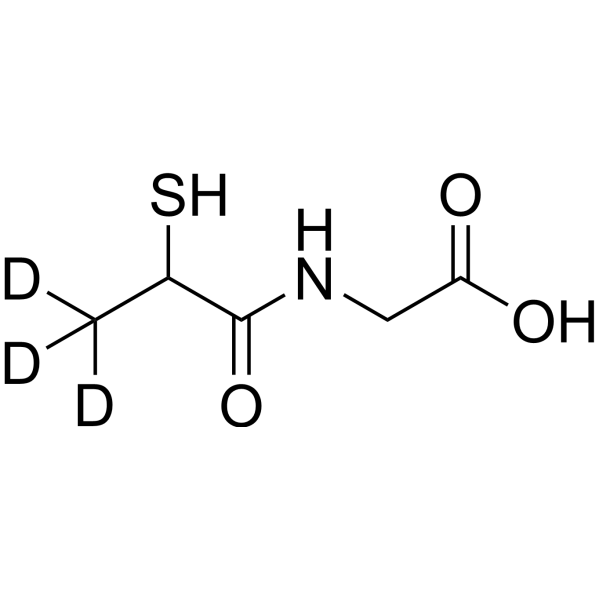
Tiopronin-d3 is the deuterium labeled Tiopronin. Tiopronin is a diffusible antioxidant, an antidote to heavy metal poisoning and a radioprotective agent. Tiopronin can control the rate of cystine precipitation and excretion and has the potential for cystinuria, rheumatoid arthritis and hepatic disorders.
For research use only. We do not sell to patients.
- Purity : 99.42%
- CAS No.: 1189700-74-0
- Formula: C5H6D3NO3S
- Molecular Weight:166.21
-
Storage:Powder -20°C, 3 years ; In solvent -80°C, 6 months , -20°C, 1 month

To place orders, for customer services and technical support, please contact: MedChemExpress USA
Tel: 609-228-6898 E-mail: [email protected] [email protected]


-
 Biological Activity
-
Chemical Information
- Protocols
- Purity & Documentation
- References
-
 Help & FAQs


-
HY-N6947
LuteinAnti-inflammatory Agent -
HY-132389S
Vitamin K3-d8Stable Isotope -
HY-N0523S
Gallic acid-d2Stable Isotope -
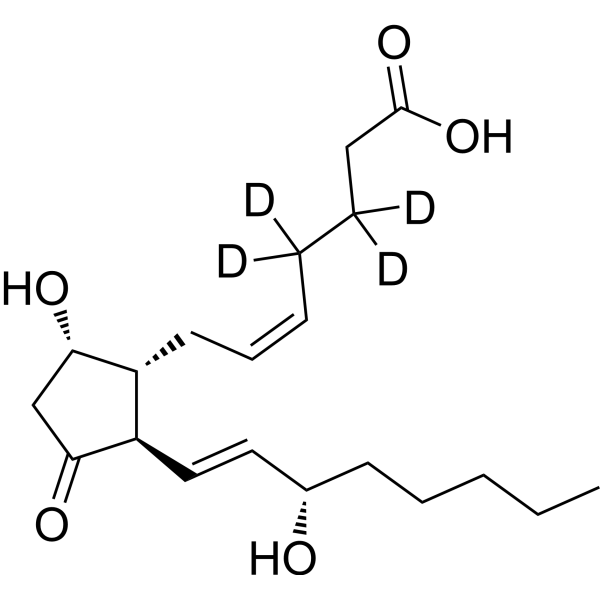
HY-101988S
Prostaglandin D2-d4Stable Isotope -
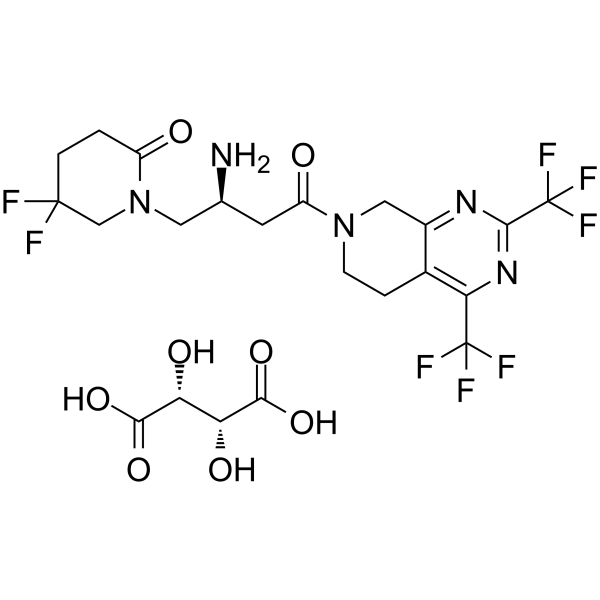
HY-14892A
Gemigliptin tartrateDPP-4 Inhibitor -
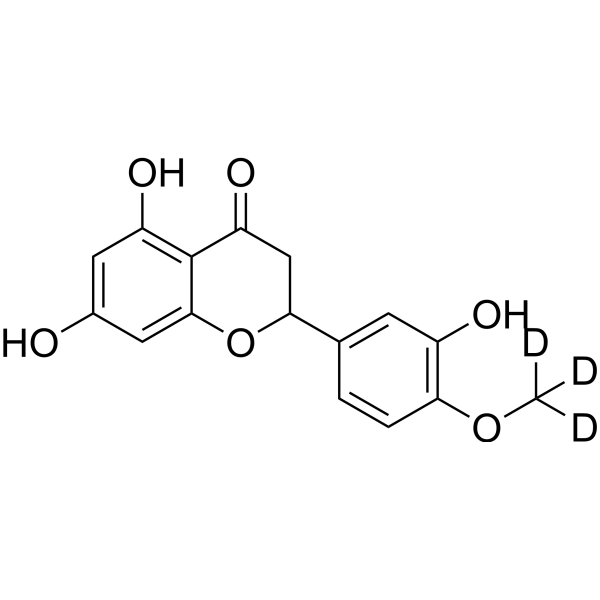
HY-N0168AS
(Rac)-Hesperetin-d3Stable Isotope -
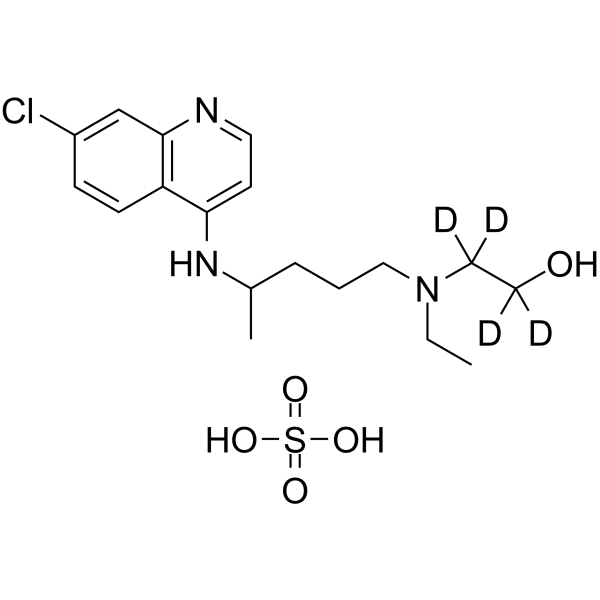
HY-B1370S
Hydroxychloroquine-d4 sulfateStable Isotope -
HY-G0007S
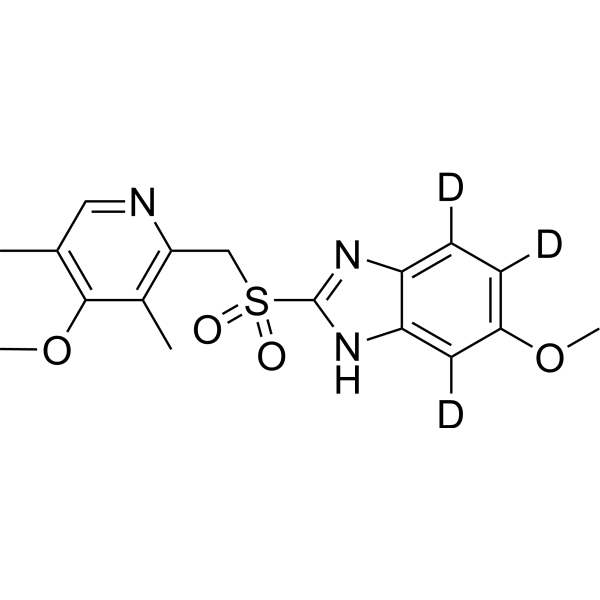
Omeprazole sulfone-d3Stable Isotope


Biological Activity
Description
In Vitro
Stable heavy isotopes of hydrogen, carbon, and other elements have been incorporated into drug molecules, largely as tracers for quantitation during the drug development process. Deuteration has gained attention because of its potential to affect the pharmacokinetic and metabolic profiles of drugs[1].
MedChemExpress (MCE) has not independently confirmed the accuracy of these methods. They are for reference only. Further protocols information, click here.
Application
1. This compound can be used as a tracer
2. This compound can be used as an internal standard for quantitative analysis by NMR, GC-MS, or LC-MS.


Chemical Information
-
CAS No. 1189700-74-0
-
Unlabeled CAS 1953-02-2
-
Appearance Solid
-
Molecular Weight 166.21
-
Formula C5H6D3NO3S
-
Color White to off-white
-
SMILES
OC(CNC(C(S)C([2H])([2H])[2H])=O)=O
-
Shipping
Room temperature in continental US; may vary elsewhere.
-
Storage
Powder -20°C 3 years In solvent -80°C 6 months -20°C 1 month

Protocols
-
Collagen-Induced Arthritis
Collagen-induced arthritis (CIA) is an autoimmune murine model of rheumatoid arthritis in which immunization with type II collagen (CII) emulsified in an adjuvant induces a T cell- and autoantibody-driven inflammatory arthritis characterized by synovial hyperplasia, immune cell infiltration, and joint destruction. The model typically relies on genetically susceptible mouse strains (e. g. , DBA/1) and reproduces key features of human rheumatoid arthritis, including anti-collagen immune responses and progressive joint inflammation. Disease onset generally occurs within ~3-4 weeks after immunization, depending on antigen/adjuvant combinations and protocol variation. The immunopathology is driven by adaptive immune activation against CII, leading to systemic and local joint inflammation mediated by pro-inflammatory cytokines and effector immune cells, making CIA a standard preclinical platform for evaluating immunomodulatory and anti-arthritic interventions.


Purity & Documentation
-
Data Sheet (267 KB)
-
SDS (393 KB)
- English - EN (393 KB)
- Français - FR (393 KB)
- Deutsch - DE (393 KB)
- Norwegian - NO (393 KB)
- Español - ES (393 KB)
- Swedish - SV (393 KB)
- Italian - IT (393 KB)
- Korean - KR (393 KB)
- Portuguese - PT (393 KB)
-
Handling Instructions (2659 KB)
References
[1]. Russak EM, et al. Impact of Deuterium Substitution on the Pharmacokinetics of Pharmaceuticals. Ann Pharmacother. 2019;53(2):211-216. [Content Brief]
[2]. Pu Zhang, et al. Detection of tiopronin in body fluids and pharmaceutical products using red-emissive DNA-stabilized silver nanoclusters as a fluorescent probe. Mikrochim Acta. 2019 Aug 8;186(9):609. [Content Brief]
[3]. Soohwan Yum, et al. N-(2-Mercaptopropionyl)-glycine, a diffusible antioxidant, activates HIF-1 by inhibiting HIF prolyl hydroxylase-2: implication in amelioration of rat colitis by the antioxidant. Biochem Biophys Res Commun. 2014 Jan 17;443(3):1008-13. [Content Brief]

Calculators
Concentration (start) × Volume (start) = Concentration (final) × Volume (final)


Tiopronin-d3 Related Classifications
HY-B0373S1 Related Classifications
 Powered by Bioz