



Tripotassium phosphate

Based on 1 Customer Validation
Tripotassium phosphate is a Bactericid with bactericidal activity primarily against Gram-negative bacteria. Tripotassium phosphate reduces the population counts of Enterobacteriaceae and Campylobacter in poultry skin rinsates. Tripotassium phosphate fails to reduce the population count of Enterococcus in poultry skin rinsates.
For research use only. We do not sell to patients.
- Assay : 100.8%
- CAS No.: 7778-53-2
- Formula: K3PO4
- Molecular Weight:212.27
-
Storage:
Store at room temperature, keep dry and cool.
In solvent -80°C, 1 year , -20°C, 6 months


To place orders, for customer services and technical support, please contact: MedChemExpress USA
Tel: 609-228-6898 E-mail: [email protected] [email protected]


-
 Biological Activity
-
Chemical Information
-
Solvent & Solubility
- Protocols
- Purity & Documentation
- References
-
 Help & FAQs


-
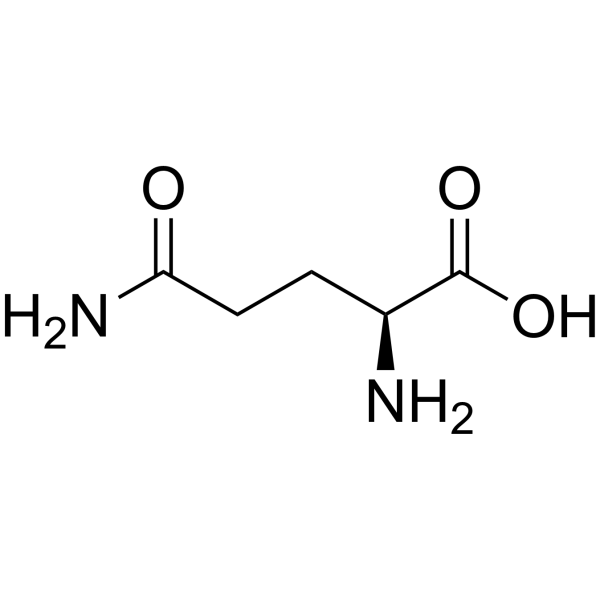
HY-N0390
L-GlutamineEndogenous Metabolite -
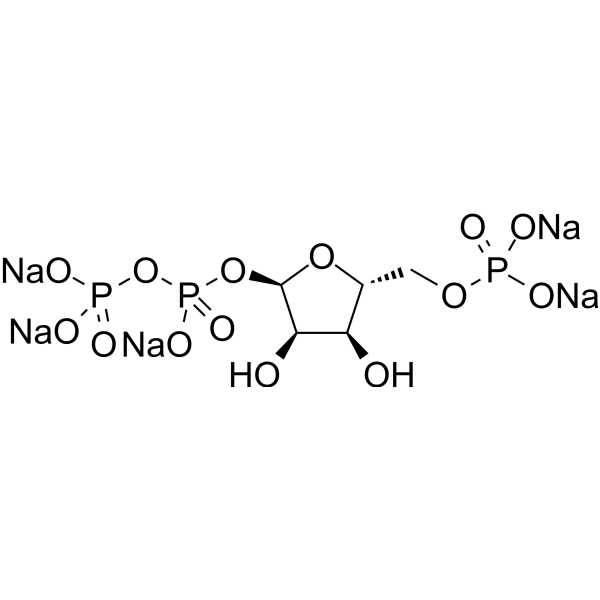
HY-W013046
Phosphoribosyl pyrophosphate pentasodiumCellular Metabolism Intermediate -
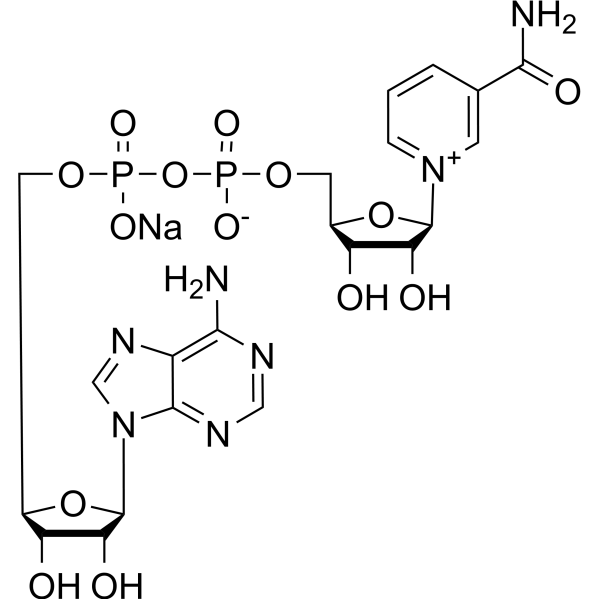
HY-B0445A
NAD sodiumCofactor, Macrophage M2 Polarization Inducer -
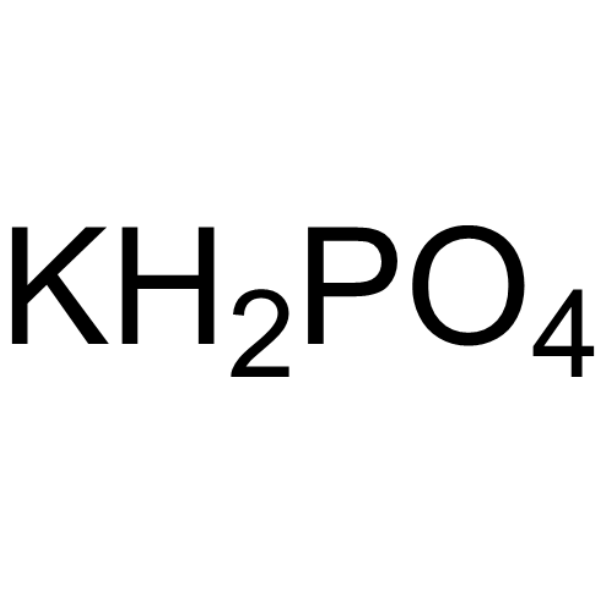
HY-Y0332B
Potassium dihydrogen phosphate, AR,99.5%Cell Culture Reagent -
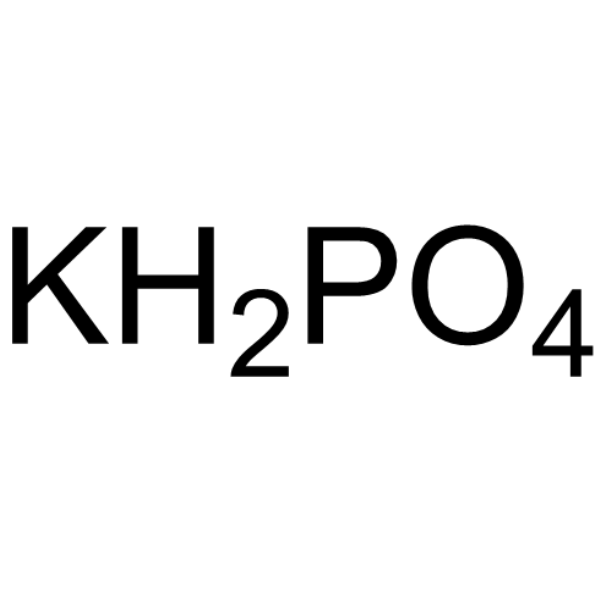
HY-Y0332K
Potassium dihydrogen phosphate, for cell cultureCell Culture Reagent -
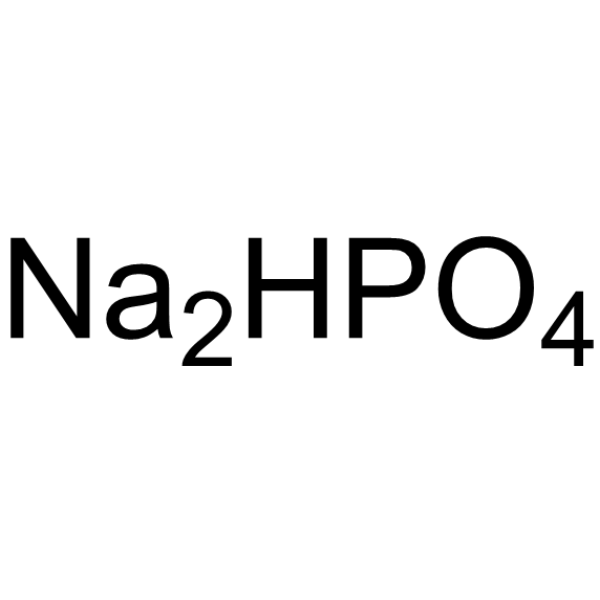
HY-Y0308E
Sodium phosphate dibasic, for cell cultureBuffer -
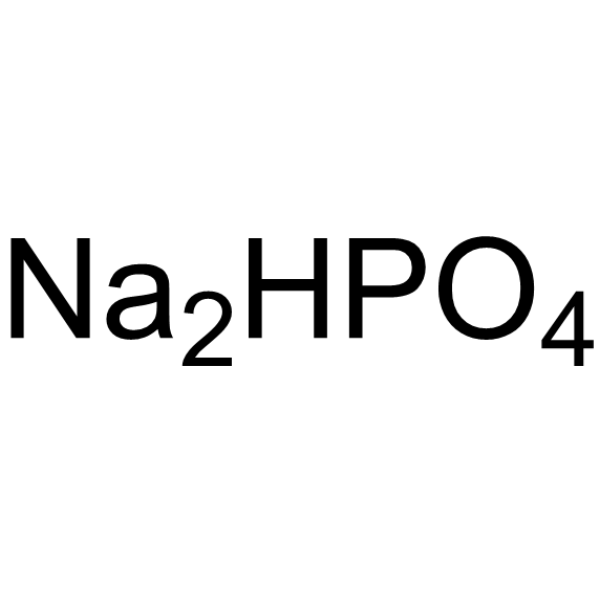
HY-Y0308
Disodium phosphatePharmaceutical Excipient -
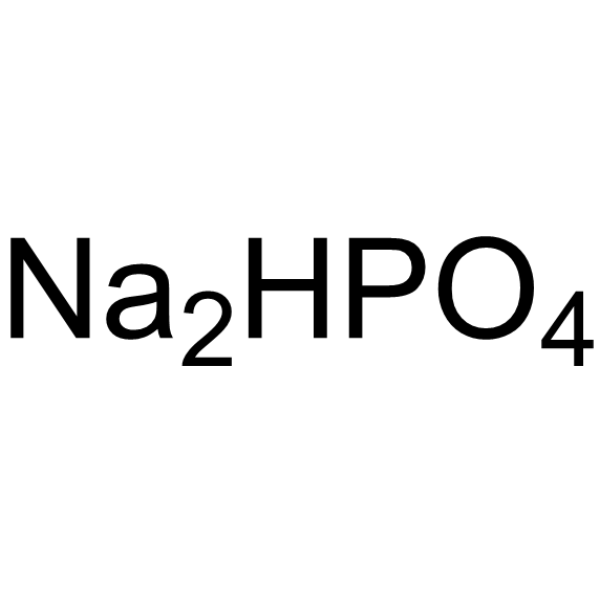
HY-Y0308H
Sodium phosphate dibasic, for molecular biologyInorganic salt -

HY-D0833
Tricalcium phosphateCalcium-phosphorus Compound -
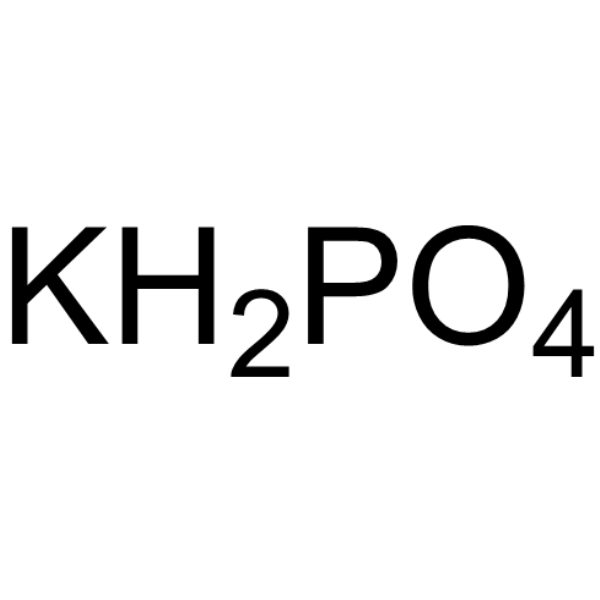
HY-Y0332G
Potassium dihydrogen phosphate, for molecular biologyCell Culture Reagent -
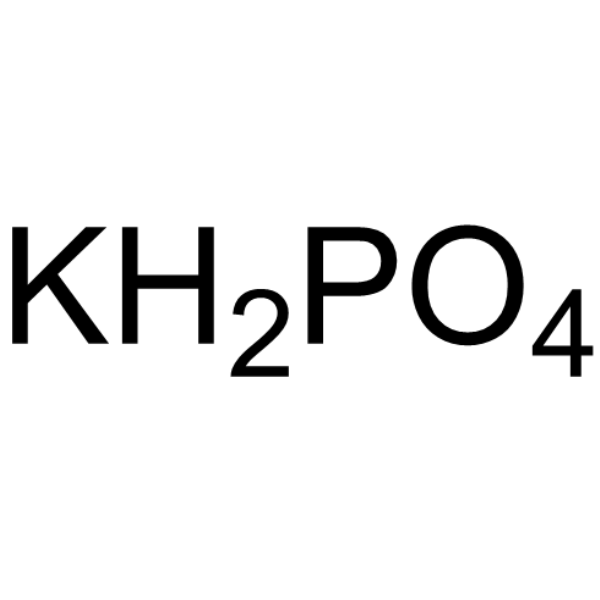
HY-Y0332J
Potassium dihydrogen phosphate, United States Pharmacopeia (USP) Reference StandardPotassium Dihydrogen Phosphate -
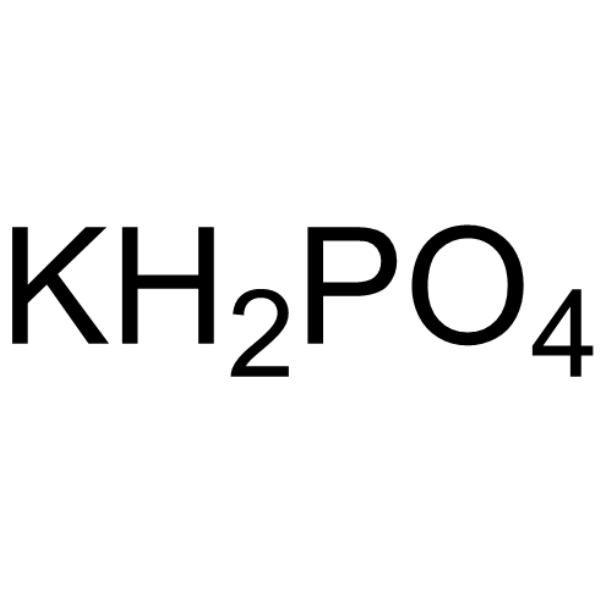
HY-Y0332L
Potassium dihydrogen phosphate, meets analytical specification of Ph. Eur., NF, E340Cell Culture Reagent


Biological Activity
Description
In Vitro
Tripotassium phosphate (1-3% (w/v)) significantly reduces the counts of aerobic bacteria, Enterobacteriaceae and Campylobacter in the rinse solution of commercial broiler skin, but fails to reduce the count of Enterococcus[1].
MedChemExpress (MCE) has not independently confirmed the accuracy of these methods. They are for reference only. Further protocols information, click here.
-
Cell Line:Enterobacteriaceae, Campylobacter, Enterococcus, aerobic bacteria
-
Concentration:1% (w/v); 2% (w/v); 3% (w/v)
-
Incubation Time:single application
-
Result:Reduced aerobic bacteria counts to log10 4.09 cfu/mL (from control log10 4.51 cfu/mL) at 1% dose; no Enterobacteriaceae or Campylobacter were recovered.
Reduced aerobic bacteria counts to log10 3.89 cfu/mL at 2% dose; no Enterobacteriaceae or Campylobacter were recovered.
Reduced aerobic bacteria counts to log10 3.95 cfu/mL at 3% dose; no Enterobacteriaceae or Campylobacter were recovered.
Did not significantly reduce Enterococci counts (ranging from log10 2.29 to 2.74 cfu/mL vs.
control log10 3.02 cfu/mL).


Chemical Information
-
CAS No. 7778-53-2
-
Appearance Solid
-
Molecular Weight 212.27
-
Formula K3PO4
-
Color White to off-white
-
SMILES
O=P(O[K])(O[K])O[K]
-
Shipping
Room temperature in continental US; may vary elsewhere.
-
Storage
Store at room temperature, keep dry and cool
In solvent -80°C 1 year -20°C 6 months


Solvent & Solubility
In Vitro:
H2O : 66.67 mg/mL (314.08 mM; Need ultrasonic)
Please refer to the solubility information to select the appropriate solvent. Once prepared, please aliquot and store the solution to prevent product inactivation from repeated freeze-thaw cycles.
Storage method and period of stock solution: -80°C, 1 year; -20°C, 6 months. When stored at -80°C, please use it within 1 year. When stored at -20°C, please use it within 6 months.
* Note: If you choose water as the stock solution, please dilute it to the working solution, then filter and sterilize it with a 0.22 μm filter before use.
Please refer to the solubility information to select the appropriate solvent. Once prepared, please aliquot and store the solution to prevent product inactivation from repeated freeze-thaw cycles.
Storage method and period of stock solution: -80°C, 1 year; -20°C, 6 months. When stored at -80°C, please use it within 1 year. When stored at -20°C, please use it within 6 months.
* Note: If you choose water as the stock solution, please dilute it to the working solution, then filter and sterilize it with a 0.22 μm filter before use.
Concentration (start) × Volume (start) = Concentration (final) × Volume (final)

Protocols
-
Gram Staining of Tissue Sections
Gram staining of tissue sections is a histochemical technique used to differentiate Gram-positive and Gram-negative bacteria within histological specimens based on differences in bacterial cell wall structure and dye retention, adapted from classical bacteriological Gram staining into tissue-compatible “histological Gram stain” variants. In tissue applications, modifications of the Brown-Hopps and Brown-Brenn methods are commonly used to improve differentiation of microorganisms embedded within host connective tissue and to reduce overstaining or loss of Gram-negative signal, which are known limitations of earlier approaches. The principle relies on crystal violet-iodine complex retention in Gram-positive organisms and subsequent decolorization and counterstaining steps that allow contrast visualization of Gram-negative organisms against tissue background.
-
Bacterial live/dead nucleic-acid viability staining
The LIVE/DEAD bacterial viability staining method is based on differential permeability of nucleic-acid-binding fluorescent dyes, most commonly SYTO 9 and propidium iodide (PI), which enables discrimination of bacterial populations with intact versus compromised cytoplasmic membranes. SYTO 9 penetrates both intact and damaged bacterial membranes and binds nucleic acids to produce green fluorescence, whereas propidium iodide penetrates only cells with compromised membranes and fluoresces red while also reducing SYTO 9 signal through competitive binding and fluorescence interactions. The resulting fluorescence pattern is interpreted as a proxy for membrane integrity, which is widely used as an indicator of bacterial viability in microscopy, flow cytometry, and spectroscopic platforms. However, mechanistic studies show that SYTO 9 and PI interactions involve displacement and fluorescence resonance energy transfer effects, which can influence signal interpretation depending on dye ratios a


Purity & Documentation
-
Data Sheet (274 KB)
-
SDS (614 KB)
- English - EN (614 KB)
- Français - FR (614 KB)
- Deutsch - DE (614 KB)
- Norwegian - NO (614 KB)
- Español - ES (614 KB)
- Swedish - SV (614 KB)
- Italian - IT (614 KB)
- Korean - KR (614 KB)
- Portuguese - PT (614 KB)
-
Handling Instructions (2659 KB)
References


Complete Stock Solution Preparation Table
Please refer to the solubility information to select the appropriate solvent. Once prepared, please aliquot and store the solution to prevent product inactivation from repeated freeze-thaw cycles.
Storage method and period of stock solution: -80°C, 1 year; -20°C, 6 months. When stored at -80°C, please use it within 1 year. When stored at -20°C, please use it within 6 months.
| Optional Solvent | Concentration Solvent Mass | 1 mg | 5 mg | 10 mg | 25 mg |
|---|---|---|---|---|---|
| H2O | 1 mM | 4.7110 mL | 23.5549 mL | 47.1098 mL | 117.7745 mL |
| 5 mM | 0.9422 mL | 4.7110 mL | 9.4220 mL | 23.5549 mL | |
| 10 mM | 0.4711 mL | 2.3555 mL | 4.7110 mL | 11.7775 mL | |
| 15 mM | 0.3141 mL | 1.5703 mL | 3.1407 mL | 7.8516 mL | |
| 20 mM | 0.2355 mL | 1.1777 mL | 2.3555 mL | 5.8887 mL | |
| 25 mM | 0.1884 mL | 0.9422 mL | 1.8844 mL | 4.7110 mL | |
| 30 mM | 0.1570 mL | 0.7852 mL | 1.5703 mL | 3.9258 mL | |
| 40 mM | 0.1178 mL | 0.5889 mL | 1.1777 mL | 2.9444 mL | |
| 50 mM | 0.0942 mL | 0.4711 mL | 0.9422 mL | 2.3555 mL | |
| 60 mM | 0.0785 mL | 0.3926 mL | 0.7852 mL | 1.9629 mL | |
| 80 mM | 0.0589 mL | 0.2944 mL | 0.5889 mL | 1.4722 mL | |
| 100 mM | 0.0471 mL | 0.2355 mL | 0.4711 mL | 1.1777 mL |
* Note: If you choose water as the stock solution, please dilute it to the working solution, then filter and sterilize it with a 0.22 μm filter before use.


Tripotassium phosphate Related Classifications
HY-Y1106 Related Classifications
 Powered by Bioz