



S2116

Based on 1 Customer Validation
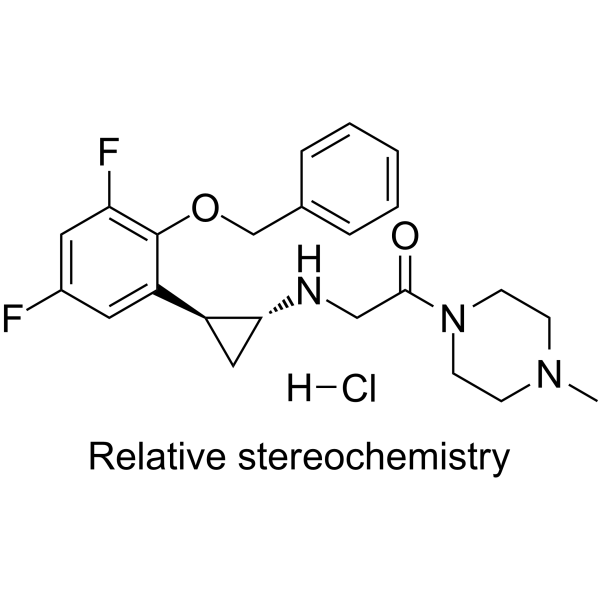
S2116, a N-alkylated tranylcypromine (TCP) derivative, is a potent lysine-specific demethylase 1 (LSD1) inhibitor. S2116 increases H3K9 methylation and reciprocal H3K27 deacetylation at super-enhancer regions. S2116 induces apoptosis in TCP-resistant T-cell acute lymphoblastic leukemia (T-ALL) cells by repressing transcription of the NOTCH3 and TAL1 genes. S2116 significantly retardes the growth of T-ALL cells in xenotransplanted mice.
For research use only. We do not sell to patients.
- Purity : 98.05%
- CAS No.: 2262489-89-2
- Formula: C22H26ClF2N3O2
- Molecular Weight:437.91
-
Storage:
4°C, sealed storage, away from moisture
* In solvent : -80°C, 6 months; -20°C, 1 month (sealed storage, away from moisture)

To place orders, for customer services and technical support, please contact: MedChemExpress USA
Tel: 609-228-6898 E-mail: [email protected] [email protected]


-
 Biological Activity
-
Chemical Information
-
Solvent & Solubility
- Protocols
- Purity & Documentation
- References
-
 Help & FAQs


-
HY-109169
BomedemstatLSD1 Inhibitor -
HY-110130
RN-1 dihydrochlorideLSD1 Inhibitor -
HY-136523
S2157LSD1 Inhibitor -
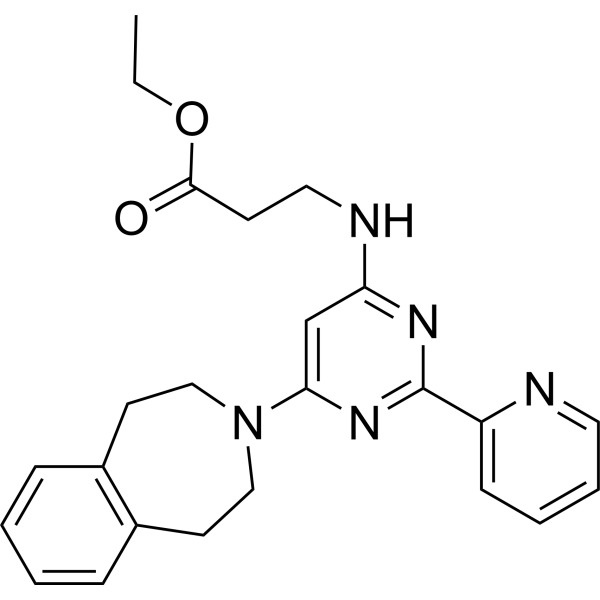
HY-15648B
GSK-J4JMJD3/UTX Inhibitor -
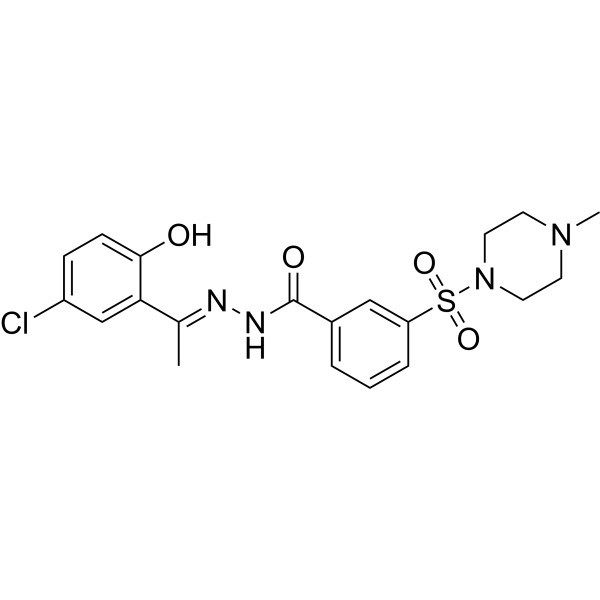
HY-103713
SeclidemstatLSD1 Inhibitor -
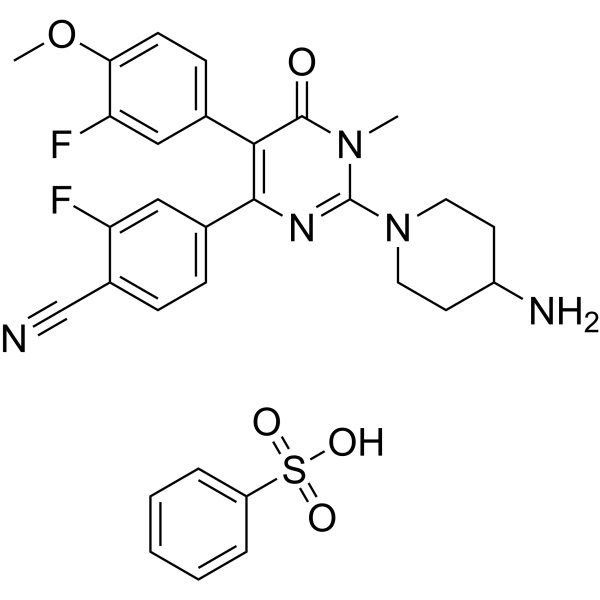
HY-129388B
Pulrodemstat benzenesulfonateLSD1 Inhititor -
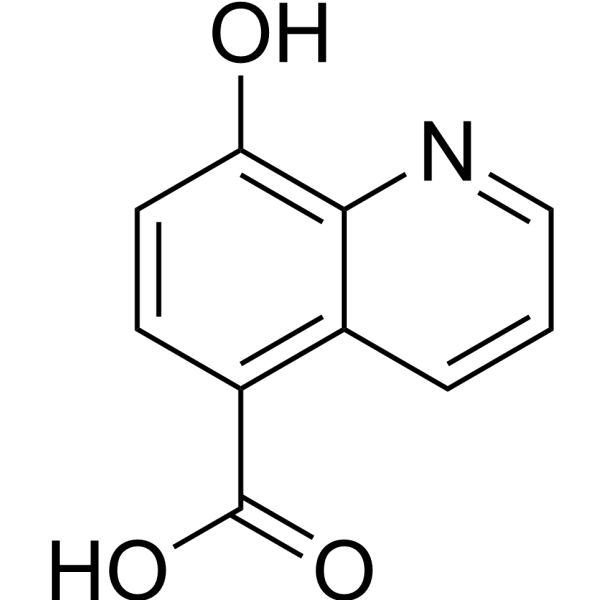
HY-12304
IOX12OG Oxygenases Inhibitor -
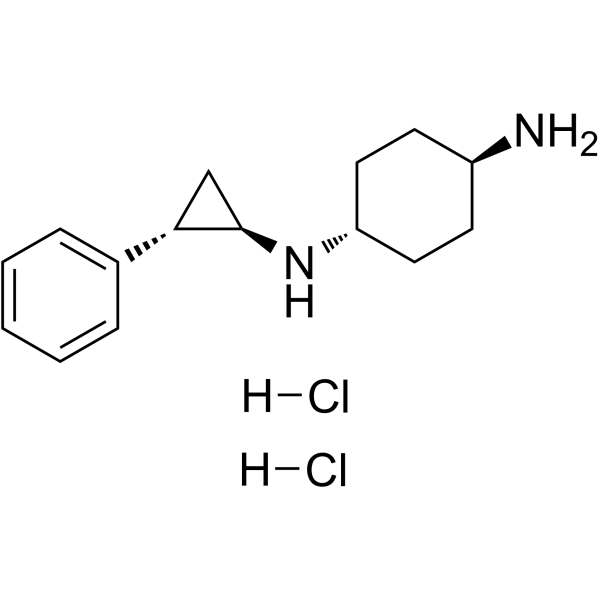
HY-12782T
Iadademstat dihydrochlorideKDM1A Inhibitor -
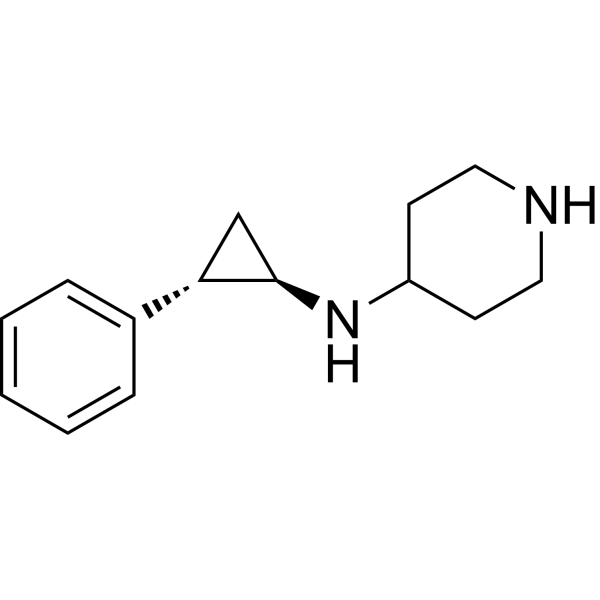
HY-100546
GSK-LSD1LSD1 Inhibitor -
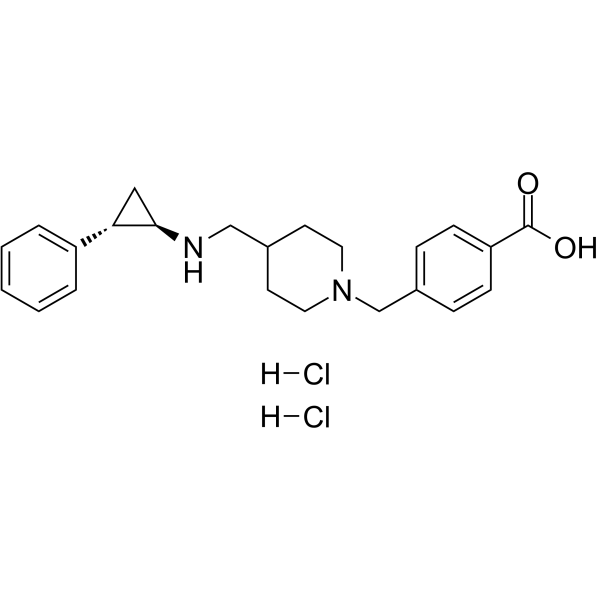
HY-18632A
GSK2879552 dihydrochlorideLSD1/KDM1A Inhibitor -
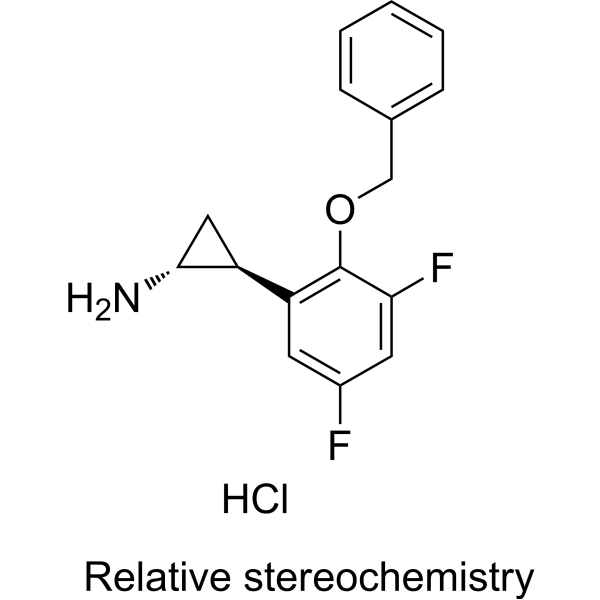
HY-110277
S2101LSD1 Inhibitor -
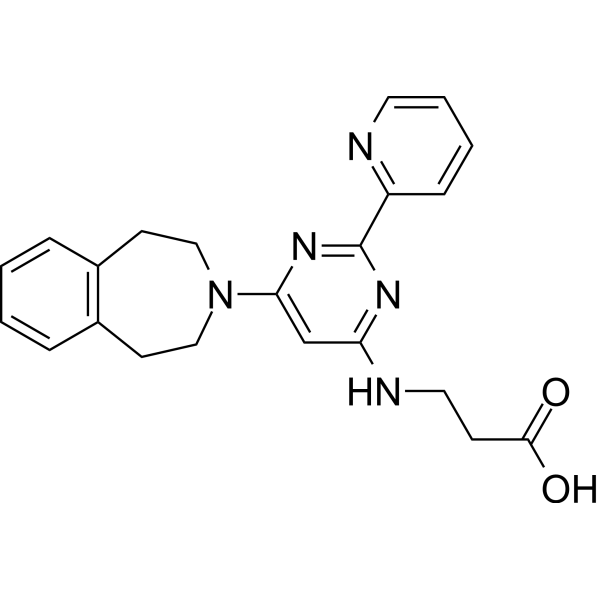
HY-15648
GSK-J1JMJD3/KDM6B Inhibitor


Biological Activity
Description
IC50 & Target
LSD1[1]
In Vitro
S2116 is particularly effective for T-ALL cell lines with the IC50 values between 1.1 µM for human T-ALL cell lines CEM and 6.8 µM for MOLT4[1].
S2116 (4-20 µM; 72 hours) modestly inhibits mitogen-activated normal T-lymphocytes[1].
S2116 (4-8 µM; 24 hours) induces apoptosis and down-regulates the expression of NOTCH3 and TAL1 proteins in T-ALL cells[1].
MedChemExpress (MCE) has not independently confirmed the accuracy of these methods. They are for reference only.
-
Cell Line:Normal T-lymphocytes
-
Concentration:4, 8, 12, 16, 20 µM
-
Incubation Time:For 72 hours
-
Result:Modestly inhibited mitogen-activated normal T-lymphocytes.
-
Cell Line:T-cell acute lymphoblastic leukemia (T-ALL) cells
-
Concentration:4, 6, 8 µM
-
Incubation Time:For 24 hours
-
Result:Induced apoptosis, as evidenced by increased annexin-V reactivity on flow cytometry in T-ALL cells in a dose- and time-dependent manner without affecting cell cycle distribution.
-
Cell Line:T-ALL cells
-
Concentration:4, 6, 8 µM
-
Incubation Time:For 24 hours
-
Result:Down-regulated the expression of NOTCH3 and TAL1 proteins in T-ALL cells.
In Vivo
S2116 (50 mg/kg; IP) has a T1/2 of 3.76 hours, a Cmax of 12.7 μM and an AUC of 59.2 μM•h[1].
MedChemExpress (MCE) has not independently confirmed the accuracy of these methods. They are for reference only.
-
Animal Model:Nonobese diabetic/severe combined immunodeficiency (NOD/SCID) mice with MOLT4 cells[1]
-
Dosage:50 mg/kg
-
Administration:IP; 3 times a week; for 28 days
-
Result:The size of subcutaneous tumors reduced to less than 20% of that in the untreated control.
-
Animal Model:8-week-old ICR mice[1]
-
Dosage:50 mg/kg (Pharmacokinetic Analysis)
-
Administration:IP
-
Result:Had a T1/2 of 3.76 hours, a Cmax of 12.7 μM and an AUC of 59.2 μM•h.


Chemical Information
-
CAS No. 2262489-89-2
-
Appearance Solid
-
Molecular Weight 437.91
-
Formula C22H26ClF2N3O2
-
Color Off-white to light yellow
-
SMILES
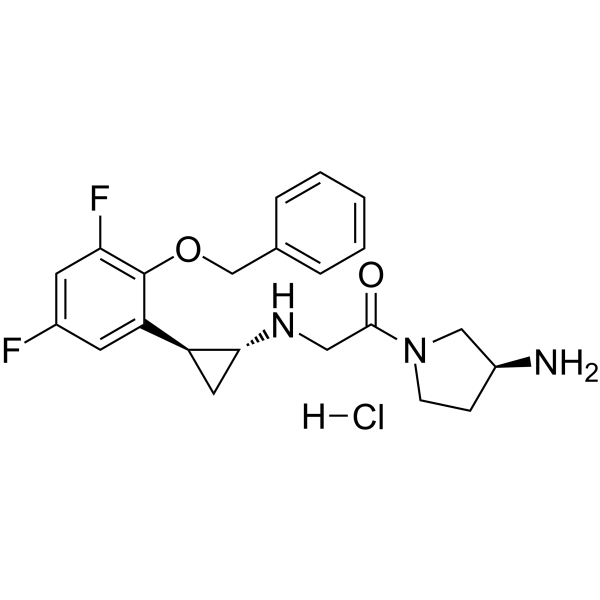
FC1=CC(F)=C(OCC2=CC=CC=C2)C([C@H]3[C@H](NCC(N4C[C@@H](N)CC4)=O)C3)=C1.[H]Cl
-
Shipping
Room temperature in continental US; may vary elsewhere.
-
Storage
4°C, sealed storage, away from moisture
* In solvent : -80°C, 6 months; -20°C, 1 month (sealed storage, away from moisture)


Solvent & Solubility
In Vitro:
DMSO : 100 mg/mL (228.36 mM; Need ultrasonic; Hygroscopic DMSO has a significant impact on the solubility of product, please use newly opened DMSO)
Please refer to the solubility information to select the appropriate solvent. Once prepared, please aliquot and store the solution to prevent product inactivation from repeated freeze-thaw cycles.
Storage method and period of stock solution: -80°C, 6 months; -20°C, 1 month (sealed storage, away from moisture). When stored at -80°C, please use it within 6 months. When stored at -20°C, please use it within 1 month.
Please refer to the solubility information to select the appropriate solvent. Once prepared, please aliquot and store the solution to prevent product inactivation from repeated freeze-thaw cycles.
Storage method and period of stock solution: -80°C, 6 months; -20°C, 1 month (sealed storage, away from moisture). When stored at -80°C, please use it within 6 months. When stored at -20°C, please use it within 1 month.
Concentration (start) × Volume (start) = Concentration (final) × Volume (final)


Purity & Documentation
-
Data Sheet (277 KB)
-
SDS (252 KB)
- English - EN (252 KB)
- Français - FR (252 KB)
- Deutsch - DE (252 KB)
- Norwegian - NO (252 KB)
- Español - ES (252 KB)
- Swedish - SV (252 KB)
- Italian - IT (252 KB)
- Korean - KR (252 KB)
- Portuguese - PT (252 KB)
-
Handling Instructions (2659 KB)
References


Complete Stock Solution Preparation Table
Please refer to the solubility information to select the appropriate solvent. Once prepared, please aliquot and store the solution to prevent product inactivation from repeated freeze-thaw cycles.
Storage method and period of stock solution: -80°C, 6 months; -20°C, 1 month (sealed storage, away from moisture). When stored at -80°C, please use it within 6 months. When stored at -20°C, please use it within 1 month.
| Optional Solvent | Concentration Solvent Mass | 1 mg | 5 mg | 10 mg | 25 mg |
|---|---|---|---|---|---|
| DMSO | 1 mM | 2.2836 mL | 11.4179 mL | 22.8357 mL | 57.0894 mL |
| 5 mM | 0.4567 mL | 2.2836 mL | 4.5671 mL | 11.4179 mL | |
| 10 mM | 0.2284 mL | 1.1418 mL | 2.2836 mL | 5.7089 mL | |
| 15 mM | 0.1522 mL | 0.7612 mL | 1.5224 mL | 3.8060 mL | |
| 20 mM | 0.1142 mL | 0.5709 mL | 1.1418 mL | 2.8545 mL | |
| 25 mM | 0.0913 mL | 0.4567 mL | 0.9134 mL | 2.2836 mL | |
| 30 mM | 0.0761 mL | 0.3806 mL | 0.7612 mL | 1.9030 mL | |
| 40 mM | 0.0571 mL | 0.2854 mL | 0.5709 mL | 1.4272 mL | |
| 50 mM | 0.0457 mL | 0.2284 mL | 0.4567 mL | 1.1418 mL | |
| 60 mM | 0.0381 mL | 0.1903 mL | 0.3806 mL | 0.9515 mL | |
| 80 mM | 0.0285 mL | 0.1427 mL | 0.2854 mL | 0.7136 mL | |
| 100 mM | 0.0228 mL | 0.1142 mL | 0.2284 mL | 0.5709 mL |


S2116 Related Classifications
HY-136522 Related Classifications
 Powered by Bioz