



β-Amyloid (1-42), human, HFIP-treated
Based on 27 publication(s) in Google Scholar
β-Amyloid (1-42), human, HFIP-treated, a 42-amino acid peptide that has been treated with HFIP from β-Amyloid (1-42), human (HY-P1363A), is a brain-penetrant amyloid protein fragment, which can be used in research on Alzheimer's disease and Down’s syndrome. β-Amyloid (1-42), human, HFIP-treated remaining as a monomer exhibits antioxidant and neuroprotective effects. β-Amyloid (1-42), human, HFIP-treated, after being dissolved in DMSO to form the stock solution, on the one hand, can form soluble oligomers (AβOs) when incubated at 4°C, which have synaptic toxicity and neurotoxicity; on the other hand, it can be incubated at 37°C to form insoluble fibrils, with lower neurotoxicity, and participating in the oxidative damage process. Aβ42 oligomers bind to various neuronal surface receptors (such as PrPc, mGluR5, NMDA receptors, etc.), triggering oxidative stress, calcium homeostasis imbalance, and synaptic toxicity via activating downstream signaling pathways, leading to neuronal dysfunction and death.
For research use only. We do not sell to patients.
- Purity: 98.41%
- CAS No.: 107761-42-2
- Formula: C203H311N55O60S
- Molecular Weight:4514.04
-
Storage:
Please store the product under the recommended conditions in the Certificate of Analysis.


To place orders, for customer services and technical support, please contact: MedChemExpress USA
Tel: 609-228-6898 E-mail: [email protected] [email protected]


-
 Biological Activity
-
Chemical Information
-
Solvent & Solubility
- Purity & Documentation
- References
-
 Help & FAQs


-

HY-P1363A
β-Amyloid (1-42), human -
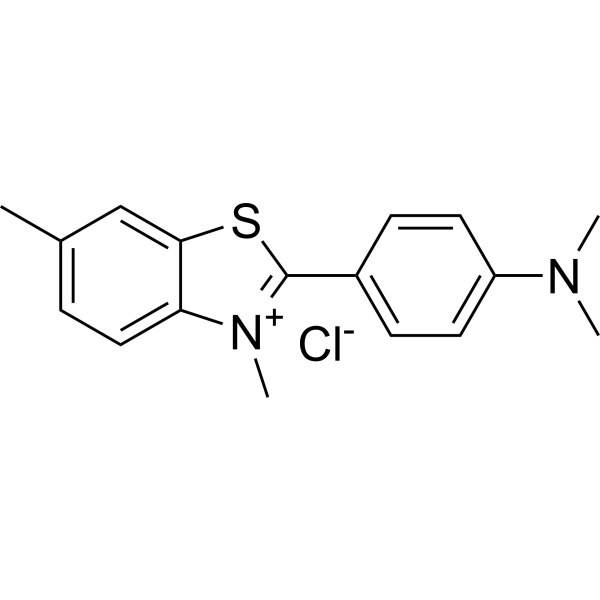
HY-D0218
Thioflavin T -
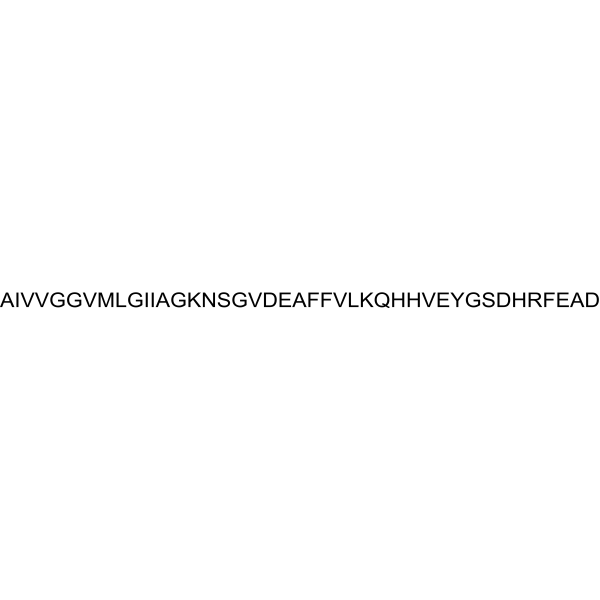
HY-P1362
β-Amyloid (42-1), human -
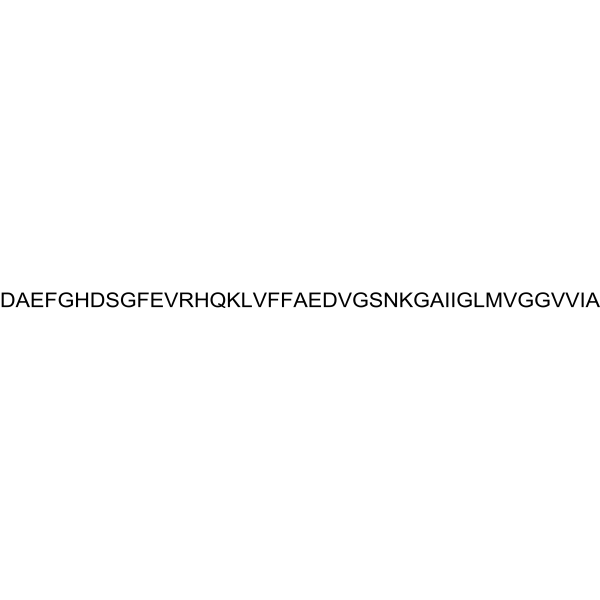
HY-P1388
β-Amyloid (1-42), (rat/mouse) -
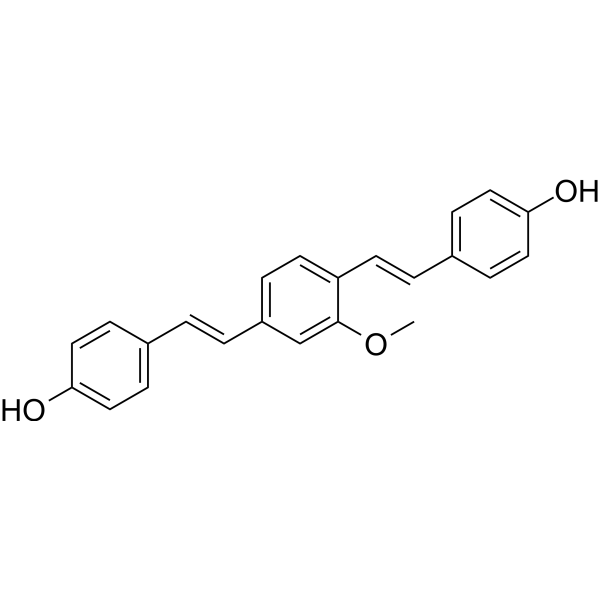
HY-103240
Methoxy-X04 -

HY-P9902
Pembrolizumab -
HY-Y0320
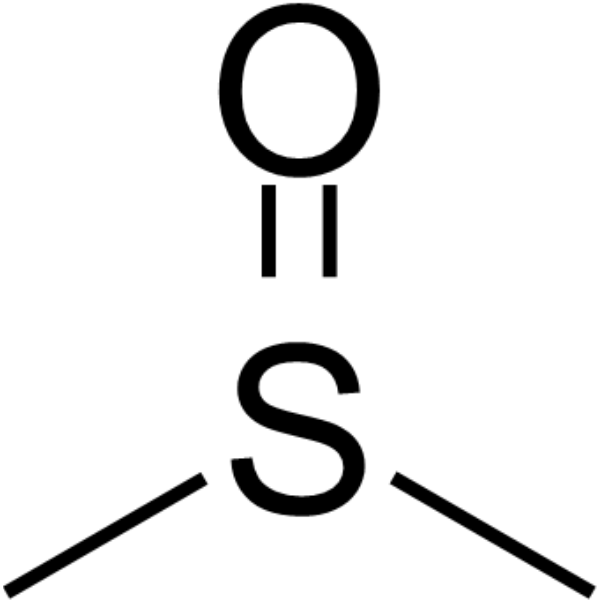
Dimethyl sulfoxide, meets analytical specification of Ch.P. -
HY-Y0320C
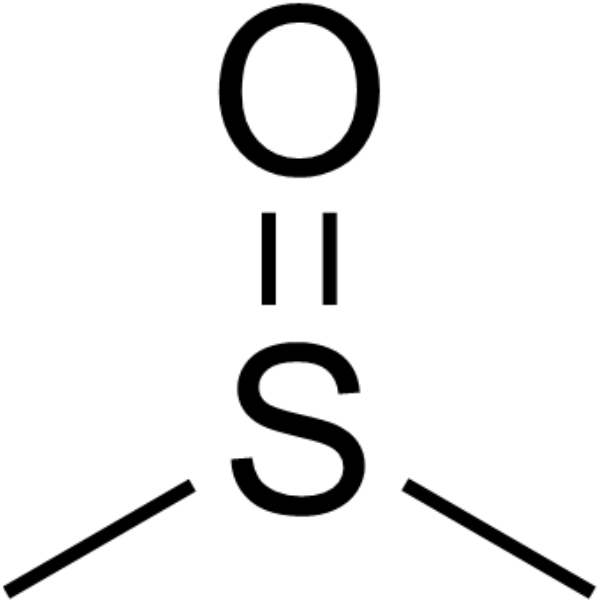
Dimethyl sulfoxide -
HY-109590
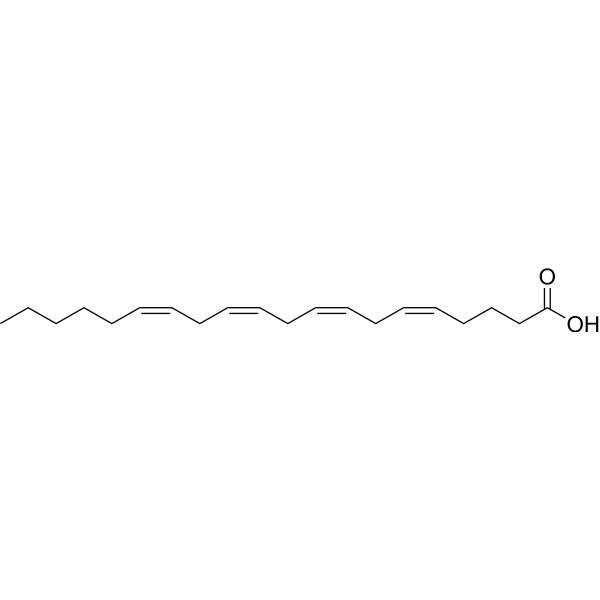
Arachidonic acid -

HY-P0265C
β-Amyloid (1-40), HFIP-treated TFA -
HY-10583
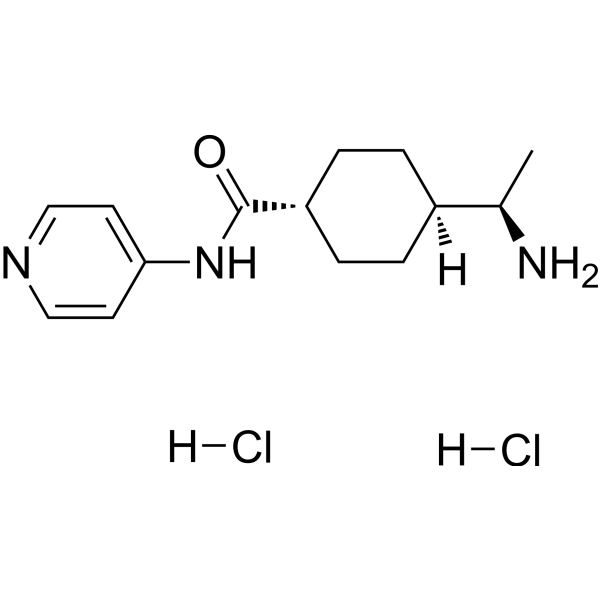
Y-27632 dihydrochloride -
HY-100218A
RSL3
Publications Citing Use of MedChemExpress (MCE) β-Amyloid (1-42), human, HFIP-treated
More- Cell. 2026 Apr 2;189(7):1923-1941.e26. [Abstract]
- J Neuroinflammation. 2024 Dec 23;21(1):327. [Abstract]
- Int J Nanomedicine. 2024 May 29:19:4977-4994. [Abstract]
- Cell Rep. 2025 Feb 23;44(3):115343. [Abstract]
- Eur J Med Chem. 2026 Aug 5:312:118852. [Abstract]
- Eur J Med Chem. 2022 Dec 15:244:114841. [Abstract]
- Int Immunopharmacol. 2025 Jun 5:157:114746. [Abstract]
- Am J Physiol Cell Physiol. 2024 Jun 1;326(6):C1697-C1709. [Abstract]
- Front Aging Neurosci. 2022 Apr 25;14:890134. [Abstract]
- Exp Gerontol. 2026 Feb:214:113034. [Abstract]
- Mol Med Rep. 2026 Jun;33(6):172. [Abstract]
- Food Sci Nutr. 2026 Mar 11;14(3):e71604. [Abstract]
- Mol Med Rep. 2021 Apr;23(4):280. [Abstract]
- Exp Neurol. 2026 Apr:398:115640. [Abstract]
- Neuropharmacology. 2026 Jun 15:291:110923. [Abstract]
- ACS Infect Dis. 2026 Apr 10;12(4):1329-1337. [Abstract]
- Mol Divers. 2025 Jul 13. [Abstract]
- FASEB J. 2024 Sep;38(17):e23861. [Abstract]
- Front Oncol. 2026 Jan 5:15:1752562. [Abstract]
- Brain Res. 2024 Dec 15:1845:149173. [Abstract]
- Yonsei Med J. 2019 Jul;60(7):640-650. [Abstract]
- bioRxiv. 2026 May 28.
- bioRxiv. 2026 Feb 25.
- Biomed Pharmacother. 2024 Sep:178:117199. [Abstract]
- Cell Mol Biol (Noisy-le-grand). 2024 Jan 31;70(1):200-206. [Abstract]
- University of Nottingham. 2023 Apr 13.
- Aging. 2021 Jun 9;13(11):15569-15579. [Abstract]
 Customer Validation & Images

-
WB
-
Cell Proliferation/Viability Assay
-
IF
-
RT-PCR
-
WB


Biological Activity
Description
In Vitro
β-Amyloid Aggregation Guidelines (Following is our recommended protocol. This protocol only provides a guideline, and should be modified according to your specific needs of your downstream experimental schemes). Oligomer preparation
1. β-Amyloid (1-42), human, treated with HFIP is dissolved in anhydrous DMSO/0.1M NaOH/1% ammonia solution at 5 mM. Then, dilute it with sterile double-distilled water to a certain concentration (eg: 200 μM) to ensure complete dissolution.
2. Next, the solution is age 24-48 h at 4-8°C. The sample is then centrifuged at 14000g for 10 min at 4-8°C; the soluble oligomers are in the supernatant. The supernatant is diluted 10-200-fold for experiments.
Fiber preparation:
1. β-Amyloid (1-42), human, treated with HFIP is dissolved in anhydrous DMSO at 5 mM and then dilutes into the appropriate concentration and buffer (10 mM HCl) with vortexing.
2. Next, the solution is age 24-48 h at 37°C to obtain Aβ42 fibrils.
Note:
1) If using PBS for dilution, it may cause the precipitation of the polypeptide.
2) The aggregation form is unstable in the solution, it is recommended to prepare and use it immediately. If storage is required, it is recommended to store the peptides in a film form at -20°C or -80°C.
β-Amyloid (1-42), human, HFIP-treated is prepared into oligomers, exhibiting neurotoxicity:
β-amyloid (1–42) peptide (60-180 μM, 48 h) could form oligomers significantly faster than Aβ40 and Aβ43 and Aβ42 oligomers (1-1000 μg/mL, 48 h) showed the greatest level of neurotoxicity in both SH-SY5Y and PC12 cells[10].
Aβ42 oligomers (20 μM, 0-48 h) induces both apoptosis and autophagy in SH-SY5Y cells but only autophagy in U87 cells[11].
Aβ42 oligomers (0.5 μM, 1 h) induces intracellular Ca2+ influx, mitochondrial reactive oxygen species (ROS) production and increases cell death in mouse neuroblastoma N2a cells[12].
MedChemExpress (MCE) has not independently confirmed the accuracy of these methods. They are for reference only.
In Vivo
Please do not refer to only one article to determine the experimental conditions. It is recommended to determine the optimal experimental conditions (animal strain, age, dosage, frequency and cycle, detection time and indicators, etc.) through preliminary experiments before the formal experiment.
MedChemExpress (MCE) has not independently confirmed the accuracy of these methods. They are for reference only.


Chemical Information
-
CAS No. 107761-42-2
-
Appearance Film
-
Molecular Weight 4514.04
-
Formula C203H311N55O60S
-
Color Colorless
-
Sequence
Asp-Ala-Glu-Phe-Arg-His-Asp-Ser-Gly-Tyr-Glu-Val-His-His-Gln-Lys-Leu-Val-Phe-Phe-Ala-Glu-Asp-Val-Gly-Ser-Asn-Lys-Gly-Ala-Ile-Ile-Gly-Leu-Met-Val-Gly-Gly-Val-Val-Ile-Ala
-
Sequence Shortening
DAEFRHDSGYEVHHQKLVFFAEDVGSNKGAIIGLMVGGVVIA
-
Shipping
Shipping with dry ice.
-
Storage
Please store the product under the recommended conditions in the Certificate of Analysis.


Publications (27)
-
Journal Impact Factor
-
Most Recent
-
Cell
2026 Apr 2;189(7):1923-1941.e26. PMID: 41785850 -
J Neuroinflammation
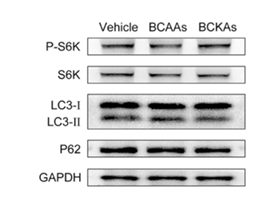
Accumulated BCAAs and BCKAs contribute to the HFD-induced deterioration of Alzheimer's disease via a dysfunctional TREM2-related reduction in microglial β-amyloid clearance. [Abstract]2024 Dec 23;21(1):327. PMID: 39716292
β-Amyloid (1-42), human, HFIP-treated purchased from MedChemExpress. Usage Cited in: J Neuroinflammation. 2024 Dec 23;21(1):327. [Abstract]
Protein levels in BV2 cell treated with or without BCAAs/ BCKAs for 4 h in the presence of Aβ (1 μM) and the corresponding quantification results (n = 3).
-
Int J Nanomedicine
Engineered Exosomes Containing microRNA-29b-2 and Targeting the Somatostatin Receptor Reduce Presenilin 1 Expression and Decrease the β-Amyloid Accumulation in the Brains of Mice with Alzheimer's Disease. [Abstract]2024 May 29:19:4977-4994. PMID: 38828204 -
Cell Rep
GPNMB and ATP6V1A interact to mediate microglia phagocytosis of multiple types of pathological particles. [Abstract]2025 Feb 23;44(3):115343. PMID: 39992792 -
Eur J Med Chem
Structure-based virtual screening, in vitro and in silico analysis identified novel potent m6A demethylase FTO inhibitors as promising neurotherapeutic agents. [Abstract]2026 Aug 5:312:118852. PMID: 42024965 -
Eur J Med Chem
Discovery of novel hybrids containing clioquinol-1-benzyl-1,2,3,6-tetrahydropyridine as multi-target-directed ligands (MTDLs) against Alzheimer's disease. [Abstract]2022 Dec 15:244:114841. PMID: 36257284 -
Int Immunopharmacol
Paraquat exposure triggers amyloid-β and α-synuclein aggregation in the prefrontal cortex of mice: Suppression of microglial phagocytosis via IL-17A. [Abstract]2025 Jun 5:157:114746. PMID: 40300355 -
Am J Physiol Cell Physiol
SIRT4 promotes neuronal apoptosis in models of Alzheimer's disease via the STAT2-SIRT4-mTOR pathway. [Abstract]2024 Jun 1;326(6):C1697-C1709. PMID: 38586875 -
Front Aging Neurosci
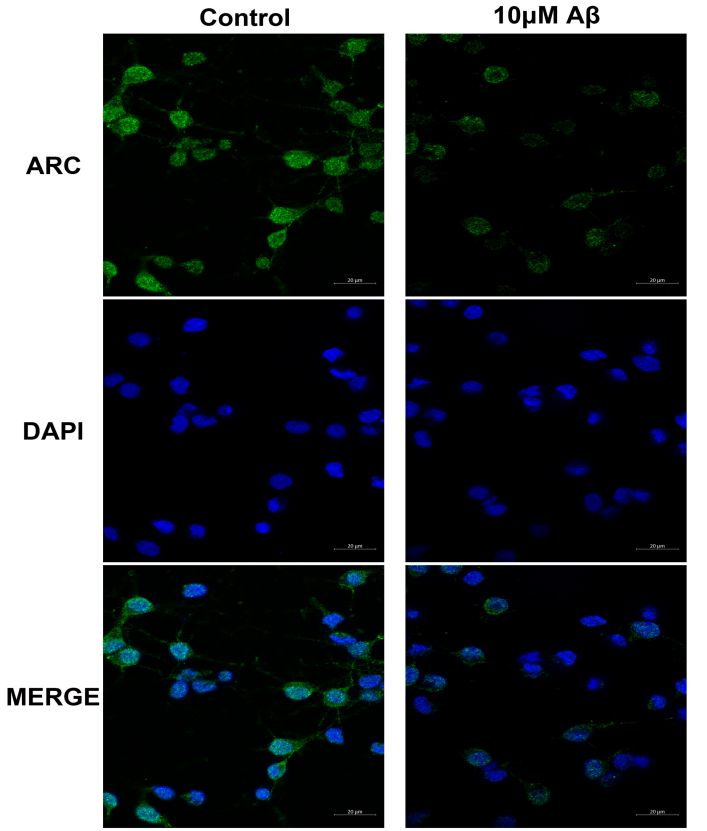
Methyltransferase-Like 3 Rescues the Amyloid-beta protein-Induced Reduction of Activity-Regulated Cytoskeleton Associated Protein Expression via YTHDF1-Dependent N6-Methyladenosine Modification. [Abstract]2022 Apr 25;14:890134. PMID: 35547627
β-Amyloid (1-42), human, HFIP-treated purchased from MedChemExpress. Usage Cited in: Front Aging Neurosci. 2022 Apr 25;14:890134. [Abstract]
Immunofluorescence showed lost ARC expression after 10 μM Aβ treatment. For Aβ treatment, human β-Amyloid (1-42) (HY-P1363) was dissolved, and the solution was incubated for 3 days at 37°C to form oligomeric Aβ, and then cells were treated with 10 μM Aβ for 48 h.
β-Amyloid (1-42), human, HFIP-treated purchased from MedChemExpress. Usage Cited in: Front Aging Neurosci. 2022 Apr 25;14:890134. [Abstract]
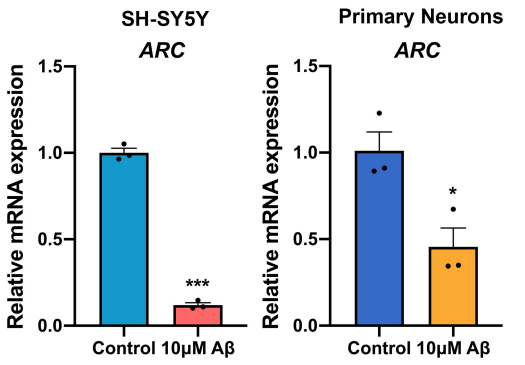
qRT-PCR showed decreased mRNA levels of ARC after 10 μM Aβ treatment (n = 3). For Aβ treatment, human β-Amyloid (1-42) (HY-P1363) was dissolved, and the solution was incubated for 3 days at 37°C to form oligomeric Aβ, and then cells were treated with 10 μM Aβ for 48 h.
β-Amyloid (1-42), human, HFIP-treated purchased from MedChemExpress. Usage Cited in: Front Aging Neurosci. 2022 Apr 25;14:890134. [Abstract]
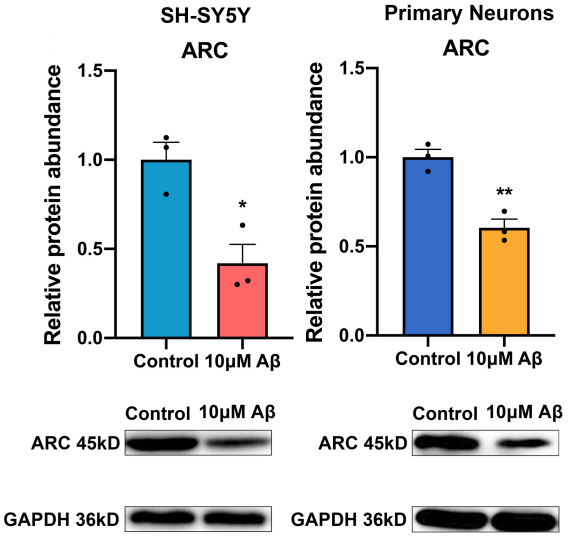
Western blotting analysis showed declined protein levels of ARC after 10 μM Aβ treatment (n = 3). For Aβ treatment, human β-Amyloid (1-42) (HY-P1363) was dissolved, and the solution was incubated for 3 days at 37°C to form oligomeric Aβ, and then cells were treated with 10 μM Aβ for 48 h.
-
Exp Gerontol
Probucol attenuates bone loss in APP/PS1 mice and ameliorates Aβ42-induced osteoblast dysfunction by regulating AKT/FOXO3a signaling pathway. [Abstract]2026 Feb:214:113034. PMID: 41534646 -
Mol Med Rep
SRSF1 as a promising biomarker and key player in the pathogenesis of Alzheimer's disease. [Abstract]2026 Jun;33(6):172. PMID: 41992956 -
Food Sci Nutr
Structural Characterization and Anti-Alzheimer's Disease Effect of Polysaccharides From Stellariae Radix. [Abstract]2026 Mar 11;14(3):e71604. PMID: 42016241 -
Mol Med Rep
CART mitigates oxidative stress and DNA damage in memory deficits of APP/PS1 mice via upregulating β‑amyloid metabolism‑associated enzymes. [Abstract]2021 Apr;23(4):280. PMID: 33604684 -
Exp Neurol
2026 Apr:398:115640. PMID: 41506439 -
Neuropharmacology
Ajugol ameliorates mitochondrial dysfunction and cognitive decline in Alzheimer's Disease via BNIP3-dependent mitophagy. [Abstract]2026 Jun 15:291:110923. PMID: 41819485 -
ACS Infect Dis
Treponema pallidum Impairs Microglial Aβ1-42 Clearance by Hijacking TLR2/PI3K/AKT Immune Signaling. [Abstract]2026 Apr 10;12(4):1329-1337. PMID: 41789731 -
Mol Divers
Synthesis and multi-target evaluation of 2-(2-phenylethyl)/2,3-styrylchromone derivatives as potential anti-Alzheimer's disease agents. [Abstract]2025 Jul 13. PMID: 40652414 -
FASEB J
Elevated concentrations of amyloid-β oligomers and their proapoptotic effects on age-related cataract. [Abstract]2024 Sep;38(17):e23861. PMID: 39247969 -
Front Oncol
The Identification of LA-tumor associated macrophages in immune modulation via amyloid-beta precursor protein/CD74 signal pathway in gastric cancer: a predictive module and machine learning. [Abstract]2026 Jan 5:15:1752562. PMID: 41561750 -
Brain Res
2024 Dec 15:1845:149173. PMID: 39168265 -
Yonsei Med J
Long Noncoding RNA NEAT1 Aggravates Aβ-Induced Neuronal Damage by Targeting miR-107 in Alzheimer's Disease. [Abstract]2019 Jul;60(7):640-650. PMID: 31250578 -
-
-
Biomed Pharmacother
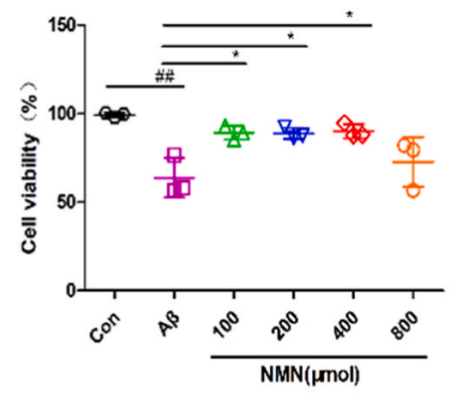
Therapeutic effect of nicotinamide mononucleotide on Alzheimer's disease through activating autophagy and anti-oxidative stress. [Abstract]2024 Sep:178:117199. PMID: 39053426
β-Amyloid (1-42), human, HFIP-treated purchased from MedChemExpress. Usage Cited in: Biomed Pharmacother. 2024 Sep:178:117199. [Abstract]
The effect of NMN on the survival rate of β-Amyloid (1-42) (Aβ, 1 μM; 24 h)-induced PC12 cells was determined by MTT assay.
-
Cell Mol Biol (Noisy-le-grand)
Up-regulation of lncRNA WT1-AS ameliorates Aβ-stimulated neuronal injury through modulation of miR-186-5p/CCND2 axis in Alzheimer's disease. [Abstract]2024 Jan 31;70(1):200-206. PMID: 38372094 -
-
Aging
Repressor element-1 silencing transcription factor regulates glutamate receptors and immediate early genes to affect synaptic plasticity. [Abstract]2021 Jun 9;13(11):15569-15579. PMID: 34106879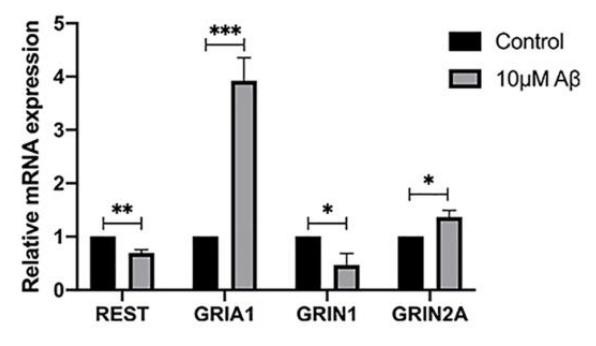
β-Amyloid (1-42), human, HFIP-treated purchased from MedChemExpress. Usage Cited in: Aging. 2021 Jun 9;13(11):15569-15579. [Abstract]
10 μM Aβ increased the mRNA expression of GRIA1 and GRIN2A, and decreased GRIN1 mRNA expression. n = 3. For the Aβ treatment, cells were incubated with 10 μM human β-Amyloid (1-42) for 48 h.


Solvent & Solubility
In Vitro:
DMSO : 22.57 mg/mL (5.00 mM; Need ultrasonic and warming; Hygroscopic DMSO has a significant impact on the solubility of product, please use newly opened DMSO)
0.1 M NaOH : 22.57 mg/mL (5.00 mM; Need ultrasonic and warming)
Please refer to the solubility information to select the appropriate solvent. The compound is unstable in solutions, freshly prepared is recommended.
Please refer to the solubility information to select the appropriate solvent. The compound is unstable in solutions, freshly prepared is recommended.
Concentration (start) × Volume (start) = Concentration (final) × Volume (final)


Purity & Documentation
-
Data Sheet (296 KB)
-
SDS (252 KB)
- English - EN (252 KB)
- Français - FR (252 KB)
- Deutsch - DE (252 KB)
- Norwegian - NO (252 KB)
- Español - ES (252 KB)
- Swedish - SV (252 KB)
- Italian - IT (252 KB)
- Korean - KR (252 KB)
- Portuguese - PT (252 KB)
-
Handling Instructions (2659 KB)
References
[1]. Solntseva EI, et al. Impact of amyloid-β peptide (1-42) on voltage-gated ion currents in molluscan neurons. Bull Exp Biol Med. 2011 Oct;151(6):671-4. [Content Brief]
[2]. Barucker C, et al. Nuclear translocation uncovers the amyloid peptide Aβ42 as a regulator of gene transcription. J Biol Chem. 2014 Jul 18;289(29):20182-91. [Content Brief]
[3]. Stefania Sabella, et al. Capillary electrophoresis studies on the aggregation process of beta-amyloid 1-42 and 1-40 peptides. Electrophoresis. 2004 Oct;25(18-19):3186-94. [Content Brief]
[4]. Porzoor A, et al. Pretreatment of chemically-synthesized Aβ42 affects its biological activity in yeast. Prion. 2014;8(6):404-10. [Content Brief]
[5]. Zou K, et al. A novel function of monomeric amyloid beta-protein serving as an antioxidant molecule against metal-induced oxidative damage. J Neurosci. 2002 Jun 15;22(12):4833-41. [Content Brief]
[6]. Peters C, et al. Alzheimer's Aβ interacts with cellular prion protein inducing neuronal membrane damage and synaptotoxicity. Neurobiol Aging. 2015 Mar;36(3):1369-77. [Content Brief]
[7]. Yao ZX, et al. Function of beta-amyloid in cholesterol transport: a lead to neurotoxicity. FASEB J. 2002 Oct;16(12):1677-9. [Content Brief]
[8]. Jancsó G, et al. Beta-amyloid (1-42) peptide impairs blood-brain barrier function after intracarotid infusion in rats. Neurosci Lett. 1998 Sep 4;253(2):139-41. [Content Brief]
[9]. Bourgade K, et al. β-Amyloid peptides display protective activity against the human Alzheimer's disease-associated herpes simplex virus-1. Biogerontology. 2015 Feb;16(1):85-98. [Content Brief]
[10]. Fu L, et al. Comparison of neurotoxicity of different aggregated forms of Aβ40, Aβ42 and Aβ43 in cell cultures. J Pept Sci. 2017 Mar;23(3):245-251. [Content Brief]
[11]. Wang H, et al. Amyloid-beta1-42 induces reactive oxygen species-mediated autophagic cell death in U87 and SH-SY5Y cells. J Alzheimers Dis. 2010;21(2):597-610. [Content Brief]
[12]. Fei X, et al. Degradation of FA reduces Aβ neurotoxicity and Alzheimer-related phenotypes. Mol Psychiatry. 2021 Oct;26(10):5578-5591. [Content Brief]


Complete Stock Solution Preparation Table
Please refer to the solubility information to select the appropriate solvent. The compound is unstable in solutions, freshly prepared is recommended.
| Optional Solvent | Concentration Solvent Mass | 1 mg | 5 mg | 10 mg | 25 mg |
|---|---|---|---|---|---|
| DMSO / 0.1 M NaOH | 1 mM | 0.2215 mL | 1.1077 mL | 2.2153 mL | 5.5383 mL |


β-Amyloid (1-42), human, HFIP-treated Related Classifications
HY-P1363B Related Classifications
 Powered by Bioz