



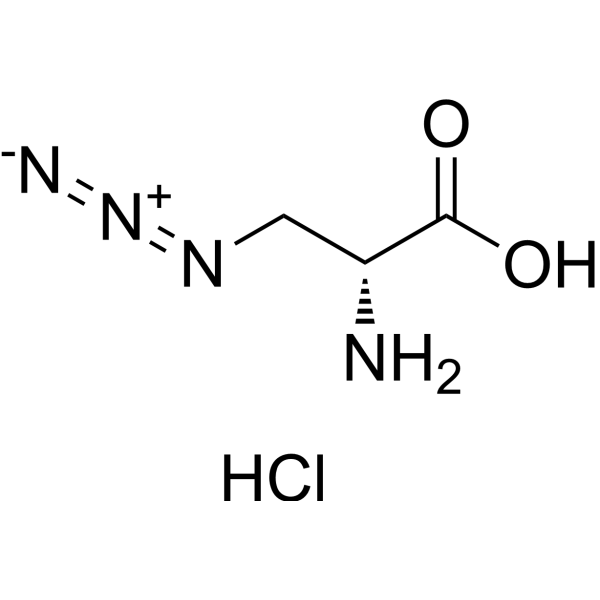
3-Azido-D-alanine hydrochloride
Based on 1 publication(s) in Google Scholar
3-Azido-D-alanine (hydrochloride) is an orally active, selective metabolic tracer applicable for click chemistry labeling. 3-Azido-D-alanine (hydrochloride) can be selectively incorporated into bacterial cell wall peptidoglycans, introducing azido groups to enable copper-free click chemistry-based modification, labeling and single-cell tracing, while it cannot be metabolically incorporated by mammalian cells. 3-Azido-D-alanine (hydrochloride) can be used in studies related to bacterial infection, intracranial infection, otitis media, intestinal inflammation and tissue damage, as well as sepsis.
For research use only. We do not sell to patients.
- Purity : 99.94%
- CAS No.: 1379690-01-3
- Formula: C3H7ClN4O2
- Molecular Weight:166.57
-
Storage:
4°C, sealed storage, away from moisture
* In solvent : -80°C, 6 months; -20°C, 1 month (sealed storage, away from moisture)

To place orders, for customer services and technical support, please contact: MedChemExpress USA
Tel: 609-228-6898 E-mail: [email protected] [email protected]


-
 Biological Activity
-
Chemical Information
-
Solvent & Solubility
- Purity & Documentation
- References
-
 Help & FAQs


Publications Citing Use of MedChemExpress (MCE) 3-Azido-D-alanine hydrochloride
More

Biological Activity
Description
In Vitro
3-Azido-D-alanine (hydrochloride) (1 h) selectively modifies the cell walls of E. coli (ATCC 25922) and MRSA (ATCC 43300) with azide groups, enabling efficient conjugation to sulfo-DBCO-ICG via copper-free click chemistry, as detected by CLSM and flow cytometry[1].
3-Azido-D-alanine (hydrochloride) (30 min) modification enables targeted photothermal lysis of E. coli (ATCC 25922) and MRSA (ATCC 43300) via sulfo-DBCO-ICG, resulting in significant ATP release that correlates linearly with bacterial CFU counts for quantitative detection[1].
3-Azido-D-alanine (hydrochloride) (15 min) modification enables potent photothermal killing of E. coli (ATCC 25922) and MRSA (ATCC 43300) via sulfo-DBCO-ICG[1].
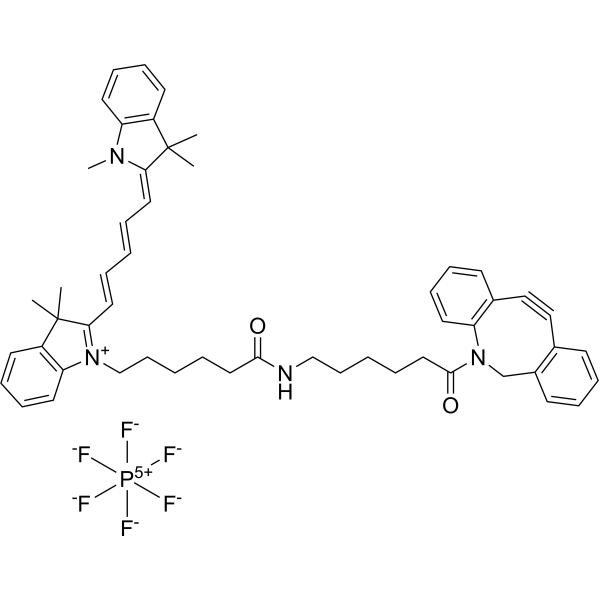
3-Azido-D-alanine (hydrochloride) (0.5 mM; 2 h) efficiently and specifically labels the peptidoglycan cell walls of both Escherichia coli and Staphylococcus aureus via metabolic incorporation, enabling fluorescent detection after click conjugation with Cy3-DBCO[3].
3-Azido-D-alanine (hydrochloride) (0.5 mM; 2 h) efficiently metabolically labels a range of authentic rat gut bacteria, including Bacillus subtilis, Lactobacillus murinus, and Bacillus licheniformis, as well as mixed fecal bacterial populations, with measurable fluorescence intensity increases after click conjugation with Cy3-DBCO[3].
3-Azido-D-alanine (hydrochloride) (3.84 mM; 60 min) optimally labels the peptidoglycan of Staphylococcus aureus (ATCC 25923) with azide groups for bioorthogonal fluorescence detection[5].
3-Azido-D-alanine (hydrochloride) (3.84 mM; 12 h) does not significantly reduce the viability of Staphylococcus aureus (ATCC 25923), with a survival rate above 90%[5].
3-Azido-D-alanine (hydrochloride) (3.84 mM; 60 min) enables sensitive capture and detection of Staphylococcus aureus (ATCC 25923) in whole blood, with a detection limit of 4 CFU/mL and capture efficiencies of 75.0% to 83.5% for low-concentration bacteria[5].
3-Azido-D-alanine (hydrochloride) (3.84 mM; 60 min) enables selective fluorescence labeling of Staphylococcus aureus (ATCC 25923) in mixed cultures with Escherichia coli (ATCC 10798) for Gram-type identification[5].
3-Azido-D-alanine (hydrochloride) (0-8 mM) is nontoxic to Lactobacillus reuteri at concentrations up to 8 mM, and 4 mM achieves near-saturation metabolic labeling of bacterial surface azide groups at a rate of 78.6 %[6].
MedChemExpress (MCE) has not independently confirmed the accuracy of these methods. They are for reference only.
In Vivo
3-Azido-D-alanine (hydrochloride) (10 mg/kg; p.o.; single dose) enables specific in vivo metabolic labeling of gut bacteria, revealing that simulated microgravity induces a significant increase in total gut bacterial content (approximately 6-fold higher than controls) and altered spatial distribution, which correlates with intestinal inflammation and tissue damage[3].
3-Azido-D-alanine hydrochloride (150 mg per 50 mg of MSP@PAA-Alkyne; p.o.) enables efficient labeling and spatiotemporal tracking of viable oral microbiota in healthy C57BL/6J mice, with labeled bacteria detectable in the gastrointestinal tract for up to 36 hours post-gavage[4].
MedChemExpress (MCE) has not independently confirmed the accuracy of these methods. They are for reference only.
-
Animal Model:Sprague-Dawley (SD) rats (simulated microgravity via tail suspension at 30° angle for 28 days)[3]
-
Dosage:10 mg/kg
-
Administration:p.o.; single dose
-
Result:Showed notably enhanced fluorescence signals across all imaging time points, with maximum intensity at 6 hours.
Revealed intestinal fluorescence intensity in simulated microgravity rats was approximately 6-fold higher than control rats.
Demonstrated fluorescence concentrated primarily in the ileum, with simulated microgravity rats showing increased gut bacterial load in the ileum compared to controls, and bacterial distribution diffused toward the jejunum and ileum.
Confirmed higher bacterial accumulation in simulated microgravity rat jejunum, ileum, and colon, correlated with pathological changes including villus rupture, crypt loss, colonic basal layer detachment, elevated IL-6 and TNF-α levels in intestinal tissues, and increased plasma endotoxin levels.
-
Animal Model:C57BL/6J (four-week-old)[4]
-
Dosage:150 mg per 50 mg of MSP@PAA-Alkyne (incorporated into MSP@PAA-ADA); 0.1 mg/mL (MSP@PAA-ADA for in vitro incubation); 200 μL (labeled bacterial solution); 200 μL of 0.1 mM (Cy5ADA for sequential labeling)
-
Administration:p.o. (single dose for labeled bacterial solution; single dose 3 hours post initial gavage for Cy5ADA)
-
Result:Detected large fluorescent signal in the mouse gastrointestinal tract at 3 hours post-gavage, which increased and centralized by 9 hours, then attenuated at 16 hours, and continued to weaken through 24 and 36 hours.
Retained detectable fluorescent signal in mice at 36 hours post-gavage.
Recovered diverse viable oral bacteria (including Gram-positive and Gram-negative bacilli, cocci, and streptococci) that retained both MSP@PAA-ADA binding and Cy5ADA fluorescence via magnetic separation of cecum contents.


Chemical Information
-
CAS No. 1379690-01-3
-
Appearance Solid
-
Molecular Weight 166.57
-
Formula C3H7ClN4O2
-
Color White to off-white
-
SMILES
OC([C@H](N)CN=[N+]=[N-])=O.Cl
-
Shipping
Room temperature in continental US; may vary elsewhere.
-
Storage
4°C, sealed storage, away from moisture
* In solvent : -80°C, 6 months; -20°C, 1 month (sealed storage, away from moisture)


Publications (1)
-
Journal Impact Factor
-
Most Recent
-
Nat Commun
Engineered BCG selectively triggers trained immunity in tumor-associated macrophages and sensitizes glioblastoma to radiotherapy in mice. [Abstract]2026 Apr 20;17(1):5465. PMID: 42009673


Solvent & Solubility
In Vitro:
DMSO : 100 mg/mL (600.35 mM; Need ultrasonic; Hygroscopic DMSO has a significant impact on the solubility of product, please use newly opened DMSO)
Please refer to the solubility information to select the appropriate solvent. Once prepared, please aliquot and store the solution to prevent product inactivation from repeated freeze-thaw cycles.
Storage method and period of stock solution: -80°C, 6 months; -20°C, 1 month (sealed storage, away from moisture). When stored at -80°C, please use it within 6 months. When stored at -20°C, please use it within 1 month.
Please refer to the solubility information to select the appropriate solvent. Once prepared, please aliquot and store the solution to prevent product inactivation from repeated freeze-thaw cycles.
Storage method and period of stock solution: -80°C, 6 months; -20°C, 1 month (sealed storage, away from moisture). When stored at -80°C, please use it within 6 months. When stored at -20°C, please use it within 1 month.
Concentration (start) × Volume (start) = Concentration (final) × Volume (final)
In Vivo:
Select the appropriate dissolution method based on your experimental animal and administration route.
- For the following dissolution methods, please ensure to first prepare a clear stock solution using an In Vitro approach and then sequentially add co-solvents:
- To ensure reliable experimental results, the clarified stock solution can be appropriately stored based on storage conditions. As for the working solution for In Vivo experiments, it is recommended to prepare freshly and use it on the same day.
- The percentages shown for the solvents indicate their volumetric ratio in the final prepared solution. If precipitation or phase separation occurs during preparation, heat and/or sonication can be used to aid dissolution.
Add each solvent one by one: 10% DMSO 40% PEG300 5% Tween-80 45% Saline
Solubility: ≥ 2.08 mg/mL (12.49 mM); Clear solution
This protocol yields a clear solution of ≥ 2.08 mg/mL (saturation unknown).
Taking 1 mL working solution as an example, add 100 μL DMSO stock solution (20.8 mg/mL) to 400 μL PEG300, and mix evenly; then add 50 μL Tween-80 and mix evenly; then add 450 μL Saline to adjust the volume to 1 mL.
Preparation of Saline: Dissolve 0.9 g sodium chloride in ddH₂O and dilute to 100 mL to obtain a clear Saline solution.
Add each solvent one by one: 10% DMSO 90% (20% SBE-β-CD in Saline)
Solubility: ≥ 2.08 mg/mL (12.49 mM); Clear solution
This protocol yields a clear solution of ≥ 2.08 mg/mL (saturation unknown).
Taking 1 mL working solution as an example, add 100 μL DMSO stock solution (20.8 mg/mL) to 900 μL 20% SBE-β-CD in Saline, and mix evenly.
Preparation of 20% SBE-β-CD in Saline (4°C, storage for one week): 2 g SBE-β-CD powder is dissolved in 10 mL Saline, completely dissolve until clear.
In Vivo Dissolution Calculator
Please enter the basic information of animal experiments:
-
-
-
-
Recommended: Prepare an additional quantity of animals to account for potential losses during experiments.
Please enter your animal formula composition:
-
%DMSO +
Recommended: Keep the proportion of DMSO in working solution below 2% if your animal is weak.
-
%+
-
+%Tween-80 + +
-
%Saline +
The co-solvents required include: DMSO, . All of co-solvents are available by MedChemExpress (MCE). , Tween 80. All of co-solvents are available by MedChemExpress (MCE).
Working solution concentration: 0.22 mg/mL
Method for preparing stock solution: mg drug dissolved in μL DMSO. Stock solution concentration: mg/mL. * In solvent : -80°C, 6 months; -20°C, 1 month (sealed storage, away from moisture)
1. Take μL DMSO stock solution;
2. Add μL .
μL , mix evenly;
3. Then add μL Tween 80, mix evenly;
4. Then add μL
Please ensure that the stock solution in the first step is dissolved to a clear state, and add co-solvents in sequence. You can use ultrasonic heating (ultrasonic cleaner, recommended frequency 20-40 kHz), vortexing, etc. to assist dissolution.


Purity & Documentation
-
Data Sheet (288 KB)
-
SDS (252 KB)
- English - EN (252 KB)
- Français - FR (252 KB)
- Deutsch - DE (252 KB)
- Norwegian - NO (252 KB)
- Español - ES (252 KB)
- Swedish - SV (252 KB)
- Italian - IT (252 KB)
- Korean - KR (252 KB)
- Portuguese - PT (252 KB)
-
Handling Instructions (2659 KB)
References
[1]. Zhang L, et al. Bacteria Wear ICG Clothes for Rapid Detection of Intracranial Infection in Patients After Neurosurgery and Photothermal Antibacterial Therapy Against Mutans. Frontiers in bioengineering and biotechnology. 2022;10:932915. [Content Brief]
[3]. Wu Z, et al. Imaging of Gut Bacterial Macroscopic Changes in Simulated Microgravity-Exposed Rats via Metabolic Labeling. Analytical chemistry. 2024 Dec 10;96(49):19758-19767. [Content Brief]
[5]. Zhao J, et al. Sensitive NIR Fluorescence Identification of Bacteria in Whole Blood with Bioorthogonal Nanoprobes for Early Sepsis Diagnosis. Analytical chemistry. 2023 Jan 17;95(2):955-965. [Content Brief]
[6]. Liu Z, et al. Hierarchical arming of probiotics for improved viability to synergistically alleviate ulcerative colitis. Biomaterials. 2026 Apr;327:123791. [Content Brief]


Complete Stock Solution Preparation Table
Please refer to the solubility information to select the appropriate solvent. Once prepared, please aliquot and store the solution to prevent product inactivation from repeated freeze-thaw cycles.
Storage method and period of stock solution: -80°C, 6 months; -20°C, 1 month (sealed storage, away from moisture). When stored at -80°C, please use it within 6 months. When stored at -20°C, please use it within 1 month.
| Optional Solvent | Concentration Solvent Mass | 1 mg | 5 mg | 10 mg | 25 mg |
|---|---|---|---|---|---|
| DMSO | 1 mM | 6.0035 mL | 30.0174 mL | 60.0348 mL | 150.0870 mL |
| 5 mM | 1.2007 mL | 6.0035 mL | 12.0070 mL | 30.0174 mL | |
| 10 mM | 0.6003 mL | 3.0017 mL | 6.0035 mL | 15.0087 mL | |
| 15 mM | 0.4002 mL | 2.0012 mL | 4.0023 mL | 10.0058 mL | |
| 20 mM | 0.3002 mL | 1.5009 mL | 3.0017 mL | 7.5044 mL | |
| 25 mM | 0.2401 mL | 1.2007 mL | 2.4014 mL | 6.0035 mL | |
| 30 mM | 0.2001 mL | 1.0006 mL | 2.0012 mL | 5.0029 mL | |
| 40 mM | 0.1501 mL | 0.7504 mL | 1.5009 mL | 3.7522 mL | |
| 50 mM | 0.1201 mL | 0.6003 mL | 1.2007 mL | 3.0017 mL | |
| 60 mM | 0.1001 mL | 0.5003 mL | 1.0006 mL | 2.5015 mL | |
| 80 mM | 0.0750 mL | 0.3752 mL | 0.7504 mL | 1.8761 mL | |
| 100 mM | 0.0600 mL | 0.3002 mL | 0.6003 mL | 1.5009 mL |


3-Azido-D-alanine hydrochloride Related Classifications
HY-151642A Related Classifications
 Powered by Bioz
Keywords
- 3-Azido-D-alanine
- 1379690-01-3
- Biochemical Assay Reagents
- Bacterial
- magnetosome production
- *Staphylococcus aureus* (ATCC 25923)
- copper-free click chemistry
- bacterial cell wall peptidoglycan
- *E. coli* (ATCC 25922)
- gut bacteria
- MRSA (ATCC 43300)
- C57BL/6J mice
- bacterial infection
- intestinal inflammation
- Inhibitor
- inhibitor
- inhibit