



4-Hydroxy hexenal

Based on 1 Customer Validation
4-Hydroxy hexenal (4-HHE) is a lipid peroxidation product derived from oxidized ω-3 fatty acids such as DHA.
For research use only. We do not sell to patients.
- Purity : 99.86%
- CAS No.: 17427-21-3
- Formula: C6H10O2
- Molecular Weight:114.14
-
Storage:
Solution, -20°C, 2 years


To place orders, for customer services and technical support, please contact: MedChemExpress USA
Tel: 609-228-6898 E-mail: [email protected] [email protected]


-
 Biological Activity
-
Chemical Information
- Protocols
- Purity & Documentation
- References
-
 Help & FAQs


-
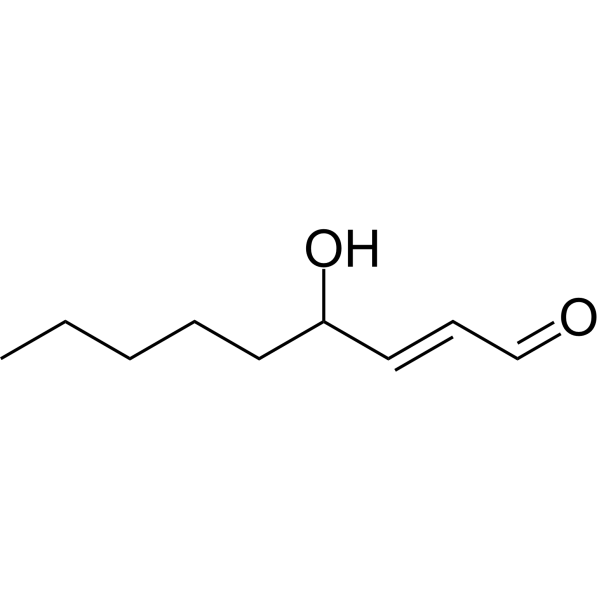
HY-113466
4-HydroxynonenalOxidative/Nitrosative Stress Biomarker -
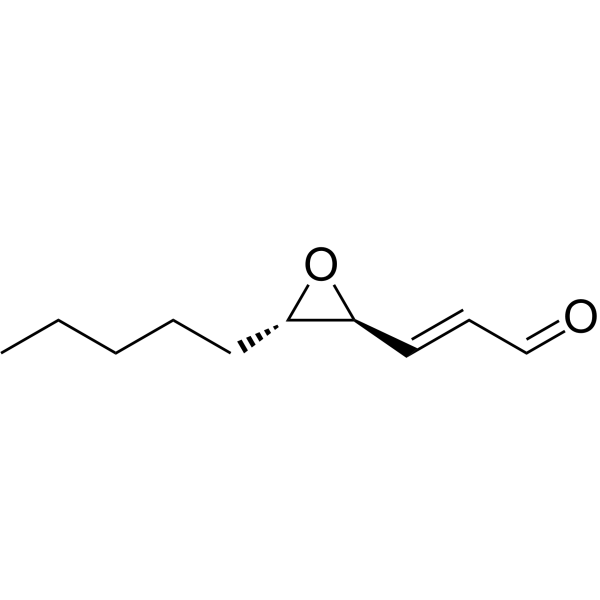
HY-120893
trans-4,5-Epoxy-(E)-2-decenalα,β-unsaturated aldehyde -
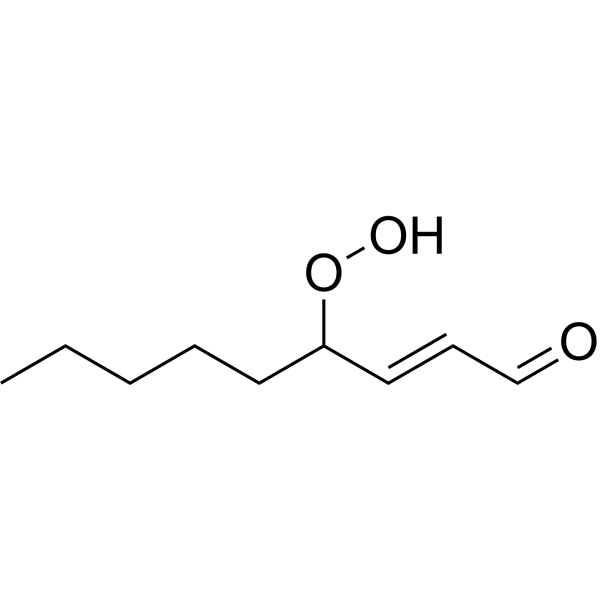
HY-116722
(2E)-4-Hydroperoxy-2-nonenalLipid Peroxidation -
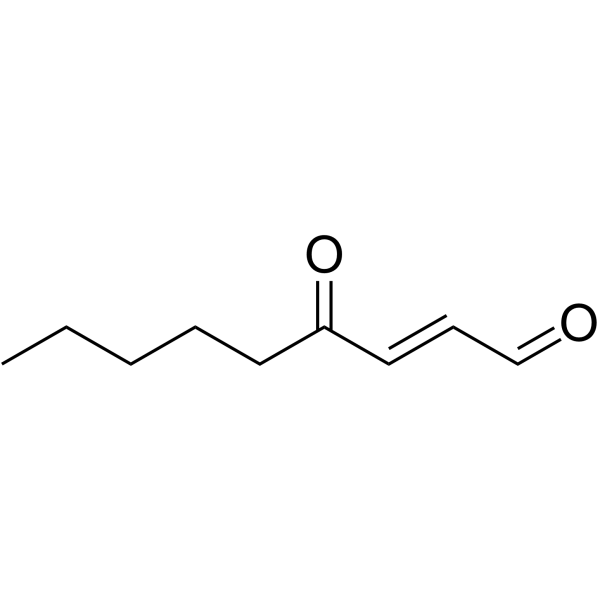
HY-114524
(E)-4-Oxo-2-nonenalTRPA1 Agonist -

HY-113884A
(±)-Coriolic acidRacemic Monohydroxy Fatty Acids -
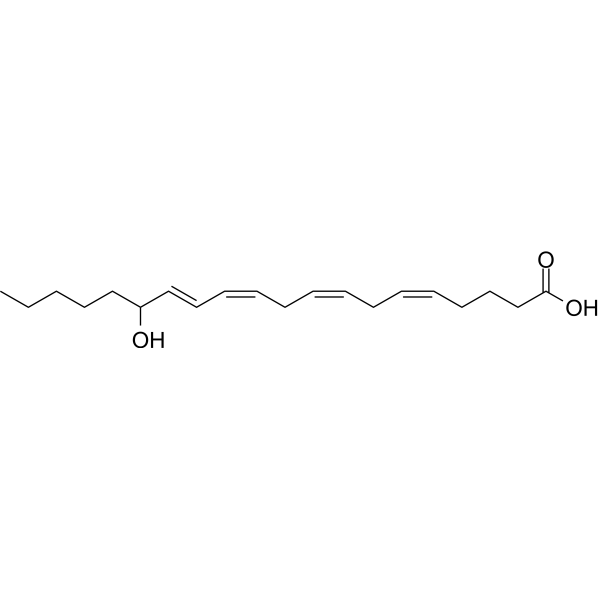
HY-113336B
(±)15-HETEPROTAC Linkers -
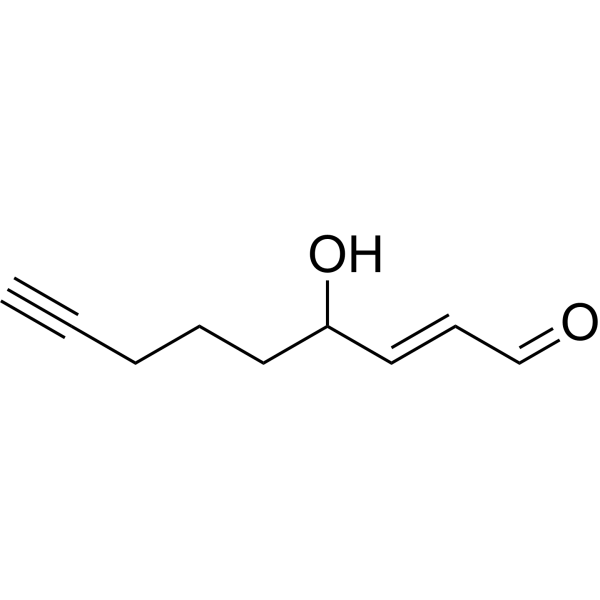
HY-113803
4-Hydroxynonenal alkyneAzide -

HY-136410
4-hydroxy Nonenal Mercapturic AcidUnsaturated Fatty Acid -

HY-113466R
4-Hydroxynonenal (Standard)Oxidative/Nitrosative Stress Biomarker -

HY-117044A
(±)12-HEPE -

HY-N7801
(±)5-HEPE -

HY-126108
(±)8-HEPE
All Endogenous Metabolite Isoforms
More

Biological Activity
Description


Chemical Information
-
CAS No. 17427-21-3
-
Appearance Liquid
-
Molecular Weight 114.14
-
Formula C6H10O2
-
Color Colorless to light yellow
-
SMILES
CCC(/C=C/C=O)O
-
Synonyms
4-HHE
-
Shipping
Room temperature in continental US; may vary elsewhere.
-
Storage
Solution, -20°C, 2 years

Protocols
-
Ferroptosis Solutions
Ferroptosis is an iron-dependent, non-apoptotic form of regulated cell death characterized by lethal lipid peroxidation and sensitivity to suppression by iron chelators or lipophilic radical-trapping antioxidants. The core pathway links cystine uptake through system Xc−, glutathione availability, GPX4-dependent detoxification of phospholipid hydroperoxides, iron-dependent oxidative reactions, and polyunsaturated-phospholipid metabolism into a cell-death program that is biochemically and morphologically distinct from apoptosis, necrosis, and autophagy. The ferroptosis pathway is experimentally linked to phenotype through chemical and genetic perturbation. Erastin induces ferroptosis by inhibiting cystine uptake through system Xc− and weakening antioxidant defenses, while GPX4 inhibition or depletion causes lipid peroxide accumulation and ferroptotic cancer-cell death. ACSL4 and oxidizable arachidonoyl- or adrenoyl-containing phosphatidylethanolamines shape ferroptosis sensitivity by con


Purity & Documentation
-
Data Sheet (263 KB)
-
SDS (545 KB)
- English - EN (545 KB)
- Français - FR (545 KB)
- Deutsch - DE (545 KB)
- Norwegian - NO (545 KB)
- Español - ES (545 KB)
- Swedish - SV (545 KB)
- Italian - IT (545 KB)
- Korean - KR (545 KB)
- Portuguese - PT (545 KB)
-
Handling Instructions (2659 KB)
References

Calculators
Concentration (start) × Volume (start) = Concentration (final) × Volume (final)


4-Hydroxy hexenal Related Classifications
HY-124355 Related Classifications
 Powered by Bioz