



4-Nitropyrazole

Based on 1 Customer Validation
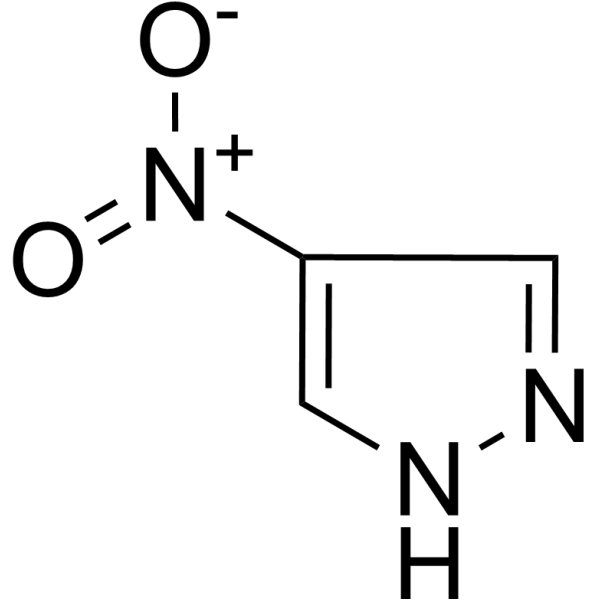
4-Nitropyrazole is a five-membered nitrogen-containing heterocyclic compound that can be used as a drug intermediate. 4-Nitropyrazole can be synthesized into antibiotics/antifungal/antiviral agents containing pyrazole rings. 4-Nitropyrazole is synthesized through C-H activation reactions to produce LRRK2 inhibitors, which are used in the research of Parkinson's disease.
For research use only. We do not sell to patients.
- Purity : 99.99%
- CAS No.: 2075-46-9
- Formula: C3H3N3O2
- Molecular Weight:113.08
-
Storage:Powder -20°C, 3 years , 4°C, 2 years ; In solvent -80°C, 6 months , -20°C, 1 month

To place orders, for customer services and technical support, please contact: MedChemExpress USA
Tel: 609-228-6898 E-mail: [email protected] [email protected]


-
 Biological Activity
-
Chemical Information
-
Solvent & Solubility
- Protocols
- Purity & Documentation
- References
-
 Help & FAQs


-

HY-B0876
FomepizoleCytochrome P450 Inhibitor -
HY-I0312
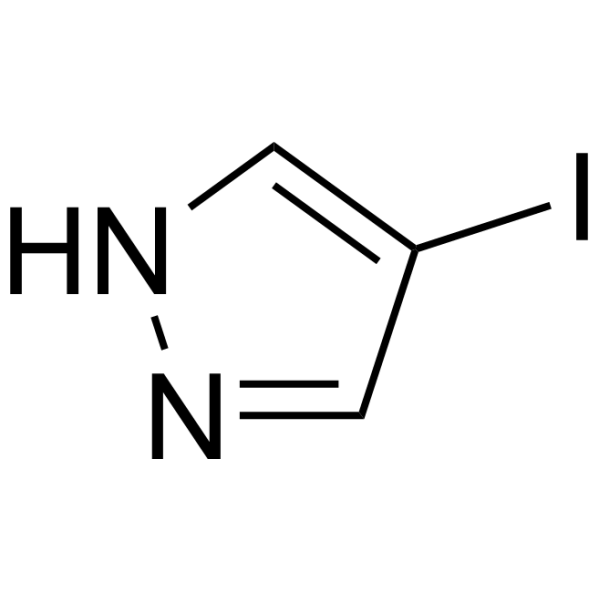
4-IodopyrazoleBiochemical Reagent -
HY-75637
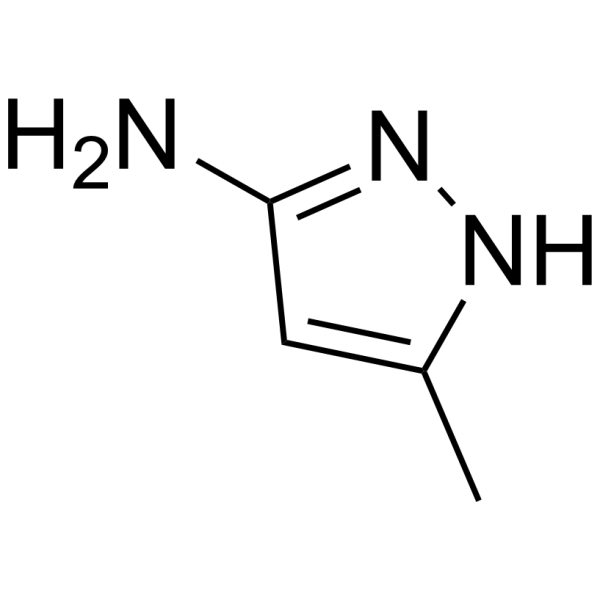
3-Amino-5-methylpyrazoleDrug Intermediate -
HY-W002457
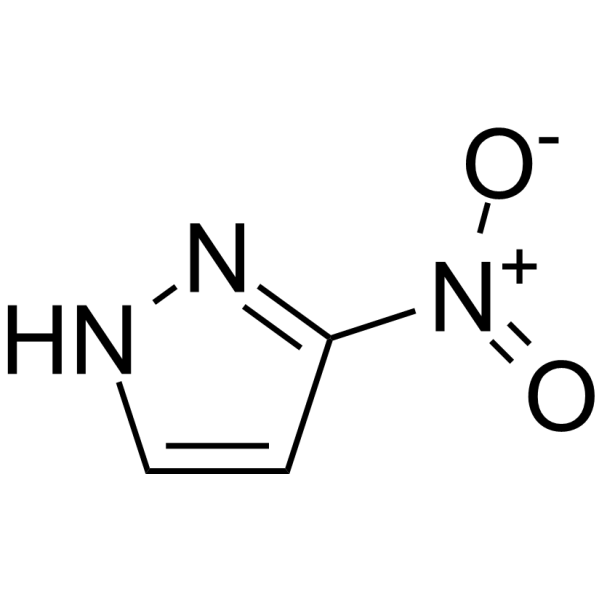
3-NitropyrazoleBiochemical Reagent -
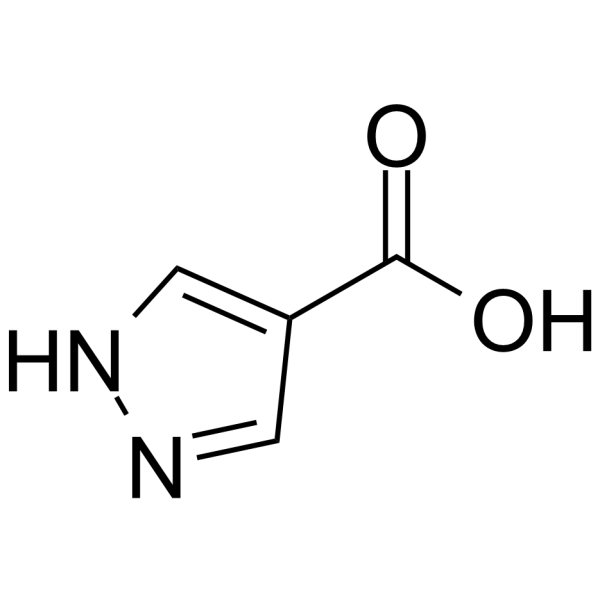
HY-W002065
4-CarboxypyrazoleAlcohol Dehydrogenase Ligand -
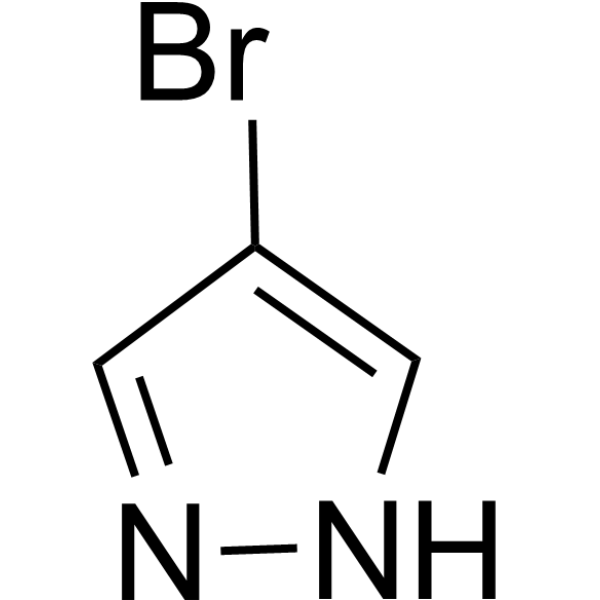
HY-78243
4-BromopyrazoleBiochemical Reagent -
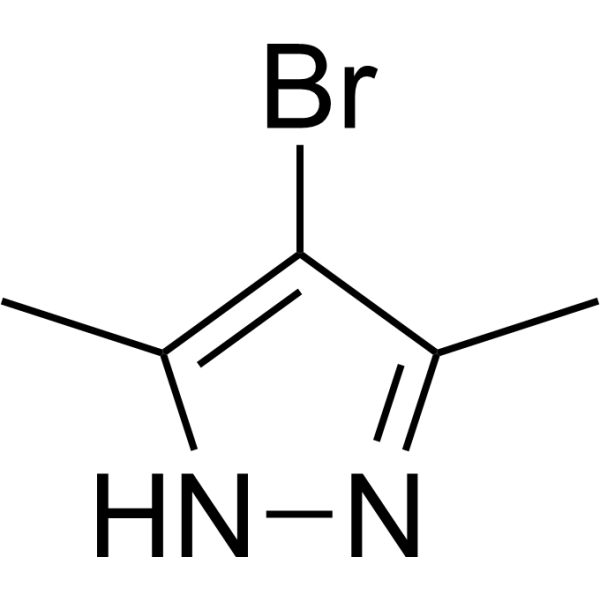
HY-W016754
4-Bromo-3,5-dimethylpyrazoleBiochemical Reagent -
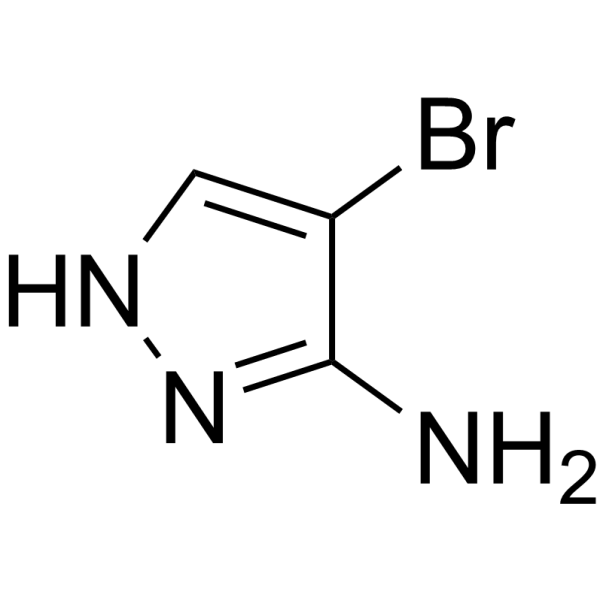
HY-W007681
4-Bromo-1H-pyrazol-3-amineBiochemical Reagent -
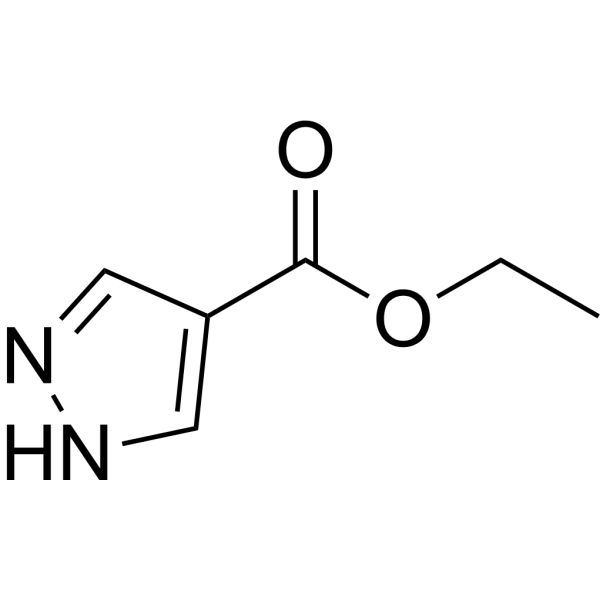
HY-100040
Ethyl 1H-pyrazole-4-carboxylateBiochemical Reagent -
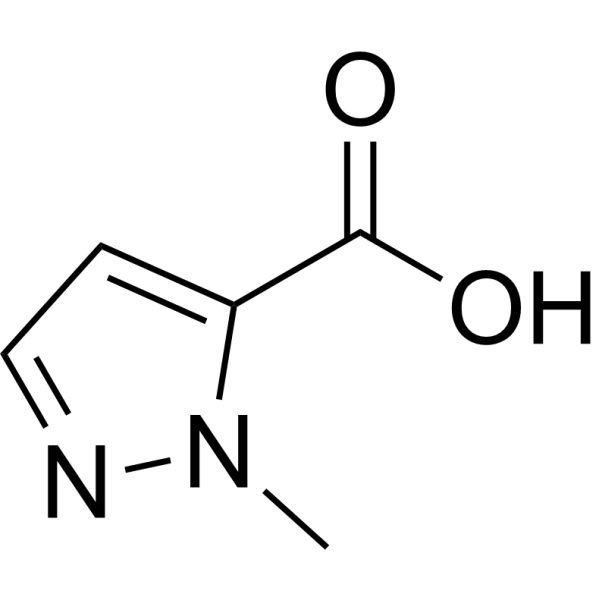
HY-34505
1-Methyl-5-pyrazolecarboxylic acidBuilding Block -
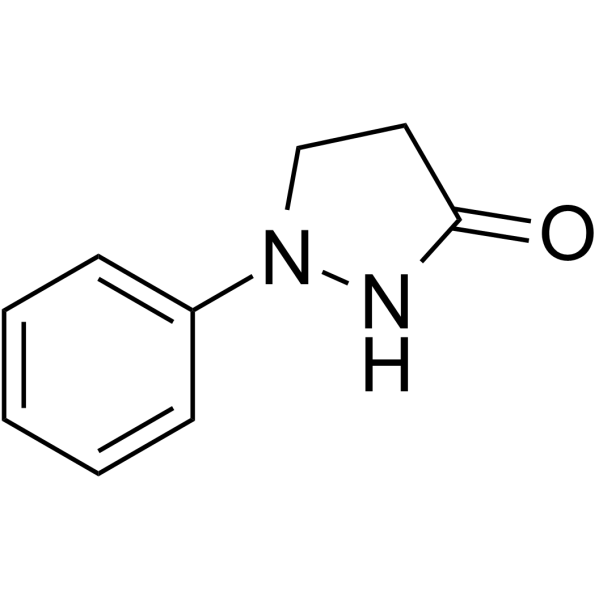
HY-W010144
PhenidoneCOX/LOX Inhibitor -
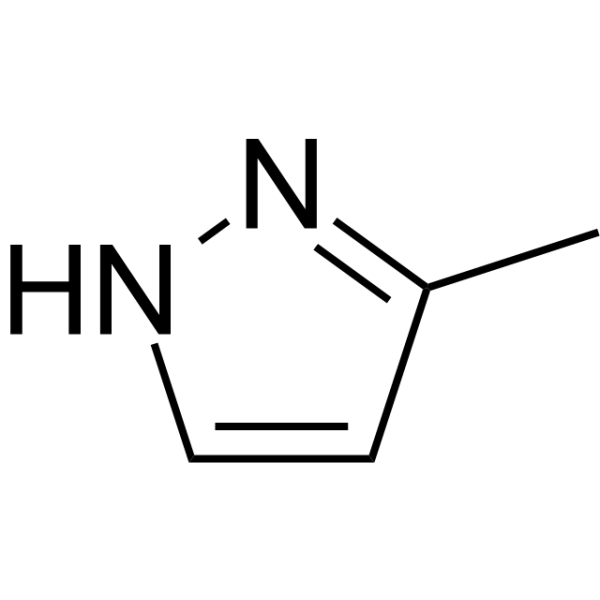
HY-66054
3-MethylpyrazoleNitrification Inhibito


Biological Activity
Description


Chemical Information
-
CAS No. 2075-46-9
-
Appearance Solid
-
Molecular Weight 113.08
-
Formula C3H3N3O2
-
Color White to off-white
-
SMILES
O=[N+](C1=CNN=C1)[O-]
-
Shipping
Room temperature in continental US; may vary elsewhere.
-
Storage
Powder -20°C 3 years 4°C 2 years In solvent -80°C 6 months -20°C 1 month


Solvent & Solubility
In Vitro:
DMSO : 200 mg/mL (1768.72 mM; Need ultrasonic; Hygroscopic DMSO has a significant impact on the solubility of product, please use newly opened DMSO)
Please refer to the solubility information to select the appropriate solvent. Once prepared, please aliquot and store the solution to prevent product inactivation from repeated freeze-thaw cycles.
Storage method and period of stock solution: -80°C, 6 months; -20°C, 1 month. When stored at -80°C, please use it within 6 months. When stored at -20°C, please use it within 1 month.
Please refer to the solubility information to select the appropriate solvent. Once prepared, please aliquot and store the solution to prevent product inactivation from repeated freeze-thaw cycles.
Storage method and period of stock solution: -80°C, 6 months; -20°C, 1 month. When stored at -80°C, please use it within 6 months. When stored at -20°C, please use it within 1 month.
Concentration (start) × Volume (start) = Concentration (final) × Volume (final)

Protocols
-
Research Protocol for Infectious Diseases
Infectious-disease experiments test how pathogens interact with host barriers, innate immune receptors, inflammatory signaling, pathogen replication, and tissue injury; pattern-recognition receptors such as TLRs, RIG-I-like receptors, NOD-like receptors, and inflammasomes detect microbial molecules and activate NF-κB, interferon, and cytokine responses. The central hypothesis is that infection severity reflects the balance between pathogen burden and host response: protective inflammation restricts pathogen growth, whereas excessive or mislocalized inflammation contributes to tissue damage and disease phenotype. Unresolved questions include which host pathways are protective versus pathogenic, why some infection models fail to translate to human disease, and which combined readouts best predict clinically relevant infection outcomes.
-
Human pluripotent stem cell midbrain dopaminergic neuron differentiation
Human pluripotent stem cells are directed toward midbrain dopaminergic neurons by first inducing a neural floor-plate-like progenitor state, then patterning cells with ventralizing SHH signaling and midbrain/WNT-FGF cues, and finally maturing progenitors into neurons expressing dopaminergic markers such as TH, NURR1/NR4A2, PITX3, DAT/SLC6A3, VMAT2/SLC18A2, GIRK2/KCNJ6, FOXA2, LMX1A, and EN1. The main readouts are loss of pluripotency, acquisition of FOXA2+/LMX1A+ midbrain floor-plate progenitors, emergence of βIII-tubulin+/MAP2+ neurons, and production of TH+ dopaminergic neurons with molecular, dopamine-release, and electrophysiological features of midbrain dopaminergic identity.


Purity & Documentation
-
Data Sheet (271 KB)
-
SDS (614 KB)
- English - EN (614 KB)
- Français - FR (614 KB)
- Deutsch - DE (614 KB)
- Norwegian - NO (614 KB)
- Español - ES (614 KB)
- Swedish - SV (614 KB)
- Italian - IT (614 KB)
- Korean - KR (614 KB)
- Portuguese - PT (614 KB)
-
Handling Instructions (2659 KB)
References
[1]. Manfredini S,et al. Synthesis and antiviral/antitumor activity of some substituted pyrazole and pyrazolo[4,3-d]-1,2,3-triazin-4-one nucleosides. J Med Chem. 1992 Mar 6;35(5):917-24. [Content Brief]
[2]. Barron B, et al. A Concise Enantioselective Synthesis of Fluorinated Pyrazolo-Piperidine GSK3901383A Enabled by an Organocatalytic Aza-Michael Addition. Org Lett. 2024 Mar 1;26(8):1533-1538. [Content Brief]
[3]. Hrelia P, et al. Synthesis, metabolism and structure-mutagenicity relationships of novel 4-nitro-(imidazoles and pyrazoles) in Salmonella typhimurium. Mutat Res. 1998 Feb 2;397(2):293-301. [Content Brief]


Complete Stock Solution Preparation Table
Please refer to the solubility information to select the appropriate solvent. Once prepared, please aliquot and store the solution to prevent product inactivation from repeated freeze-thaw cycles.
Storage method and period of stock solution: -80°C, 6 months; -20°C, 1 month. When stored at -80°C, please use it within 6 months. When stored at -20°C, please use it within 1 month.
| Optional Solvent | Concentration Solvent Mass | 1 mg | 5 mg | 10 mg | 25 mg |
|---|---|---|---|---|---|
| DMSO | 1 mM | 8.8436 mL | 44.2180 mL | 88.4361 mL | 221.0902 mL |
| 5 mM | 1.7687 mL | 8.8436 mL | 17.6872 mL | 44.2180 mL | |
| 10 mM | 0.8844 mL | 4.4218 mL | 8.8436 mL | 22.1090 mL | |
| 15 mM | 0.5896 mL | 2.9479 mL | 5.8957 mL | 14.7393 mL | |
| 20 mM | 0.4422 mL | 2.2109 mL | 4.4218 mL | 11.0545 mL | |
| 25 mM | 0.3537 mL | 1.7687 mL | 3.5374 mL | 8.8436 mL | |
| 30 mM | 0.2948 mL | 1.4739 mL | 2.9479 mL | 7.3697 mL | |
| 40 mM | 0.2211 mL | 1.1055 mL | 2.2109 mL | 5.5273 mL | |
| 50 mM | 0.1769 mL | 0.8844 mL | 1.7687 mL | 4.4218 mL | |
| 60 mM | 0.1474 mL | 0.7370 mL | 1.4739 mL | 3.6848 mL | |
| 80 mM | 0.1105 mL | 0.5527 mL | 1.1055 mL | 2.7636 mL | |
| 100 mM | 0.0884 mL | 0.4422 mL | 0.8844 mL | 2.2109 mL |


4-Nitropyrazole Related Classifications
HY-W002458 Related Classifications
 Powered by Bioz