



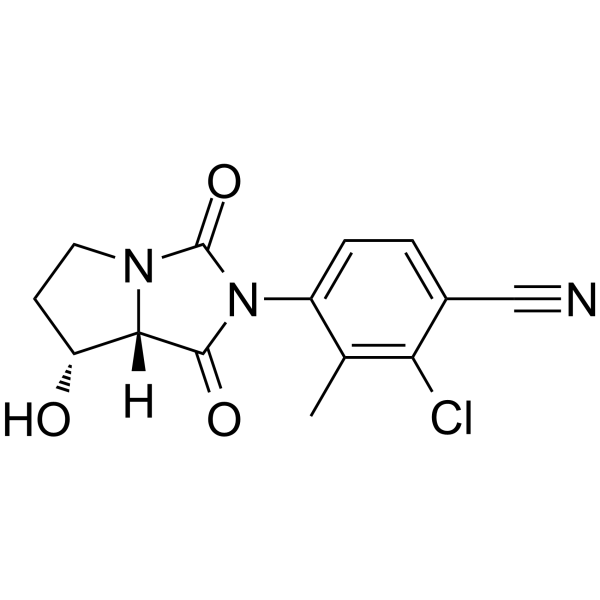
BMS-564929
Based on 6 publication(s) in Google Scholar
BMS-564929 is an androgen receptor (AR) agonist, binds to androgen receptor (AR) with a Ki of 2.11±0.16 nM.
For research use only. We do not sell to patients.
- Purity : 98.28%
- CAS No.: 627530-84-1
- Formula: C14H12ClN3O3
- Molecular Weight:305.72
-
Storage:Powder -20°C, 3 years , 4°C, 2 years ; In solvent -80°C, 2 years , -20°C, 1 year

To place orders, for customer services and technical support, please contact: MedChemExpress USA
Tel: 609-228-6898 E-mail: [email protected] [email protected]


-
 Biological Activity
-
Chemical Information
-
Solvent & Solubility
- Protocols
- Purity & Documentation
- References
-
 Help & FAQs


-
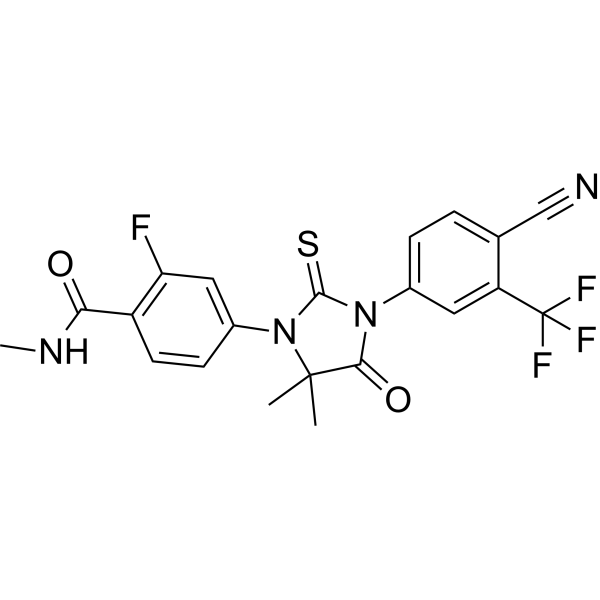
HY-70002
EnzalutamideAndrogen Receptor Antagonist -
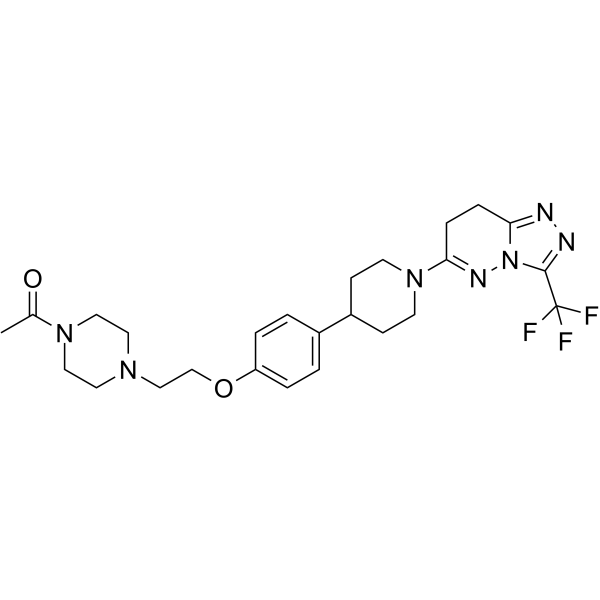
HY-16079
AZD3514AR Inhibitor -
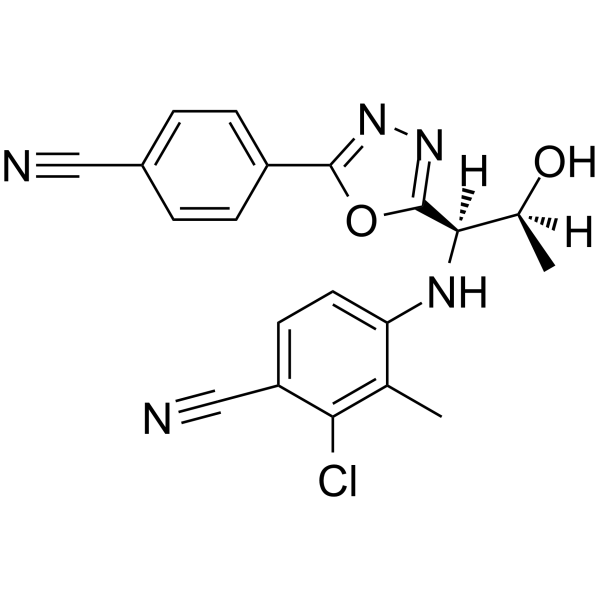
HY-14383
VosilasarmAndrogen Receptor Modulator -
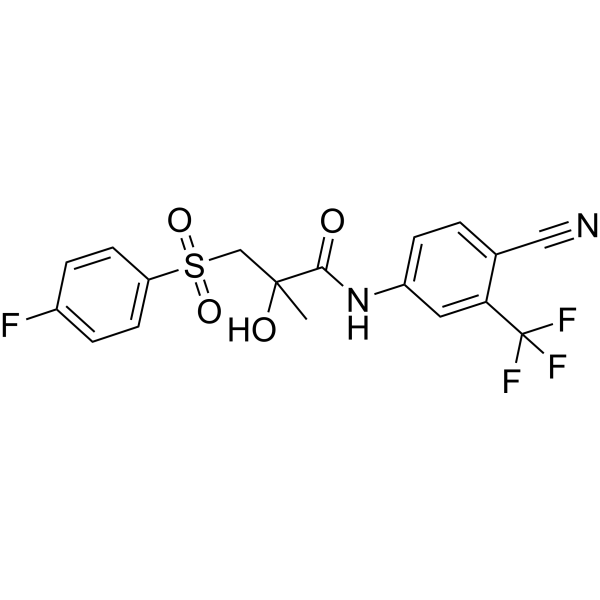
HY-14249
BicalutamideAndrogen Receptor Inhibitor -
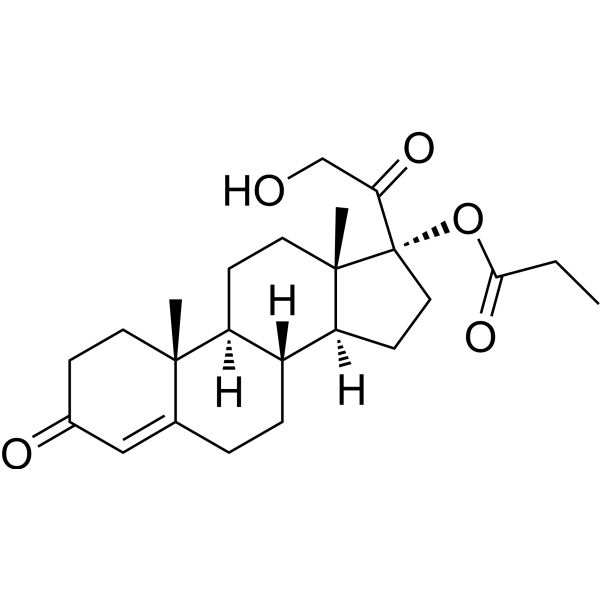
HY-13331
ClascoteroneAndrogen Receptor Inhibitor -
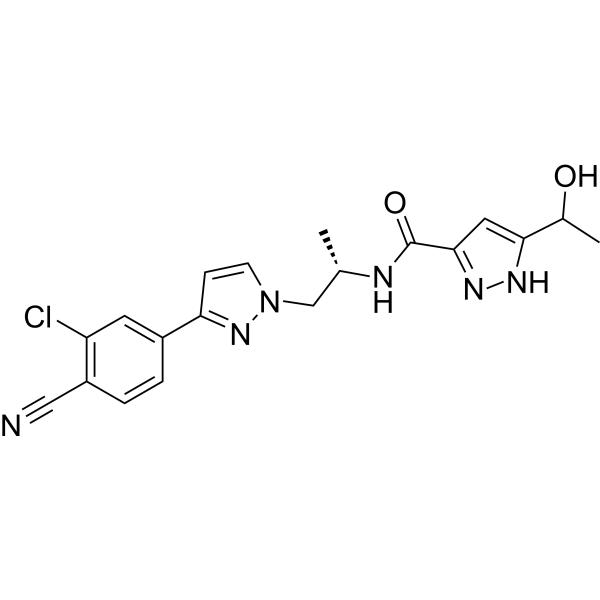
HY-16985
DarolutamideAndrogen Receptor Antagonist -
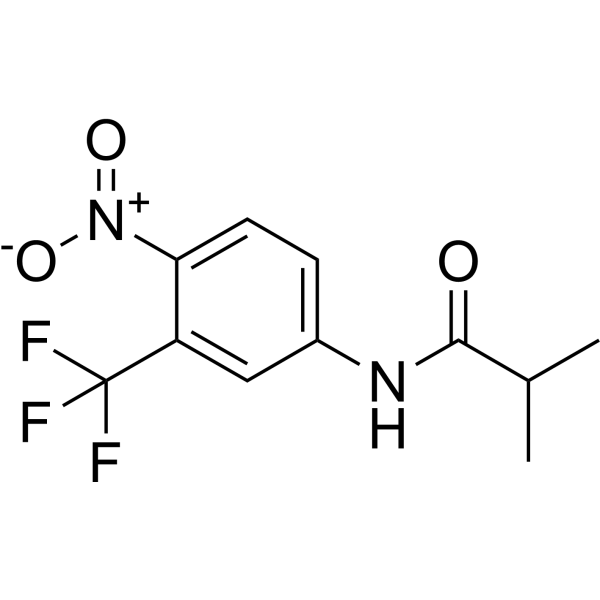
HY-B0022
FlutamideAntiandrogen Agent -
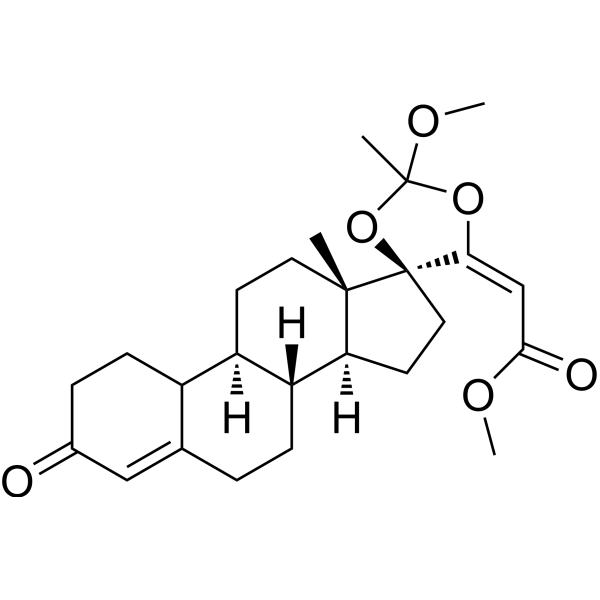
HY-107480
YK11Androgen Receptor Partial Agonist -
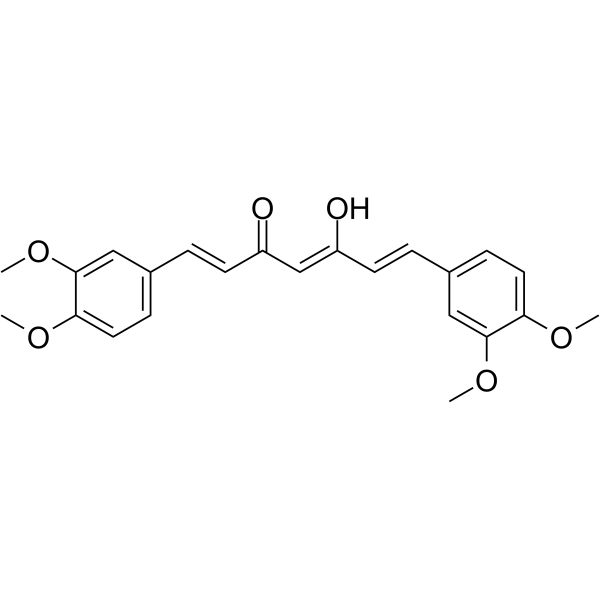
HY-15194
DimethylcurcuminAndrogen Receptor Inhibitor -
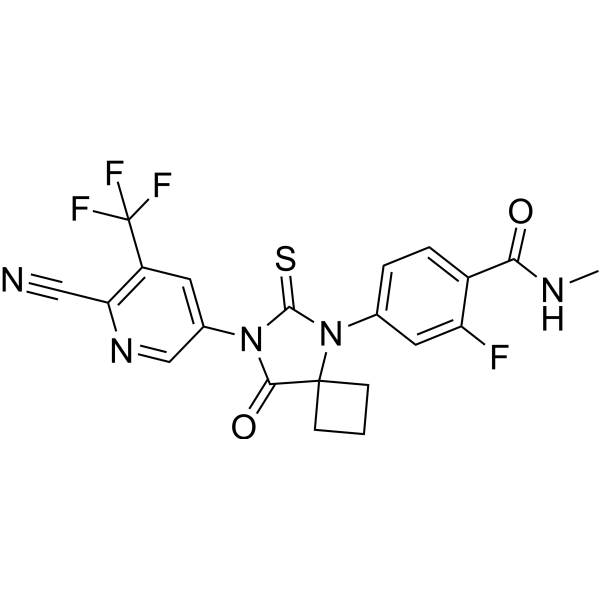
HY-16060
ApalutamideAR Antagonist -
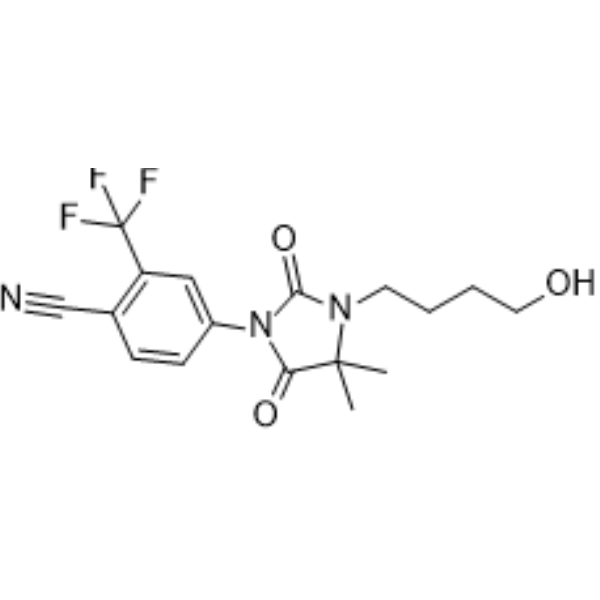
HY-10561
RU 58841Androgen Receptor Antagonist -
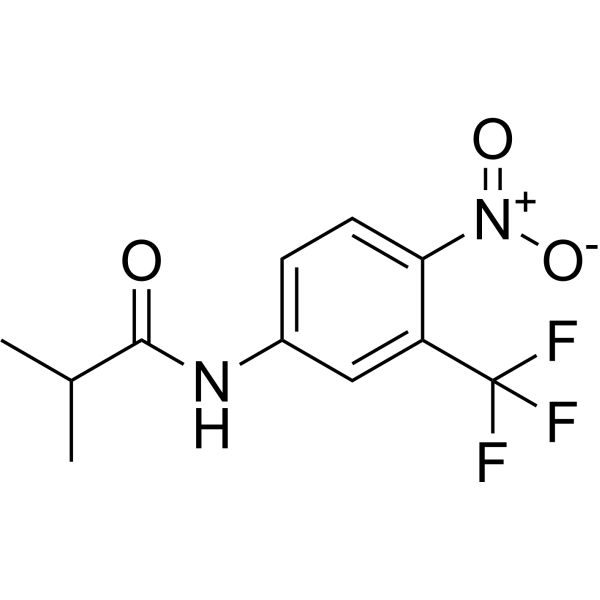
HY-B0022R
Flutamide (Standard)Antiandrogen Agent
Publications Citing Use of MedChemExpress (MCE) BMS-564929
More- Redox Biol. 2025 Oct:86:103793. [Abstract]
- Food Chem X. 2019 Sep 24:4:100056. [Abstract]
- Cancers (Basel). 2023 Oct 15;15(20):4995. [Abstract]
- J Chromatogr A. 2019 Aug 30:1600:183-196. [Abstract]
- MethodsX. 2020 May 21:7:100926. [Abstract]
- Food Addit Contam Part A Chem Anal Control Expo Risk Assess. 2020 Aug;37(8):1253-1263. [Abstract]
 Customer Validation & Images

-
RT-PCR


Biological Activity
Description
IC50 & Target
Ki: 2.11±0.16 nM (Androgen receptor)[1]
Cellular Effect
|
Cell Line

|
Type | Value | Description | References |
|---|---|---|---|---|
| C2C12 | EC50 |
0.44 nM
Compound: 2
|
Agonist activity at androgen receptor in mouse C2C12 cells by receptor transactivation assay
Agonist activity at androgen receptor in mouse C2C12 cells by receptor transactivation assay
|
[PMID: 17574413] |
| C2C12 | EC50 |
0.7 nM
Compound: 3
|
Agonist activity at androgen receptor expressed in C2C12 mouse cells by luciferase reporter transactivation assay
Agonist activity at androgen receptor expressed in C2C12 mouse cells by luciferase reporter transactivation assay
|
[PMID: 17552509] |
| C2C12 | EC50 |
7.8 nM
Compound: 1
|
Agonist activity at rat androgen receptor expressed in mouse skeletal muscle C2C12 cells assessed as transcriptional activation after 24 hrs by androgen-specific response element driven luciferase reporter gene assay
Agonist activity at rat androgen receptor expressed in mouse skeletal muscle C2C12 cells assessed as transcriptional activation after 24 hrs by androgen-specific response element driven luciferase reporter gene assay
|
[PMID: 19351168] |
In Vitro
BMS-564929 exhibits a potency (EC50, calculated as the concentration at which 50% of the maximum stimulatory effect of DHT is achieved) of 0.44±0.03 nM in the C2C12 myoblast cell line. In the PEC cell line, the EC50 for BMS-564929 is 8.66±0.22 nM. BMS-564929 is more than 1000-fold selective for AR vs. estrogen receptors (ER) α and β, glucocorticoid receptor (GR), and mineralocorticoid receptor (MR), and approximately 400-fold selective vs. progesterone receptor (PR). BMS-564929 shows no measurable activity in functional transactivation assays with ERα/β, GR, MR, or PR at concentrations up to 30 μM[1].
MedChemExpress (MCE) has not independently confirmed the accuracy of these methods. They are for reference only. Further protocols information, click here.
In Vivo
MedChemExpress (MCE) has not independently confirmed the accuracy of these methods. They are for reference only.


Chemical Information
-
CAS No. 627530-84-1
-
Appearance Solid
-
Molecular Weight 305.72
-
Formula C14H12ClN3O3
-
Color White to off-white
-
SMILES
N#CC1=CC=C(N(C(N2[C@@]3([H])[C@H](O)CC2)=O)C3=O)C(C)=C1Cl
-
Shipping
Room temperature in continental US; may vary elsewhere.
-
Storage
Powder -20°C 3 years 4°C 2 years In solvent -80°C 2 years -20°C 1 year


Publications (6)
-
Journal Impact Factor
-
Most Recent
-
Redox Biol
Arylsulfatase K attenuates airway epithelial cell senescence in COPD by regulating parkin-mediated mitophagy. [Abstract]2025 Oct:86:103793. PMID: 40763656
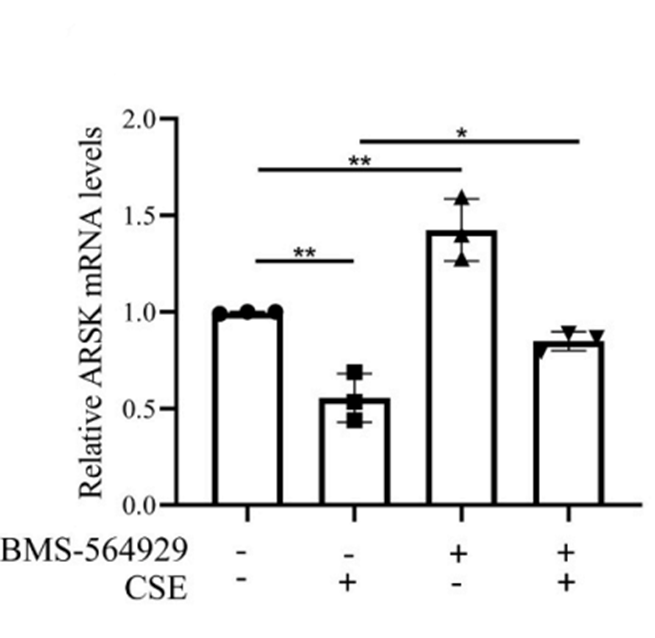
BMS-564929 purchased from MedChemExpress. Usage Cited in: Redox Biol. 2025 Oct:86:103793. [Abstract]
Relative ARSK mRNA levels with or without the treatment of BMS-564929 (AR agonist) (20 nM) in HBE cells.
-
Food Chem X
Monitoring of selective androgen receptor modulators in bovine muscle tissue by ultra-high performance liquid chromatography-tandem mass spectrometry. [Abstract]2019 Sep 24:4:100056. PMID: 31650129 -
Cancers (Basel)
A Combinatorial Regulatory Platform Determines Expression of RNA Polymerase III Subunit RPC7α (POLR3G) in Cancer. [Abstract]2023 Oct 15;15(20):4995. PMID: 37894362 -
J Chromatogr A
Development and validation of a semi-quantitative ultra-high performance liquid chromatography-tandem mass spectrometry method for screening of selective androgen receptor modulators in urine. [Abstract]2019 Aug 30:1600:183-196. PMID: 31053351 -
MethodsX
Enhanced UHPLC-MS/MS screening of selective androgen receptor modulators following urine hydrolysis. [Abstract]2020 May 21:7:100926. PMID: 32547930 -
Food Addit Contam Part A Chem Anal Control Expo Risk Assess
2020 Aug;37(8):1253-1263. PMID: 32401172


Solvent & Solubility
In Vitro:
DMSO : 50 mg/mL (163.55 mM; Need ultrasonic; Hygroscopic DMSO has a significant impact on the solubility of product, please use newly opened DMSO)
Please refer to the solubility information to select the appropriate solvent. Once prepared, please aliquot and store the solution to prevent product inactivation from repeated freeze-thaw cycles.
Storage method and period of stock solution: -80°C, 2 years; -20°C, 1 year. When stored at -80°C, please use it within 2 years. When stored at -20°C, please use it within 1 year.
Please refer to the solubility information to select the appropriate solvent. Once prepared, please aliquot and store the solution to prevent product inactivation from repeated freeze-thaw cycles.
Storage method and period of stock solution: -80°C, 2 years; -20°C, 1 year. When stored at -80°C, please use it within 2 years. When stored at -20°C, please use it within 1 year.
Concentration (start) × Volume (start) = Concentration (final) × Volume (final)
In Vivo:
Select the appropriate dissolution method based on your experimental animal and administration route.
- For the following dissolution methods, please ensure to first prepare a clear stock solution using an In Vitro approach and then sequentially add co-solvents:
- To ensure reliable experimental results, the clarified stock solution can be appropriately stored based on storage conditions. As for the working solution for In Vivo experiments, it is recommended to prepare freshly and use it on the same day.
- The percentages shown for the solvents indicate their volumetric ratio in the final prepared solution. If precipitation or phase separation occurs during preparation, heat and/or sonication can be used to aid dissolution.
Add each solvent one by one: 10% DMSO 40% PEG300 5% Tween-80 45% Saline
Solubility: ≥ 2.5 mg/mL (8.18 mM); Clear solution
This protocol yields a clear solution of ≥ 2.5 mg/mL (saturation unknown).
Taking 1 mL working solution as an example, add 100 μL DMSO stock solution (25.0 mg/mL) to 400 μL PEG300, and mix evenly; then add 50 μL Tween-80 and mix evenly; then add 450 μL Saline to adjust the volume to 1 mL.
Preparation of Saline: Dissolve 0.9 g sodium chloride in ddH₂O and dilute to 100 mL to obtain a clear Saline solution.
In Vivo Dissolution Calculator
Please enter the basic information of animal experiments:
-
-
-
-
Recommended: Prepare an additional quantity of animals to account for potential losses during experiments.
Please enter your animal formula composition:
-
%DMSO +
Recommended: Keep the proportion of DMSO in working solution below 2% if your animal is weak.
-
%+
-
+%Tween-80 + +
-
%Saline +
The co-solvents required include: DMSO, . All of co-solvents are available by MedChemExpress (MCE). , Tween 80. All of co-solvents are available by MedChemExpress (MCE).
Working solution concentration: 0.22 mg/mL
Method for preparing stock solution: mg drug dissolved in μL DMSO. Stock solution concentration: mg/mL.
1. Take μL DMSO stock solution;
2. Add μL .
μL , mix evenly;
3. Then add μL Tween 80, mix evenly;
4. Then add μL
Please ensure that the stock solution in the first step is dissolved to a clear state, and add co-solvents in sequence. You can use ultrasonic heating (ultrasonic cleaner, recommended frequency 20-40 kHz), vortexing, etc. to assist dissolution.

Protocols
-
Research Protocol for Endocrine Diseases
Endocrine diseases often arise from disrupted hormone production, hormone signaling, or target-tissue responsiveness; for diabetes-focused endocrine disease models, insulin signaling regulates glucose uptake, hepatic glucose output, lipid metabolism, and β-cell compensation. Type 2 diabetes develops through interacting defects in insulin resistance, β-cell dysfunction, adipose inflammation, hepatic glucose overproduction, altered incretin signaling, and ectopic lipid metabolism. A major unresolved question is whether endocrine dysfunction is driven primarily by target-tissue insulin resistance, intrinsic β-cell failure, immune/inflammatory stress, or combined multi-organ failure that differs by disease stage.


Purity & Documentation
-
Data Sheet (281 KB)
-
SDS (392 KB)
- English - EN (392 KB)
- Français - FR (392 KB)
- Deutsch - DE (392 KB)
- Norwegian - NO (392 KB)
- Español - ES (392 KB)
- Swedish - SV (392 KB)
- Italian - IT (392 KB)
- Korean - KR (392 KB)
- Portuguese - PT (392 KB)
-
Handling Instructions (2659 KB)
References


Complete Stock Solution Preparation Table
Please refer to the solubility information to select the appropriate solvent. Once prepared, please aliquot and store the solution to prevent product inactivation from repeated freeze-thaw cycles.
Storage method and period of stock solution: -80°C, 2 years; -20°C, 1 year. When stored at -80°C, please use it within 2 years. When stored at -20°C, please use it within 1 year.
| Optional Solvent | Concentration Solvent Mass | 1 mg | 5 mg | 10 mg | 25 mg |
|---|---|---|---|---|---|
| DMSO | 1 mM | 3.2710 mL | 16.3548 mL | 32.7097 mL | 81.7742 mL |
| 5 mM | 0.6542 mL | 3.2710 mL | 6.5419 mL | 16.3548 mL | |
| 10 mM | 0.3271 mL | 1.6355 mL | 3.2710 mL | 8.1774 mL | |
| 15 mM | 0.2181 mL | 1.0903 mL | 2.1806 mL | 5.4516 mL | |
| 20 mM | 0.1635 mL | 0.8177 mL | 1.6355 mL | 4.0887 mL | |
| 25 mM | 0.1308 mL | 0.6542 mL | 1.3084 mL | 3.2710 mL | |
| 30 mM | 0.1090 mL | 0.5452 mL | 1.0903 mL | 2.7258 mL | |
| 40 mM | 0.0818 mL | 0.4089 mL | 0.8177 mL | 2.0444 mL | |
| 50 mM | 0.0654 mL | 0.3271 mL | 0.6542 mL | 1.6355 mL | |
| 60 mM | 0.0545 mL | 0.2726 mL | 0.5452 mL | 1.3629 mL | |
| 80 mM | 0.0409 mL | 0.2044 mL | 0.4089 mL | 1.0222 mL | |
| 100 mM | 0.0327 mL | 0.1635 mL | 0.3271 mL | 0.8177 mL |


BMS-564929 Related Classifications
HY-12111 Related Classifications
 Powered by Bioz