



LTURM34
Based on 5 publication(s) in Google Scholar
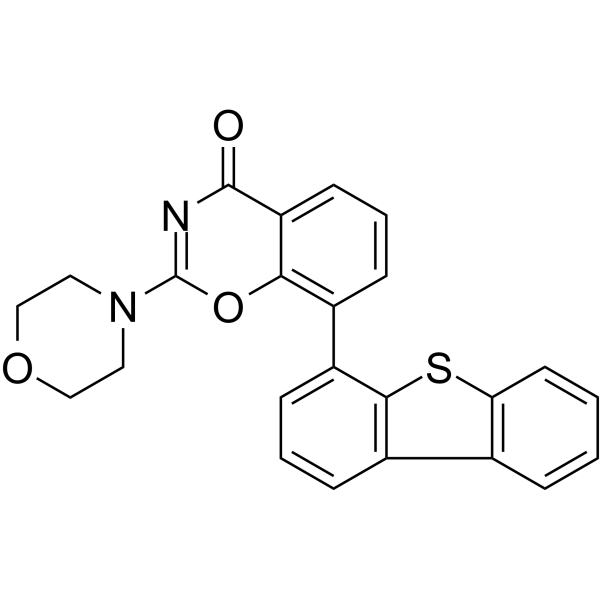
LTURM34 is a specific DNA-PK inhibitor (IC50=34 nM). LTURM34 exhibits 170-fold selectivity for DNA-PK over PI3K. LTURM34 shows potent antiproliferative activity in a wide range of tumor cell lines.
For research use only. We do not sell to patients.
- Purity : 99.35%
- CAS No.: 1879887-96-3
- Formula: C24H18N2O3S
- Molecular Weight:414.48
-
Storage:Powder -20°C, 3 years , 4°C, 2 years ; In solvent -80°C, 2 years , -20°C, 1 year

To place orders, for customer services and technical support, please contact: MedChemExpress USA
Tel: 609-228-6898 E-mail: [email protected] [email protected]


-
 Biological Activity
-
Chemical Information
-
Solvent & Solubility
- Protocols
- Purity & Documentation
- References
-
 Help & FAQs


-
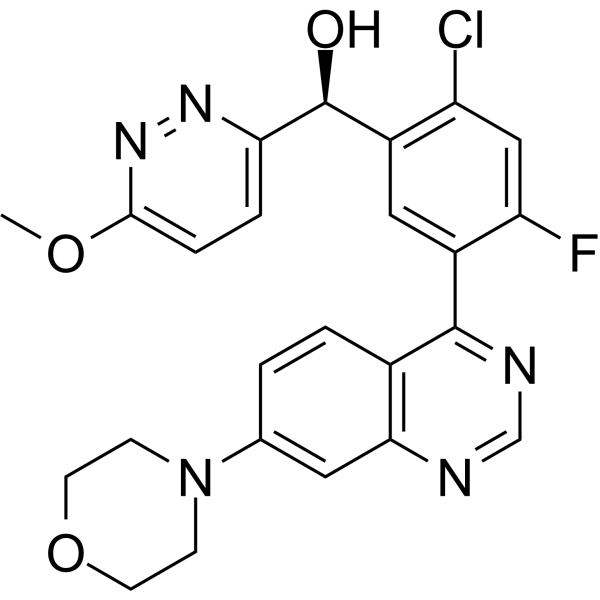
HY-101570
NedisertibDNA-PK Inhibitor -
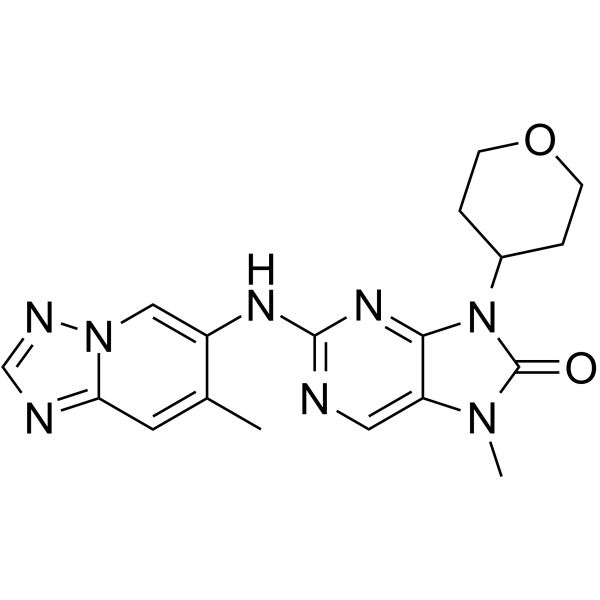
HY-111783
AZD-7648DNA-PK Inhibitor -
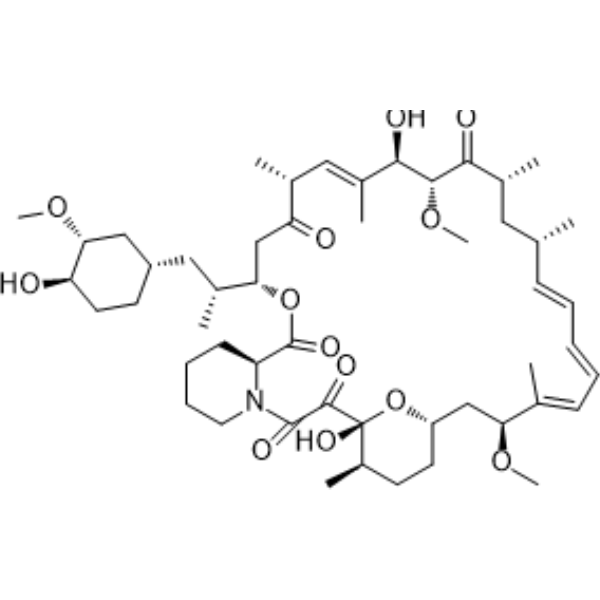
HY-10219
RapamycinmTOR Inhibitor -
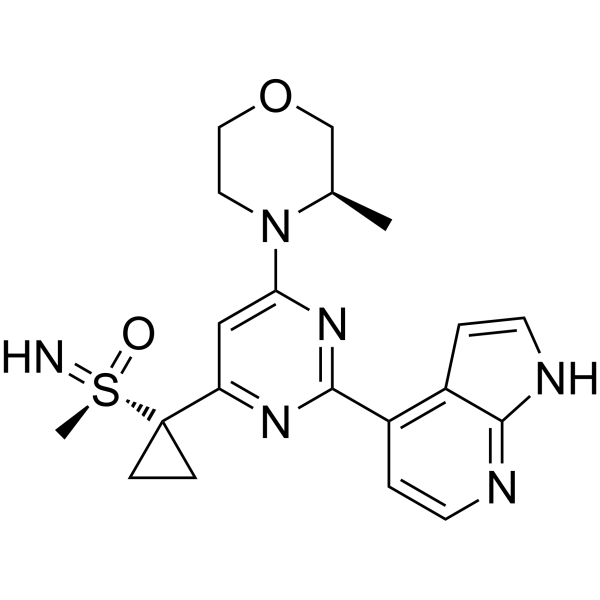
HY-19323
CeralasertibATR Inhibitor -
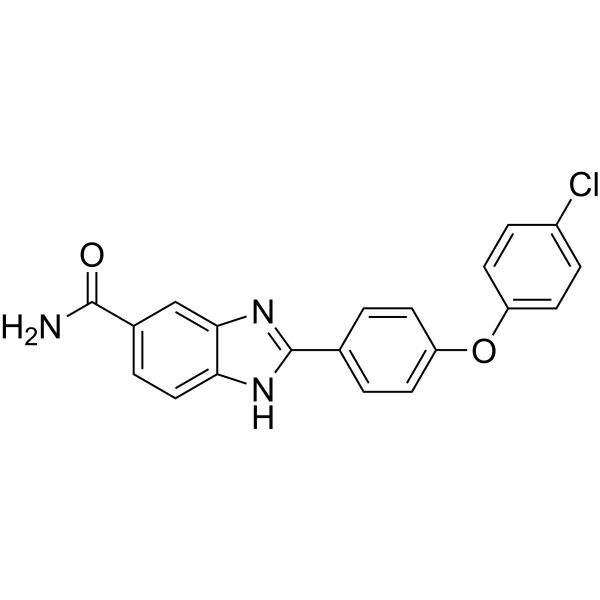
HY-13946
BML-277 -
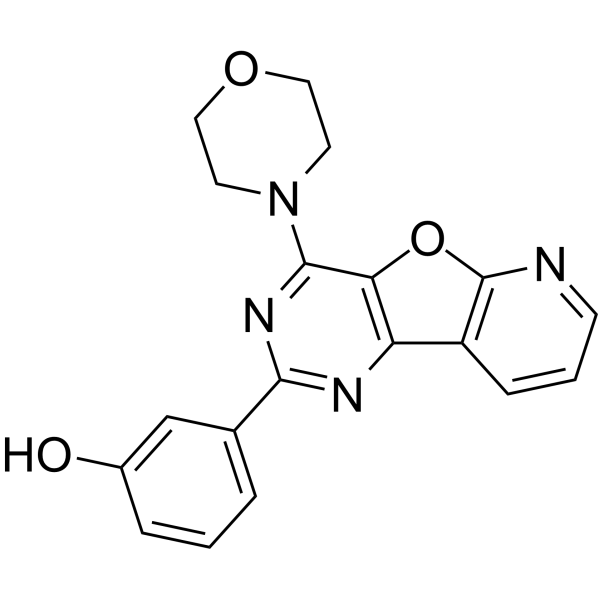
HY-10115
PI-103PI3K/mTOR Inhibitor -
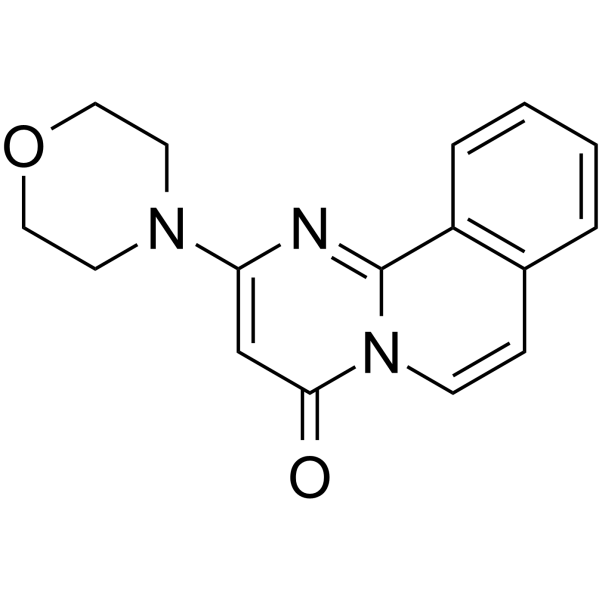
HY-19341
Compound 401DNA-PK Inhibitor -
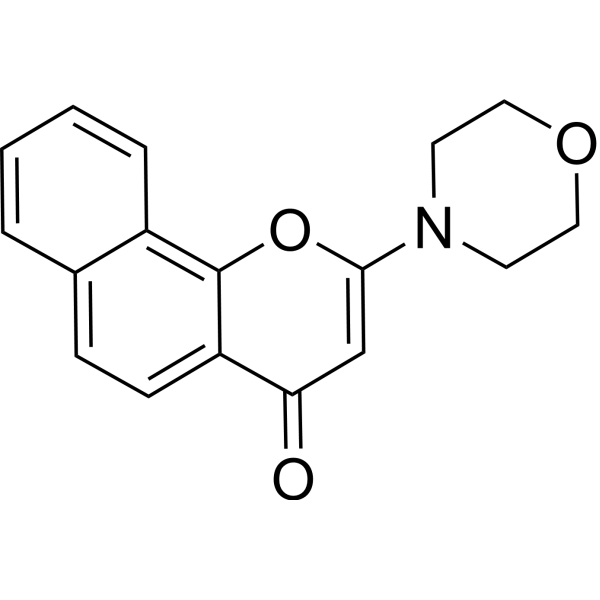
HY-15719
NU 7026DNA-PK Inhibitor -
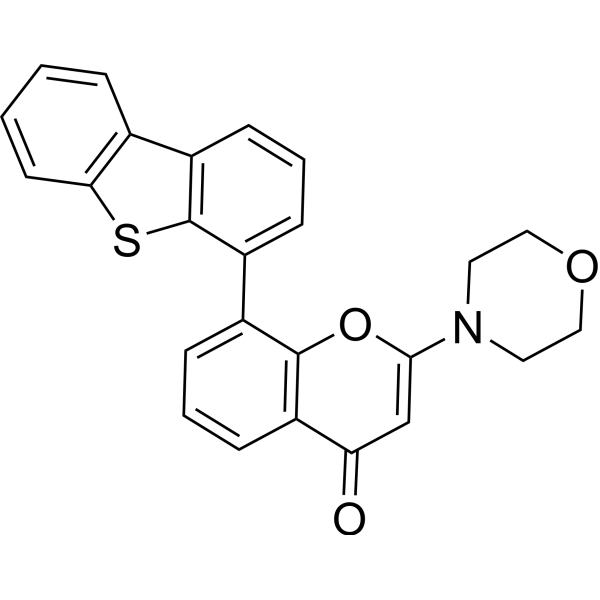
HY-11006
KU-57788DNA-PK Inhibitor -

HY-101667R
LTURM34 (Standard)DNA-PK Inhibitor -
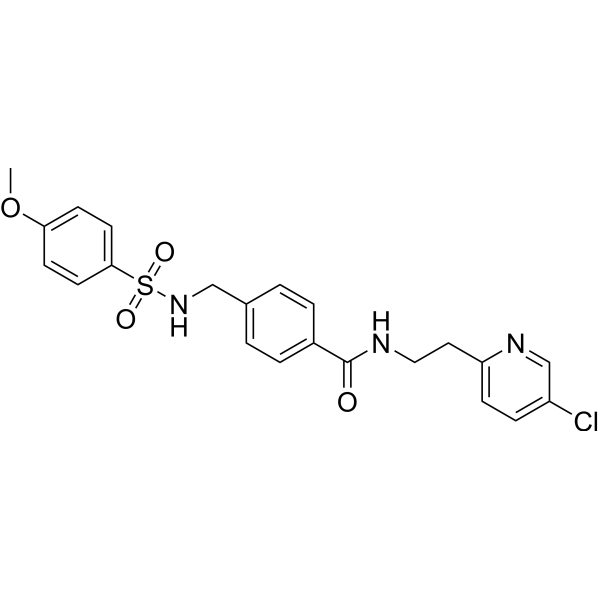
HY-19977
YU238259HDR Inhibtior -
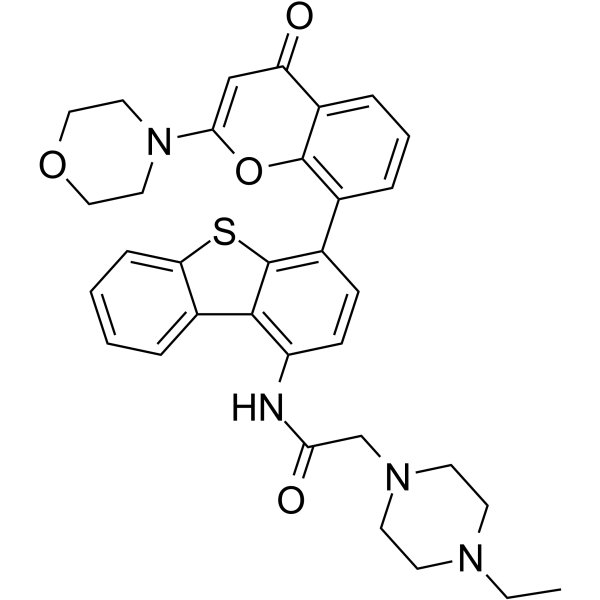
HY-13431
KU-0060648DNA-PK/PI3K Inhibitor
Publications Citing Use of MedChemExpress (MCE) LTURM34
More

Biological Activity
Description
IC50 & Target
[1]|
DNA-PK 34 nM (IC50) |
PI3Kβ 5.8 μM (IC50) |
PI4Kδ 8.5 μM (IC50) |
In Vitro
LTURM34 shows potent inhibition of DNA-PK with excellent selectivity over the Class I PI3K isoforms. The IC50s are 5.8 and 8.5 μM for PI3K β and δ, respectively. LTURM34 is more consistently active against the selected cell lines (11 of 16), but at best shows 54% inhibition against the HOP-92 non-small cell lung cancer line[1].
MedChemExpress (MCE) has not independently confirmed the accuracy of these methods. They are for reference only. Further protocols information, click here.


Chemical Information
-
CAS No. 1879887-96-3
-
Appearance Solid
-
Molecular Weight 414.48
-
Formula C24H18N2O3S
-
Color White to off-white
-
SMILES
O=C1C2=CC=CC(C3=CC=CC4=C3SC5=C4C=CC=C5)=C2OC(N6CCOCC6)=N1
-
Shipping
Room temperature in continental US; may vary elsewhere.
-
Storage
Powder -20°C 3 years 4°C 2 years In solvent -80°C 2 years -20°C 1 year


Publications (5)
-
Journal Impact Factor
-
Most Recent
-
Nat Biotechnol
High-efficiency transgene integration by homology-directed repair in human primary cells using DNA-PKcs inhibition. [Abstract]2024 May;42(5):731-744. PMID: 37537500 -
Cell Rep
2020 Jan 14;30(2):497-509.e4. PMID: 31940492 -
Genome Res
2021 Mar;31(3):461-471. PMID: 33574136 -
Oncogenesis
SCFβ-TrCP-mediated degradation of TOP2β promotes cancer cell survival in response to chemotherapeutic drugs targeting topoisomerase II. [Abstract]2020 Feb 3;9(2):8. PMID: 32015321 -
Reprod Biol Endocrinol
Rapamycin reduces DNA damage of in vitro matured oocytes by promoting Rad51-mediated homologous recombination. [Abstract]2025 Jul 3;23(1):93. PMID: 40611176


Solvent & Solubility
In Vitro:
DMSO : 65 mg/mL (156.82 mM; Need ultrasonic; Hygroscopic DMSO has a significant impact on the solubility of product, please use newly opened DMSO)
Please refer to the solubility information to select the appropriate solvent. Once prepared, please aliquot and store the solution to prevent product inactivation from repeated freeze-thaw cycles.
Storage method and period of stock solution: -80°C, 2 years; -20°C, 1 year. When stored at -80°C, please use it within 2 years. When stored at -20°C, please use it within 1 year.
Please refer to the solubility information to select the appropriate solvent. Once prepared, please aliquot and store the solution to prevent product inactivation from repeated freeze-thaw cycles.
Storage method and period of stock solution: -80°C, 2 years; -20°C, 1 year. When stored at -80°C, please use it within 2 years. When stored at -20°C, please use it within 1 year.
Concentration (start) × Volume (start) = Concentration (final) × Volume (final)
In Vivo:
Select the appropriate dissolution method based on your experimental animal and administration route.
- For the following dissolution methods, please ensure to first prepare a clear stock solution using an In Vitro approach and then sequentially add co-solvents:
- To ensure reliable experimental results, the clarified stock solution can be appropriately stored based on storage conditions. As for the working solution for In Vivo experiments, it is recommended to prepare freshly and use it on the same day.
- The percentages shown for the solvents indicate their volumetric ratio in the final prepared solution. If precipitation or phase separation occurs during preparation, heat and/or sonication can be used to aid dissolution.
In Vivo Dissolution Calculator
Please enter the basic information of animal experiments:
-
-
-
-
Recommended: Prepare an additional quantity of animals to account for potential losses during experiments.
Please enter your animal formula composition:
-
%DMSO +
Recommended: Keep the proportion of DMSO in working solution below 2% if your animal is weak.
-
%+
-
+%Tween-80 + +
-
%Saline +
The co-solvents required include: DMSO, . All of co-solvents are available by MedChemExpress (MCE). , Tween 80. All of co-solvents are available by MedChemExpress (MCE).
Working solution concentration: 0.22 mg/mL
Method for preparing stock solution: mg drug dissolved in μL DMSO. Stock solution concentration: mg/mL.
1. Take μL DMSO stock solution;
2. Add μL .
μL , mix evenly;
3. Then add μL Tween 80, mix evenly;
4. Then add μL
Please ensure that the stock solution in the first step is dissolved to a clear state, and add co-solvents in sequence. You can use ultrasonic heating (ultrasonic cleaner, recommended frequency 20-40 kHz), vortexing, etc. to assist dissolution.

Protocols
-
Cell Cytotoxicity Assay
Cytotoxicity assays are usually based on the assessment of cell membrane damage, which can also be indirectly detected by measuring cell viability. Detection methods include MTT assay, CKK-8 assay, LDH assay and ATP assay, etc.
-
Cell Viability Determination by MTT Colorimetric Assay
The following protocol uses the MTT colorimetric assay as a classic literature-established method for assessing cell viability/metabolic activity in cultured mammalian cells. MTT[3-(4,5-dimethylthiazol-2-yl)-2,5-diphenyltetrazolium bromide] is reduced by metabolically active cells to a colored formazan product; the amount of formazan is quantified spectrophotometrically and provides an indirect measure of metabolically active viable cells. Importantly, MTT reduction reflects cellular oxidoreductase/metabolic activity rather than an absolute direct count of living cells, so changes in cellular metabolism can alter the signal independently of cell number.


Purity & Documentation
-
Data Sheet (276 KB)
-
SDS (393 KB)
- English - EN (393 KB)
- Français - FR (393 KB)
- Deutsch - DE (393 KB)
- Norwegian - NO (393 KB)
- Español - ES (393 KB)
- Swedish - SV (393 KB)
- Italian - IT (393 KB)
- Korean - KR (393 KB)
- Portuguese - PT (393 KB)
-
Handling Instructions (2659 KB)
References


Complete Stock Solution Preparation Table
Please refer to the solubility information to select the appropriate solvent. Once prepared, please aliquot and store the solution to prevent product inactivation from repeated freeze-thaw cycles.
Storage method and period of stock solution: -80°C, 2 years; -20°C, 1 year. When stored at -80°C, please use it within 2 years. When stored at -20°C, please use it within 1 year.
| Optional Solvent | Concentration Solvent Mass | 1 mg | 5 mg | 10 mg | 25 mg |
|---|---|---|---|---|---|
| DMSO | 1 mM | 2.4127 mL | 12.0633 mL | 24.1266 mL | 60.3165 mL |
| 5 mM | 0.4825 mL | 2.4127 mL | 4.8253 mL | 12.0633 mL | |
| 10 mM | 0.2413 mL | 1.2063 mL | 2.4127 mL | 6.0317 mL | |
| 15 mM | 0.1608 mL | 0.8042 mL | 1.6084 mL | 4.0211 mL | |
| 20 mM | 0.1206 mL | 0.6032 mL | 1.2063 mL | 3.0158 mL | |
| 25 mM | 0.0965 mL | 0.4825 mL | 0.9651 mL | 2.4127 mL | |
| 30 mM | 0.0804 mL | 0.4021 mL | 0.8042 mL | 2.0106 mL | |
| 40 mM | 0.0603 mL | 0.3016 mL | 0.6032 mL | 1.5079 mL | |
| 50 mM | 0.0483 mL | 0.2413 mL | 0.4825 mL | 1.2063 mL | |
| 60 mM | 0.0402 mL | 0.2011 mL | 0.4021 mL | 1.0053 mL | |
| 80 mM | 0.0302 mL | 0.1508 mL | 0.3016 mL | 0.7540 mL | |
| 100 mM | 0.0241 mL | 0.1206 mL | 0.2413 mL | 0.6032 mL |


LTURM34 Related Classifications
HY-101667 Related Classifications
 Powered by Bioz