



Cancer Targeted Therapy
Cancer targeted therapy is the foundation of precision medicine; it uses drugs or other substances to target specific genes and proteins that control cancer cells’ growth, division and spreading. Compared to traditional chemotherapy drugs, targeted-drugs can specifically act on cancer cells with high efficacy without damaging normal cells. Drugs used in cancer targeted therapy mainly includes small molecules and macromolecules (e.g., monoclonal antibodies), which can target cancer cells and constituents in the tumor microenvironment to activate the immune system. Anti-angiogenesis drugs, such as those targeting vascular endothelial growth factor (VEGF), epidermal growth factor receptor (EGFR), transforming growth factor (TGF)-α, TGF-β, Tumor necrosis factor (TNF)-α, and platelet-derived endothelial growth factor (PDGFR) inhibit the proliferation and metastasis of cancer cells. In recent years, the proportion of antibody drugs in cancer treatment has gradually become prominent. Antibody-drug conjugates (ADCs) are a new type of targeted drugs that are composed of monoclonal antibody, cytotoxic drug and linker. ADCs can deliver drugs to tumor cells and minimize the toxicity to normal tissues. Proteolysis-targeting chimera (PROTAC) is a useful technology for targeted protein degradation. PROTAC exploits the ubiquitin-proteasome system and forms a ternary complex with a hijacked E3 ubiquitin ligase and target protein, leading to polyubiquitination and degradation of the target protein.
Targeted therapy is a useful strategy in treatment of cancer either alone or in combination with standard chemotherapy. At present, targeted therapy has proved significant clinical success in the treatment of many types of cancer, including breast cancer, colorectal cancer, leukemia, ovarian cancer and lung cancer.

-
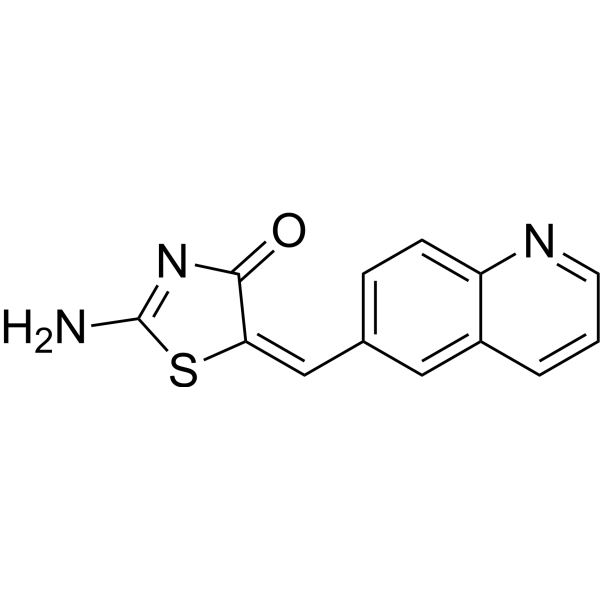
Tubulin polymerization-IN-80
 0 ImagesCat. No.: HY-176201
Tubulin polymerization-IN-80 (Compound 32) is a potent tubulin polymerization inhibitor with antiproliferative activity. Tubulin polymerization-IN-80 disrupts microtubule formation and leads to cell cycle arrest and apoptosis. Tubulin polymerization-IN-80 is promising for research of cancers.
-
P22D
 0 ImagesCat. No.: HY-180979CAS No.: 2635386-51-3
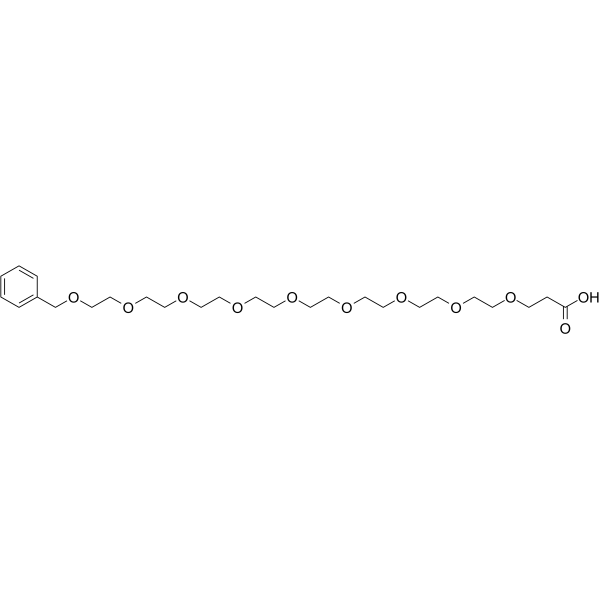
P22D is a BCR-ABL PROTAC degrader based on Dasatinib (HY-10181), with a DC50 value of approximately 10 nM for the wild-type BCR-ABL protein. P22D cannot degrade the BCR-ABL T315I mutant. P22D has inhibitory activity against K562 cells (wild type), but is ineffective against BaF3-BCR-ABL (T315I) cells. P22D can be used for research on chronic myeloid leukemia and acute lymphocytic leukemia.
-
MDL-27048
 0 ImagesCat. No.: HY-182478CAS No.: 124711-23-5
MDL-27048, a tubulin inhibitor, binds competitively, reversibly to the Colchicine (HY-16569)-binding site on tubulin heterodimers. MDL-27048 inhibits microtubule assembly, induces slow depolymerization of preassembled microtubules, disrupts microtubule polymerization-depolymerization dynamics, and disrupts cytoplasmic microtubule networks. MDL-27048 exerts growth inhibitory effects on human cancer cells, induces mitotic arrest, and does not disrupt actin filaments at microtubule-depolymerizing concentrations. MDL-27048 can be used for the research of malignant tumors.
-
mmu-miR-8111 inhibitor
 0 ImagesCat. No.: HY-RI04159
mmu-miR-8111 inhibitors are chemically-modified oligonucleotides that hybridize with mature miRNAs. The miRNA inhibitors have full-length nucleotide 2'-methoxy modification. The miRNA inhibitors strongly compete with mature miRNAs to prevent the complementary pairing of miRNAs and their target genes, thereby inhibiting miRNAs from functioning.
-
Theophylline-triazole-estrone
 0 ImagesCat. No.: HY-187715
Theophylline-triazole-estrone is an α-glucosidase inhibitor with an IC50 of 123.9 μM. Theophylline-triazole-estrone interacts with the catalytic site of α-glucosidase and binds to the anti-apoptotic protein BCL-2. Theophylline-triazole-estrone reduces cancer cell viability and can be used in research related to type 2 diabetes and breast cancer.
-
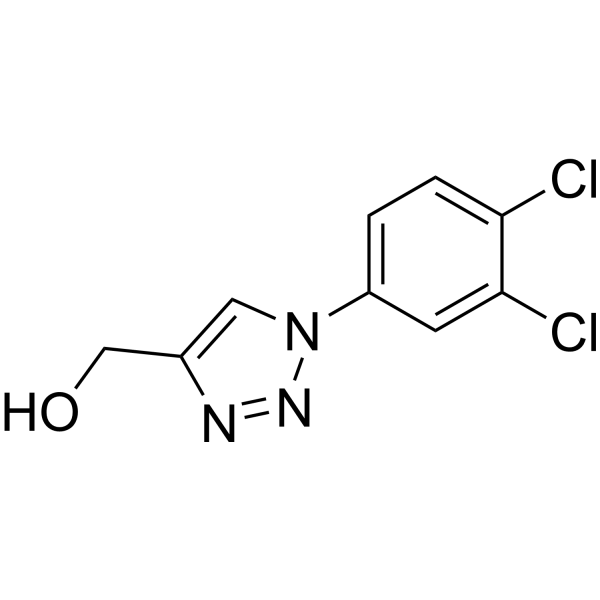
Notum-IN-1
 0 ImagesCat. No.: HY-W171983CAS No.: 338419-11-7
Notum-IN-1 (compound 6b) is an orally active, selective and brain penetrant inhibitor of Notum. Notum-IN-1 blocks the Wnt signaling in vivo in mouse.
-
CCT368772
 0 ImagesCat. No.: HY-155865CAS No.: 2902671-74-1
-
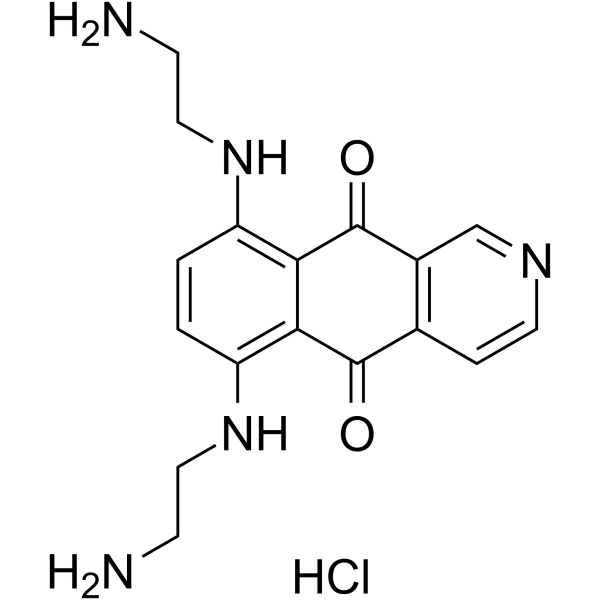
Pixantrone hydrochloride
 0 ImagesCat. No.: HY-13727BCAS No.: 175989-38-5Synonyms: BBR 2778 hydrochloride
Pixantrone (BBR 2778 (free base)) hydrochloride, a mitoxantrone analog, is a topoisomerase II inhibitor and DNA intercalator, with anti-tumor activity.
-
hsa-miR-4636 inhibitor
 0 ImagesCat. No.: HY-RI01178
hsa-miR-4636 inhibitors are chemically-modified oligonucleotides that hybridize with mature miRNAs. The miRNA inhibitors have full-length nucleotide 2'-methoxy modification. The miRNA inhibitors strongly compete with mature miRNAs to prevent the complementary pairing of miRNAs and their target genes, thereby inhibiting miRNAs from functioning.
-
hsa-miR-575 antagomir
 0 ImagesCat. No.: HY-RI01798A
hsa-miR-575 antagomirs are chemically-modified oligonucleotides that hybridize with mature miRNAs. The miRNA antagomirs have 2 phosphorothioates at the 5' end, 4 phosphorothioates at the 3' end, 1 cholesterol group at the 3' end, and full-length nucleotide 2'-methoxy modification. The miRNA antagomirs strongly compete with mature miRNAs to prevent the complementary pairing of miRNAs and their target genes, thereby inhibiting miRNAs from functioning. Stability of miRNA antagomirs appears to be significantly higher than miRNA inhibitors, they exhibits enhanced cellular uptake, stability and regulatory activity in vivo.
-
mmu-miR-344b-3p inhibitor
 0 ImagesCat. No.: HY-RI03041
mmu-miR-344b-3p inhibitors are chemically-modified oligonucleotides that hybridize with mature miRNAs. The miRNA inhibitors have full-length nucleotide 2'-methoxy modification. The miRNA inhibitors strongly compete with mature miRNAs to prevent the complementary pairing of miRNAs and their target genes, thereby inhibiting miRNAs from functioning.
-
mmu-miR-6969-5p inhibitor
 0 ImagesCat. No.: HY-RI03666
mmu-miR-6969-5p inhibitors are chemically-modified oligonucleotides that hybridize with mature miRNAs. The miRNA inhibitors have full-length nucleotide 2'-methoxy modification. The miRNA inhibitors strongly compete with mature miRNAs to prevent the complementary pairing of miRNAs and their target genes, thereby inhibiting miRNAs from functioning.
-
ZINC08792229
 0 ImagesCat. No.: HY-123241CAS No.: 904514-73-4
-
hsa-miR-3150b-5p inhibitor
 0 ImagesCat. No.: HY-RI00597
hsa-miR-3150b-5p inhibitors are chemically-modified oligonucleotides that hybridize with mature miRNAs. The miRNA inhibitors have full-length nucleotide 2'-methoxy modification. The miRNA inhibitors strongly compete with mature miRNAs to prevent the complementary pairing of miRNAs and their target genes, thereby inhibiting miRNAs from functioning.
-
CBP/p300 ligand 5
 0 ImagesCat. No.: HY-161711
CBP/p300 ligand 5 is the target protein ligand of XYD129 (HY-161710). CBP/p300 ligand 5 can be used to study the acute myelogenous leukemia.
-
Phthalimide-PEG3-C2-OTs
 0 ImagesCat. No.: HY-129772CAS No.: 382162-12-1
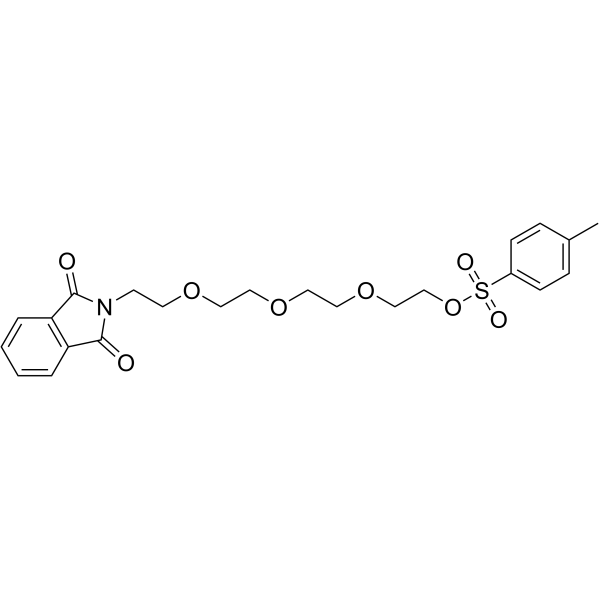
Phthalimide-PEG3-C2-OTs (Compound 5) is a PROTAC linker, which refers to the PEGs composition. Phthalimide-PEG3-C2-OTs can be used in the synthesis of a series of PROTACs. PROTACs contain two different ligands connected by a linker; one is a ligand for an E3 ubiquitin ligase and the other is for the target protein. PROTACs exploit the intracellular ubiquitin-proteasome system to selectively degrade target proteins.



