



Cancer Targeted Therapy
Cancer targeted therapy is the foundation of precision medicine; it uses drugs or other substances to target specific genes and proteins that control cancer cells’ growth, division and spreading. Compared to traditional chemotherapy drugs, targeted-drugs can specifically act on cancer cells with high efficacy without damaging normal cells. Drugs used in cancer targeted therapy mainly includes small molecules and macromolecules (e.g., monoclonal antibodies), which can target cancer cells and constituents in the tumor microenvironment to activate the immune system. Anti-angiogenesis drugs, such as those targeting vascular endothelial growth factor (VEGF), epidermal growth factor receptor (EGFR), transforming growth factor (TGF)-α, TGF-β, Tumor necrosis factor (TNF)-α, and platelet-derived endothelial growth factor (PDGFR) inhibit the proliferation and metastasis of cancer cells. In recent years, the proportion of antibody drugs in cancer treatment has gradually become prominent. Antibody-drug conjugates (ADCs) are a new type of targeted drugs that are composed of monoclonal antibody, cytotoxic drug and linker. ADCs can deliver drugs to tumor cells and minimize the toxicity to normal tissues. Proteolysis-targeting chimera (PROTAC) is a useful technology for targeted protein degradation. PROTAC exploits the ubiquitin-proteasome system and forms a ternary complex with a hijacked E3 ubiquitin ligase and target protein, leading to polyubiquitination and degradation of the target protein.
Targeted therapy is a useful strategy in treatment of cancer either alone or in combination with standard chemotherapy. At present, targeted therapy has proved significant clinical success in the treatment of many types of cancer, including breast cancer, colorectal cancer, leukemia, ovarian cancer and lung cancer.
-
rno-miR-380-3p inhibitor
 0 ImagesCat. No.: HY-RI04452
rno-miR-380-3p inhibitors are chemically-modified oligonucleotides that hybridize with mature miRNAs. The miRNA inhibitors have full-length nucleotide 2'-methoxy modification. The miRNA inhibitors strongly compete with mature miRNAs to prevent the complementary pairing of miRNAs and their target genes, thereby inhibiting miRNAs from functioning.
-
Mal-amido-PEG3-NHS ester
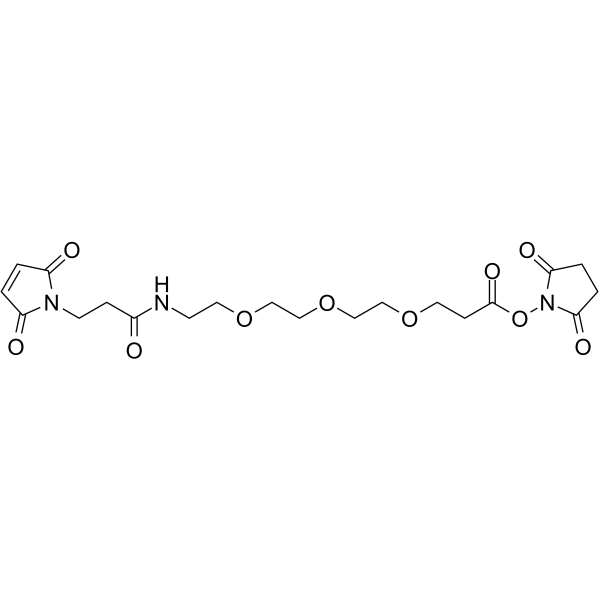 0 ImagesCat. No.: HY-138729CAS No.: 2055353-77-8
-
TH5427 hydrochloride
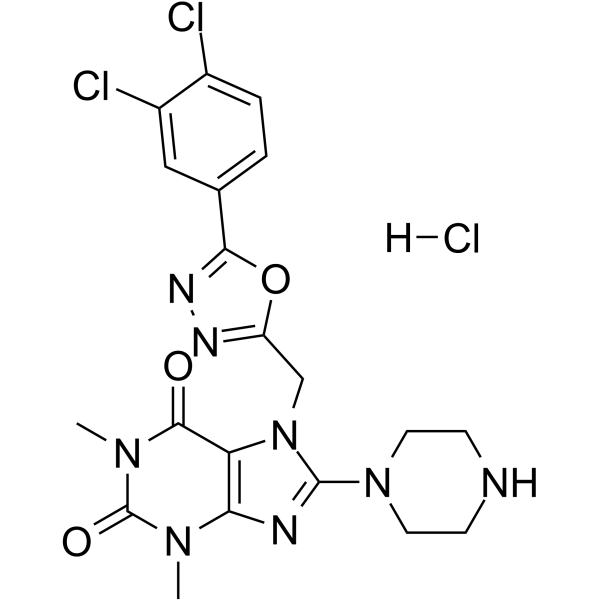 0 ImagesCat. No.: HY-125209ACAS No.: 2253744-57-7
TH5427 hydrochloride is a NUDT5 inhibitor with a human target IC50 of 29 nM, ~690-fold selectivity over MTH1 in vitro, and selective functional inhibition over other NUDIX hydrolases including NUDT9.TH5427 hydrochloride binds to the active site of NUDT5, blocking enzymatic activity related to ADP-ribose metabolism and PAR-derived ATP synthesis.TH5427 hydrochloride blocks progestin-dependent nuclear ATP synthesis, impairs progestin-induced chromatin remodeling, inhibits histone H1 displacement, disrupts progestin-dependent gene regulation, and abrogates progestin-dependent proliferation in breast cancer cells.TH5427 hydrochloride functions as a versatile probe to study nuclear ATP dynamics and ADP-ribose-related metabolism in cells.TH5427 hydrochloride engages NUDT5 at physiological temperatures, as demonstrated by Drug Affinity Responsive Target Stability (DARTS) assay.TH5427 hydrochloride stabilizes NUDT5 against thermal denaturation in cell lysates and intact cells, as shown by cellular thermal shift assay (CETSA).TH5427 hydrochloride functionally inhibits NUDT5 activity, leading to downstream effects on oxidative DNA damage and DNA replication in triple-negative breast cancer (TNBC) cells.TH5427 hydrochloride suppresses proliferation of TNBC cells without inducing cell death or apoptosis, slows DNA replication in TNBC cells, promotes accumulation of oxidative DNA lesions, and triggers DNA damage response in TNBC cells.TH5427 hydrochloride suppresses growth of TNBC cells in vitro, inhibits growth of TNBC xenograft tumors in nude mice in vivo, and shows greater potency against TNBC cell lines compared to ER-positive and normal-like breast cell lines.TH5427 hydrochloride can be used for the research of breast cancer and triple-negative breast cancer.
-
(R)-SR-C-107
 0 ImagesCat. No.: HY-169937
(R)-SR-C-107 is an orally available inhibitor of ENL (YEAST domain-containing protein) designed to target acute myeloid leukemia (AML). (R)-SR-C-107 targets ENL with IC50 and KD of 40 nM and 144 nM, respectively. (R)-SR-C-107 demonstrates in vivo efficacy in a xenograft mouse model of AML, with a tumor regression rate of 45% at a dose of 200 mg/kg (PO; QD).
-
RET-IN-31
 0 ImagesCat. No.: HY-178786CAS No.: 2491726-04-4
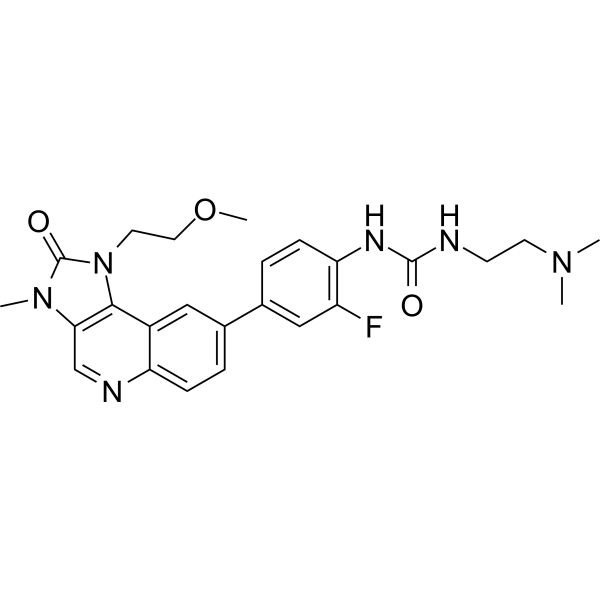
RET-IN-31 (Compound 13) is an orally active, selective RET inhibitor (IC50s: 1.4 nM, 1.9 nM, 3.8 nM for RETWT, RETV804L, RETV804M, respectively). RET-IN-31 inhibits hERG and Cytochrome P450 (IC50s: 13.6 μM, 7.9 μM, 12.8 μM, 16.9 μM, 8.9 μM, 13.0 μM for CYP1A2, CYP2C9, CYP2C19, CYP2D6, CYP3A4-M, CYP3A4-T, respectively). RET-IN-31 has anti-cancer effects against activated RET mutations and gene fusion-driven cancers.
-
Akt1-IN-5
 0 ImagesCat. No.: HY-163577CAS No.: 3034252-53-1
Akt1-IN-5 (Compound 115) is an Akt1 inhibitor (IC50: <15 nM)
-
3’-O-MOE-U-2’-phosphoramidite
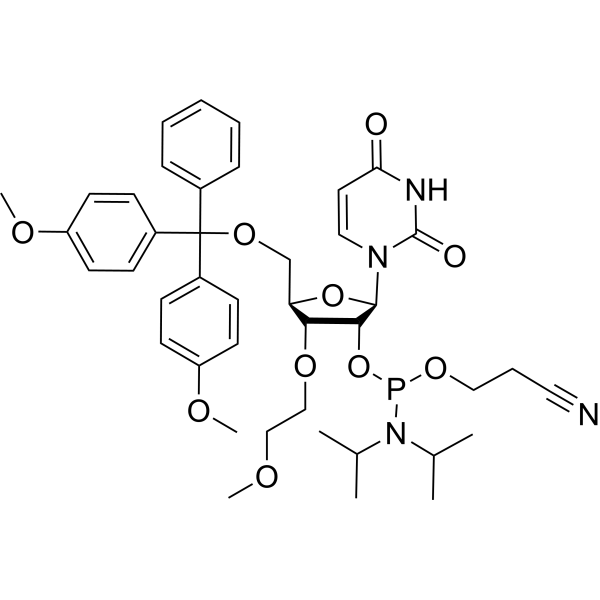 0 ImagesCat. No.: HY-154544CAS No.: 1452849-90-9
3’-O-MOE-U-2’-phosphoramidite is a purine nucleoside analog. Purine nucleoside analogs have broad antitumor activity targeting indolent lymphoid malignancies. Anticancer mechanisms in this process rely on inhibition of DNA synthesis, induction of apoptosis, etc.
-
PC-PEG11-Azide
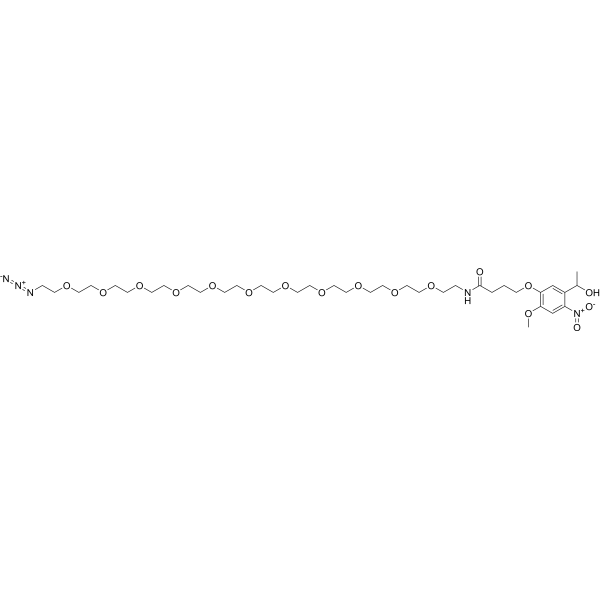 0 ImagesCat. No.: HY-140863CAS No.: 2353409-89-7
PC-PEG11-Azide is a PEG-based PROTAC linker that can be used in the synthesis of PROTACs. PC-PEG11-Azide is a click chemistry reagent, it contains an Azide group and can undergo copper-catalyzed azide-alkyne cycloaddition reaction (CuAAc) with molecules containing Alkyne groups. It can also undergo strain-promoted alkyne-azide cycloaddition (SPAAC) reactions with molecules containing DBCO or BCN groups.
-
BRD4 RIMTAC-1
 0 ImagesCat. No.: HY-187390
BRD4 RIMTAC-1 is a BRD4 PROTAC degrader based on the RIPK1-mediated targeted chimera (RIMTAC) technology. It hijacks the endogenous RIPK1-VHL complex via the RIPK1 inhibitor moiety to indirectly recruit the VHL E3 ligase, forming a BRD4-Compound 10-RIPK1-VHL quaternary complex, and degrades BRD4 through the ubiquitin-proteasome system (UPS). BRD4 RIMTAC-1 exhibits selectivity over other BET proteins, induces concentration- and time-dependent, reversible post-translational degradation of BRD4 without altering the target mRNA level. BRD4 RIMTAC-1 potently induces endogenous BRD4 degradation in RAW264.7 and HEK-293T cells, with DC50 values of 179.1 nM and 54.12 nM, respectively. BRD4 RIMTAC-1 can be used for the research of cancer and inflammation-related diseases.
-
(123B9)2-Motif
 0 ImagesCat. No.: HY-P11015
(123B9)2-Motif is a selective EphA2 receptor agonist (Kd=4.9 μM) that does not bind to EphA4. (123B9)2-Motif works by inducing EphA2 receptor phosphorylation and oligomerization, thereby promoting receptor activation and internalization. (123B9)2-Motif is primarily used in targeted drug delivery studies for cancers that overexpress EphA2, such as breast cancer, to reduce circulating tumor cells and inhibit metastasis.
-
hsa-miR-135b-5p antagomir
 0 ImagesCat. No.: HY-RI00261A
hsa-miR-135b-5p antagomirs are chemically-modified oligonucleotides that hybridize with mature miRNAs. The miRNA antagomirs have 2 phosphorothioates at the 5' end, 4 phosphorothioates at the 3' end, 1 cholesterol group at the 3' end, and full-length nucleotide 2'-methoxy modification. The miRNA antagomirs strongly compete with mature miRNAs to prevent the complementary pairing of miRNAs and their target genes, thereby inhibiting miRNAs from functioning. Stability of miRNA antagomirs appears to be significantly higher than miRNA inhibitors, they exhibits enhanced cellular uptake, stability and regulatory activity in vivo.
-
hsa-miR-3922-5p antagomir
 0 ImagesCat. No.: HY-RI00882A
hsa-miR-3922-5p antagomirs are chemically-modified oligonucleotides that hybridize with mature miRNAs. The miRNA antagomirs have 2 phosphorothioates at the 5' end, 4 phosphorothioates at the 3' end, 1 cholesterol group at the 3' end, and full-length nucleotide 2'-methoxy modification. The miRNA antagomirs strongly compete with mature miRNAs to prevent the complementary pairing of miRNAs and their target genes, thereby inhibiting miRNAs from functioning. Stability of miRNA antagomirs appears to be significantly higher than miRNA inhibitors, they exhibits enhanced cellular uptake, stability and regulatory activity in vivo.
-
hsa-miR-6780a-5p antagomir
 0 ImagesCat. No.: HY-RI02123A
hsa-miR-6780a-5p antagomirs are chemically-modified oligonucleotides that hybridize with mature miRNAs. The miRNA antagomirs have 2 phosphorothioates at the 5' end, 4 phosphorothioates at the 3' end, 1 cholesterol group at the 3' end, and full-length nucleotide 2'-methoxy modification. The miRNA antagomirs strongly compete with mature miRNAs to prevent the complementary pairing of miRNAs and their target genes, thereby inhibiting miRNAs from functioning. Stability of miRNA antagomirs appears to be significantly higher than miRNA inhibitors, they exhibits enhanced cellular uptake, stability and regulatory activity in vivo.
-
mmu-miR-1930-5p antagomir
 0 ImagesCat. No.: HY-RI02744A
mmu-miR-1930-5p antagomirs are chemically-modified oligonucleotides that hybridize with mature miRNAs. The miRNA antagomirs have 2 phosphorothioates at the 5' end, 4 phosphorothioates at the 3' end, 1 cholesterol group at the 3' end, and full-length nucleotide 2'-methoxy modification. The miRNA antagomirs strongly compete with mature miRNAs to prevent the complementary pairing of miRNAs and their target genes, thereby inhibiting miRNAs from functioning. Stability of miRNA antagomirs appears to be significantly higher than miRNA inhibitors, they exhibits enhanced cellular uptake, stability and regulatory activity in vivo.
-
mmu-miR-6360 inhibitor
 0 ImagesCat. No.: HY-RI03366
mmu-miR-6360 inhibitors are chemically-modified oligonucleotides that hybridize with mature miRNAs. The miRNA inhibitors have full-length nucleotide 2'-methoxy modification. The miRNA inhibitors strongly compete with mature miRNAs to prevent the complementary pairing of miRNAs and their target genes, thereby inhibiting miRNAs from functioning.
-
mmu-miR-7227-3p antagomir
 0 ImagesCat. No.: HY-RI03991A
mmu-miR-7227-3p antagomirs are chemically-modified oligonucleotides that hybridize with mature miRNAs. The miRNA antagomirs have 2 phosphorothioates at the 5' end, 4 phosphorothioates at the 3' end, 1 cholesterol group at the 3' end, and full-length nucleotide 2'-methoxy modification. The miRNA antagomirs strongly compete with mature miRNAs to prevent the complementary pairing of miRNAs and their target genes, thereby inhibiting miRNAs from functioning. Stability of miRNA antagomirs appears to be significantly higher than miRNA inhibitors, they exhibits enhanced cellular uptake, stability and regulatory activity in vivo.
-
1,3-Bis-aminooxy propane
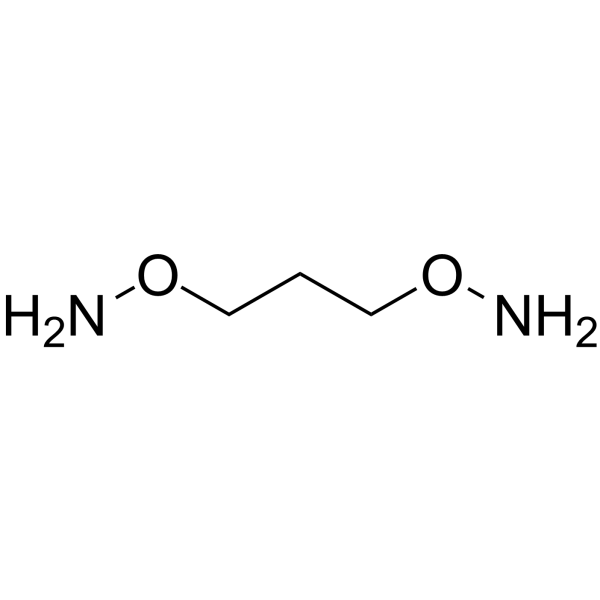 0 ImagesCat. No.: HY-116924CAS No.: 98627-69-1




