



Bacterial
Anything that destroys bacteria or suppresses their growth or their ability to reproduce. Heat, chemicals such as chlorine, and antibiotic drugs all have antibacterial properties. Many antibacterial products for cleaning and handwashing are sold today. Such products do not reduce the risk for symptoms of viral infectious diseases in otherwise healthy persons. This does not preclude the potential contribution of antibacterial products to reducing symptoms of bacterial diseases in the home.
All Product Categories
-
Bacterial Inhibitors
(7479)
View all products
-
Bacterial Agonists
(3)
View all products
-
Bacterial Antagonists
(9)
View all products
-
Bacterial Activators
(23)
View all products
-
Bacterial Modulators
(23)
View all products
-
Bacterial Chemicals
(2)
View all products
-
Bacterial Inducers
(7)
View all products
-
Bacterial Controls
(14)
View all products
-
Bacterial Substrates
(2)
View all products
-
Bacterial Ligand
(1)
View all products
-
Bacterial Related Products (8796)
Related Products (8796)

-
Antibodies (14)
-
Related Compound Screening Libraries (1)
-
Polyketide synthase 13-IN-2
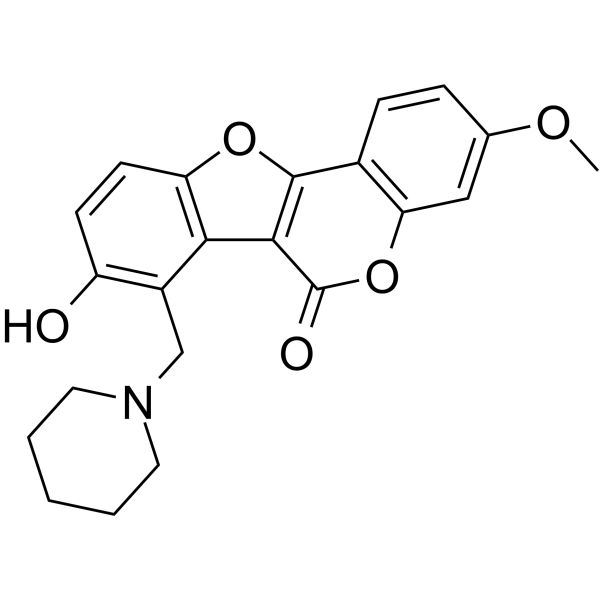 0 ImagesCat. No.: HY-139595CAS No.: 2219338-48-2Polyketide synthase 13-IN-2 (comp 42) is a polyketide synthase 13 inhibitor against Mycobacterium tuberculosis, with an MIC of 0.25 μg/mL.
-
Sodium citrate dihydrate (Standard)
 0 ImagesSynonyms: Trisodium citrate dihydrate (Standard); Citric acid trisodium salt dihydrate (Standard)Sodium citrate (Trisodium citrate) dihydrate (Standard) is the analytical standard of Sodium citrate (dihydrate) (HY-B1610). This product is intended for research and analytical applications. Sodium citrate dihydrate is an orally active natural product that can be found in citrus fruits. Sodium citrate dehydrate can inhibit the proliferation of tumor cells and induce apoptosis. Sodium citrate dehydrate has antibacterial, anti-tumor and antioxidant activities. Sodium citrate dehydrate can be prepared as a cosolvent or buffer.
-
Trigonostemon F
 0 ImagesCat. No.: HY-N21516CAS No.: 1207265-02-8Trigonostemon F is a modified euphorbia diterpenoid, which is found in the roots of Trigonostemon thyrsoideum and the stems of Trigonostemon howii. Trigonostemon F inhibits the proliferation of human tumor cell lines and the growth of specific bacteria in vitro. Trigonostemon F is applicable to cancer-related research.
-
SARS-CoV-2 3CLpro-IN-4
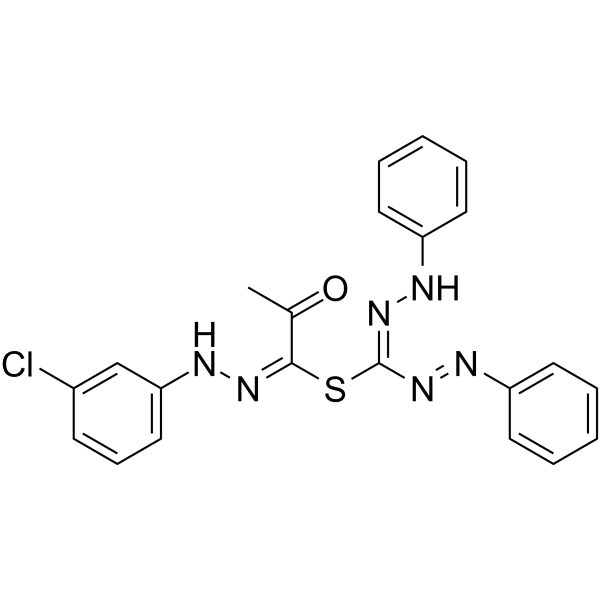 0 ImagesCat. No.: HY-147805CAS No.: 2505241-31-4SARS-CoV-2 3CLpro-IN-4 (Compound 5g) is a SARS CoV-2 3CLpro inhibitor with antiviral, antibacterial and antifungal activities.
-
Deacetylravidomycin N-oxide
 0 ImagesCat. No.: HY-N14959CAS No.: 114494-30-3Deacetylravidomycin N-oxide is an antibiotic that can be produced by Streptomyces ravidus S50905. Deacetylravidomycin N-oxide is active against Gram-positive bacteria but inactive against Gram-negative bacteria. Deacetylravidomycin N-oxide has antitumor activity against P388 leukemia and methamphetamine A fibrosarcoma.
-
Punica granatum rinds extract
 0 ImagesCat. No.: HY-N19077Punica granatum rinds extract is rich in a variety of bioactive compounds, such as punicin, ellagic acid, tannins, and flavonoids, which give it powerful antioxidant, anti-inflammatory, antibacterial, and anticancer properties.
-
3,3-Dimethylacrylic acid (Standard)
 0 ImagesSynonyms: 3-Methylcrotonic acid (Standard); 3-Methylbut-2-enoic acid (Standard)3,3-Dimethylacrylic acid (Standard) (3-Methylcrotonic acid (Standard)) is the analytical standard of 3,3-Dimethylacrylic acid (HY-W010611). This product is intended for research and analytical applications.3,3-Dimethylacrylic acid is an active small molecule, that can be used as drug intermediate.
-
Mtb-cyt-bd oxidase-IN-3
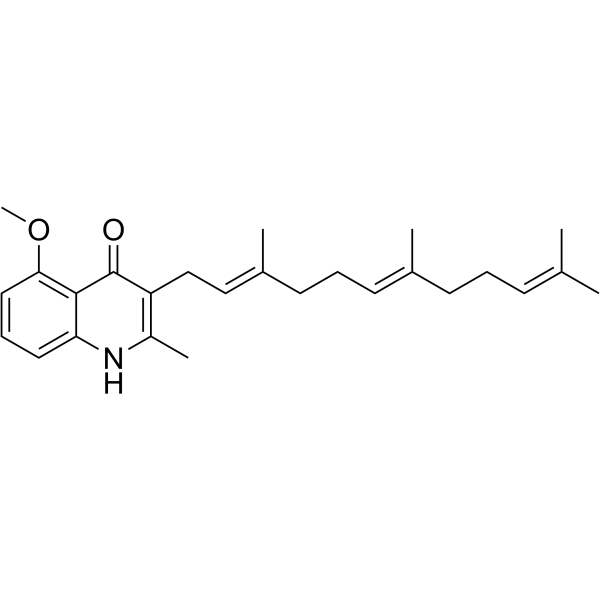 0 ImagesCat. No.: HY-151550Mtb-cyt-bd oxidase-IN-3 (compound 1u) is a Mycobacterium tuberculosis cytochrome bd oxidase (Mtb cyt-bd oxidase) inhibitor with an IC50 value of 0.36 μM. Mtb-cyt-bd oxidase-IN-3 inhibits the growth of Mycobacterium tuberculosis (MIC=32 μM). Mtb-cyt-bd oxidase-IN-3 can be used in tuberculosis research.
-
EGFR/InhA-IN-1
 0 ImagesCat. No.: HY-179529EGFR/InhA-IN-1 (Compound 15) is an inhibitor of the anti-cancer target EGFR tyrosine kinase (1M17) (Ki = 0.05 μM) and the anti-tuberculosis target InhA enzyme (1OUZ) (Ki = 0.02 μM). EGFR/InhA-IN-1 exhibits anti-proliferative activity against A549 cells, with an IC50 of 10.38 μM. EGFR/InhA-IN-1 has inhibitory activity against Mycobacterium tuberculosis H37Rv, with a MIC of 6.25 μM. EGFR/InhA-IN-1 can be used for research on non-small cell lung cancer and Mycobacterium tuberculosis infection.
-
Gy-CATH
 0 ImagesCat. No.: HY-P11467Gy-CATH is an anionic antimicrobial peptide. Gy-CATH activates MAPK and NF-κB signaling pathways (elevated levels of phospho-ERK, -p38, -JNK, -p65, and -IκBα). Gy-CATH upregulates the expression levels of three physiological anticoagulant pathways. Gy-CATH inhibits ADP-, Collagen-, and PMA-induced platelet aggregation. Gy-CATH has no direct antimicrobial activity, but shows significant preventive abilities against mice infected with Staphylococcus aureus, Escherichia coli, and Methicillin (HY-121544)-resistant Staphylococcus aureus. Gy-CATH exhibits potent immunomodulatory activity, enhancing macrophage-and neutrophil-mediated bactericidal functions. Gy-CATH significantly reduces the extent of pulmonary fibrin deposition and prevents thrombosis in mice.
-
Antibiofilm agent-6
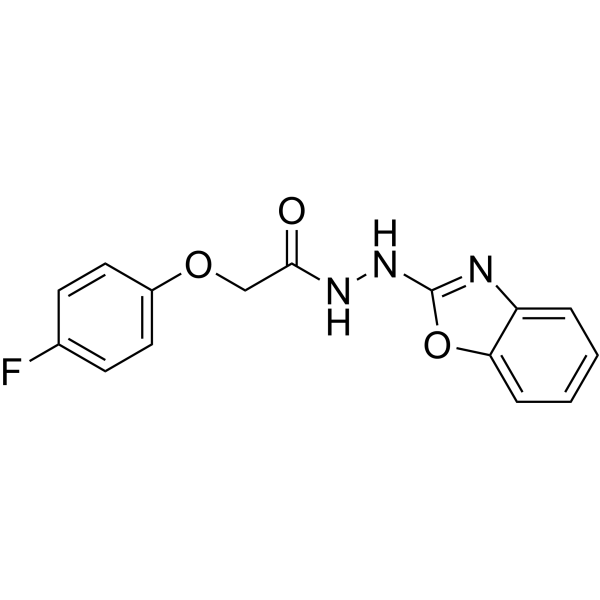 0 ImagesCat. No.: HY-163481CAS No.: 3033920-95-2Antibiofilm agent-6 (Compound 26c) is a quorum sensing inhibitor with strong antibiofilm effects that can inhibit the fluorescence intensity of PAO1-lasB-gfp and PAO1-pqsA-gfp in a concentration-dependent manner. Antibiofilm agent-6 can inhibit the production of pyocyanin and rhamnolipid. Antibiofilm agent-6 aids helps ciprofloxacin (HY-B0356) effectively eliminate the living bacteria in a mouse model infected with P. aeruginosa PAO1.
-
Monogalactosyl diglyceride
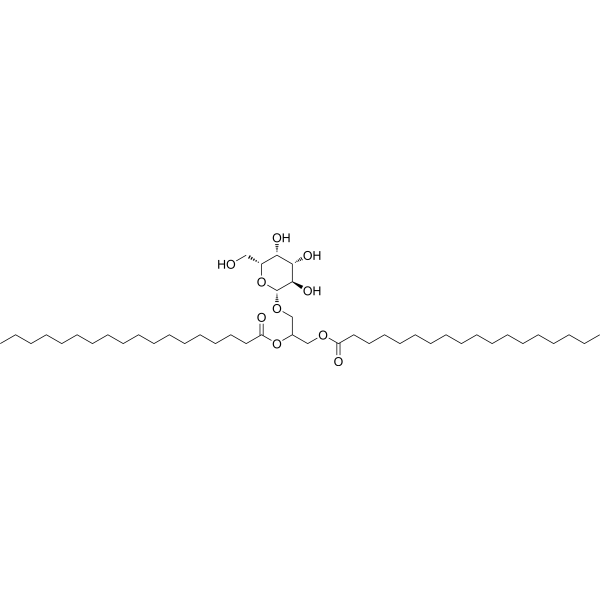 0 ImagesCat. No.: HY-148294CAS No.: 41670-62-6Monogalactosyl diglyceride is a antimicrobial. Monogalactosyl diglyceride has antibacterial activity and antifungal activity in vitro.
-
Antibacterial agent 62
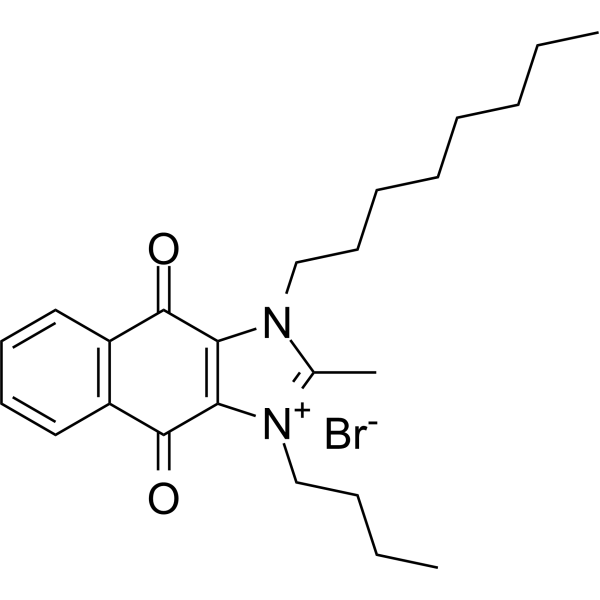 0 ImagesCat. No.: HY-139863CAS No.: 3031364-03-8Antibacterial agent 62 is a novel redox cycling antituberculosis chemotype with potent bactericidal activity against growing and nutrient-starved phenotypically drug-resistant nongrowing bacteria.
-
SP1
 0 ImagesCat. No.: HY-P10603CAS No.: 858602-44-5SP1 is an α-peptide encoded by the mating pheromone MFα1 gene in Candida albicans, which can induce cell growth arrest at the mating type locus MTLa in Candida albicans. SP1 can be used in the study of the prevention and treatment of Candida albicans infection.
-
Nevadensin (Standard)
 0 ImagesSynonyms: Lysionotin (Standard)Nevadensin (Standard) (Lysionotin (Standard)) is the analytical standard of Nevadensin (HY-N1377). This product is intended for research and analytical applications. Nevadensin, a natural flavonoid, is a selective human carboxylesterase 1 (hCE1) inhibitor with an IC50 of 2.64 μM. Nevadensin is more selective for hCE1 than hCE2 (IC50 of 132.8 μM). Nevadensin can induce apoptosis and DNA damage in cancer cells. Nevadensin has a variety of pharmacological effects such as anti-inflammatory, anti-tumour, anti-hypertensive, anti-tubercular, antitussive, antioxidant and anti-microbial activities.
-
CDG-DNB3
 0 ImagesCat. No.: HY-D2991CAS No.: 2081872-38-8CDG-DNB3 is a selective fluorescent probe for Mycobacterium tuberculosis. CDG-DNB3 provides rapid and specific labeling of live Mycobacterium tuberculosis. CDG-DNB3 can image Bacillus Calmette-Guérin phagocytosis in real time.
-
JPL
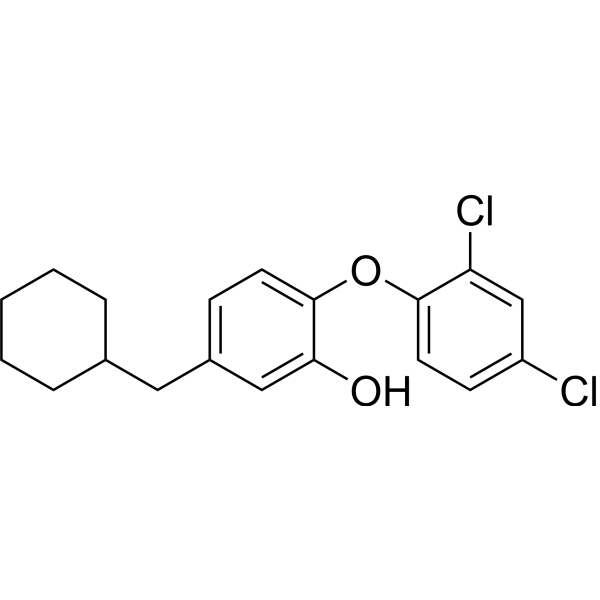 0 ImagesCat. No.: HY-160653CAS No.: 952588-18-0JPL is a InhA-cofactor-ligand 3FNG inhibitor, and can be used for study of tuberculosis.
-
D-K6L9
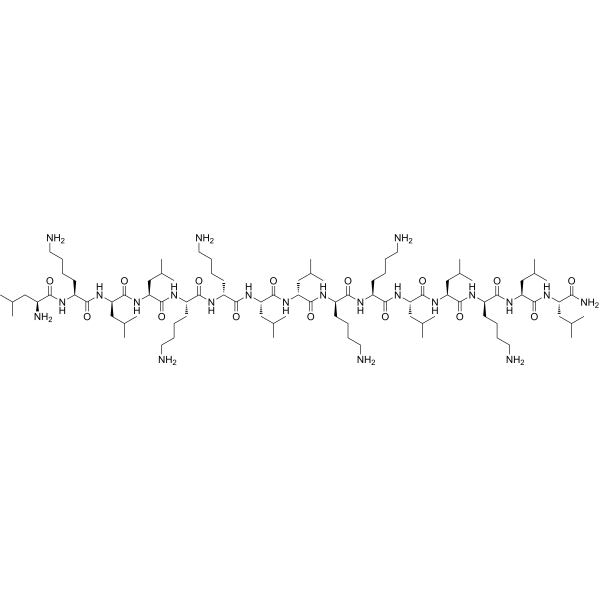 0 ImagesCat. No.: HY-P5924ACAS No.: 426264-61-1D-K6L9 shows antimicrobial and antibiofilm activities against P. aeruginosa from cystic fibrosis patients. D-K6L9 is stable and resistant to degradation by cystic fibrosis sputum proteases and will not induce bacterial resistance .

-
VEGFR-2/InhA-IN-1
 0 ImagesCat. No.: HY-159565VEGFR-2/InhA-IN-1 is a pyrazole-based dual inhibitor of InhA-VEGFR with anti-tuberculosis and anti-angiogenic activities. VEGFR-2/InhA-IN-1 has good antibacterial activity against Mycobacterium tuberculosis H37Rv strain (MIC=6.25 μg/mL) and significantly inhibits VEGFR-2 (IC50=15.27 nM).




