



Btk
Bruton tyrosine kinase
Bruton tyrosine kinase (Btk) is a member of the Tec family kinases with a well-characterized role in B-cell antigen receptor (BCR)-signaling and B-cell activation.
Btk plays a crucial role in B cell development and activation through the BCR signaling pathway and represents a new target for diseases characterized by inappropriate B cell activity. Btk is a kinase expressed exclusively in B cells and myeloid cells and has a well characterized, vital role in B cells highlighted by the human primary immune deficiency disease, X-linked agammaglobulinemia (XLA), which results from mutation in the Btk gene. Btk plays an essential role in the BCR signaling pathway. Antigen binding to the BCR results in B cell receptor oligomerization, Syk and Lyn kinase activation, followed by Btk kinase activation. Once activated, Btk forms a signaling complex with proteins such as BLNK, Lyn, and Syk and phosphorylates phospholipase C (PLC)γ2. This leads to downstream release of intracellular Ca2+ stores and propagation of the BCR signaling pathway through extracellular signal-regulated kinase and NF-κB signaling, ultimately resulting in transcriptional changes to foster B cell survival, proliferation, and/or differentiation.
All Product Categories
-
Btk Related Products (271)
Related Products (271)

-
Recombinant Proteins (19)
-
Antibodies (3)
-
BTK-IN-31
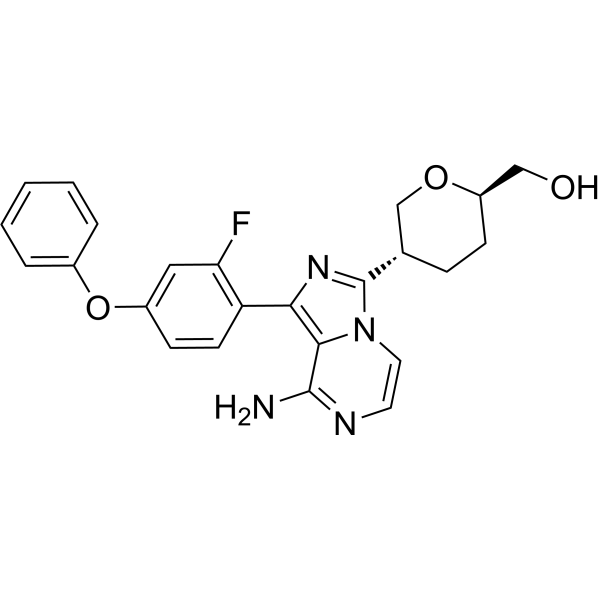 0 ImagesCat. No.: HY-160168CAS No.: 2662512-02-7BTK-IN-31 (Compound 2) is a selective, non-covalently reversible, and blood-brain barrier (BBB) permeable Btk inhibitor. BTK-IN-31 has research potential in immune disorders, cancer, cardiovascular disease, viral infections, inflammation, metabolic/endocrine dysfunction, and neurological disorders.
-
I-As-1
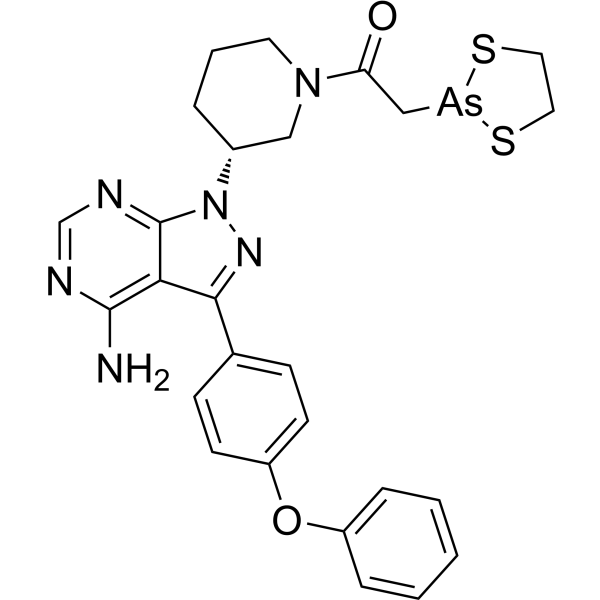 0 ImagesCat. No.: HY-162407CAS No.: 2891500-11-9I-As-1 is a potent inhibitor of Bruton’s tyrosine kinase (BTK), with the IC50 of 2.35 nM. I-As-1 shows antiproliferative activities among Ramos cells and OCI-LY10 cells with IC50s of 0.52 μM and 0.11 μM, respectively.
-
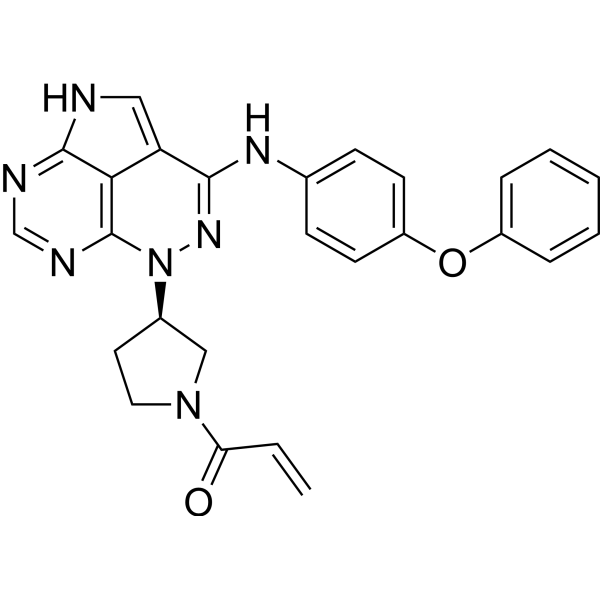
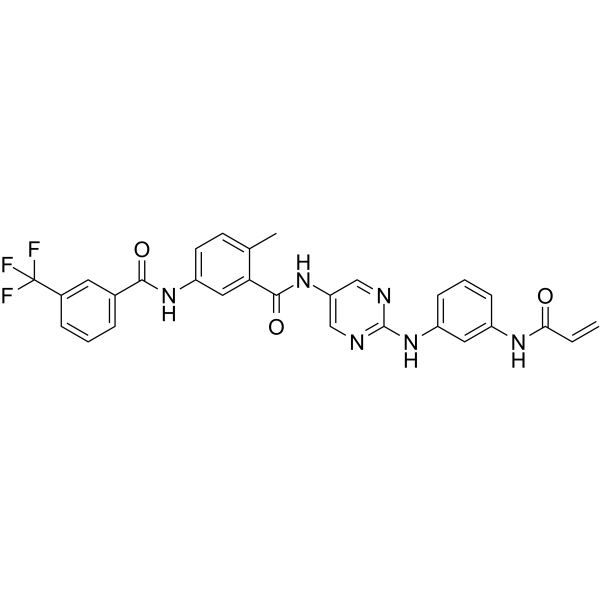
Birelentinib
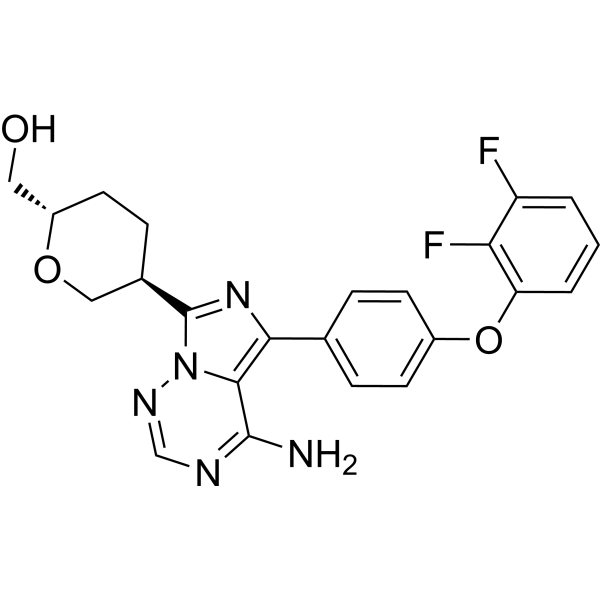 0 ImagesCat. No.: HY-160167CAS No.: 2662512-15-2Synonyms: DZD8586Birelentinib (DZD8586) is an orally effective, selective, non-covalent inhibitor targeting LYN tyrosine kinase and BTK tyrosine kinase, capable of penetrating the blood-brain barrier. Birelentinib exhibits concentration-dependent antiproliferative effects in RI-1 cells and diffuse large B-cell lymphoma (DLBCL) cell lines carrying BTK resistance mutations (such as C481X, V416L, etc.). Birelentinib blocks both BTK-dependent and independent signaling of the B-cell receptor (BCR), thereby inhibiting tumor cell proliferation and inducing cell death. Birelentinib can be used in research to overcome resistance to existing covalent and non-covalent BTK inhibitors in B-cell non-Hodgkin lymphoma (B-NHL).
-
Ibt-DOX
 0 ImagesCat. No.: HY-181546Ibt-DOX is a BTK inhibitor with an IC50 of 2.89 nM. Ibt-DOX is also a targeted covalent activated chemotherapeutic agent composed of the targeting ligand Ibrutinib (HY-10997), Doxorubicin (DOX) (HY-15142A), α-MAA (HY-W017180), and a linker (HY-Y0892). Ibt-DOX specifically binds to BTK and releases DOX, synergistically achieving BTK inhibition and chemotherapeutic killing, significantly enhancing toxicity against B-cell lymphoma cells and greatly reducing the toxic side effects of DOX on BTK-negative cells. Ibt-DOX can be used in lymphoma-related research.
-
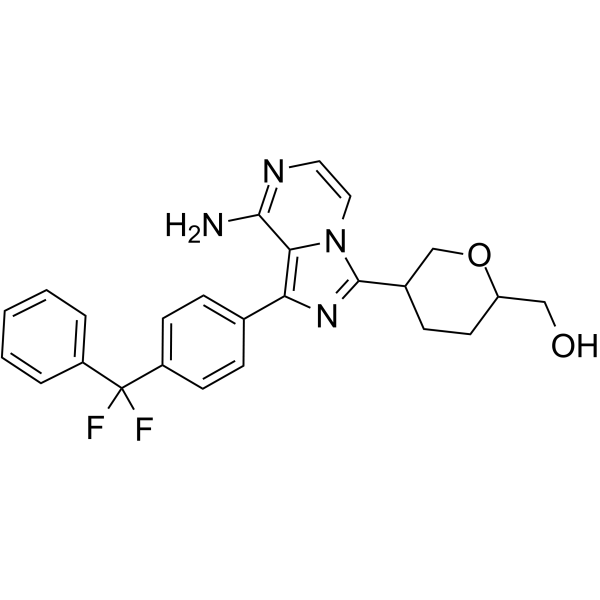
HBC-12551
 0 ImagesCat. No.: HY-181547CAS No.: 2963606-11-1HBC-12551 is an orally active BTK inhibitor (IC50 in HEK293 cells: 1.31 nM for BTK; 2.18 nM for BTKC481S). HBC-12551 has antitumor activity against diffuse large B-cell lymphoma.
-
JAK3/BTK-IN-2
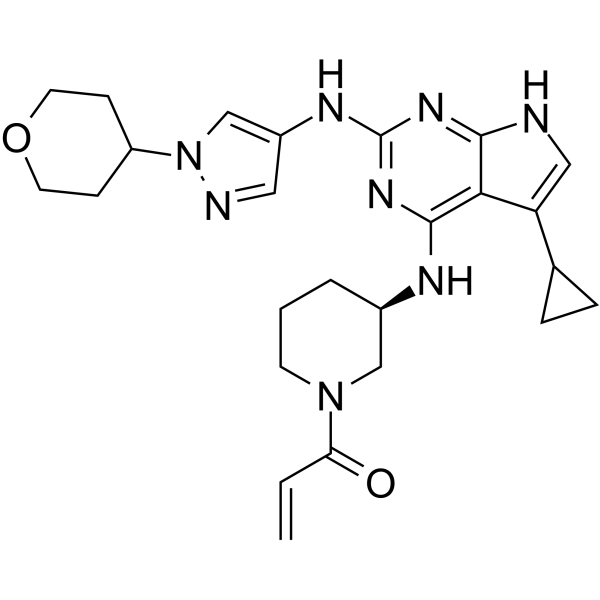 0 ImagesCat. No.: HY-143717CAS No.: 2674036-93-0JAK3/BTK-IN-2 is a potent inhibitor of JAK3/BTK. BTK and JAK3 are two important targets for autoimmune diseases. Simultaneous inhibition of the BTK/JAK3 signalling pathway exhibits synergistic effects. JAK3/BTK-IN-2 has the potential for the research of JAK3 kinase and/or BTK-related diseases (extracted from patent WO2021147952A1, compound 004)
-
GNE-431
 0 ImagesCat. No.: HY-124153CAS No.: 1433820-83-7GNE-431 is a potent, selective and noncovalent “pan-BTK” inhibitor against C481R, T474I and T474Ms mutants. GNE-431 shows potency against wild-type BTK (IC50= 3.2 nM) and potency against C481S mutant (IC50= 2.5 nM). GNE-431 is proming for rasearch of haematological disorders and autoimmune diseases.
-
BTK-IN-21
 0 ImagesCat. No.: HY-148584CAS No.: 2170788-98-2
-
PDD-87
 0 ImagesCat. No.: HY-183103CAS No.: 2222129-13-5PDD-87 is an orally active, blood-brain barrier permeable kinase inhibitor, with IC50 values ranging from 0.07 nM to 0.72 nM against ABL, SRC family, BTK kinases and their key mutants. PDD-87 induces antiproliferative effects in leukemia and lymphoma cells, and inhibits tumor growth in mouse xenograft models. PDD-87 can be used for the research of leukemia and lymphoma.

-
BTK inhibitor 19
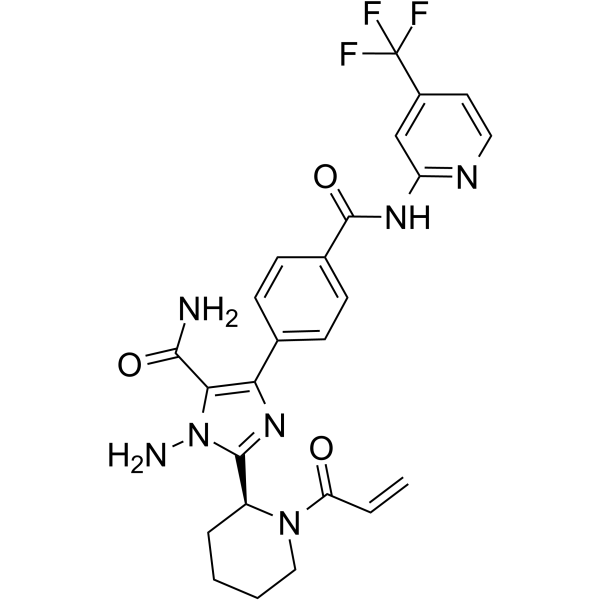 0 ImagesCat. No.: HY-139881CAS No.: 2557174-19-1
-
BTK-IN-28
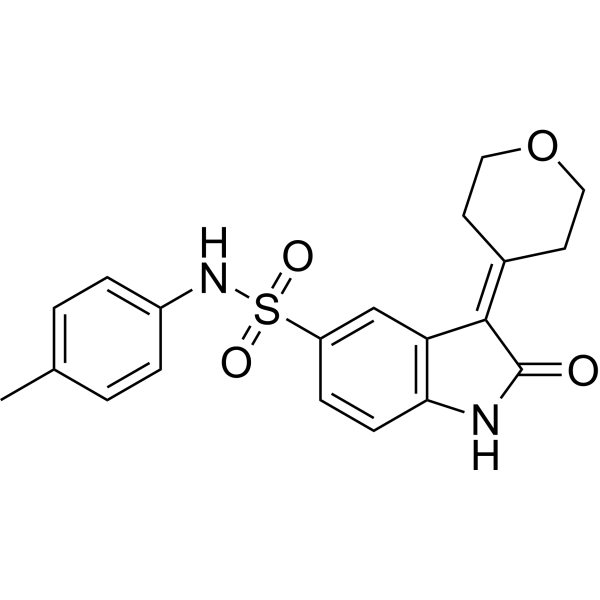 0 ImagesCat. No.: HY-157159BTK-IN-28 (compound PID-4) is a potent BTK inhibitor with anticancer activity. BTK-IN-28 has inhibitory effects on BTK and downstream signaling cascades and selectively inhibits Burkitt lymphoma RAMOS proliferation. BTK-IN-28 has no significant cytotoxicity towards non-tumor cells.
-
RN941
 0 ImagesCat. No.: HY-117499CAS No.: 1360055-03-3RN941 is a BTK inhibitor. RN941 is applicable to research related to rheumatoid arthritis and B-cell malignancies.
-
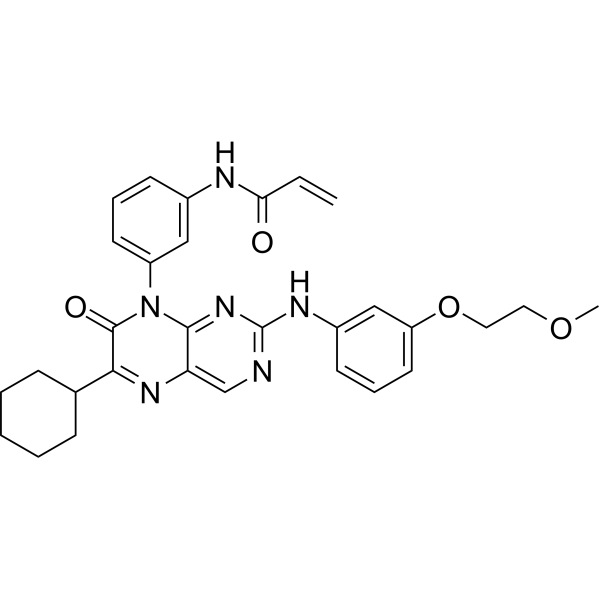
AMX5160
 0 ImagesCat. No.: HY-176131CAS No.: 2639293-95-9AMX5160 (36) is an orally active BTK inhibitor, with an IC50 of 0.98 nM against mutant BTKC481S. AMX5160 (36) can be used in the research for leukemia, lymphoma, multiple sclerosis, and other autoimmune diseases.
-
DPPY
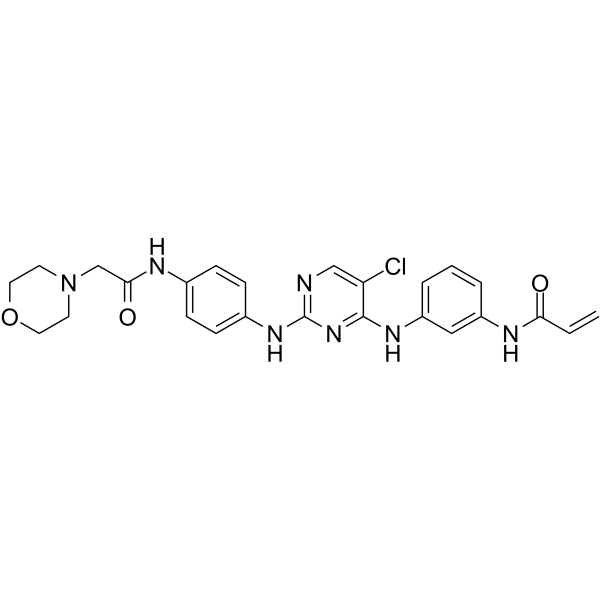 0 ImagesCat. No.: HY-147741CAS No.: 2095883-62-6




