



Fungal
An antifungal agent is a drug that selectively eliminates fungal pathogens from a host with minimal toxicity to the host.
Classes: 1. Polyene Antifungal Drugs: Amphotericin, nystatin, and pimaricin interact with sterols in the cell membrane (ergosterol in fungi, cholesterol in humans) to form channels through which small molecules leak from the inside of the fungal cell to the outside. 2. Azole Antifungal Drugs: Fluconazole, itraconazole, and ketoconazole inhibit cytochrome P450-dependent enzymes (particularly C14-demethylase) involved in the biosynthesis of ergosterol, which is required for fungal cell membrane structure and function. 3. Allylamine and Morpholine Antifungal Drugs: lylamines (naftifine, terbinafine) inhibit ergosterol biosynthesis at the level of squalene epoxidase. The morpholine drug, amorolfine, inhibits the same pathway at a later step. 4. Antimetabolite Antifungal Drugs: 5-Fluorocytosine acts as an inhibitor of both DNA and RNA synthesis via the intracytoplasmic conversion of 5-fluorocytosine to 5-fluorouracil.
All Product Categories
-
Fungal Related Products (2735)
Related Products (2735)

-
Antibodies (1)
-
Related Compound Screening Libraries (1)
-
Alternaric acid
 0 ImagesCat. No.: HY-N13916CAS No.: 10088-62-7
-
Pithecolobine
 0 ImagesCat. No.: HY-N19846CAS No.: 22368-82-7Pithecolobine is a saponin-like alkaloid found in the bark, seeds, and leaves of Samanea saman. Pithecolobine can inhibit the growth of Gram-positive bacteria, Gram-negative bacteria, and pathogenic yeasts. Pithecolobine scavenges DPPH radicals. Pithecolobine can be used for the research of infections caused by pathogenic bacteria and yeasts.
-
Neobulgarone B
 0 ImagesCat. No.: HY-N14808CAS No.: 315209-16-6Neobulgarone B is an anthraquinone derivative of Neobulgaria pura HA A07-97, a fungus of the ascomycetes class. Neobulgarone B can inhibit the formation of Appressorium in Magnaporthe grisea and has weak cytotoxicity without antifungal, antibacterial or phytotoxicity.
-
Dyclonine hydrochloride (Standard)
 0 ImagesSynonyms: Dyclocaine hydrochloride (Standard)Dyclonine hydrochloride (Standard) (Dyclocaine hydrochloride (Standard)) is the analytical standard of Dyclonine hydrochloride (HY-B0364A). This product is intended for research and analytical applications. Dyclonine hydrochloride (Dyclocaine hydrochloride) is an orally active, blood-brain barrier-permeable piperidine phenylacetone small molecule commonly used as a local anesthetic. Dyclonine hydrochloride acts as a highly selective allosteric antagonist of TRPV3; it also reversibly inhibits G9a, ALDH2 and ALDH3A1, non-competitively blocks AChE. Dyclonine hydrochloride activates the Nrf2/ARE pathway, relieves the epigenetic silencing of FXN, blocks Aβ42 aggregation, and promotes remyelination and reparative polarization of microglia. Dyclonine hydrochloride alleviates pruritus via TRPV3 inhibition; it is used in studies of neurodegenerative disease models based on its AChE inhibitory, antioxidant and remyelinating effects; it sensitizes drug-resistant tumors through ALDH inhibition, and combined use with protease inhibitors induces more tumor cell apoptosis; it inhibits Candida albicans in vitro. Dyclonine hydrochloride can be used for research on multiple diseases including neurodegenerative diseases, cancer and pruritic dermatitis.
-
Pervicoside B
 0 ImagesCat. No.: HY-N7236CAS No.: 96157-95-8Pervicoside B is a glycoside C isolated from Neothyone gibbosa sea cucumber. In vitro studies have shown that Pervicoside B has a potent antiparasitic effect against Leishmania mexicana, inhibiting 100% of promastigotes at 5-10 μg/mL. Pervicoside B also exhibits strong antifungal activity against Aspergillus niger, with MIC values ranging from 4.65 to 16.7 μg/mL. Pervicoside B has potential applications in the inhibition of parasitic infections and fungal diseases.
-
Oxathiapiprolin
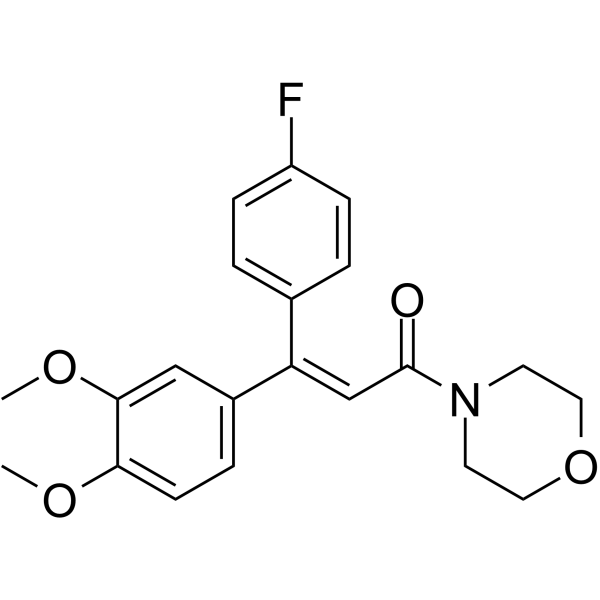
 0 ImagesCat. No.: HY-133087CAS No.: 1003318-67-9Oxathiapiprolin is an anti-phytopathogenic oomycete agent. Oxathiapiprolin inhibits mycelial growth, sporangium production, zoospore release and zoospore motility in specific oomycetes. Oxathiapiprolin exhibits both protective and therapeutic activities against Phytophthora capsici infection in pepper plants. Oxathiapiprolin can be used in studies related to plant diseases.
-
Tavaborole (Standard)
 0 ImagesSynonyms: AN-2690 (Standard)Tavaborole (Standard) is the analytical standard of Tavaborole. This product is intended for research and analytical applications. Tavaborole (AN-2690) is an antifungal agent with activity against Trichophyton species, in a topical solution formulation for the potential treatment of onychomycosis.
-
Cerbinal
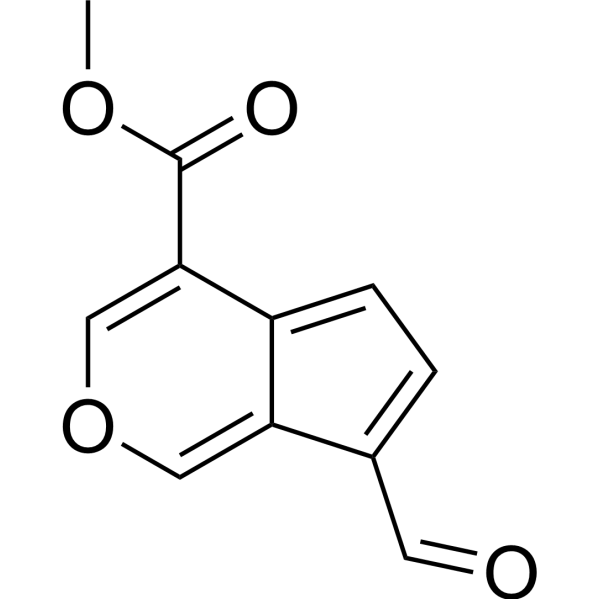 0 ImagesCat. No.: HY-N3569CAS No.: 65597-42-4Cerbinal is a natural compound isolated from Gardenia jasminoides Ellis. Cerbinal has antifungal activity.
-
Isoconazole
 0 ImagesCat. No.: HY-W895978CAS No.: 27523-40-6Isoconazole is an antifungal agent against Candida albicans. Isoconazole is a broad-spectrum antimicrobial azole that can be studied in research on dermatomycoses.
-
Echinocandin B nucleus
 0 ImagesCat. No.: HY-107211CAS No.: 79411-15-7Synonyms: SL 7810 nucleus; A-30912 A nucleusEchinocandin B nucleus (A-30912 A nucleus) is the reaction product catalyzed by Echinocandin B (HY-125723) deacylase. Echinocandin B nucleus serves as an intermediate for the synthesis of semi-synthetic antifungal agents.
-
Vitamin K5 hydrochloride (Standard)
 0 ImagesVitamin K5 (hydrochloride) (Standard) is the analytical standard of Vitamin K5 (hydrochloride). This product is intended for research and analytical applications. Vitamin K5 hydrochloride is a photosensitizer and a antimicrobial agent. Vitamin K5 hydrochloride is a specific PKM2 inhibitor with IC50 values of 28, 191 and 120 μM for PKM2, PKM1 and PKL. Vitamin K5 hydrochloride induces apoptosis of colon 26 cells. Vitamin K5 hydrochloride can be used for the research of infection and cancer, and it also can be used as a preservative for pharmaceuticals, foods, and beverages[1][2][3].
-
Tiadinil
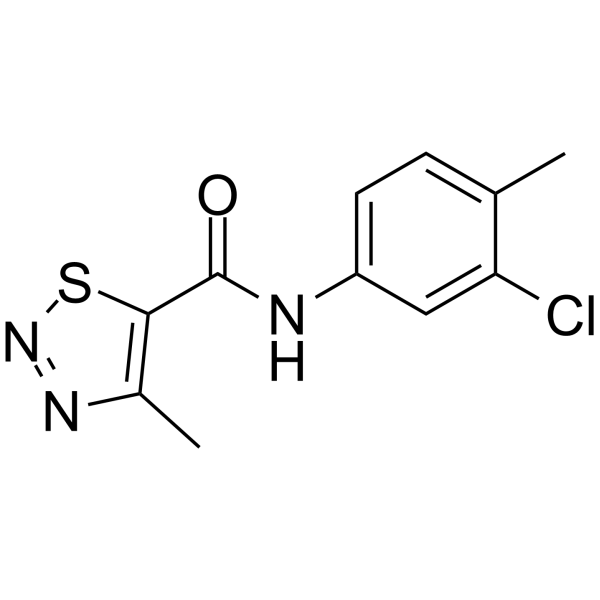 0 ImagesTiadinil is a systemic acquired resistance (SAR) inducer, plant elicitor and antifungal agent. Tiadinil promotes the production of herbivore-induced plant volatiles in Camellia sinensis (tea plant). Tiadinil inhibits mycelial growth, spore germination and germ tube elongation of Stagonosporopsis citrulli in vitro. Tiadinil can be used in studies related to vine blight.
-
(Rac)-Amorolfine hydrochloride
 0 ImagesCat. No.: HY-W391940CAS No.: 106614-68-0(Rac)-Amorolfine hydrochloride is the racemic form of Amorolfine hydrochloride. Amorolfine (Ro 14-4767/002) hydrochloride (HY-B0238) is an effective antifungal agent. Amorolfine hydrochloride inhibits the biosynthesis of ergosterol and has research potential for treating onychomycosis caused by Neoscytalidium dimidiatum.
-
Flutolanil (Standard)
 0 ImagesCat. No.: HY-B2011RCAS No.: 66332-96-5Flutolanil (Standard) is the analytical standard of Flutolanil (HY-B2011). This product is intended for research and analytical applications. Flutolanil is a succinate dehydrogenase complex inhibitor and fungicide. Flutolanil blocks electron transfer between the redox center of succinate dehydrogenase and coenzyme Q, inhibits mycelial oxygen consumption, and suppresses mycelial growth. Flutolanil induces acute and sublethal toxicity in zebrafish at different life stages. Flutolanil can be used in studies on plant disease control.
-
L-731128
 0 ImagesCat. No.: HY-123404CAS No.: 172722-09-7L-731128 is a novel alkyl citrate. L-731128 can be isolated as a minor component of Sporormiella intermedia (MF 5447, ATCC 20985) fermentations. L-731128 is a potent squalene synthase inhibitor, with an IC50 value of 767 nM.
-
Antifungal agent 96
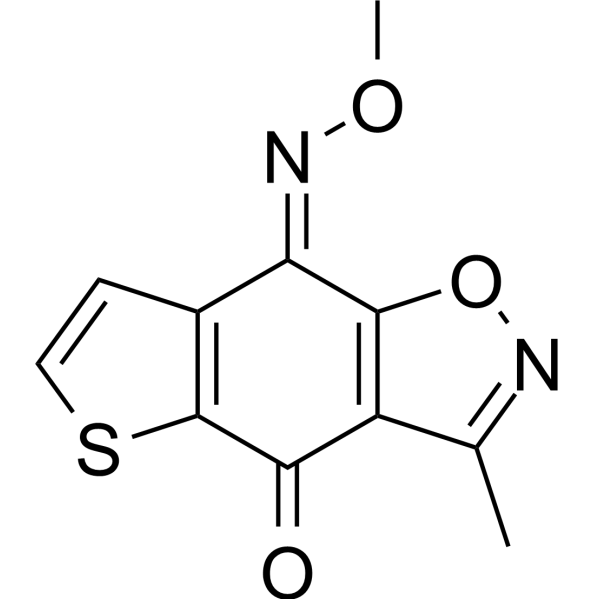 0 ImagesCat. No.: HY-161380Antifungal agent 96 (Compound WZ-2) is an antifungal agent with good blood-brain barrier permeability and brain penetration. Antifungal agent 96 inhibits the growth of C. neoformans H99 and C. albicans 0304103 with MIC values of 0.016 and 32 μg/mL, respectively.
-
Pyrrolomycin A
 0 ImagesCat. No.: HY-N14513CAS No.: 79763-01-2Pyrrolomycin A is a pyrrole antibiotic. Pyrrolomycin A has anti-Gram-positive bacteria, anti-Gram-negative bacteria and anti-individual fungi activity.
-
Torvoside C
 0 ImagesCat. No.: HY-N15309CAS No.: 185012-38-8Synonyms: Torvoside KTorvoside C (Torvoside K) is a compound found in Solanum torvum with antifungal activity. The ZOIs and MIC values of Torvoside C against the tested fungi (Alternaria brassicicola, Alternaria geophila, Aspergillus flavus, etc.) range from 33.4% to 87.4% and 31.25 to 250 μg/mL, respectively. Additionally, it exhibits a dose-dependent inhibitory effect on the production of mycotoxins aflatoxin B1 and fumonisin B1, which are produced by A. flavus and F. verticillioides, respectively. Torvoside C can be used for research in the field of antifungal infection.
-
7-Amino-4-methylcoumarin (Standard)
 0 ImagesSynonyms: Coumarin 120 (Standard); AMC (Standard)7-Amino-4-methylcoumarin (Standard) is the analytical standard of 7-Amino-4-methylcoumarin. This product is intended for research and analytical applications. 7-Amino-4-methylcoumarin belongs to the coumarin class, can be isolated from the endophytic fungus Xylaria sp. and has a broad spectrum of antibacterial activity. 7-Amino-4-methylcoumarin is also commonly used as an important laser dye that emits in the blue region, capable of analyzing glycoprotein monosaccharides and N-linked oligosaccharides, and is also utilized in tissue pathology analysis, enzyme activity measurement, and copper ion detection. The excitation wavelength and emission wavelength are 351 nm and 430 nm, respectively.[4]




