



PROTACs
PROTAC (PROteolysis-TArgeting Chimera) is a heterobifunctional nanomolecule containing two different ligands, ligand for ubiquitin E3 and ligand for target protein. The two parts are connected by linker to form a "three-unit" polymer, target protein ligand-linker-E3 ligase ligand. Building blocks of PROTAC molecules include PROTAC Linker, Ligand for Target Protein for PROTAC, Ligand for E3 Ligase, E3 Ligase Ligand-Linker Conjugate, Target Protein Ligand-Linker Conjugate, etc.
PROTACs Isoform Specific Products
-
PROTACs Related Products (1398)
Related Products (1398)

-
Antibodies (1)
-
PROTACs Isoform Comparison
-
SD-436
 0 ImagesSD-436 is a highly selective and efficacious STAT3 PROTAC degrader (DC50: 0.5 μM), with IC50 of 19 nM (STAT3), 270 nM (STAT1), 360 nM (STAT4), >10 μM (STAT5) and >10 μM (STAT6). SD-436 promotes ubiquitination and degradation of STAT3, and induces tumor regression. SD-436 can be used for tumor research, such as leukemia and lymphoma.
-
PROTAC IRAK3 degrade-1 formic
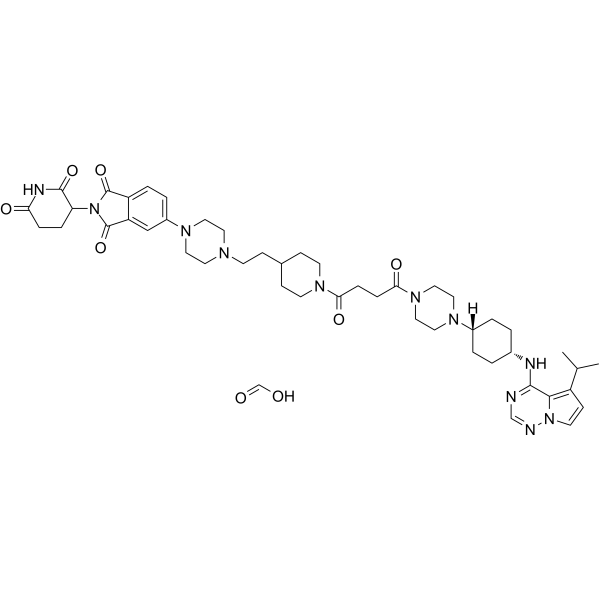 0 ImagesCat. No.: HY-142662APurity: 99.26%
-
DAS-5-oCRBN
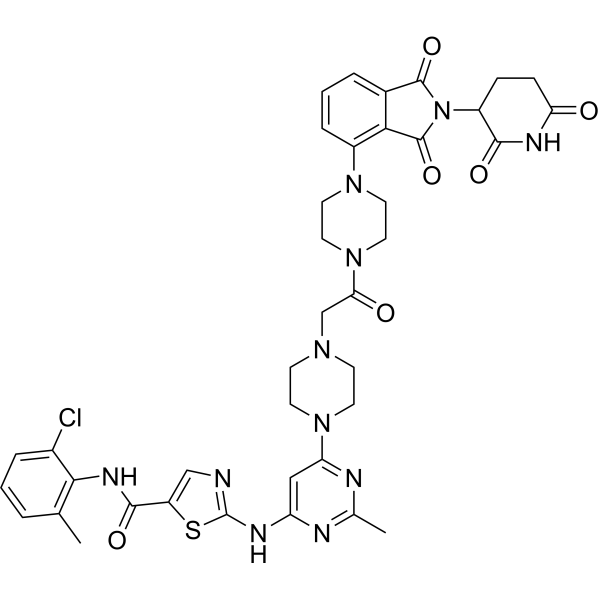 0 ImagesDAS-5-oCRBN is a PROTAC molecule with both c‑Src kinase inhibitory activity and target protein degradation activity, with an EC50 of 45 nM for c‑Src binding. DAS-5-oCRBN binds non-covalently to Cereblon and mediates target protein degradation via the ubiquitin-proteasome pathway. DAS-5-oCRBN can catalytically deplete intracellular c‑Src protein, while blocking both the kinase catalytic function of c‑Src and the non-catalytic protein interactions mediated by its SH2 and SH3 domains. DAS-5-oCRBN inhibits tumor cell proliferation and exerts significant anti-proliferative effects on both c‑Src kinase activity-dependent MDA-MB-231 cells and c‑Src protein level-dependent CAL51 cells. DAS-5-oCRBN can be used in cancer-related research such as studies on triple-negative breast cancer and chronic myeloid leukemia.
-
MDEG-541
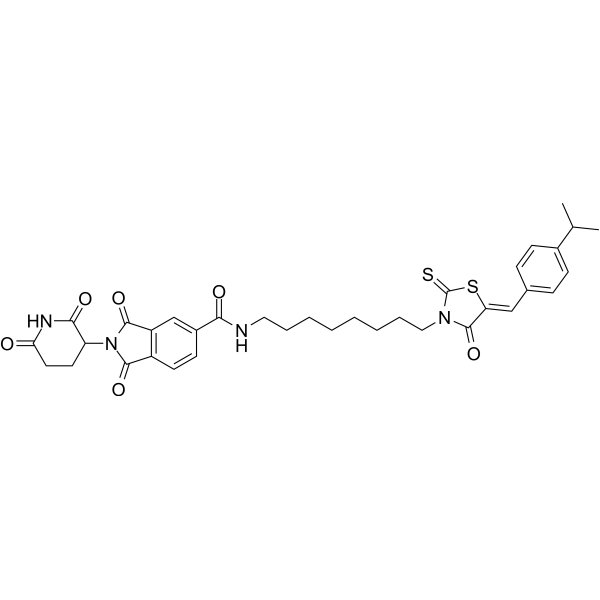 0 ImagesCat. No.: HY-150259Purity: 98.68%MDEG-541 is a PROTAC degrader targeting MYC, GSPT1/2 and PLK1. MDEG-541 induces degradation via proteasome- and ubiquitin-dependent pathways. MDEG-541 exhibits anti-tumor activity in gastrointestinal cancer cells and patient-derived organoids. MDEG-541 can be used for the research of gastrointestinal cancer.
-
BI-3663
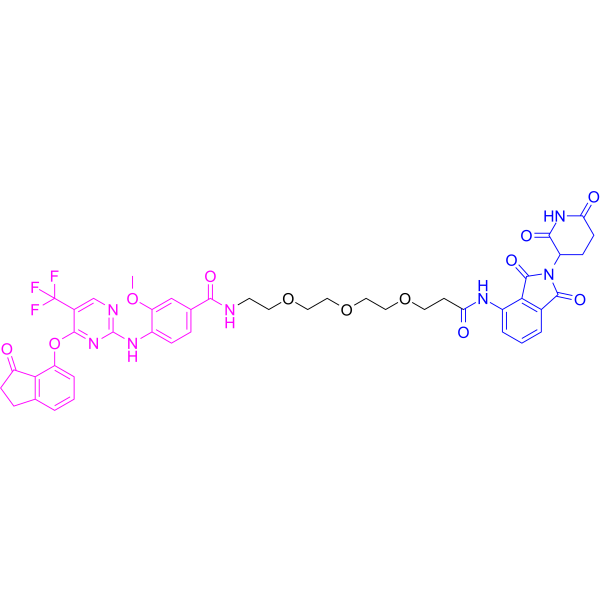 0 ImagesBI-3663 is a highly selective PTK2/FAK PROTAC (DC50 = 30 nM) with a Cereblon E3 ligase ligand capable of degrading PTK2, with an IC50 value of 18 nM. BI-3663 is a PROTAC generated by linking the PTK2/FAK inhibitor BI-4464 (HY-124625) with a Pomalidomide (HY-10984) derivative via a linker. BI-3663 can induce PTK2 degradation at low nanomolar concentrations. BI-3663 has antitumor activity.
-
GBD-9
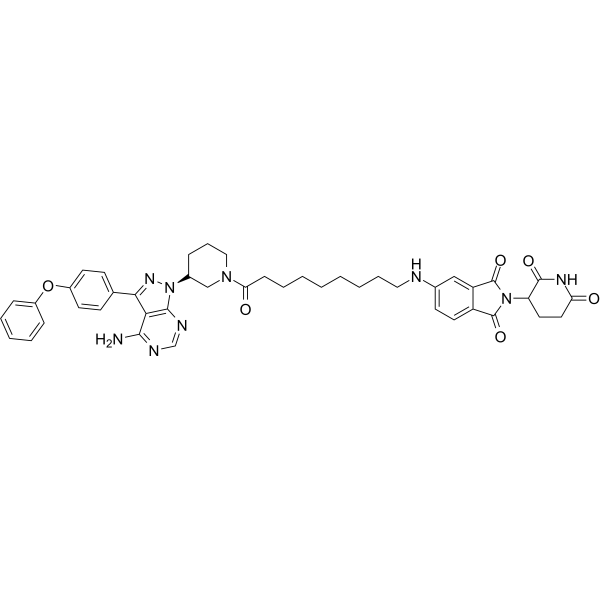 0 ImagesGBD-9 is a degrader based on the E3 ubiquitin ligase CRBN that targets BTK and the G1 to S phase transition protein GSPT1. GBD-9 has both PROTAC and molecular glue properties by inducing ubiquitination and proteasomal degradation of target proteins. GBD-9 can efficiently degrade wild-type and mutant BTK (such as C481S mutation) and GSPT1. GBD-9 significantly inhibits tumor cell proliferation by inducing G1 phase arrest in cancer cells, downregulating anti-apoptotic proteins (BCL-2, MCL-1) and activating Caspase-3 to induce apoptosis. GBD-9 is mainly used in the research of hematological tumors such as diffuse large B-cell lymphoma (DLBCL) and acute myeloid leukemia (AML).
-
MS6105
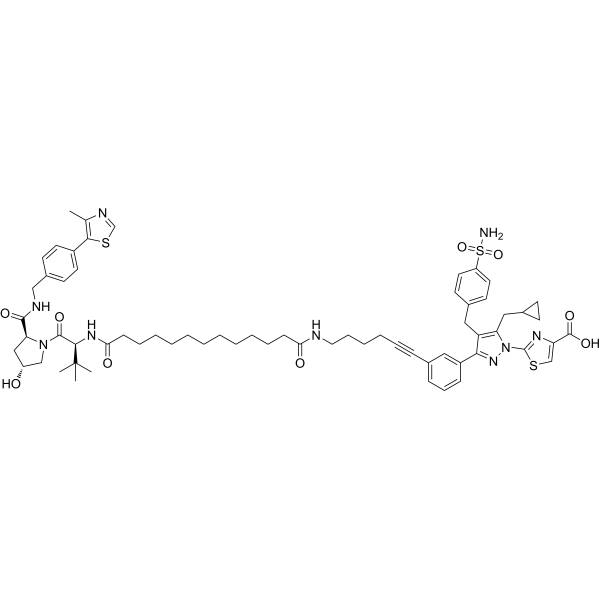 0 ImagesMS6105 is a PROTAC degrader targeting LDHA and LDHB, with DC50 values of 38 nM and 74 nM for degrading LDHA and LDHB in PANC-1 cells, respectively, and no hook effect is observed at high concentrations. MS6105 inhibits the proliferation of pancreatic cancer cells, and no obvious toxicity is observed after intraperitoneal administration in mice. MS6105 can be used for pancreatic cancer-related research.
-
PROTAC Sirt2 Degrader-1
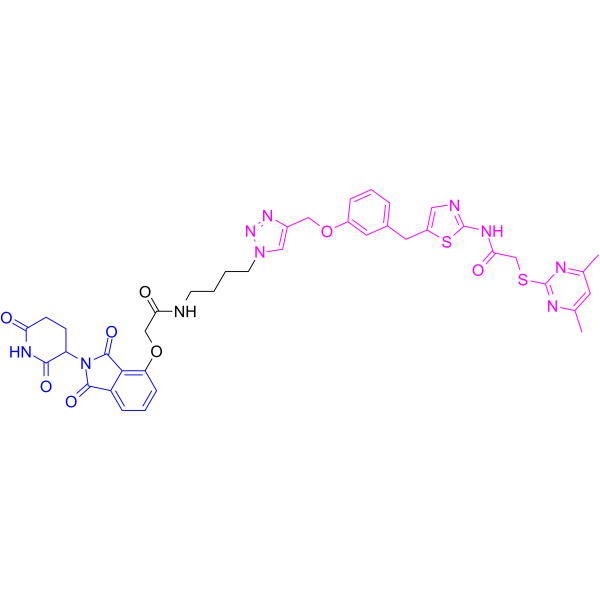 0 ImagesPROTAC Sirt2 Degrader-1 is a SirReal-based PROTAC, acts as a Sirt2 degrader, composed of a highly potent and isotype-selective Sirt2 inhibitor, a linker, and a bona fide Cereblon ligand for E3 ubiquitin ligase. PROTAC Sirt2 Degrader-1 shows an IC50 of 0.25 μM for Sirt2, with no effect on Sirt1/Sirt3 (IC50s>100 μM).
-
BSJ-03-204 triTFA
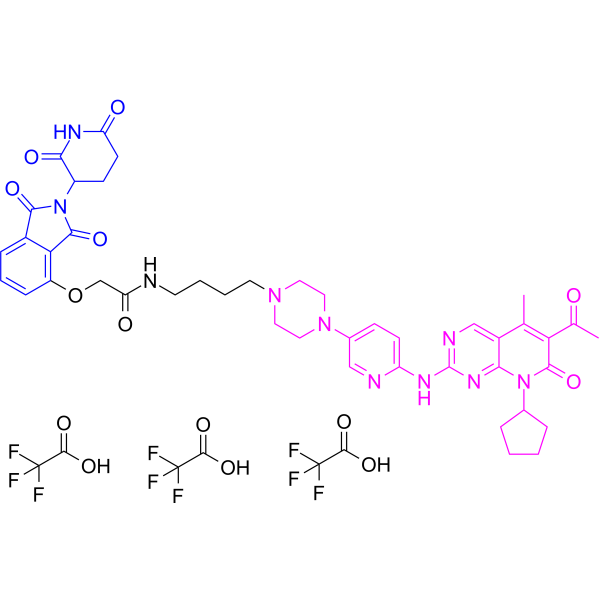 0 ImagesCat. No.: HY-136250APurity: 99.87%BSJ-03-204 triTFA is a PROTAC-based CDK degrader derived from Palbociclib (HY-50767). BSJ-03-204 triTFA targets bovine CDK4/CCND1 and CDK6/CCND1 complexes with IC50 values of 26.9 nM and 10.4 nM, respectively. BSJ-03-204 triTFA also triggers ubiquitination and degradation of RB1, reduces pRb levels, thereby inducing G1 cell cycle arrest and exerting antiproliferative effects, as well as inducing time-dependent KLHL8 accumulation. BSJ-03-204 triTFA can be used in research related to pancreatic ductal adenocarcinoma, breast cancer, lung cancer, mantle cell lymphoma, and cloned bovine placental hyperplasia.
-
ARD-69
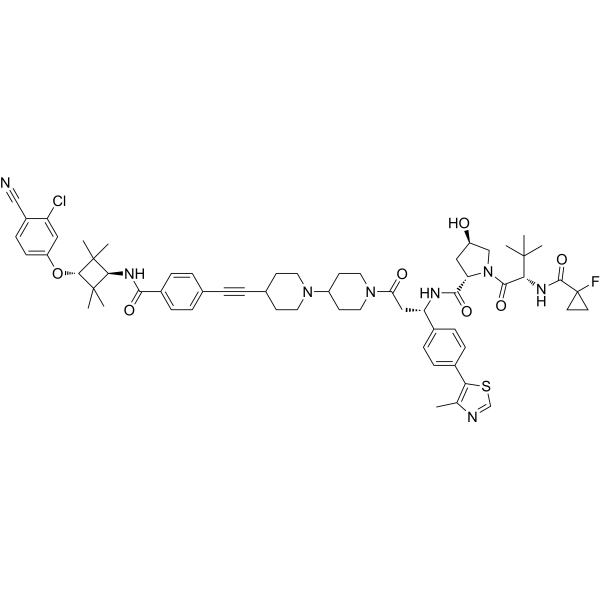 0 ImagesARD-69 is a PROTAC degrader based on the E3 ubiquitin ligase VHL and targeting the androgen receptor, which can induce androgen receptor (AR) protein degradation in AR-positive prostate cancer cells. ARD-69 inhibits AR-regulated gene expression, binds to the AR ligand binding domain at one end and binds to VHL at the other end, prompting AR to be recruited to the E3 ubiquitin ligase complex, triggering proteasome degradation, thereby inhibiting AR signaling pathways and downstream gene expression (such as PSA, TMPRSS2). ARD-69 can be used to study of castration-resistant prostate cancer (mCRPC).
-
ARD-2128
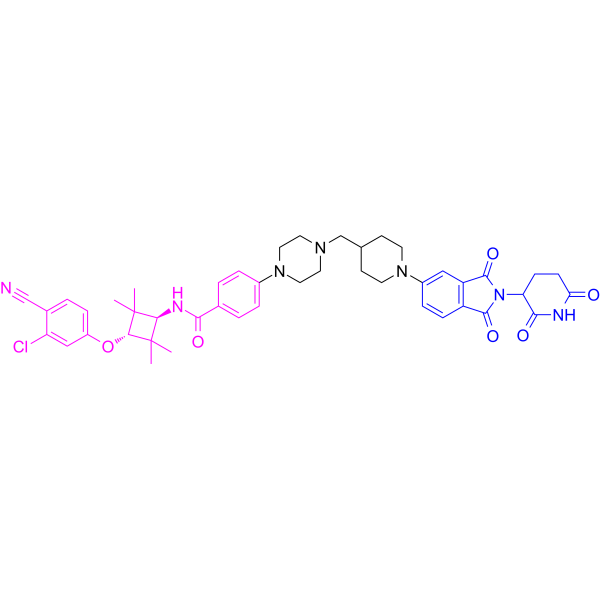 0 ImagesARD-2128 is a highly potent, orally bioavailable PROTAC androgen receptor (AR) degrader. ARD-2128 effectively reduces AR protein, suppresses AR-regulated genes in tumor tissues, and inhibits growth of tumor without signs of toxicity. ARD-2128 has the potential for the research of the prostate cancer.
-
XIAP degrader-1
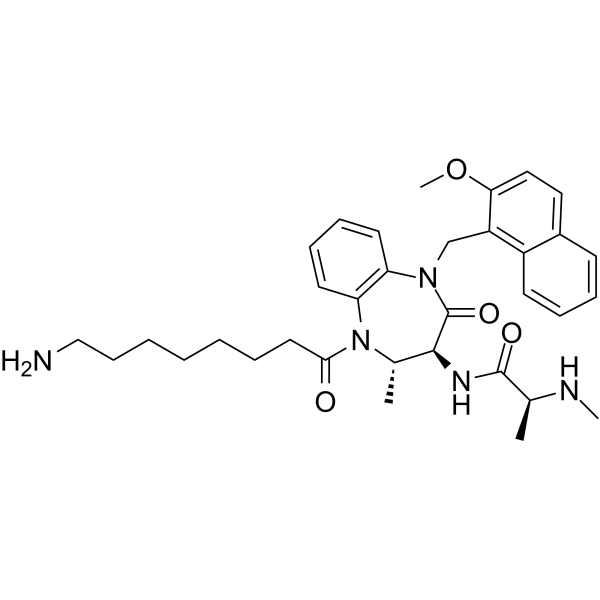 0 ImagesXIAP degrader-1 is a PROTAC-like degrader with a Kd value of 1 μM for XIAP. XIAP degrader-1 is metabolized into an active aldehyde species that covalently binds to Cys326 of FBXO22, thereby forming a ternary complex with the BIR2 domain of XIAP. XIAP degrader-1 induces polyubiquitination and proteasomal degradation of XIAP via the ubiquitin-proteasome system, a process dependent on NEDD8 conjugation, the SCFFBXO22 ligase complex, as well as the functional activities of XIAP ligase, E1 and the proteasome.
-
PROTAC JAK1 degrader 1
 0 ImagesPROTAC JAK1 degrader 1 is a JAK1 PROTAC degrader with a DC50 of 214 nM and an IC50 of 5.2 nM. PROTAC JAK1 degrader 1 inhibits the downstream JAK-STAT signaling pathway by degrading JAK1. PROTAC JAK1 degrader 1 exhibits antiproliferative activity in cells. PROTAC JAK1 degrader 1 can be used for research on leukemia.
-
PROTAC KDM3 degrader-1
 0 ImagesPROTAC KDM3 degrader-1 is a KDM3A/KDM3B PROTAC degrader with DC50 values of 13.73 nM and 172.6 nM in SW480 cells, respectively. PROTAC KDM3 degrader-1 induces cereblon-dependent proteasomal degradation of KDM3A and KDM3B. PROTAC KDM3 degrader-1 inhibits the oncogenic Wnt/β-catenin signaling pathway. PROTAC KDM3 degrader-1 eliminates colorectal cancer stem cells, suppresses their self-renewal, and blocks colony formation of colorectal cancer cells. PROTAC KDM3 degrader-1 inhibits tumor growth in a colorectal cancer xenograft mouse model. PROTAC KDM3 degrader-1 can be used for the research of colorectal cancer.
-
LC-MB12
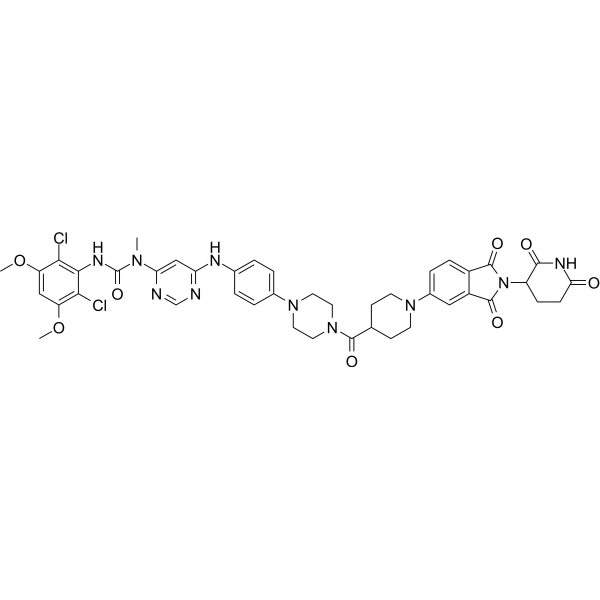 0 ImagesLC-MB12 is an orally active PROTAC compound targets FGFR2 degradation with a DC50 of 11.8 nM. LC-MB12 contains BGJ398 (a FGFR2 inhibitor), PROTAC linker and CRBN.LC-MB12 inhibits FGFR2 signaling in gastric cancer cells and has anti-tumor activity.
-
dAurAB5
 0 ImagesdAurAB5 is a potent Aurora-A/Aurora-B PROTAC degrader with DC50 values of 8.8 nM and 6.1 nM, respectively. dAurAB5 promotes proteasomal degradation of target proteins, induces ubiquitination of Aurora-A and Aurora-B kinases, and downregulates the protein levels of TTK and MYCN. dAurAB5 can be used in studies related to neuroblastoma[1].
-
SK2188
 0 ImagesSynonyms: JB325SK2188 (JB325) is a selective AURKA PROTAC degrader with a DC50 of 3.9 nM. SK2188 recruits CRBN E3 ubiquitin ligase to target and degrade AURKA, abrogating both its catalytic and non-kinase functions, which leads to the destabilization and degradation of the oncogenic protein MYCN, ultimately inducing replication stress, DNA damage and apoptosis. SK2188 is applicable to research related to neuroblastoma.




