



PKM2
Pyruvate kinase M2 (PKM2) is a glycolytic enzyme that catalyzes the final rate-limiting step of glycolysis, converting phosphoenolpyruvate to pyruvate and ATP, and it is highly expressed in proliferating cells and many tumor types[1]. PKM2 contributes to metabolic reprogramming by maintaining a relatively low catalytic state that redirects glucose-derived intermediates from energy production toward anabolic biosynthesis required for rapid cell growth[1][2]. Mechanistically, PKM2 functions not only as a metabolic enzyme but also as a regulator of gene expression and signaling, with nuclear PKM2 supporting transcriptional programs associated with proliferation, tumor growth, and metabolic adaptation[2][3]. In disease contexts, PKM2 expression has been closely associated with cancer metabolism, embryonic development, tissue repair, and multiple models of tumor progression[4][5]. Compared with the related isoform PKM1, which forms constitutively active tetramers with high catalytic activity, PKM2 exists in multiple oligomeric states and exhibits distinct regulatory properties that enable dynamic control of glycolytic flux and cellular biosynthetic pathways[1][6]. This functional distinction is considered a key determinant of the metabolic phenotype observed in proliferating cells and tumors[4][6]. For experimental applications, PKM2 has become a widely studied therapeutic target because modulation of its oligomeric state can alter both metabolic and non-metabolic functions[2]. Small-molecule activators that promote PKM2 tetramer formation, including TEPP-46, have been used extensively to investigate the relationship between PKM2 activity, glycolytic regulation, and disease-associated cellular phenotypes[2][7].
References:
- [1]. Wang RH, et al. Hydrogen sulfide coordinates glucose metabolism switch through destabilizing tetrameric pyruvate kinase M2. Nat Commun. 2024 Aug 29;15(1):7463. [Content Brief]
- [2]. Huang Y, et al. The adjuvant treatment role of ω-3 fatty acids by regulating gut microbiota positively in the acne vulgaris. J Dermatolog Treat. 2024 Dec;35(1):2299107. [Content Brief]
- [3]. Snaebjornsson MT, et al. Non-canonical functions of enzymes facilitate cross-talk between cell metabolic and regulatory pathways. Exp Mol Med. 2018 Apr 16;50(4):1-16. [Content Brief]
- [4]. Dayton TL, et al. PKM2, cancer metabolism, and the road ahead. EMBO Rep. 2016 Dec;17(12):1721-1730. [Content Brief]
- [5]. Wei Y, et al. Pyruvate kinase type M2 promotes tumour cell exosome release via phosphorylating synaptosome-associated protein 23. Nat Commun. 2017 Jan 9;8:14041. [Content Brief]
- [6]. Chen X, et al. Protein kinase function of pyruvate kinase M2 and cancer. Cancer Cell Int. 2020 Oct 29;20(1):523. [Content Brief]
- [7]. Yu C, et al. Pyruvate kinase M2 -mediated histone lactylation alters three-dimensional genomic architecture in polycystic ovary syndrome. Signal Transduct Target Ther. 2025 Nov 19;10(1):376. [Content Brief]
-
PKM2 Related Products (13)
Related Products (13)

- 1
-
Licoflavone A
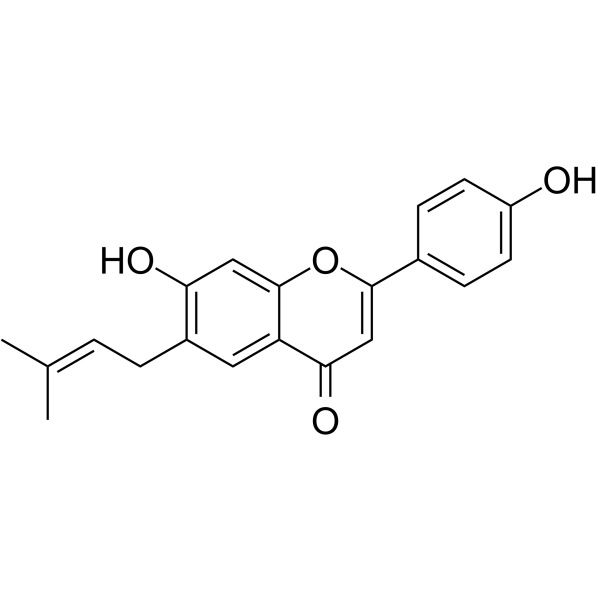 0 ImagesLicoflavone A is an orally active PTP1B/VEGFR-2 inhibitor, with an IC50 of 54.5 μM against PTP1B, an IC50 of 14.36 μM and a Kd of 142.38 nM against human VEGFR-2. Licoflavone A blocks the PI3K/AKT and MEK/ERK signaling pathways. Licoflavone A induces G1 phase cell cycle arrest, apoptosis via the intrinsic mitochondrial pathway (apoptosis), and inhibits migration, invasion and epithelial-mesenchymal transition (EMT) of gastric cancer cells. Licoflavone A inhibits the proliferation of gastric cancer cells in vitro and in xenograft models. Licoflavone A reduces the expression levels of HIF-1α, GLUT1, LDHA, PKM2 and HK2 in hypoxic gastric cancer cells, decreases glucose uptake and suppresses glycolysis. Licoflavone A can be used in research related to gastric cancer, type 2 diabetes and obesity.
-
LIQ1
 0 ImagesCat. No.: HY-179371CAS No.: 2606032-80-6LIQ1, a flavonoid derivative, is a potent Pyruvate kinase M2 (PKM2) allosteric inhibitor (IC50 = 0.39 μM; Kd = 4.5 μM) targeting Arg43 within the polyarginine pocket. LIQ1 exhibits efficacy in a mouse model of LPS (HY-D1056)-induced endotoxemia, preventing the nuclear translocation of PKM2 and inhibiting its binding to HIF-1α, thereby suppressing IL-1β transcription. LIQ1 can be used for the research of endotoxemia[1].
-
PARP1/PKM2-IN-1
 0 ImagesCat. No.: HY-183765PARP1/PKM2-IN-1 is a dual PARP1/PKM2 inhibitor, with an IC50 of 39.5 nM against PARP1, and IC50 values of 261 nM (recombinant PKM2) and 50 nM (dimeric PKM2) against PKM2. PARP1/PKM2-IN-1 reduces the dimerization of PKM2 and decreases its nuclear accumulation level. PARP1/PKM2-IN-1 also selectively downregulates PKM2 mRNA and impairs poly (ADP-ribose)-mediated nuclear retention of PKM2. PARP1/PKM2-IN-1 exhibits antiproliferative activity and inhibits the formation of 3D cancer spheroids. PARP1/PKM2-IN-1 can be used in research related to mammary adenocarcinoma, triple-negative breast cancer, BRCA1-mutant triple-negative breast cancer, and prostate adenocarcinoma.
-
PKM2-IN-10
 0 ImagesCat. No.: HY-172881PKM2-IN-10 (Compound 16) is a PKM2 inhibitor. PKM2-IN-10 inhibits the proliferation of A549 and HCC1833 cell lines with IC50 of 3.36 μM and 9.20 μM, respectively. PKM2-IN-10 exhibits antitumor activity in human non-small cell lung cancer (NSCLC) and mouse lung adenocarcinoma models. PKM2-IN-10 can be used in lung cancer research.
-
PKM2-IN-13
 0 ImagesCat. No.: HY-180523PKM2-IN-13 is a selective PKM2 inhibitor inhibiting PKM2 with an IC50 value of 55.13 μM. PKM2-IN-13 exhibits broad-spectrum anticancer activity with low toxicity to normal cells. PKM2-IN-13 induces apoptosis by elevated ROS levels and activation of caspases 3/7, and interacts with and inhibits the glycolytic activity of Pyruvate Kinase M2 in virto. PKM2-IN-13 demonstrates a favorable safety profile with no significant adverse effects in vivo. PKM2-IN-13 can be used for oral squamous cell carcinoma (OSCC), colon carcinoma, breast cancer and melanoma research.
-
ZY-2 (solution)
 0 ImagesCat. No.: HY-DY1120ZY-2 (solution) is a fluorescent probe targeting pyruvate kinase M2 (PKM2) with an excitation wavelength of 419 nm. ZY-2 (solution) significantly activates purified PKM2 protein. ZY-2 (solution) exhibits enhanced fluorescence emission in low-polarity or high-viscosity environments. ZY-2 (solution) enables highly sensitive and selective fluorescence imaging of PKM2 in live PKM2-positive cancer cells, with no significant side effects on cell viability within its effective concentration range. ZY-2 (solution) can be used for cervical cancer research.
Solvent and concentration: DMSO: 10 mM
-
Multi-target kinase-IN-9
 0 ImagesCat. No.: HY-182037Multi-target kinase-IN-9 is a multi-target enzyme inhibitor with antiproliferative and antiangiogenic activities, and exhibits remarkable selectivity against hepatocellular carcinoma cells. By broadly binding to the active sites or ATP-binding regions of multiple key enzymes including DNA polymerase β, Pyruvate Kinase M2 (PKM2), Multi-target kinase-IN-9 comprehensively disrupts DNA repair and replication, glycolysis, chromatin dynamics and transcriptional programs, and blocks the self-renewal of cancer stem cells. Multi-target kinase-IN-9 induces genomic instability, lysosomal dysfunction and autophagic flux impairment, thereby triggering tumor cell death, effectively inhibiting tumor proliferation, invasion, metastasis and angiogenesis, and significantly reducing tumor volume in xenograft models. Multi-target kinase-IN-9 is applicable to hepatocellular carcinoma-related research.
-
PKM2-IN-12
 0 ImagesCat. No.: HY-178748PKM2-IN-12 is an orally active PKM2 inhibitor with an IC50 of 10 nM. PKM2-IN-12 inhibits COLO-205 cell proliferation and migration, arrests the cell cycle, and induces apoptosis. PKM2-IN-12 significantly reduces cellular levels of lactate, pyruvate, and ROS. PKM2-IN-12 directly kills cancer cells and restores disrupted gut microbiota balance in mice model. PKM2-IN-12 can be used to study colorectal cancer.
-
PKM2-IN-11
 0 ImagesCat. No.: HY-178441PKM2-IN-11 is a PKM2 inhibitor (IC50 = 0.363 μM). PKM2-IN-11 has dual mechanisms involving pyruvate kinase M2 (PKM2) inhibition and microtubule stabilization. PKM2-IN-11 can decrease PKM2 protein levels in MCF-7 cells. PKM2-IN-11 can slightly reduce reactive oxygen species (ROS) levels and significantly increase early apoptotic cells. PKM2-IN-11 induces G2/M phase arrest. PKM2-IN-11 can be used for the study of breast cancer.
-
PKM2 activator 11
 0 ImagesCat. No.: HY-180795PKM2 activator 11 (Compound 23) is a PKM2 activator with an AC50 value of 92.12 nM. PKM2 activator 11 promotes PKM2 tetramerization and inhibits its nuclear translocation. PKM2 activator 11 suppresses glycolysis and the PKM2/STAT3 signaling pathway. PKM2 activator 11 induces Apoptosis. PKM2 activator 11 exhibits anti-CRC activity in vitro with potency and selectivity.
-
ML 083
 0 ImagesCat. No.: HY-111936CAS No.: 562867-96-3Synonyms: BML283ML083 is a member of a series of highly specific allosteric activators for the tumor-specific isoform of human pyruvate kinase (M2 isoform). ML083 affects the cooperativity of phosphoenolpyruvate (PEP) binding. ML083 can be used in the research of tumors.
-
ZINC08383544
 0 ImagesCat. No.: HY-129165CAS No.: 618361-63-0ZINC08383544 is a PKM2 activator with anti-tumor activity. ZINC08383544 binds to the dimer-dimer interface of PKM2, promotes tetramer formation, blocks nuclear translocation, inhibits the expression of glycolysis-related genes such as GLUT1, and reduces T cell-mediated inflammatory responses. ZINC08383544 can be used in cancer-related research such as cervical cancer.
-
PKM2 agonist-1
 0 ImagesCat. No.: HY-180796CAS No.: 3075162-42-1PKM2 agonist-1 (Compound D16) is a highly effective, allosteric PKM2 agonist with an AC50 value of 77 nM. PKM2 agonist-1 inhibits Ang II-induced smooth muscle cell phenotypic switching. PKM2 agonist-1 effectively prevents aortic dissection and results in reduced mortality.
- 1



