



Tyrosinase
Tyrosinase is a copper-containing metalloprotein belonging to the type-3 copper protein family, together with haemocyanins and catechol oxidases. Tyrosinases are the catalysts in mammals responsible for the formation of melanin in skin and hair color, as well as browning in fruit and vegetables following cell damage.
Tyrosinases are found in various prokaryotes as well as in plants, fungi, arthropods, and mammals and are responsible for pigmentation, wound healing, radiation protection, and primary immune response. Tyrosinases perform two sequential enzymatic reactions: hydroxylation of monophenols and oxidation of diphenols to form quinones which polymerize spontaneously to melanin. In plants, sponges, and many invertebrates, tyrosinases are important for wound healing and primary immune responses; in arthropods, they play a role in sclerotization, and in bacteria, tyrosinases protect DNA from UV damage.
All Product Categories
-
Tyrosinase Inhibitors
(273)
View all products
-
Tyrosinase Antagonist
(1)
View all products
-
Tyrosinase Activators
(10)
View all products
-
Tyrosinase Modulator
(1)
View all products
-
Tyrosinase Inducer
(1)
View all products
-
Tyrosinase Degrader
(1)
View all products
-
Tyrosinase Substrates
(7)
View all products
-
Tyrosinase Ligand
(1)
View all products
-
Tyrosinase Related Products (319)
Related Products (319)

-
Antibodies (9)
-
2-Ethoxybenzamide (Standard)
 0 Images2-Ethoxybenzamide (Standard) is the analytical standard of 2-Ethoxybenzamide (HY-B1428). 2-Ethoxybenzamide (Ethenzamide) is a nonsteroidal anti-inflammatory agent that shows analgesic and antipyretic effects. 2-Ethoxybenzamide induces melanin synthesis via cAMP response element-binding protein (CREB) phosphorylation. 2-Ethoxybenzamide can be used in the research of hypopigmentation and inflammation-related diseases.
-
Tyrosinase-IN-42
 0 ImagesCat. No.: HY-176437CAS No.: 1914971-97-3Tyrosinase-IN-42 (Compound 13t) is a tyrosinase inhibitor (IC50: 1.363 µM). Tyrosinase-IN-42 exhibits anti-browning effects on fresh-cut apples. Tyrosinase-IN-42 has antioxidant activity by scavenging DPPH and ABTS free radicals (IC50: 57.90 and 45.64 µM, respectively).
-
3',4'-Dihydroxyacetophenone (Standard)
 0 Images3',4'-Dihydroxyacetophenone (3,4-DHAP), isolated from Picea Schrenkiana Needles exhibits a strong suppressive action against tyrosinase activity, with an IC50 of 10 μM. 3',4'-Dihydroxyacetophenone (3,4-DHAP) is a vasoactive agent and antioxidant.
-
Tyrosinase activator-1
 0 ImagesCat. No.: HY-175795Tyrosinase activator-1 (Compound 7A) is a Tyrosinase activator. Tyrosinase activator-1 significant antibacterial activity against gram-positive bacteria, such as MRSA, Staphylococcus aureus ATCC653 and Enterococcus faecium with MICs of 12.5-20 μM. Tyrosinase activator-1 activates tyrosinase by competitively occupying the binding site of L-DOPA on the surface of tyrosinase without interfering with the substrate binding at the active center. Tyrosinase activator-1 can be used for bacterial infections and antibiotics development research.
-
Taraxinic acid
 0 ImagesCat. No.: HY-N13739CAS No.: 75911-33-0Taraxinic acid can be found in the roots of Taraxacum flavostylum and Taraxacum lucidum. It is a Tyrosinase inhibitor that dose-dependently inhibits Tyrosinase activity, showing approximately 54.5% inhibition at a concentration of 50 μg/mL. Taraxinic acid has an IC50 of 83.2 μM against melanoma cells A375 and HTB140, and an IC50 of 60.4 μM against melanoma cells WM793, with activity being both dose- and time-dependent. Taraxinic acid holds promise for research in the field of anticancer therapy.
-
SYK-IN-14
 0 ImagesCat. No.: HY-183924CAS No.: 725237-11-6SYK-IN-14 is an orally active Syk and ZAP-70 inhibitor with human Syk IC50 of 0.006 μM, human ZAP-70 IC50 of 0.23 μM. SYK-IN-14 functionally inhibits Syk kinase activity in vitro. SYK-IN-14 functionally inhibits ZAP-70 kinase activity in vitro. SYK-IN-14 suppresses passive cutaneous anaphylaxis reaction in Mus musculus mice. SYK-IN-14 suppresses Concanavalin A (HY-P2149)-induced IL-2 production in Mus musculus mice. SYK-IN-14 can be used for the research of allergic disorders and autoimmune diseases.
-
Benzylacetone (Standard)
 0 ImagesCat. No.: HY-W015616RCAS No.: 2550-26-7Synonyms: 4-Penylbutan-2-one (Standard)Benzylacetone (4-Penylbutan-2-one) (Standard) is the analytical standard of Benzylacetone (HY-W015616). This product is intended for research and analytical applications. Benzylacetone is an aromatic compound. Benzylacetone is a mushroom tyrosinase inhibitor with an IC50 of 2.8 mM, a Ki of 1.25 mM for monophenolase and an IC50 of 0.6 mM, a Ki of 0.39 mM for diphenolase. Benzylacetone inhibits free mushroom tyrosinase and enzyme-substrate complex. Benzylacetone acts as an appetite enhancer via olfactory stimulation, reduces spontaneous locomotor activity, induces weight gain. Benzylacetone exhibits repellent, fumigant, and contact toxicity against Tribolium castaneum adults.
-
N-Acetyl-4-S-cysteaminylphenol
 0 ImagesCat. No.: HY-W129441CAS No.: 91281-32-2Synonyms: N-Ac-4-S-CAPN-Acetyl-4-S-mercaptoaminophenol (N-Ac-4-S-CAP) is a compound that is selectively cytotoxic to melanocytes of black mouse hair follicles. It can cause 98% depigmentation of black mouse hair follicles. N-Ac-4-S-CAP can produce visible changes in hair follicle melanocytes 4 hours after intraperitoneal injection, including aggregation of melanin granules and nuclear condensation. Electron microscopy observations showed that it caused progressive destruction of melanocytes, including swelling of membranous organelles, nuclear condensation, and cytoplasmic vacuolation, ultimately leading to complete cell necrosis. N-Ac-4-S-CAP has a specific cytotoxic effect on melanocytes that actively produce eumelanin, but may not affect precursor or dormant melanocytes. These properties suggest that N-Ac-4-S-CAP may have potential application value in the treatment of melanoma or skin whitening.
-
Litchinol B
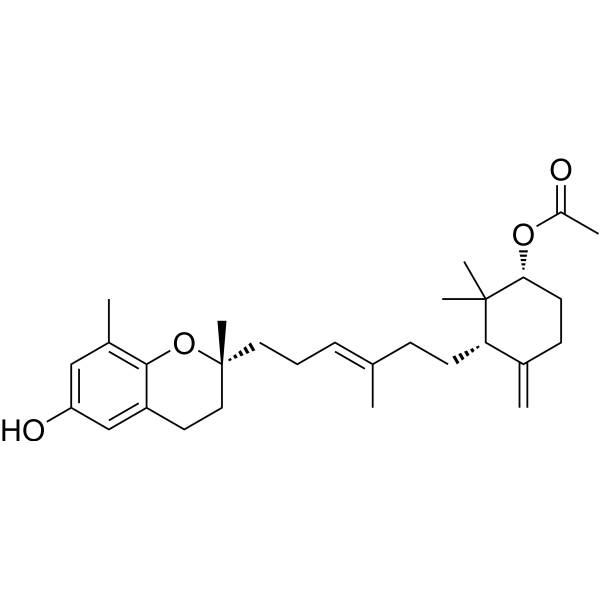 0 ImagesCat. No.: HY-N12427Litchinol B (compound 2) is a non-competitive tyrosinase inhibitor with an inhibition constant of 5.70 μM.
-
5-epi-Arvestonate A
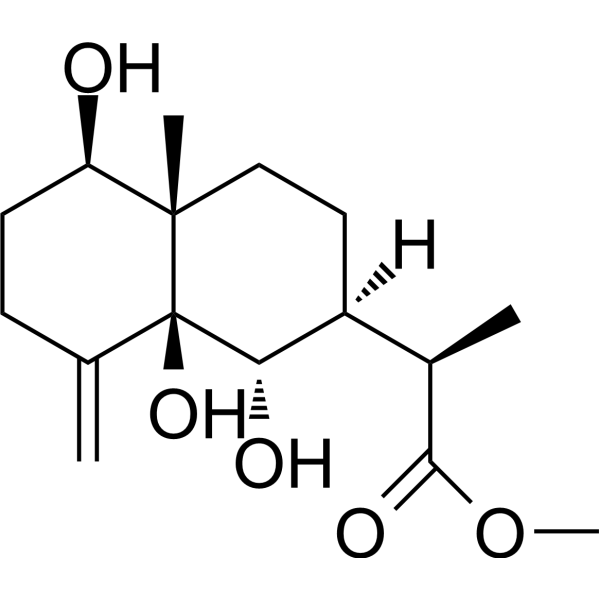 0 ImagesCat. No.: HY-N10623CAS No.: 2767066-84-05-epi-Arvestonate A is a sesquiterpenoid isolated from the whole plants of Seriphidium transiliense. 5-epi-Arvestonate A promotes melanogenic production by activating the transcription of microphthalmia-associated transcription factor (MITF) and tyrosinase family genes. 5-epi-Arvestonate A inhibits the expression of IFN-γ-chemokine through the JAK/STAT signaling pathway in immortalized human keratinocyte (HaCaT) cells.
-
Arbutin-d4
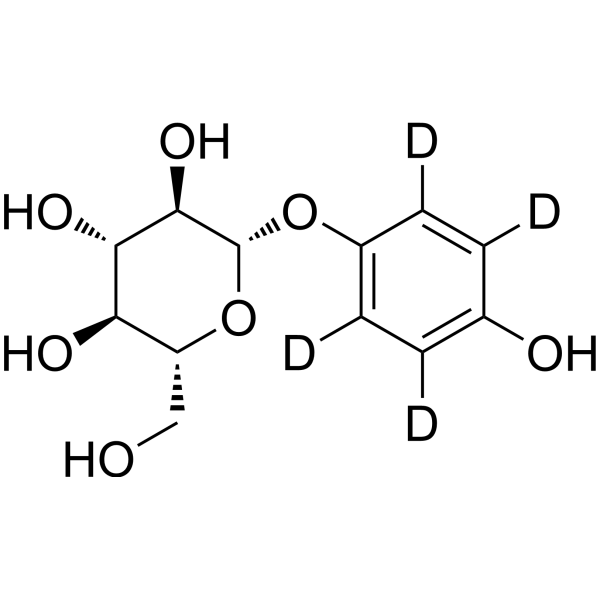 0 ImagesCat. No.: HY-N0192SSynonyms: β-Arbutin-d4Arbutin-d4 is deuterium labeled Arbutin. Arbutin (β-Arbutin) is a competitive inhibitor of tyrosinase in melanocytes, with Kiapp values of 1.42 mM for monophenolase; 0.9 mM for diphenolase. Arbutin is also used as depigmenting agents. Arbutin is a natural polyphenol isolated from the bearberry plant Arctostaphylos uvaursi, possesses with anti-oxidant, anti-inflammatory and anti-tumor properties.
-
Ethyl 3,4,5-trimethoxybenzoate (Standard)
 0 ImagesCat. No.: HY-W012092RCAS No.: 6178-44-5Ethyl 3,4,5-trimethoxybenzoate is a natural compound isolated from the roots of Rauvolfia yunnanensis Tsiang. Ethyl 3,4,5-trimethoxybenzoate is a melanogenesis inhibitor. Ethyl 3,4,5-trimethoxybenzoate does not directly target tyrosinase activity, but inhibits melanin synthesis in a dose-dependent manner by downregulating α-MSH (HY-P0252)-induced tyrosinase protein expression and scavenging ROS. Ethyl 3,4,5-trimethoxybenzoate scavenges DPPH free radicals. Ethyl 3,4,5-trimethoxybenzoate can be used in the research of hyperpigmentation.
-
Retusin (Standard)
 0 ImagesSynonyms: Quercetin-3,3',4',7-tetramethylether (Standard)Retusin (Quercetin-3,3',4',7-tetramethylether) (Standard) is the analytical standard of Retusin. This product is intended for research and analytical applications. Retusin is a tyrosinase inhibitor, with IC50 values of 50.9 μM and 51.8 μM against mushroom and intracellular tyrosinase, respectively. Retusin also acts as a free radical scavenger, melanogenesis inhibitor, anti-apoptosis agent, neuroprotective agent, antiemetic, antifungal agent, and antiviral agent. Retusin scavenges ABTS•+ and DPPH• free radicals. Retusin can be used in studies related to hyperpigmentation, vomiting, Aspergillus niger infection, and COVID-19 infection.
-
Tyrosinase-IN-47
 0 ImagesCat. No.: HY-180506Tyrosinase-IN-47 (compound 6a) is a potent competitive tyrosinase inhibitor with an IC50 of 1.43 µM and a Ki of 0.1142 μM. Tyrosinase-IN-47 also shows inhibition activity in α-Glucosidase (IC50 = 36.26 μM) and acetylcholinesterase (IC50 = 8.26 μM). Tyrosinase-IN-47 exhibits in vitro antioxidant activity, with good scavenging ability for DPPH (IC50 = 4.75 μM) and ABTS (IC50 = 0.04 μM). Tyrosinase-IN-47 displays anti-browning effect on freshly cut potatoes. Tyrosinase-IN-47 can be used for pharmaceutical research.
-
H-Tyr-OMe (Standard)
 0 ImagesH-Tyr-OMe (Standard) is the analytical standard of H-Tyr-OMe (HY-W007671). This product is intended for research and analytical applications. H-Tyr-OMe is an amino acid derivative and also a coordinating ligand for CuII ions. H-Tyr-OMe can serve as a surface functionalization reagent for carbon dots, and is used to prepare fluorescent probes for biothiol sensing. H-Tyr-OMe is oxidized to quinone under the catalysis of Tyrosinase via its phenolic hydroxyl group, which quenches the fluorescence of carbon dots. H-Tyr-OMe contains potential coordination sites, including carboxyl, amino and phenolic hydroxyl groups.
-
Tyrosinase-IN-32
 0 ImagesCat. No.: HY-159586Tyrosinase-IN-32 (compound 11) is a hydroxamate-based alkaloid and a mushroom tyrosinase inhibitor. Tyrosinase-IN-32 has antioxidant activity and can be isolated from black pepper (Piper nigrum L.).
-
AP736
 0 ImagesCat. No.: HY-157010CAS No.: 1365531-21-0AP736 is a potent tyrosinase inhibitor (IC50 = 0.9 μM) with anti-melanogenesis activity in normal human melanocytes (IC50 = 0.11 μM). AP736 suppresses the expression of tyrosinase and TRP-1/2 by inhibiting the cAMP-PKA-CREB signalling axis, leading to reduced microphthalmia-associated transcription factor (MITF) transcripts and proteins. AP736 can be used for melanogenesis and hyperpigmentation research.
-
D-Tyrosine (Standard)
 0 ImagesD-Tyrosine (Standard) is the analytical standard of D-Tyrosine (HY-Y0444). This product is intended for research and analytical applications. D-Tyrosine is the D-isomer of tyrosine. D-Tyrosine negatively regulates melanin synthesis by inhibiting tyrosinase activity. D-Tyrosine inhibits biofilm formation and trigger the self-dispersal of biofilms without suppressing bacterial growth.

-
2-Hydroxy-4-methoxybenzoic acid potassium
 0 ImagesSynonyms: 4-Methoxysalicylic acid potassium2-Hydroxy-4-methoxybenzoic acid (potassium), is one of the major phytoconstituents of Decalepis arayalpathra, also known as 4-Methoxysalicylic acid (potassium), has a variety of biological effects, including anti-inflammatory, antipyretic, antioxidant, and anti-diabetic properties.




