



Tyrosinase
Tyrosinase is a copper-containing metalloprotein belonging to the type-3 copper protein family, together with haemocyanins and catechol oxidases. Tyrosinases are the catalysts in mammals responsible for the formation of melanin in skin and hair color, as well as browning in fruit and vegetables following cell damage.
Tyrosinases are found in various prokaryotes as well as in plants, fungi, arthropods, and mammals and are responsible for pigmentation, wound healing, radiation protection, and primary immune response. Tyrosinases perform two sequential enzymatic reactions: hydroxylation of monophenols and oxidation of diphenols to form quinones which polymerize spontaneously to melanin. In plants, sponges, and many invertebrates, tyrosinases are important for wound healing and primary immune responses; in arthropods, they play a role in sclerotization, and in bacteria, tyrosinases protect DNA from UV damage.
All Product Categories
-
Tyrosinase Inhibitors
(275)
View all products
-
Tyrosinase Antagonist
(1)
View all products
-
Tyrosinase Activators
(10)
View all products
-
Tyrosinase Modulator
(1)
View all products
-
Tyrosinase Inducer
(1)
View all products
-
Tyrosinase Degrader
(1)
View all products
-
Tyrosinase Substrates
(7)
View all products
-
Tyrosinase Ligand
(1)
View all products
-
Tyrosinase Related Products (321)
Related Products (321)

-
Antibodies (9)
-
Tyrosinase-IN-23
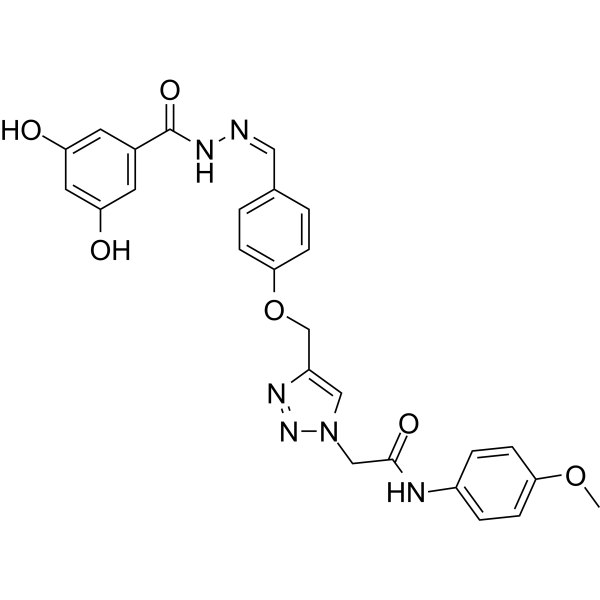 0 ImagesCat. No.: HY-161241CAS No.: 3030420-71-1Tyrosinase-IN-23 (Compd 11m) is a tyrosinase inhibitor with an IC50 of 55.39±4.93 µM. Tyrosinase-IN-23 can be used for research of melanin biosynthesis.
-
3-(2,4-Dihydroxyphenyl)propanoic acid (Standard)
 0 ImagesGarenoxacin (Standard) is the analytical standard of Garenoxacin. This product is intended for research and analytical applications. Garenoxacin (BMS284756) is an orally active quinolone antibiotic and has a broad spectrum of activity against a wide array of gram-positive and gram-negative bacteria, anaerobes, and fastidious organisms.
-
Kojic acid dipalmitate (Standard)
 0 ImagesSynonyms: Kojic dipalmitate (Standard)Kojic acid dipalmitate (Standard) is the analytical standard of Kojic acid dipalmitate. This product is intended for research and analytical applications. Kojic acid dipalmitate (Kojic dipalmitate) is a derivative of Kojic acid (HY-W050154), a fungal metabolite that can be produced by species of Aspergillus, Acetobacter and Penicillium. Kojic acid dipalmitate is a slow and reversible competitive inhibitor of tyrosinase. Kojic acid dipalmitate can be used for skin‐lightening agent research.
-
Apovincamine
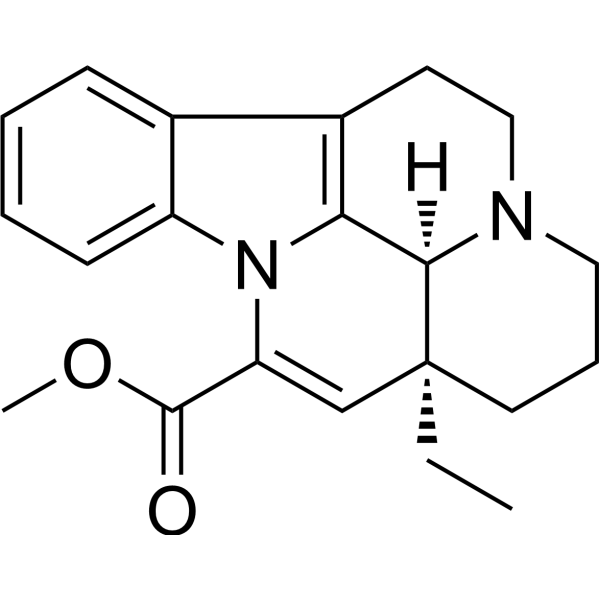 0 ImagesApovincamine (cis-Apovincamine) is an indole alkaloid isolated from the Malaysian Alstonia pneumatophora (Apocynaceae). Apovincamine shows anti-melanogenesis activity.
-
Tec-IN-1
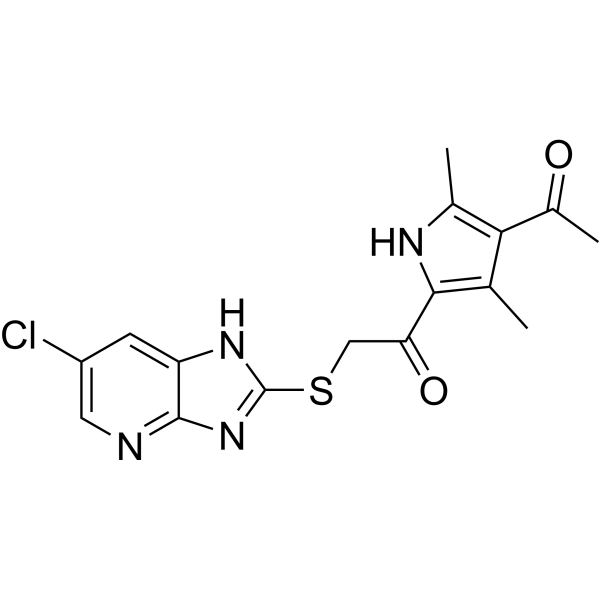 0 ImagesCat. No.: HY-124827CAS No.: 931664-41-4Tec-IN-1 (Compound 21) is a Tec inhibitor (IC50s of 11.7 μM). Tec-IN-1 inhibits Tec-mediated tyrosine phosphorylation of FGF2, and inhibits FGF2 secretion from cells.
-
Tyrosinase-IN-34
 0 ImagesCat. No.: HY-161969Tyrosinase-IN-34 (compound 5a) is a human tyrosinase inhibitor (IC50: 3.5 μM) with the potential to control melanogenesis and pigmentation.
-
Mycosporine 2 glycine
 0 ImagesCat. No.: HY-161612CAS No.: 149092-45-5Mycosporine 2 glycine is an anti-inflammatory agent and TYRP1 inhibitor. Mycosporine 2 glycine inhibits the expression of inflammatory genes and reduces nitric oxide production. Mycosporine 2 glycine binds tightly to the active pocket of TYRP1 and inhibits the activity of melanogenesis-related enzymes. Mycosporine 2 glycine can be used in the research of hyperpigmentation and inflammation-related diseases.
-
Tyrosinase-IN-41
 0 ImagesCat. No.: HY-173223Tyrosinase-IN-41 (compound 7) is a Tyrosinase inhibitor, with an IC50 of 9.45 μM.
-
Methyl cinnamate-d7
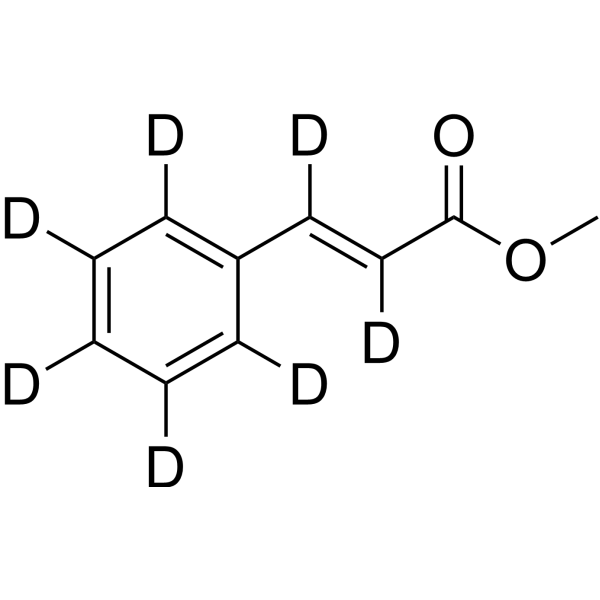 0 ImagesCat. No.: HY-W017212SCAS No.: 1219806-38-8Synonyms: Methyl 3-phenylpropenoate-d7Methyl cinnamate-d7 is deuterated labeled Methyl cinnamate (HY-W017212). Methyl cinnamate (Methyl 3-phenylpropenoate), an active component of Zanthoxylum armatum, is a widely used natural flavor compound. Methyl cinnamate (Methyl 3-phenylpropenoate) possesses antimicrobial activity and is a tyrosinase inhibitor that can prevent food browning. Methyl cinnamate (Methyl 3-phenylpropenoate) has antiadipogenic activity through mechanisms mediated, in part, by the CaMKK2-AMPK signaling pathway.
-
Methyl cinnamate (Standard)
 0 ImagesSynonyms: Methyl 3-phenylpropenoate (Standard)Methyl cinnamate (Methyl 3-phenylpropenoate), an active component of Zanthoxylum armatum, is a widely used natural flavor compound. Methyl cinnamate (Methyl 3-phenylpropenoate) possesses antimicrobial activity and is a tyrosinase inhibitor that can prevent food browning. Methyl cinnamate (Methyl 3-phenylpropenoate) has antiadipogenic activity through mechanisms mediated, in part, by the CaMKK2-AMPK signaling pathway.
-
5,5′-(1,3-Propanediyl)bis-1,3,4-oxadiazole-2(3H)-thione
 0 ImagesCat. No.: HY-141555CAS No.: 333409-31-75,5′-(1,3-Propanediyl)bis-1,3,4-oxadiazole-2(3H)-thione is a weak inhibitor for snake venom and human recombinant phosphodiesterase 1 with IC50 of 429 and 467 μM. 5,5′-(1,3-Propanediyl)bis-1,3,4-oxadiazole-2(3H)-thione inhibits mushroom tyrosinase weakly, with Ki of 1.9 μM.
-
Tyrosinase-IN-51
 0 ImagesCat. No.: HY-W1060179CAS No.: 2302-93-4Tyrosinase-IN-51 is a tyrosinase inhibitor with an IC50 value of 340 nM. Tyrosinase-IN-51 can be used in studies related to pigmented skin diseases such as melasma, melanosis, freckles, and senile plaques.
-
Rhusflavanone
 0 ImagesCat. No.: HY-N19905CAS No.: 53060-72-3Rhusflavanone is a biflavonoid found in the stamens of Mesua ferrea. Rhusflavanone IC50 values against elastase and tyrosinase are 10.6 and 14.3 μg/mL, respectively. Rhusflavanone inhibits the replication of influenza B virus, SARS-CoV-2, Measles virus and HSV-2, and suppresses the secretion of Salmonella T3SS effector proteins. Rhusflavanone inhibits the production of pro-inflammatory mediators and exerts cytotoxic effects on cancer cells. Rhusflavanone can be used in research related to colon cancer, breast cancer, cervical cancer, COVID-19, influenza B, measles, HSV-2 infection and Salmonella infection.
-
2,3-Diaminopropionic acid hydrochloride (Standard)
 0 ImagesCat. No.: HY-W013673RCAS No.: 1482-97-92,3-Diaminopropionic acid hydrochloride is the precursor of antibiotics and the siderophore staphyloferrin B. 2,3-Diaminopropionic acid hydrochloride is the inhibitor for polyphenoloxidase (PPO).
-
4-Ethylresorcinol (Standard)
 0 ImagesCat. No.: HY-W015782RCAS No.: 2896-60-84-Ethylresorcinol (Standard) is the analytical standard of 4-Ethylresorcinol (HY-W015782). This product is intended for research and analytical applications. 4-Ethylresorcinol is a derivative of resorcinol and can serve as a substrate for tyrosinase. 4-Ethylresorcinol has anti-hyperpigmentation and antioxidant effects and can inhibit melanin synthesis. 4-Ethylresorcinol has potential whitening value.
-
Cepharadione B
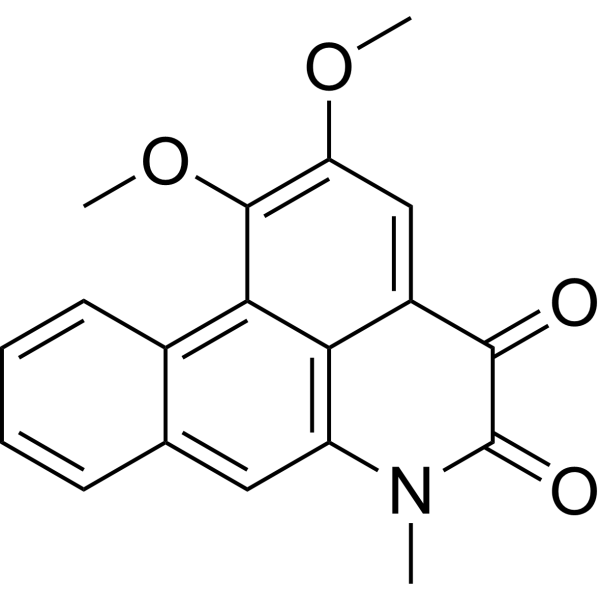 0 ImagesCat. No.: HY-123898CAS No.: 55610-02-1Cepharadione B (compound 22) is a natural compound isolated from the leaves of Piper sanctum. Cepharadione B is a tyrosinase inhibitor with an IC50 value of 170 μM, and inhibits cell growth in A-549, SK-OV-3, SK-MEL-2, XF-498 and HCT-15 cells.
-
Tyrosinase-IN-50
 0 ImagesTyrosinase-IN-50 (Compound 14) is a Tyrosinase inhibitor (IC50 is 0.06 μM or 0.16 μM). Tyrosinase-IN-50 inhibits melanogenesis in multiple cell types. Tyrosinase-IN-50 can be used for the research of hyperpigmentation-related diseases and inflammatory diseases.
-
β-Tocopherol-d3
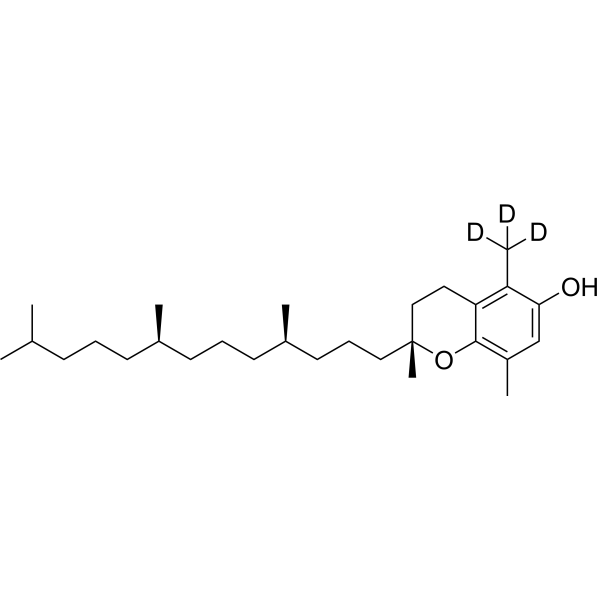 0 ImagesCat. No.: HY-113068SCAS No.: 936230-75-0β-Tocopherol-d3 is the deuterium labeled β-Tocopherol. β-Tocopherol is an analogue of vitamin E, exhibits antioxidant properties. β-Tocopherol can inhibit tyrosinase activity and melanin synthesis. β-Tocopherol can also prevent the inhibition of cell growth and of PKC activity caused by d-alpha-tocopherol.
-
Mulberroside A (Standard)
 0 ImagesMulberroside A (Standard) is the analytical standard of Mulberroside A. This product is intended for research and analytical applications. Mulberroside A is one of the main bioactive constituent in mulberry (Morus alba L.). Mulberroside A decreases the expressions of TNF-α, IL-1β, and IL-6 and inhibits the activation of NALP3, caspase-1, and NF-κB and the phosphorylation of ERK, JNK, and p38, exhibiting anti-inflammatory antiapoptotic effects. Mulberroside A shows inhibitory activity against mushroom tyrosinase with an IC50 of 53.6 μM.
-
(R)-Trolox (Standard)
 0 ImagesL-Aspartic acid (potassium) (Standard) is the analytical standard of L-Aspartic acid (potassium). This product is intended for research and analytical applications. Aspartic acid potassium is an amino acid, can be used as a suitable proagent for colon-specific agent deliverly.




