



Tyrosinase
Tyrosinase is a copper-containing metalloprotein belonging to the type-3 copper protein family, together with haemocyanins and catechol oxidases. Tyrosinases are the catalysts in mammals responsible for the formation of melanin in skin and hair color, as well as browning in fruit and vegetables following cell damage.
Tyrosinases are found in various prokaryotes as well as in plants, fungi, arthropods, and mammals and are responsible for pigmentation, wound healing, radiation protection, and primary immune response. Tyrosinases perform two sequential enzymatic reactions: hydroxylation of monophenols and oxidation of diphenols to form quinones which polymerize spontaneously to melanin. In plants, sponges, and many invertebrates, tyrosinases are important for wound healing and primary immune responses; in arthropods, they play a role in sclerotization, and in bacteria, tyrosinases protect DNA from UV damage.
All Product Categories
-
Tyrosinase Inhibitors
(279)
View all products
-
Tyrosinase Antagonist
(1)
View all products
-
Tyrosinase Activators
(10)
View all products
-
Tyrosinase Modulator
(1)
View all products
-
Tyrosinase Inducer
(1)
View all products
-
Tyrosinase Degrader
(1)
View all products
-
Tyrosinase Substrates
(7)
View all products
-
Tyrosinase Ligand
(1)
View all products
-
Tyrosinase Related Products (325)
Related Products (325)

-
Antibodies (9)
-
Tyrosinase-IN-45
 0 ImagesCat. No.: HY-179100Tyrosinase-IN-45 (compound 4) is a tyrosinase inhibitor (IC50 = 1.51 μM). Tyrosinase-IN-45 can reduce the melanin content. Tyrosinase-IN-45 can be used for skin whitening and improving pigmentation.
-
Tyrosinase-IN-17
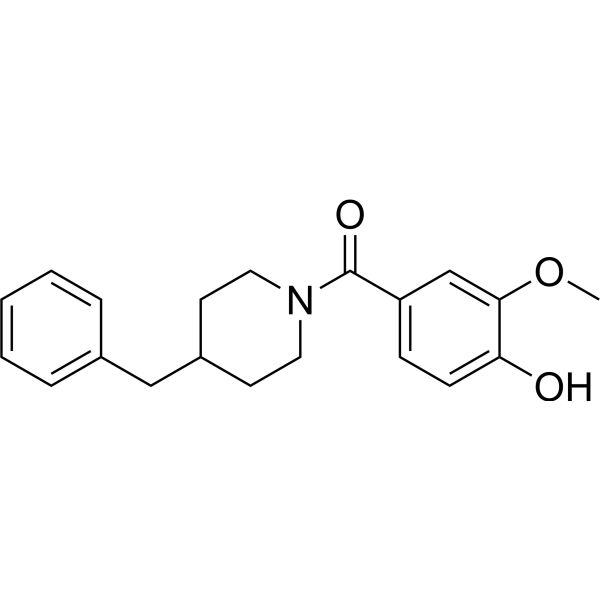 0 ImagesCat. No.: HY-149698CAS No.: 2427043-61-4Tyrosinase-IN-17 (Compound 5b) is a lipophilic, skin-permeable, and non-cytotoxic Tyrosinase inhibitor (pIC50=4.99). Tyrosinase-IN-17 can be used for research on melanin-related diseases, such as melanoma, melanogenesis, etc.
-
Tyrosinase-IN-31
 0 ImagesCat. No.: HY-161846CAS No.: 903206-81-5Tyrosinase-IN-31 (compound 2-06) is a central-targeting tyrosinase inhibitor (tyrosinase: monophenolase IC50=70.44 μM, diphenolase IC50=1.89 μM). Tyrosinase-IN-31 can inhibit the tyrosinase and melanogenesis. Tyrosinase-IN-31 can penetrate the BBB and enter the central nervous system (CNS). Tyrosinase-IN-31 shows neuroprotective effects and Parkinsonism behavior improving function.
-
AG 99
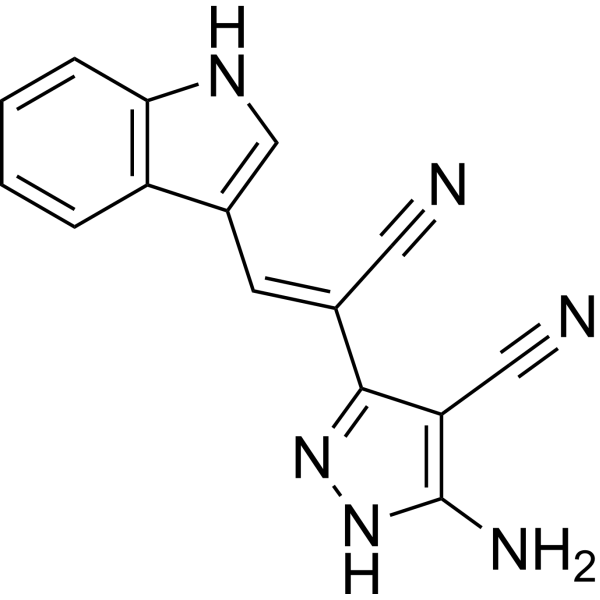
 0 ImagesCat. No.: HY-100962ACAS No.: 118409-59-9Synonyms: Tyrphostin 46; Tyrphostin AG 99AG 99 (Tyrphostin 46), a tyrphostin derivative, is a tyrosine kinase inhibitor that increases sister chromatid exchange frequency in transformed CHO-K1 and primary CHE cells. AG 99 is promising for research of proliferative diseases.
-
Tyrosinase-IN-19
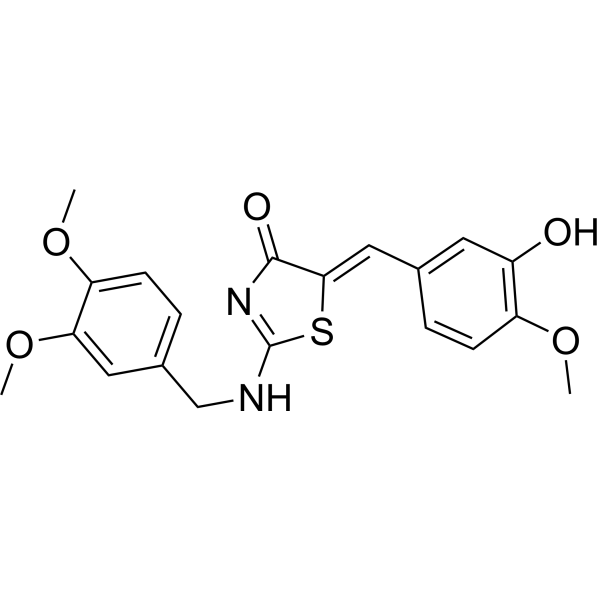 0 ImagesCat. No.: HY-157124Tyrosinase-IN-19 (compound 9) is a competitive tyrosinase inhibitor. Tyrosinase-IN-19 has strong antioxidant activities against ROS, ABTS+, and DPPH radicals. Tyrosinase-IN-19 suppresses tyrosinase expression in a dose-dependent manner.
-
ent-11α-Hydroxy-15-oxokaur-16-en-19-oic acid
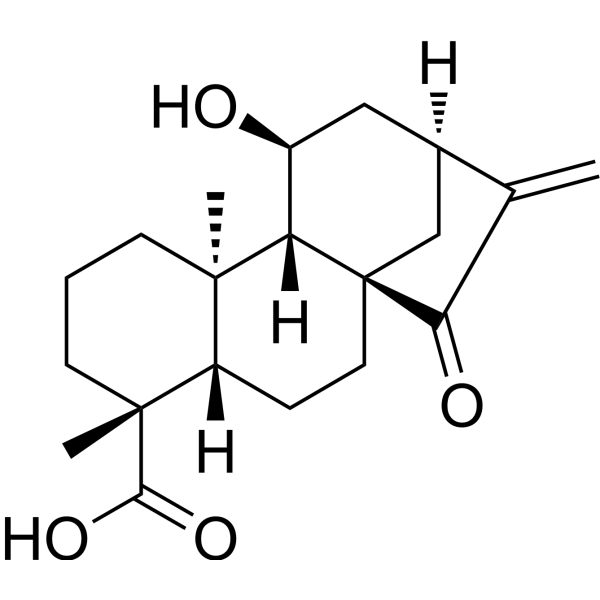 0 ImagesCat. No.: HY-N3810CAS No.: 57719-81-0ent-11α-Hydroxy-15-oxokaur-16-en-19-oic acid is an anti-melanin synthesis tyrosinase inhibitor, which can be isolated from Pteris fern. ent-11α-Hydroxy-15-oxokaur-16-en-19-oic acid regulates the melanogenesis transcription factor microphthalmia-associated transcription factor (MITF). The 11α-OH, 15-oxo and 16-en moieties of ent-11α-Hydroxy-15-oxokaur-16-en-19-oic acid are key fragments that inhibit melanin synthesis. The 19-COOH moiety has been implicated in the inhibition of cytotoxicity associated with 11α-OH KA and related compounds.
-
Tyrosinase-IN-35
 0 ImagesCat. No.: HY-161971CAS No.: 1613467-47-2Tyrosinase-IN-35 (compound 6g) is a human tyrosinase inhibitor (IC50: 2.09 μM), which is more potent than Kojic Acid (HY-W050154) (IC50: 16.38 μM). Tyrosinase-IN-35 can reduce the melanin content of melanoma B16F10 cells in vitro at doses of 4 μM and 8 μM.
-
Chetoseminudin B
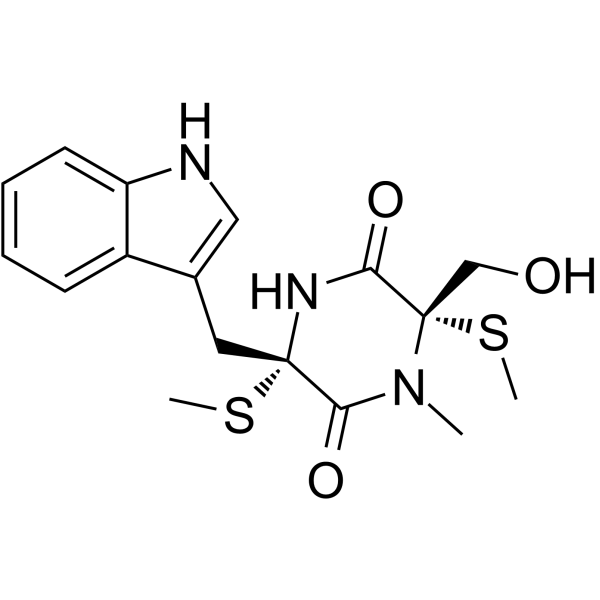 0 ImagesCat. No.: HY-N10286CAS No.: 658711-87-6Chetoseminudin B possesses mushroom tyrosinase inhibitory activity with IC50 of 31.7 μM.
-
Sorocein H
 0 ImagesCat. No.: HY-N16670CAS No.: 157382-82-6Synonyms: Sanggenon PSorocein H (Sanggenon P) is a mulberry Diels–Alder‑type adduct (MDAA). Sorocein H has inhibitory activity against tyrosinase with an IC50 of 6.49 μM. Sorocein H can reduce melanin synthesis. Sorocein H can be used in the research of pigment-related diseases.
-
Aspochalasin I
 0 ImagesCat. No.: HY-126618CAS No.: 670225-69-1Aspochalasin I exhibits cytotoxicity against cancer cells NCIH460, MCF-7 and SF-268, with IC50s of 22.1, 33.4 and 19.9 μM. Aspochalasin I inhibits melanogenesis (IC50 of 22.4 μM) through inhibition of tyrosinase, and can thus be used as whitening agent.
-
Diaminopropionoyl tripeptide-33
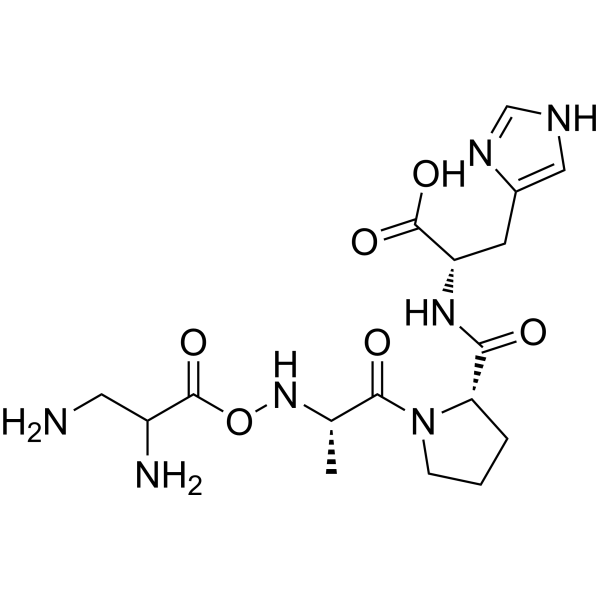 0 ImagesCat. No.: HY-P5252CAS No.: 1199495-15-2Diaminopropionoyl tripeptide-33isa bioactive peptide with protects skin cells from UVA-induced DNA damages and has been reported used as a cosmetic ingredient.
-
Tyrosinase-IN-24
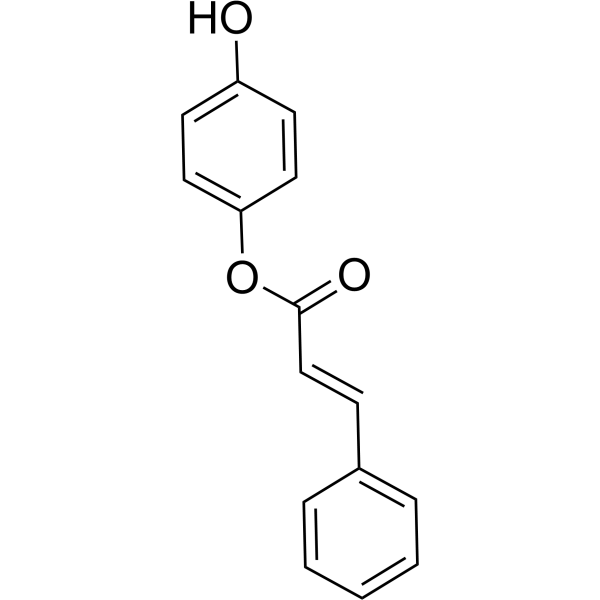 0 ImagesCat. No.: HY-161289CAS No.: 22129-66-4Tyrosinase-IN-24 (compound 3b) is a tyrosinase inhibitor with inhibitory activity against mushroom tyrosinase.
-
2-Ketoglutaric acid Sodium (Standard)
 0 ImagesCat. No.: HY-W013636ARCAS No.: 22202-68-2Synonyms: Alpha-Ketoglutaric acid Sodium (Standard)2-Ketoglutaric acid (Sodium) (Standard) is the analytical standard of 2-Ketoglutaric acid Sodium (HY-W013636A). This product is intended for research and analytical applications. 2-Ketoglutaric acid (Alpha-Ketoglutaric acid) Sodium (Standard) is an intermediate in the production of ATP or GTP in the Krebs cycle. 2-Ketoglutaric acid Sodium also acts as the major carbon skeleton for nitrogen-assimilatory reactions. 2-Ketoglutaric acid Sodium is a reversible inhibitor of tyrosinase (IC50=15 mM).
-
p-Anisic acid-d7
 0 ImagesCat. No.: HY-W723952CAS No.: 1219803-08-3Synonyms: 4-Methoxybenzoic acid-d7; Draconic acid-d7p-Anisic acid-d7 (4-Methoxybenzoic acid-d7) is the deuterium labeled p-Anisic acid (HY-N1394). p-Anisic acid (4-Methoxybenzoic acid) is an orally available tyrosinase inhibitor that has antioxidant, anti-anxiety, anti-inflammatory, anti-tumor, anti-diabetic, and preservative properties. p-Anisic acid can be used as a preservative in the cosmetics field.
-
Tyrosinase-IN-6
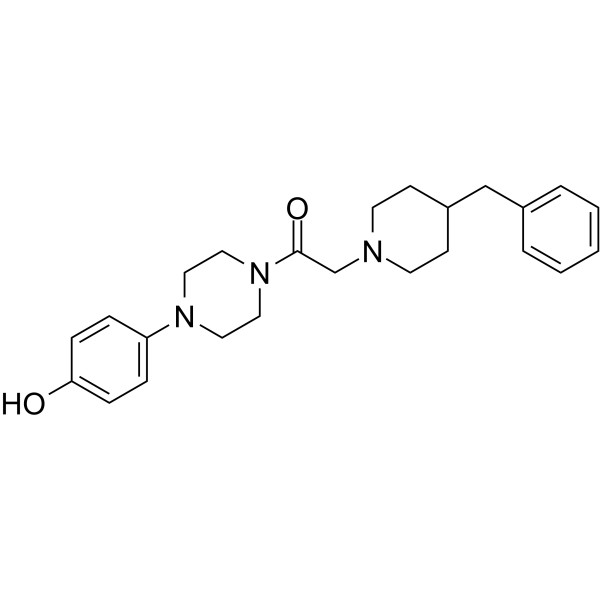 0 ImagesCat. No.: HY-147709CAS No.: 2569221-17-4Compound 4B proved to be the most effective tyrosinase inhibitor (ic50= 3.80 μ M) It also showed good antioxidant activity.
-
Tyrosinase-IN-13
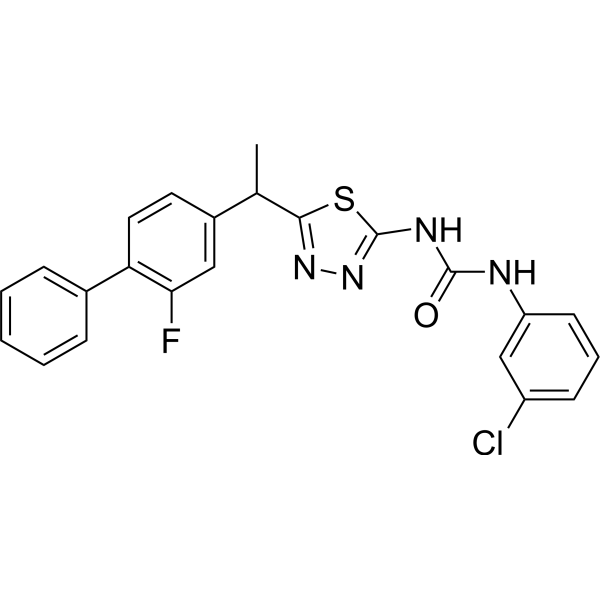 0 ImagesCat. No.: HY-155240Tyrosinase-IN-13 (compound 3c), a derivative of Flurbiprofen (HY-10582), is a potent, non-competitive tyrosinase inhibitor (IC50=68 μM; Ki=36.3 μM). Tyrosinase-IN-13 is cytotoxic against hepatocellular carcinoma (HepG2), colorectal cancer (HT-29), and melanoma (B16F10).
-
Dodoviscin A
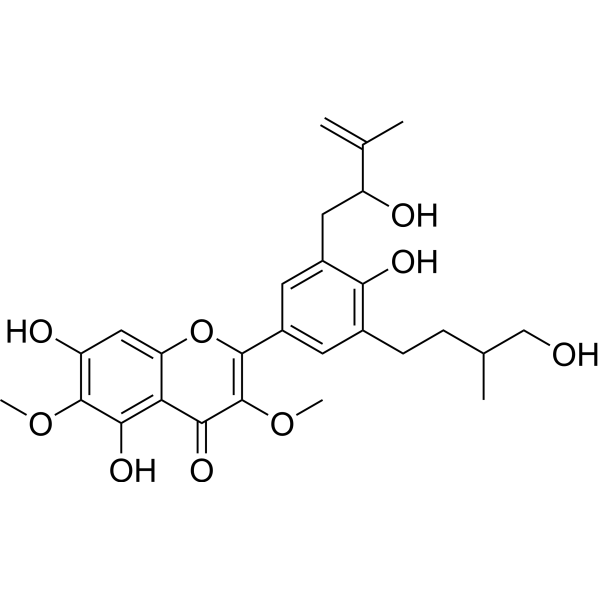 0 ImagesCat. No.: HY-N3773CAS No.: 1372527-25-7Dodoviscin A is a pigmentation-altering agent, which can be isolated from the aerial parts of Dodonaea viscosa. Dodoviscin A inhibits melanin production in B16-F10 melanoma cells. Dodoviscin A suppresses mushroom tyrosinase activity, and tyrosinase activity induced by 3-isobutyl-1-methylxanthine. Dodoviscin A also inhibits the phorphosylation of cAMP response element binding protein, induced by 3-isobutyl-1-methylxanthine and forskolin.
-
[8]-Dehydrogingerdione
![[8]-Dehydrogingerdione](https://file.medchemexpress.com/product_pic/hy-n19646.gif "Click to View [8]-Dehydrogingerdione Product Detail") 0 ImagesCat. No.: HY-N19646CAS No.: 77334-08-8[8]-Dehydrogingerdione is a Hydroxyphenylalkanone. [8]-Dehydrogingerdione can be isolated from the seeds of Aframomum melegueta and the rhizomes of Curcuma xanthorrhia. [8]-Dehydrogingerdione acts as an inhibitor of α-glucosidase and Tyrosinase, with an IC50 value of 19.5 μM against α-glucosidase and an approximate IC50 value of 100 μM against tyrosinase. [8]-Dehydrogingerdione can be used in diabetes-related research.
0 ImagesCat. No.: HY-N19646CAS No.: 77334-08-8[8]-Dehydrogingerdione is a Hydroxyphenylalkanone. [8]-Dehydrogingerdione can be isolated from the seeds of Aframomum melegueta and the rhizomes of Curcuma xanthorrhia. [8]-Dehydrogingerdione acts as an inhibitor of α-glucosidase and Tyrosinase, with an IC50 value of 19.5 μM against α-glucosidase and an approximate IC50 value of 100 μM against tyrosinase. [8]-Dehydrogingerdione can be used in diabetes-related research.
-
Tyrosinase-IN-37
 0 ImagesCat. No.: HY-162894CAS No.: 1899025-43-4Tyrosinase-IN-37 (Compound 3c) is an effective Tyrosinase inhibitor with an IC50 of 1.02 μM, exhibiting 14 times the inhibitory effect of kojic acid (Kojic acid, HY-W050154), which has an IC50 of 14.74 μM. Tyrosinase-IN-37 can effectively prevent the browning of Rosa roxburghii. Additionally, Tyrosinase-IN-37 can also inhibit browning that is not caused by Tyrosinase.




