



Antibiotic
Antibiotics are a class of secondary metabolites produced from microorganisms, animals or plants. Some of them exhibit anti-bacterial, anti-fungal, anthelmintic, anti-tumor or immunosuppressive activities with a wealth of structural classes such as β-lactams, macrolide and polyether. As major sources of antibiotics, streptomycetes, penicillium and marine organisms produce a wide variety of commercially important polyketide compounds including the well-known macrolide, polyene and polyether antibiotics with wide range of activities. Antibiotics such as penicillin, cephalosporin, streptomycin, and tetracycline can be used in the treatment of human and veterinary diseases. However, antibiotic resistance is also a growing threat to global public health.
Antibiotic Isoform Specific Products
-
Antibiotic
(2767)
View all products
-
Aminoglycoside
(47)
View all products
-
Glycopeptide
(20)
View all products
-
Lipopeptide
(6)
View all products
-
Macrolide
(76)
View all products
-
Oxazolidinone
(16)
View all products
-
Quinolone
(101)
View all products
-
Tetracycline
(42)
View all products
-
β-lactam
(200)
View all products
All Product Categories
-
Antibiotic Related Products (3529)
Related Products (3529)

-
Related Compound Screening Libraries (1)
-
Antibiotic Isoform Comparison
-
Himalomycin B
 0 ImagesCat. No.: HY-N14281CAS No.: 701915-11-9Himalomycin B is an anthraquinone antibiotic. Himalomycin B has strong activity against Staphylococcus aureus, Escherichia coli and Streptomyces vuridochromogenes.
-
Adustin
 0 ImagesCat. No.: HY-N13880CAS No.: 69579-74-4Adustin, an antifungal antibiotic, is a polypeptide with translation-inhibiting activity. Adustin inhibits translation in a cell-free rabbit reticulocyte lysate system with an IC50 of 0.34 μM.
-
Epithienamycin F
 0 ImagesCat. No.: HY-N14210CAS No.: 79057-45-7Epithienamycin F is a carbapenem antibiotic. Epithienamycin F has anti-Gram-positive bacteria and anti-Gram-negative bacteria activity.
-
Elaiomycin
 0 ImagesCat. No.: HY-N14745CAS No.: 23315-05-1Elaiomycin has activity against Gram-positive bacteria, some anaerobic bacteria, Eimeria tenella, E.acervulina.
-
2-Hydroxygentamicin C2
 0 ImagesCat. No.: HY-N14705CAS No.: 60768-15-22-Hydroxygentamicin C2 is an antibiotic of the gentamicin group with anti-Gram-positive and negative bacteria activity.
-
Dechlorogriseofulvin
 0 ImagesCat. No.: HY-W741555CAS No.: 3680-32-8Synonyms: 7-DechlorogriseofulvinDechlorogriseofulvin (7-Dechlorogriseofulvin) is an antibiotic, and exhibits inhibitory activity against various plant pathogenic fungi. Dechlorogriseofulvin inhibits Botrytis cinerea, Rhizoctonia solani, Pythium ultimum, and Sclerotinia sclerotiorum with MIC of 40.0 µg/ml, 43.9 µg/ml, 81.7 µg/ml, and 28.5 µg/ml, respectively.
-
Nalidixic Acid-d5
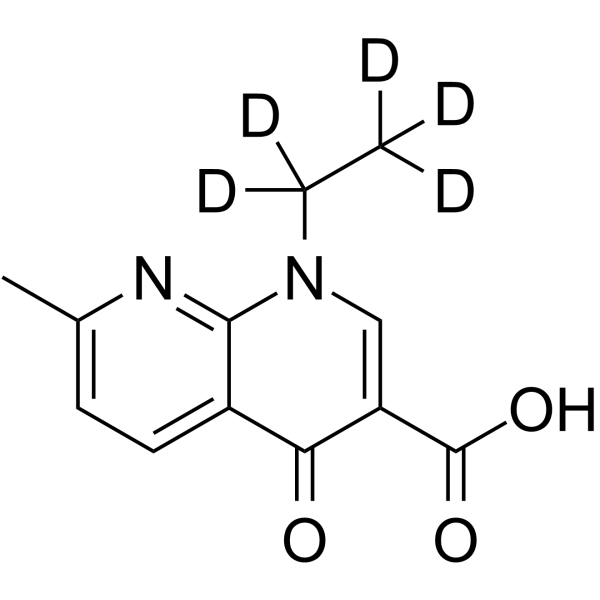 0 ImagesCat. No.: HY-B0398SCAS No.: 1189467-36-4Nalidixic Acid-d5 is the deuterium labeled Nalidixic acid. Nalidixic acid, a quinolone antibiotic, is effective against both gram-positive and gram-negative bacteria. Nalidixic acid acts in a bacteriostatic manner in lower concentrations and is bactericidal in higher concentrations. Nalidixic acid inhibits a subunit of DNA gyrase and topoisomerase IV and reversibly blocks DNA replication in susceptible bacteria.
-
Mollisin
 0 ImagesMollisin is a quinone antibiotic with antifungal activity.
-
Murepavadin
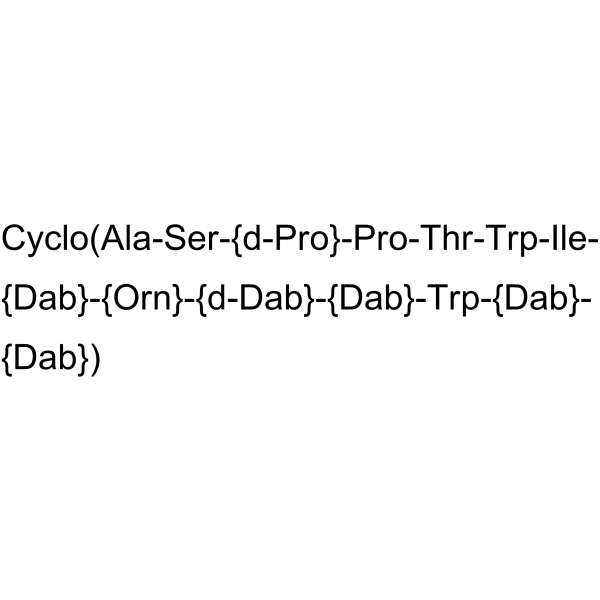 0 ImagesCat. No.: HY-P1674CAS No.: 944252-63-5Synonyms: POL7080Murepavadin (POL7080), a 14-amino-acid cyclic peptide, is a highly potent, specific antibiotic. Murepavadin exhibits a potent antimicrobial activity for P. aeruginosa with both MIC50 and MIC90 values of 0.12 mg/L. Murepavadin also can target the lipopolysaccharide transport portin D. Murepavadin can be used for the research of bacterial resistance.
-
Epiderstatin
 0 ImagesCat. No.: HY-N14173CAS No.: 126602-16-2Epiderstatin is a glutarimide antibiotic. Epiderstatin has the activity of inhibiting the filamentous division induced by epidermal growth factor (EGF), but does not inhibit EGF-receptor kinase. Epiderstatin has only weak antifungal activity and no antibacterial effect.
-
Cephalothin sodium (Standard)
 0 ImagesCephalothin (Cephalotin) sodium (Standard) is the analytical standard of Cephalothin sodium (HY-B1275). This product is intended for research and analytical applications. Cephalothin sodium is a semi-synthetic cephalosporin antibiotic and beta-lactam antibiotic. Cephalothin inhibits class C β-lactamase AmpC, with an Ki of 0.32 µM. Cephalothin sodium binds to penicillin-binding proteins, interfering with the cross-linking of peptidoglycan in the cell wall and thus hindering the normal synthesis of the bacterial cell wall. Cephalothin sodium shows antibacterial activity against a variety of bacteria. Cephalothin sodium can be used in hematological and nephrotoxicity studies.
-
Decatromicin B
 0 ImagesCat. No.: HY-N8339CAS No.: 235097-64-0Decatromicin B is an antibiotic. Decatromicin B has potent antibacterial activities against both Gram-positive and Gram-negative bacteria. Decatromicin B can be isolated from Actimonadura sp..
-
Miyakamide A1
 0 ImagesCat. No.: HY-N14274CAS No.: 497252-38-7Miyakamide A1 is an antibiotic with insecticidal effect. Miyakamide A1 inhibits the growth of Artemia salina. Miyakamide A1 has a weak antixanthomonas activity. Miyakamide A1 inhibits P388 cells with an IC50 of 10.5 μg/mL.
-
Platenomycin A0
 0 ImagesCat. No.: HY-N14456CAS No.: 52310-62-0Platenomycin A0 is a macrolide antibiotic with anti-Gram-positive bacteria activities.
-
Altromycin G
 0 ImagesCat. No.: HY-125395CAS No.: 134887-79-9Altromycin G is an antibiotic that primarily targets Gram-positive bacteria and has strong antitumor activity.
-
Sannamycin C
 0 ImagesCat. No.: HY-130471CAS No.: 73522-71-1Sannamycin C is an aminoglycoside antibiotic. Sannamycin C has weak antibacterial activity against Gram-positive bacteria.
-
Mutalomycin
 0 ImagesCat. No.: HY-121148CAS No.: 62618-08-0Mutalomycin is a polyether antibiotic. Mutalomycin has anti-Gram-positive bacteria, anti-mycoplasma and anti-coccidial activity.
-
Phyllosinol
 0 ImagesCat. No.: HY-N14888CAS No.: 24292-29-3Phyllosinol is an antifungal antibiotic.
-
Piericidin B
 0 ImagesCat. No.: HY-N12223CAS No.: 16891-54-6Piericidin B (compound 8) is an antibiotic that provides strong antibacterial defense for wasp larvae.
-
Endophenazine B
 0 ImagesCat. No.: HY-W780199CAS No.: 479415-40-2Endophenazine B is a phenazine antibiotic, and it has low herbicidal activity against Lemna minor.



