



Arrestin
Arrestin is a key protein that regulates G protein-coupled receptor (GPCR) signaling. Upon ligand activation, GPCRs undergo C-terminal phosphorylation by specific kinases (such as GRK, G protein-coupled receptor kinase), which recruits Arrestin, thereby preventing further coupling between GPCRs and G proteins while triggering receptor internalization and downstream signal transduction. Arrestin plays a crucial role in signal transduction, receptor desensitization and endocytosis, as well as multiprotein signaling complex assembly.
Arrestin is mainly classified into four types: Visual Arrestin (Arrestin-1), Cone Arrestin (Arrestin-4), β-Arrestin 1 (Arrestin-2), and β-Arrestin 2 (Arrestin-3). Among them, Arrestin-1 and Arrestin-4 are primarily involved in retinal phototransduction, whereas β-Arrestin 1 and β-Arrestin 2 are widely expressed in multiple tissues, regulating most GPCR-related signaling pathways. Structurally, Arrestin consists of N-terminal and C-terminal β-strand domains, stabilized by a polar core, and undergoes conformational changes upon receptor binding, thereby initiating signal transmission.
In the nervous system, Arrestin regulates dopamine receptor (e.g., D2 receptor) signaling, affecting Parkinson’s disease and Schizophrenia. In cancer, Arrestin integrates ERK, JNK, and Akt signaling pathways to regulate tumor cell growth and migration, for example, β-Arrestin 2-mediated GPCR signaling promotes cancer cell survival and drug resistance. Additionally, Arrestin is involved in inflammatory responses and immune regulation, playing important roles in diabetes, asthma, and inflammatory diseases[1][2].
Arrestin Isoform Specific Products
All Product Categories
-
Arrestin Related Products (80)
Related Products (80)

-
Antibodies (2)
-
Arrestin Isoform Comparison
-
GPR35 agonist 2
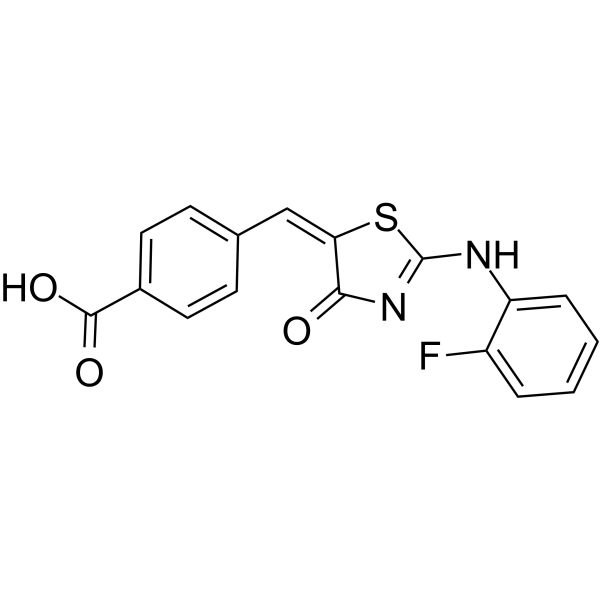 0 ImagesGPR35 agonist 2 (compound 11) is a potent agonist of GPR35, with EC50s of 26 and 3.2 nM in the β-arrestin and Ca2+ release assay, respectively.
-
MRS2365
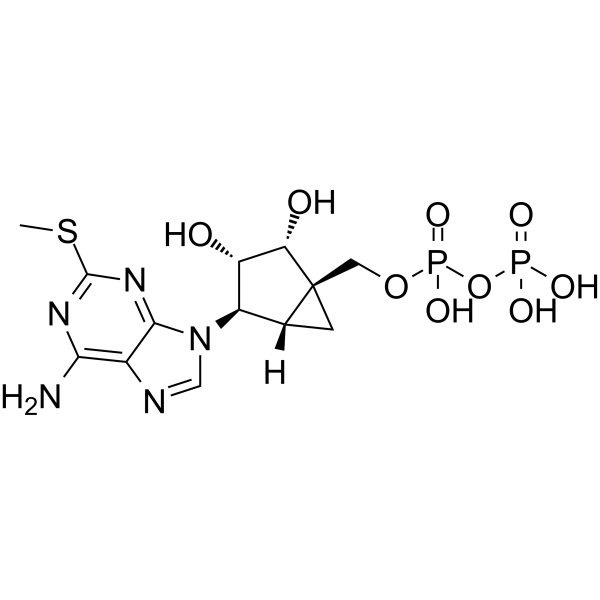 0 ImagesCat. No.: HY-108656CAS No.: 436847-09-5MRS2365 is a potent and selective P2Y1 receptor (EC50=0.4 nM) /[35S]GTPγS binding/β-arrestin 2 recruitment agonist with an EC50 of 0.4 nM. MRS2365 relieves mechanical allodynia and increases mechanical sensitivity. MRS2365 shows little agonist or antagonist activity at the P2Y12 or P2Y13 receptors.
-
CCX-777 formic
 0 ImagesCat. No.: HY-123813APurity: 98.01%CCX-777 formic is an orthosteric binder and partial agonist of CXCR7/ACKR3. CCX-777 formic induces the recruitment of β-arrestin 2 and affects the rebinding of chemokines to ACKR3. CCX-777 formic functions to stabilize the ACKR3 receptor and promotes the formation of a monodisperse, stable complex of the receptor in DDM/CHS micelles. CCX-777 formic is widely used in cancer-related research.
-
(S)-IDOR-1117-2520
 0 ImagesCat. No.: HY-162495APurity: 99.47%(S)-IDOR-1117-2520 is the S-isomer of IDOR-1117-2520 (HY-162495). IDOR-1117-2520 is an orally active, potent, selective and reversible CCR6 antagonist. IDOR-1117-2520 antagonizes the CCL20-mediated calcium flow (IC50 = 63 nM) and inhibits β-arrestin recruitment to human CCR6 (IC50 = 30 nM) in cells expressing recombinant human CCR6. IDOR-1117-2520 is found to be a substrate of P-gp/MDR1. IDOR-1117-2520 can be used in the research of autoimmune diseases and skin inflammation.
-
(R)-Verapamil
 0 ImagesSynonyms: Dexverapamil(R)-Verapamil (Dexverapamil) is an optically enantiomer of the oral-active Verapamil (HY-14275). (R)-Verapamil has a relatively low affinity for L-type calcium channels (Cav1.2) (IC50 > 300 μM), and its IC50 for sodium channels (sodium channel) is 3.19 μM. (R)-Verapamil exhibits SSTR2 agonistic activity, with an EC50 of 1.3 μM. (R)-Verapamil significantly downregulates the expression of TXNIP protein in diabetic mouse models and significantly inhibits β-cell apoptosis (apoptosis), effectively controlling blood sugar. (R)-Verapamil can be used as a PET tracer for the function of P-glycoprotein (P-gp).
-
DHICA (Standard)
 0 ImagesCat. No.: HY-W018158RCAS No.: 4790-08-3Synonyms: 5,6-Dihydroxyindole-2-carboxylic acid (Standard)DHICA (Standard) is an analytical standard of DHICA (HY-W018158). This product is for research and analytical applications. DHICA (5,6-Dihydroxyindole-2-carboxylic acid) is an eumelanin building block, GPR35 agonist and melanin synthesis intermediate. DHICA activates GPR35, triggering dynamic mass redistribution and β-arrestin translocation. DHICA interacts with DNA and interferes with Fpg activity. DHICA promotes the generation of single-strand breaks in plasmid DNA. DHICA increases the activity and expression levels of SOD and Catalase. DHICA is applicable to research related to skin cancer and colon cancer.
-
β2AR-IN-15
 0 Imagesβ2AR-IN-15 is a selective β2-adrenergic receptor (β2AR) antagonist with a Kd of 1.7 μM. β2AR-IN-15 binds to an intracellular β2AR region overlapping the G-protein binding site, enhancing orthosteric inverse agonist binding while negatively modulating binding of orthosteric agonists with EC50 values of 1.9 and 0.48 μM. β2AR-IN-15 shows inhibitory effect on cAMP production and β-arrestin recruitment to activated β2AR. β2AR-IN-15 can be used for the research of cardiovascular and pulmonary diseases.
-
D1/D5 Receptor agonist-1
 0 ImagesCat. No.: HY-175001D1/D5 Receptor agonist-1 is a highly brain-penetrant and orally active D1/D5 receptor agonist. D1/D5 Receptor agonist-1 maintains considerable efficacy in the cAMP pathway and in β-arrestin recruitment, with EC50s of 3.7 nM (D1R cAMP), 91 nM (D1R β-arrestin), 129 nM (D1R internalization) and a Ki of 111 nM (D1R binding affinity). D1/D5 Receptor agonist-1 inhibits β-arrestin signaling in a rat with L-DOPA (HY-N0304) induced dyskinesias. D1/D5 Receptor agonist-1 can be used for the study of Parkinson’s disease.
-
RWT9996
 0 ImagesCat. No.: HY-179606CAS No.: 2877694-62-5RWT9996 is a GPR17 antagonist. RWT9996 inhibits GPR17-mediated signal transduction processes, including G protein activation and β-arrestin-2 recruitment. RWT9996 inhibits MDL-29951 (HY-16312)-mediated phosphorylation of ERK1/2, phosphorylation of CREB, and accumulation of inositol phosphate (IP1) in oligodendrocyte precursor cells in vitro. RWT9996 can be used in studies related to demyelinating diseases.
-
[DArg10, Aib20] TLQP-21
![[DArg10, Aib20] TLQP-21](https://file.medchemexpress.com/product_pic/hy-p1345c.gif "Click to View [DArg10, Aib20] TLQP-21 Product Detail") 0 ImagesCat. No.: HY-P1345C[DArg10, Aib20] TLQP-21 is a functional antagonist of the complement 3a receptor (C3aR), with EC50 values of 854 nM, 1007 nM, and 1715 nM against human C3aR. [DArg10, Aib20] TLQP-21 recruits β-arrestin, activates Gi3, mediates β-arrestin-dependent receptor internalization, and does not induce calcium influx. [DArg10, Aib20] TLQP-21 inhibits the adrenergic‑induced lipolysis enhancement mediated by TLQP-21 (HY-P1345) and also inhibits the β-hexosaminidase secretion induced by C3a63-77. [DArg10, Aib20] TLQP-21 can be used in research related to asthma and inflammatory diseases.
0 ImagesCat. No.: HY-P1345C[DArg10, Aib20] TLQP-21 is a functional antagonist of the complement 3a receptor (C3aR), with EC50 values of 854 nM, 1007 nM, and 1715 nM against human C3aR. [DArg10, Aib20] TLQP-21 recruits β-arrestin, activates Gi3, mediates β-arrestin-dependent receptor internalization, and does not induce calcium influx. [DArg10, Aib20] TLQP-21 inhibits the adrenergic‑induced lipolysis enhancement mediated by TLQP-21 (HY-P1345) and also inhibits the β-hexosaminidase secretion induced by C3a63-77. [DArg10, Aib20] TLQP-21 can be used in research related to asthma and inflammatory diseases.
-
DOR agonist 3
 0 ImagesCat. No.: HY-175366CAS No.: 939956-07-7DOR agonist 3 (Compound 10) is a δ-opioid receptor (DOR)-selective positive allosteric modulator. DOR agonist 3 enhances G protein signaling while reducing β-arrestin2 recruitment. DOR agonist 3 is promising for research of chronic pain and depression.
-
APJ receptor agonist 6
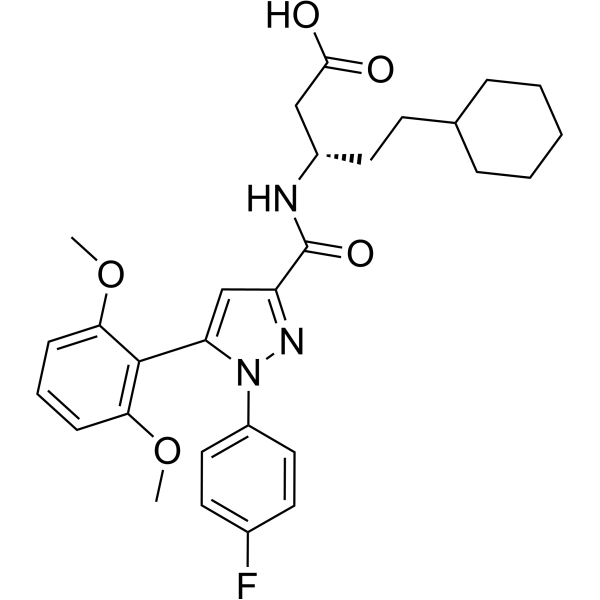 0 ImagesCat. No.: HY-147751CAS No.: 1965244-85-2APJ receptor agonist 6 (compound 9) is a potent APJ (apelin receptor) agonist, with Ki of 1.3 μM. APJ receptor agonist 6 has EC50 values of 0.070 , 0.097, and 0.063 μM for calcium, cAMP, and β-arrestin, respectively.
-
ADX68692
 0 ImagesCat. No.: HY-W673613CAS No.: 1067191-08-5ADX68692 is an orally active FSHR negative allosteric regulator, with an IC50 value of 140 nM against hFSHR. ADX68692 antagonizes hCG (HY-107953)-mediated cAMP production, β-arrestin 2 recruitment, and the LH/CGR signaling pathway. ADX68692 partially inhibits testosterone synthesis. ADX68692 blocks follicle growth, disrupts the estrous cycle in rats, and reduces the pregnancy rate in rats. ADX68692 can be used in research related to contraception and endometriosis.
-
NCGC00135472
 0 ImagesCat. No.: HY-125020CAS No.: 862811-76-5NCGC00135472 is a potent agonist of resolvin D1 receptor (DRV1), with the EC50 of 0.37 nM and 0.05 μM for β-arrestin and cAMP activities, respectively.

-
CB1R Allosteric modulator 3
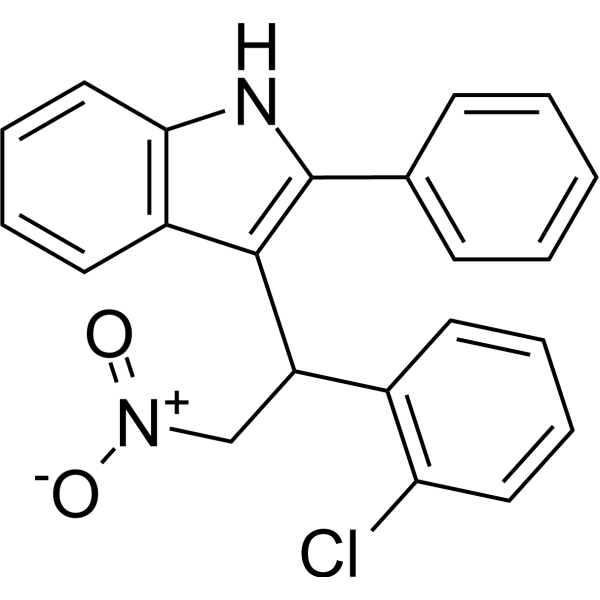 0 ImagesCB1R Allosteric modulator 3 is a CB1R positive allosteric modulator. CB1R Allosteric modulator 3 has potent inhibition of cAMP and β-Arrestin with EC50 values of 0.018 μM and 1.241 μM, respectively.
-
GEP44
 0 ImagesCat. No.: HY-P11043GEP44 is a peptide biased triple agonist targeting Glucagon-like peptide 1 receptor (GLP-1R), neuropeptide Y1 Receptor (Y1-R), and neuropeptide Y2 Receptor (Y2-R). GEP44 induces Y1-R antagonist-controlled, GLP-1R-dependent stimulation of insulin secretion in both rat and human pancreatic islets by counteracting effects of Y1-R and GLP-1R agonism. GEP44 promotes insulin-independent Y1-R-mediated glucose uptake in muscle tissue and significantly reduces food intake and body weight in diet-induced obese rat models. GEP44 can be used for obesity and type 2 diabetes mellitus research.
-
MW073
 0 ImagesCat. No.: HY-178323CAS No.: 3048608-87-0MW073 is a highly selective and orally active 5-HT2BR antagonist (IC50 =70 nM). MW073 exerts its effects by concentration-dependently inhibiting receptor activity and β-arrestin-1 recruitment. MW073 ameliorates synaptic plasticity and behavioral deficits, including aggression, in Alzheimer’s disease (AD) mouse models. MW073 can be used for Alzheimer’s disease (AD) research[1][2].
-
MRS542
 0 ImagesCat. No.: HY-153157CAS No.: 163152-31-6MRS542 is a nucleoside A3 AR antagonist with a pKi of 8.74. MRS542 also acts as a partial agonist (pEC50 = 7.76) in promoting β-arrestin translocation. MRS542 can be converted into an agonist by LUF6000 (HY-13236). MRS542 can be used for cardiovascular disease research.
-
ISAM-CG557
 0 ImagesCat. No.: HY-175666ISAM-CG557 is a selective CB2R agonist, with a Ki of 54.6 nM. ISAM-CG557 reduces intracellular ROS levels and caspase activity. ISAM-CG557 exhibits significant MAPK bias and moderate G-protein bias, with CB2R EC50s of 0.60 nM (cAMP), 60.9 nM (β-arrestin) and 0.03 nM (MAPK). ISAM-CG557 exerts potent anti-inflammatory effects by reducing pro-inflammatory cytokines and increasing anti-inflammatory cytokines in cells. ISAM-CG557 can be used for the study of neuroinflammatory and neurodegenerative disorders.




