



Galectin Ligand
-
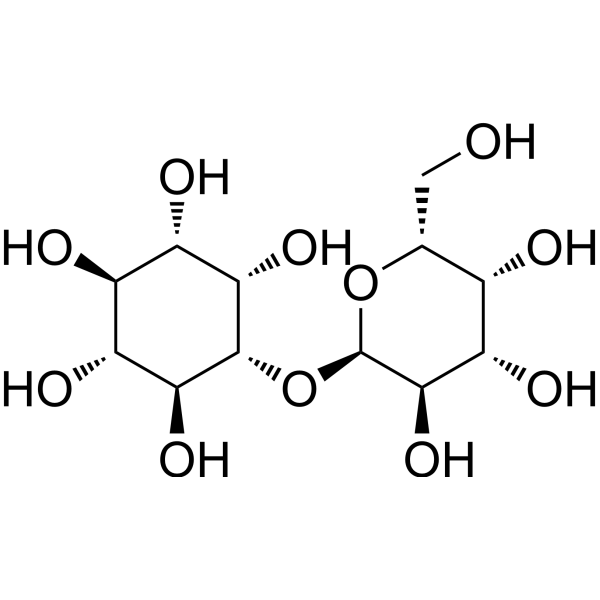
Galactinol
 0 Images
Galactinol is a disaccharide carbohydrate serving as a galactosyl donor, which belongs to the raffinose family oligosaccharide pathway and acts as an important osmoprotectant. Galactinol not only induces disease resistance in plants against fungal and bacterial pathogens, but also significantly enhances plant tolerance to abiotic stresses such as drought, high salinity, low temperature and oxidative damage. In addition, Galactinol has the ability to scavenge hydroxyl radicals, can act as a signaling component for root colonization-induced systemic resistance, and is positively correlated with seed longevity in various crops, making it a potential biomarker for evaluating seed vigor. Therefore, Galactinol can be used in the research of various plant diseases including fungal leaf spot, bacterial angular leaf spot, gray mold and soft rot.
-
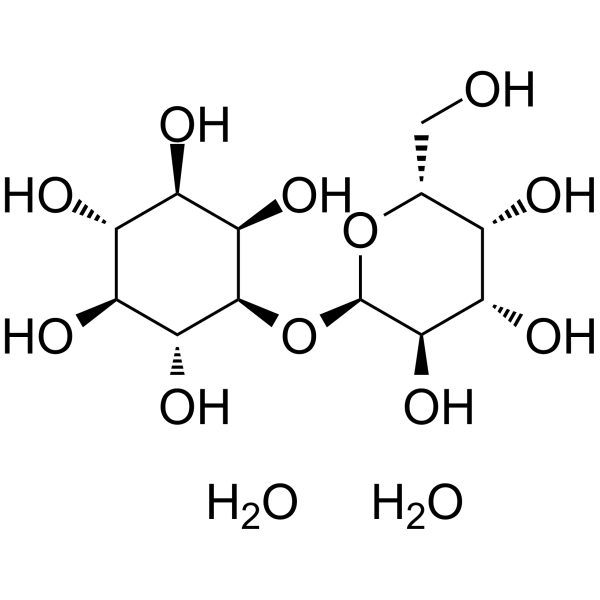
Galactinol dihydrate
 0 Images
Galactinol dihydrate is a disaccharide carbohydrate serving as a galactosyl donor, which belongs to the raffinose family oligosaccharide pathway and acts as an important osmoprotectant. Galactinol dihydrate not only induces disease resistance in plants against fungal and bacterial pathogens, but also significantly enhances plant tolerance to abiotic stresses such as drought, high salinity, low temperature and oxidative damage. In addition, Galactinol dihydrate has the ability to scavenge hydroxyl radicals, can act as a signaling component for root colonization-induced systemic resistance, and is positively correlated with seed longevity in various crops, making it a potential biomarker for evaluating seed vigor. Therefore, Galactinol dihydrate can be used in the research of various plant diseases including fungal leaf spot, bacterial angular leaf spot, gray mold and soft rot.
-
Gal beta(1-3)GalNAc-alpha-Thr
 0 ImagesCat. No.: HY-W040121CAS No.: 60280-58-2Synonyms: TF-Thr
Gal beta (1-3) GalNAc-alpha-Thr (TF-Thr) is a tumor-associated Thomsen-Friedenreich (TF) O-glycan and a ligand of galectin-3, with a human Kd value of 288 µM. Gal beta (1-3) GalNAc-alpha-Thr binds to the CRD of galectin-3 through the TF disaccharide and β-D-Galp/α-D-GalpNAc contacts, perturbing amide resonances and dynamics. Gal beta (1-3) GalNAc-alpha-Thr weakly binds to MGL-CRD through the terminal Gal rather than GalNAc. Gal beta (1-3) GalNAc-alpha-Thr competes with cell surface TF/MUC1 for Peanut Agglutinin (HY-P3443) binding, blocking Peanut Agglutinin-mediated adhesion of cancer cells to endothelium. Gal beta (1-3) GalNAc-alpha-Thr can be used in cancer-related research.



