



GLP-1
Glucagon-like peptide-1 receptor (GLP-1R) is a class B G protein-coupled receptor (GPCR) activated by glucagon-like peptide-1 (GLP-1) that regulates glucose-dependent insulin secretion and metabolic homeostasis[1][2]. GLP-1R activation stimulates adenylate cyclase activity, increases intracellular cyclic AMP (cAMP), and activates downstream signaling pathways including protein kinase A (PKA) and exchange protein directly activated by cAMP (EPAC)[2][3]. Mechanistically, GLP-1R signaling enhances pancreatic β-cell insulin secretion, regulates glucagon release, and influences gastrointestinal and central nervous system functions[1][4]. In disease models, impaired GLP-1R signaling is associated with metabolic disorders including type 2 diabetes mellitus and obesity, where GLP-1R agonists improve glucose control and regulate energy balance[4][5]. GLP-1R agonist treatment promotes glucose-dependent insulin secretion and reduces body weight through coordinated effects on pancreatic, gastrointestinal, and central metabolic pathways[5][6]. Compared with related class B GPCRs such as glucagon receptor (GCGR) and glucose-dependent insulinotropic polypeptide receptor (GIPR), GLP-1R has distinct ligand specificity and physiological functions mediated by GLP-1 signaling[2][7]. For experimental applications, GLP-1R function is investigated using receptor expression systems, β-cell models, animal models, and pharmacological activation approaches[1][6]. Synthetic GLP-1R agonists, including exendin-4 and long-acting GLP-1 analogs, are widely used to study receptor signaling and metabolic regulation[6][8].
References:
- [1]. Drucker DJ. The biology of incretin hormones. Cell Metabolism. 2006;3(3):153-165. [Content Brief]
- [2]. Mayo KE, et al. International Union of Pharmacology. XXXV. The glucagon receptor family. Pharmacological Reviews. 2003;55(1):167-194. [Content Brief]
- [3]. Holz GG. Epac: a new cAMP-binding protein in support of glucagon-like peptide-1 receptor-mediated signal transduction in the pancreatic beta-cell. Diabetes. 2004;53(1):5-13. [Content Brief]
- [4]. Holst JJ. The physiology of glucagon-like peptide 1. Physiological Reviews. 2007;87(4):1409-1439. [Content Brief]
- [5]. Nauck MA, et al. Incretin hormones: their role in health and disease. Diabetes, Obesity and Metabolism. 2018;20(Suppl 1):5-21. [Content Brief]
- [6]. Drucker DJ, et al. Discovery, characterization, and clinical development of the glucagon-like peptides. Journal of Clinical Investigation. 2017;127(12):4217-4227. [Content Brief]
- [7]. Mayo KE, et al. The glucagon receptor family: from molecular biology to therapeutic targets. Pharmacological Reviews. 2003;55(1):167-194. [Content Brief]
- [8]. Eng J, et al. Isolation and characterization of exendin-4, an exendin-3 analogue, from Heloderma suspectum venom. Journal of Biological Chemistry. 1992;267(11):7402-7405. [Content Brief]
-
GLP-1 Related Products (26)
Related Products (26)

- 1
- 2
-
V-0219
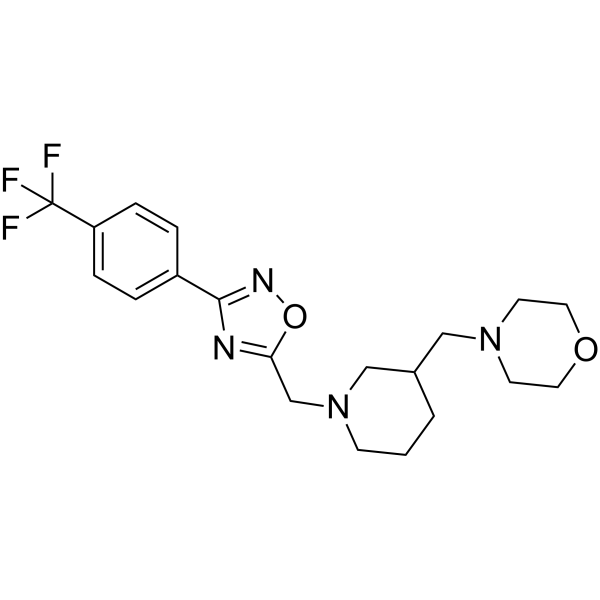 0 ImagesV-0219 is an orally active glucagon-like peptide-1 receptor (GLP-1R) positive allosteric modulator. V-0219 potentiates GLP-1R stimulation, and enhances GLP-1-induced cAMP production and insulin secretion. V-0219 potentiates glucose-dependent insulin secretion. V-0219 improves glucose handling in normal and diabetic rodents. V-0219 can be used for the research of obesity-associated diabetes.
-
GLP-1R agonist 10
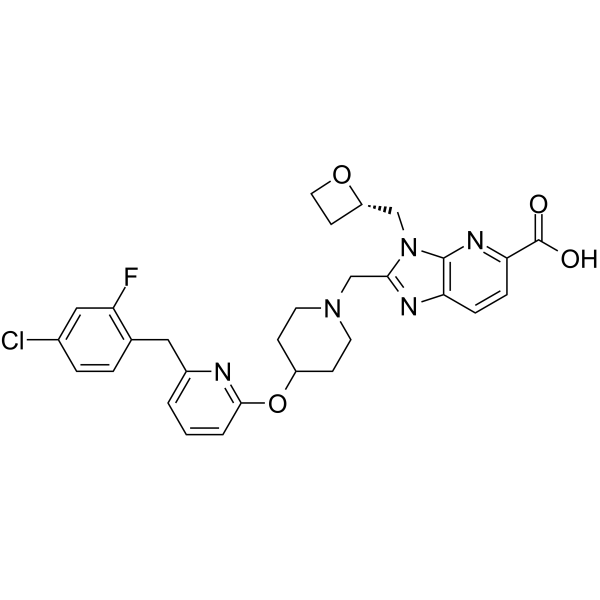 0 ImagesGLP-1R agonist 10 is a heterocyclic GLP-1R agonist. GLP-1R agonist 10 can be used for the research of type 2 diabetes mellitus.
-
Berobenatide acetate
 0 ImagesCat. No.: HY-P11235APurity: 98.65%Synonyms: PF-08653944 acetate; MET-097 acetateBerobenatide acetate (PF-08653944 acetate; MET-097 acetate) is a GLP-1R agonist that exerts functional regulation of GLP-1R biased toward the Gs protein signaling pathway. Berobenatide acetate induces weight loss in diet-induced obese mice. Berobenatide acetate can be used in obesity-related research.
-
SAR441255
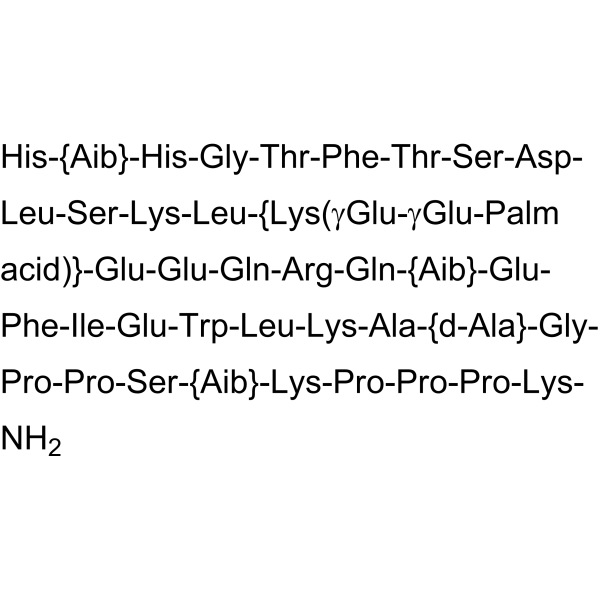 0 ImagesCat. No.: HY-P10031Purity: 99.84%SAR441255 is a GLP-1R/GCGR/GIPR agonist, with human EC50 values of 1.03 pM, 1.01 pM, and 0.73 pM, respectively. SAR441255 stimulates receptor activity and drives cAMP accumulation. SAR441255 can be used for the research of type 2 diabetes, obesity.
-
GLP-1 receptor agonist 14
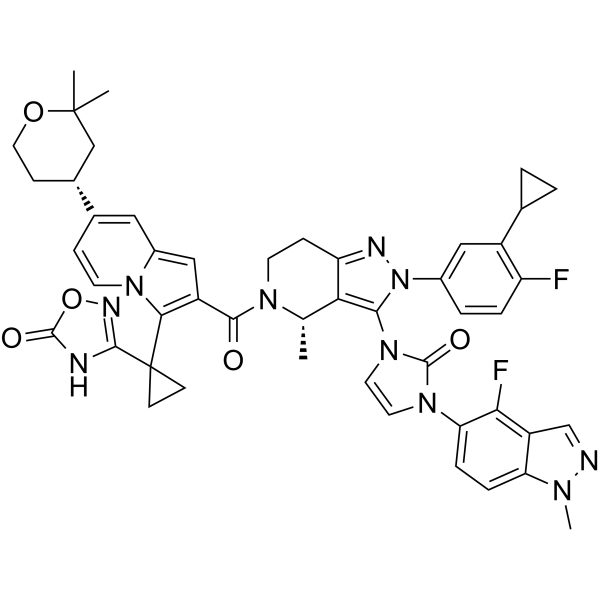 0 ImagesGLP-1 receptor agonist 14 is a glucagon-like peptide-1 receptor (GLP-1 receptor) agonist. GLP-1 receptor agonist 14 can be used in research related to diabetes or other metabolic diseases.
-
DBPR108
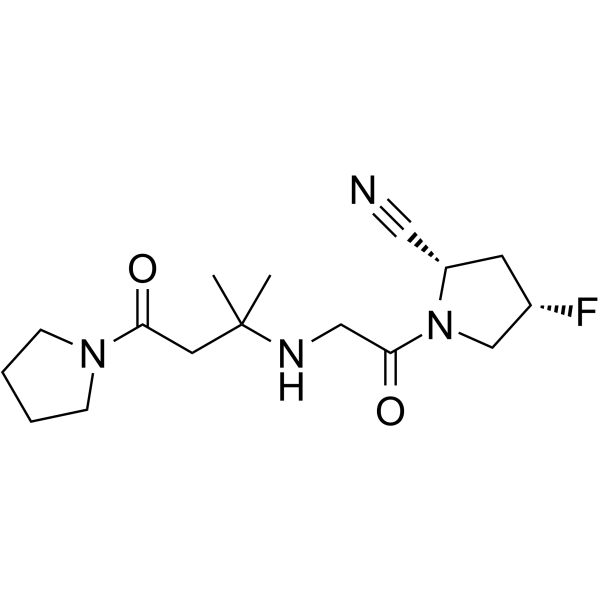 0 ImagesDBPR108 is an orally active, selective dipeptidyl peptidase-4 (DPP-4) inhibitor with an IC50 of 15 nM. DBPR108 reduces glycated hemoglobin, fasting plasma glucose and postprandial plasma glucose levels, increases serum active GLP-1 and insulin levels, and improves glucose tolerance. DBPR108 can be used in research related to type 2 diabetes.
-
SAR441255 TFA
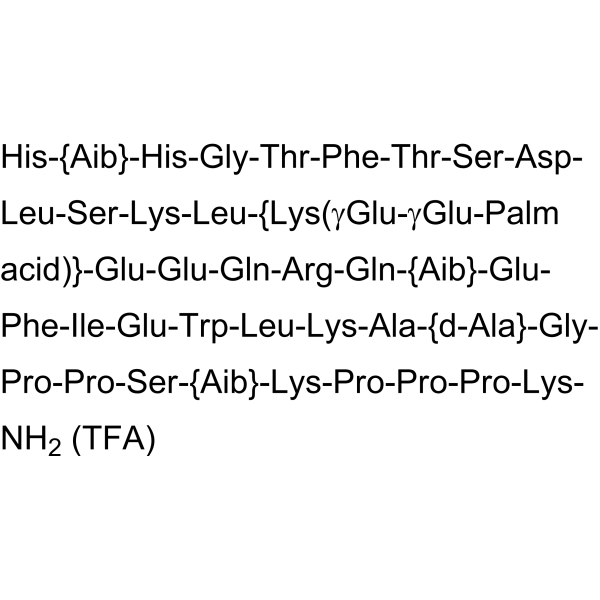 0 ImagesCat. No.: HY-P10031APurity: 99.93%SAR441255 TFA is a GLP-1R/GCGR/GIPR agonist, with human EC50 values of 1.03 pM, 1.01 pM, and 0.73 pM, respectively. SAR441255 TFA stimulates receptor activity and drives cAMP accumulation. SAR441255 TFA can be used for the research of type 2 diabetes, obesity.
-
DA-302168S
 0 ImagesDA-302168S is an orally active and selective agonist targeting the GLP-1R, with EC50 value of 1.32 nM. DA-302168S reduces blood glucose levels and suppresses appetite, demonstrates minimal safety risks including low hERG channel inhibition and no significant off-target toxicity, and mitigates drug-drug interaction risk. DA-302168S can be used for the research of type 2 diabetes and obesity.
-
V-0219 hydrochloride
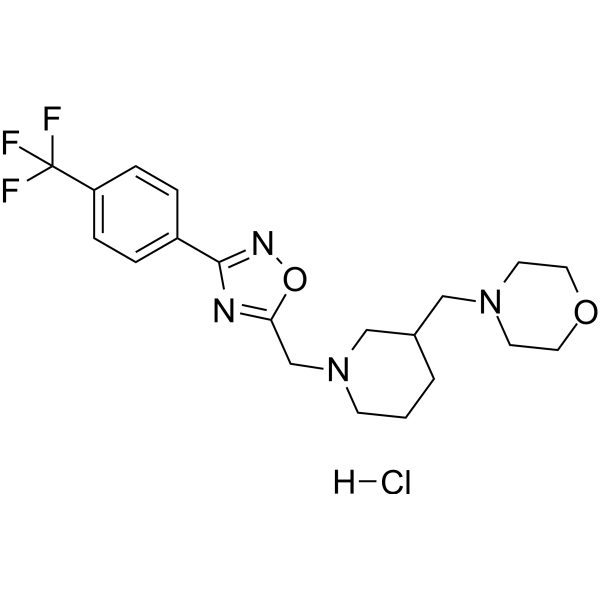 0 ImagesV-0219 hydrochloride is an orally active glucagon-like peptide-1 receptor (GLP-1R) positive allosteric modulator. V-0219 hydrochloride potentiates GLP-1R stimulation, and enhances GLP-1-induced cAMP production and insulin secretion. V-0219 hydrochloride potentiates glucose-dependent insulin secretion. V-0219 hydrochloride improves glucose handling in normal and diabetic rodents. V-0219 hydrochloride can be used for the research of obesity-associated diabetes.
-
Elecoglipron
 0 ImagesCat. No.: HY-159055CAS No.: 3011682-49-5Synonyms: ECC5004; AZD5004Elecoglipron (AZD5004) is an orally active small-molecule GLP-1R agonist. Its IC50 against human GLP-1R is 2.4 nM. It activates the cAMP signaling pathway in HEK293 cells overexpressing human GLP-1R with a potency of 2.1 nM, and enhances glucose-stimulated insulin secretion in EndoC-βH5 cells with an EC50 of 5.9 nM, with no detectable β-arrestin-2 recruitment or GLP-1R internalization. Elecoglipron can be used in research related to obesity, overweight and type 2 diabetes.
-
GLP-1 receptor agonist 22
 0 ImagesCat. No.: HY-183694CAS No.: 3124217-40-6GLP-1 receptor agonist 22 is an orally active GLP-1 receptor agonist. GLP-1 receptor agonist 22 promotes the accumulation of cAMP. GLP-1 receptor agonist 22 reduces blood glucose levels and inhibits feeding behavior in human glucagon-like peptide-1 receptor knock-in mice. GLP-1 receptor agonist 22 can be used in the research of type 2 diabetes and obesity.
-
MEDI-4166
 0 ImagesCat. No.: HY-P992407MEDI-4166 is an antibody-peptide gene fusion molecule of a PCSK9 antibody and a GLP-1 analog. MEDI-4166 is applicable to research related to type 2 diabetes.
-
K-757
 0 ImagesCat. No.: HY-175420CAS No.: 2696409-13-7K-757 is an orally active, gut-targeted GPR40 agonist with EC50 values of 2.1 nM, 5.6 nM, 4.2 nM and 166 nM in humans, mice, rats and dogs, respectively. K-757 activates nutrient receptors co-expressed on pancreatic β cells and intestinal enteroendocrine cells. K-757 mediates and induces the secretion of satiety hormones GLP-1 and PYY in multiple in vitro and in vivo models. When used in combination with GPR119 agonist K-833, K-757 acts as a potentiator to elevate circulating levels of satiety hormones. K-757 can be used in the research of type 2 diabetes, weight loss and other related metabolic disorders.
-
Tirzepatide (crude)
 0 ImagesCat. No.: HY-P1731CPCAS No.: 2023788-19-2Tirzepatide (LY3298176) (crude) is the crude form of Tirzepatide (HY-P1731).Tirzepatide (LY3298176) is a dual glucose-dependent insulinotropic polypeptide (GIP) and glucagon-like peptide-1 (GLP-1) receptor agonist. Tirzepatide exerts anti-apoptotic and pro-differentiation effects via the pAkt/CREB/BDNF cascade and miRNA in neurons; in the heart, it promotes BCAA catabolism and inhibits the mTOR pathway by mediating the dephosphorylation of BCKDHA; meanwhile, it effectively reduces insulin and leptin levels and suppresses inflammatory responses at the systemic level. Tirzepatide can be used for research on myocardial infarction, colon cancer, diabetes, diabetic cognitive impairment, neurodegeneration, diabetes-related neuropathy, and obesity.
-
IUB288
 0 ImagesCat. No.: HY-P11881Purity: 98.88%IUB288 is a stable and long-acting glucagon-modified peptide, as well as a highly selective Glucagon Receptor agonist. IUB288 stimulates the production of cAMP, increases the expression levels of FGF21 in plasma and liver, regulates bile acid metabolism, and inhibits the expression of hepatic HMGCR. IUB288 improves hypercholesterolemia, enhances insulin sensitivity, increases core body temperature, boosts energy expenditure, suppresses food intake, and can also induce hyperglycemia and glucose intolerance. IUB288 is applicable to the research of diet-induced obesity, type 2 diabetes, and obesity-related glucose intolerance.
-
GIPR/GLP-1R/GCGR agonist-1
 0 ImagesCat. No.: HY-P11818GIPR/GLP-1R/GCGR agonist-1 (compound 686) is a triple receptor agonist with activity at GLP-1R, GIPR, and GCGR. GIPR/GLP-1R/GCGR agonist-1 functionally modulates target receptors to drive cAMP generation. GIPR/GLP-1R/GCGR agonist-1 can be used for the research of type 2 diabetes mellitus, obesity, nonalcoholic fatty liver disease.
-
AZ13581837
 0 ImagesCat. No.: HY-115643CAS No.: 2896777-27-6AZ13581837 is an orally active GPR120 agonist with an EC50 of 5.2 nM for human GPR120. AZ13581837 signals through Gαq, Gαs, and β-arrestin pathways, reduces cAMP production, stimulates GLP-1 secretion, induces glucose lowering, and increases insulin secretion. AZ13581837 can be used for the research of type 2 diabetes.
-
Tirzepatide sodium
 0 ImagesCat. No.: HY-P1731CSynonyms: LY3298176 sodiumTirzepatide sodium (LY3298176 sodium) is a dual glucose-dependent insulinotropic polypeptide (GIP) and glucagon-like peptide-1 (GLP-1) receptor agonist. Tirzepatide sodium exerts anti-apoptotic and pro-differentiation effects via the pAkt/CREB/BDNF cascade and miRNA in neurons; in the heart, it promotes BCAA catabolism and inhibits the mTOR pathway by mediating the dephosphorylation of BCKDHA; meanwhile, it effectively reduces insulin and leptin levels and suppresses inflammatory responses at the systemic level. Tirzepatide sodium can be used for research on myocardial infarction, colon cancer, diabetes, diabetic cognitive impairment, neurodegeneration, diabetes-related neuropathy, and obesity.
-
DA5-CH
 0 ImagesCat. No.: HY-P12141CAS No.: 2227651-65-0Synonyms: KP405DA5-CH (KP405) is a blood-brain barrier-permeable GLP-1/GIP receptor agonist. DA5-CH activates GLP-1 and GIP receptors, inhibits the NF-κB inflammatory pathway, reduces α-synuclein (α-synuclein) levels, restores the expression of tyrosine hydroxylase and neurotrophic factors, improves motor function, decreases amyloid plaques and phosphorylated tau protein levels in the hippocampus, restores synaptic plasticity, regulates the PI3K/AKT/GSK3β and CREB signaling pathways, and alleviates mitochondrial stress. DA5-CH can be used for research on Parkinson's disease and Alzheimer's disease.
-
Berobenatide
 0 ImagesCat. No.: HY-P11235CAS No.: 3028974-74-2Synonyms: PF-08653944; MET-097Berobenatide (PF-08653944; MET-097) is a GLP-1R agonist that exerts functional regulation of GLP-1R biased toward the Gs protein signaling pathway. Berobenatide induces weight loss in diet-induced obese mice. Berobenatide can be used in obesity-related research.
- 1
- 2



