



Isotope-Labeled Compounds
Isotope-labeled compounds are chemical substances in which some atoms in their molecules are replaced by isotope atoms. The range of stable isotope products can cover from gases to complex molecules. Isotope-labeled compounds could provide a site-specific investigation of structures, making molecules easily detectable by mass spectrometry and NMR, and maintaining the physico-chemical properties of the target molecule at the same time.
MCE isotope-labeled compounds are all stable isotope-labeled compounds and are non-radioactive labeled substances. MCE isotope-labeled compounds are unique tools for identifying and understanding biological and chemical processes. Stable isotope-labeled products are now getting more and more popular among scientists. The scope of application is gradually penetrating into various scientific fields, such as life sciences, food and medicine, agriculture, environment, geology, etc. Stable isotope-labeled compounds have a wide range of applications in the Life Science areas, such as Metabolomics, Proteomics, Clinical studies, Deuterium drugs, etc.
All Product Categories
-
Isotope-Labeled Compounds Related Products (11100)
Related Products (11100)

-
Tazarotenic acid-d8
 0 ImagesCat. No.: HY-W742417Synonyms: AGN 190299-d8Tazarotenic acid-d8 (AGN 190299-d8) is the deuterium labeled Tazarotenic acid (HY-101108). Tazarotenic acid is the metabolite of Tazarotene (HY-15388).
-
Selpercatinib-d3
 0 ImagesCat. No.: HY-W759629CAS No.: 2433775-55-2Synonyms: LOXO-292-d3Selpercatinib-d3 (LOXO-292-d3) is deuterium labeled Selpercatinib. Selpercatinib (LOXO-292) is a potent, selective RET kinase inhibitor with IC50 values of 14.0 nM, 24.1 nM, and 530.7 nM for RET (WT), RET (V804M), and RET (G810R), respectively. Selpercatinib has anticancer activity.
-
L-threo-Droxidopa-13C2
 0 ImagesCat. No.: HY-W778064CAS No.: 1276295-04-5L-threo-Droxidopa-13C2,15N is 13C- and 15N-labeled L-threo-Droxidopa.

-
Taurolithocholic Acid-d5 sodium
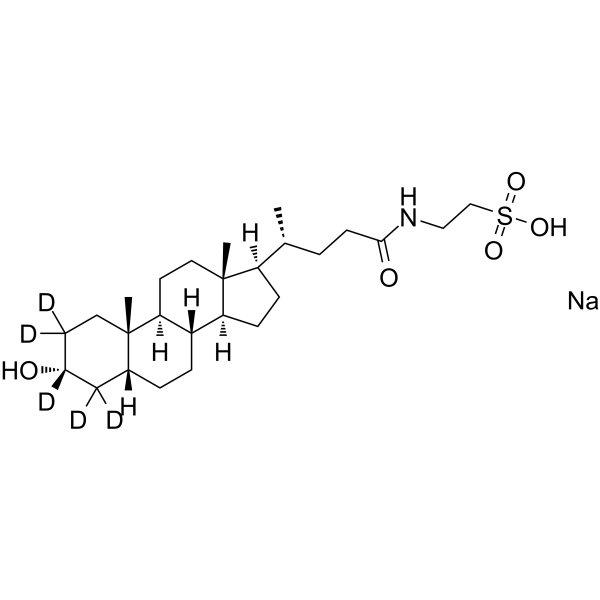 0 ImagesCat. No.: HY-113308AS1CAS No.: 1265476-97-8Taurolithocholic Acid-d5 (sodium) is the deuterium labeled Taurolithocholic acid sodium salt. Taurolithocholic Acid sodium salt is an orally active bile acid and antiviral agent. Taurolithocholic Acid sodium salt upregulates FADS2 by activating the TGR5-PI3K/AKT-SREBP2 signaling axis, inhibits SFTSV-induced ferroptosis, viral replication and viral entry of HBV/HDV, while reducing the release of IL-1β, lipid ROS and LDH. While exerting antiviral protective effects, Taurolithocholic Acid sodium salt also stimulates the recycling of hepatocellular membrane transporters, impairs canalicular bile acid secretion function, and induces hepatocyte cholestasis, apoptosis and acute hepatocellular injury. Taurolithocholic Acid sodium salt serves as an experimental model compound for hepatocellular cholestasis. At concentrations ≤200 μM, Taurolithocholic Acid sodium salt shows no cytotoxicity and does not activate the interferon pathway. Taurolithocholic Acid sodium salt not only protects mice from lethal SFTSV infection but also is suitable for studies related to severe fever with thrombocytopenia syndrome and cholestasis.
-
H-β-Ala-NH2.-d4 HCl
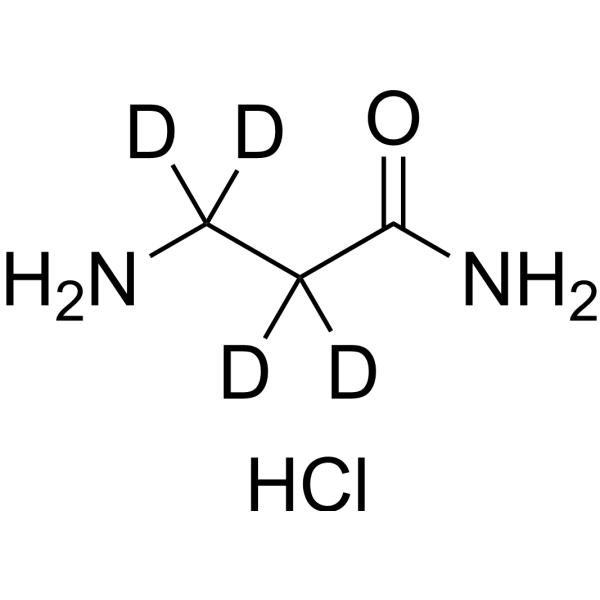 0 ImagesCat. No.: HY-W007497SCAS No.: 1276197-35-3Synonyms: H-β-Ala-NH2·HCl-d4H-β-Ala-NH2.-d4 HCl is the deuterium labeled H-β-Ala-NH2.HCl.
-
Atenolol-13C6
 0 ImagesCat. No.: HY-17498S3Synonyms: (RS)-Atenolol-13C6Atenolol-13C6 ((RS)-Atenolol-13C6) is 13C labeled Atenolol. Atenolol ((RS)-Atenolol) is a cardioselective β1-adrenergic receptor blocker, with a Ki of 697 nM at β1-adrenoceptor in guine pig left ventricle membrane. Atenolol can be used for the research of hypertension and angina pectoris.
-
Cilostazol-d2
 0 ImagesCat. No.: HY-17464S2CAS No.: 1073608-03-3Synonyms: OPC 13013-d2Cilostazol-d2 (OPC 13013-d2) is deuterium labeled Cilostazol. Cilostazol (OPC 13013) is a potent and selective inhibitor of phosphodiesterase (PDE) 3A, the isoform of PDE 3 in the cardiovascular system, with an IC50 of 0.2 μM.
-
(E)-Fenpyroximate-d9
 0 ImagesCat. No.: HY-W758734(E)-Fenpyroximate-d9 is the deuterium labeled (E)-Fenpyroximate.
-
N1-(4-Nitrophenyl)sulfanilamide-d4
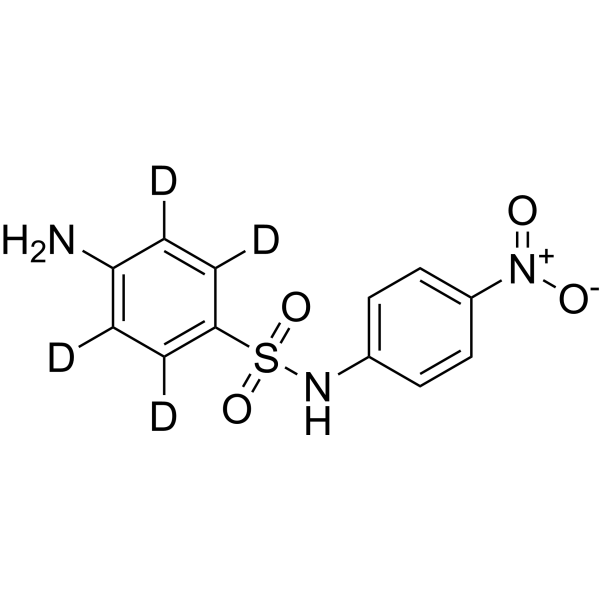 0 ImagesCat. No.: HY-W191560SPurity: 98.0%Synonyms: 4-Amino-N-(4-nitrophenyl)benzenesulfonamide-d4N1-(4-Nitrophenyl)sulfanilamide-d4 is the deuterium labeled N1-(4-Nitrophenyl)sulfanilamide.
-
CYP51-IN-23-d3
 0 ImagesCat. No.: HY-174353SCYP51-IN-23-d3 is a potent and broad-spectrum CYP51 inhibitor with a MIC80 of 1 μg/mL against Aspergillus fumigatum. CYP51-IN-23-d3 can prevent fungal phase transformation and biofilm formation. CYP51-IN-23-d3 exhibits anti-drug resistance activity and fungal activity, and shows excellent safety for cells and significant pharmacological activity in mice. CYP51-IN-23-d3 can be used for the study of invasive fungal infections (IFIs).
-
Cilostazol-d6
 0 ImagesCat. No.: HY-17464S3CAS No.: 1246641-05-3Synonyms: OPC 13013-d6Cilostazol-d6 (OPC 13013-d6) is deuterium labeled Cilostazol. Cilostazol (OPC 13013) is a potent and selective inhibitor of phosphodiesterase (PDE) 3A, the isoform of PDE 3 in the cardiovascular system, with an IC50 of 0.2 μM.
-
Aderbasib-d3
 0 ImagesCat. No.: HY-W703549Synonyms: INCB007839-d3; INCB7839-d3Aderbasib-d3 (INCB007839-d3) is deuterium labeled Aderbasib. Aderbasib (INCB007839) is a potent, orally active and target specific low nanomolar hydroxamate-based inhibitor of ADAM10 and ADAM17. Aderbasib exhibits robust antineoplastic activity and can be used for cancer research, including diffuse large B-cell non-Hodgkin lymphoma, HER2+?breast cancer, gliomas, et al.
-
Fenbufen-d9
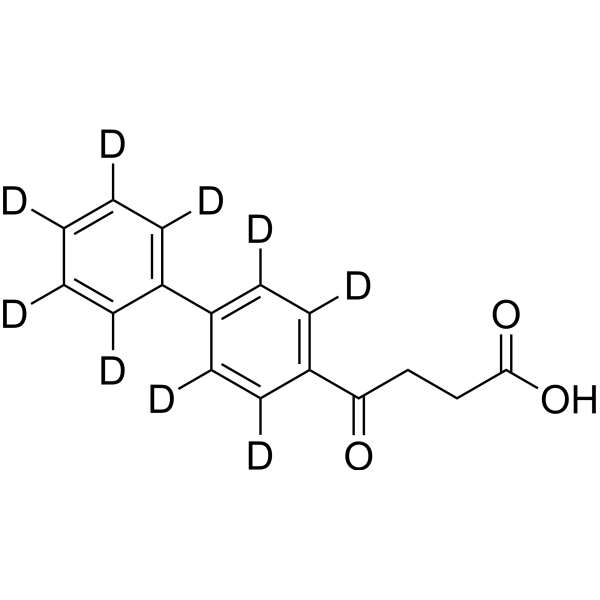 0 ImagesCat. No.: HY-B1138SCAS No.: 1189940-96-2Fenbufen-d9 (CL-82204-d9) is the deuterium labeled Fenbufen. Fenbufen (CL-82204) is an orally active non-steroidal anti-inflammatory drug (NSAID), with antipyretic effects. Fenbufen has potent activity in a variety of animal model, including carageenin edema, UV erythema and adjuvant arthritis. Fenbufen has inhibitory activities against COX-1 and COX-2 with IC50s of 3.9 μM and 8.1 μM, respectively. Fenbufen is a caspases (caspase-1, 3, 4, 5, 9) inhibitor.
-
(+)-Longifolene-13,d2
 0 ImagesCat. No.: HY-N6662S(+)-Longifolene-13C,d2 is the 13C- and deuterium labeled (+)-Longifolene (HY-N6662). (+)-Longifolene is a sesquiterpenoid and a metabolite in rabbits. (+)-Longifolen is converted to primary, secondary or tertiary alcohols in rabbits, among which the primary alcohol is predominant.
-
Hippuric acid-13C6
 0 ImagesCat. No.: HY-W747703CAS No.: 1163160-18-6Synonyms: Benzoylglycine-13C6Hippuric acid-13C6 (Benzoylglycine-13C6) is 13C labeled Hippuric acid. Hippuric Acid is an orally active metabolite. Hippuric Acid can be produced by intestinal microorganisms from the metabolism of polyphenols, benzoic acid. Hippuric Acid decreases NRF2, MMP9 and leads to ROS accumulation. Hippuric Acid activates TGFβ/SMAD signaling. Hippuric Acid improves hyperuricemia and colitis. Hippuric Acid can also be used in cardiovascular disease research. .
-
4-Oxofenretinide-d4
 0 ImagesCat. No.: HY-109583SCAS No.: 2991099-34-2Synonyms: 4-Oxo-4-HPR-d44-Oxofenretinide-d4 (4-Oxo-4-HPR-d4) is deuterium labeled 4-Oxofenretinide. 4-Oxofenretinide (4-Oxo-4-HPR) is a metabolite of Fenretinide (HY-15373). 4-Oxofenretinide induces cell growth inhibition in ovarian, breast, and neuroblastoma tumor cell lines. 4-Oxofenretinide causes a marked accumulation of cells in G2-M. 4-Oxofenretinide induces cancer cell apoptosis through caspase-9.
-
Vortioxetine-d6
 0 ImagesCat. No.: HY-15414S1CAS No.: 1629684-23-6Synonyms: Lu AA 21004-d6Vortioxetine-d6 (Lu AA 21004-d6) is the deuterium labeled Vortioxetine (HY-B1490A). Vortioxetine (Lu AA 21004) is an antagonist of 5-HT3A and 5-HT7 receptors (Ki: 3.7 nM, 19 nM) and an inhibitor of serotonin transporter (SERT) (Ki: 1.6 nM), as well as a 5-HT1A agonist and a partial agonist of 5-HT1B (Ki: 15 nM, 33 nM).
-
Tristearin-d9
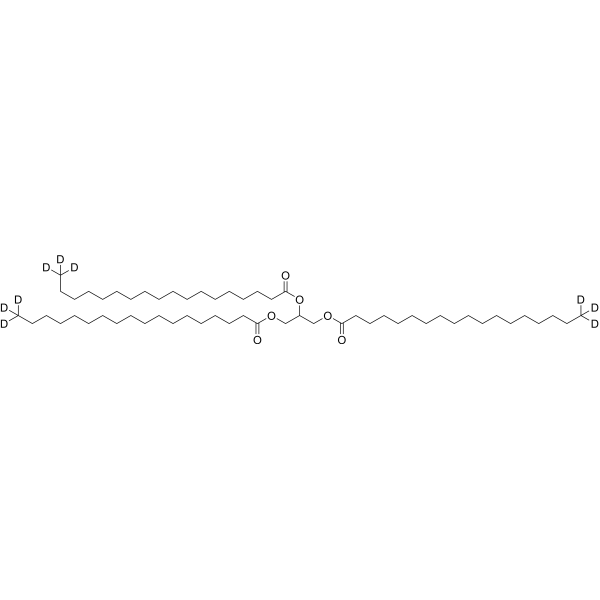 0 ImagesTristearin-d9 is the deuterium labeled Tristearin (HY-127035). Tristearin is a triglyceride derived from three units of stearic acid.
-
(±)-1-Amino-2-phenylpropane-1,1,3,3,3-d5 hydrochloride
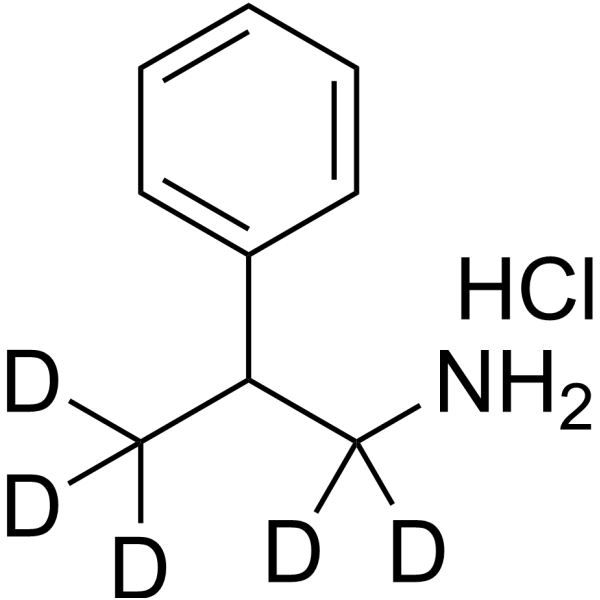 0 ImagesCat. No.: HY-W005394S(±)-1-Amino-2-phenylpropane-1,1,3,3,3-d5 (hydrochloride) is the deuterium labeled 2-Phenylpropan-1-amine hydrochloride.



