



MHC
Major Histocompatibility Complex; MHC
MHC is a group of genes encoding proteins which are transferred to the cell surfaces to present the intracellular or extracellular, self or non-self antigens to the cells of the immune system, thereby helping T cells in differentiating self from non-self proteins, and initiating adaptive immune responses. MHC can be divided into 3 subtypes, MHC I, MHC II and MHC III, in which MHC I presents endogenous antigens (such as antigens produced by virus-infected cells or tumor cells) to activate cytotoxic T cells (CD8+ T cells); MHC II presents exogenous antigens (such as bacteria or parasites) to activate helper T cells (CD4+ T cells); MHC III does not directly participate in antigen presentation, but involves in immune regulation, inflammatory response and cell signaling. MHC is crucial for stem cell transplant (SCT), and could lead to graft-versus-host disease (GVHD)[1][2].
Références:
- [1]. Deakin JE, et al., Evolution and comparative analysis of the MHC Class III inflammatory region. BMC Genomics. 2006 Nov 2;7:281. [Content Brief]
- [2]. Sharma S K. Major Histocompatibility Complex[M]//Basics of Hematopoietic Stem Cell Transplant. Singapore: Springer Nature Singapore, 2023: 903-913.
MHC Isoform Specific Products
All Product Categories
-
MHC Produits associés (121)
Produits associés (121)

-
MHC Isoform Comparison
-
Smcy HY Peptide (738-746)
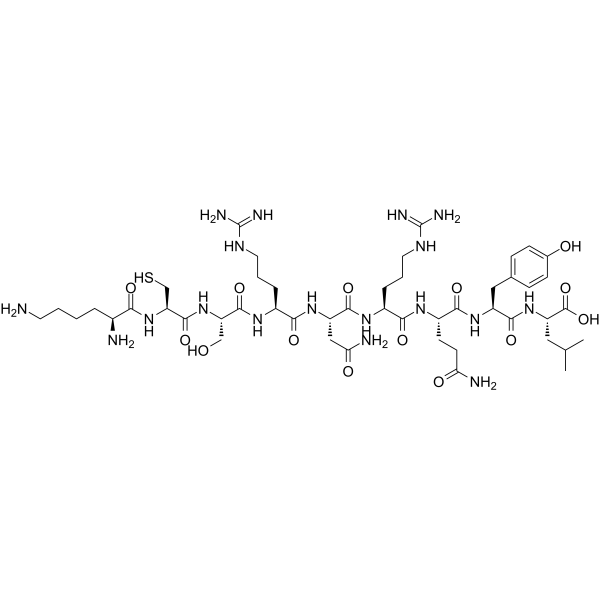 0 ImagesSmcy HY Peptide (738-746) is a H2-Db-restricted peptide corresponding to amino acids 738-746 of Smcy protein.
-
Photolumazine III
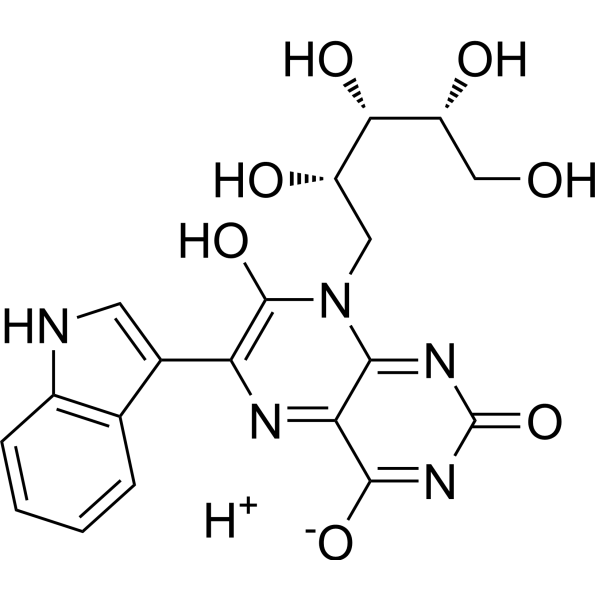 0 ImagesSynonyms: PLIIIPhotolumazine III (PLIII) is a microbial metabolite and derivative of Riboflavin (HY-B0456). Photolumazine III binds MR1 with high specificity. Photolumazine III supports efficient TCR binding. Photolumazine III acts as an antigen to activate cells. Responses to Photolumazine III trigger immune reactions.
-
Adrixetinib TFA
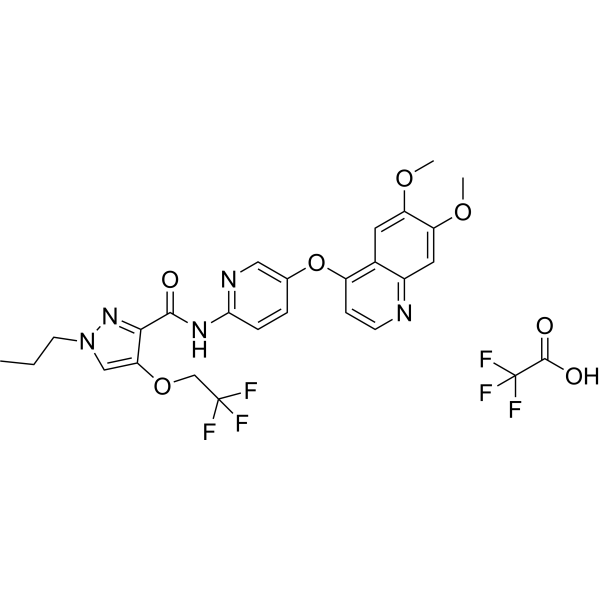 0 ImagesCat. No.: HY-152830APureté: 99.82%Synonyms: Q702 TFAAdrixetinib (Q702) TFA is an orally active triple inhibitor against CSF1R, Mer, and Axl, with Kd values of 8.7 nM, 0.8 nM, and 0.3 nM, respectively. Adrixetinib TFA acts as a potent immune modulator that remodels the tumor microenvironment. Adrixetinib TFA increases the abundance of M1 macrophages and CD8⁺ T cells, while decreasing the levels of M2 macrophages and myeloid-derived suppressor cells (MDSCs). Adrixetinib TFA upregulates the expression of MHC class I and E-cadherin in tumor cells. Adrixetinib TFA shows remarkable antitumor efficacy in syngeneic mouse tumor models. Adrixetinib TFA is suitable for the research of breast cancer, renal adenocarcinoma, colon carcinoma, and melanoma.

-
WT1 126-134 peptide
 0 ImagesCat. No.: HY-P11084CAS No.: 256952-63-3WT1 126-134 peptide is a Wilms' tumor oncogene protein (WT1) peptide (RMFPNAPYL). WT1 126-134 peptide is presented by HLA-A0201 and induces cytotoxic CD8 T cells capable of killing WT1+ positive tumor cells. WT1 126-134 can form stable complexes with the H-2Db (mouse) or HLA-A0201 (human) molecules. WT1 126-134 peptide/HLA-A0201 complex has an extremely high affinity (Kd = 0.2 nM) with the humanized monoclonal antibody (IgG1). WT1 126-134 peptide can be used as a vaccine for T cells or as a target for antibodies.
-
Myelin Oligodendrocyte Glycoprotein (40-54), Rat, Mouse
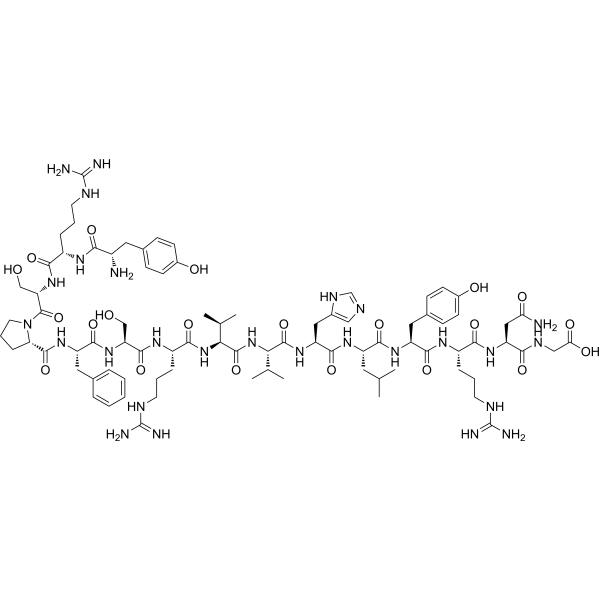 0 ImagesSynonyms: MOG (40-54)Myelin Oligodendrocyte Glycoprotein (40-54), Rat, Mouse (MOG (40-54)) is a CD8-related self-antigenic epitope of the myelin oligodendrocyte glycoprotein (MOG) protein and is presented in association with H-2Db.
-
MC38 SLP Adpgk
 0 ImagesCat. No.: HY-P11060Synonyms: Adpgk peptideMC38 SLP Adpgk (Adpgk peptide) is an H-2 Kb-restricted colorectal cancer neoantigen peptide. MC38 SLP Adpgk is formulated into PCNP nanocomplexes together with CpG ODN. PCNP vaccines significantly enhance the co-delivery efficiency of neoantigens and adjuvants to lymphoid organs, and activate cytotoxic T cells. PCNP vaccines not only protect mice from MC-38 colorectal tumor invasion, but also exhibit anti-tumor efficacy in established colorectal tumor models and significantly prolong the survival of tumor-bearing mice.
-
Z-Val-Val-Nle-diazomethylketone
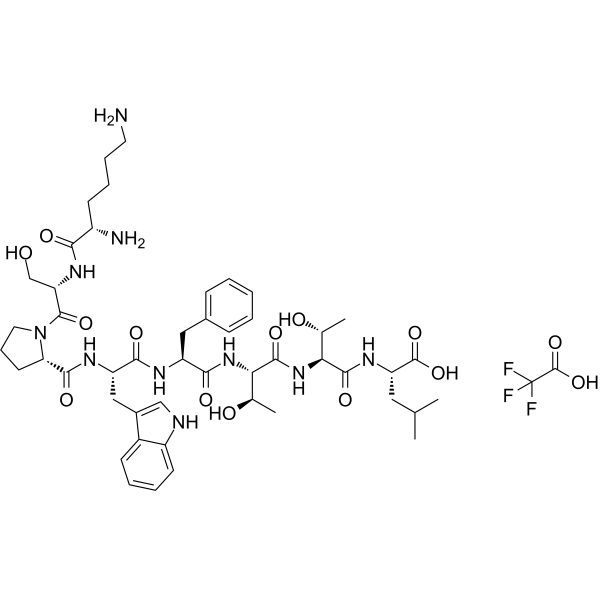
 0 ImagesCat. No.: HY-P5898CAS No.: 155026-49-6Synonyms: Z-Val-Val-Nle-CHN2Z-Val-Val-Nle-diazomethylketone is a cathepsin S (CATS) inhibitor. Z-Val-Val-Nle-diazomethylketone significantly inhibits the IFNg-induced upregulation of the MHCII molecules HLA-DR and Ii-p33/35 with an increase of Ii-p10 protein level. Z-Val-Val-Nle-diazomethylketone can be used for dermatological diseases like psoriasis, atopic dermatitis and actinic keratosis research.
-
KRAS G12V Peptide TFA
 0 ImagesCat. No.: HY-P11356AKRAS G12V Peptide TFA is a polypeptide and epitope derived from KRASG12V. KRAS G12V Peptide TFA forms a stable, high-affinity peptide-HLA class I complex, which is processed and presented by tumor cells and can be recognized by specific TCR. KRAS G12V Peptide TFA is applicable to research related to metastatic lung cancer.
-
Anti-Mouse MHC Class I (H-2Kb/H-2Db) Antibody
 0 ImagesCat. No.: HY-P991786Pureté: 98.21%Anti-Mouse MHC Class I (H-2Kb/H-2Db) Antibody (28-8-6S) reacts with the mouse H-2Kb and H-2Db MHC Class I alloantigens. Anti-Mouse MHC Class I (H-2Kb/H-2Db) Antibody (28-8-6S) can be used to study the role of H-2Kb and H-2Db alloantigens. Recommend Isotype Controls: Mouse IgG2a kappa, Isotype Control (HY-P99978).
-
Anti-CD160 Antibody (MAT 302)
 0 ImagesCat. No.: HY-P992201Synonyms: CL1-R2Anti-CD160 Antibody (MAT 302) (CL1-R2) is a human monoclonal antibody targeting CD160. Anti-CD160 Antibody (MAT 302) blocks the CD160-HVEM protein interaction, inhibits FGF2-mediated renal tubular vascular growth, and induces endothelial cell apoptosis. Anti-CD160 Antibody (MAT 302) targets CD160 on neovascularization to exert anti-angiogenic and vascular normalization effects, trigger the production of IFN-γ, TNF and IL-6 by NK cells, and enhance glucose metabolism of NK cells through the AKT/mTOR/s6k signaling pathway. Anti-CD160 Antibody (MAT 302) reduces vascular density, normalizes remaining tumor blood vessels, and inhibits tumor growth in melanoma-bearing mice. Anti-CD160 Antibody (MAT 302) can be used in research related to neovascularization, proliferative diabetic retinopathy, and melanoma.
-
MOG (89-113), human
 0 ImagesCat. No.: HY-P2461CAS No.: 218291-36-2MOG (89-113), human is a peptide fragment of human myelin oligodendrocyte glycoprotein.
-
KRAS G12V Peptide
 0 ImagesCat. No.: HY-P11356CAS No.: 1932689-39-8KRAS G12V Peptide is a polypeptide and epitope derived from KRASG12V. KRAS G12V Peptide forms a stable, high-affinity peptide-HLA class I complex, which is processed and presented by tumor cells and can be recognized by specific TCR. KRAS G12V Peptide is applicable to research related to metastatic lung cancer.
-
Anti-Mouse MHC Class I Antibody (A4C8.1-Do9)
 0 ImagesCat. No.: HY-P991799Anti-Mouse MHC Class I Antibody (A4C8.1-Do9) reacts with the mouse H-2Kb MHC class I alloantigen. MHC class I antigens are heterodimers consisting of one alpha chain (44 kDa) associated with β2 microglobulin (11.5 kDa). Recommend Isotype Controls: Rat IgG2a kappa, Isotype Control (HY-P990679).
-
Anti-Mouse Vβ8 TCR Antibody (F23.1)
 0 ImagesCat. No.: HY-P990141Anti-Mouse Vβ8 TCR Antibody (F23.1) is an anti-mouse Vβ8 TCR IgG2a monoclonal antibody. Anti-Mouse Vβ8 TCR Antibody (F23.1) can clear Vβ8+ T cells to alleviate immune conditions. Anti-Mouse Vβ8 TCR Antibody (F23.1) can be used for research on autoimmune conditions. Anti-Mouse Vβ8 TCR Antibody (F23.1) is often used in flow cytometry.
-
TRVLNLGPI
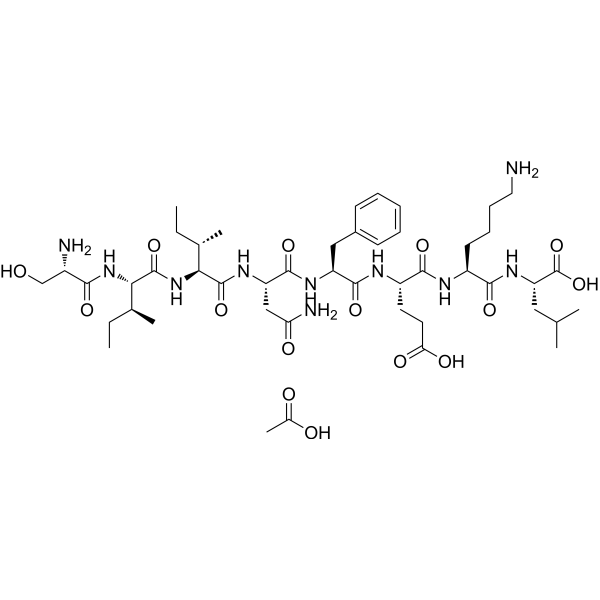
 0 ImagesCat. No.: HY-P11703TRVLNLGPI is an MHC motif-containing, MHC-independent nonapeptide. TRVLNLGPI is not a product of immune presentation, but a product of renal protein degradation, and its concentration is sufficiently high to be specifically recognized by vomeronasal neurons. The concentration of TRVLNLGPI in mouse urine can be six orders of magnitude higher than that of prototype MHC-dependent peptides.
-
Albaconol
 0 ImagesCat. No.: HY-N20661CAS No.: 338405-64-4Albaconol is a prenylresorcinol compound. Albaconol is isolated from the mushroom A. confluens. Albaconol inhibits NF-κB and DNA topoisomerase II, and induces Apoptosis. Albaconol inhibits IκB-α phosphorylation and p65 nuclear translocation, enhances SOCS1 expression, reduces the production of proinflammatory cytokines and NO, and suppresses the expression of iNOS, MHC-II and co-stimulatory molecules. Albaconol acts as a weak antagonist of hVR1 and rVR1, with IC50 values of 17 µM and 5.5 µM, respectively. Albaconol induces tracheal contraction and desensitization. Albaconol inhibits the growth of tumor cells. Albaconol can be used in pain-related research.
-
GRWD5769
 0 ImagesCat. No.: HY-184499CAS No.: 2420554-24-9GRWD5769 is an orally potent ERAP1 inhibitor. GRWD5769 regulates the peptide repertoire presented by MHC-I, alters TCR diversity/clonality, reprograms antigen-experienced T cells, induces novel T cell responses, drives tumor cell killing, and alleviates T cell exhaustion. GRWD5769 can be used in the research of advanced solid malignancies, microsatellite-stable colorectal cancer, non-small cell lung cancer, bladder cancer, hepatocellular carcinoma, head and neck squamous cell carcinoma, and cervical cancer.



